You’ll find California’s most stunning autumn ghost town experiences at Bodie State Historic Park, where golden aspens frame 200 weathered structures at 8,375 feet, and Calico Ghost Town near Barstow, where vibrant fall colors highlight restored mining buildings against mineral-streaked hillsides. October brings crisp air, dramatic temperature swings, and morning mists that transform these frontier relics into photographer’s dreams. Lesser-known gems like Monitor Ghost Town and Randsburg offer solitude amid amber foliage and mountain vistas, while seasonal Halloween events and after-dark flashlight tours deepen the atmospheric experience awaiting your exploration.
Key Takeaways
- Bodie State Historic Park at 8,375 ft features weathered structures and big leaf maple fall colors, peaking in early October.
- Calico Ghost Town near Barstow combines historic mining architecture with seasonal wildflowers and vibrant autumn colors along I-15.
- Randsburg offers relaxed exploration with ruins, a museum, and scenic mountain views painted in fall hues.
- Monitor Ghost Town along Monitor Pass displays foundational remains and amber fall foliage for scenic autumn exploration.
- October and November provide optimal conditions with cooler temperatures, clear air, and peak fall colors before winter arrives.
Best Ghost Towns to Experience Autumn Colors in California
The desert wind carries whispers of forgotten fortunes as you wind through California’s backcountry, where abandoned mining camps transform into something almost magical come October. You’ll find Bodie State Historic Park perched on Yosemite’s eastern edge, where nearly 200 structures stand frozen in time against a backdrop of golden aspens.
Two centuries of weathered wood and shattered dreams stand sentinel beneath Sierra peaks, waiting for autumn gold to frame their stories.
Monitor Ghost Town delivers serious leaf-peeping along Monitor Pass—foundations and century-old hops emerging through amber foliage.
For ghost town ghost stories with a seasonal twist, Calico hosts its Halloween Ghost Haunt during October’s final weekends, blending scare attractions with mining heritage. The town once produced nearly $80 million of silver ore from 500 mines before silver prices collapsed in the 1890s. Oak Glen’s apple orchards offer a detour from ghost hunting, where fall colors peak among the working farms of Southern California’s mountain communities.
Check autumn event guides before heading to Randsburg, where The Joint saloon and weekend museum hours let you explore without rigid schedules—just you, the ruins, and California’s painted mountains.
Why Fall Is the Perfect Season for Ghost Town Exploration
October’s crisp air settles differently in California’s high desert, wrapping around weathered timber frames and crumbling stone walls with a clarity summer’s heat never allows. You’ll feel the difference immediately—cooler temperatures let you wander for hours without exhaustion.
Golden aspens frame forgotten mining camps in haunting brilliance. The off-season solitude amplifies ancient legends whispered through these abandoned corridors. Morning mist clings to Bodie’s silent streets, transforming ghostly legends into visceral experiences.
You’re alone here, free to explore without crowds disrupting the eerie stillness. Golden hour light slants dramatically across peeling facades, while overcast skies deepen the mystery. Your camera becomes essential as you capture the forlorn scenery—decaying structures stand as time capsules of former frontier life, telling stories through weathered wood and rusted metal.
The rustling golden grasses and vibrant foliage create compositions impossible in summer’s glare. Personalized flight arrangements can help you reach remote ghost towns efficiently, maximizing your exploration time during this brief seasonal window. Fall doesn’t just enhance ghost town exploration—it completes it.
Calico Ghost Town: Southern California’s Premier Historic Destination
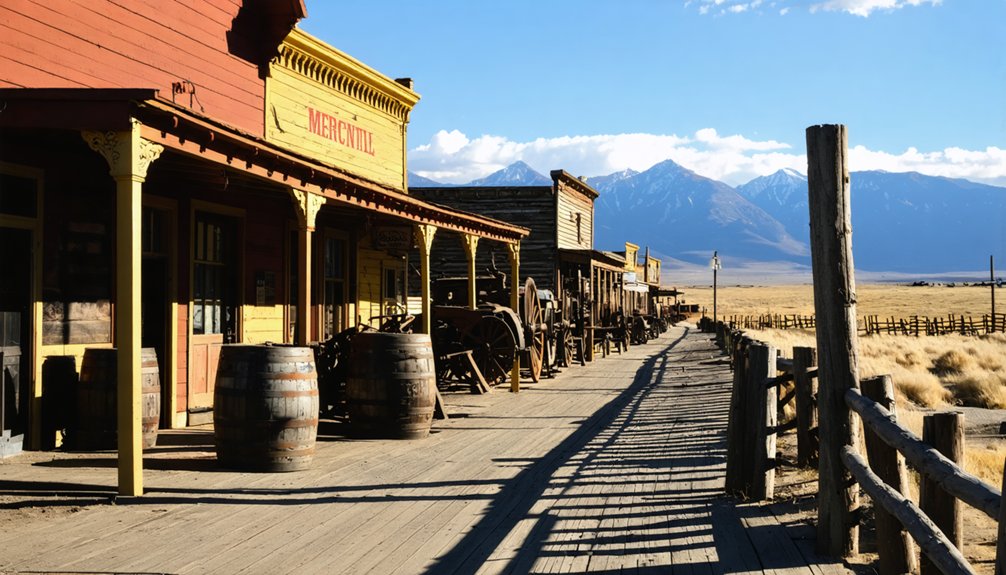
Rising from the Mojave Desert like a mirage of California’s silver rush past, Calico Ghost Town sprawls across sun-bleached hillsides where $20 million in ore once flowed from 500 tunnels carved into calico-striped mountains.
You’ll wander false-front salons and peer into Maggie Mine‘s darkness, where thirteen million dollars’ worth of silver ore emerged between 1881 and the mid-1890s collapse. Walter Knott’s 1950s restoration preserved this authenticity—five original structures standing as a testament to boom-and-bust freedom.
Located off Interstate 15 near Barstow, you’re two hours from Los Angeles’s constraints. The town welcomes visitors daily from 9 AM to 5 PM, with affordable admission making this slice of history accessible to all.
Fall brings relief from summer’s brutality: cooler temperatures for exploring mountainous trails, occasional wildflower blooms defying the arid landscape, and desert wildlife emerging at dusk.
The schoolhouse beneath giant “CALICO” letters frames your escape into untamed history. The town’s name echoes Calicut, India, where the distinctive striped fabric originated in the 11th century, mirroring the multicolored mineral deposits that streak these desert peaks.
Bodie State Historic Park: High Sierra Fall Beauty and Preservation
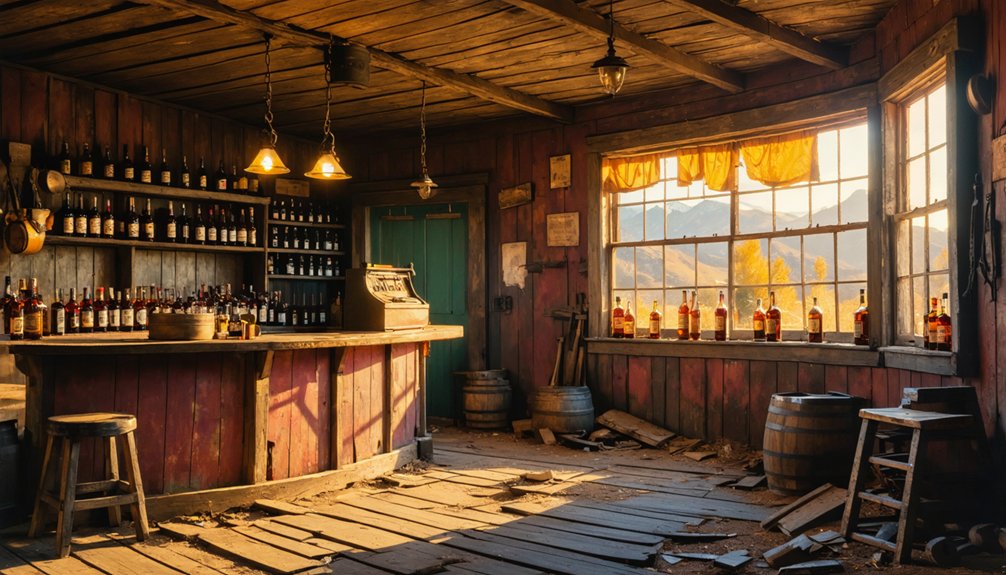
You’ll find nearly 200 weathered wooden structures still standing at 8,375 feet elevation. Their peeling paint and tilted frames are frozen in time since Bodie’s last residents walked away. The “arrested decay” preservation means you can peer through dusty windows at tables still set for dinner, tools left mid-repair, and bottles lined up on bar shelves as if miners just stepped outside.
Pack layers for your visit—this High Sierra ghost town endures fierce winds, sudden afternoon storms, and temperature swings that can drop 40 degrees between midday sun and twilight shadows across the sagebrush hills. Big leaf maples and other deciduous trees add splashes of yellow and orange to the austere landscape during fall months, creating unexpected color against the weathered gray buildings. Plan your visit for early October to catch peak fall colors while also exploring nearby Bishop’s autumn foliage displays.
Extensive Standing Structures Preserved
When you peer through the weathered windows of Bodie’s abandoned buildings, you’ll find rooms frozen in time—newspapers spread on tables, bottles lined up behind the saloon bar, and desks still holding their inkwells. Nearly 200 wooden structures stand in “arrested decay,” their interiors deliberately left untouched since abandonment.
You’re free to explore the church, schoolhouse, and Bodie Jail on the town’s outskirts, where haunted legends whisper through empty cells.
The red light district cabins along Bonanza Street remain intact, offering unfiltered glimpses into frontier life. Restoration challenges mean preserving authenticity over prettification—weathered wood stays weathered, and relics remain exactly where miners left them.
This approach lets you experience the ghost town’s raw reality, not a sanitized recreation. Each building tells its own story of boom and sudden desertion. The surrounding landscape transitions between the Sierra Nevada and Great Basin, creating a unique ecological zone that supports sagebrush uplands and diverse wildlife. Beyond the preserved structures, you can explore the northern Bodie Hills on guided fall colors tours that visit historic mining sites and aspen groves.
High Sierra Weather Conditions
Perched at 8,611 feet in the High Sierra, Bodie exists in a climate that’s as unforgiving as the mining life that once sustained it.
You’ll face temperature swings of 20-30°F between sunlit afternoons and frost-bitten nights.
November brings the sweet spot—brilliant fall foliage against mostly sunny skies with highs around 55°F—before winter’s grip tightens.
Weather safety demands respect here; by mid-November, precipitation chances jump to 80%, mixing snow, sleet, and rain.
Those 40 mph wind gusts aren’t just uncomfortable—they’re dangerous against weathered boardwalks and open landscapes.
Your seasonal preparation starts with layers: morning frost shift to pleasant midday warmth, then plummet again as shadows lengthen across abandoned buildings.
Check forecasts religiously.
This high-altitude freedom comes with consequences for the unprepared.
Hidden Gems in Placer and Mono Counties for Fewer Crowds
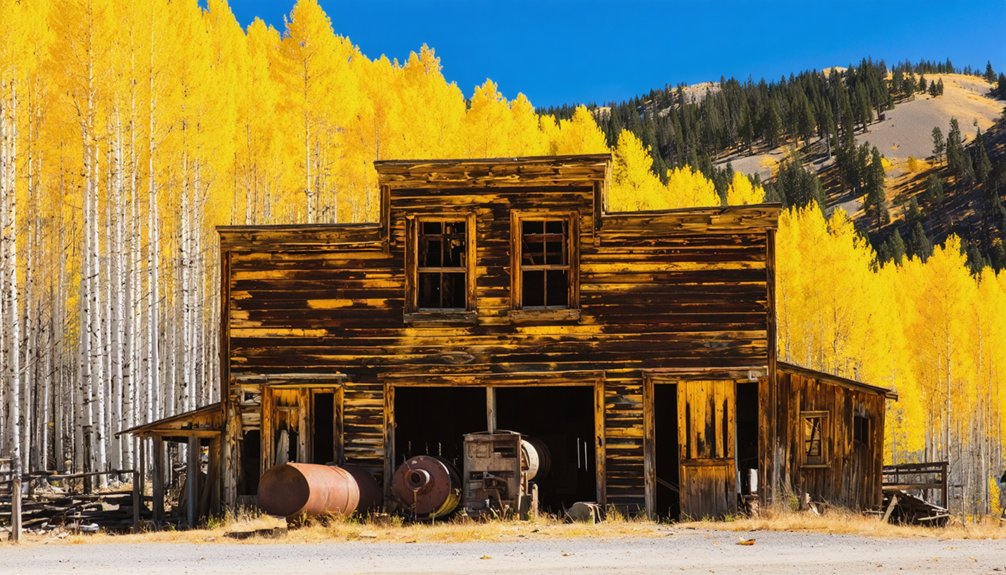
You’ll find autumn’s quietest rewards tucked along mountain ridges where most travelers never venture. At Dutch Flat, crimson wallpaper glows in afternoon light filtering through the hotel’s dusty windows, while nearby Damascus lies so hidden that trail cameras outnumber visitors among its collapsed timber frames.
Silver Mountain City’s cemetery sits empty beneath golden aspens, accessible only by those willing to hike the interpretive trail where frost crunches underfoot and the ghost of Alpine County’s first seat whispers through turning leaves.
Ward Mining Camp Features
Deep in Mono County’s backcountry, where autumn aspens shimmer gold against granite peaks, Ward Mining Camp clings to the eastern Sierra slope like a stubborn memory. You’ll find Thomas Ward’s 1892 four-stamp mill foundations scattered among wildflower blooms that paint the landscape before winter arrives. Mining relics emerge from the earth—hewed logs still bearing hatchet marks, flooded stamp mill roads leading nowhere.
The trail upward tests your resolve. Ed L. Page once crawled this near-vertical path on stick crutches, climbing 2,000 feet to work his claims at 11,000 feet. His determination carved routes you can still follow, though they’ll leave you breathless and humble.
Fourteen miles west of Bodie, this isolated camp rewards those who venture beyond the crowds, offering solitude among cabin ruins where Sierra winds whisper stories of stubborn miners and impossible dreams.
Munckton’s Remote Mountain Setting
Hidden beneath a canopy of conifers at 9,800 feet, Munckton guards its secrets from casual passersby who speed along the Conway Summit roads without a second glance. You’ll discover this settlement above Upper Sinnamon Meadow, where sage now reclaims the scattered depressions that once held miners’ cabins.
The vertical terrain drops 2,000 feet between mill and mine—a brutal daily commute that explains why Ed L. Page’s 1917 shutdown ended operations for good.
Before Thomas Ward’s 1892 stamp mill, prehistoric artifacts scattered across Kavanaugh Ridge testified to Native heritage predating Charles Snyder’s 1867 claims.
Three weathered log cabins and crumbling mill machinery remain your reward for venturing beyond roadside distractions. Each autumn visit reveals something missed before—a rusted tool, a forgotten foundation stone.
Dutch Flat Historic District
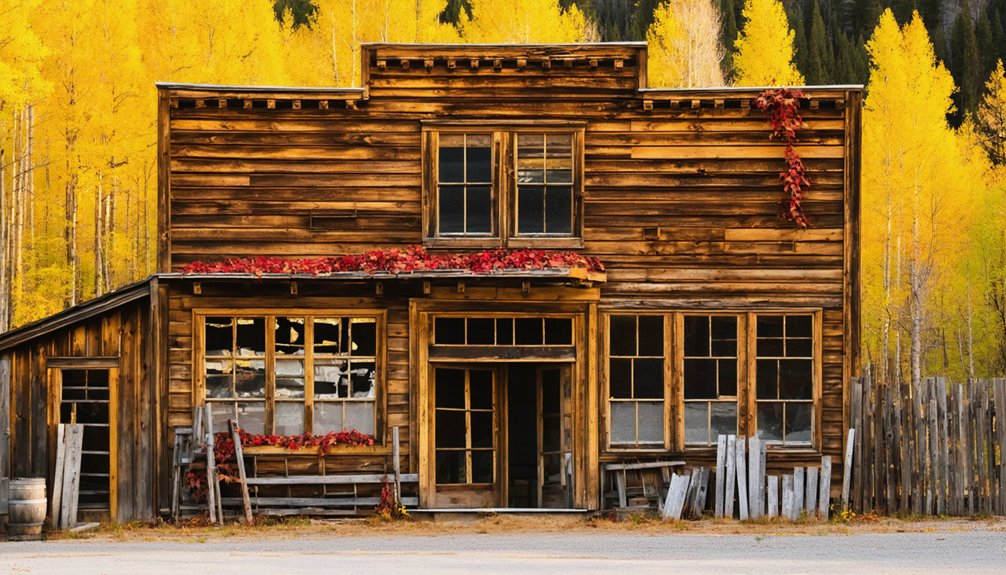
Gold Rush architecture lines both sides of Main Street in Dutch Flat, where forty-five pre-1900 woodframe houses still perch on their original foundations—a rarity among California’s mining settlements. You’ll wander freely through 480 acres of historic architecture without tourist crowds pressing in around you.
The 1852 Dutch Flat Hotel‘s weathered siding catches afternoon light filtering through golden cottonwoods, while the 1856 Masonic Hall stands sentinel over empty boardwalks.
Preservation efforts here haven’t sanitized the town’s authentic character—peeling paint and creaking porches tell stories the guidebooks miss.
October transforms the Sierra Foothills setting into rust and amber, and you’ll likely have the entire walking tour to yourself.
The Golden Drift Museum opens when volunteers arrive, operating on mountain time rather than schedules.
Photography Tips for Capturing Fall Foliage Against Historic Structures
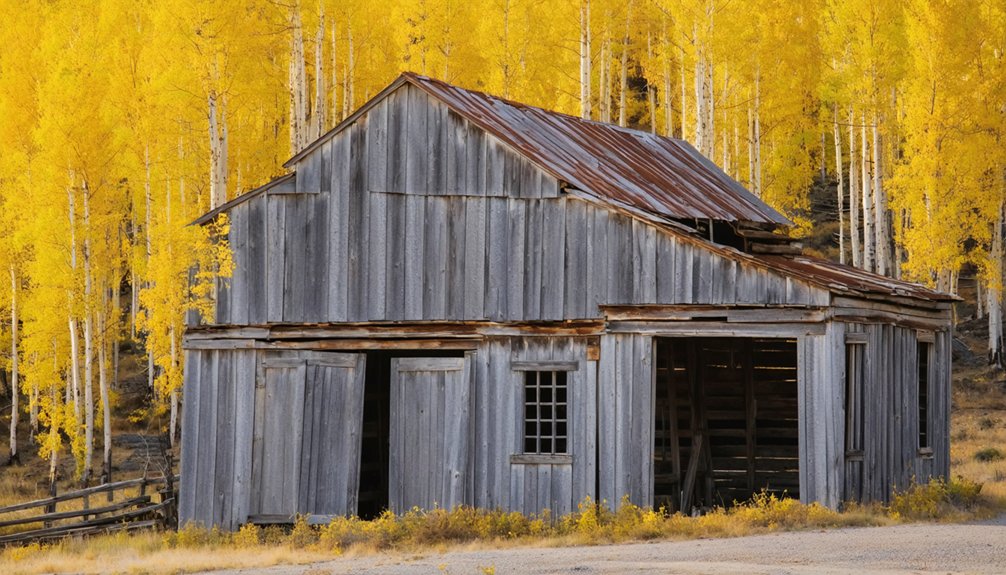
When autumn light filters through abandoned doorways and windows of California’s ghost towns, photographers discover a unique convergence where history meets nature’s seasonal transformation. You’ll capture compelling compositions by positioning weathered structures against vibrant foliage, creating depth through strategic layering.
Golden hour illumination bathes crumbling facades in warm light, intensifying autumn colors while casting dramatic shadows through empty window frames. Consider these creative approaches:
Golden hour transforms ghost town ruins into luminous canvases, where warm light amplifies autumn’s palette through weathered frames and forgotten passages.
- Night photography reveals star trails above silhouetted buildings, with moonlight painting decay in ethereal tones
- Drone perspectives expose hidden architectural patterns surrounded by colorful canopies invisible from ground level
- Low-angle shots emphasize towering ruins against flame-colored trees
Overcast conditions soften harsh contrasts, letting you emphasize texture in weathered wood and peeling paint. Polarizing filters deepen saturated foliage while reducing glare from rusted metal surfaces.
Halloween Events and Seasonal Activities at California Ghost Towns
As October’s chill settles over California’s abandoned settlements, these weathered remnants of the past transform into theatrical stages for spine-tingling celebrations that blend authentic history with seasonal thrills.
You’ll discover Calico Ghost Town’s annual Ghost Haunt, where haunted ghost stories echo through authentic mining structures while you navigate trick-or-treating trails beneath desert moonlight.
Join seasonal costume events featuring pumpkin carving competitions, scream contests, and mummy-wrapping challenges that’ll test your nerve.
For serious thrill-seekers, Preston Castle’s paranormal investigations let you hunt specters with professional equipment, while Bodie’s after-dark flashlight tours reveal shadowy corners where California’s frontier spirits allegedly linger.
These October weekends merge Wild West authenticity with Halloween revelry, creating experiences you won’t find in manufactured theme parks.
Planning Your Visit: Amenities, Camping, and What to Bring
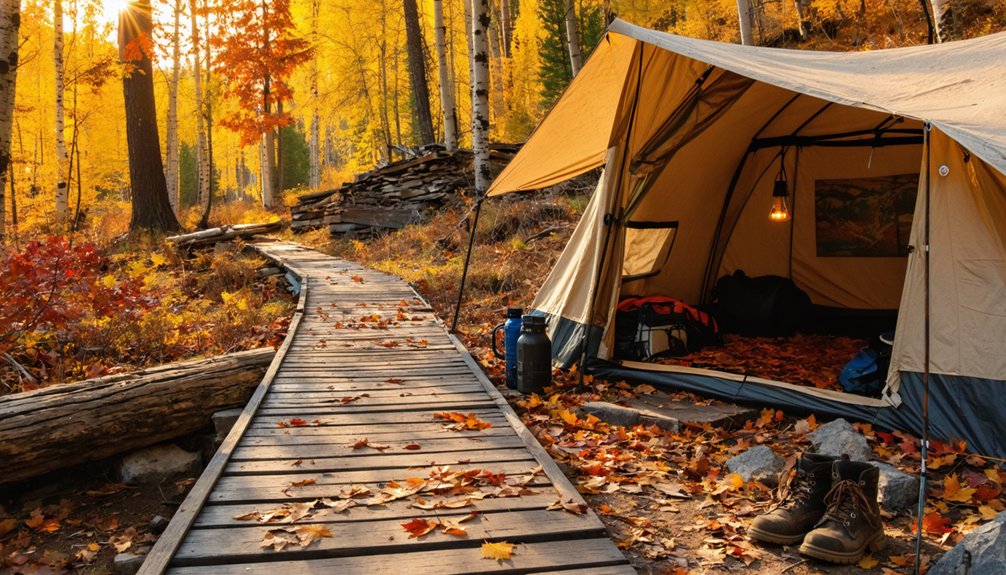
Before you load your sedan with random supplies and point toward California’s backcountry, understand that visiting ghost towns demands strategic preparation vastly different from your typical weekend getaway.
Exploring ghost towns around Alma, California offers a unique glimpse into the past, revealing the forgotten stories of those who once inhabited these areas. Plan your itinerary to include essential hiking gear and a reliable map, as many of these towns can be found off the beaten path. Additionally, it’s wise to check local weather conditions, as the remoteness can bring unexpected challenges.
Ghost town exploration isn’t your average road trip—ditch the casual mindset and pack like your comfort depends on it.
Calico offers 259 campsites with bunkhouses sleeping six to twenty people, letting you wake among weathered structures rather than rushing day-trip schedules. You’ll find local dining and souvenir shopping within its restored buildings—gold panning equipment clatters alongside restaurant conversation.
Pack strategically for high-elevation ghost towns:
- Layered clothing for daytime warmth and evening temperatures that plummet when sun disappears behind peaks
- Sturdy boots gripping rocky trails overlooking aspen-gold canyons
- Headlamps illuminating mine tours and sunset returns to camp
Silver City and Bodie require self-sufficiency—no restaurants materialize when hunger strikes.
Lake Isabella and Bishop Creek provide basecamp amenities for extended backcountry exploration.
Frequently Asked Questions
Are Pets Allowed at California Ghost Towns During Fall Visits?
You’ll find most California ghost towns welcome leashed pets during fall visits. Pet policies vary by location, so check visitor guidelines beforehand. Picture your dog trotting alongside you through crunchy autumn leaves, exploring historic trails together—pure freedom awaits.
What Are the Entrance Fees for Bodie and Calico Ghost Towns?
You’ll pay $8 per adult at Bodie, where historical preservation meets rustic tourist amenities. Calico’s fees weren’t confirmed in available sources. Cash works best—there’s freedom in exploring these weathered towns without modern payment hassles.
Can Visitors Explore Buildings Interiors or Only View From Outside?
Building access varies dramatically between sites. You’ll find interior exploration at Calico’s shops and Lucy Lane Museum, while Bodie restricts you to external viewing only. Silver City offers seasonal building access, and Falk requires guided hikes for any entry.
Are Ghost Town Roads Accessible by Regular Vehicles or Required 4WD?
Most ghost town roads welcome regular vehicles, though you’ll need 4WD for Bodie’s final stretch and remote High Sierra sites. Road safety and historical preservation guide access—your freedom machine handles paved routes, but rugged terrain demands capable wheels.
What Cell Phone Coverage Can Visitors Expect at Remote Ghost Towns?
Cell coverage vanishes like desert mirages at most ghost towns—you’ll find signal strength fading to nothing at isolated Bodie and Amboy, while tourist-friendly Calico offers reliable bars. Pack offline maps and embrace the digital detox adventure ahead.
References
- https://californiathroughmylens.com/best-places-for-fall/
- https://www.youtube.com/watch?v=3AkK0gKGmmg
- https://nvtami.com/2022/10/18/top-10-ghost-towns-to-visit-this-fall/
- https://www.visitplacer.com/blog/gold-rush-ghost-towns-a-fall-road-trip-in-placer-county/
- https://www.camp-california.com/california-ghost-towns/
- https://whimsysoul.com/must-see-california-ghost-towns-explore-forgotten-histories/
- https://www.visitcalifornia.com/road-trips/ghost-towns/
- https://californiahighsierra.com/trips/explore-ghost-towns-of-the-high-sierra/
- https://www.californist.com/articles/interesting-california-ghost-towns
- https://traveloregon.com/things-to-do/trip-ideas/favorite-trips/cool-season-adventures/