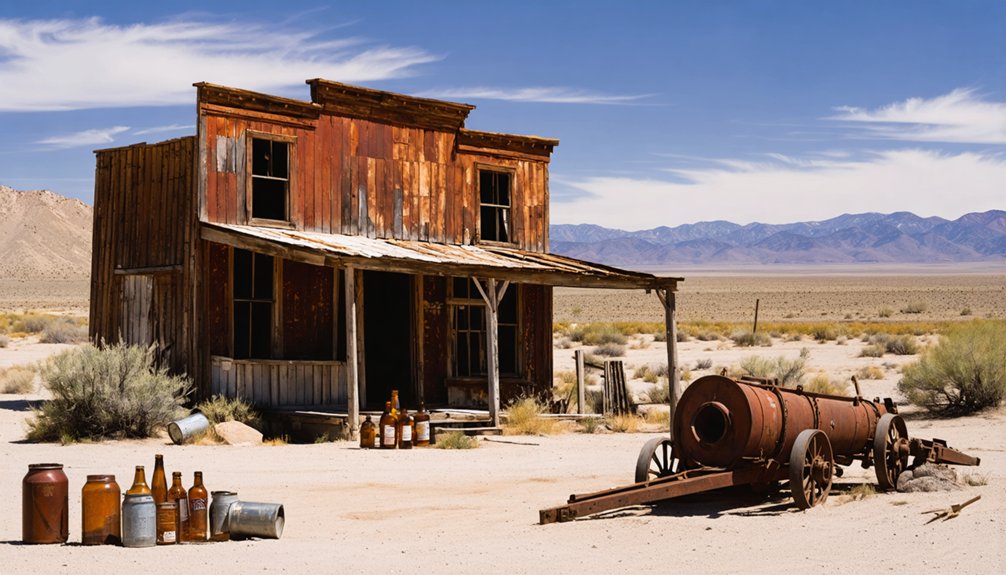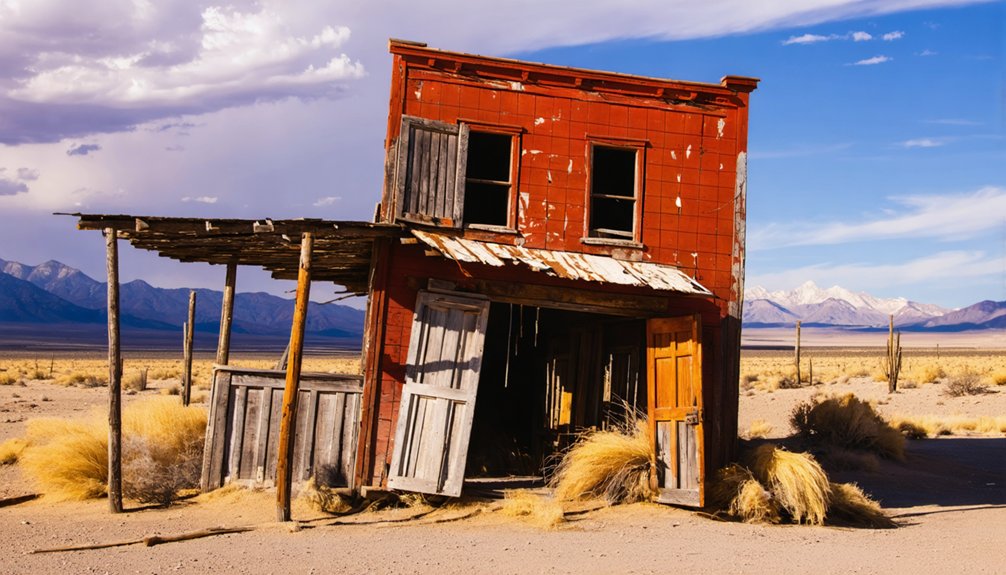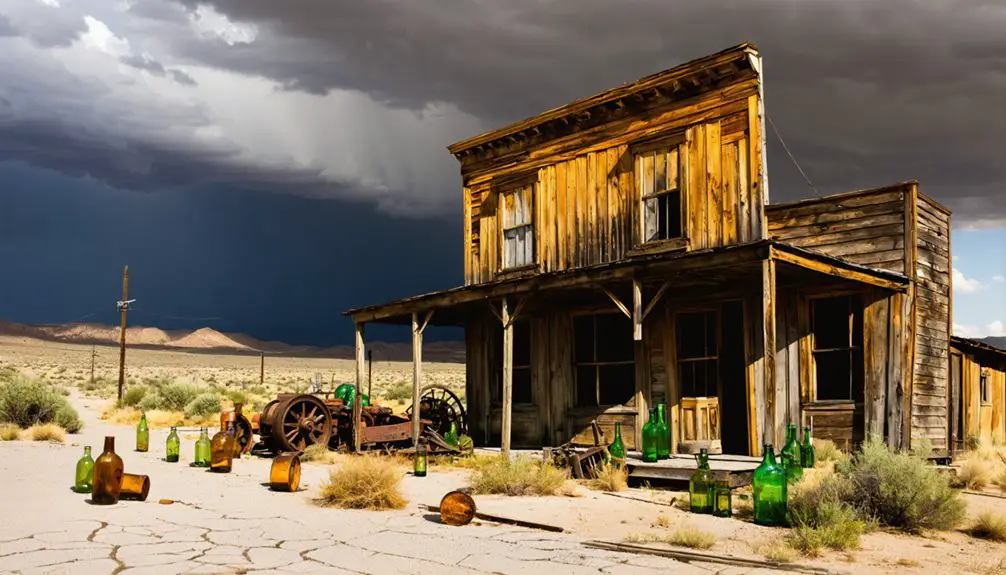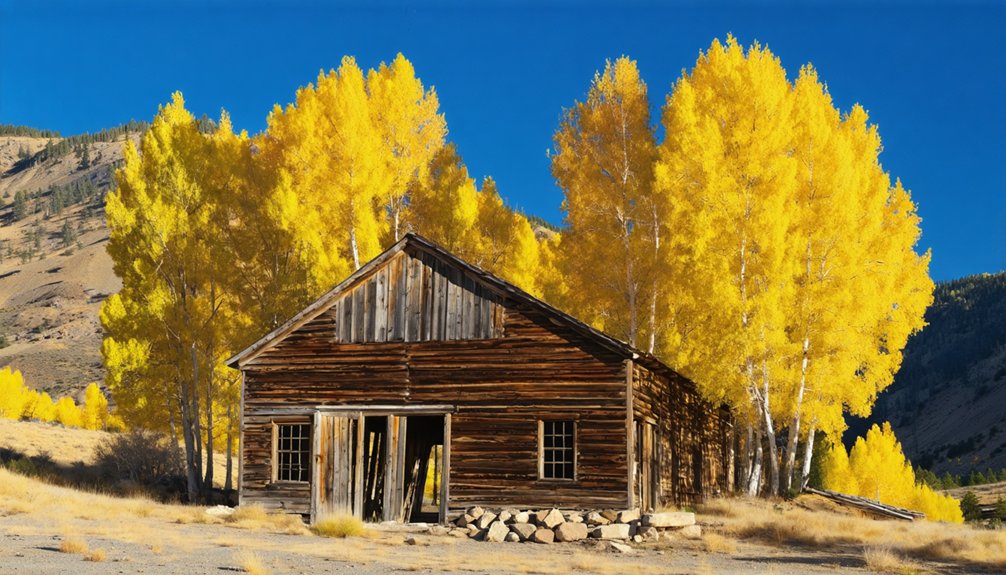
You’ll find Nevada’s most stunning ghost town autumn displays at Munckton & Dunderberg Mill, where golden aspens frame 1870s mining ruins at nearly 10,000 feet elevation. Mid-October offers peak colors when vibrant fall foliage contrasts against weathered structures at Conway Ranches’ historic homesteads and Glen Alpine Springs’ Victorian-era resort buildings. Berlin’s preserved mining camp and Rhyolite’s iconic Bottle House provide equally photogenic backdrops, with remote locations ensuring solitude during your exploration. The Sierra Nevada’s high-desert landscape transforms these abandoned settlements into photographer’s dreams, and timing your visit reveals secrets about accessing Nevada’s most spectacular seasonal transformations.
Key Takeaways
- Munckton & Dunderberg Mill at 10,000 feet offers Nevada’s most secluded fall display with vibrant aspens and crimson willows along creekside.
- Rhyolite features photogenic ruins including the Bottle House and Cook Bank Building, ideal for capturing ghostly remnants against fall scenery.
- Berlin’s preserved 1911 mining structures and 30-stamp mill provide authentic backdrops amid Shoshone Mountain autumn colors.
- Mid-October delivers optimal conditions with peak foliage, cooler temperatures, and clear skies for ghost town photography statewide.
- Higher elevation sites above 8,000 feet reach peak color in late September, while lower sites peak through early November.
Glen Alpine Springs: Tahoe’s First Family Resort
Tucked into a granite amphitheater where Fallen Leaf Lake meets the rugged edge of what would become Desolation Wilderness, Glen Alpine Springs emerged in 1878 as Lake Tahoe’s first family resort—a destination where Victorian travelers shed their corsets and city dust for mountain air, mineral waters, and the kind of rustic luxury only the Sierra Nevada could provide.
You’d have arrived by steamboat and horse-drawn stage, settling into one of 120 guest spots where meals were served on china with silver utensils for five dollars daily.
John Muir praised it as one of Tahoe’s most delightful places during his 1890s visits.
Today, historic preservation efforts maintain nine remaining buildings, including five Bernard Maybeck designs.
Maybeck’s innovative use of lightweight aerated concrete in the Bubble Building marked the first application of this material in the United States.
His designs combined native granite with metal roofs and arch style, creating some of the first fire-resistant buildings at Lake Tahoe.
The seasonal migration of modern hikers now traces trails where Victorian guests once strolled.
Munckton & Dunderberg Mill: Hidden Autumn Gem
At nearly 10,000 feet in the High Sierras, Munckton’s autumn aspens blaze gold against granite peaks. Crimson willows line the creek flowing past the Dunderberg Mill ruins.
You’ll navigate a steep, rocky four-wheel-drive road that climbs beyond Bridgeport into remote backcountry where few visitors venture, even during peak fall color season.
The reward for this challenging approach is a pristine ghost town frozen in time, where sage-covered depressions mark vanished buildings and scattered bricks tell stories of the 1870s boomtown that served the Castle Peak and Green Creek mines. The mill itself was originally the IXL Mill, relocated from Silver Mountain City in Scandinavian Canyon before being reduced to bricks and timber remnants. The 10-stamp mill was built to process ore from the mine’s primary adit, which extended over 600 feet into the mountainside.
Spectacular Fall Color Display
Rising above 8,500 feet in the Sierra Nevada, the ruins of Munckton and Dunderberg Mill transform into Nevada’s most secluded autumn spectacle when September arrives. Dense stands of aspen ignite in gold against the weathered remains of the 1870s mining operation, while Sierra peaks frame your backdrop.
You’ll need binoculars for viewing the crumbling cabins and mill foundations scattered across Kavanaugh Ridge—most details hide beneath the forest canopy until you’re practically standing on them.
Drone pilots capture stunning historical photography here, revealing patterns invisible from ground level. The abandoned covered railway grades cut through flaming aspens, leading to collapsed structures where Munckton’s water-powered 20-stamp mill once battled sulphide-laden ore. Charles Snyder first staked quartz vein claims in the area around 1867, establishing what would become the Castle Peak District.
This high-altitude ghost town delivers untracked solitude during peak color season. The nearby Ward Mining Camp stands out for its rare log structures, offering a glimpse into 1890s mountain mining life.
Accessing the Remote Site
Reaching Munckton demands commitment—you’ll navigate fourteen miles of high Sierra backcountry west from Bodie, where pavement surrenders to dirt roads that thread through pine and aspen forests above 8,500 feet. Your vehicle climbs through challenging terrain near Conway Summit, winding past Virginia Lakes toward Kavanaugh Ridge.
Off-road capability isn’t optional here; the route tests both machine and driver as you ascend toward Upper Sinnamon Meadow.
These access challenges actually serve historical preservation—the difficulty keeps crowds away, leaving crumbling cabins and tunnel entrances largely undisturbed since 1903’s devastating fire.
You’ll discover scattered foundations and rusting metal where drone perspectives reveal what ground-level views obscure.
The remoteness that once limited mining operations to summer months now protects this hidden gem, rewarding adventurous souls with solitary exploration among golden aspens and weathered ruins.
Conway Ranches: Historic Homesteads at the Summit
Perched along ancient Native American trade routes where autumn winds sweep across high-desert meadows, Conway Ranch stands as an affirmation to frontier resilience and the hardy souls who carved out lives in this unforgiving landscape.
You’ll discover original homestead buildings from the 1870s, their weathered timbers still defying time near the corrals where John Conway once raised cattle and operated his blacksmithing trade.
The historic architecture tells stories of Gold Rush-era supply runs to nearby Bodie’s mining camps.
Today’s landscape blends past and present—wetlands support migrating mule deer while artificial habitats nurture trophy trout in commercial raceways.
The Conway family purchased the property in 1903, establishing a legacy that would span nearly a century before the land transitioned to public ownership.
Richie Conway, John’s oldest son, started Little Conway Ranch in 1939, relocating buildings from the main ranch and Bodie to establish his own operations.
Six abandoned houses from a failed subdivision stand like sentinels, monuments to development dreams that couldn’t conquer this wild territory.
It’s yours to explore, unfenced and unrestricted.
Goldfield: Nevada’s Legendary Boomtown
When gold-hungry prospectors struck pay dirt in 1902, they couldn’t have imagined their scrappy tent camp would explode into Nevada’s largest city within just six years. You’ll wander through Goldfield’s 200-acre historic district where nearly 120 buildings showcase remarkable mineral preservation and testimony to a boom that produced $86 million in gold.
The majestic Goldfield Hotel still flaunts its mahogany panels and gold-leaf ceilings, while the Consolidated Mines Building stands as a monument to historical architecture that once commanded Nevada’s richest operations. The Esmeralda County Courthouse, built in 1907, remains in active use today with its original Tiffany lamps and period furnishings. Major fires and floods devastated the town, with the catastrophic 1923 disasters destroying 53 city blocks.
At its 1906 peak, 30,000 fortune-seekers packed this desert metropolis with five banks, three railroads, and the Northern Saloon’s legendary 80-bartender operation. Today, fewer than 300 residents guard this living ghost town where autumn light gilds weathered facades.
Rhyolite: The Most Photographed Ghost Town
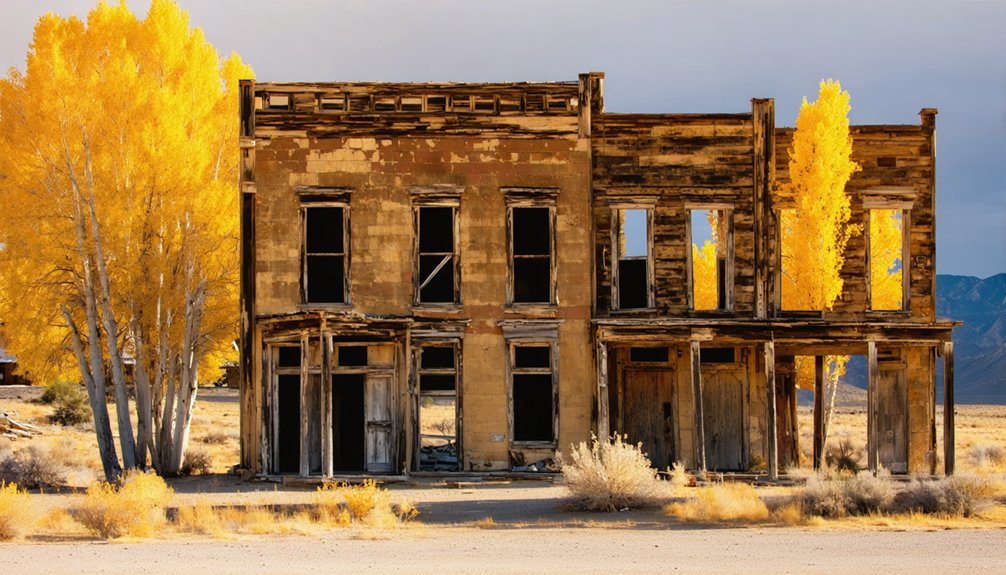
Just seven miles west of Beatty, the skeletal remains of Rhyolite command Death Valley‘s edge like a monument to ambition turned to dust. You’ll discover why this became Nevada’s most photographed ghost town when you stand before the crumbling three-story Cook Bank Building, its concrete walls defying a century of desert winds.
Prime photography spots await you:
- The iconic Bottle House, crafted from 50,000 beer bottles in 1905
- The weathered train depot, once gateway to 5,000 fortune-seekers
- The jail’s partial stone walls against volcanic Bullfrog Hills
Historical preservation efforts by the Bureau of Land Management protect these ruins, letting you witness what remains when boom turns to bust. From two-tent camp to ghost town in just six years—Rhyolite’s story pulses through every shadow and stone.
Berlin: Preserved Silver Mining Camp
Deep in the Shoshone Mountains, twenty-three miles from the nearest paved road, Berlin stands frozen in 1911—the year its miners walked away for good. You’ll wander among the original 30-stamp mill, assay office, and miners’ homes—structures that once buzzed with 300 souls chasing $849,000 in gold from three miles of underground tunnels.
The mining history here runs deeper than most ghost towns; this was a company operation complete with doctor, nurse, and union hall.
Preservation efforts have maintained Berlin as Nevada’s most authentic mining camp, with over 80 interpretive signs guiding you through its past.
What makes this site extraordinary? It shares space with 225-million-year-old ichthyosaur fossils—ancient marine giants resting beside humanity’s fleeting ambitions.
Best Time to Visit Ghost Towns in Nevada
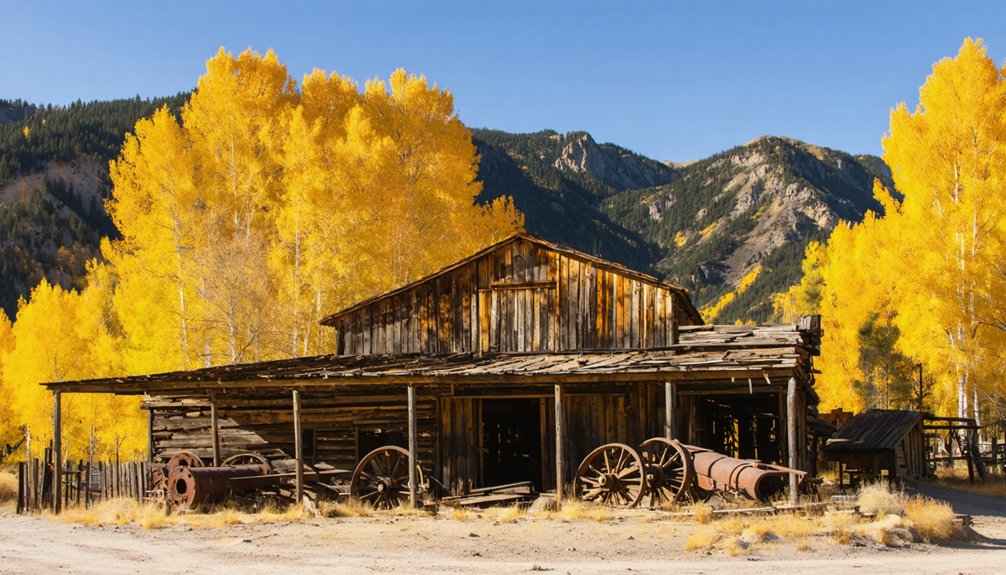
You’ll find Nevada’s ghost towns transform into photographers’ dreams during mid-October, when golden aspens and scarlet maples frame weathered mining structures against crisp blue skies.
The pleasant fall temperatures—cooler than summer’s scorching heat but mild enough for comfortable exploration—let you hike to remote sites like Glen Alpine Springs without breaking a sweat.
Time your visit before late October crowds arrive for Virginia City’s “Hauntober” festivities, or embrace the spooky atmosphere as costumed revelers parade through authentic Wild West streets.
Peak Autumn Color Timing
When planning your ghost town exploration in Nevada, timing your visit between mid-September and early November captures the state’s mountains at their most vibrant. The botanical diversity across elevations creates a rolling wave of color—aspens turn brilliant yellow in high-altitude zones while maples blaze red in protected canyons.
This extended five-week window offers flexibility as you chase peak conditions.
Key timing factors include:
- Elevation shifts: Higher ghost town sites near 8,000+ feet peak earliest in late September
- Wildlife habitats: Cooler temperatures bring active fauna during comfortable hiking conditions
- Daily tracking: Interactive maps provide real-time updates from September 1st onward
Northern abandoned settlements near Verdi and Austin Summit typically reach 100% color by mid-October, while Ruby Mountains’ Harrison Pass and Great Basin’s high country demand earlier visits before snow closes access.
Weather and Temperature Conditions
As autumn settles across Nevada’s basin-and-range topography, the state’s ghost towns transform into microclimates where temperature and light orchestrate a spectacular color show. You’ll find mild mornings and evenings at higher elevations like Lee Canyon, where crisp air accompanies the aspen’s golden transformation.
Cooler nights following the autumnal equinox break down chlorophyll, revealing vibrant yellows and oranges against weathered mining structures.
The high-altitude air remains comfortable through October, though early winter storms may dust peaks by month’s end. Unlike spring bloom’s fleeting beauty, fall’s progression unfolds gradually—shortened days and tranquil mountain weather allow you to explore freely.
No heavy rain or wind disrupts the color cascade from green to red, making ghost town exploration ideal before Nevada’s backcountry succumbs to winter’s grip.
Avoiding Seasonal Crowd Patterns
While Virginia City’s “Hauntober” festivals pack Main Street with costume parades and ghost tours throughout October, Nevada’s lesser-known ghost towns offer solitary communion with autumn’s palette. You’ll dodge crowds by targeting mid-October weekdays at Austin Summit, where golden aspens frame crumbling stamp mills without another soul in sight.
Seasonal weather creates ideal conditions—crisp mornings, brilliant color contrasts—making early arrivals your best visitor tip for photographic solitude.
Strategic timing accesses Nevada’s abandoned landscapes:
- Belmont and Berlin: Central Nevada’s preserved structures see minimal fall traffic compared to coastal tourist magnets.
- Tuscarora near Elko: This 1869 settlement remains virtually empty outside mining heritage events.
- Goldfield’s sub-300 population: Historic attractions maintain their ghostly authenticity without seasonal surges.
Remote Glen Alpine Springs near Fallen Leaf Lake rewards hikers with waterfall vistas and zero resort congestion.
What to Bring on Your Ghost Town Adventure
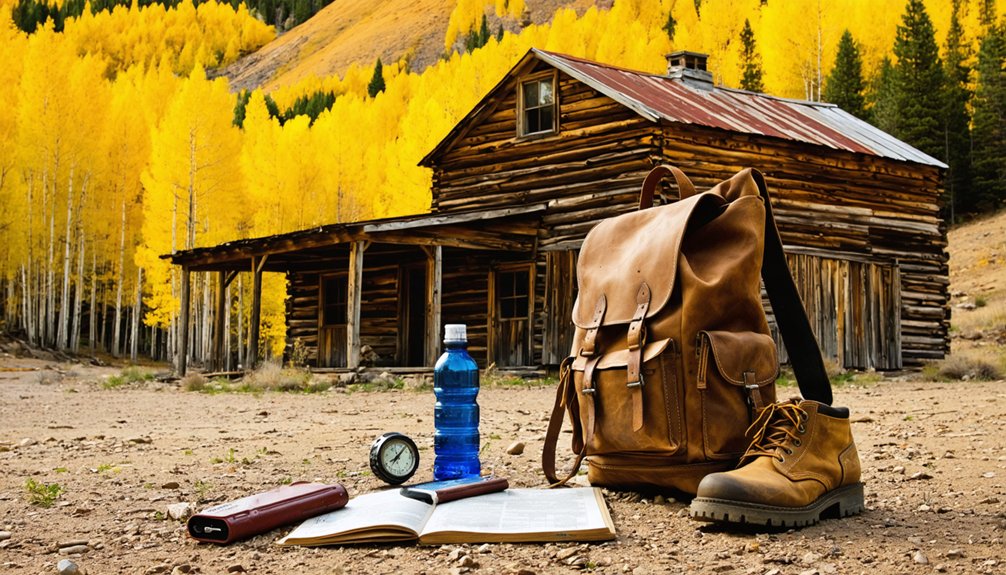
Before you venture into Nevada’s abandoned mining camps where autumn gold transforms weathered timbers and rusted machinery into living paintings, proper preparation determines whether you’ll capture stunning photographs or find yourself stranded on a washboard road at sunset.
In Nevada’s ghost towns, autumn turns decay into art—but only if you’re prepared enough to reach them.
Pack navigation essentials including detailed maps of Berlin-Ichthyosaur State Park and offline GPS apps. Your high-clearance vehicle needs first aid supplies, emergency blankets, and multi-tools for exploring Belmont’s crumbling courthouse.
Layer clothing for Sierra Nevada temperature swings, and bring sturdy boots for trails at Pahranagat Refuge where wildlife considerations demand bear spray and snake gaiters.
Carry one gallon of water per person daily through Rhyolite’s desert heat. Respect the cultural significance of these sites with Leave No Trace principles.
Your camera, extra batteries, and portable charger ensure you’ll document autumn’s fleeting transformation.
Planning Your Nevada Ghost Town Road Trip
Nevada’s ghost town corridor stretches from the Sierra Nevada’s aspen-gold slopes to the Mojave’s creosote flats, demanding strategic route planning that maximizes autumn’s brief color show.
You’ll find day trips radiating from Carson City, Reno, and Lake Tahoe accessing Berlin’s preserved mill machinery and Belmont’s courthouse ruins within hours.
Central Nevada’s Belmont-to-Berlin route pairs 150-year-old structures with Tonopah’s mining heritage, while Goldfield positions perfectly between northern and southern hubs.
Consider these timing essentials:
- Mid-October peaks for leaf changes at Austin Summit and Conway Ranches
- Pahranagat Wildlife Refuge near Alamo combines 72-mile trail options with wildlife observation
- Local cuisine stops in Virginia City and Genoa break up backcountry drives
Self-guided Elko County tours connect copper mines to Pony Express sites, creating weeklong expeditions.
Frequently Asked Questions
Are Pets Allowed at Nevada Ghost Town Sites?
You’ll find pet guidelines welcome your furry companions at most Nevada ghost towns with leashes required. While animal restrictions ban them from buildings and fossil areas, your four-legged explorer can freely roam historic ruins and desert trails alongside you.
Do Any Ghost Towns Charge Admission Fees?
You’ll find 75% of Nevada’s ghost towns remain gloriously free. Admission fees vary—Nelson charges $2-$20 for photography access, while Rhyolite and Goodsprings welcome you without entry costs. Guided experiences run $8-$149 for those seeking deeper exploration.
Can You Camp Overnight Near These Ghost Town Locations?
You’ll find dispersed camping opportunities near most ghost towns, letting you wake surrounded by historic preservation sites. Dawn photography opportunities capture abandoned structures bathed in golden light, offering you complete freedom to explore Nevada’s wild, untamed landscapes independently.
Are the Ghost Towns Accessible for Wheelchairs or Mobility Devices?
Wheelchair access faces serious mobility challenges at Nevada’s ghost towns. You’ll encounter rough terrain, dirt roads, and remote conditions limiting standard devices. Bodie offers specialized high-flotation wheelchairs, but most sites remain difficult to navigate independently.
Do Cell Phones Work at These Remote Ghost Town Sites?
You’ll feel utterly disconnected—cell phone reception vanishes at most remote ghost towns. Verizon and AT&T offer spotty signals near highways, but canyons go dark. Pack satellite devices for emergency communication when exploring Nevada’s isolated, autumn-draped ruins.
References
- https://nvtami.com/2022/10/18/top-10-ghost-towns-to-visit-this-fall/
- https://gonevadacounty.com/fall-photoshoot-locations/
- https://findingnevadawild.com/goldfield-the-old-west-lives-in-nevadas-best-ghost-town/
- https://www.visittheusa.com/experience/6-nevada-ghost-towns-explore-if-you-dare
- https://travelnevada.com/ghost-town/
- https://nvtami.com/2020/10/29/chemung-fall-pictures/
- https://www.pbslearningmedia.org/resource/nevada-ghost-towns-video-gallery/outdoor-nevada/
- https://tahoequarterly.com/best-of-tahoe-2020/an-oasis-of-history-high-in-the-hills
- https://nvtami.com/2020/12/10/glen-alpine-springs-ca-lake-tahoes-first-family-resort/
- https://visitlaketahoe.com/things-to-do/hikes/glen-alpine-springs-a-hike-into-lake-tahoes-first-tourist-destination/