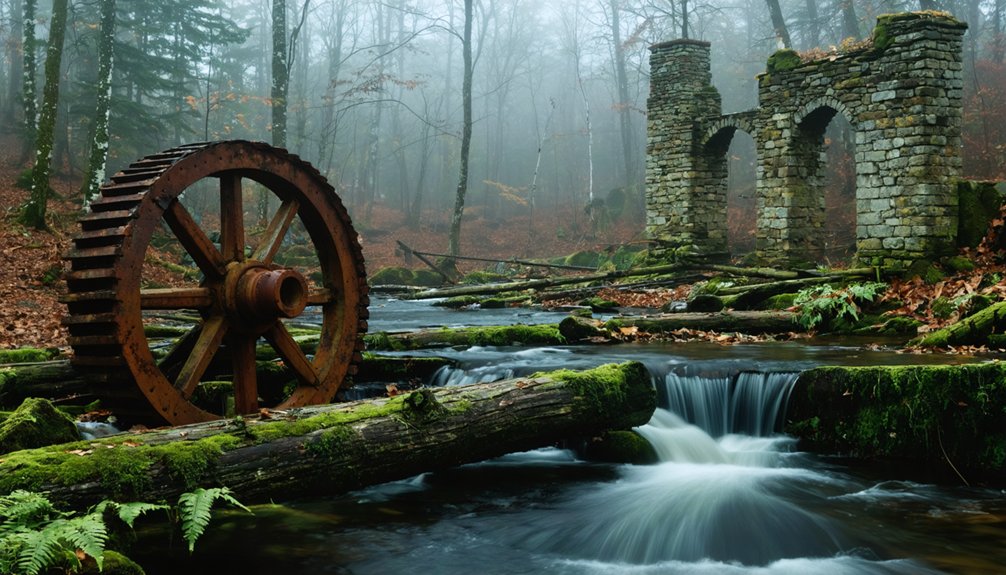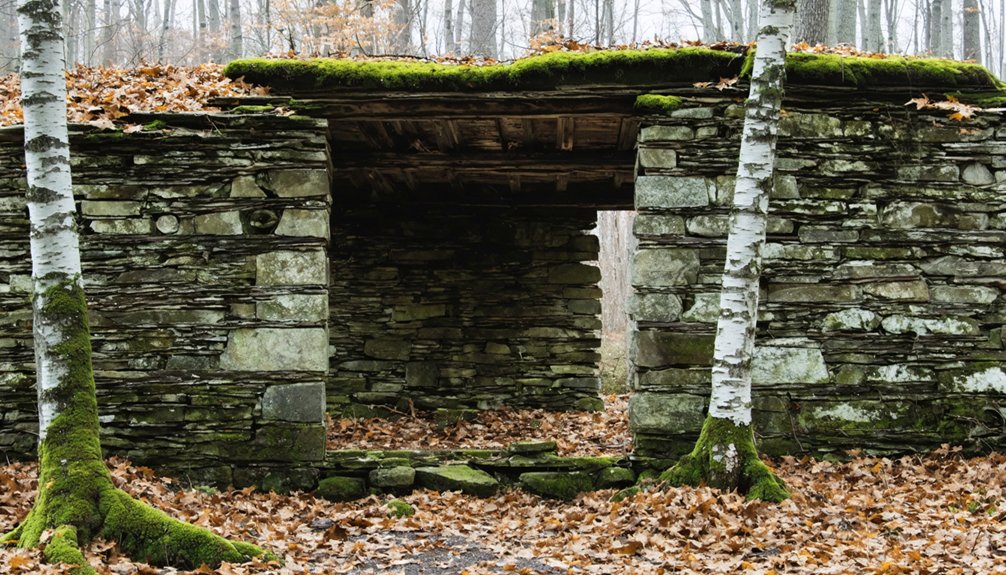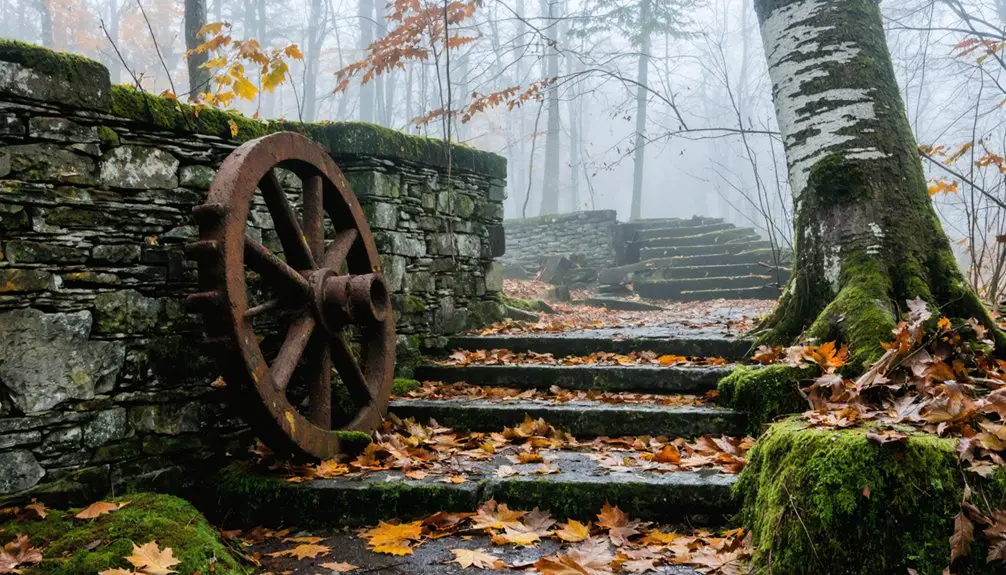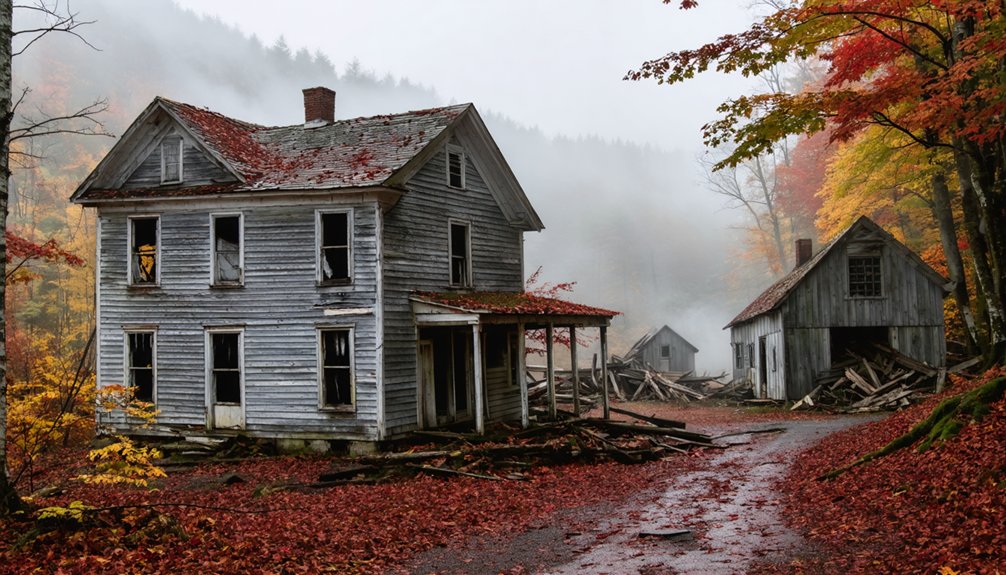
You’ll find New Hampshire’s most mesmerizing ghost towns framed by autumn’s brilliant reds and golds from mid-September through mid-October. Explore Thornton Gore’s 22 abandoned farms along Tripoli Road, where golden birches surround stone cellars, or wander Monson Village’s gentle 2.3-mile trail past Revolutionary War-era foundations. Livermore’s accessible ruins near Route 302 offer brick chimneys and rusted safes against vibrant maples. Time your visit between October 5th-12th for peak foliage, when weathered artifacts and supernatural legends blend with nature’s most spectacular display.
Key Takeaways
- Thornton Gore features 22 abandoned farms and 600 cellar holes within White Mountain National Forest, accessible via Exit 31 from I-93.
- Livermore Ghost Town contains foundations, stone cellars, and sawmill remnants two miles from Route 302 along Sawyer River Road.
- Monson Village offers 2.3 miles of well-marked trails through historic cellar holes and the 1756 Gould House with ghostly legends.
- Peak foliage viewing occurs mid-September to mid-October, with Thornton Gore best in late September and Monson in early October.
- Tripoli Road provides scenic access through White Mountain National Forest, connecting Waterville Valley to Lincoln with vibrant autumn colors.
Thornton Gore: A Hidden Gem in the White Mountains
When the autumn sun filters through the canopy along Tripoli Road, you’ll discover Thornton Gore—a forgotten settlement where golden leaves now blanket what once thrived as 22 working farms.
You’re free to wander among 600 cellar holes scattered throughout White Mountain National Forest, where moss-covered stone walls emerge from fiery hillsides like artifacts from another era.
The historical significance here runs deep. Settlers arrived in 1804, cleared 1,100 acres, and built a complete community before abandonment claimed it by 1900.
While preservation efforts remain minimal, nature’s reclaimed these triangular acres southeast of Russell Pond beautifully. The sawmill built in 1860 stands among the most recognizable remnants, its old equipment still visible beneath the fall foliage.
Trek the narrow path beneath yellow leaf bowers to Wildcat Cemetery, where crooked headstones stand guard over faded inscriptions, their weathered faces witnessing another spectacular autumn. The site appeals equally to history enthusiasts, nature lovers, and adventure seekers drawn to its haunting solitude.
Fall Foliage Splendor Along Tripoli Road
You’ll find Tripoli Road transforms into a photographer’s dream each autumn, where golden birch and crimson maple leaves dance through the air with every mountain breeze.
The lesser-known gravel passage cuts straight through the White Mountains’ heart, delivering you to Thornton Gore without the bumper-to-bumper traffic that clogs the main highways.
Between mid-May and October, when the road’s actually open, you can chase waterfalls at Talford Brook Cascades and watch sunset turn Russell Pond into liquid gold. The route switches between paved and unpaved sections, creating an adventurous drive through magical tree canopies that few tourists know about. You’ll appreciate the peaceful, off-the-beaten-path experience with limited cell service and fewer crowds than the popular highways.
Scenic Autumn Drive Experience
As you wind your way along Tripoli Road’s 11.2-mile stretch through White Mountain National Forest, the fall foliage transforms this historic route into a kaleidoscope of burning reds, blazing oranges, and golden yellows.
The unpaved gravel surface crunches beneath your tires as you climb toward Thornton Gap’s 2,372-foot summit, where towering trees create a canopy overhead.
Your scenic autumn drive offers:
- Historical preservation sites including Thornton Gore Hill Farm’s haunting cellar holes and weathered stone walls
- Wildlife sightings along the quiet corridors where minimal traffic lets nature reclaim the path
- Secluded camping spots at designated roadside sites for overnight foliage immersion
Between mid-May and October, you’ll discover this less-traveled alternative to Kancamagus Highway—a peaceful escape where light breezes send golden leaves dancing across your windshield. This peaceful gravel route connects Waterville Valley to Lincoln/Woodstock, offering serenity with limited cell service.
Built in 1934, the road was named after the Tripoli mill that once operated in this remote mountain region.
Accessing Thornton Gore Easily
The turn off I-93 at Exit 31 marks your gateway to Thornton Gore’s autumn secrets. Head east on Tripoli Road, where crimson maples frame your drive past Russell Pond Campground. You’ll spot the gated Forest Service Road 416—your trailhead into history.
Park near the ranger station and venture down the half-mile path. October transforms this urban exploration into something magical: overgrown cellars peek through golden foliage, apple orchards still bloom where families once gathered, and Parker house foundations reveal their archaeological significance beneath rust-colored leaves.
The trail’s muddy, sure, with missing bridges over Eastman Brook, but that’s the price of freedom. Over 600 documented cellar holes dot these woods—each one a story waiting beneath autumn’s brilliant canopy. The nearby Welch and Dickey Loop offers additional fall foliage views with its personality-rich terrain of roots and stone steps. Quiet rural roads like Bump Intervale provide perfect alternatives for avoiding crowds while exploring abandoned settlements.
You’re walking where communities thrived.
Monson Village: Easy Access to Historic Ruins
You’ll find Monson Village surprisingly accessible compared to other abandoned settlements—clearly marked trails from Federal Hill Road’s parking area guide you past stone-lined cellar holes where families like the Goulds and Nevins once carved out their short-lived dreams.
The restored 1756 Gould House stands as a silent museum among the ruins, though some visitors swear they’ve felt unexplained cold spots near certain foundations, whispers of the hardship that drove an entire community to flee.
Maps at the trailhead keep you oriented as you wander the blazed paths through autumn-bright forests, where 200 years of undisturbed silence has left the stone walls and homestead foundations eerily intact. This ghost town spans four different municipalities—Hollis, Brookline, Amherst, and Milford—with no regard for modern political boundaries. The settlement was among New Hampshire’s first inland colonies, established in the 1730s before being officially incorporated in 1746.
Paranormal Activity and Legends
Despite its evocative name, Monson Center won’t deliver the supernatural thrills you might expect from a “ghost town.” Walking these preserved ruins, you’ll find the only spirits here are historical ones—the echoes of colonial families whose stories live on through interpretive signs at each cellar hole.
The site lacks documented ghost sightings or supernatural myths, instead offering authentic historical intrigue:
- The Nevins Stone legend tells of five brothers abandoning their work mid-excavation when Revolutionary War militia called.
- Joshua Bailey’s family fled their burning homestead in nightclothes before journeying west with Mormon settlers.
- Thomas Nevins’ tragedy—losing three sons during the Revolution—haunts these grounds without paranormal embellishment.
The archaeological focus and genealogical research create connections far more profound than fabricated hauntings. You’re exploring genuine human drama.
Trail Features and Accessibility
Winding through former village roads now reclaimed by forest, Monson Center’s 2.3-mile trail network welcomes hikers of all abilities with gentle terrain and well-marked paths. The trail difficulty rates as beginner-friendly, with merely 70 feet of elevation gain that won’t leave you breathless.
You’ll discover six cellar holes marked along the spiderweb of paths, each whispering stories of families who once called this wilderness home.
For accessibility tips: park along Federal Hill Road’s small lot and follow yellow rectangle markers on the outer loop. The wide former roads of East and West Monson make navigation straightforward, though you’ll want a map for exploring the narrower forest paths.
Dogs are welcome to join your adventure, and winter transforms these trails into perfect snowshoeing territory—just know the lot isn’t plowed.
Livermore: Roadside Remnants in Grafton County
The scent of decaying leaves mingles with rust and old timber as you turn onto Sawyer River Road, where Livermore’s scattered bones lie just two miles from Route 302. This roadside ghost town welcomes exploration without permits or restrictions—just park and wander among foundations where 200 souls once thrived.
Historical preservation here means nature’s own craftsmanship restoration, where stone cellars and rusted safes emerge from autumn’s amber carpet. You’ll discover:
- The town store’s foundation housing a deteriorating safe amid golden birches
- Concrete sawmill remnants at the log pond, wrapped in crimson vines
- A brick chimney rising from the power house ruins like a sentinel
One modern house occupies the site, a living anachronism among Livermore’s sleeping infrastructure, accessible to anyone seeking freedom from crowded trails.
Paranormal Activity and Ghostly Encounters
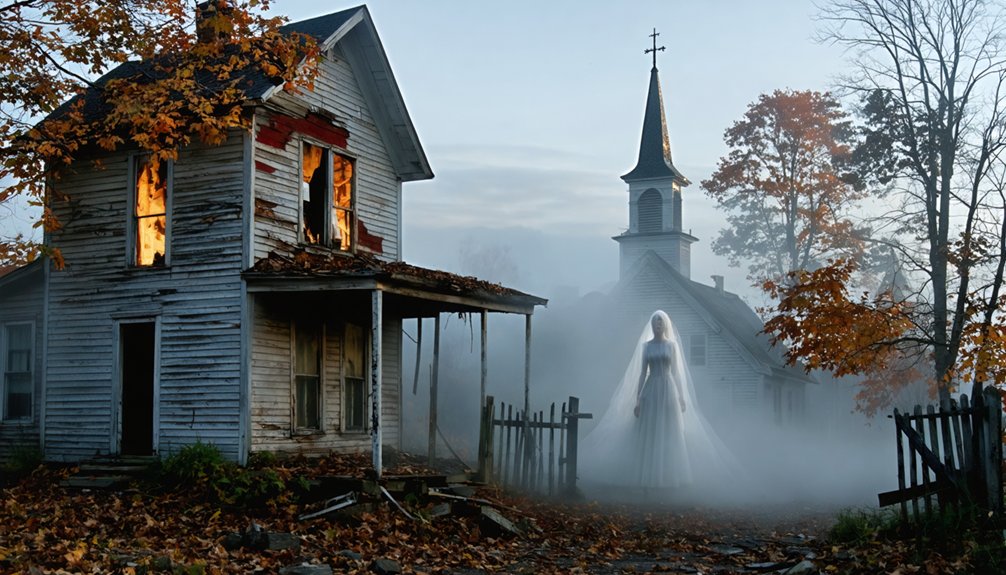
Beyond Livermore’s tangible ruins—those foundations you can touch, those cellars you can photograph—New Hampshire’s ghost towns harbor something less concrete but equally persistent. You’ll find supernatural sightings woven through abandoned settlements, where hikers report unexplained footsteps echoing through empty clearings and orbs drifting between skeletal trees.
In the hidden corners of these ghost towns in New Hampshire, whispers of history linger, enticing explorers to uncover their secrets. Locals share tales of the past, where the line between the living and the lost blurs amidst the overgrown landscapes. Each visit serves as a reminder that while the towns may be abandoned, the stories they hold remain vividly alive in the echoes of time.
Ancient legends speak of residual energy clinging to forsaken homesteads. At dusk, when fall foliage bleeds crimson and gold, some visitors claim they’ve glimpsed shadowy figures moving through former doorways.
Cold spots materialize without explanation. Disembodied voices drift from cellars long since collapsed.
Whether you’re a skeptic or believer, these ghost towns offer more than historical curiosity—they’re testing grounds for your courage when autumn darkness falls and you’re alone among the ruins.
Best Times and Tips for Visiting
Timing your ghost town exploration requires synchronizing three elements: foliage intensity, weather cooperation, and site accessibility. You’ll find mid-September through mid-October delivers the White Mountains’ most vivid transformation—maples and oaks blazing against abandoned foundations.
Perfect ghost town visits blend peak foliage, cooperative weather, and accessible trails—mid-September through mid-October offers the White Mountains’ most spectacular abandoned settlements.
Essential visiting strategies:
- Target late September for Thornton Gore when crisp air carries pine needle scent through overgrown paths.
- Plan Monson Village loops for warm October days before winter activities claim these trails.
- Check NH State Parks for seasonal closures after October 15.
You’re free to explore most sites via easy, flat trails—perfect for 1-2 hour rambles without rigorous hiking. Pack provisions since you won’t find local cuisine near these remote locations.
Respect property boundaries, embrace solitude among stone foundations, and let the dense forest’s kaleidoscope colors guide your wandering spirit.
Photography Opportunities Among the Ruins
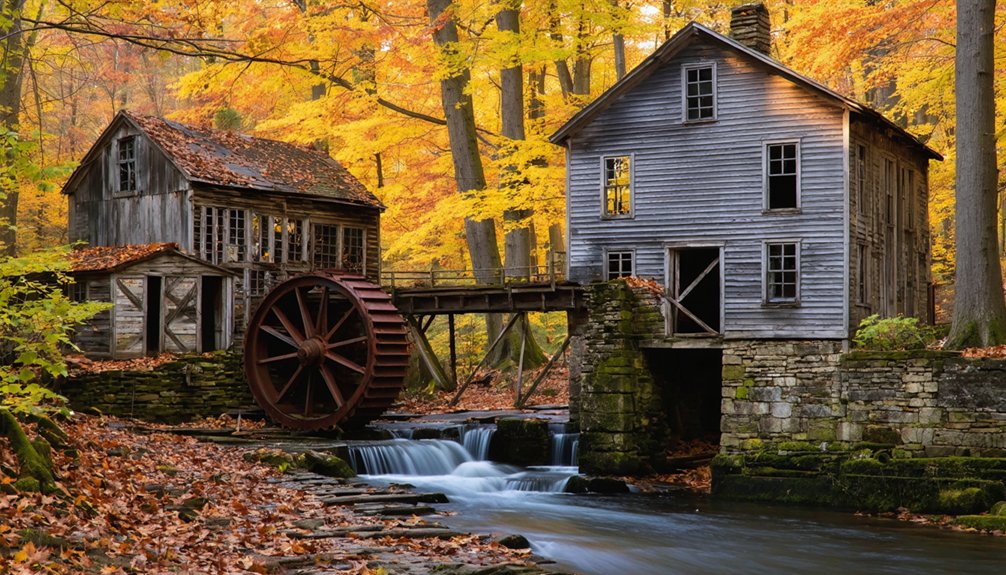
When autumn light slants through abandoned doorways at Thornton Gore, your camera captures more than decay—it freezes moments where wilderness reclaims human ambition.
Frame crumbling cellar holes against blazing maples, where rusting iron fixtures create stark counterpoints to golden leaves cascading over moss-covered foundations. The photogenic textures here are unmatched—weathered stone walls emerge from carpets of crimson and orange, while overgrown paths offer endless compositions blending ruins and foliage.
You’ll find solitude essential for your craft. Minimal visitors mean you can experiment with long exposures, capturing the eerie interplay between human artifacts and nature’s weave.
From Tripoli Road, shoot wide to capture fiery hillsides framing these ghostly settlements, or move close to emphasize the tactile contrast between smooth fallen leaves and rough, reclaimed stonework.
Planning Your Ghost Town Foliage Tour
Orchestrating your ghost town foliage expedition demands precision—miss the peak by a week, and you’ll photograph bare branches against gray skies instead of New Hampshire’s legendary color explosion.
Target White Mountains ghost towns around October 5th, when Thornton Gore’s cellar holes emerge through fiery maples.
Your essential timeline:
- Early season (September 28th): Great North Woods via Moose Path Trail—drive slowly for hiking safety around wildlife.
- Peak window (October 5-12th): Kancamagus Highway to abandoned settlements, combining seasonal folklore with vibrant hillsides.
- Extended viewing (October 20th): Monadnock region’s remote ruins.
Base yourself in Sugar Hill’s B&Bs for countryside solitude, or Conway for modern amenities.
Weather trumps everything—sunshine ignites colors while rain dulls them.
Nancy’s Woods near Crawford Notch offers eerie seasonal folklore, though locals recommend companions.
Frequently Asked Questions
Are Pets Allowed on the Trails at These Ghost Town Locations?
Pet friendliness isn’t explicitly documented, but you’ll find trail regulations typically allow leashed dogs at these sites. Standard national forest protocols prevail—your four-legged companion can explore crumbling foundations and autumn-gold paths alongside you, leash required.
What Should I Bring for Safety When Exploring Abandoned Cellar Holes?
Crumbling stone walls hide unseen dangers beneath autumn leaves. You’ll need sturdy boots, a reliable headlamp, and navigation tools like GPS or compass. Pack survival gear including first-aid supplies, water, and a charged phone for emergencies in remote locations.
Are There Entrance Fees for Visiting These Ghost Town Sites?
You’ll find no entrance fees at these sites—they’re yours to explore freely. The historical preservation efforts and local folklore remain accessible to all who seek adventure among New Hampshire’s forgotten settlements without financial barriers.
Can I Camp Overnight Near Any of These Ghost Town Locations?
You can camp overnight near Thornton Gore and Livermore in White Mountain National Forest with permits. However, camping restrictions prohibit stays at Monson Village and Madame Sherri’s Castle. Check trail pet policies before bringing companions along.
Are the Trails Wheelchair Accessible at These Historic Sites?
Unfortunately, you’ll find these wild forest paths aren’t wheelchair accessible—overgrown trails wind through ruins nature’s reclaimed. Historic site preservation here prioritizes authenticity over accessibility improvements, leaving weathered cellar holes and crumbling foundations accessible only to adventurous hikers.
References
- https://www.explore.com/1951502/thornton-gore-new-hampshire-ghost-town-white-mountains-fall-foliage/
- https://heleneinbetween.com/2025/03/best-places-to-see-fall-foliage-in-new-england-towns-farms-leaves-festivals-and-more.html
- https://www.visitwhitemountains.com/blog/post/spooky-stories-ghost-towns-and-historic-haunted-spots/
- https://www.nhmagazine.com/the-insiders-scoop-spectacular-spooky-spots-by-j-w-ocker/
- https://nothingbutnewengland.com/new-hampshires-haunted-hikes/
- https://www.youtube.com/watch?v=mFBYIdURBvQ
- https://en.wikipedia.org/wiki/List_of_ghost_towns_in_New_Hampshire
- https://www.onlyinyourstate.com/experiences/new-hampshire/my-favorite-haunted-places-nh
- https://www.youtube.com/watch?v=rzJN7i0WYOY
- https://www.visitwhitemountains.com/blog/post/scary-tales-of-the-white-mountains/