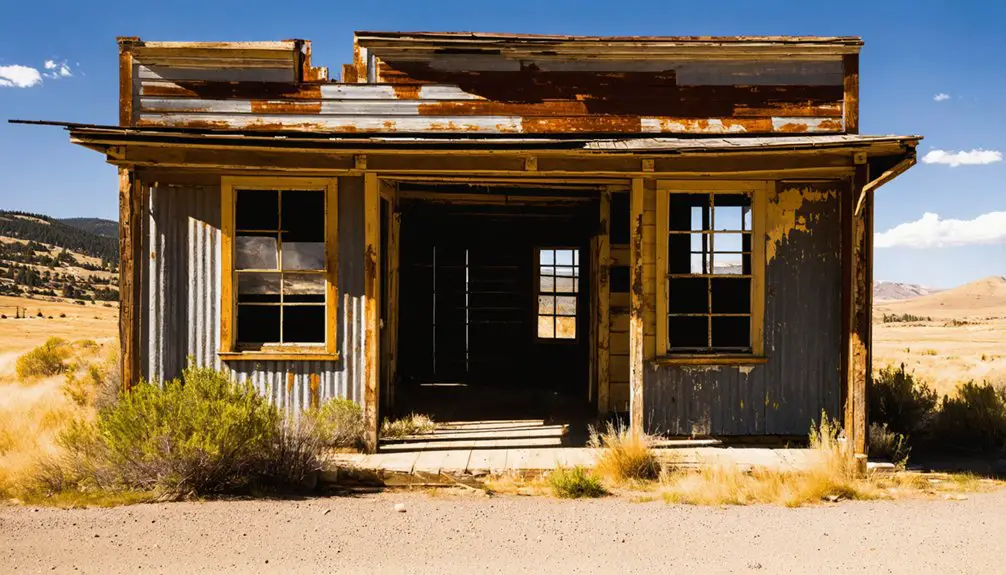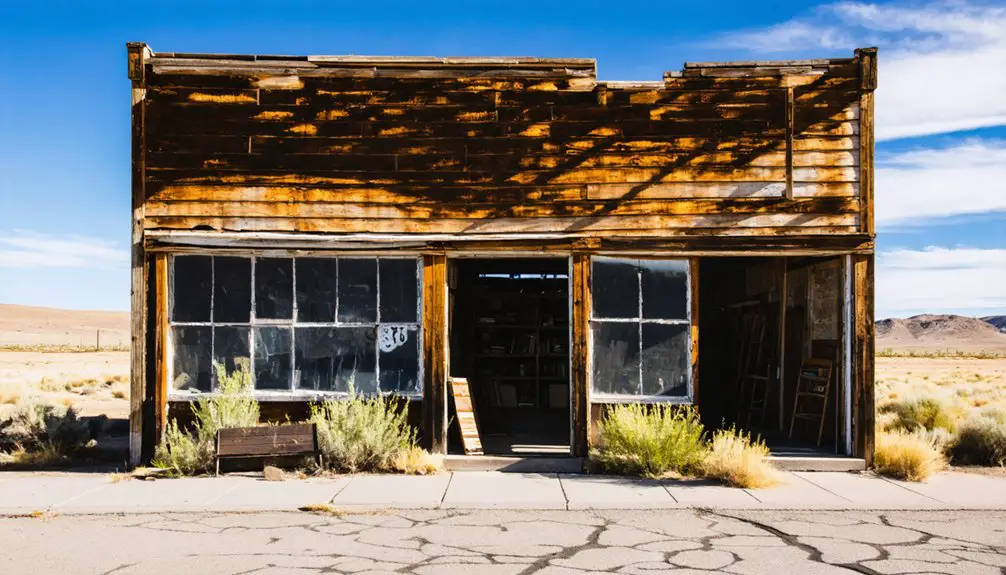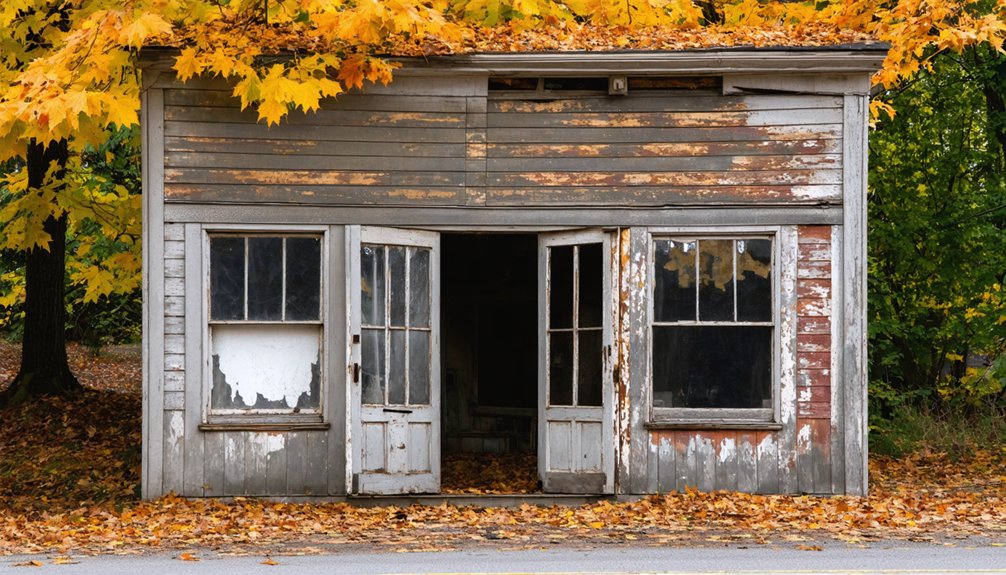
You’ll find Oregon’s most spectacular ghost town displays along the Elkhorn Scenic Byway, where golden larches frame abandoned mining structures from mid-October through late month. Sumpter’s preserved dredge stands against autumn aspens, while Greenhorn—Oregon’s highest ghost town at 6,306 feet—offers solitude among colorful mountain slopes. Bourne’s weathered cabins hide within pine forests, and Shaniko’s brick buildings rise from high desert sagebrush. Time your visit between October 12-28 for peak colors, when dawn light transforms weathered facades into photographer’s gold and the mountains reveal their seasonal secrets.
Key Takeaways
- The Elkhorn Scenic Byway offers a 106-mile loop through ghost towns like Sumpter and Granite with golden larch displays peaking mid-October.
- Greenhorn, Oregon’s highest incorporated city at 6,306 feet, features mining ruins accessible seasonally amid autumn mountain colors.
- Bourne’s abandoned cabins sit within pine-covered Blue Mountains, offering solitude and fall foliage exploration seven miles north of Sumpter.
- Sumpter preserves gold rush heritage including the Valley Dredge and railroad, surrounded by Elkhorn Mountains’ October color displays.
- Peak foliage occurs October 12-28 statewide, with Elkhorn Mountains’ alpine elevations showcasing yellow larch against dark evergreens around October 16.
Elkhorn Scenic Byway: Your Gateway to Autumn Adventures
As you wind through the 106-mile Elkhorn Scenic Byway loop, the landscape transforms from golden ranchlands into a tapestry of autumn fire.
West of Baker City, you’ll trade juniper hills for ponderosa forests ablaze with seasonal color, climbing toward Elkhorn Summit’s 7,392-foot peak.
The route’s been calling adventurers since 1989, threading through basalt Blue Canyon where wildflower blooms give way to rust-colored foliage.
Along Granite Creek, wildlife sightings punctuate your journey past rock mounds built by Chinese miners in the 1860s.
You’ll discover ghost towns frozen in time, their weathered structures framed by scissor-sharp peaks and layered volcanic geology.
From Blue Springs to Anthony Lakes, each mile offers unscripted encounters with Oregon’s untamed past, where freedom-seekers once chased gold-mining fortunes through these magnificent mountains.
The historic town of Granite still stands with abandoned buildings from its gold rush heyday, including tales of ’49 Jimmie and his rooster echoing through time.
At Mowich Look Wildlife Viewing Area, watch for osprey and bald eagles soaring above the Powder River corridor.
Sumpter: Mining History Meets Golden Aspens
Where California prospectors struck gold in 1862, the remote Blue Mountains kept Sumpter’s secret tucked away for three decades.
You’ll discover a town that exploded from 300 souls to 3,500 adventurers by 1902, leaving behind brick buildings and mining artifacts that whisper tales of seven hotels and sixteen saloons. Ghost town preservation efforts since 1971 protect this Queen City’s authentic character.
Where 300 dreamers swelled to 3,500 fortune-seekers, Sumpter’s preserved ruins still echo with prosperity’s ghost.
Experience Sumpter’s Living History:
- Explore the massive Sumpter Valley Dredge at the state park, where 72 one-ton buckets once processed riverbed gold 24/7.
- Ride steam-powered trains on the Historic Narrow Gauge Railroad through autumn-blazed valleys.
- Try gold panning demonstrations on weekends—strike your own fortune.
- Wander past original structures on plank-paved streets where aspens frame every weathered facade.
The gravel tailings and restored buildings create an unfiltered snapshot of frontier independence. Though a devastating 1917 fire consumed nearly 100 buildings including the Capital Hotel, Sumpter’s revival as a heritage destination keeps its mining legacy alive. Nestled in Oregon’s Elkhorn Mountain Range, the town sits along the scenic byway surrounded by mountains, rivers, and streams that once drew those early settlers.
Greenhorn: Oregon’s Highest Ghost Town Experience
At 6,306 feet, Greenhorn claims the paradox of being Oregon’s highest incorporated city—and its smallest, with a population of zero. You’ll find only two habitable buildings straddling the Baker-Grant county line, remnants of a mining hub that once housed 2,000 souls during its 1910-1915 peak.
Mountain legends swirl around its name—some say inexperienced eastern prospectors staked the “Greenhorn Mine,” others point to the green uplift dominating the skyline.
Ghost stories echo through empty saloon foundations and the spot where the wooden jail once stood before vanishing overnight. The original bank building still stands among the authentic historical structures scattered throughout town.
Access requires commitment: thirty miles on Highway 7 from Sumpter, then Greenhorn Road 503B climbing through golden aspens. Deep snow and harsh winters once forced miners to abandon their claims, the same conditions that now limit modern visitors to warm-weather exploration.
No electricity, no sewer—just autumn’s paintbrush sweeping across Oregon’s most elevated ghost town.
Bourne: Hidden Ruins Among Fall Forests
Seven miles north of Sumpter, Bourne’s weathered cabins emerge from Blue Mountains pines like memories half-forgotten by the forest.
Weathered cabins materialize through mountain pines like fragments of history the wilderness is slowly reclaiming.
Cracker Creek whispers past abandoned cabins where thousands once chased gold fever between 1900-1906.
You’ll find crumbling structures along the mining road, their weathered boards blending into autumn foliage that blazes orange and gold each fall.
This ghost town’s notorious past—including swindler F. Wallace White’s decade-long fraud scheme—adds intrigue to your exploration of ruins scattered through evergreen shadows. White’s most prominent structure, a mansion built in 1904 to impress potential investors, now stands abandoned among the pines.
Essential Details for Your Visit:
- Vehicle access from Sumpter along Cracker Creek road (snowmobile-only winters)
- Several summer-occupied cabins remain among deteriorating structures
- Mines produced $8,000,000 in gold and silver before 1937 flood destroyed infrastructure
- The town received its official post office in 1895, when it was renamed after Senator Jonathan Bourne, Jr.
- Forested setting offers solitude and seasonal color changes near historic mining sites
Shaniko: The Wool Capital’s Preserved Pioneer Legacy
While autumn aspens shimmer gold across Oregon’s mountainous ghost towns, Shaniko stands defiantly different—a high desert relic where sagebrush replaces evergreens and weathered brick structures rise from windswept plains forty miles northeast of Madras.
You’ll discover pioneer history etched in every boardwalk plank of this “Wool Capital of the World,” where millions of pounds once shipped via Columbia Southern Railroad.
The Italianate Shaniko Hotel, reopened in 2023, anchors legacy preservation efforts alongside the brick warehouse and museum operated by the Shaniko Preservation Guild.
With just twenty-three residents maintaining this “living ghost town,” you’ll witness authentic decay—storefronts frozen since 1911’s railway bypass, wind whistling through empty streets where 600 souls once thrived.
Summer brings antique shops and seasonal tourists, but solitude defines this stubborn survivor.
Best Times to Visit for Peak Fall Colors
You’ll find Oregon’s ghost towns transformed by autumn’s brush from mid-October through early November.
During this time, abandoned storefronts frame mountains ablaze in gold and crimson.
The Elkhorn Mountains near Sumpter and Granite reach their peak in October.
They drape weathered mining structures in shimmering aspen light that makes century-old ruins feel almost alive again.
Time your visit to these high-elevation sites for mid-to-late October, when the western larch needles turn brilliant yellow against the backdrop of decaying mill works and forgotten cabins.
Regional Peak Foliage Timeline
As September’s golden light stretches across Oregon’s peaks, the state’s fall color show begins its spectacular descent from mountain to valley.
You’ll witness this natural migration shaped by forest ecology and seasonal weather patterns that paint different regions on their own schedules.
Regional Color Timeline:
- Cascade Peaks (Early October): Mount Hood blazes first as cooler temperatures trigger vibrant changes at elevation, with colors sweeping north to south.
- Willamette Valley (Late October): Ash trees and maples ignite neighborhoods and parks as lower elevations finally catch fire.
- Coast Range (Mid-September to Late October): Mountain slopes frame evergreen forests while coastal towns like Florence wait their turn.
- Statewide Peak (October 12-28): The second week delivers ideal touring conditions across ghost town country.
Elkhorn Mountains October Colors
The Elkhorn Mountains stage Oregon’s most dramatic alpine color show, where thousands of western larch transform these northeastern peaks into a golden amphitheater each October. You’ll find peak vibrancy around October 16th, when the color palette explodes across elevations reaching 9,000 feet. Western larch needles blaze brilliant yellow against dark evergreens, while vine maples punctuate slopes with crimson and orange flames.
Navigate the Elkhorn Drive Scenic Byway through ghost towns like Sumpter and Granite, where foliage patterns frame weathered structures in autumn gold. The crisp mountain air intensifies every hue as you hike Marble Creek trails, surrounded by shimmering aspens and golden bigleaf maples.
Colors hold strong through October’s final week, rewarding your midweek escape with uncrowded vistas and that wild, unfiltered freedom only remote mountains deliver.
Photography Tips for Capturing Ghost Towns in Autumn
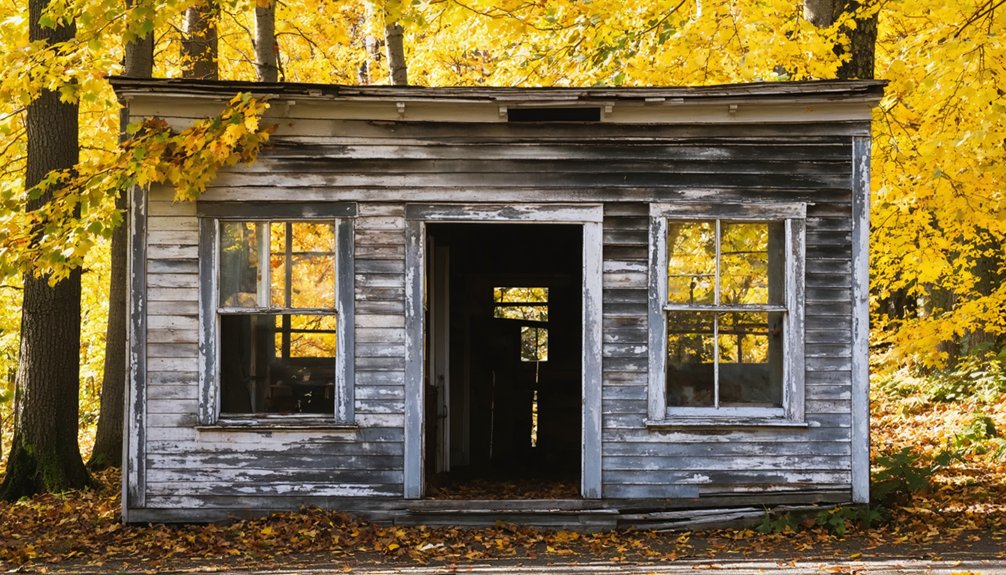
When autumn light filters through broken windows of Oregon’s abandoned structures, it transforms weathered wood and peeling paint into a photographer’s canvas of gold and amber. You’ll want to arrive during dawn or dusk when shadows carve depth into crumbling facades.
Set your white balance to “Shade” mode to amplify those warm tones against cool October skies.
Essential techniques for ghost town photography:
- Drone photography reveals patterns invisible from ground level—collapsed roofs framed by golden aspens, forgotten roads disappearing into colorful forests.
- Long exposure techniques during twilight blur passing clouds while keeping structures sharp, adding ethereal movement to static decay.
- Circular polarizing filters cut glare from wet surfaces, enriching autumn colors even under overcast conditions.
- Wide-angle lenses capture both architectural details and surrounding foliage in single, expansive compositions.
Planning Your Ghost Town Road Trip Route
Before dawn breaks over Baker City, you’ll want your route mapped with backup plans inked across worn paper—Oregon’s ghost towns demand strategic plotting between foliage peaks and high-elevation closures.
Autumn’s ghost town pilgrimages require meticulous planning—elevation shifts and seasonal closures won’t forgive spontaneous wanderers chasing October’s fleeting glow.
String together the 106-mile Elkhorn Byway with Sumpter’s valley dredge, then pivot west toward Shaniko’s weathered storefronts when northeastern aspens blaze early November.
Time your Columbia Gorge ghosts like Bridal Veil for late October’s fiery maples, staying at Dufur’s Historic Balch Hotel where seasonal culinary offerings anchor your evenings.
Central Oregon’s dry climate means reliable roads through mid-October, while lodging options thin beyond The Dalles—book ahead or embrace roadside camping.
Track foliage reports from September onward, adjusting your path as colors migrate downslope, chasing that perfect convergence of crumbling foundations and golden light.
What to Bring for Your Fall Foliage Adventure
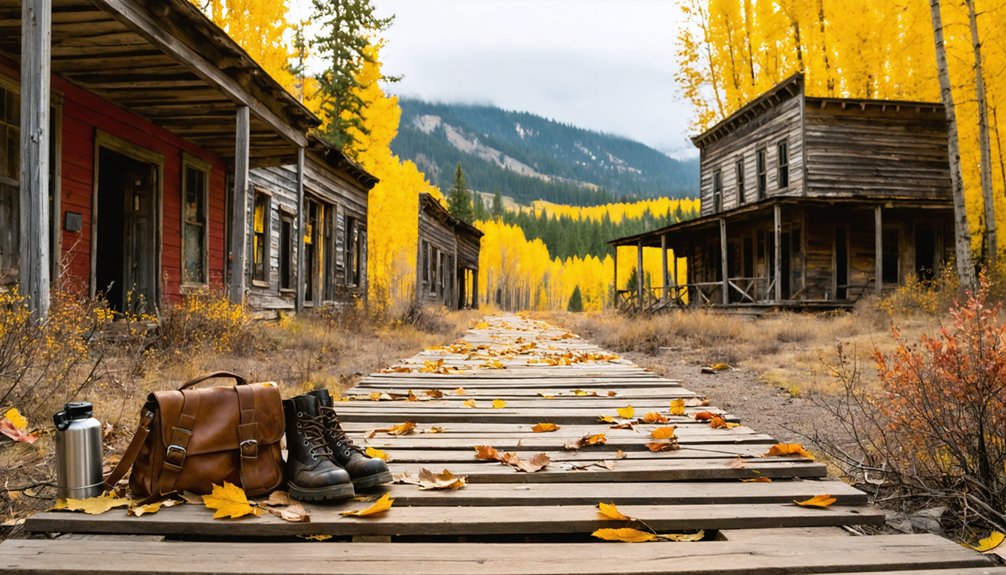
Crisp morning air bites at your fingertips as you load gear into your vehicle’s trunk, each piece of equipment a deliberate choice between mobility and creative possibility. Pack your full-frame camera with weather-sealing for Oregon’s unpredictable autumn moisture.
A versatile 24-105mm lens handles both sweeping ghost town facades and intimate leaf details, while your circular polarizer cuts through morning mist to reveal saturated amber and crimson hues.
Essential items for your expedition:
- Lightweight carbon fiber tripod for stabilizing dawn compositions without weighing down trail exploration
- Waterproof camera covers and merino wool layers protecting against coastal drizzle
- Camping gear enabling multi-day immersion in remote locations
- Telephoto lens (70-200mm) perfect for wildlife spotting and isolating architectural fragments
Your shutter remote waits in an accessible vest pocket, ready when golden hour illuminates weathered structures.
Frequently Asked Questions
Are the Ghost Town Roads Accessible for RVS and Large Vehicles?
Road conditions vary considerably—while you’ll navigate wider routes to Shaniko easily, historical preservation has kept Bourne’s narrow creek-tracing paths tight. You’ll want smaller vehicles for authentic exploration, though larger RVs can access main scenic byways comfortably.
Do Any Ghost Towns Offer Overnight Accommodations or Camping Nearby?
You’ll find overnight stays at Shaniko’s reopened hotel and Dufur’s Historic Balch Hotel, where historical preservation meets modern comfort. Nearby dispersed camping at Bourne and Sumpter offers photography opportunities under star-filled skies, letting you embrace untethered exploration.
Are Pets Allowed When Exploring Oregon’s Ghost Towns?
Pet policies vary by location, so you’ll need to research each ghost town individually. When permitted, prioritize pet safety on crumbling structures and observe leash requirements—freedom doesn’t mean disregarding rules that protect your companion and fragile historic sites.
What Cell Phone Coverage Can Visitors Expect in These Areas?
You’ll find cell service unpredictable across Oregon’s ghost towns—strong near highways like I-84, vanishing in Elkhorn Mountains and Steens backcountry. Expect significant coverage gaps where golden aspens meet wilderness, so download maps beforehand and embrace disconnection.
Do Ghost Towns Charge Entrance Fees or Require Permits?
You’ll find most ghost towns don’t charge entrance fees—Golden, Buncom, and Sterlingville welcome you freely. However, some sites have permits requirements or costs, like Oregon Caves’ timed tickets and interpretive centers charging $8-17 for access.
References
- https://traveloregon.com/things-to-do/destinations/parks-forests-wildlife-areas/oregon-fall-foliage/
- https://www.obbg.org/blog/2023/06/elkhorn-scenic-byway-and-oregon-ghost-towns-2/
- https://thatoregonlife.com/2025/09/elkhorn-scenic-byway-ghost-town-fall-road-trip/
- https://www.pdxmonthly.com/travel-and-outdoors/oregon-ghost-towns
- https://www.onlyinyourstate.com/experiences/oregon/shaniko-ghost-town-day-trip-or
- https://www.backpacker.com/trips/trips-by-state/oregon-trails/3-spooky-ghost-town-hikes/
- https://nsbfoundation.com/sb/elkhorn-scenic-byway/
- https://traveloregon.com/things-to-do/trip-ideas/scenic-drives/elkhorn-drive-scenic-byway/
- https://www.tripcheck.com/Pages/Scenic-Byways-Elkhorn-Drive
- https://fhwaapps.fhwa.dot.gov/bywaysp/byway/2151