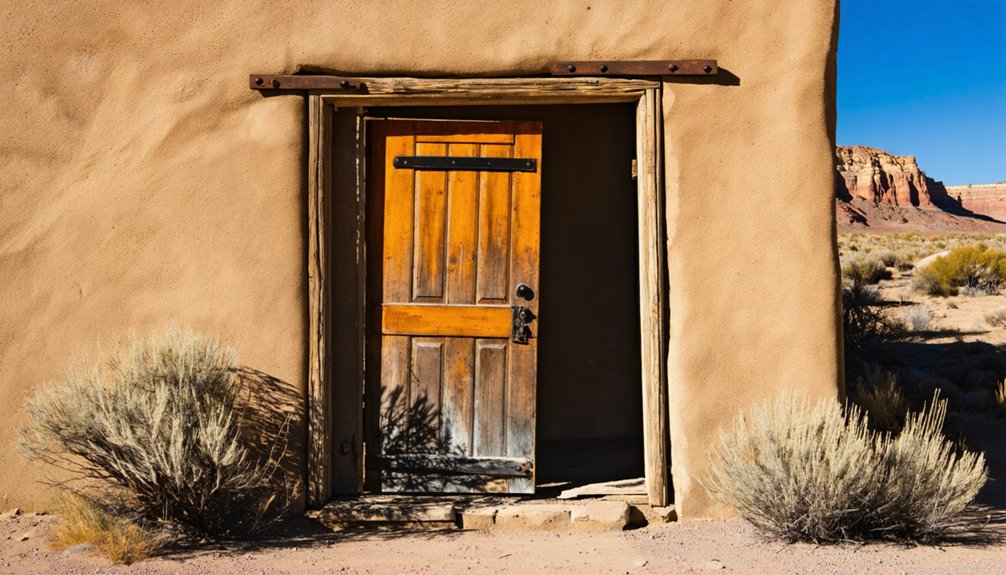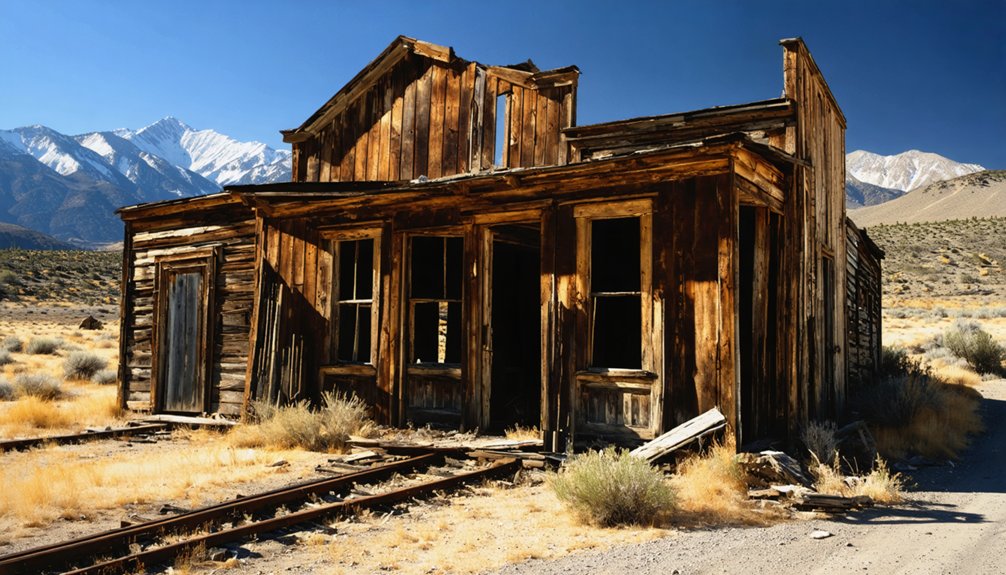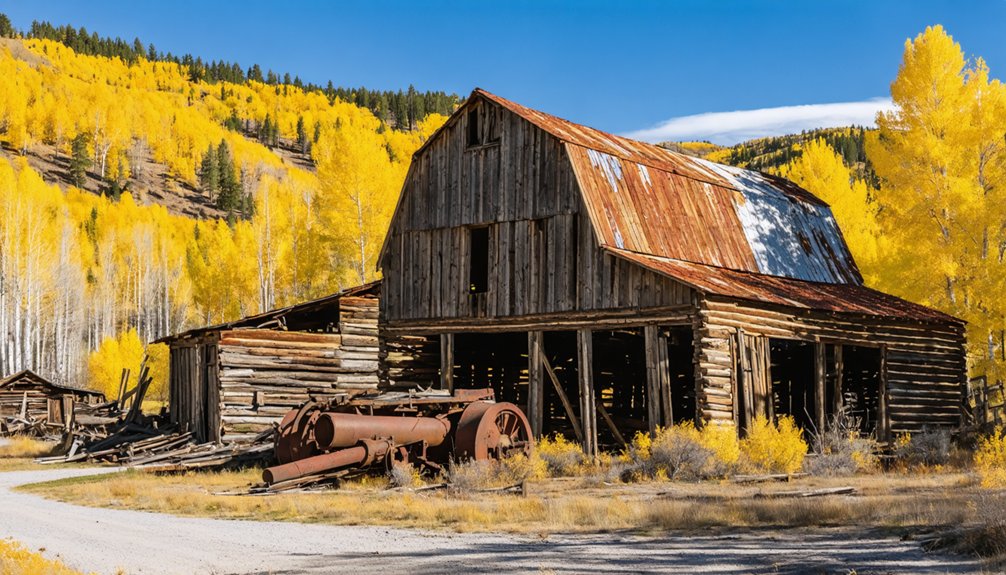
You’ll find Utah’s most photogenic ghost towns framed by brilliant fall colors from mid-September through early November. Grafton’s weathered cabins glow against golden cottonwoods, while Silver Reef’s sandstone ruins stand amid vibrant autumn hues just fifteen miles from St. George. Old Irontown in Dixie National Forest and Clear Creek’s logging remnants showcase amber aspens at their peak. Time your visit for early October to catch mid-elevation sites like Grafton at their most spectacular, then descend to valley towns where cottonwoods turn luminous gold through November—each location offering distinct seasonal transformations worth exploring further.
Key Takeaways
- Grafton peaks in early October with golden cottonwoods framing historic buildings, including the iconic schoolhouse from “Butch Cassidy and the Sundance Kid.”
- Silver Reef, fifteen miles northeast of St. George, offers restored Wells Fargo Museum amid red cliffs and autumn cottonwood groves along valley floors.
- Thistle displays haunting flooded structures surrounded by golden aspens, creating dramatic contrasts with submerged remnants visible through late-season foliage.
- Fall colors span mid-September to early November; high-elevation sites peak first, followed by mid-elevation towns, then lower valley cottonwoods.
- Old Irontown within Dixie National Forest combines beehive kiln ruins with accessible trails showcasing Pine Valley Mountains’ vibrant autumn colors.
Grafton: Where Autumn Colors Meet Cinematic History
When cottonwood leaves turn gold along the Virgin River each fall, they frame one of the West’s most hauntingly beautiful ghost towns. Grafton’s weathered structures stand sentinel beneath ancient trees—five original buildings that’ve survived floods, conflicts, and over a century of abandonment.
You’ll recognize the iconic barn from *Butch Cassidy and the Sundance Kid*, where cinematic legend merges with authentic local history.
Mormon pioneers founded this settlement in 1859, but nature proved relentless. The 1862 flood obliterated their first attempt, and subsequent deluges kept driving families away until 1944’s final exodus. Grafton also made cinematic history in 1929 by hosting Old Arizona, the first outdoor talking movie.
Today, preservation efforts by the Grafton Heritage Partnership maintain these National Register-listed remnants. Walk among the cemetery’s weathered headstones, explore sun-bleached farming equipment, and witness autumn’s transformation—this ghost town delivers freedom from modern constraints. The cemetery also contains unmarked graves that hint at untold stories from Grafton’s pioneer past.
Old Irontown: Desert Ruins Amid Seasonal Transformation
Twenty miles west of Cedar City, desert brush surrenders to autumn’s palette as you approach Utah’s first industrial ghost town. Old Irontown‘s beehive kiln rises from ochre earth, where juniper and pinyon pine now blaze gold against weathered stone.
You’ll discover the arastra’s grinding wheel frozen mid-turn, while the furnace chimney points skyward like a monument to ambition abandoned in 1876.
The archaeological significance reveals itself along quarter-mile trails winding past foundry remnants and pioneer cabins. Informative plaques at each site explain the ruins and their role in historic iron production.
Historical preservation efforts protect these industrial bones—though 1950s looters claimed stones for modern houses. The Sons of the Utah Pioneers manage the site, ensuring its place within Dixie National Forest boundaries remains accessible to visitors.
Free year-round access lets you explore at your pace, examining casting molds and blacksmith shops where Mormon settlers forged iron for westward expansion before economics crushed their desert dreams.
Frisco: Beaver County’s High-Rated Ghost Town Experience
Where else in Utah could you witness two murders per day during a town’s blood-soaked heyday? Frisco’s notorious past rivals Tombstone’s wildest tales—23 saloons served 6,000 fortune-seekers who’d descended upon the Horn Silver Mine‘s legendary riches.
You’ll find this outlaw sanctuary 15 miles west of Milford, where $60 million in precious metals once flowed from tunnels that collapsed catastrophically in 1885.
Today’s autumn landscape transforms juniper-covered hills into bronze tapestries surrounding remarkable ghost town architecture.
Those beehive-shaped charcoal kilns—National Register landmarks—stand as proof to industrial ambition. You’ll discover rusting mining equipment preservation scattered across private land, alongside Boot Hill’s silent graves. Sheriff William Pearson, the “iron fist sheriff”, restored order by shooting six outlaws in a single night, establishing fear-based control over this lawless environment.
The 1885 cave-in killed Frisco’s fever dream; by 1921, silence reclaimed what lawlessness built. Founded in September 1875 by prospectors James Ryan and Samuel Hawks, the settlement emerged from the Galena Mine discovery before the Horn Silver transformed it into a booming mining district.
Silver Reef: Perfect Starting Point for Fall Exploration
You’ll find Silver Reef’s restored Wells Fargo building standing sentinel along what was once a mile-long Main Street. Its fortress-style doors and ornate arches defy over a century of high desert weather.
The museum inside offers detailed townsite maps that’ll guide you through foundations and ruins scattered across sagebrush hills now touched with autumn gold. Nearby, the restored Rice Bank Building, which was converted into a jail and carefully restored in 1991, stands as another testament to the town’s remarkable preservation efforts.
Interstate-15 lies just minutes away, making this geological oddity—where silver impossibly emerged from sandstone—your most convenient gateway to southwestern Utah’s ghost town country. The Pioneer Cemetery sits quietly among the ruins, containing over 30 marked graves that tell stories of the mining community’s dangerous past.
Restored Wells Fargo Building
Standing sentinel over Silver Reef’s weathered landscape since 1877, the restored Wells Fargo Building beckons visitors with its fortress-like metal doors and ornate sandstone arches—a symbol of when this remote Utah outpost hummed with silver-fevered ambition.
Unlike conventional urban preservation projects, this architectural restoration showcases raw frontier craftsmanship. Master masons George Brooks and Ira McMullin quarried local red sandstone, creating what contemporaries called Southern Utah’s finest stone building. The building stands as one of only two remaining structures from Silver Reef’s brief prosperity era.
Your exploration reveals:
- Ashlar masonry defining the elegant front facade
- Original vault where $12 million in silver awaited transport
- Basement stables that sheltered horses from bandits
- Mercantile rooms where miners traded dust for supplies
Washington County’s museum now occupies these rooms, opening Thursday through Saturday. The building earned its place on the National Register of Historic Places in March 1971, cementing its significance in Western mining heritage.
You’ll discover freedom in wandering trails beyond, where autumn colors frame abandoned mine shafts and geological wonders.
Historic Townsite Map Available
Your journey through Silver Reef’s architectural treasures demands a roadmap, and the Washington County Historical Society delivers precisely that through its detailed Trail Guide PDF. This essential document numbers twelve key locations—from St. John’s Church Memorial to the Cassidy Powder House—transforming wandering into purposeful discovery.
The plat map reveals Main Street’s raucous past: nine saloon foundations, hospital remnants, and West Street homes where doctors and mine foremen once resided.
Historical preservation efforts by the Silver Reef Foundation assure you’ll navigate authentic ruins spanning Bonanza City to Rockpile tent city.
Paired with audio narratives at the powder house, this guide enhances visitor engagement, letting you trace the 1870s boomtown’s sandstone silver legacy at your own pace.
Download it before exploring these desert cliff ruins framed by October’s golden cottonwoods.
Accessible Near Interstate-15
Just fifteen miles northeast of St. George, Silver Reef beckons from Interstate-15’s Leeds exit, offering spontaneous exploration without rigid planning. You’ll appreciate how effortlessly this ghost town fits into your wandering schedule—pull off, discover, continue onward through Utah’s red rock country.
The positioning against Pine Valley Mountains‘ eastern slope creates remarkable forest ecology shifts where:
- Cottonwood groves shift from summer green to golden autumn harvesting light
- Red sandstone cliffs amplify amber foliage against crimson stone
- Quick access trails lead to Anasazi sites within half-mile walks
- Adjacent wilderness areas extend your adventure into backpacking territory
You’re not confined to guided tours or reservation schedules here. The Wells Fargo Museum opens when you arrive, crumbling mines wait silently, and those dramatic red cliffs frame whatever timeframe suits your journey.
Clear Creek: Logging Camp Surrounded by Peak Fall Colors
When golden aspens frame weathered timber frames and crimson scrub oak blankets the hillsides, Clear Creek’s transformation from bustling coal camp to seasonal retreat becomes most apparent. You’ll discover a settlement that once housed 600 souls at 8,200 feet—Utah’s highest coal operation.
The mining history echoes through twenty-five company homes now serving as Alpine School District’s wilderness retreat.
These temporary settlements weren’t meant to last, yet Clear Creek persists differently than its founders imagined. Walk past the repurposed dormitory cabins where miners’ families once slept, where Clydesdale teams hauled coal cars, where theatrical performances entertained exhausted workers.
Autumn ignites the surrounding forest into flame-bright color—nature reclaiming what industry borrowed. The clear stream still flows, unchanged since the 1870s, while you wander freely through this high-elevation ghost.
Thistle: Flooded Remnants Along the Scenic Canyon Route
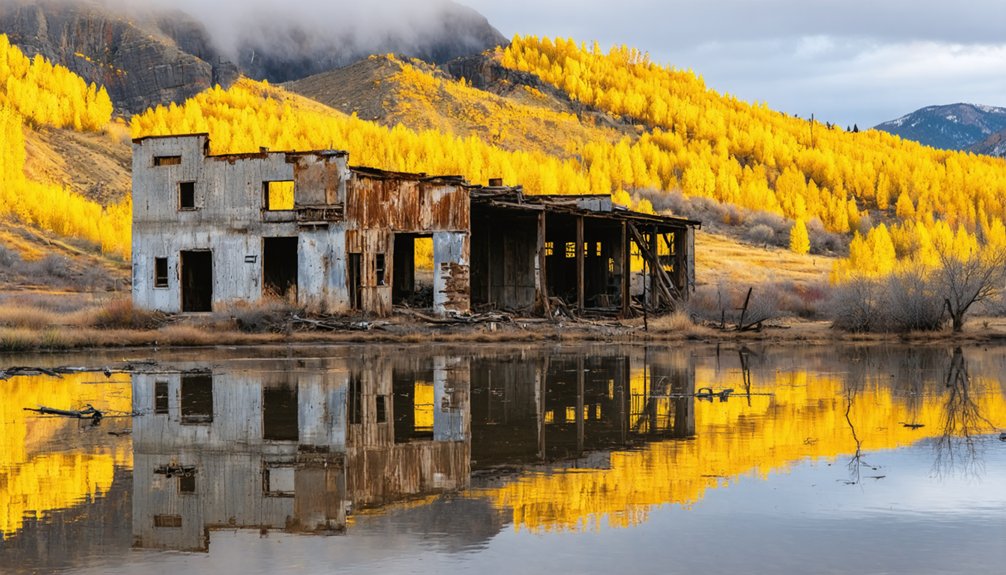
Half-buried in the pale waters of an artificial lake, Thistle’s skeletal remains tell a story that other ghost towns can’t match—this settlement didn’t fade through economic decline but drowned catastrophically in 1983.
The landslide effects reshaped this canyon community forever, creating America’s costliest slope failure and Utah’s first Presidential disaster declaration.
You’ll discover scattered foundations marking where railroad history once thrived.
From designated pullouts along Highway 6/89, you can witness:
- A half-submerged house standing eerily in the water
- The red schoolhouse still defying its watery grave
- Crumbled train shop foundations along the former rail junction
- Interpretive signs explaining the 65,000 acre-feet lake creation
Autumn’s golden aspens frame these waterlogged ruins, offering photographers haunting compositions where nature reclaimed civilization through unstoppable geological force.
Best Times to Visit Utah Ghost Towns for Fall Foliage
You’ll want to time your ghost town visits with Utah’s elevation-driven color cascade, which unfolds across six weeks from mid-September through late October. Higher elevation sites like Brian Head and Cedar Breaks ignite first with orange and yellow flames in late September.
Meanwhile, mid-elevation locations such as Grafton reach their golden peak in early October.
At the same time, desert ghost towns near Snow Canyon glow against black lava rock through month’s end.
Planning your route from high to low elevations lets you chase the descending wave of color, catching each abandoned settlement at its most luminous moment before winter winds strip the branches bare.
Peak Fall Color Timing
The ancient mining cabins and weathered saloons of Utah’s ghost towns transform into something almost mystical when autumn’s palette sweeps across the canyons. But you’ll need to time your visit carefully to catch this fleeting spectacle at its peak. Elevation variations dictate everything—higher ghost towns above 10,000 feet blaze with seasonal flora in late September, while lower-elevation sites peak through early November.
Strategic timing by elevation:
- High mountain ghost towns (10,000+ feet): Late September captures aspens at their golden peak.
- Mid-elevation sites (7,000-9,000 feet): Mid-October delivers brilliant reds and oranges.
- Valley locations: Late October through early November showcases cottonwoods.
- Northern mountain towns: Last week of September through first October week.
Weather patterns shift yearly, so check current reports before heading out.
Weather and Accessibility Considerations
When morning frost clings to abandoned windowpanes and autumn storms gather above canyon walls, your ghost town adventure hinges on understanding Utah’s unpredictable fall conditions.
Mid-September through early October offers stable weather predictions, letting you navigate high-elevation sites like Monroe Mountain without sudden squalls. You’ll want layered clothing as temperatures swing from mild days to cool nights, especially above 10,000 feet where aspen groves blaze golden.
Vehicle maintenance becomes essential before tackling Timpanogos’s dirt roads or Monroe Mountain’s challenging 4×4 sections. Standard cars handle paved routes to Grafton and Eureka’s Main Street just fine.
Check sunrise times and forecasts before departing—desert ghost towns near Zion face flash flood risks despite generally dry conditions. Early morning starts before 9:30 capture ideal light while avoiding crowds on accessible byways.
Photography Tips for Capturing Autumn at Abandoned Sites
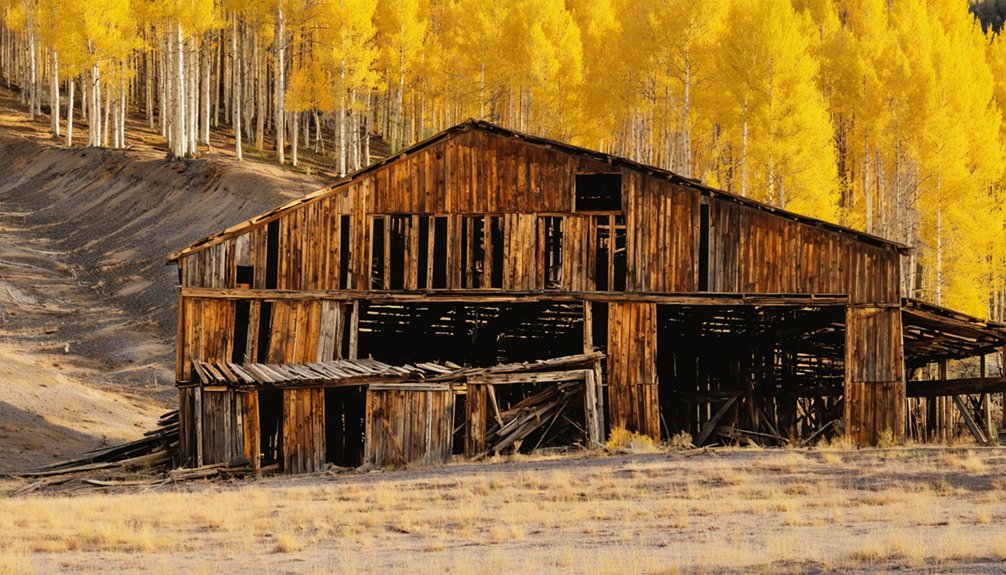
Abandoned buildings draped in autumn’s copper and gold create an irresistible canvas for photographers willing to venture beyond the typical fall foliage shots. Utah’s ghost towns whisper haunted legends through crumbling facades where urban legends merge with genuine history. Your camera becomes a storytelling tool when you bracket exposures, merging rust textures with vibrant fall colors through HDR processing.
Essential Techniques for Autumn Abandonment:
- Position your wide-angle lens to frame structures against golden-hour landscapes
- Use natural light beaming through broken windows to illuminate interior decay
- Focus on discarded objects as anchors amidst seasonal overgrowth
- Employ leading lines through doorways, layering warm foliage against cool structural shadows
Mount your tripod low for dramatic perspectives, letting thirty-second exposures capture moonlit scenes where nature reclaims human spaces beneath autumn’s transformative touch.
Planning Your Ghost Town Road Trip Through Southern Utah
You’ll want to thread together Grafton, Silver Reef, and Old Irontown in a single sweep through southern Utah’s high desert, where autumn transforms rust-red canyons into galleries of gold.
Time your journey for mid-October when the aspens glow against weathered wood and crumbling stone, avoiding summer’s scorching heat and winter’s impassable roads.
The loop from Zion north to Cedar City creates a natural circuit—each ghost town spaced perfectly for unhurried exploration before the sun drops behind ancient volcanic peaks.
Best Route Combinations
Southern Utah’s ghost towns scatter across a landscape where crimson slot canyons meet gold-leafed cottonwood groves. These natural corridors link abandoned settlements into unforgettable autumn routes.
Four Essential Route Combinations:
- Grafton-Zion Circuit: Photograph the schoolhouse from “Butch Cassidy and the Sundance Kid” before exploring canyon drives where historical preservation meets October’s palette.
- Silver Reef-Old Irontown Loop: Navigate I-15 between restored Wells Fargo Buildings and nature trails, combining visitor safety with adventure.
- Paria Backway Expedition: Drive 33 miles east from Kanab through BLM terrain to abandoned movie sets.
- Carbon Corridor Traverse: Connect Helper, Price, and Coal City along Highway 6, where mining ruins emerge from aspen-covered mountainsides.
Each combination delivers freedom to wander between human remnants and nature’s seasonal transformation.
Seasonal Timing Considerations
When October’s chill descends on Utah’s high country, nature orchestrates a descending wave of color that transforms ghost town exploration from simple history lesson into sensory immersion.
You’ll find mid-to-late October offers the sweet spot for southern Utah’s abandoned settlements, where golden cottonwoods frame weathered cabins and rabbit brush blazes yellow against crumbling foundations. The cultural significance of these timing windows runs deeper than aesthetics—preservation efforts depend on respectful visitation during prime conditions when trails remain accessible yet crowds thin.
Start your morning drives before 9:30 am to catch shadowed canyons awakening in amber light. Check local color reports yearly; weather patterns shift the window between early October’s peak and mid-November’s lingering cottonwood displays near St. George, where freedom seekers find solitude among ruins.
What to Bring When Exploring Remote Historic Locations
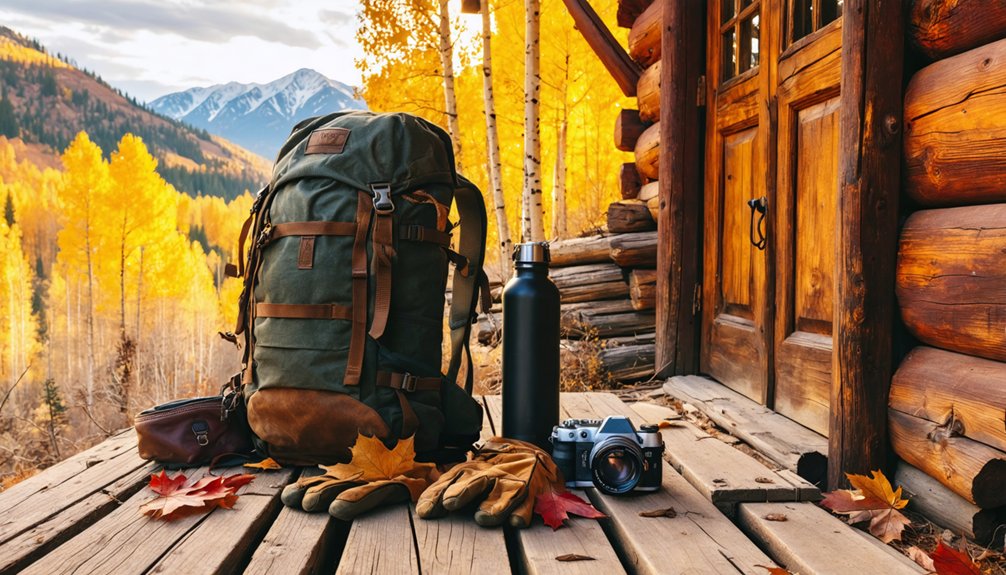
Before you venture into Utah’s crumbling mining camps and weathered settlements, proper preparation separates memorable exploration from potential disaster.
Thorough preparation transforms risky ghost town ventures into safe adventures—the difference between disaster and discovery lies in what you pack.
The freedom to roam these abandoned landscapes demands respect for both historic preservation and personal safety.
Essential gear for remote ghost town exploration:
- Closed-toe boots with ankle support for traversing debris-scattered floors
- First aid kit and emergency whistle for areas beyond cell coverage
- Ample water and electrolyte drinks for high-elevation sites like Clear Creek
- GPS device with printed maps for backcountry routes
Pack sun protection, insect repellent, and layered clothing for elevation changes. Bring your camera to document weathered structures against autumn cottonwoods, and consider binoculars for wildflower identification along forgotten wagon roads. Leave no trace—these sites deserve preservation for future adventurers.
Frequently Asked Questions
Are Utah Ghost Towns Safe to Visit With Children During Fall?
You’ll find family-friendly ghost towns like Grafton and Old Irontown safe during fall, where historic preservation protects structures and trails. Watch for wildlife encounters on remote roads, pack sturdy shoes, and you’re free to explore responsibly together.
Do Any Ghost Towns Charge Entrance Fees or Require Permits?
Your wallet won’t feel much lighter exploring Utah’s ghost towns. Entry fee policies vary—Silver Reef charges $3 per person, while Grafton operates on donations. Historic preservation depends on these modest contributions, keeping your autumn adventures both affordable and accessible.
Can I Camp Overnight Near These Ghost Town Locations?
Ghost town accommodations don’t allow overnight stays—you’ll find only daytime exploration permitted. However, camping regulations in nearby Uinta-Wasatch-Cache National Forest welcome dispersed camping, letting you chase autumn’s golden palette across surrounding wildlands freely.
Are the Paranormal Reports at Grafton More Frequent During Autumn Months?
No evidence suggests paranormal activity increases during autumn at Grafton. Autumn sightings aren’t documented more frequently than other seasons. You’ll find reports span all visits equally—the spirits don’t follow seasonal patterns, appearing whenever they choose.
Which Ghost Towns Have Cell Phone Service for Emergencies?
Like pioneers who ventured beyond civilization’s reach, you’ll find ghost towns offer minimal cell service. Remote communication remains unreliable in Utah’s abandoned settlements. Emergency preparedness demands you carry satellite phones, ensuring freedom to explore safely beyond modern connectivity’s grasp.
References
- https://whimsysoul.com/utah-fall-colors-road-trip/
- https://www.visitutah.com/things-to-do/history-culture/ghost-towns
- https://www.tripadvisor.com/Attractions-g28965-Activities-c47-t14-Utah.html
- https://www.ksl.com/article/51362209/how-the-past-lingers-in-these-utah-ghost-towns
- https://www.youtube.com/watch?v=IbeTyQNamUE
- https://www.utah.com/things-to-do/attractions/old-west/ghost-towns-in-utah/
- https://www.atlasobscura.com/things-to-do/utah/ghost-towns
- https://capitolreefcountry.com/ghost-towns/
- https://graftonheritage.org/history-settlement/
- https://www.zionredrock.com/post/a-block-away-from-mystery-grafton-ghost-town