You’ll discover Washington’s most photogenic ghost towns when autumn transforms Liberty’s weathered cabins into golden larch backdrops at 2,600 feet, or when Monte Cristo’s valley glows with September foliage along its 4-mile trail. Franklin’s mining ruins near Mount Rainier burst with October colors, while Melmont’s abandoned rail grade showcases rust-colored ferns framing Mount Rainier views. Eastern Washington’s Sherman and Govan settlements offer high desert fall hues among 1880s churches and grain elevators, with each location revealing distinct seasonal transformations and frontier stories waiting beneath the changing leaves.
Key Takeaways
- Franklin Ghost Town near Mount Rainier offers vibrant October fall colors along a 2.5-mile trail with mining ruins and historic relics.
- Liberty Ghost Town at 2,600 feet features golden larches and weathered cabins, best visited in October for peak foliage displays.
- Monte Cristo Ghost Town provides dramatic September-October fall foliage with a 4-mile hike revealing silver mining ruins at 5,400 feet.
- Melmont Ghost Town’s 4-mile trail showcases rust-colored ferns and fallen maple leaves with scenic Mount Rainier views in autumn.
- High elevation ghost towns like Monte Cristo and Liberty deliver superior fall color displays amid Cascade Mountain wilderness settings.
Franklin Ghost Town: Railroad Grade Adventure Near Mount Rainier
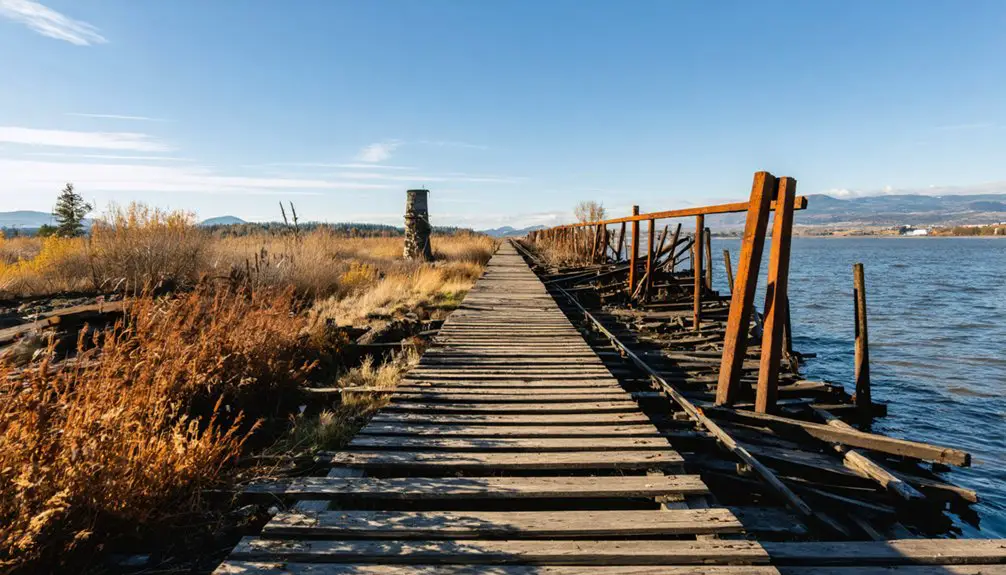
Tucked into the South Cascades near Mount Rainier and the Green River Gorge, Franklin Ghost Town offers a haunting journey through Washington’s coal-mining past along an old railroad grade that nature has slowly reclaimed.
You’ll discover this urban exploration gem just 45-60 minutes southeast of Seattle, where a 2.5-mile roundtrip trail reveals building foundations, mining equipment, and a sealed 1,000-foot mineshaft—grim reminders of the 1894 disaster that killed 37 miners.
October transforms the old growth forest into a canvas of fall colors, making historical preservation feel urgent as blackberry vines swallow headstones in the small graveyard. The trail also passes an old railcar labeled “Franklin”, one of the few remaining structures from the town’s peak population of over 1,000 residents in the early 1900s. Budget approximately 1.5 hours for hiking and exploring the site, giving yourself time to discover the trail’s hidden remnants and photograph the autumn scenery.
Park in the dirt field ($5 honor system), pass the yellow gate, and let moss-covered ruins tell their dark stories.
Liberty Ghost Town: Gold Rush Remnants in the Central Cascades
Tucked along Blewett Pass in the Central Cascades, Liberty Ghost Town transports you to Washington’s 1870s gold rush era through weathered cabins and historic mining equipment set against a backdrop of crimson and gold autumn foliage.
You’ll wander past interpretive signs that tell stories of miners who once extracted rare crystalline wire gold from these mountains, while rustic log structures and the remnants of Mamie Caldwell’s restored house offer glimpses into frontier life.
This living ghost town—home to roughly a dozen residents and listed on the National Register of Historic Places—provides an accessible autumn escape where mining camp ruins meet the vibrant colors of fall in the Cascade Mountains. Originally called Meaghersville, the settlement evolved into the state’s oldest mining town before earning its place in history. The community successfully fought off eviction attempts by mining companies and the U.S. Forest Service during the 1960s and 1970s, ultimately securing historic district status through legal battles and Congressional action.
Exploring Mining Camp Ruins
North of Cle Elum, where the Central Cascades rise into wilderness just two miles east of Highway 97, Liberty stands as Washington’s oldest and only living ghost town—a collection of weathered log cabins and rustic structures that have clung to these mountainsides for over a century.
You’ll discover antique mining equipment lining Main Street’s one-third mile stretch, remnants of an 1870s gold rush that birthed this mountain settlement.
The mining preservation efforts here tell a defiant story—residents battled mining companies in the 1960s and fought a decade-long struggle against Forest Service eviction in the 1970s, ultimately securing historic district status through state Supreme Court victories and Congressional action.
Today’s historic landmarks include a 1930s arrastra replica and original log structures that transport you to frontier days.
The town is also home to the largest black Hawthorne tree in the United States, a species first discovered and named by Lewis and Clark during their westward exploration.
Informational signs throughout the site share compelling miner stories and chronicle the local history of this mountain community.
Autumn Colors and Accessibility
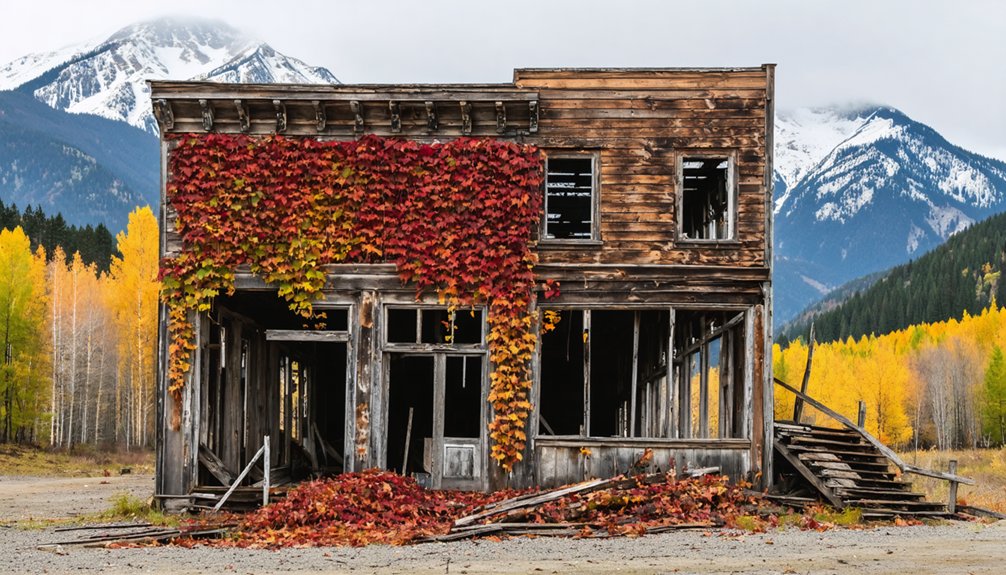
When October arrives at Liberty, golden larches set the mountainsides ablaze against a backdrop of weathered log cabins and rusting mining equipment.
You’ll find the autumn foliage most vibrant at this 2,600-foot elevation, where crisp mountain air and pine-scented surroundings intensify the seasonal transformation.
Accessibility features make Liberty remarkably easy to explore.
From Cle Elum, you’ll drive north on WA-970 E for 15.5 miles, then turn right onto Liberty Road for another 1.5 miles.
Park roadside near the town entrance and wander the open landscape without formal trails—a 20-minute main street walk reveals historic structures through self-guided exploration.
The town’s name reflects the foundational principles of liberty that resonated deeply during its establishment in the Gold Rush era.
Informational signs dot the 23-acre district, letting you discover this living ghost town at your own pace while respecting the small resident population that calls it home.
Liberty earned its place on the National Register of Historic Places in 1974, recognizing its significance as the state’s oldest mining town dating back to 1867.
Gold Rush History Preserved
Liberty’s story begins in 1873 when prospectors struck gold along Swauk Creek, transforming this remote Cascade valley into Washington’s oldest continuously settled mining townsite. You’ll discover crystalline wire gold that formed 15 million years ago—tangled metallic threads unlike California’s rock-like nuggets.
Mining techniques evolved from hand-placer operations to hydraulic blasting and eventually dredging through the 1960s. Early miners focused on bedrock near streams, extracting coarse nuggets while dismissing the fine gold that modern prospectors now seek.
The town’s preservation efforts rival any gold strike. When mining companies tried evicting residents in the 1960s, locals fought back through the state Supreme Court. They defeated another eviction attempt in the 1970s by convincing Congress to declare Liberty a historic district.
Today, twelve determined residents maintain original log cabins, operate a replica arrastra, and keep this living ghost town accessible to visitors seeking authentic frontier freedom. Located about 80 miles east of Seattle near Blewett Pass on U.S. Highway 97, the town’s main road extends roughly a third of a mile through structures designed to resemble the 1890s.
Monte Cristo Ghost Town: Historic Mining Community in Snohomish County
You’ll find Monte Cristo nestled in a remote Northern Cascade valley where silver ore sparked a frenzied boom in 1889, transforming wilderness into a bustling community of over 2,000 souls by the mid-1890s.
The 4-mile hike along the closed South Fork Sauk River road guides you through golden fall foliage toward weathered structures and mining relics that mark where upper and lower towns once thrived with commercial enterprises, railroad yards, and mountain dreams.
Autumn’s vibrant tapestry now drapes the steep hillsides where tramways once hauled ore, and golden aspens frame the valley where Frederick Trump’s real-estate office and dozens of other establishments served miners chasing silver beneath these rugged peaks.
1890s Mining Boom History
The discovery of gold and silver on the west slopes of the Cascade Range in 1889 sparked a mining rush that transformed a remote wilderness into Monte Cristo, eastern Snohomish County’s first permanent mining camp.
You’ll find evidence of rapid expansion—13 mines and 40 claims by 1891 exploded to 211 claims within two years. John D. Rockefeller’s syndicate seized control of prime properties like the Pride and Mystery mines, paying the Willmans brothers $470,000.
Mining technology included tramways hauling ore from steep hillsides to processing mills. The town layout divided into upper Dumas Street’s respectable businesses and lower town’s saloons.
Railways connected you to Everett’s markets. At its peak, 1,000-2,000 fortune-seekers called this lead-silver district home before funding dried up and floods reclaimed the canyon.
Scenic Valley Fall Exploration
Perched at 5,400 feet where the South Fork Sauk River carves through the Cascade Mountains, Monte Cristo beckons fall explorers with its dramatic alpine setting 34 miles east of Granite Falls.
You’ll discover ecosystem diversity thriving in this mountain meadow, where native flora transforms the valley into autumn’s canvas.
The 4-mile trail from Barlow Pass rewards you with:
- Golden hillsides framing glacier-fed creek junctions
- Unobstructed valley views from historic townsite remnants
- Vibrant understory vegetation along the river corridor
- Alpine wildflower meadows metamorphosing to fall colors
While summer crowds thin, September and October reveal Monte Cristo’s raw beauty.
You’ll experience the headwaters valley without restrictions, where interpretive signs connect you to mining history amid nature’s seasonal show.
This isolated wilderness setting delivers authentic mountain exploration.
Melmont Ghost Town: Coal Mining Heritage Along Mowich Lake Road
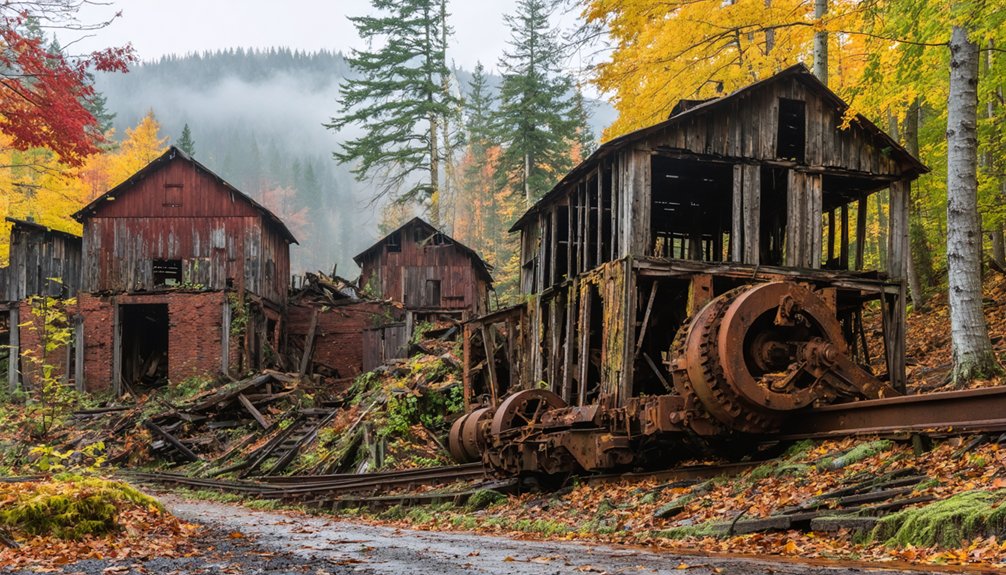
The 4-mile round-trip trail follows an abandoned rail grade from Fairfax Bridge, leading you through deserted structures including powder house ruins and schoolhouse remnants.
Autumn transforms this forgotten settlement into a photographer’s paradise, where rust-colored ferns blanket former cottage foundations.
Maple leaves drift across boggy fields where miners once lived.
The site’s proximity to Mount Rainier ensures spectacular fall colors frame your exploration of this atmospheric industrial ghost town.
Govan Ghost Town: Homesteading History Under Starlit Skies
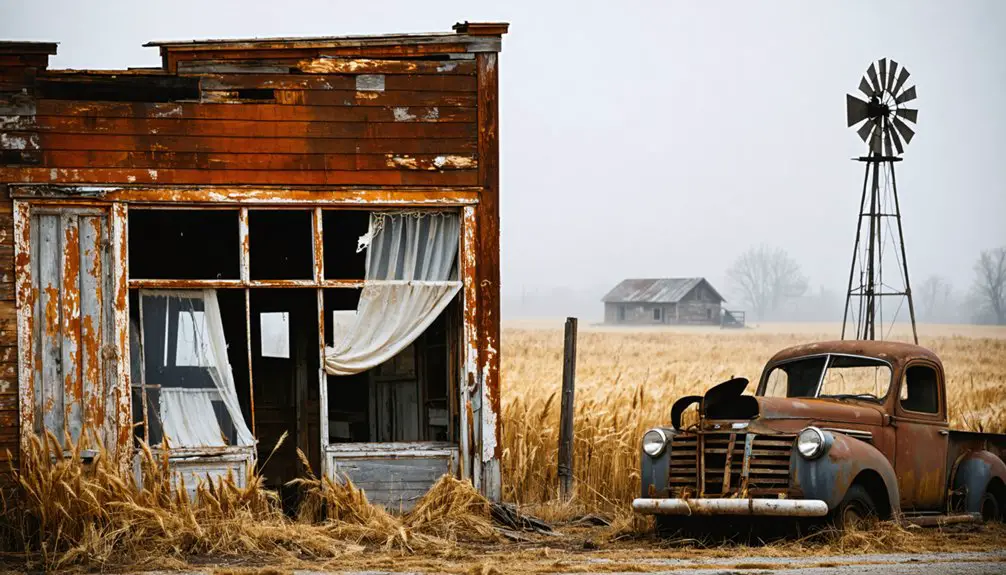
While Melmont’s forested trails showcase autumn’s beauty amid mountain wilderness, eastern Washington’s high desert plains hold their own haunting charm where sagebrush meets amber wheat fields.
You’ll find Govan off Highway 2, where three residents remain among structures from 1889’s railway boom.
The 1905 red schoolhouse stands weathered, its steeple toppled in 2019, surrounded by:
- Empty grain elevators rising against endless skies
- Abandoned homes with untold histories
- Wildflower blooms carpeting forgotten foundations each spring
- Remnants of two churches from prosperous decades
This desolate landscape offers unobstructed stargazing opportunities.
River crossings nearby lead toward scattered ruins where sheep ranchers once thrived.
Fire destroyed the business district in 1927, and the 1933 highway bypass sealed Govan’s fate, leaving today’s explorers complete solitude among high desert winds.
Sherman Ghost Town: Eastern Washington’s Abandoned Settlement
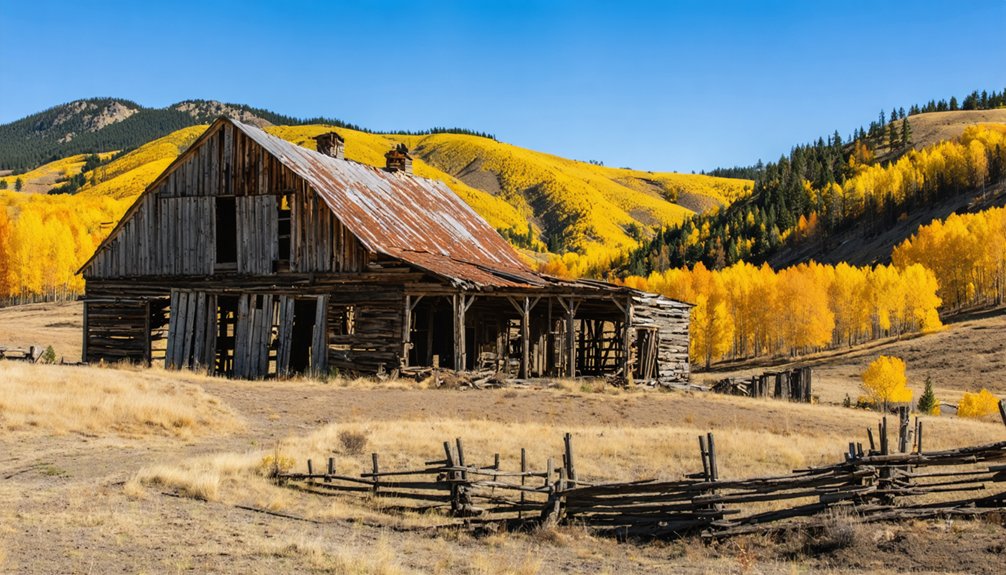
Beyond Govan’s sagebrush plains, Sherman Ghost Town emerges from eastern Washington’s wheat country like a portal to homesteading’s hardest years. You’ll find the 1888 church standing defiant against time, its stained glass catching light above weathered pews where photos chronicle the 1889 blizzard that buried livestock under six feet of snow.
The collapsed schoolhouse offers striking abandoned buildings for winter photography, its skeletal frame haunting against rolling grain fields.
Ring the church bell, sign the guest book, then wander the 1892 cemetery where a Civil War veteran rests among pioneer families. Every Memorial Day, descendants gather here, fifteen minutes northeast of Highway 2, keeping memory alive in this settlement that transportation progress emptied.
Three hours from Central Washington, freedom awaits among these lonesome remnants.
Best Time to Visit Washington Ghost Towns for Fall Colors
When September’s first chill sweeps through Washington’s mountains, ghost towns transform into temporal masterpieces where human abandonment meets nature’s seasonal crescendo. You’ll catch prime viewing windows varying by elevation and region:
- Mid-September to early October: Central Cascades sites like Liberty and Monte Cristo peak earliest, where folklore legends of prospectors blend with golden aspens.
- Late September through October: Mount Rainier-area Franklin offers coal-mining relics amid vibrant maples along railroad grades.
- October: Eastern Washington and Okanogan locations like Nighthawk display colors against open terrain, ideal for wildlife observation.
- Early to mid-fall: Crisp air and seasonal light create dramatic contrasts on decaying foundations.
Target weekdays for solitude among fading structures, when autumn’s reclamation feels most profound.
Frequently Asked Questions
Are Dogs Allowed at Washington Ghost Town Sites?
While none explicitly ban dogs, you’ll find these dog-friendly trails welcome leashed pets. Follow pet safety tips: pack water, watch for old mining hazards, and keep your companion close among crumbling foundations and forested paths.
Do Any Ghost Towns Require Entrance Fees or Permits?
You’ll pay $10 at Franklin Ghost Town’s dusty parking lot, where historical preservation meets local regulations. Most other sites remain wonderfully free—Liberty, Monte Cristo, and Govan welcome your independent exploration without permits or entrance fees blocking your path.
Which Ghost Towns Are Suitable for Children and Families?
Like stepping into a living history book, you’ll find Red Town Trail, Coal Creek Trail, Northern State, and Old Molson perfect for families—offering historical preservation, incredible photography opportunities, and safe exploration that’ll spark your children’s adventurous spirits.
Can I Camp Overnight Near These Ghost Town Locations?
The provided information doesn’t specify overnight camping at these ghost towns. You’ll need to research nearby campgrounds or backcountry sites. Remember, historical preservation matters—practice Leave No Trace principles. Dawn lighting offers exceptional photography tips for capturing authentic, weathered details.
Are the Ghost Towns Wheelchair or Stroller Accessible?
Like scattered puzzle pieces with missing connections, these ghost towns offer varying accessibility. Northern State provides excellent wheelchair access with maintained paths and visitor facilities, while Franklin and Monte Cristo present significant challenges through stairs, rough terrain, and limited accessibility features.
References
- https://www.wta.org/go-outside/seasonal-hikes/fall-destinations/hidden-history-ghost-town-hikes
- https://explorewashingtonstate.com/black-diamond-franklin-ghost-town/
- https://stateofwatourism.com/ghost-towns-of-washington-state/
- https://www.youtube.com/watch?v=gx9r_aKZZ2s
- https://www.emeraldpalate.com/abandoned-places-in-washington/
- https://okanogancountry.com/ghost-towns
- https://pupsandpeaks.com/franklin-ghost-town/
- https://www.islands.com/1938500/franklin-ghost-town-washington-woodlands-waterfalls-abandoned-mountain-trail/
- https://www.wta.org/go-hiking/hikes/franklin-ghost-town
- https://jaysjourneys.com/2019/10/26/franklin-ghost-town/