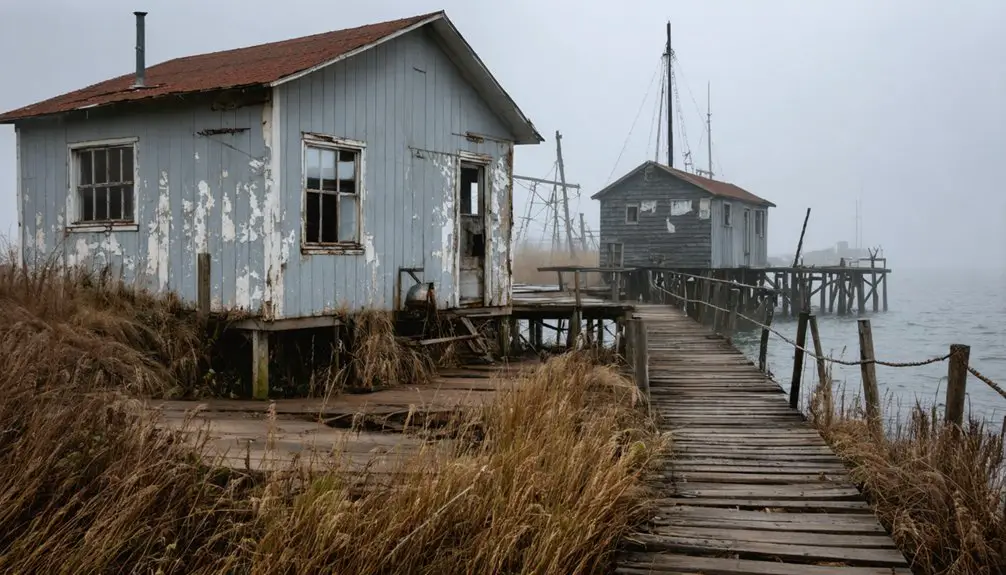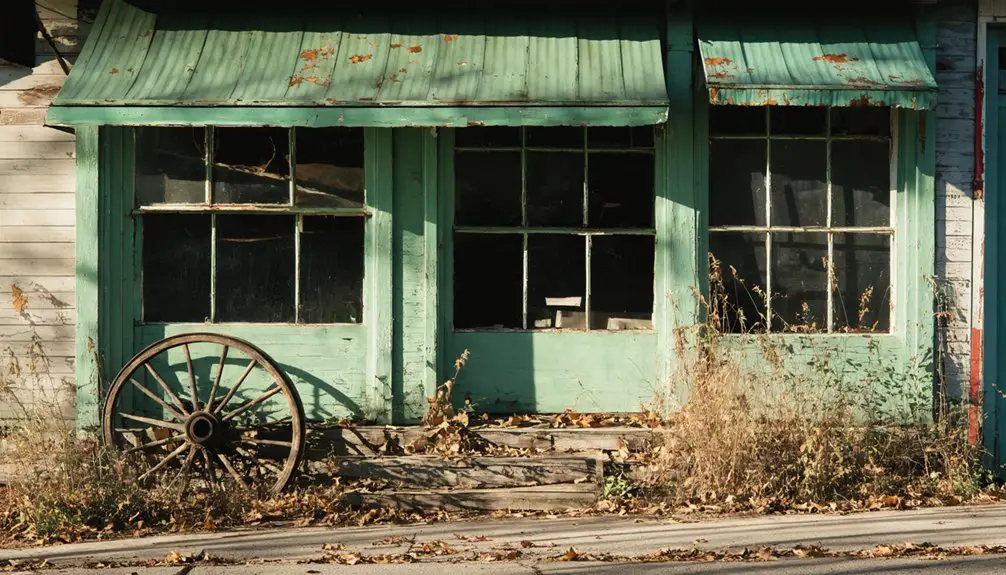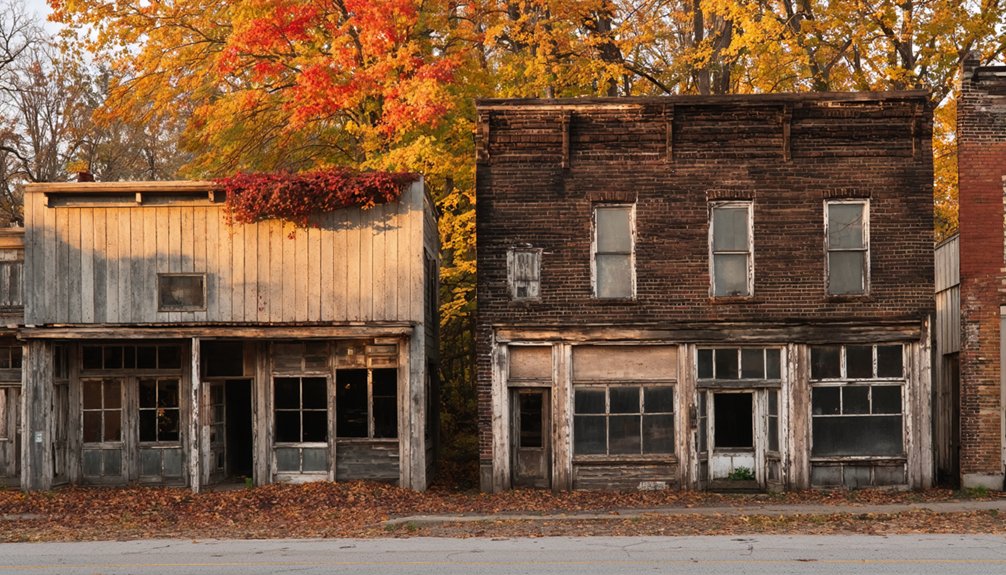
You’ll find Wisconsin’s most haunting autumn scenes at Clifton’s limestone ruins in Grant County, where Western Lime and Cement Company remnants stand against October’s crimson and gold. Nowell’s foundations emerge from Waupaca County’s vibrant leaves, while Perote’s 35-acre lake mirrors Menominee County’s fiery wilderness. Wakefield’s weathered structures wear copper-hued canopies in Outagamie County. Time your visit for mid-October when these abandoned settlements transform into photographers’ dreams, combining industrial ghosts with nature’s most brilliant seasonal display beneath Wisconsin’s vivid autumn skies.
Key Takeaways
- Clifton in Grant County features limestone ruins from a mining company, surrounded by vibrant October reds and golds.
- Nowell in Waupaca County offers building foundations amid crimson and gold leaves, peaking in mid-October.
- Wakefield in Outagamie County has weathered structures with copper-colored foliage and local haunted legends.
- Williamsonville ghost town provides stories of the 1871 Peshtigo Fire alongside autumn-colored weathered markers.
- Peak fall colors occur mid-to-late October; visit early mornings for optimal photography and fewer crowds.
Clifton: Limestone Ruins Amid Autumn Splendor
Perched on a rocky bluff in Grant County, Clifton’s limestone ruins emerge from the autumn landscape like weathered sentinels of Wisconsin’s industrial past.
You’ll discover the crumbling remnants of the Western Lime and Cement Company, where pioneers once toiled through hardship and frustration during the boom years.
The clifton limestone structures stand in stark contrast against October’s brilliant reds and golds, creating photography opportunities you won’t find anywhere else.
As you explore these autumn ruins, you’re walking through a genuine ghost town—abandoned when the mining operations collapsed, leaving behind only these skeletal remains. Among the overgrown brush, you’ll find a small hidden cemetery that offers a poignant glimpse into the lives of those who settled here. Two historic cemeteries mark the settlement’s past, with weathered gravestones standing as silent witnesses to the community that once thrived here.
The rocky terrain amplifies the fall colors surrounding you, offering that raw freedom of discovering forgotten places where nature’s reclaiming what was once hers.
North Freedom’s Historic Railway Through Fall Colors
You’ll step aboard a lovingly restored passenger car at North Freedom’s 1894 depot, where a uniformed conductor’s “all aboard” transports you back to railroading’s golden age.
The 55-minute journey winds seven miles along the Baraboo River, with a diesel locomotive pulling you past crimson maples and amber oaks. These trees frame weathered barns and the gentle Baraboo Hills.
Plan your visit for October 4-5 or 11-12, 2025, when the Mid-Continent Railway Museum’s Autumn Color Weekend transforms this preserved Chicago & North Western line into a moving canvas of fall’s finest palette. The museum’s collection includes over 40 cars and locomotives, meticulously restored to showcase the region’s rich railroading heritage. Adult coach tickets are priced at $24, with reduced fares for seniors and children to make this nostalgic journey accessible to families.
Vintage Train Journey Experience
There’s something magical about settling into a century-old coach car as the conductor’s “all aboard” echoes across the 1894 wooden depot platform. You’ll feel time collapse as vintage locomotives pull away from historic depots, carrying you through seven miles of untamed valley between the Baraboo Hills.
The 55-minute journey unfolds through open farmland and woodland patches, where fall’s brilliant hues blaze outside your window.
Your authentic railway experience includes:
- Window seats in restored steel coaches optimized for leaf-peeping
- Caboose rides offering unmatched panoramic foliage views
- Period-uniformed conductors creating genuine historic atmosphere
- Wheelchair-accessible cars ensuring everyone experiences autumn’s glory
Watch the Baraboo River glide past, feel the rhythmic clack of rails beneath you, and breathe in Wisconsin’s quintessential fall countryside—unspoiled and magnificently wild. The Mid-Continent Railway Museum hosts these memorable excursions, bringing railroad history to life against autumn’s spectacular backdrop. During Autumn Color Weekends, the scenic bluffs showcase nature’s changing leaves in their most dramatic display.
Autumn Color Tour Schedule
The locomotive’s whistle cuts through crisp October air on select weekends when North Freedom’s historic railway transforms into autumn’s moving gallery. You’ll board vintage passenger cars October 4-5 and 11-12, 2025, departing at 9:00 AM for hour-long journeys through Sauk County’s blazing hillsides.
The seven-mile route along the historic Chicago & North Western line offers unmatched photograph composition opportunities—crimson maples frame weathered railroad ties while golden oaks crown ancient bluffs. The round-trip concludes at Quartzite Lake before returning passengers to the depot in North Freedom.
Coach tickets run $24 for adults, $13 for kids, with caboose seating available for those seeking unobstructed views. Local seasonal folklore speaks of abandoned settlements visible through thinning canopy, their stories woven into every curve of track.
An authentically-attired conductor guides passengers through the journey, sharing historical details about the vintage rail line and surrounding countryside. Book ahead; these autumn escapes sell out fast among travelers craving Wisconsin’s wild, unbridled beauty.
Mountain Fire Lookout Tower: Panoramic Autumn Vistas
Rising 100 feet above the forest floor, Mountain Fire Lookout Tower transforms autumn sightseeing into a visceral experience where wind whips across the open observation deck. The entire Chequamegon-Nicolet National Forest spreads beneath you in waves of crimson, amber, and gold.
This historic preservation gem offers unmatched scenic vantage through its 7-by-7-foot observation cab, accessible via 125 steps that earn every breathtaking view. Listed on the National Register of Historic Places since August 2008, the tower stands as a recognized landmark of Wisconsin’s fire detection heritage.
Essential visiting details:
- Free admission daily from 8 a.m. to sunset, May through October
- Located 2.5 miles north of Mountain, Wisconsin off Forest Road 2106
- No facilities available—plan accordingly
- Evacuate immediately during lightning storms
Built in 1935 by the Civilian Conservation Corps, you’ll discover September through October peak foliage periods worth every challenging step upward into Wisconsin’s unfettered wilderness. The tower earned distinction as the first Wisconsin lookout registered on the National Historic Lookout Register in the United States.
Baraboo’s Natural Wonders in Peak Foliage Season
You’ll find yourself standing at the edge of Devil’s Lake’s quartzite cliffs, watching the autumn reds and golds ripple across the Baraboo Bluffs like a painter’s palette come alive.
The narrow gorges of Parfrey’s Glen and Pewits Nest draw you into shadowed corridors where sandstone walls frame filtered sunlight dancing on fallen leaves.
Between these natural wonders, the rustic roads wind through oak-maple forests so thick with color that you’ll pull over every few miles just to breathe it all in.
Devil’s Lake Cliff Views
Perched thirty-five miles northwest of Madison, Devil’s Lake State Park transforms into a spectacular canvas each October, where 500-foot quartzite cliffs frame a breathtaking display of autumn brilliance.
You’ll discover unmatched freedom along the East Bluff Trail, where every cliff overlook reveals yellow-gold canopies stretching toward the horizon. Navigate these essential rock formations for ideal viewing:
- Devil’s Doorway – Stone steps lead to dramatic cliff-edge perspectives
- Balanced Rock – Massive boulder teetering above vivid foliage
- Elephant Rock – North bluff vantage point overlooking crimson valleys
- Tumbled Rocks Trail – Wind through fallen boulders beneath copper-hued pines
Morning light illuminates the Baraboo Hills’ quilted treetops, while afternoon sun intensifies the burnt oranges and scarlets below. The glassy-smooth quartzite surfaces reflect Wisconsin’s wildest autumn palette.
Scenic Gorge Trail Hikes
When autumn winds sweep through the Baraboo Hills, the region’s hidden gorges explode into corridors of flame-bright color that’ll make your chest tighten with their wild beauty.
You’ll find Parfrey’s Glen’s stone walls draped in scarlet maples and burning sumac, while Pewit’s Nest squeezes you between limestone outcroppings beneath a canopy gone gold. These forgotten places feel like hidden ruins nature reclaimed—Powell Creek cutting through rock while oak and hickory rain amber leaves onto your shoulders.
The forest colors peak mid-October when you can escape the crowds entirely.
Both trails demand little more than sturdy boots and curiosity, rewarding your wanderlust with photographs that’ll haunt your memory through colorless winters.
Highway 113 connects these gorges like pearls on a scenic string.
Rustic Road Fall Drives
The ribbon of asphalt unspools through Wisconsin’s Baraboo Hills like something from a fever dream—Rustic Road 21 threading 8.6 miles through stands of oak and maple so dense you’ll swear the canopy is swallowing the sky.
Mid-October transforms this gravel-and-pavement hybrid into a corridor of flame, where abandoned buildings lurk between hickory groves and urban legends whisper through basswood thickets.
Your essential routes through peak foliage:
- R-11, R-12, R-36: Nearly 20 miles of lakeshore solitude
- Highway 113 to Gibraltar Rock: Panoramic autumn sprawl worth the vertical climb
- Merrimac Ferry crossing: Free passage over Wisconsin River’s golden bluffs
- Devil’s Lake north entrance: Four minutes of concentrated color intensity
Check TravelWisconsin.com’s real-time reports. These roads don’t wait.
Williamsonville and Door County’s October Attractions
Tucked away near Green Bay, Williamsonville stands as a somber reminder of the 1871 Peshtigo Fire—a ghost town where collapsed structures and weathered historical markers tell stories of a community erased in flames. While this site offers haunted history rather than organized autumn events, you’ll find its proximity to Door County creates perfect October adventures combining autumn legends with vibrant foliage.
Head to Door Peninsula during the third week of October when peak colors transform shorelines into red-orange tapestries. You can explore Egg Harbor’s Pumpkin Patch Festival, Sister Bay’s Fall Festival with its quirky Ping Pong Ball Drop, or Fish Creek’s Jack O’Lantern Days featuring town-wide trick-or-treating.
Between festivals, hike Peninsula State Park’s Eagle Trail for cliff views or climb Ellison Bluff’s Mountain Tower for breathtaking autumn panoramas.
Nowell: Waupaca County’s Hidden Autumn Gem
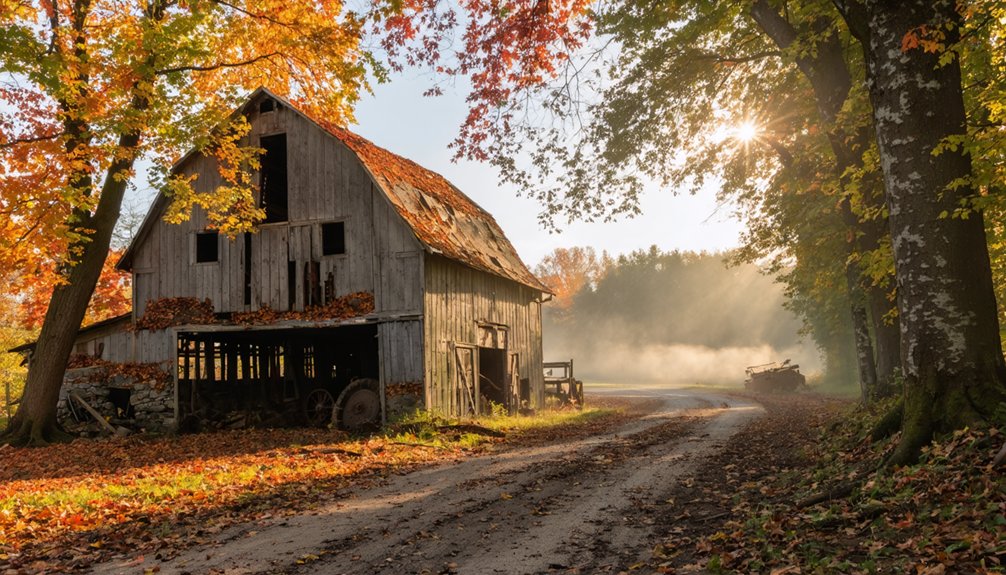
Along County Highway N in Lebanon Township, you’ll discover Nowell’s weathered foundations peeking through carpets of crimson and gold leaves each October. This forgotten settlement invites you to wander freely among abandoned structures where maples and oaks have reclaimed what pioneers once built.
Your exploration checklist:
- Photograph crumbling stone foundations surrounded by blazing sugar maples
- Walk the old settlement pathways now carpeted in russet oak leaves
- Search for historic sites marking Nowell’s 1800s heyday
- Time your visit mid-October when Waupaca County’s forests peak
The solitude here amplifies autumn’s sensory feast—crunching leaves underfoot, wood smoke drifting from distant farms, and wind whispering through abandoned doorways. You’re free to roam these historic sites at your own pace, connecting with Wisconsin’s vanished communities through fall’s spectacular lens.
Perote: Menominee County’s Forested Fall Escape
Deep within Menominee County’s forested embrace, Perote emerges from Wisconsin’s past like a whisper barely audible above rustling leaves. You’ll find this abandoned settlement five miles south-southwest of White Lake, where forest panoramas stretch endlessly at 1,253 feet elevation.
Five miles from White Lake, Perote’s whispers echo through Menominee County forest at 1,253 feet—an abandoned settlement reclaimed by wilderness.
Once documented on USGS maps until 1952, Perote’s autumn heritage now belongs to wanderers seeking untamed beauty beyond civilization’s reach.
The 35-acre Perote Lake mirrors October’s golden canopy—largemouth bass lurking beneath five feet of crystalline water that reflects crimson maples and amber birches. You’re free to explore where former residents once carved lives from wilderness, their stories dissolved into soil.
Dense tree cover transforms this ghost town into nature’s cathedral each fall, where your footsteps disturb only leaves and memories.
Wakefield: Outagamie County’s Seasonal Transformation
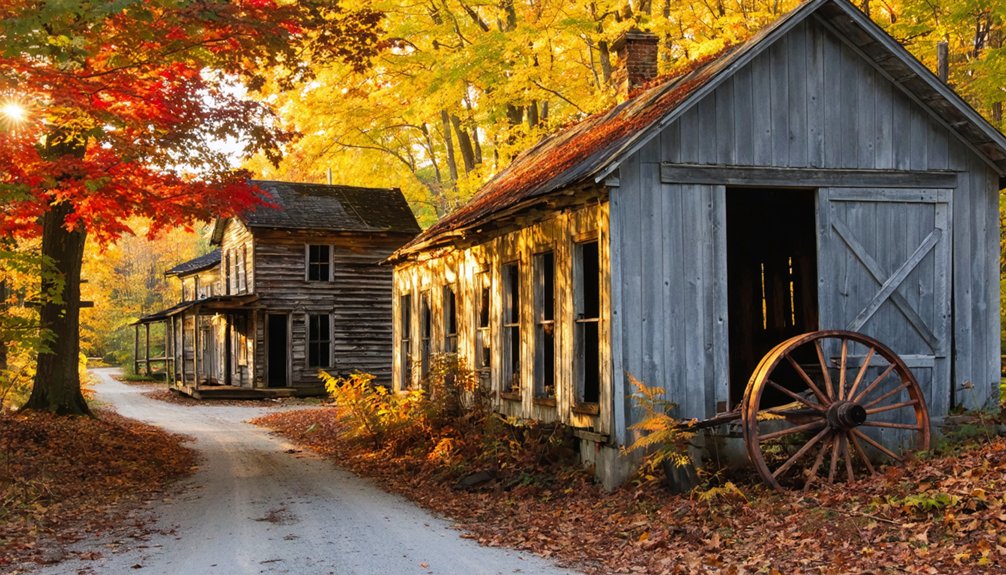
Where Outagamie County’s agricultural plains surrender to scattered woodlands, Wakefield stands frozen between memory and decay at coordinates 44°15′56.33″N 88°32′13.52″W. You’ll discover abandoned structures wearing autumn’s copper crown, their weathered frames softened by maple brilliance.
This semi-abandoned settlement whispers haunted legends through October winds while crimson leaves swirl past empty doorways.
Your Fall Exploration Guide:
- Dawn visits capture mist rising through skeletal buildings draped in golden foliage
- Photography opportunities abound where nature reclaims civilization’s forgotten corners
- Historic building remnants create striking contrasts against fiery autumn canopies
- Woodland trails wind past vanished neighborhoods now transformed into seasonal spectacles
You’re walking where Grand Chute’s pioneers once thrived, where population collapsed to ghostly silence.
The crunch of leaves beneath your boots echoes through abandoned spaces, offering solitary freedom among fall’s spectacular transformation.
Planning Your Wisconsin Ghost Town Foliage Tour
Timing transforms everything when you’re chasing Wisconsin’s ghost towns through their autumn metamorphosis. You’ll want mid-October for Door County’s forgotten settlements, when maples ignite around weathered foundations and wildlife photography opportunities peak along the Fruit Loop’s abandoned sites.
Pack for exclusive camping near Baraboo’s ghost towns—mornings bring mist rising through Clifton’s limestone ruins while oaks blaze gold overhead.
Check Travel Wisconsin’s Fall Color Report weekly; weather shifts these spectral landscapes dramatically. Northern spots like Oil City glow earliest, while southern Blue Mounds rewards late-season wanderers with hickory-framed remnants.
Devil’s Lake makes your basecamp, bluff trails connecting you to North Freedom’s railway museum by day, secluded Nowell structures by dusk. You’re not following crowds—you’re tracking vanished communities through their most photogenic season.
Frequently Asked Questions
What Should I Wear When Visiting Wisconsin Ghost Towns in Fall?
Like autumn leaves layering forest floors, you’ll need moisture-wicking base layers, fleece mid-layers, and waterproof jackets for Wisconsin’s unpredictable fall weather. Sturdy boots protect ankles on crumbling historical architecture paths, while gloves combat morning chills during your ghost town adventures.
Are Wisconsin Ghost Towns Safe to Explore With Children?
Most Wisconsin ghost towns aren’t safe for children due to unstable abandoned structures and hidden hazards. While haunted legends intrigue adventurous spirits, crumbling foundations and rusty debris create real dangers. You’ll find safer fall adventures at maintained historical parks instead.
Can I Camp Near These Ghost Town Locations During Autumn?
You’ll find campgrounds near Wisconsin’s historical ruins where vibrant autumn colors blaze against weathered foundations. Devil’s Lake and Perrot State Park offer designated sites, while Chequamegon-Nicolet’s dispersed camping lets you roam freely among hardwoods near forgotten settlements.
What Wildlife Might I Encounter at Wisconsin Ghost Towns in Fall?
You’ll encounter woodland mammals like chipmunks rustling through amber leaves and white-tailed deer ghosting between abandoned structures. Local birdwatching reveals migrating songbirds, hawks circling overhead, and woodpeckers echoing through silent, decaying settlements—nature reclaiming forgotten freedom.
Do I Need Permits to Photograph at These Ghost Town Sites?
You’ll generally roam freely through Wisconsin’s abandoned settlements, but permitting requirements vary by location. Before capturing those weathered buildings through golden leaves, check photography regulations with local historical societies—some preserved sites restrict commercial shoots.
References
- https://wadedesigninc.com/the-8-best-spots-in-wisconsin-to-view-peak-fall-colors/
- https://ringlinghousebnb.com/blog/small-towns-in-wisconsin-fall-colors/
- https://www.worldatlas.com/places/7-autumn-ready-wisconsin-towns-for-a-weekend-retreat.html
- https://northcentralwisconsin.com/fall/
- https://en.wikipedia.org/wiki/List_of_ghost_towns_in_Wisconsin
- https://boulderjct.org/four-wonderful-reasons-to-visit-boulder-junction-right-now/
- https://www.onlyinyourstate.com/trip-ideas/wisconsin/ghost-town-fall-wi
- https://99wfmk.com/clifton-ghost-town/
- https://bonnevillemariner.wordpress.com/2008/05/02/forgotten-ghost-town-of-clifton-reminds-visitors-of-minings-boom-and-bust-times/
- https://gloverparkhistory.com/estates-and-farms/clifton/clifton/