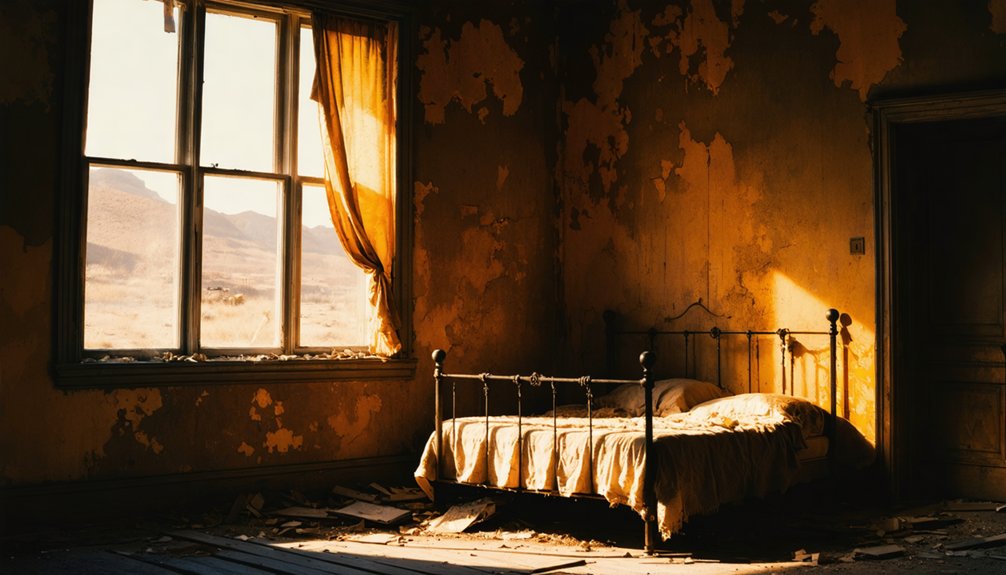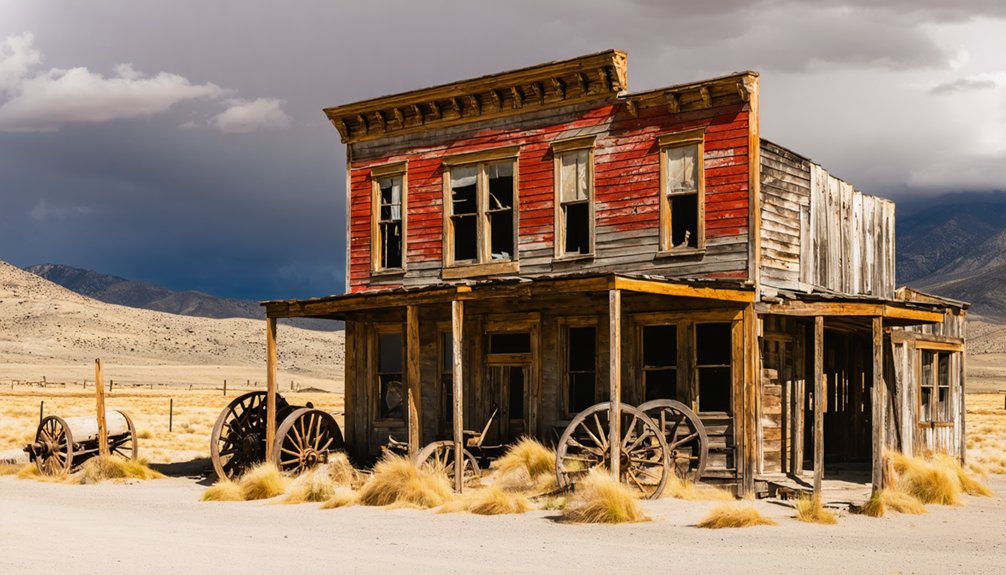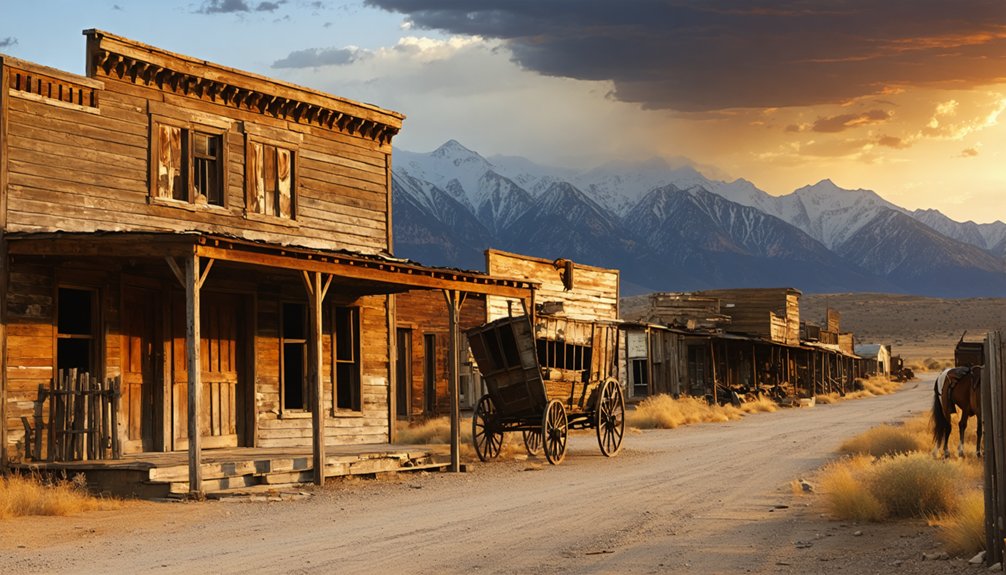
You’ll find California’s best weekend ghost towns within three hours of LA, where Calico’s 480-acre silver camp offers family-friendly mine tours, Bodie’s 110 buildings stand frozen at 8,379 feet in authentic arrested decay, and Silver City’s 20 relocated structures near Lake Isabella welcome self-guided exploration for just $5.50. Spring and fall deliver perfect 60-80°F temperatures for hiking to remote sites like Cerro Gordo’s mountain perch or Panamint City’s challenging 15-mile canyon trek, and knowing what gear to pack makes all the difference.
Key Takeaways
- Bodie State Historic Park offers 110 preserved buildings in authentic “arrested decay” at 8,379 feet elevation near Mammoth Lakes.
- Calico Ghost Town features accessible attractions including saloons, mines, and Saturday ghost tours just off Interstate 15 near Barstow.
- Silver City Ghost Town provides self-guided tours of 20+ original structures for only $5.50, located 45 minutes from Bakersfield.
- Cerro Gordo Mines sits at 8,500 feet with restored buildings, aerial tramway remnants, and stunning Inyo Mountains views.
- Most ghost towns require multi-day trips with advance lodging reservations, especially during peak seasons near Death Valley.
Calico Ghost Town: A Family-Friendly Mining Adventure in Barstow
Where else can you step into an authentic 1880s silver mining camp without leaving modern California? Calico Ghost Town delivers exactly that—a genuine slice of mining history nestled in the Mojave Desert’s colorful mountains.
This isn’t some sterile museum; you’ll wander through Lil’s Saloon, explore Maggie’s Mine, and browse Lane’s General Store, where locals claim Lucy Lane’s spirit still lingers. The town’s 480 acres invite you to camp under desert stars after exploring over 500 former mine sites that once produced $20 million in silver.
Saturday ghost tours add spine-tingling thrills to your weekend escape. Located just three miles off Interstate 15 between Barstow and Yermo, Calico proves you don’t need permission slips or crowded tourist traps to experience authentic Old West adventure. Governor Arnold Schwarzenegger declared Calico California’s official Silver Rush Ghost Town, cementing its status as a premier historic destination. Families can ride the Railroad Odessa train to see how miners transported silver ore from the mountains to processing facilities.
Bodie State Historic Park: Frozen in Time at 8,000 Feet
Standing at 8,379 feet in the Eastern Sierra, Bodie State Historic Park transports you to 1880s gold rush California with eerie authenticity. You’ll wander past 110 buildings maintained in “arrested decay”—a historical preservation philosophy that keeps structures exactly as found, without restoration.
Frozen in time through arrested decay, Bodie’s 110 weathered structures stand exactly as gold rush pioneers left them in the 1880s.
Peer through dusty windows at dishes still on tables, bottles lining saloon bars, and goods stocking store shelves.
This ghost town architecture tells raw stories: 65 saloons once lined Main Street when 10,000 fortune-seekers chased $70 million in gold. Now silence dominates where chaos reigned.
Plan your visit carefully—it’s 48 miles from civilization near Mammoth Lakes. The town’s name appears on disambiguation pages that distinguish it from other places and people called Bodie. The town owes its name to W. S. Bodey, a prospector who discovered gold here in 1859 but tragically died in a blizzard shortly after his discovery. Don’t pocket artifacts; rangers enforce strict protection rules.
The Bodie Foundation helps preserve this remarkable snapshot of freedom-seeking pioneers who gambled everything on striking it rich.
Silver City Ghost Town: Hidden Gem Near Lake Isabella
Tucked away in the Southern Sierra foothills just minutes from Lake Isabella, Silver City Ghost Town preserves over 20 authentic structures from the 1850s gold rush that nearly rivaled the Mother Lode’s legendary strikes.
You’ll walk through weathered buildings maintained in “arrested decay”—hand-hewn lumber and square-forged nails still visible—relocated from vanished mining camps like Keyesville and Whiskey Flat before bulldozers claimed them forever.
The town’s original Isabella jail, complete with floor shackles that once held gunslinger Newt Walker, anchors this roadside collection of Old West architecture that makes an ideal detour during your Kern River Valley adventure.
Among the relocated structures stands the Apalatea/Burlando House, believed to be the oldest building on site, which once operated as both a saloon and general store serving thirsty miners.
The site opens daily from 10 a.m. to 4 p.m. with admission at $5.50 for adults and $4.50 for children ages 5-12, while kids under 5 enter free.
1850s Mining Era History
The year 1855 changed everything for California’s Kern River Valley when prospectors struck gold near present-day Kernville, triggering a second wave of fortune seekers just seven years after the famous Sutter’s Mill discovery.
You’ll find remnants of this wild era throughout Silver City, where miners once perfected gold panning and mining techniques in harsh, unforgiving terrain.
The rush created several boom towns almost overnight:
- Keyesville – Known for rich placer deposits and innovative sluicing operations
- Whiskey Flat – Rough-and-tumble camp where miners spent their earnings
- Miracle – Aptly named for its surprisingly productive claims
- Claraville – Short-lived settlement that vanished within a decade
These settlements embodied frontier freedom but proved unsustainable.
As gold deposits depleted rapidly, prospectors abandoned their claims, leaving ghost towns scattered across the valley’s rugged landscape. The Dave Mills family began salvaging and restoring 20 buildings from these forgotten camps in the 1970s, preserving crucial pieces of California’s mining heritage. Today, these sites attract hiking guides and adventurers seeking hidden history in California’s backcountry.
Preserved Old West Structures
When Dave Mills and his family recognized that Lake Isabella’s expanding waters would swallow countless pieces of California history, they launched an ambitious rescue mission in the late 1960s. They hauled structures from seven doomed mining camps—Keyesville, Whiskey Flat, Claraville—preserving them in “arrested decay” rather than slicking them up with modern polish.
You’ll find over 20 authentic buildings waiting for your exploration at 3829 Lake Isabella Boulevard. Step inside the original Isabella jail where gunslinger Newt Walker rattled his shackles in 1905.
Run your hands along the hand-hewn lumber of the Apalatea House, the valley’s oldest standing structure. These outdoor exhibits let you wander freely through crooked doorways and across weathered boardwalks, experiencing genuine Old West atmosphere without velvet ropes blocking your path. The old Marshall building relocated here once stood at Big Blue Mine, an early gold discovery site that helped spark the region’s mining boom.
The ghost town sits just 45 minutes from Bakersfield, making it an easy addition to any Kern Valley adventure.
Historical preservation never felt this raw.
Southern Sierra Road Trip
Just thirty minutes northeast of Lake Isabella, Silver City sprawls across a Bodfish hillside like a movie set that forgot to pack up and leave. Over 20 buildings rescued from seven frontier settlements create this composite ghost town where you’ll walk through authentic saloons, peer into the notorious Isabella jail with shackles still bolted to floorboards, and explore the valley’s oldest standing structure—the Apalatea/Burlando House with its hand-forged square nails.
Essential visit details:
- Self-guided tours let you explore at your own pace
- Open year-round, 10 AM–4 PM weekdays/Sundays
- Thousands of authentic mining artifacts throughout
- Free parking and no crowds
After exploring, head to nearby Bodfish for artisan crafts and local cuisine. The Mills family’s 20,000 restoration hours preserved California’s gold rush grit without sanitizing history’s rough edges.
Cerro Gordo Mines: Remote Silver Mining History in the Inyo Mountains
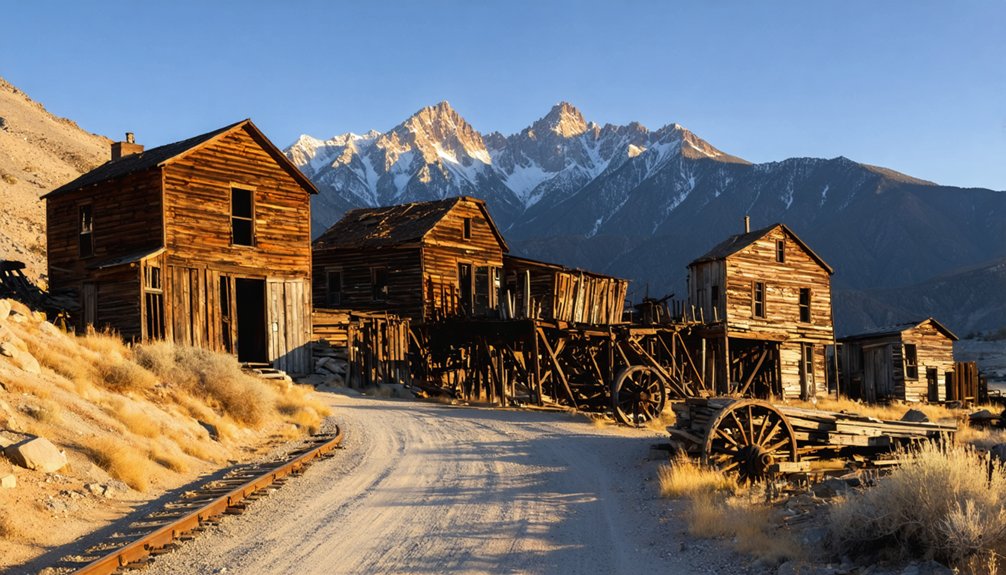
Perched at 8,500 feet on the western slope of the Inyo Mountains, Cerro Gordo represents one of California’s most dramatic silver boom stories. You’ll find this privately owned ghost town thirty miles south of Independence, where Mexican prospectors struck it rich discovering silver in the early 1860s.
The geological formations here—strongly folded limestone containing lenticular cerussite masses—yielded $17 million worth of silver, lead, and zinc before operations ceased in 1949.
Mining technology evolved from simple adobe roasting ovens to sophisticated smelters and an impressive 6-mile aerial tramway built in 1911.
At its peak, 1,500 miners stripped these mountains bare.
Today, you can explore remnants of the pump house and tramway buildings, standing testament to an era when fortune-seekers defied isolation for mineral wealth.
Panamint City: Death Valley’s Lawless Mining Outpost
You’ll find Panamint City’s crumbling smokestack and mill foundations at the end of a grueling 15-mile round-trip hike through Surprise Canyon—a fitting challenge for reaching what was once called the West’s rawest hellhole.
The locked gate installed in 2001 means you’re committed to a full day of scrambling over boulders and wading through creek crossings, so base yourself at one of Death Valley’s lodges the night before.
Pack extra water and start at dawn; this remote corner of Death Valley National Park rewards prepared hikers with petroglyphs, outlaw history, and ruins that few visitors ever see.
Remote Desert Mining History
At 6,500 feet in the remote Panamint Range, Panamint City’s story begins with a double-cross that set the tone for one of Death Valley’s most lawless outposts. When Kennedy, Stewart, and Jacobs discovered silver here in 1872, stage robbers tracked them down and muscled into their claim.
This wild beginning attracted 5,000 fortune-seekers by the mid-1870s.
You’ll find remnants of remarkable mining technology scattered throughout Surprise Canyon:
- A 2,600-foot aerial tramway that hauled ore from Wyoming Mine
- Twenty-stamp mills that crushed rock into silver-bearing powder
- 450-pound silver cannonballs—too heavy to steal—that replaced standard transport
- The 2,300-foot Lewis Tunnel from 1920s revival attempts
Ghost town preservation efforts now protect these ruins within Death Valley National Park, letting you explore this untamed chapter of American independence.
Abandoned Town Exploration Tips
Reaching Panamint City demands serious commitment—this isn’t a casual afternoon adventure. You’ll tackle six and a half miles through Surprise Canyon with 3,000 feet of elevation gain, traversing waterfalls and flash flood terrain that’s claimed structures since 1876.
The BLM locked the gate in 2001, leaving only foot access for experienced backpackers.
Pack topographic maps and plan multi-day provisions—water sources run scarce in this remote pocket of freedom.
Once you arrive, urban decay tells stories the guidebooks miss: explore “The Castle,” “The Hilton,” and that crumbling 1875 smokestack.
Scattered foundations mark where 2,000 lawless souls once walked a mile-and-a-half main street.
Historical preservation here means leaving artifacts untouched—your reward is witnessing authentic Western chaos frozen in desert time.
Death Valley Lodging Options
Since Panamint City sits deep in backcountry wilderness without services, you’ll need to base yourself at Death Valley’s established accommodations.
After examining historical artifacts and learning about 1870s mining techniques at the ghost town, you’ll appreciate returning to creature comforts.
Your options range from rustic to refined:
- Panamint Springs Resort – Closest base camp, offering motel rooms and camping 20 miles west
- Stovepipe Wells Village – Mid-park location with hotel, RV sites, and general store
- Furnace Creek Resort – Full-service lodging with restaurants and visitor center access
- Wildrose Campground – Free primitive camping in the Panamints for self-sufficient adventurers
Book ahead during peak seasons.
Most visitors tackle Panamint City as a day trip, dedicating 6-8 hours for the rough approach and on-site exploration before retreating to civilization.
Goffs Ghost Town: Mojave Desert’s Abandoned Railroad Junction
Deep in the eastern Mojave Desert, where searing heat shimmers off abandoned railroad tracks, Goffs stands frozen in time—a ghost town that once thrived as a vital junction on the Atlantic and Pacific Railway.
You’ll find the 1914 Mission-style schoolhouse anchoring this windswept settlement, a tribute to historic preservation efforts by the Mojave Desert Heritage and Cultural Association.
During WWII, this lonely outpost transformed into one of General Patton‘s training camps, where 10,000 soldiers prepared for North African desert warfare—a fascinating chapter of military history you can explore through outdoor displays.
Today, you’re free to wander among working stamp mills and mining artifacts, camp under star-filled skies via Harvest Hosts, and spot protected desert tortoises roaming this desolate landscape near the Nevada border.
Planning Your Ghost Town Road Trip From Los Angeles
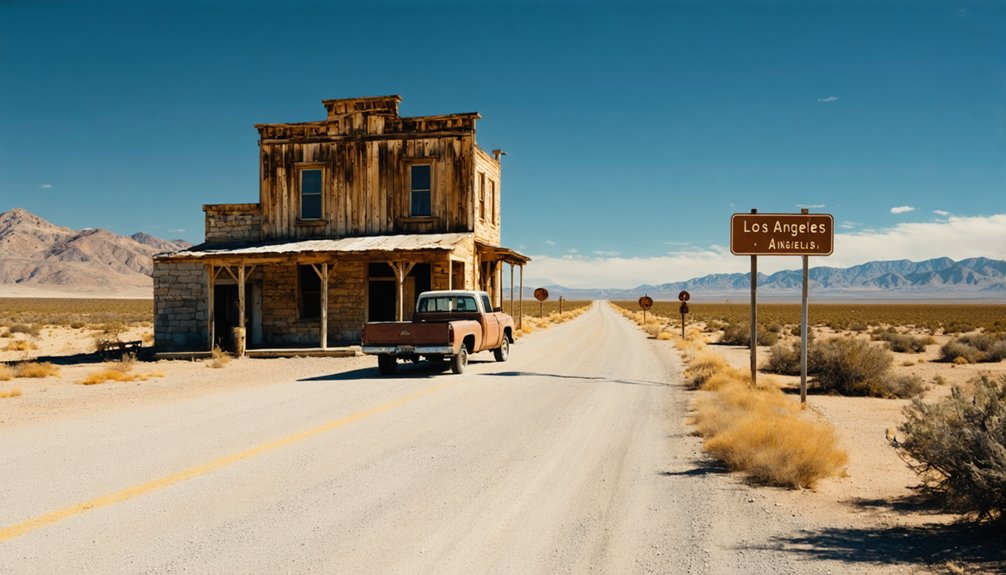
You’ll want to map your ghost town adventure based on drive times—Calico sits just 2 hours out via I-15.
In contrast, Bodie demands a full 6-hour commitment through the eastern Sierras.
Pack more water than you think you need, along with snacks and a full tank of gas, since many of these sites offer zero services. Bodie has potable water but no food.
Fall delivers perfect temperatures and spooky atmosphere.
But if you’re braving summer heat, arrive at dawn before the desert turns into an oven.
Best Routes and Distances
Planning your ghost town adventures from Los Angeles becomes straightforward once you understand the hub-and-spoke pattern these historic sites create around the city.
Route planning reveals distinct corridors: the close-in Mentryville sits just 34 miles north via I-5, perfect for afternoon escapes.
Desert destinations branch northeast and east—Calico’s 110 miles along I-15, Randsburg’s 140-mile journey up CA-14, and Pioneertown’s 120-mile trek via I-10 demand full-day commitments.
Distance tiers shape your adventure:
- Under 50 miles: Mentryville (46 minutes)
- 100-120 miles: Calico, Pioneertown (1.5-2 hours)
- 140+ miles: Randsburg, Allensworth (2.5-3 hours)
Historical preservation sites like Allensworth require the longest drive at 185 miles through Tejon Pass.
You’ll navigate highways where freedom-seekers once struck gold, establishing communities that now reward your wanderlust with authentic Western atmosphere.
Essential Supplies and Preparation
Before you chase the ghosts of California’s mining past, your vehicle needs a thorough once-over that goes beyond checking the gas gauge.
Check that spare tire, pack jumper cables, and toss in a tire gauge—remote desert roads don’t offer roadside assistance.
Vehicle maintenance isn’t glamorous, but it’s your ticket to freedom when pavement turns to dust.
Personal safety means more than a first aid kit, though you’ll want bandages and painkillers.
Pack a flashlight, keep your AAA card accessible, and store emergency contacts in your glovebox.
I learned this stuffing mechanics gloves into my trunk before Bodie—they saved me when a radiator hose needed tightening.
Layer weather-appropriate clothing, bring sun protection, and pack extra water.
Ghost towns reward the prepared, not the reckless.
Seasonal Timing Considerations
California’s ghost towns shift personalities with the calendar, and timing separates magical weekends from miserable ones. You’ll dodge sweltering 100°F+ Mojave summers and snow-locked Sierra passes by targeting seasonal shifts.
Spring’s 60-80°F sweet spot transforms desert ruins into hiking paradise, while fall’s cooler days gift you solitude before winter closes Bodie entirely.
Prime visiting windows:
- Spring (March-May): Mild temps, Randsburg reenactments, minimal visitor density
- Fall (September-November): Calico ghost tours, Halloween events, pre-snow Bodie access
- Winter weekdays: Empty Amboy streets, authentic isolation (pack chains for Highway 395)
- Avoid July-August: Flash floods, crowds, dangerous heat
Winter’s freezing nights and summer’s tourist hordes bookend your planning. Memorial Day spikes visitor density everywhere—choose shoulder seasons when ghost towns actually feel abandoned.
Exploring abandoned places in California can reveal the rich history and stories of communities that once thrived. These hidden gems are often nestled within breathtaking landscapes, providing a unique experience for adventurers and photographers alike. Plan your visit carefully, as some sites may require permits or have restrictions to preserve their integrity.
What to Bring for Your Desert Ghost Town Adventure
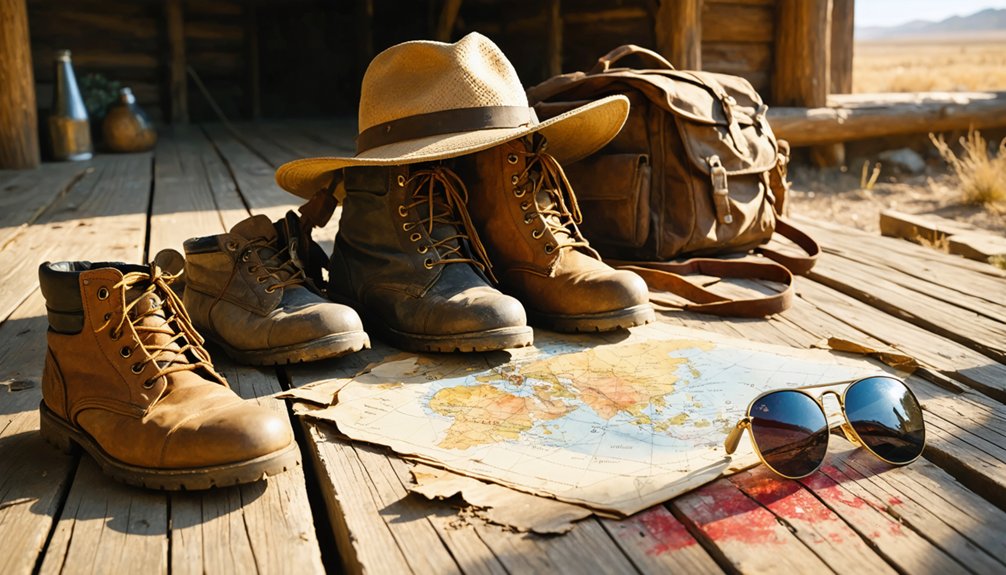
The desert doesn’t forgive poor preparation, and ghost towns—often miles from the nearest services—demand respect. Pack three liters of water daily, plus electrolyte packets for when the sun hammers down.
Your dust mask isn’t optional—I’ve watched wildflower blooms vanish behind sudden whiteouts that’ll sandblast exposed skin. Bring goggles with foam seals, high SPF sunscreen, and UPF clothing.
Desert dust storms materialize without warning—protect your eyes, lungs, and skin or risk serious injury in conditions that transform visibility to zero.
Layer smart: breathable long sleeves for scorching days, warm fleece for nights when temperatures plummet under that spectacular night sky. Don’t skimp on your first aid kit, headlamp, or multi-tool.
Pack baby wipes, trash bags, and extra batteries. Sturdy boots protect against rattlesnake country and broken glass from century-old structures.
Your portable charger might save your navigation when cell towers are ghost stories themselves.
Best Times of Year to Visit California’s Ghost Towns
October transforms California’s ghost towns into their most magical—and most manageable—selves. You’ll find Calico hosting its legendary Ghost Haunt with scare attractions and live shows. Meanwhile, the desert temperatures finally cooperate with your exploration plans.
Skip the brutal summer heat that makes Randsburg unbearable. Also, avoid crowded summer weekends at Bodie.
Optimal visiting windows are as follows:
- Fall (October-November): Perfect desert temps, spooky events, minimal crowds
- Spring (April-May): Wildflower peaks near towns like Randsburg, mild weather
- Winter: Accessible before Sierra snow closes Bodie roads
- Avoid June-August: Oppressive desert conditions, packed parking lots
Silver City and Randsburg shine during shoulder seasons when you’re not fighting extreme temperatures.
Time your High Sierra visits before snow arrives, keeping Bodie accessible through early winter.
Overnight Stays and Camping Near Historic Mining Sites
Sleeping under stars near crumbling mine shafts adds an unforgettable dimension to your ghost town weekend. You’ll find established campgrounds at Calico Ghost Town Regional Park and Malakoff Diggins, where tent sites sit within walking distance of preserved structures.
For rawer experiences, dispersed camping near Bodie lets you wake up steps from 200 abandoned buildings showcasing authentic ghost town architecture.
The Mammoth Consolidated Mine area in Inyo National Forest offers primitive sites among bunkhouse remnants and diesel-powered mills—perfect for examining historic mining technology up close.
Remote Ballarat provides ultimate freedom with desert camping near adobe ruins and weathered shacks.
Pack permits where required, respect arrested decay preservation, and you’ll experience these mining sites as few daytrippers ever do.
Frequently Asked Questions
Are Ghost Town Tours Safe for Young Children and Toddlers?
Ghost town tours aren’t ideal for toddlers—long walks and complex stories won’t hold their attention. Kids 6+ handle family-friendly activities better, enjoying historical preservation tales without nightmares. You’ll want proper shoes and weather gear for everyone’s comfort.
Do I Need Special Permits to Explore Abandoned Mines?
Like wandering into a dragon’s lair, exploring abandoned mines requires permits—you’ll need mining permit requirements met and landowner permission. Abandoned mine safety regulations protect your freedom to roam while preventing environmental damage and legal consequences.
Can I Metal Detect or Collect Artifacts at Ghost Towns?
You’ll need landowner permission and must follow metal detecting regulations strictly. Artifact collection laws prohibit taking items from protected sites—it’s a felony on federal lands. Private property with written consent offers your best legal opportunity for treasure hunting.
Are Ghost Towns Wheelchair Accessible for Visitors With Mobility Issues?
Finding your way through ghost towns can feel like threading a needle—challenging but possible. You’ll find wheelchair friendly pathways at places like Ashcroft, though terrain varies wildly. Accessibility improvements remain inconsistent, so research specific sites beforehand and bring adaptive equipment for freedom.
Which Ghost Towns Allow Overnight RV Parking or Boondocking?
You’ll find excellent boondocking at Bodie, Ballarat, and Rhyolite, where you can park free on BLM land. Local guides recommend four-wheel drive for rougher routes. Calico offers hookups if you’re prioritizing historical preservation visits over dispersed camping.
References
- https://www.youtube.com/watch?v=3AkK0gKGmmg
- https://lafamilytravel.com/10-best-california-ghost-towns-to-visit-this-summer/
- https://www.visitcalifornia.com/road-trips/ghost-towns/
- https://whimsysoul.com/must-see-california-ghost-towns-explore-forgotten-histories/
- https://www.tripadvisor.com/ShowTopic-g1-i12567-k12202207-o20-Ghost_towns_in_California_Arizona-Road_Trips.html
- https://www.hertz.com/p/american-road-trip-planner/west-coast/ghost-towns-of-the-west
- https://main.sbcounty.gov/2025/05/29/san-bernardino-county-history-calico-ghost-town/
- https://www.mclbbarstow.marines.mil/Media-Room/Stories/Article/Article/509284/calico-barstows-best-kept-secret/
- https://www.youtube.com/watch?v=ILv_uPHtpyM
- https://californiathroughmylens.com/calico-ghost-town/