You can sleep in Arizona’s most atmospheric ghost towns at Jerome Grand Hotel, a former hospital with 8,000 deaths still echoing through vintage hallways, or Ghost City Inn’s 1890s Victorian boarding house where miners once rested. Globe offers the gem-themed Chrysocolla Inn in an authentic mining boardinghouse, while Oatman provides rustic stays near wild burros and haunted saloons. Chloride’s Shep Miner’s Inn features thick adobe walls from the Butterfield Stage era. Reserve early—these historic accommodations fill quickly, and there’s much more to discover about each location’s paranormal past and frontier charm.
Key Takeaways
- Jerome offers overnight stays at the haunted Jerome Grand Hotel and Ghost City Inn, both featuring paranormal activity and Victorian-era charm.
- Tombstone Monument Ranch provides Old West-themed rooms with period storefronts, mountain views, and modern amenities like WiFi and air conditioning.
- Oatman’s historic hotels, including the reputedly haunted Oatman Hotel, offer authentic Wild West lodging near Route 66 and wild burros.
- Globe’s Chrysocolla Inn B&B occupies an 1800s mining boardinghouse with gem-themed rooms near active mining sites and Besh-Ba-Gowah Ruins.
- Chloride’s Shep Miner’s Inn features authentic adobe walls from the 1800s with on-site dining and proximity to Grand Canyon West.
Jerome: America’s Most Vertical Ghost Town
The mining history runs deep here, literally. Eighty-eight miles of tunnels snake beneath your feet, remnants of $800 million in extracted copper.
Walk past the Sliding Jail, which crept 200 feet downhill from relentless blasting.
Today’s Jerome offers overnight stays in buildings that survived five major fires, countless explosions, and near-total abandonment.
It’s preservation through sheer defiance.
The Connor Hotel stairway registers intense paranormal activity, with EMF meters spiking without explanation.
At its peak, this vertical town housed 15,000 residents from 30 different nationalities before the Great Depression and ore depletion nearly erased it from existence.
Jerome Grand Hotel: Where Spirits Still Walk the Halls
Perched at 5,240 feet on Cleopatra Hill, the Jerome Grand Hotel dominates the town’s skyline as it has since 1927—though it wasn’t always a place people checked into voluntarily. This 30,000-square-foot concrete structure served as United Verde Hospital, treating mining injuries until the copper dried up in the 1950s.
Built as a hospital in 1927, this imposing concrete fortress treated miners high above Jerome until the copper boom went bust.
Nearly 8,000 people died here between those walls.
After 44 years abandoned, Larry Altherr transformed it into Arizona’s highest-elevation hotel in 1994. You’ll find the original 1926 Otis elevator still running and that vintage Kewanee Boiler cranking out heat. The hotel initially opened with only 6 rooms available to guests. Altherr’s renovation required hauling out over 1,000 truckloads of debris to create 70 parking spaces by 1996.
But you’ll also hear gurney wheels rolling down empty hallways and voices drifting from vacant rooms. The haunted history draws paranormal investigations regularly—making this one destination where you might get more than you booked.
Ghost City Inn: Award-Winning Historic Lodging in Jerome
Built in the late 1890s as a boarding house for mine management, this Victorian structure has outlasted the copper boom that created it. You’ll find Ghost City Inn perched at 541 Main Street, where historical architecture meets ghost stories that’ve accumulated over a century.
The building’s evolved through multiple lives—restaurant, art gallery, ashram—before becoming Jerome’s award-winning bed and breakfast in 1994.
Rates run $105-$155 nightly, including blueberry-stuffed French toast that’ll fuel your exploration of America’s “wickedest town in the west.”
The inn’s nestled against Cleopatra Hill’s slope, offering stunning views of the valley below. From your window, you’ll gaze across Verde Valley toward Sedona’s red rocks, a panorama that connects Jerome’s mining heritage to Arizona’s natural splendor. You’re staying in Jerome’s oldest continuously running accommodations, where mine managers once plotted copper extractions and modern travelers now chase authentic Western history without tourist-trap artifice. Ingird, the inn’s owner from Germany, creates a welcoming atmosphere by sharing travel stories with guests, making your stay feel like visiting family rather than checking into an impersonal hotel.
Globe-Miami: Active Ghost Towns With Paranormal Appeal
Ninety miles east of Phoenix, Globe-Miami defies the typical ghost town definition—these sister cities pulse with living residents while their copper mining past haunts every street corner.
You’ll find authentic paranormal experiences at the 1910 Gila County Sheriff’s Office, where monthly ghost tours explore cells that witnessed vigilante justice and mob violence. The mining history runs deep here, from operational pits to restored worker housing you can tour during cultural festivals.
Between ghost hunts, you’re perfectly positioned for Salt River Canyon adventures and Roosevelt Lake expeditions. Spend your days browsing the Cobre Valley Center for the Arts, where local artists display their work in a building that echoes the town’s creative renaissance.
Stay at Noftsger Hill Inn’s Victorian rooms or book a casita with Superstition Mountain views. With over 20 pet-friendly accommodations available, you can bring your four-legged companion along for the ghost town adventure.
The Bullion Plaza School museum showcases Mexican-American heritage, while Besh-Ba-Gowah Ruins sit just two miles from downtown—living towns where spirits and history refuse to surrender.
Chrysocolla Inn B&B: Gem-Themed Rooms in Globe
Your paranormal investigations in Globe deserve equally historic accommodations, and the Chrysocolla Inn B&B at 246 E Oak Street delivers mining-era authenticity without sacrificing modern comfort.
Historic mining-town accommodations meet paranormal exploration at the Chrysocolla Inn, where 1800s authenticity blends seamlessly with modern amenities.
This late-1800s boardinghouse once sheltered copper miners who hot-bunked between shifts, sharing cramped quarters with just a cot and corner sink.
The Rooneys’ decade-long historic renovation transformed the demolition-bound property into six spacious gem-themed rooms, each featuring clawfoot bathtubs and chandeliers.
They laid every black-and-white tile themselves, sourcing 90% of furnishings from local antique shops.
The mineral themed decor honors Globe’s mining heritage—named for chrysocolla, a copper-derived gemstone found throughout the region.
You’ll enjoy Mediterranean breakfasts on the wraparound porch overlooking Historic Downtown Globe, with the old jailhouse and antique shops within walking distance.
Local lore even connects Big Nose Kate to the property’s colorful past.
Before the Rooneys purchased it in 2000, the building served as a training site for firefighters.
The inn’s 4.9 out of 5 rating from 103 reviews reflects consistently high scores across rooms, service, cleanliness, and the memorable home-cooked breakfast experience.
Tombstone Monument Ranch: Old West Storefronts Meet Modern Comfort
Step through swinging saloon doors into your room at Tombstone Monument Ranch, where each of the 17 uniquely themed storefronts recreates an 1880s business facade—complete with weathered wood and vintage signage—while hiding modern luxuries like plush bedding and climate control behind the Old West veneer.
I once watched guests pose for photos outside their “General Store” room before heading inside to stream movies on the flat-screen TV, perfectly capturing this property’s dual commitment to authenticity and comfort.
Located just 2.5 miles from Tombstone’s famous historic district on a quiet dirt road, you’ll find premium suites with kitchenettes and mountain-view terraces that make extended stays feel less like camping in the past and more like inhabiting a carefully curated Western film set.
Authentic Storefront Room Designs
At Tombstone Monument Ranch, your accommodations aren’t just rooms—they’re faithful recreations of an 1880s frontier town nestled in the Dragoon Mountains.
You’ll choose from 17-18 Western storefronts, each one uniquely themed. Sleep in the Marshal’s Office, the Grand Hotel, or even the Courthouse—authentic architecture that transports you 140 years back in time.
Standard rooms feature two queen beds with street views of your personal ghost town.
Upgrade to a deluxe room for a king bed and private terrace overlooking the Dragoons (around $293 nightly).
Need more space? Junior suites offer separate sleeping areas with both queen and king beds—perfect for watching sunrise paint the mountains gold.
You’re just steps from the saloon, pool, and corrals, yet wonderfully isolated on a dirt road 2.5 miles from Tombstone’s crowds.
Historic Charm, Modern Amenities
While weathered wooden facades and antique hitching posts set an authentic 1880s scene, you won’t sacrifice modern convenience for atmosphere. Your room blends frontier aesthetics with contemporary comforts—luxury bedding ensures restful sleep after dusty trail rides, while free WiFi keeps you connected if needed.
Modern decor complements rustic architecture without overwhelming the Old West vibe.
Premium suites deliver the full package: air conditioning battles Arizona heat, kitchenettes offer independence from dining schedules, and spacious bathrooms provide genuine relaxation. After exploring Tombstone’s legendary streets, you’ll return to ceiling fans, flat-screen TVs, and private terraces overlooking the Dragoon Mountains.
The ranch understands that experiencing history shouldn’t mean enduring discomfort. You’re free to immerse yourself in frontier character while enjoying the amenities that make extended stays genuinely enjoyable.
Shep Miner’s Inn: Adobe Accommodations From the Butterfield Stage Era
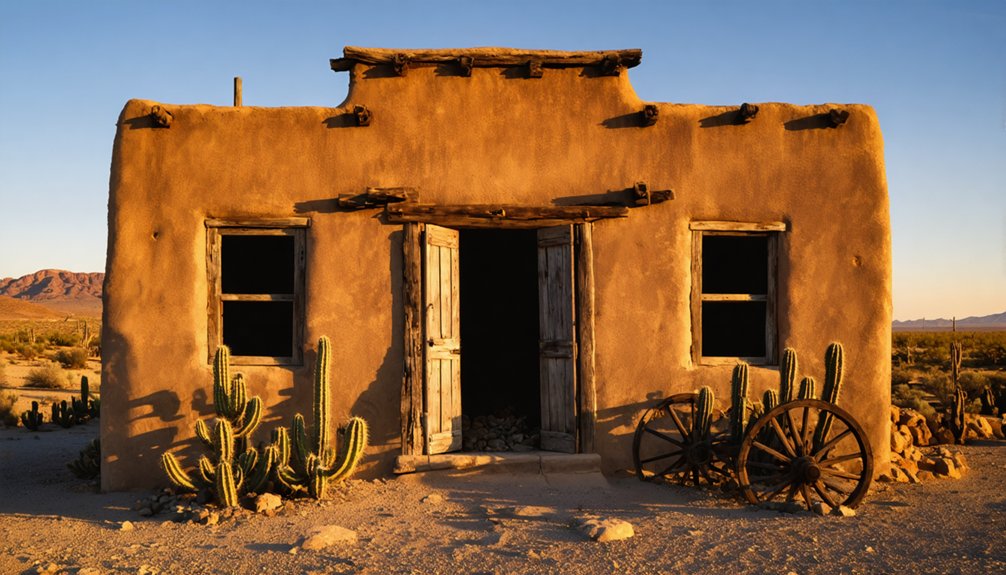
You’ll sleep within thick adobe walls that once sheltered dusty stagecoach passengers traveling the Butterfield Stage Line in the mid-1800s.
The inn’s historic architecture—complete with original construction techniques—creates an authentic Old West atmosphere that modern hotels can’t replicate.
Though you won’t find flat screens or mini-fridges here, after settling into your room, head downstairs to Yesterday’s Restaurant.
Hearty portions and strong coffee fuel your ghost town explorations without leaving the property.
Historic 1800s Adobe Architecture
Standing solid against the desert winds, the 12-inch adobe walls of Shep Miner’s Inn have sheltered weary travelers since the late 1800s, when stagecoach passengers sought refuge from the dusty routes between territorial outposts.
You’ll find authentic adobe techniques here—blocks hand-molded from sand and mud pulled straight from local stream beds, then sun-cured under the brutal Arizona sky.
This architectural preservation maintains the building’s original integrity through careful patching and plastering, inserting new bricks only where absolutely necessary.
The Spanish brought these methods in the 1500s, and by mid-century, travelers recognized adobe as the Southwest’s signature.
Walk through these rooms with their sparse furnishings, and you’re experiencing the same thick-walled fortress design that protected territorial settlers.
It’s territorial architecture that refuses to surrender.
Butterfield Stage Line Heritage
When the Butterfield Stage Line thundered through southern Arizona’s dusty corridors in the late 1800s, Shep Miner’s Inn opened its thick adobe doors to bone-weary passengers who’d endured days of relentless desert travel. This Butterfield Heritage outpost served travelers crossing the San Pedro River Valley before routes stretched toward Tucson and Mesilla.
Today’s stagecoach history lives in those original 12-inch adobe walls:
- Standard rooms ($119) in authentic block construction from local sand and mud
- Jr. Suites ($129) featuring queen and twin beds for small groups
- Family suites ($149) sleeping up to six adventurers
- 24-hour check-in at Yesterday’s Restaurant—because freedom doesn’t punch a clock
Located in Chloride, America’s oldest continuously inhabited mining town, you’ll find yourself 10 miles from Grand Canyon West, surrounded by wandering deer and jackrabbits.
On-Site Restaurant Dining
At the heart of Shep Miner’s Inn sits Yesterday’s Restaurant, a saloon-style eatery where the scent of biscuits and gravy drifts through adobe corridors each morning.
Restaurant ambiance captures authentic Old West character—you’ll fuel up surrounded by quirky nostalgia before exploring Chloride’s abandoned streets.
The dining room wraps conveniently around guest quarters, eliminating any need to venture far after dusty adventures.
Menu variety spans hearty breakfasts through cold-beer dinners, with steaks and burgers keeping you satisfied after long exploration days.
Check-in starts at 3:00 PM, giving you immediate access to lunch service, while 11:00 AM checkout leaves time for one last breakfast.
Call ahead for dinner—occasional early closures happen in remote territories.
Friendly staff and reasonable pricing make Yesterday’s more than convenient; it’s genuinely good fuel for freedom-seekers.
Oatman: Wild Burros and Route 66 Charm
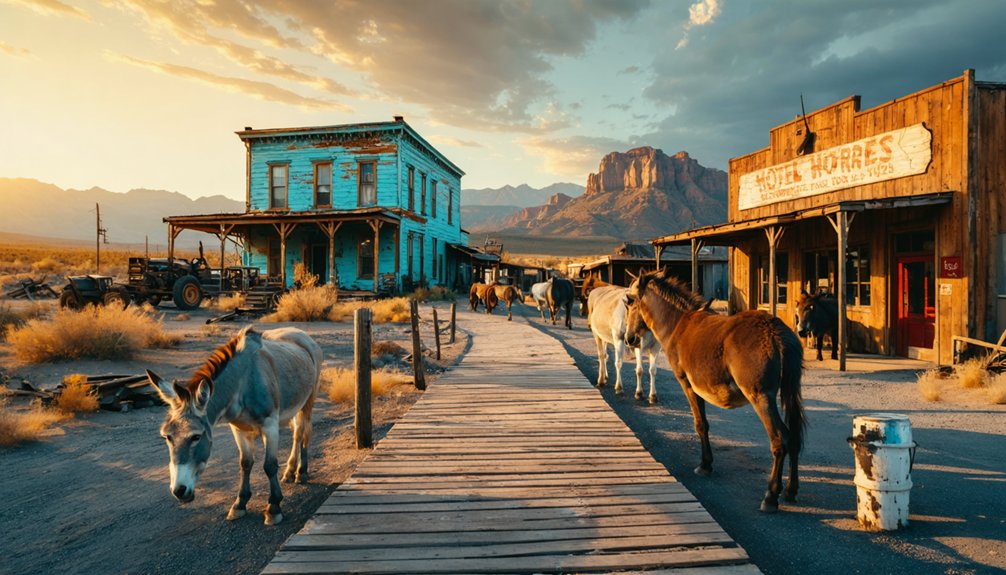
Nestled in the Black Mountains of Mohave County, Oatman owes its existence to a spectacular $14 million gold strike in 1915 that transformed barren slopes into a boomtown of over 10,000 fortune-seekers within months. Though mines closed during WWII and Route 66‘s 1953 bypass nearly abandoned it, you’ll find this living ghost town thrives on Wild West charm.
What makes Oatman unmissable:
- Wild burros descended from miners’ pack animals roam freely, outnumbering the 102 residents—you’re encouraged to feed these protected ambassadors.
- Staged gunfights erupt twice daily along wooden sidewalks lined with saloons and gift shops.
- The haunted Oatman Hotel where Clark Gable’s ghost allegedly lingers.
- Route 66 nostalgia draws worldwide travelers to this authentic mining relic surrounded by desert flora echoing Native traditions.
You’ll experience freedom here that sanitized attractions can’t replicate.
Camping Near Arizona’s Ghost Towns
After exploring Arizona’s weathered storefronts and abandoned mines, you’ll want a place to rest your head under the desert stars—and the state’s ghost towns offer camping options ranging from primitive backcountry sites to full-service RV hookups.
Jerome’s proximity to Potato Patch Campground** puts you 8 miles from painted ladies and art galleries, where ponderosa pines at 7,000 feet** replace saguaros. You’ll wake to mountain air instead of desert heat.
Goldfield Ghost Town eliminates the commute entirely with on-site camping ($30 dry, $50 with hookups) that lets you stumble from your tent to gunfight reenactments.
While Vulture City’s day-use-only policy means you’ll drive 15 miles to Wickenburg for lodging after touring the Assay Building and Blacksmith Shop.
Ghost town photography shines during golden hour, and mining safety improves when you’re staying nearby—no rushing dangerous roads at dusk.
Planning Your Overnight Ghost Town Adventure
You’ll want to book your ghost town accommodations well ahead of time—places like Jerome Grand Hotel and Kentucky Camp’s rustic cabins fill up fast,
especially during Arizona’s prime visiting seasons of spring and fall when temperatures hover in the comfortable 70s.
Pack layers for dramatic temperature swings (desert nights can drop 30 degrees),
plus essentials like flashlights, your own bedding for primitive sites, and plenty of water since these remote locations offer few services.
I learned the hard way that calling ahead about road conditions is vital—
Ruby Ghost Town closes after heavy rains,
and you don’t want to drive 50 miles only to find a locked gate.
Best Times to Visit
Timing can transform your ghost town adventure from merely interesting to utterly unforgettable. You’ll discover each destination reveals its character differently across seasons, weather patterns, and cultural festivals that breathe life into these abandoned spaces.
Optimal visiting windows:
- Spring and fall deliver mild temperatures perfect for exploring Globe-Miami’s agricultural history and Jerome’s hillside streets without scorching heat or winter chill.
- Weekday visits let you escape weekend crowds in Jerome, securing intimate experiences at haunted inns when spirits are most active.
- Summer evenings showcase Cottonwood’s Thursday farmers markets (5PM-dark), celebrating the region’s agricultural heritage through September’s jamboree.
- Winter months attract snowbirds to Oatman’s Route 66 corridor, offering special long-stay rates and cooler desert mornings for burro encounters.
Essential Packing List Items
Since ghost towns offer minimal amenities and zero convenience stores, your packing strategy determines whether you’ll sleep comfortably or shiver through a miserable night in Jerome’s historic bordello-turned-inn.
Your essentials checklist starts with bedding—twin sheets, sleeping bags, and earplugs transform spartan bunks into restful havens.
Layer lightweight long-sleeves and zip-off pants for desert temperature swings from scorching afternoons to freezing nights. Don’t skip the sweater.
Desert sun punishes exposed skin, so pack serious sunscreen, chapstick, and a wide-brimmed hat.
Bring your own towels, dishwashing liquid, and complete food supplies—you’re genuinely off-grid here.
For exploration, sturdy hiking boots, a daypack, camera, and binoculars let you document crumbling stamp mills and distant mountain vistas.
That bandana? You’ll soak it for neck cooling during midday hikes through abandoned mining camps.
Booking Accommodations in Advance
Pack your bags right, then grab your phone—Arizona’s ghost town stays disappear faster than prospectors during a gold rush.
Lock down these reservations early:
- Kentucky Camp requires 30+ days advance through Forest Service at (520) 281-2296—that $75 cabin books solid months ahead.
- Contact Charmayne and Jon Samuelson directly for Dos Cabezas rooms; small properties mean limited availability.
- The Shady Dell and Ghost City Inn fill weekends fast—call (520) 432-3567 or book through property websites.
- Consider weather considerations—spring and fall are prime ghost town season, intensifying competition for beds.
Popular spots like Copper Queen Hotel and Saguaro Sunset Retreat vanish from booking platforms quickly.
Secure your adventure base, then plan local cuisine explorations and trail expeditions around confirmed dates.
Frequently Asked Questions
Are Arizona Ghost Towns Safe to Visit With Children?
Yes, if you choose wisely. Commercial towns like Jerome and Tombstone offer historical safety with child-friendly amenities—guided tours, museums, and secure lodging. Avoid abandoned structures entirely; their weathered floors collapse unexpectedly, turning adventure into disaster quickly.
What’s the Best Season to Visit Arizona’s Ghost Towns?
Spring and fall are your golden tickets—mild seasonal weather makes exploring comfortable, and you’ll dodge the sweltering summers while enjoying manageable tourist crowds. These shoulder seasons offer perfect conditions for authentic, unburdened ghost town adventures.
Do I Need a Four-Wheel Drive Vehicle to Reach These Locations?
You won’t need four-wheel drive for Jerome, Oatman, or Bisbee—standard vehicle rental options work fine. Ruby’s different though, requiring high-clearance for off-road accessibility. I’d skip Ruby after rain; those desert roads become impassable mud traps fast.
Are Pets Allowed at Ghost Town Accommodations in Arizona?
Yes, you’ll find pet-friendly options! Pet policies vary—Kentucky Camp and Tombstone accommodations welcome leashed pets, while Goldfield restricts indoor access. Check accommodation amenities beforehand, as Dos Cabezas doesn’t specify. Your adventure awaits together!
How Much Should I Budget for an Overnight Ghost Town Trip?
Budget $150-300 per person for your ghost town adventure. Cost estimation includes lodging ($47-110 nightly), supplies ($50-100), and food. Here’s a budget tip: choose Kentucky Camp’s cabin at $75 to split costs among friends.
References
- https://www.visitarizona.com/like-a-local/arizonas-ghost-town-getaways
- https://www.hipcamp.com/journal/camping/arizona-ghost-towns/
- https://www.ghostcityinn.com
- https://www.youtube.com/watch?v=2LF3dcq6w5k
- https://www.tripadvisor.com/HotelsNear-g31295-d10801088-Oatman_Ghost_Town-Oatman_Arizona.html
- http://www.cottonwoodhotel.com/thingstodo/arizonaghosttowns.html
- https://jeromegrandhotel.net
- https://www.expedia.com/Gold-King-Mine-Ghost-Town-Hotels.0-l553248621533114723-0.Travel-Guide-Filter-Hotels
- https://gccaverns.com
- https://www.losviajerosinn.com/vulture-city-ghost-town-mine/