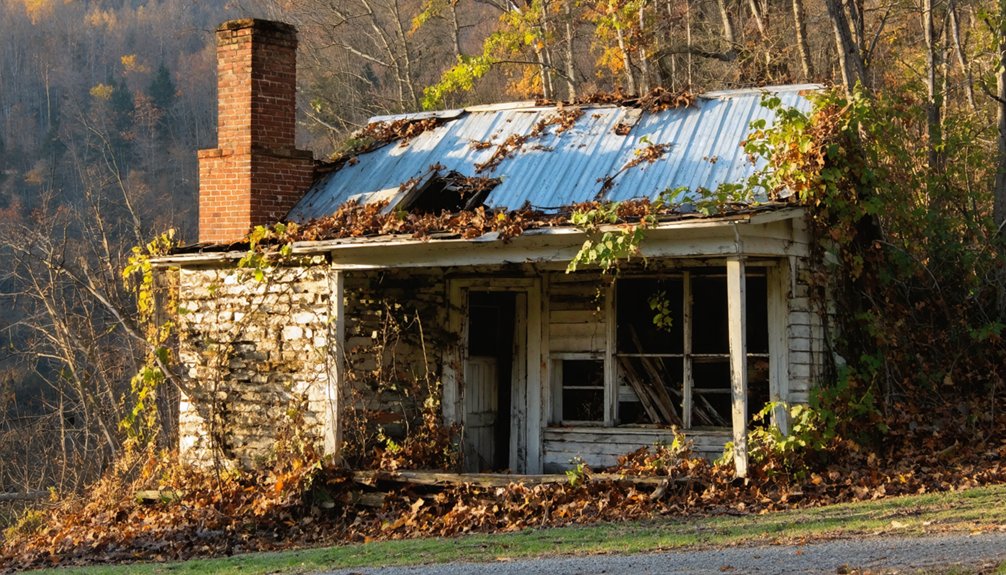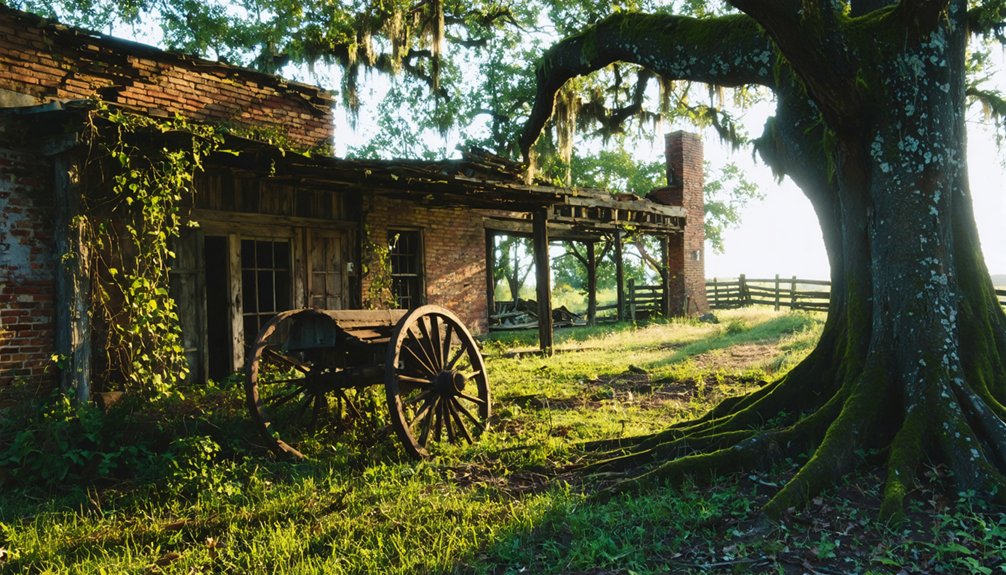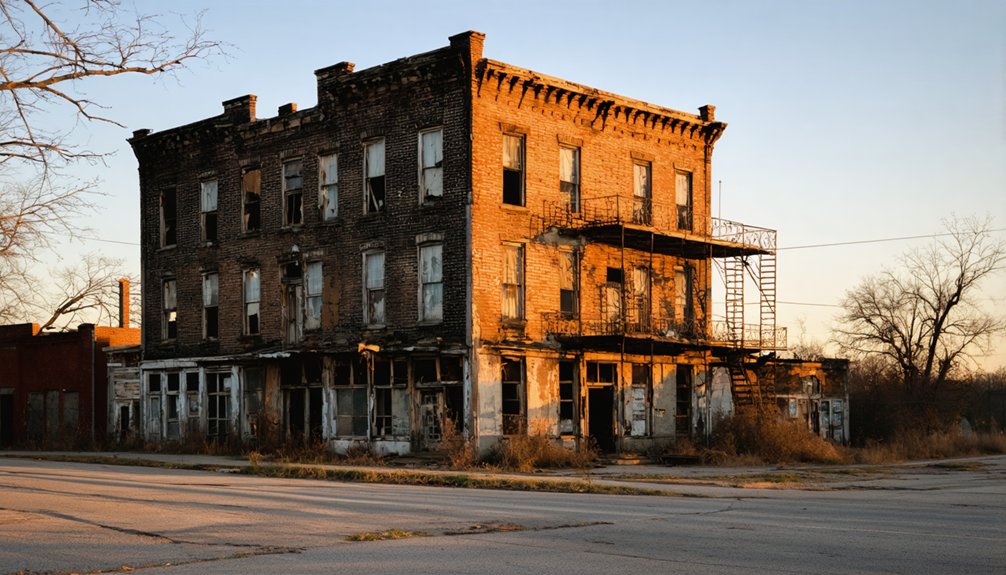
You can spend the night at Rush, Arkansas’s best-preserved ghost town, where you’ll camp among authentic 1880s zinc mining ruins within Buffalo National River. The primitive campground offers 12 tent-only sites ($16/night) surrounded by stone smelters, abandoned mine shafts, and historic structures from the town’s peak population of 5,000. Alternatively, stay at Calico Rock’s Cold Creek Manor, a historic rental overlooking America’s only officially designated “ghost town within a town.” Both locations provide hiking trails, preserved artifacts, and immersive experiences that reveal Arkansas’s fascinating mining heritage.
Key Takeaways
- Rush Campground offers 12 primitive tent sites within the historic zinc mining ghost town at Buffalo National River for $16 nightly.
- Cold Creek Manor vacation rental sleeps ten guests just 0.1 miles from Calico Rock’s inhabited ghost town district with modern amenities.
- Rush camping operates first-come, first-served from March to November with seasonal water; winter camping is free but without amenities.
- Calico Rock is America’s only inhabited town with an official ghost town district, offering lodging near preserved 1920s ruins.
- Primitive Rush campsites require self-sufficiency with vault toilets, fire rings, and pack-in/pack-out protocols near historic mining structures.
Rush, Arkansas: A Zinc Mining Town Frozen in Time
Along the banks of Rush Creek in the 1880s, farmers stumbled upon shiny metallic flakes that would transform their quiet community into Arkansas’s most prosperous mining town.
What they’d mistaken for silver turned out to be zinc, sparking a boom that drew nearly 5,000 fortune-seekers to these Ozark hills.
During World War I, Rush’s zinc mining operations powered Arkansas’s entire industry, with the legendary Morning Star Mine leading thirteen developed operations.
A massive 13,000-pound zinc nugget from the Morning Star mine earned awards at the 1892 Chicago World Fair, showcasing the exceptional quality of Rush’s mineral deposits.
You’ll find this ghost town preservation site within Buffalo National River, where it’s been frozen since 1972.
The ruins stand as Arkansas’s only remaining testimony to northern zinc mining—a National Register Historic District where you can explore authentic mines, structures, and buildings spanning 1880 to 1940, virtually untouched by time.
The Rush campground offers twelve primitive campsites near the historic district, providing an immersive basecamp for exploring the ghost town and accessing the Buffalo River.
Camping Facilities at Rush Campground
Nestled within the historic mining district, Rush Campground offers twelve intimate tent-only sites that blend rustic simplicity with strategic access to both ghost town ruins and Buffalo National River trails.
You’ll find essential amenities without the crowds—vault toilets, potable water (March 15-November 14), and designated fire rings where campfire safety is paramount.
Each site accommodates up to six people with included picnic tables.
Tent Camping Essentials to Pack:
- Water containers for dry season visits
- All trash bags (pack-in/pack-out policy enforced)
- Firewood if visiting outside dead-wood collection zones
- Cell phone alternatives—no service exists here
Sites operate first-come, first-served at $16 nightly, with free winter camping November 15-March 14.
The unpaved access road via County Road 6035 becomes challenging when wet, so plan accordingly for true backcountry independence. From Yellville, the campground sits approximately 12 miles south on Highway 14 before turning onto County Road 6035 for the final approach. After reaching Rush town, continue about 1 mile until the road forks, then bear right to reach the campground at road’s end.
What to Expect at Rush’s Primitive Campsites
Rush’s primitive campsites strip away modern conveniences to deliver an authentic backcountry experience where self-sufficiency matters more than comfort. You’ll find nothing but a fire ring and picnic table at each of the 12 tent-only sites—no hookups, no showers, no trash service.
Vault toilets provide basic sanitation year-round, while potable water’s available only March through November. During winter months, you’re completely off-grid and camping free.
Campfire safety becomes critical since you’ll rely on designated rings for cooking and warmth. Only dead and down wood can be used for fires, and all flames must be completely extinguished whenever you leave your site unattended.
Wildlife precautions are essential in this remote setting where rangers patrol periodically but help isn’t immediately available. Emergency services operate via local authorities in St. Joe, adding response time to any urgent situation.
You’ll need to pack everything in and out, prepare for insects and river hazards, and embrace total cellular isolation from all major carriers.
Exploring the Morning Star Mine and Historic Structures
The Morning Star Mine’s stone smelter stands as Rush’s oldest structure, a tribute to both ambition and miscalculation from the district’s earliest days. Built in 1886 after a faulty assay promised silver, it revealed only zinc during its first firing.
Built on false promises of silver in 1886, the stone smelter produced only zinc—a monument to misplaced hope and frontier miscalculation.
You’ll find mining relics scattered throughout this valley where 2,000-5,000 fortune-seekers once lived.
As you explore, watch for:
- The 1886 stone smelter – Rush’s oldest building, later repurposed for lime burning
- Mill foundations along the creek where they processed tons of zinc ore
- Mineral specimens including massive smithsonite chunks that once weighed over 12,000 pounds
- Community remnants where the Morning Star Hotel and stores once clustered
The fractured Everton Dolomite hillsides reveal where claimholders extracted their fortunes before imported zinc ended their prosperity. Jim McCabe discovered the Morning Star Mine while observing the moon’s position early one morning, naming this site that would become the most nationally respected mine in Rush. The Taylor-Medley Store served the community until 1956, marking one of the last operating businesses before Rush’s final decline into a ghost town.
Hiking Trails Through Rush’s Mining Heritage
The Rush Mine Level Trail winds 2.8 miles through rugged terrain where you’ll encounter at least seven fenced zinc mine entrances and foundations from the 1920s mining operations.
As you navigate the mostly level path after an initial steep climb, watch for wildlife moving through the forested landscape. Historic structures like the 1925 blacksmith shop and 1886 ore smelter stand as silent witnesses to the community’s industrial past.
The trail’s bluff-loop sections offer glimpses of the Buffalo River below, revealing why miners chose this challenging valley despite the difficult terrain that tested their strength daily. Along the route, Boiling Springs flows into Rush Creek, where clear, cold water once powered a grist mill that served the mining community. The trailhead is located in the Rush Historic District, accessible via Highway 14 south from Yellville, where you’ll find parking and facilities near the former ghost town’s abandoned buildings.
Trail Features and Terrain
You’ll encounter diverse features along these paths:
- Seven fenced zinc mine entrances with protective grates for trail safety.
- Historic mill ruins and mining tailings scattered throughout.
- Boiling Springs offering crystal-clear cold water near an old grist mill site.
- Panoramic Buffalo River views from elevated bluffs.
The well-traveled routes wind past the 1886 smelter and 1925 blacksmith shop.
These sites reveal the 1880s-1920s mining boom legacy through preserved industrial remnants.
Wildlife and Historic Structures
Beyond the physical landscape, Rush’s hiking trails offer encounters with both wildlife and remarkably preserved remnants of its industrial past. You’ll spot deer wandering among crumbling foundations and wild turkeys crossing paths where miners once worked.
The Morning Star Mill ruins and visible waste rock piles stand as stark contrasts to modern tourism expectations—there’s no urban development here to dilute the authentic experience.
The National Park Service maintains these 1885-1931 structures without over-restoration, letting you explore offices, mercantile buildings, and smelter remains at your own pace.
Buffalo River’s proximity supports diverse fauna populations, while the isolated Ozarks setting preserves both natural ecosystems and mining-era architecture.
This 1,300-acre district represents Arkansas’s only intact zinc mining landscape, where history and wilderness coexist without compromise.
Calico Rock: America’s Only Ghost Town Designation
You’ll find something truly unusual in Calico Rock—a ghost town designation that exists within the boundaries of a living, functioning city.
This paradoxical status makes it America’s only inhabited community with an officially recognized abandoned district, where you can walk through deteriorating 1920s buildings one moment and grab coffee at a modern café the next.
The blend of decay and liveliness creates an experience unlike any other ghost town in the state, complete with vacation rentals that let you stay overnight in the heart of this historic anomaly.
Unique Ghost Town Status
Nestled in northwestern Izard County, Calico Rock holds a distinction you won’t find anywhere else in America—it’s the only town with an authentic ghost town within its city limits. East Calico‘s industrial decay tells stories of abandoned cotton gins, silent rail yards, and shuttered businesses that once thrived along the White River.
Urban legends swirl around Peppersauce Alley, where moonshine flowed and violence erupted during Prohibition.
You’ll discover this freedom to explore history through:
- Twenty privately-owned structures visible from the street
- A 1920s cement jail that once held twenty rowdy Saturday night visitors
- Ruins of theaters, pool halls, and feed mills
- Historical markers detailing the area’s colorful past
Since 2007, CORE’s revitalization efforts have transformed East Calico into an accessible tourist attraction.
Historic Manor Vacation Rental
Cold Creek Manor stands as your gateway to experiencing Calico Rock’s ghost town heritage firsthand. This 1,400-square-foot rental blends modern interiors with antique charm, featuring restored period furniture and local artifacts throughout.
You’ll find three bedrooms sleeping up to ten guests, a fully equipped kitchen, smart TVs, and air conditioning—all the contemporary comforts you need.
The outdoor space delivers authentic Arkansas experiences with a patio grill, fire ring, and dining area overlooking ghost town territory. Peppersauce Ghost Town sits steps from your private entrance.
Calico Rock’s Historic District awaits 0.1 miles away.
With perfect 10.0 ratings across cleanliness, comfort, and location on Booking.com, this pet-friendly manor lets you explore America’s only officially designated ghost town without sacrificing comfort.
Modern Amenities and Services
While exploring Calico Rock’s ghostly past, you won’t sacrifice modern convenience in this thriving Ozark community. The town balances historic preservation with contemporary tourism infrastructure, transforming its ghost town economy into a sustainable attraction since 2007’s revitalization efforts.
Your visit includes these modern amenities:
- Guided walking tours with detailed brochures highlighting East Calico’s 20 abandoned structures
- Clear signage and designated paths ensuring safe, legal viewing from street level
- Accessible city jail offering the only interior exploration of original 1920s-era structures
- Local businesses supporting tourists while respecting private property boundaries
You’ll find East Calico seamlessly integrated into northwestern Izard County’s active community. The “ghost town within a town” designation attracts freedom-seeking adventurers who appreciate authentic history without sacrificing contemporary comforts during their Arkansas exploration.
Historic Manor Vacation Rental in Calico Rock
Situated just one block from the White River in the heart of Calico Rock’s Ozark Mountains, this 1,400-square-foot vacation rental offers an authentic glimpse into Arkansas’s past.
Step back in time with this historic Ozark Mountains retreat overlooking the White River in charming Calico Rock.
Cold Creek Manor features three bedrooms sleeping up to ten guests, decorated with restored antiques and local artifacts that echo the town’s frontier heritage.
You’ll find modern comforts like free WiFi and smart TVs seamlessly blended with period furniture that transports you back in time.
While haunted legends and ghostly encounters draw many to Peppersauce Ghost Town just steps away, you’ll appreciate the property’s perfect 10.0 rating across all categories.
The fully equipped kitchen, outdoor fire ring, and covered patio let you experience historic living without sacrificing contemporary conveniences—freedom to explore Arkansas’s past on your own terms.
Outdoor Activities Near Buffalo National River
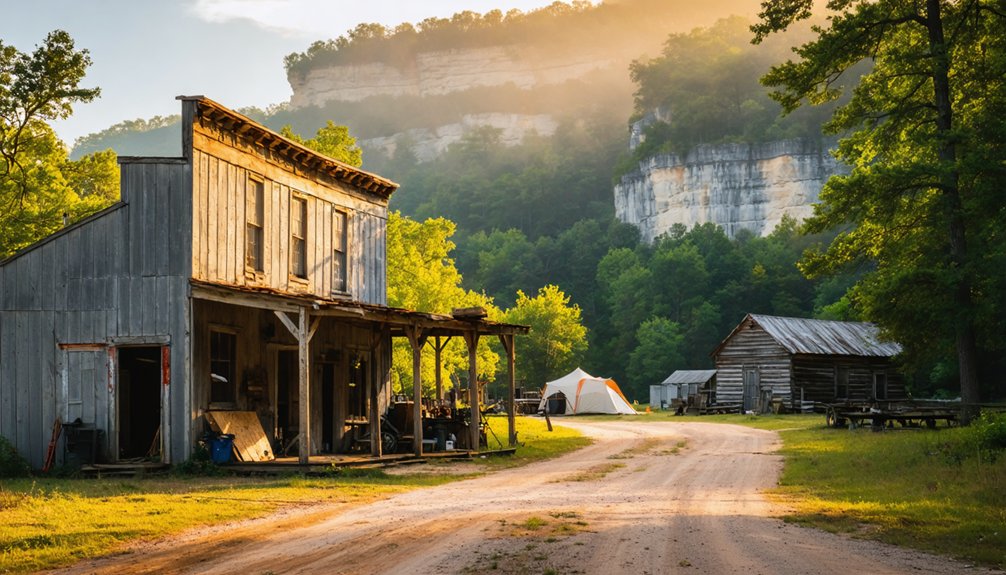
Beyond exploring the historic streets of Calico Rock, you’ll find Arkansas’s crown jewel of wilderness adventure just minutes away at Buffalo National River. This 135-mile waterway offers unmatched freedom to explore pristine Ozark wilderness on your terms.
Top Adventures Awaiting You:
- Canoe adventures from Ponca to Kyle’s Landing reveal 10+ miles of dramatic bluffs and cascading waterfalls—no experience required.
- Wildlife photography opportunities abound with deer, black bear, and elk roaming the landscape.
- Zipline through treetops on Arkansas’s only wilderness canopy tour (ages 7+).
- Hike to Hemmed-In Hollow, where spring waterfalls thunder down ancient limestone cliffs.
From March through July, you’re free to paddle, hike, or soar above the canopy. The wilderness doesn’t require reservations for exploring—just your sense of adventure.
Planning Your Ghost Town Overnight Adventure
When planning your ghost town overnight adventure in Arkansas, you’ll need to choose between rustic camping at Rush or comfortable lodging near Calico Rock.
Rush’s 12 primitive campsites operate first-come, first-served, so arrive early during peak seasons. You’ll find picnic tables and fire rings but no water or electricity—pack accordingly.
The Quiet, Historic Manor near Calico Rock offers a pet-friendly alternative with modern amenities like WiFi and air conditioning.
For those drawn to local legends, consider Eureka Springs’ haunted Crescent Hotel or Basin Park Hotel, both featuring ghost tours.
You’ll have direct access to hiking trails showcasing ghost town architecture, including Morning Star Mine and historic ore mills.
Frequently Asked Questions
Are There Any Guided Ghost Town Tours Available in Rush or Calico Rock?
No guided tour availability exists at Rush or Calico Rock—you’ll explore independently through self-guided trails with interpretive signs. This approach respects historical preservation while giving you complete freedom to discover Arkansas’s ghost towns at your own pace.
What Is the Best Season to Visit Arkansas Ghost Towns for Camping?
Fall’s your best bet for camping at Arkansas ghost towns. You’ll enjoy cooler seasonal weather, stunning foliage, and reduced wildlife activity—fewer bugs and snakes. Plus, Halloween events add extra thrills while you’re exploring abandoned structures under comfortable conditions.
Are There Any Restaurants or Stores Near Rush and Calico Rock Ghost Towns?
Near Rush, you’ll find several barbecue spots and American restaurants within 7 miles offering local cuisine. However, both ghost towns lack nearby souvenir shops or stores—you’ll need to plan ahead and bring supplies for your adventure.
Can You Visit Rush Ghost Town Without Staying Overnight at the Campground?
Yes, you’ll enjoy exploring Rush as a self-guided day trip. You can hike trails past historical preservation sites, view mining ruins, and potentially experience wildlife encounters—all without camping overnight. Bring water and wear sturdy shoes.
What Safety Precautions Should Visitors Take When Exploring Abandoned Mining Structures?
Don’t enter abandoned mining structures—they’re deadly traps with unstable explosives and collapse risks. If you’re determined to pursue urban exploration despite dangers, wear proper safety gear, never go alone, inform others of your location, and respect all warning signs.
References
- https://www.katepantier.com/discover-the-ghost-town-of-rush-arkansas-hidden-historic-gem/
- https://northwestarkansas.org/crescent-hotel-basin-park-hotel/
- https://kkyr.com/arkansas-most-haunted-hotels/
- https://www.arkansas.com/articles/epic-sleeps-most-unique-places-stay-arkansas
- https://www.booking.com/hotel/us/historic-manor-with-fire-pit-near-ghost-town.html
- https://beardandladyinn.com
- https://www.airbnb.com/rooms/53967202
- https://crescent-hotel.com
- https://www.arkansashauntedhouses.com/blog/arkansas-haunted-hotels.html
- https://www.historichotels.org/us/hotels-resorts/1886-crescent-hotel-and-spa/