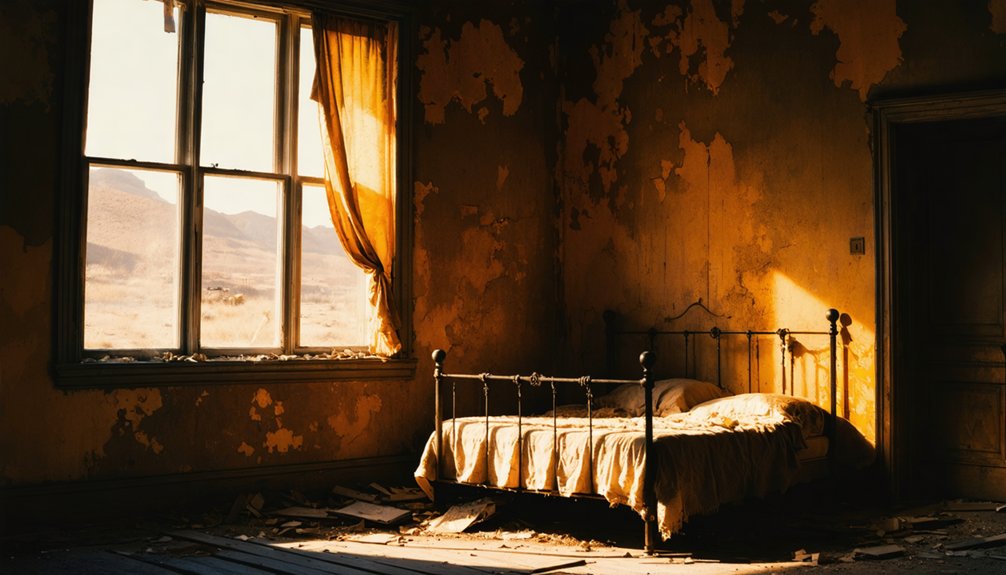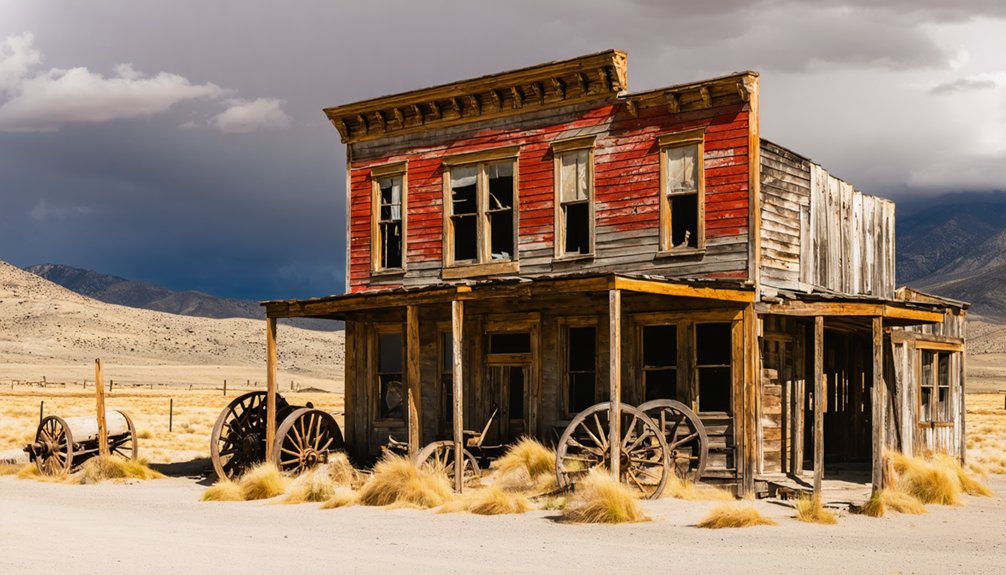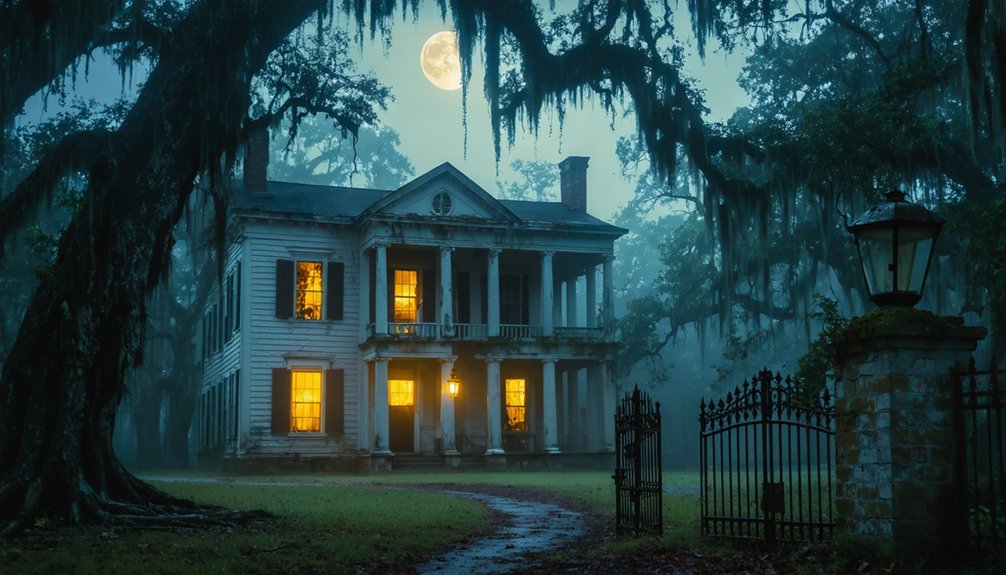
You can camp at Elkmont’s crumbling Wonderland Hotel ruins in the Smokies, kayak to Proctor’s abandoned lumber camp with waterfront tent sites, or book rooms in preserved St. Elmo’s mining cottages that’ve swapped ore carts for guest beds. These aren’t roped-off exhibits—you’ll sleep within earshot of structures that once housed entire communities, where morning light filters through hand-hewn beams and evening shadows stretch across foundation stones. The stories embedded in these weathered walls reveal themselves gradually across moonlit trail walks and golden-hour explorations.
Key Takeaways
- Elkmont offers camping near crumbling resort buildings with walking trails revealing historic chimney stacks and cottage remnants.
- St. Elmo provides boutique lodging in a preserved mining town with authentic period interiors and nearby ruins to explore.
- Proctor’s Campsite allows kayak access to abandoned lumber offices and mill remains for overnight riverside camping experiences.
- Battery Carriage House Inn features haunted rooms with documented paranormal activity in preserved Civil War-era architecture.
- Myrtles Plantation offers overnight stays in a historic Louisiana property known for ghost encounters and paranormal investigations.
What Defines a Ghost Town in the Deep South
When a town loses its reason for existence, it transforms into something haunting yet magnetic—a ghost town. You’ll find these shadowy remnants throughout the Deep South, where urban decay meets historical significance in tangible ways. They’re abandoned settlements with visible buildings—sometimes just foundations—marking where communities once thrived before economic collapse or disaster struck.
What you’re seeing isn’t complete abandonment. Some ghost towns retain sparse populations alongside period structures, though there’s no operative town proper. You’ll discover standing ruins from mining operations, mill towns, and agricultural sites across Tennessee, Kentucky, North Carolina, and especially Texas, which claims 550 ghost towns. Transportation disruptions, such as bypassed railroads or changing highway routes, also contributed to the desertion of many Southern communities. Many originated in the late 19th century driven by mining booms and resource discoveries before experiencing rapid decline.
Resource depletion, industry closures, and natural disasters emptied these places, leaving behind atmospheric shells you can actually explore and experience firsthand.
Best Times to Visit Southern Ghost Towns
Timing your ghost town adventure correctly transforms a dusty roadside stop into an unforgettable experience. You’ll find seasonal weather patterns dramatically shift your exploration—October through February delivers comfortable temperatures perfect for wandering crumbling structures and hiking abandoned trails without the oppressive summer heat.
I’ve discovered that early morning arrivals around opening time offer authentic solitude before visitor crowds descend. Fall months combine ideal hiking conditions with special Halloween events that breathe theatrical life into forgotten streets.
Winter’s cooler temperatures mean fewer tourists competing for photo ops at weathered storefronts. You’ll avoid the midday desert furnace and catch golden-hour lighting that makes those rusted mining equipment shots truly spectacular. Many ghost towns feature interactive mine tours with preserved equipment and educational displays that let you descend underground to experience authentic prospecting history firsthand.
Weekend visits during cooler seasons release additional attractions like operational saloons serving cold drinks amid genuine Wild West atmosphere. Some preserved sites utilize the arrested decay technique that maintains buildings in their weathered state without full restoration, allowing you to witness authentic deterioration frozen in time.
Accommodations Available in Abandoned Southern Communities
After planning your perfect visiting window, you’ll need somewhere to rest your head among these spectral settlements.
At Elkmont, you’ll camp steps from crumbling resort buildings where vintage relics peek through kudzu vines.
Proctor’s Backcountry Campsite #86 requires kayaking to reach abandoned lumber offices and sawmill remains—perfect for adventurers seeking isolation.
Willow Grove accommodations overlook submerged Loyston structures visible beneath the lake’s surface, where ghostly tales emerge from drowned churches and schools.
Thurmond’s vacant mercantile and depot buildings dominate coal-country streetscapes, though overnight options remain limited.
The St. Elmo model—boutique lodging within preserved mining towns—offers exclusive after-hours access to saloons, jails, and weathered storefronts. Guest rooms feature private bathrooms and claw-foot tubs alongside gas log stoves for authentic period ambiance.
You’ll wander freely through history while modern tourists sleep elsewhere. Elkmont’s walking trails reveal chimney stacks and crumbled walls from cottages that once housed early 1900s vacationers seeking connection with nature.
Safety Considerations for Overnight Ghost Town Stays
Before you lock in your reservation, understanding the unique hazards of these forgotten places separates memorable adventures from dangerous mishaps.
Knowledge of hidden dangers in abandoned locations makes the difference between an unforgettable experience and a preventable tragedy.
You’ll encounter hazardous terrains—rotting floorboards, unstable structures, and overgrown pathways concealing twisted metal and hidden wells.
I’ve watched seasoned explorers nearly stumble through collapsing porches they’d assumed were solid.
Emergency preparedness isn’t optional out here.
Cell service vanishes in these remote locations, so download offline maps and share your itinerary with someone reliable.
Pack a thorough first-aid kit, multiple flashlights, and enough water for twice your planned stay.
Watch for wildlife reclaiming these spaces—snakes, wasps, and occasionally aggressive feral animals consider these ruins home.
Test every step before committing your weight, and never explore alone after dark.
Bring lightweight gear that enhances comfort without weighing you down, including trash bags for wet conditions, lanterns for navigating after sunset, and always maintain the site exactly as you found it.
A fully charged phone provides critical backup navigation and emergency contact capability when venturing into areas where connectivity is unreliable.
Historic Preservation Efforts in Deep South Ghost Towns
While you’re maneuvering through crumbling staircases and testing floorboards, dedicated preservation teams are racing against time to save what remains of these ghost towns. Urban decay doesn’t discriminate—brick foundations crumble, adobe walls dissolve, and roofs collapse under relentless Southern humidity.
Organizations like Preservation South Carolina have championed adaptive reuse since 1990, transforming abandoned structures into usable spaces while maintaining their historical integrity.
You’ll find preservation challenges intensify in remote locations where erosion and vegetation reclaim what humans left behind.
Hazardous material testing precedes any restoration work, and specialized teams rebuild roofs while stabilizing foundations.
Some sites receive Bureau of Land Management oversight to prevent commercial dismantling. The Southern Appalachian Highlands Conservancy has similarly worked to protect historic settlement lands, adding acreage to protected forests while preserving the cultural legacy of self-sufficient communities.
The goal? Transforming these decaying settlements into seasonal education centers where you can explore authentic Western heritage without modern constraints diluting the experience. These efforts connect to broader conversations about environmental justice and equity, as historical preservation must acknowledge the complex racial histories embedded in Southern landscapes.
Unique Activities and Attractions in Southern Ghost Towns
You’ll discover that Southern ghost towns offer far more than crumbling buildings—they’re living museums where you can join candlelit paranormal investigations in former Civil War hospitals or walk silent logging trails under moonlight.
Exploring ghost towns in South Carolina will immerse you in a rich tapestry of history and mystery. Each site has its own story, from the bustling communities that once thrived to the eerie silence that now echoes through abandoned streets. Visitors can experience guided tours that highlight the stories of those who lived there, offering a glimpse into a past that still lingers in the air.
At places like Battery Carriage House Inn, you’re steps from guided tours through Charleston’s haunted history.
Elkmont Campground positions you beside the skeletal remains of turn-of-century resorts waiting for sunrise exploration.
These destinations blend spine-tingling overnight stays with hands-on experiences, from investigating Room 311’s murder site at Read House Hotel to attending intimate ghost tours that reveal the personal stories behind each restless spirit.
Historic Tours and Paranormal Investigations
The flicker of flashlights cuts through midnight darkness as you follow your guide down overgrown paths toward Cahawba’s crumbling slave quarters, where the Webb Paranormal Group has documented inexplicable cold spots and disembodied voices for over a decade. These 90-minute historical ghostly investigations take you beyond tourist traps into authentic Southern ruins where the Bell-Troy family feud ended in gunfire during the 1800s.
You’ll learn ghost hunting techniques before gathering around bonfires to compare sightings—book ahead, as seats fill fast.
Further west, Deep South Paranormal Investigations opens forgotten bayou settlements and plantation corridors throughout Alabama and Mississippi. Their reality series captures genuine encounters at sites like Mont Helena, where tragic deaths left restless spirits.
Meanwhile, Louisiana’s Myrtles Plantation offers overnight stays where you’re not just visiting paranormal tours—you’re sleeping among them.
Authentic Ghost Town Accommodations
Stepping through the front door of the Battery Carriage House Inn at 20 South Battery in Charleston feels like crossing a threshold between centuries—the 1843 structure doesn’t just offer you a bed for the night, it delivers an immersive encounter with restless spirits documented by countless guests who’ve woken to find a headless torso hovering beside them or witnessed glowing orbs drifting through hallways.
Room 8 stands as the most haunted chamber, where apparitions seek warmth beside sleeping visitors.
Modern amenities blend seamlessly with period architecture at these authentic locations. You’ll discover the Hamilton-Turner Inn in Savannah maintains its historic integrity while providing contemporary comfort.
Despite vegetation encroachment surrounding many abandoned structures, properties like Pelican Inn in Pawleys Island preserve Civil War-era authenticity where Confederate spirits still wander and perfume scents linger unexplainably.
Local Events and Entertainment
When darkness settles over Old Cahawba’s abandoned streets, the Webb Paranormal Group transforms Alabama’s first state capital into an open-air laboratory where you’ll spend 90 minutes learning ghost-hunting techniques at the exact locations where apparitions have materialized for decades.
Beyond ghost hunts, you’ll discover Charleston’s Poogan’s Porch, where Victorian-era spirits allegedly watch diners from shadowed corners. Tennessee’s Bell Witch Cave offers 2.5-hour supernatural tours through passages where Kate Batts’ violent spirit supposedly tormented settlers since 1817.
Nashville’s haunted bar crawls combine Music City nightlife with paranormal storytelling.
Yazoo City’s moonlit cemetery walks reveal “The Witch’s Grave” surrounded by protective chains, while bonfire gatherings at investigation sites let you swap encounter stories under Southern stars. These aren’t sanitized attractions with street art and fruit festivals—they’re raw, unfiltered connections to America’s darkest histories.
Planning Your Ghost Town Road Trip Through the Deep South
Mapping your Deep South ghost town adventure begins with a spine-tingling 1,200-mile route that threads through Texas deserts, Louisiana bayous, and the misty Appalachian foothills. You’ll start in Terlingua’s abandoned scenery, where Big Bend’s rust-colored canyons frame crumbling miners’ shacks.
Terlingua’s crumbling adobe walls and rusted mining equipment create an eerie portal into Big Bend’s forgotten frontier past.
Then cruise I-10 east through forgotten lumber towns showcasing weathered vintage architecture. The journey demands 5-7 days of pure exploration freedom.
Time your escape for fall—you’ll dodge Texas’s scorching summers while catching Terlingua’s November chili cook-off among the ruins.
Spring brings wildflowers to Elkmont‘s logging camps without the Smokies’ torrential downpours. Pack extra water and fuel for desolate stretches between ghost settlements, and download offline maps where cell towers vanish.
Bear-proof containers aren’t optional in Tennessee’s haunted forests, and flash floods turn innocent desert washes into churning nightmares within minutes.
Photography Opportunities in Abandoned Southern Settlements
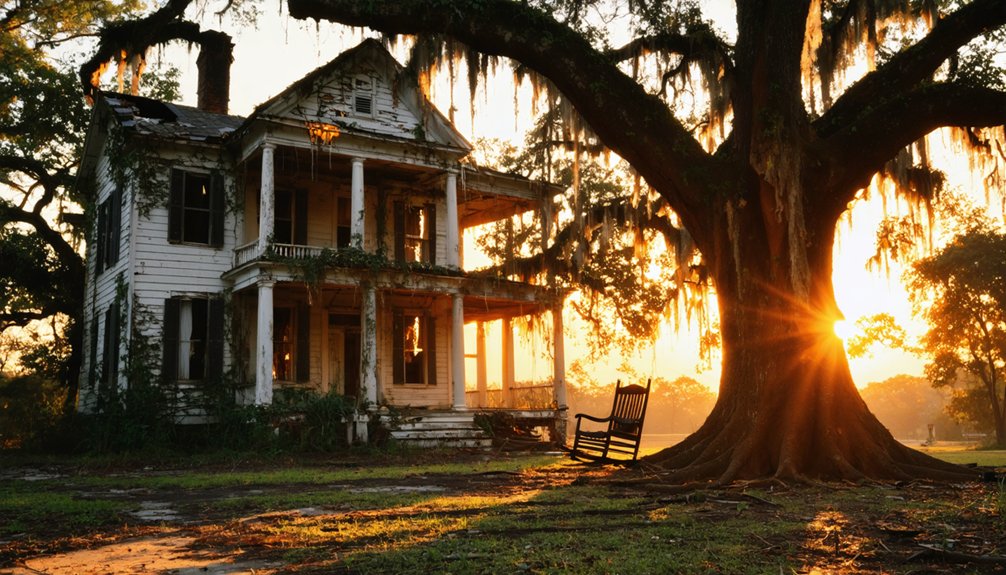
Your camera will find its most haunting subjects in the skeletal frames of Delta shotgun houses, where peeling wallpaper curls like ancient parchment and afternoon light slices through collapsed rooflines in dusty, golden beams.
Black and white film reveals textures you’d miss otherwise—weathered clapboard, rust patterns on forgotten farm equipment, sand drifting through doorways.
I’ve spent 25 years chasing these vintage landscapes along Tennessee backroads an hour from Nashville, through Mississippi settlements, and across Arkansas Delta towns.
Architectural details tell stories: hand-hewn beams, century-old porches, wicker chairs facing empty roads.
Shoot early morning or late afternoon when threatening clouds create apocalyptic drama.
Document interiors before vandalism claims them.
These structures won’t survive another decade—your images become their final testimony.
Local Legends and Folklore of Deep South Ghost Towns
Beyond the crumbling facades and rust-eaten gates, the Deep South’s abandoned settlements harbor something darker than decay—they’re wrapped in legends that locals won’t discuss after sunset. These folklore stories transform forgotten towns into something alive with supernatural dread.
Local legends you’ll encounter:
- Yazoo’s Witch – Chained grave in Glenwood Cemetery marks where she swore revenge before drowning. She allegedly returned to burn 324 buildings in 1904.
- Bell Witch Cave – Kate Batts’ violent spirit still inhabits this Tennessee cavern, beating visitors and throwing objects since the 1800s.
- Lake Lanier’s Drowned – Submerged cemeteries curse Georgia’s waters. A woman in blue pulls swimmers toward unremoved graves.
- Lantern Lady – Flickering light moves through fog across plantation roads, appearing without warning.
You’ll hear these stories whispered around campfires—decide whether you believe them.
Frequently Asked Questions
Are Pets Allowed at Overnight Accommodations in Deep South Ghost Towns?
Pet policy details aren’t explicitly stated for these Deep South ghost town stays. You’ll need to contact each property directly about pet-friendly accommodations before booking. Don’t assume—always verify whether your four-legged companion can join your paranormal adventure.
What Cell Phone Coverage Can I Expect in Abandoned Southern Communities?
You’ll find yourself stepping back in time—cell coverage vanishes in abandoned Southern communities. Historical preservation efforts and local community involvement maintain these authentic experiences, though some ghost towns near highways catch occasional signals from distant towers.
Do Ghost Towns Require Advance Reservations or Accept Walk-In Guests?
You’ll need advance reservations at most Deep South ghost town accommodations. Historical preservation efforts and limited tourist infrastructure mean walk-in availability’s rare. Book ahead to secure your spot—these atmospheric retreats fill quickly, especially during peak seasons when freedom-seekers flock southward.
Are There Nearby Medical Facilities Accessible From Deep South Ghost Towns?
You’ll find medical facilities surprisingly scarce near authentic ghost towns. Historical preservation often trumps tourist infrastructure in remote locations. You’re typically 30-60 minutes from hospitals, so pack first-aid supplies and make certain reliable cell service before exploring.
What Amenities Like Electricity and Running Water Are Typically Available Overnight?
You’ll find most ghost town stays offer electricity and running water through preservation efforts that maintain historical significance while adding modern comfort. Restored hotels provide full amenities, whereas campgrounds near ruins typically require generators for off-grid freedom.
References
- https://dreamtravel2america.wordpress.com/2018/11/15/ghost-town-getaways-usa/
- https://www.frommers.com/slideshows/848476-9-ghost-towns-to-explore-during-road-trips-through-the-american-west/
- https://www.powderhouselodge.com/black-hills-attractions/fun-attractions/ghost-towns-of-western-south-dakota/
- https://www.tripadvisor.com/Articles-loOISRppph64-American_ghost_towns.html
- https://www.lonelyplanet.com/articles/coolest-ghost-towns-us
- https://travelnevada.com/ghost-town/rhyolite-ghost-town/
- https://www.duntondestinations.com/hot-springs/
- https://www.usawelcome.net/news/explore-ghost-towns-west-usa.htm
- https://gccaverns.com
- https://www.britannica.com/topic/ghost-town