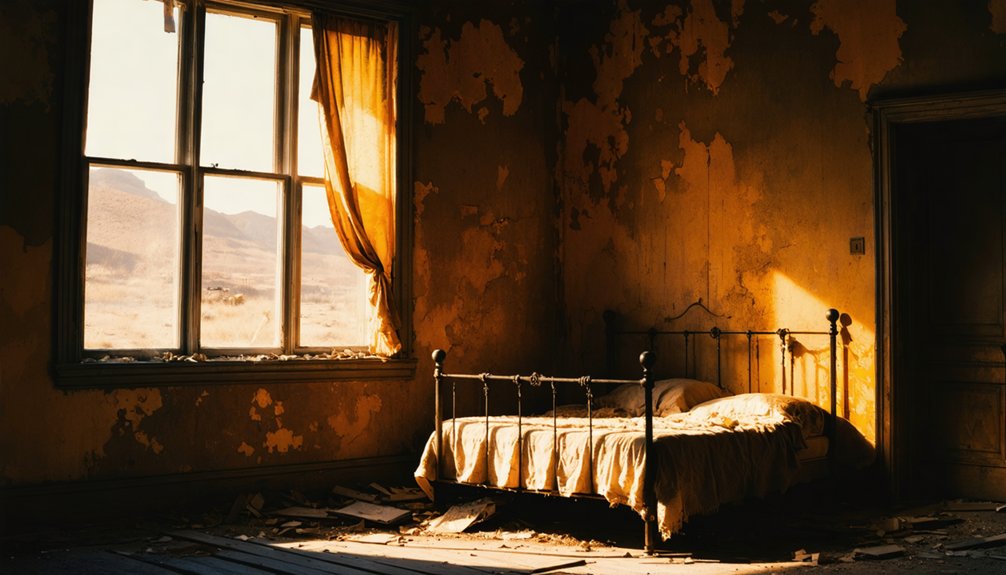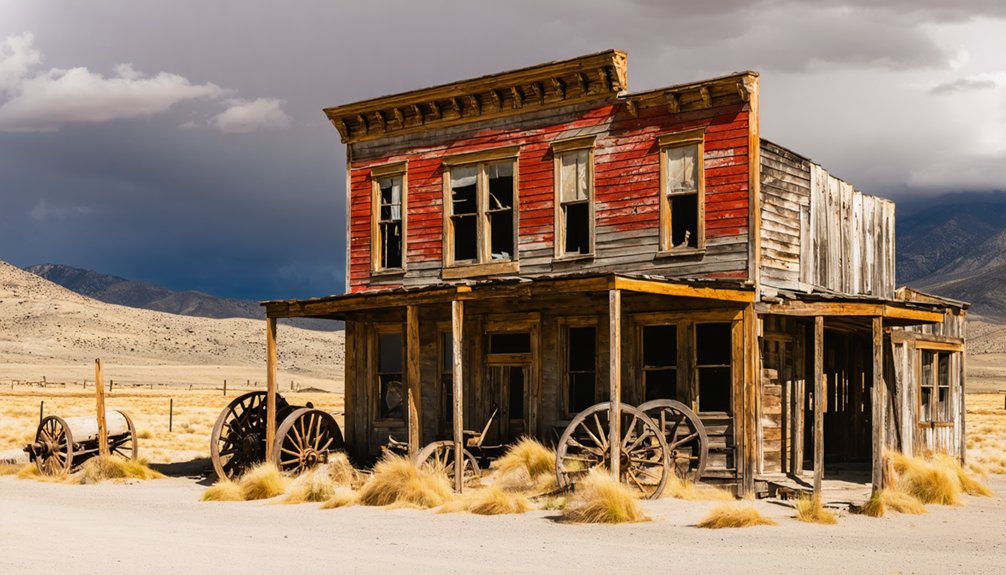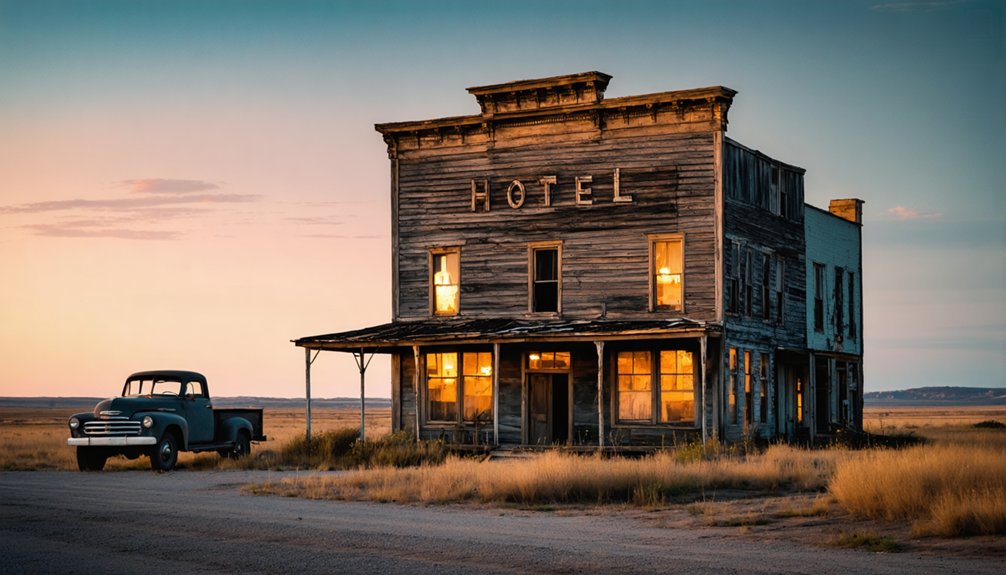
You can spend the night at Cheyenne’s historic Plains Hotel, a 1911 Edwardian landmark where cattle barons once gathered, complete with marble pillars and original features. For camping enthusiasts, Animas Forks offers dispersed sites at 11,200 feet near the Duncan House, while Dearfield visitors can stay at nearby Island Acres State Park. Modern options include Terlingua’s boutique casitas and converted miners’ dwellings near ghost town ruins, with rates from $175 to $291 nightly. Continue on to discover the best seasons, safety protocols, and how to choose your ideal ghost town accommodation.
Key Takeaways
- Plains Hotel Cheyenne, opened 1911, offers overnight stays with modern amenities including spa, gym, and 24-hour room service in historic Edwardian setting.
- Terlingua provides boutique casitas, luxury yurts, and converted shipping containers from $175-$291 nightly, blending historic miners’ dwellings with WiFi and air conditioning.
- Animas Forks Colorado allows dispersed camping near Duncan House at 11,200 feet elevation, requiring 4WD access via Mineral Creek Road.
- Dearfield Colorado prohibits overnight camping due to unprotected structures; visitors must stay at nearby Island Acres State Park or Greeley instead.
- Best visiting season is late spring through early November; winter months bring snow, road closures, and accessibility challenges across Great Plains ghost towns.
Plains Hotel Cheyenne: Sleep Among Spirits in Wyoming’s Historic 1911 Landmark
Rising from downtown Cheyenne’s historic streets, the Plains Hotel has welcomed travelers through its doors since March 9, 1911, when it opened as the city’s premier luxury accommodation. You’ll discover architect William Dubois’s Edwardian masterpiece, where steel framework creates expansive interiors beneath a stunning stained-glass skylight.
Since 1911, the Plains Hotel has stood as Cheyenne’s crown jewel of Edwardian elegance and Western hospitality.
The two-story lobby features marble pillars and bisque tile accents that transport you to an era when this establishment reigned as the leading hotel between Chicago and San Francisco. The mezzanine hosted meetings and private dinners accompanied by music from the Plains Orchestra, creating an elegant social hub for early 20th-century guests.
Today’s historical preservation efforts blend period elegance with modern comforts across 131 guest rooms. Architectural restoration has maintained original features like America’s oldest operating walk-in refrigerator and Thomas Molesworth furniture from 1936.
You’ll sleep where frontier deals were brokered and legends were born, experiencing authentic Western hospitality that’s endured for over a century. The hotel provides 24-hour room service alongside modern conveniences including a spa, gym, and 9,000 square feet of event space for gatherings.
Dearfield Colorado: Camping Near an African-American Homesteader Settlement
You’ll find tangible remnants of O.T. Jackson’s 1910 vision scattered across the windswept Weld County plains—weathered wooden cabins, the concrete filling station from 1919, and Jackson’s own 1917 house standing as silent witnesses to Colorado’s largest Black homesteading community.
While Dearfield itself offers no formal campgrounds, you can pitch your tent at nearby Island Acres State Park along the Colorado River or book accommodations in Greeley, just 30 miles west on Highway 34.
The preserved townsite lots and original structures make this National Register landmark an essential day trip for anyone tracing the authentic, often-overlooked stories of African American pioneers who shaped the Great Plains. At its height, the settlement supported about 300 Black residents through dryland farming of wheat, corn, and sugar beets, alongside local businesses and four churches that anchored community life. The site contributes to broader conversations about environmental justice and equity by highlighting the resilience of a community that faced unequal access to resources and opportunity.
Historic Structures Still Standing
Although most Black homesteading settlements have vanished entirely from the American landscape, Dearfield’s main townsite preserves a rare collection of original buildings that stand as tangible witnesses to this pioneering community. You’ll discover structures that survived where others crumbled—testament to those who built their own destiny on Colorado’s unforgiving plains.
The site’s cultural significance earned National Register designation, while the Black American West Museum secured essential land swaps to protect these historic lots.
Restoration challenges remain formidable; decades of abandonment and harsh prairie weather have tested every beam and foundation. Yet these weathered buildings still stand, defying erasure.
Since 2023, a National Park Service study has explored potential national park status—recognition that you’re standing before irreplaceable monuments to African American self-determination and resilience. Founded in 1910 by Oliver Toussaint Jackson, this settlement once encompassed 19,000 acres and housed approximately 300 residents who created a thriving community southeast of Greeley. During its peak years, Dearfield became a popular weekend destination for Denver residents seeking recreation and community connection.
Camping and Accommodation Options
During Dearfield’s heyday between 1917 and 1921, the bustling settlement welcomed travelers with 44 wooden cabins, a boarding house, and the Dearfield Lodge—a small hotel that drew weekend visitors from Denver seeking respite on the eastern Colorado plains.
You could also camp free along the South Platte River while hunting nearby game.
Today’s reality differs dramatically. Historic preservation efforts mean you can’t stay overnight at this National Register site, 25 miles southeast of Greeley off Highway 34.
The Jackson house and filling station remain unprotected from vandalism and weather, making overnight camping prohibited.
You’ll need to explore the ghost town during day visits instead, then head toward Greeley’s RV parks. Founded in 1910 by Oliver Toussaent Jackson, Dearfield was envisioned as a self-sufficient Black agricultural community that would eventually house over 10,000 residents.
Seasonal accessibility varies with Colorado’s unpredictable plains weather.
Taking items from historic sites is illegal, as it damages preservation efforts and cultural heritage.
St. Elmo Colorado: Staying in Buena Vista to Explore a Preserved Mining Town
Nestled high in the Sawatch Range at nearly 10,000 feet, St. Elmo stands as Colorado’s best-preserved ghost town, where weathered buildings whisper tales from its 1880s mining boom.
You’ll base yourself in Buena Vista, 20 miles northeast, where hotels and restaurants fuel your adventure before you venture up County Road 162 through Chalk Creek Canyon.
The town’s preservation efforts have kept five hotels, saloons, and a schoolhouse remarkably intact, letting you walk freely through authentic Western history.
Local history comes alive at the Mary Murphy Mine site and along mining roads now transformed into backcountry trails.
The Mary Murphy Mine once shipped 50-75 tons of ore daily to smelters, making it the largest operation in the area.
Camp at adjacent Iron City Campground or return to Buena Vista after exploring the schoolhouse, newspaper office, and hiking Grizzly Lake Trail.
The town shares its name with St. Elmo Hall, a building once owned by Yale University’s secret society, though the Colorado settlement took its name from a popular 19th-century novel.
You’re experiencing living history without modern constraints.
Animas Forks Colorado: Camping in the Shadow of the Duncan House
You’ll find yourself sleeping beneath one of Colorado’s most photographed landmarks—the 1879 Duncan House, a two-story Victorian clapboard perched at 11,200 feet with bay windows that once watched over the Columbus Mine.
Camp among the nine remaining structures of this high-altitude ghost town, where William Duncan’s distinctive home stands alongside the weathered jail, Columbus Mill, and scattered mining ruins.
The summer camping season lets you wake to the same mountain views that greeted the four hardy families who braved winters here year-round in the 1870s and 1880s.
Historic Duncan House Views
Standing before the Duncan House’s iconic bay window, you’ll understand why William Duncan positioned this architectural feature to capture the San Juan Mountains’ raw majesty. From the small living room, mountain views stretch across the valley at 11,584 feet.
Peaks soar between 11,000 and 14,000 feet in breathtaking succession.
This historic architecture reflects Duncan’s vision—a two-story structure built in 1879 that served his growing family while showcasing their prosperity. The bay window wasn’t merely decorative; it framed an empire of silver and gold.
Today, interpretive panels detail the mining era while you explore the restored interior.
Shatterproof windows now protect those same views that once inspired a postman-turned-miner and later captivated Tom Walsh’s daughter Evalyn, future owner of the Hope Diamond.
Camping Among Mining Ruins
Where else can you pitch a tent at 11,200 feet surrounded by structures that witnessed the 1884 blizzard’s fury? Dispersed camping near Animas Forks puts you within walking distance of nine original buildings from the 1870s boom era. You’ll wake to views of the Duncan House and jail ruins, proof of remarkable preservation efforts that have kept this mining history alive since the town’s 1920s abandonment.
Your 4WD vehicle grants access to scenic sites along Mineral Creek Road, where you can set up camp in the shadow of authentic mining remnants. No developed campgrounds here—just you, the high-altitude silence, and the ghosts of 450 former residents who once tunneled through 25 feet of snow between these very buildings.
It’s Colorado’s backcountry at its most unrestricted.
Glenrio Texas: Overnight in Amarillo to Visit the Last Stop on Route 66
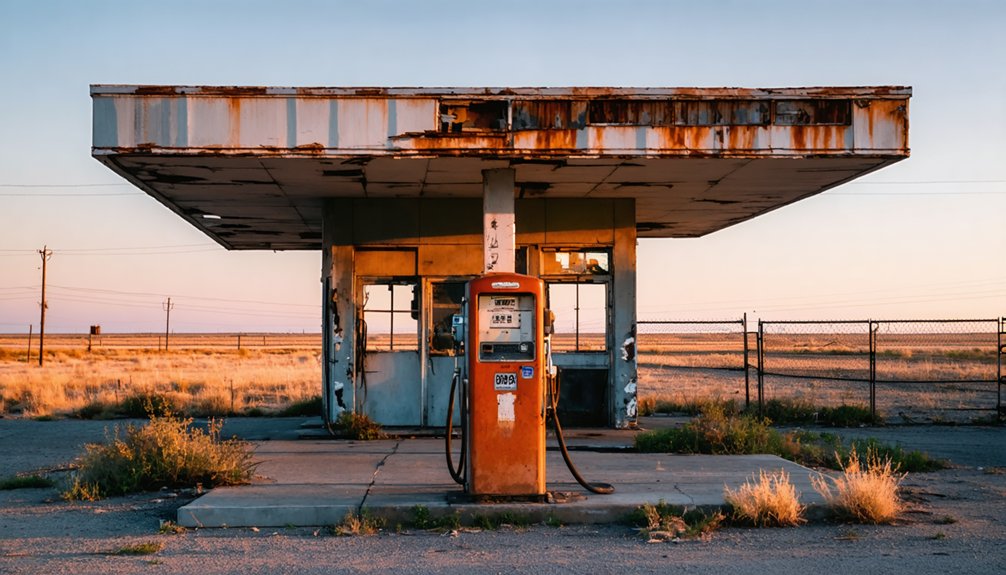
Straddling the Texas-New Mexico border like a forgotten relic of American mobility, Glenrio marks the final stop—or first, depending on your direction—along the legendary Route 66 in the Lone Star State. You’ll need to base yourself in Amarillo, 73 miles east, where transportation options and local cuisine await after your ghost town exploration.
Glenrio straddles two states as Route 66’s final Texas outpost—a ghost town best explored from your Amarillo base camp.
Cruise the preserved roadbed through seventeen abandoned buildings, including the 1955 Texas Longhorn Motel, where travelers once fueled up before the forty-four-mile stretch to Tucumcari.
The town’s split personality—no bars on dry Texas soil, no gas stations on New Mexico’s side—tells stories of tax codes and liquor laws.
Interstate 40’s 1973 completion sealed Glenrio’s fate, transforming this once-thriving waypoint into windswept ruins beneath endless plains sky.
Terlingua Texas: Modern Accommodations in a Resurgent Desert Ghost Town
Terlingua’s crumbling adobe walls and rusted mining equipment tell the story of a mercury boom that went bust.
But today you’ll find boutique casitas and luxury yurts nestled among the ruins.
This resurgent ghost town in the Chihuahuan Desert transforms its 1900s-era structures into unforgettable accommodations.
You’ll sleep steps from historic cemetery headstones and wake to Chisos Mountain sunrises.
Between Big Bend National Park and Big Bend Ranch State Park, you’re positioned to explore two of Texas’s most dramatic wilderness areas.
Enjoy modern comforts in an authentic Wild West setting.
Historic Mining Town Reborn
Deep in the Chihuahuan Desert, where the Rio Grande carves its path toward Big Bend, Terlingua’s crumbling adobe walls and rusted mining equipment tell a story of boom, bust, and unlikely resurrection.
Once home to over 1,000 mercury miners working for the Chisos Mining Company, this place collapsed when the market crashed in the late 1940s. Homes stood empty for nearly forty years before Bill Ivey and his son recognized what most couldn’t—potential in the ruins.
Today’s Terlingua balances ghost town preservation with modern living. You’ll find the 1906 Howard Perry mansion overlooking restored miners’ dwellings, now transformed into galleries and vacation rentals. The original company store operates as Terlingua Trading Company, while the jail serves a humbler purpose: restrooms.
This mining heritage isn’t museumified—it’s alive, reimagined.
Unique Lodging Among Ruins
Where Terlingua truly surprises visitors isn’t in its preserved ruins—it’s in how you can actually sleep among them. You’ll find luxury yurts with king-size beds and rain showers nestled between historic foundations, while geodesic domes offer stargazing through panoramic skylights.
For true nomadic living enthusiasts, converted shipping containers perch on ridge edges with cliff-side views. Casa de Amigos operates within authentic mining ruins, maintaining historical integrity while offering modern comfort.
The Perch takes desert solitude seriously—a fully off-grid home carved into 60-million-year-old limestone. Prices range from $175 to $291 nightly, accommodating two to four guests.
Each option blends contemporary amenities like WiFi and air conditioning with the raw authenticity of Chihuahuan Desert isolation, creating accommodations that respect history without sacrificing comfort.
What to Expect When Staying Overnight Near Ghost Towns
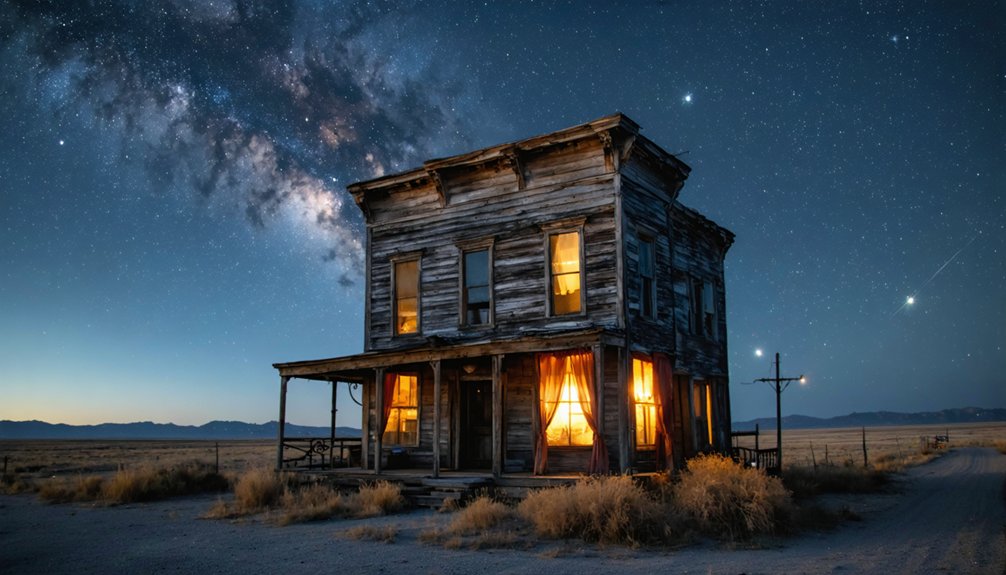
When evening settles over abandoned mining camps and frontier settlements, you’ll discover that staying near ghost towns offers an atmosphere unlike any conventional hotel experience.
Historical preservation meets modern comfort through carefully restored properties that maintain authentic character while providing essential tourist amenities.
Expect these distinctive features during your stay:
- Complete solitude after dark – Once day-trippers depart, you’ll have entire ghost towns to yourself, with 150-year-old architecture surrounding your accommodation.
- Dramatic natural settings – Mountain-flanked locations and glacial valleys create stunning backdrops that muffle modern noise.
- Dark sky viewing – Remote positioning far from light pollution reveals spectacular stargazing opportunities.
- On-site exploration – General stores, historic libraries, and preserved buildings remain accessible for evening wandering through authentic frontier remnants.
Best Times of Year to Visit Great Plains Ghost Towns
Your ghost town adventure hinges on seasonal timing that transforms these abandoned settlements from snowbound isolation to sun-drenched accessibility.
Late spring offers the sweet spot—May through early June delivers 70s°F temperatures after snowmelt accessibility opens high-elevation routes. You’ll find wildflower season painting Colorado ruins in brilliant colors while enjoying rock-bottom lodging prices before summer crowds arrive.
Summer brings fully operational facilities and annual events like Gold Rush Days, though you’ll want to skip early August’s Sturgis Rally chaos.
Fall rewards you with golden aspens framing weathered structures and empty trails through September.
Winter? Forget it—snow renders roads impassable, forcing snowmobile access or complete closures.
Target post-Memorial Day through early November for maximum freedom exploring these frozen-in-time settlements.
Safety Tips for Exploring Abandoned Structures and Camping in Ghost Towns
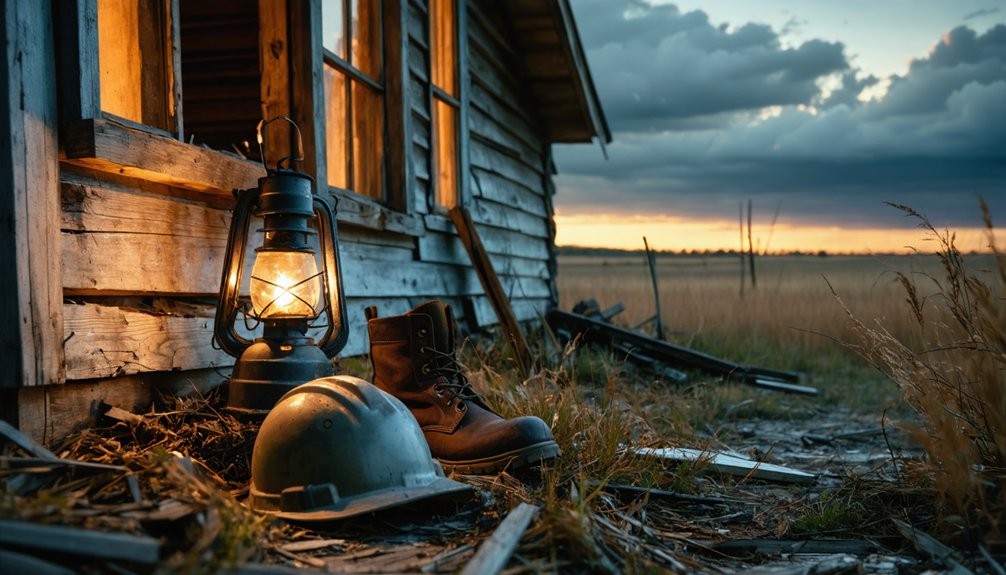
Before you step through the weathered doorway of any abandoned structure, understand that these picturesque ruins can kill you. Rotten floorboards collapse without warning, century-old timbers give way, and unstable mine shafts lurk beneath innocent-looking ground. Your freedom to explore demands serious responsibility.
Essential Safety Protocol:
- Structural inspections first – Test every surface before trusting your weight to it
- Gear up properly – Sturdy boots, gloves, flashlight, first-aid kit, and offline maps are non-negotiable
- Wildlife encounters – Rattlesnakes and other creatures claim these spaces as home
- Never camp here – Historic sites aren’t for overnight stays; dry wood ignites catastrophically
Respect posted boundaries, obtain permission for private property, and leave artifacts untouched. Pack one gallon of water per person daily, and fuel up frequently in remote areas.
How to Choose Between Hotel Stays and Camping at Ghost Town Destinations
Once you’ve mastered the safety protocols for exploring ghost towns, you’ll face a practical decision that shapes your entire adventure: sleeping under the stars or retreating to a comfortable bed.
Your choice hinges on balancing historical preservation with personal comfort.
Hotels like the Plains Hotel in Cheyenne ($90/night) and Ghost Town Hotel in Terlingua ($100/night) immerse you in authentic Old West atmospheres while supporting cultural significance through restored structures.
Meanwhile, camping options like A Starry Night campsite near Belle Plain or Buzzard’s Roost glamping tipis offer raw frontier experiences at lower costs.
Consider accessibility—some ghost towns sit 100+ miles from civilization.
Weigh your budget against desired authenticity.
Both paths honor these historic sites; choose what fuels your independent spirit.
Frequently Asked Questions
Are Pets Allowed at Ghost Town Accommodations and Nearby Camping Areas?
Pet policies aren’t explicitly detailed for these ghost town accommodations. You’ll need to contact each lodging directly about their accommodation rules before bringing your furry companion. Don’t assume pets are welcome—always verify beforehand to avoid disappointment.
What Cell Phone Service and Internet Connectivity Can I Expect?
Off the grid, out of mind—you’ll face serious cell service limitations and internet connectivity challenges. Most remote Great Plains ghost towns offer zero reception, so you’ll need printed maps and must embrace true disconnection from the digital world.
How Much Should I Budget for a Ghost Town Overnight Trip?
Budget $100-400 nightly for authentic ghost town stays where you’ll experience historic preservation firsthand. You’ll discover local legends while enjoying freedom to explore at your own pace, plus factor in $5-20 for special access fees.
Are Guided Tours Available at These Ghost Town Locations?
Guided tours aren’t formally offered at these locations—you’ll explore independently. However, preservation efforts maintain historical significance through authentic buildings and artifacts, letting you discover these time capsules at your own pace, creating your personal adventure through America’s frontier past.
What Photography Equipment Works Best for Capturing Ghost Town Structures?
You’ll want a mirrorless camera with wide-angle lenses for capturing decaying architecture. Vintage lenses add character to abandoned structures, while tripod stability guarantees sharp long exposures in dim interiors. Don’t forget flashlights for progressing through powerless buildings safely.
References
- https://www.afar.com/magazine/must-visit-ghost-towns-in-the-united-states
- https://www.hauntedrooms.com/wyoming/haunted-places/haunted-hotels/the-plains-hotel-cheyenne
- https://www.kukucampers.com/blog/9-colorado-ghost-towns-to-visit
- https://www.colorado.com/articles/colorado-ghost-towns
- https://www.legendsofamerica.com/gt-emergingghosttowns/
- https://www.kbia.org/agriculture/2017-03-22/great-plains-ghost-town-sheds-light-on-forgotten-piece-of-african-american-history
- https://tranquiltrekker.com/road-trip-2017-the-disaster-that-wasnt-part-1-the-great-plains/
- https://www.youtube.com/watch?v=IECzqQ-jIEM
- https://www.tripadvisor.com/ShowUserReviews-g60439-d255670-r895297541-The_Historic_Plains_Hotel-Cheyenne_Wyoming.html
- http://www.wyomingtalesandtrails.com/cheyennetivoli3a.html