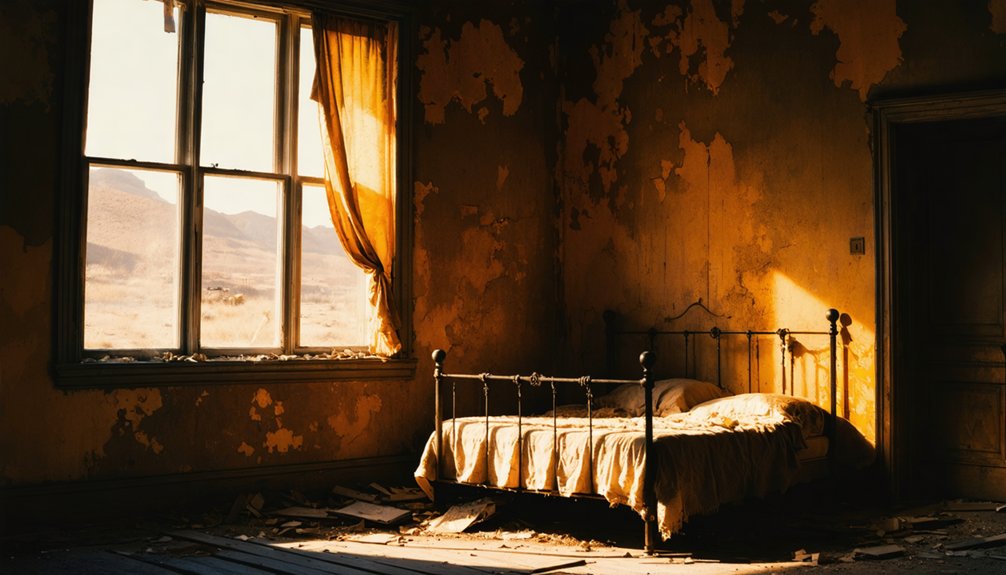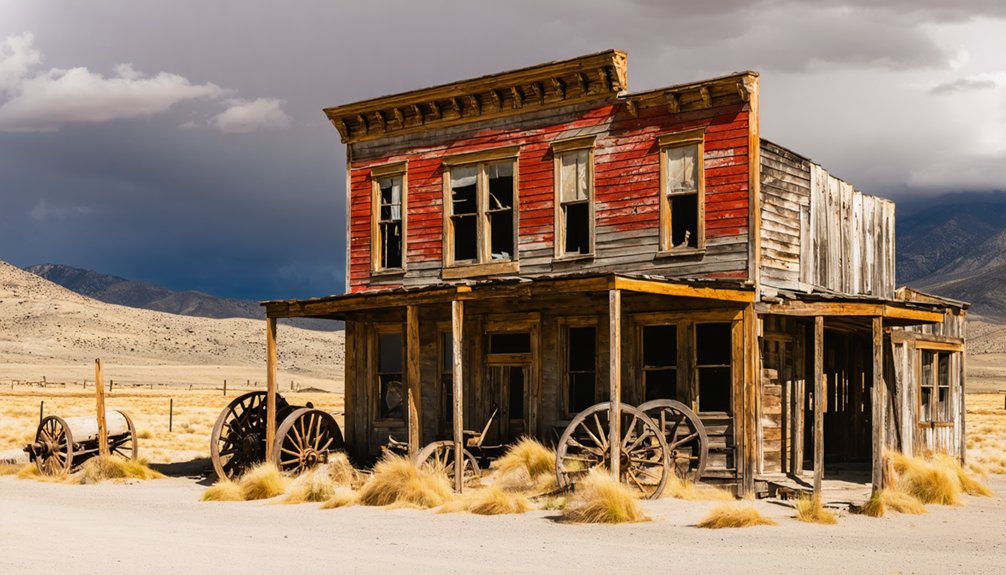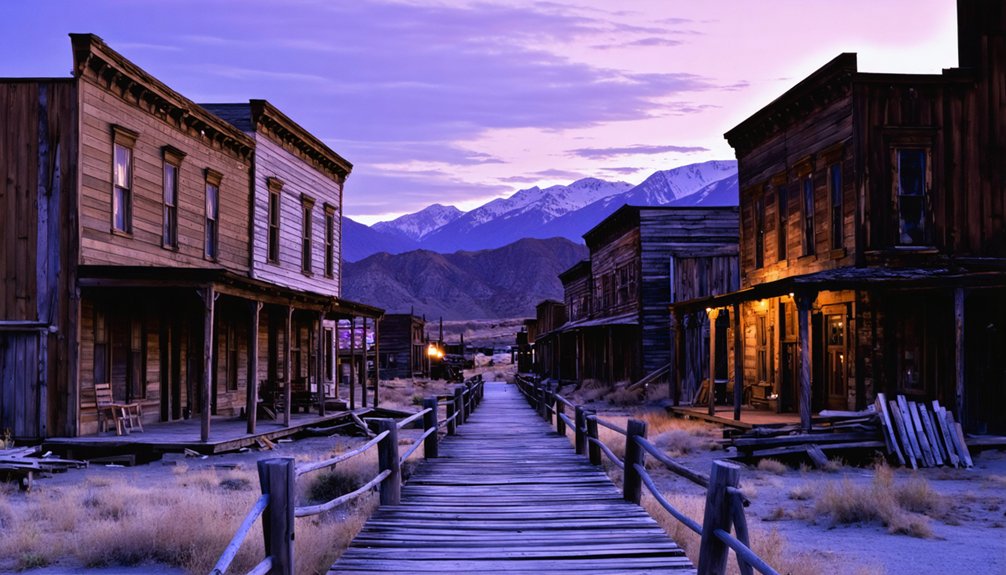
You can sleep inside authentic frontier buildings at St. Elmo, Colorado, where hand-built guest houses sit at 10,000 feet among original 1880s structures, or book restored miners’ cabins with claw-foot tubs at Gold Point, Nevada. Calico Ghost Town offers Mojave Desert bunkhouses starting at $160, while Bodie’s nearby heritage hotels serve visitors to California’s best-preserved Gold Rush site. Jerome’s historic accommodations even feature reported paranormal activity. Each location blends weathered architecture with varying comfort levels, and strategic planning helps you secure these atmospheric stays during peak seasons.
Key Takeaways
- Calico Ghost Town, California offers mini-bunkhouses from $160 and primitive camping from $35 in the Mojave Desert.
- Bodie, California has no on-site lodging but nearby Bridgeport features the Bodie Hotel with themed rooms built from relocated structures.
- Gold Point, Nevada provides restored miners’ cabins with modern amenities including WiFi, kitchenettes, and air conditioning for overnight stays.
- St. Elmo, Colorado features hand-built guest houses with authentic frontier architecture and period details like claw-foot tubs for overnight bookings.
- Jerome, Arizona’s Douglas Mansion area offers access to museums and historic sites, with nearby lodging options supporting overnight ghost town exploration.
St. Elmo, Colorado: Hand-Built Guest House in a Rocky Mountain Mining Town
Perched at 10,000 feet in the rugged Chalk Creek Canyon, St. Elmo beckons you to experience authentic silver mining history. You’ll walk streets where 2,000 prospectors once hustled between five hotels and countless saloons during the 1880s boom.
Step into Colorado’s past where thousands of silver-seekers carved their dreams into an unforgiving alpine frontier.
The Mary Murphy Mine shipped 75 tons of ore daily from 2,000 feet above the railroad—imagine that engineering feat.
Today, historic preservation efforts keep this ghost town remarkably intact. You can book the hand-built guest house and wake up surrounded by original buildings that’ve weathered over a century of Rocky Mountain storms. The St. Elmo Town Hall and Jail, built in 1880, stands as a well-preserved example of civic architecture from the mining era.
Unlike sanitized tourist traps, St. Elmo lets you touch real history. The town got its unusual name in 1880 after postal officials rejected the original Forest City designation. Explore 150 mine claims at your own pace, no guided tours required.
After the 1922 railroad abandonment, nature nearly reclaimed everything—but you’ll find freedom in these preserved ruins.
Gold Point, Nevada: Sleep in Authentic Miners’ Cabins With Modern Amenities
Tucked into Nevada’s arid backcountry, Gold Point transforms your ghost town fantasy into reality—you’ll sleep in genuine miners’ cabins where prospectors once collapsed after sixteen-hour shifts.
Five restored cabins balance authenticity with comfort: rustic plank exteriors conceal modern kitchenettes, WiFi, and air conditioning. Choose standard cabins ($120-$150) with shared facilities or deluxe options featuring private bathrooms ($160-$225).
Your breakfast funds historic preservation—owner Herb Robbins pours restoration proceeds back into Nevada’s crumbling past.
Step onto Main Street at dusk for exceptional stargazing, then explore the saloon’s 8,000 mining camp photographs. The saloon houses a 1909 Brunswick pool table alongside its classic bar, offering a glimpse into authentic Old West recreation. Jackrabbits scatter outside your door at dawn.
Don’t dismiss local ghost stories—many guests report unexplained encounters.
Two-night minimum required; Memorial Day brings fundraiser festivities with live entertainment. Reservations are available via phone, ensuring your spot in this authentic piece of Nevada mining history.
Calico Ghost Town, California: Bunkhouses and RV Camping in the Mojave Desert
Half an hour from Barstow, Calico Ghost Town sprawls across Mojave hillsides where silver miners once extracted $20 million in ore before the 1907 bust emptied the town overnight.
You’ll sleep where prospectors once did, though thankfully with heating, air conditioning, and private bathrooms replacing canvas and campfires.
The mini-bunkhouse accommodates six guests with kitchenette convenience at $160 nightly.
Desert landscapes reveal themselves spectacularly at sunrise when you’re parked in your RV—weekday rates start at $35 for primitive sites, climbing to $45 with full hookups.
Weekend camping jumps to $55 fully hooked up.
Bunkhouse amenities don’t include linens, so pack your own.
Seniors and military personnel score discounted weekday rates.
The $10 non-refundable reservation fee secures your escape into this preserved 1880s mining camp.
Groups of 20 or more pay just $5 per person per night, plus a $20 non-refundable reservation fee and $30 camping deposit.
For those preferring traditional accommodations, the Rodeway Inn On Historic Route 66 sits just 8.8 miles away with a 4.4 rating and complimentary cooked breakfast.
Bodie, California: America’s Best Preserved Gold Rush Ghost Town
You’ll walk past weathered saloons and peer through dusty windows into homes where coffee cups still sit on tables, as if Bodie’s last residents stepped out for just a moment 80 years ago.
The state park’s “arrested decay” policy means these 100 remaining structures look exactly as they did when abandonment finally took hold—no renovations, no reconstructions, just authentic preservation frozen in time.
Since there’s no lodging, food, or gas at this remote Sierra Nevada site, you’ll need to base yourself in nearby towns like Bridgeport or Lee Vining, where the historic Bodie Hotel (relocated from the ghost town itself 140 years ago) offers the closest thematic connection to your visit. The hotel features seven uniquely characterized rooms and a large communal back patio where you can take in stunning views of the Sawtooth Range. Just remember that taking anything from Bodie—even a small pebble—is said to bring the “Curse of Bodie”, compelling some visitors to mail back items with apologies after experiencing misfortune.
Historic Buildings and Relics
Walking through Bodie’s weathered streets feels like stepping onto a movie set, except the peeling paint, creaking floorboards, and dust-covered shelves are utterly genuine.
You’ll find 110 buildings frozen in time through “arrested decay”—historic architecture preserved exactly as miners left it. The Boone Store’s shelves still hold dynamite and century-old food tins, while the Miner’s Union Hall stands as a testament to workers who demanded better conditions.
The 1932 fire left Bodie Bank’s brick vault standing alone, a haunting reminder of boom-time fortunes. Peer through dusty windows at original furniture and personal belongings—artifacts preservation that lets you glimpse daily life without velvet ropes.
At 8,379 feet elevation, this National Historic Landmark offers unfiltered access to authentic Wild West history. Gold discovered in 1859 sparked the rise of this boomtown east of the Sierra Nevada Mountains, transforming it into one of the West’s wildest settlements. The place name has become synonymous with California’s best-preserved ghost town, drawing history enthusiasts from around the world.
Nearby Lodging Options
Since Bodie itself offers no overnight accommodations—those weathered buildings exist solely for preservation, not pillows—you’ll need to base yourself in one of the surrounding towns.
Bridgeport, just 20 miles southwest, delivers authentic Western character through places like the Bodie Hotel, which features historical architecture salvaged from the ghost town itself 140 years ago. Its vintage wallpapers and antique-filled parlor whisper local legends while you sip whiskey in the saloon downstairs.
Lee Vining offers budget-friendly motels near Mono Lake, perfect for early morning departures to catch Bodie’s golden-hour light.
Virginia Creek Settlement and June Lake’s cabins provide comfortable retreats after full days exploring arresting decay.
Book ahead during peak seasons—freedom-seekers flock here, chasing something real beyond sanitized tourist traps.
Jerome, Arizona: Paranormal Encounters at the Jerome Grand Hotel
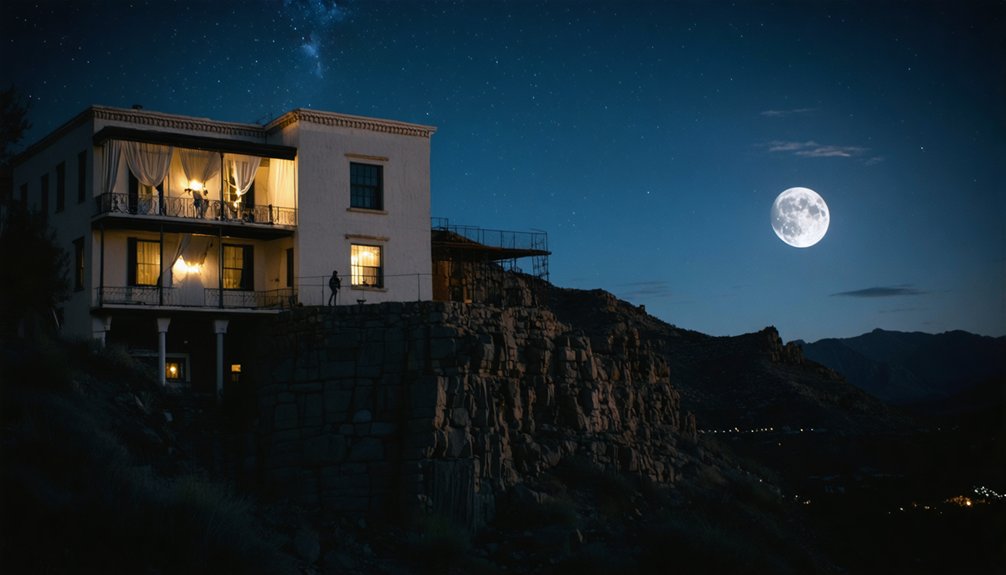
Perched on Cleopatra Hill at 5,200 feet, the Jerome Grand Hotel looms over the abandoned copper mines that once made this Arizona town thrive. Built as United Verde Hospital in 1927, it treated miners until 1950 before sitting empty for decades.
Today’s visitors encounter haunted legends at every turn—elevator cars mysteriously travel to the third floor empty, and guests report shadow figures drifting through hallways where nurses once rushed.
You’ll find twenty-three rooms available for overnight paranormal investigations. Room 505 delivers the most intense activity, with objects moving on their own.
The basement hosts “Sam,” a cigar-smoking miner’s spirit, while Harvey, an electrocuted maintenance man, reportedly still fiddles with lights.
Nightly ghost tours let you explore independently, capturing EVP recordings and experiencing cold spots yourself.
Bannack, Montana: Teepee and Tent Camping Among 60 Historic Buildings
Picture yourself waking inside a canvas tipi as dawn breaks over Montana’s most intact ghost town, where 60 weathered buildings stand frozen in the 1860s gold rush era.
At Bannack State Park, you’ll find camping that honors Native traditions alongside preservation efforts maintaining this 1,600-acre historical sanctuary.
Choose from 24 campsites split between Vigilante and Road Agent campgrounds, or book the authentic tipi for a unique experience. Four walk-in tent sites offer solitude, while RV-friendly spots accommodate larger rigs without hookups.
You’re steps from Grasshopper Creek for gold panning and fishing, with ghost walks revealing tales of vigilante justice.
Reserve your spot six months ahead through park staff.
At 5,840 feet elevation, you’ll breathe mountain air while exploring America’s best-preserved boom town—completely on your terms.
Booking Your Ghost Town Adventure: Reservation Tips and Seasonal Availability
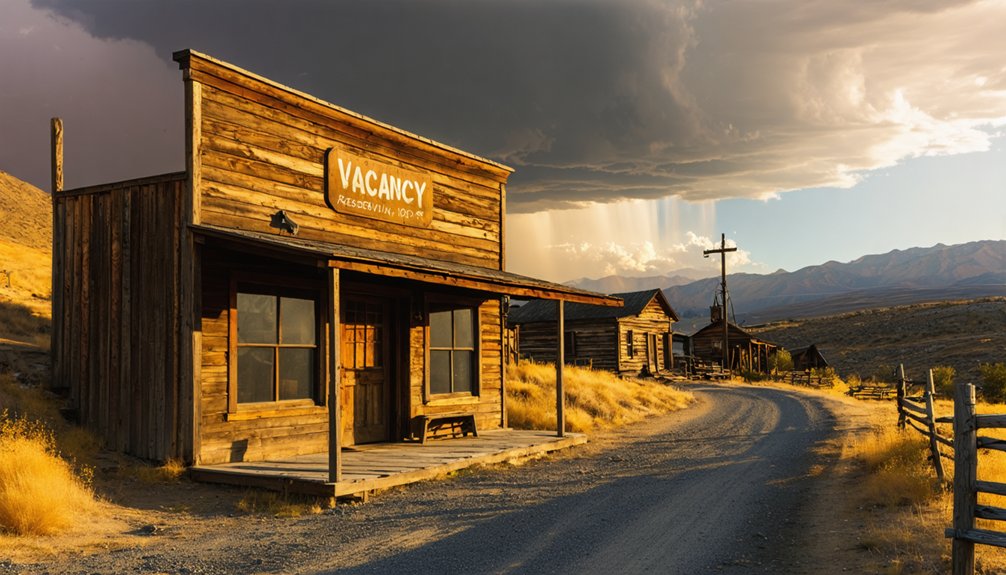
Ghost town stays book up faster than you’d expect—I learned this the hard way when St. Elmo’s three guest rooms were already full four months before my planned summer visit. Most Western ghost towns operate seasonally, with properties like St. Elmo closing after October’s first weekend and others shuttering entirely during harsh winter months.
You’ll want to reserve your room at least 8-12 weeks ahead for summer weekends, especially at limited-capacity destinations like Calico’s 10 cabins or Gold Point’s handful of restored houses.
Peak Season Booking Windows
When planning your ghost town adventure, understanding seasonal booking windows can mean the difference between securing your dream accommodation and facing a two-year wait.
Summer (May–August) dominates peak season, when ghost town legends come alive and night photography opportunities flourish under starlit skies. However, savvy travelers target these strategic windows:
- Late September–Early October: Ashcroft’s golden aspens create stunning backdrops, though weekend crowds intensify.
- December–February: Calico’s 70°F desert sunshine offers comfortable exploration without summer’s scorching heat.
- Mid-May opening weeks: Snag newly available slots at Ghost Town Guest House’s three exclusive rooms.
- Weekday bookings: Skip weekend congestion during fall foliage season.
Reserve accommodations immediately when spring reservations open. With limited capacity and surging demand, hesitation means lengthy waitlists.
Winter adventurers willing to cross-country ski into remote locations discover crowd-free wonderlands.
Advance Reservation Requirements
Securing your spot at these remote destinations requires more planning than booking a standard hotel.
St. Elmo’s guest house fills up fast—some travelers report waiting two years for availability during its spring-through-October season. You’ll need to book early or risk missing out entirely.
Reservation policies vary notably between locations. Calico’s booking procedures include a non-refundable $10 fee, with cabins at $75 nightly and their mini-bunkhouse at $160.
If you’re bringing pets to the cabins, expect a $100 deposit. Festival weekends require two-night minimums for the bunkhouse.
Gold Point takes a different approach, offering houses, cabins, and camping with rustic exteriors hiding modern interiors.
Your stay directly funds ongoing preservation work, letting you contribute to keeping these historic sites alive for future adventurers.
What to Expect During Your Overnight Stay in a Ghost Town
Stepping through the creaking door of your ghost town accommodation transports you into a carefully preserved slice of the Old West, where history whispers from every weathered plank and antique fixture. Unlike urban legends or fictional stories, you’ll experience authentic 1880s buildings with modern comforts—queen beds, private bathrooms, and gas stoves blend seamlessly with claw-foot tubs and period details.
Step into authentic 1880s buildings where weathered history meets modern comfort—queen beds and private bathrooms blend seamlessly with period charm.
Your stay typically includes:
- Self-guided exploration of preserved buildings like jails, saloons, and general stores
- Evening atmosphere on dusty main streets surrounded by towering pines and jagged peaks
- Genuine paranormal encounters at locations like Jerome’s room 32 with EMF readers
- Direct contribution to preservation efforts through your booking
You’ll find kitchenettes stocked with treats, historical videos, and summer access to working general stores selling authentic souvenirs.
Exploring Historic Sites and Museums in Western Ghost Towns
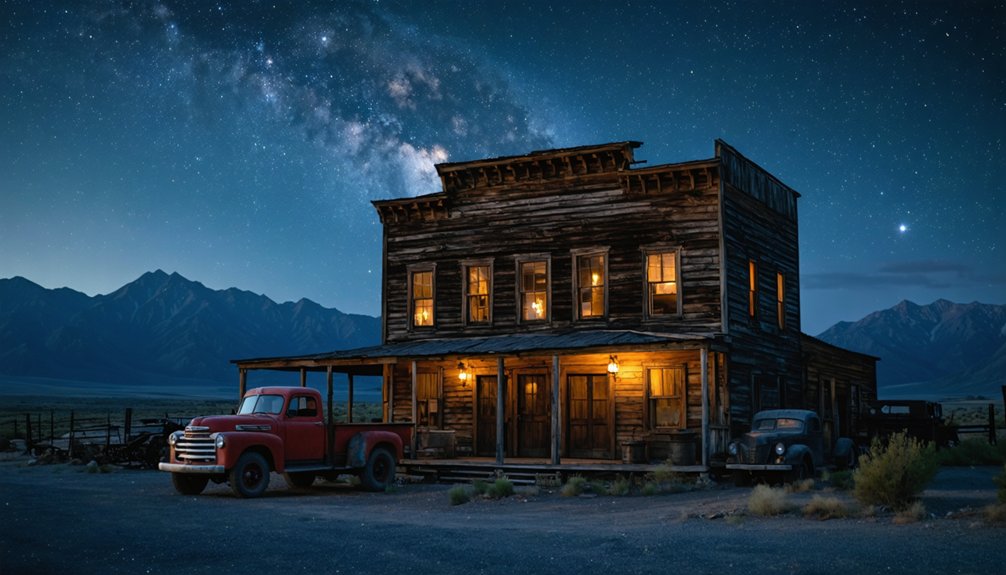
You’ll find rooms packed with hand-cranked printing presses, weathered mining tools, and faded photographs that place faces on the frontier stories you’ve only read about.
Walking through preserved saloons and schoolhouses lets you trace the wooden floorboards where prospectors once gambled away their gold dust and children practiced their penmanship on slate boards.
Many sites offer self-guided tours with detailed plaques and period furnishings, so you can explore at your own pace while imagining the clatter of stamp mills and the rumble of ore wagons that once filled these mountain valleys.
Authentic Mining Era Artifacts
When you descend 500 feet into Castle Dome’s Hull Mine, the beam of your headlamp catches glints of fluorite crystals embedded in silver-lead ore—the same veins that lured thousands of prospectors to Arizona’s desert from the 1860s through the 1970s.
These authentic mining relics tell stories words can’t capture.
At Gold King Mine, you’ll find antique tools alongside a 1270-foot shaft from 1890, while Ghost Town Museum in Colorado Springs lets you handle actual mining equipment used to extract Pikes Peak gold.
Castle Dome’s 50 buildings overflow with:
- Blacksmith tools and forging equipment
- Victorian gowns and period clothing
- Original sewing supplies and household items
- Weathered bottles and mining debris
Each artifact connects you directly to frontier lives—no glass cases separating you from history’s raw authenticity.
Self-Guided Historical Walking Tours
Beyond examining artifacts behind display glass, ghost towns reveal their secrets most powerfully when you’re free to wander at your own pace. Jerome’s history walks trace the town’s evolution through historic preservation efforts, connecting landmarks like the 1915 UVX Mine and Douglas Mansion.
Vulture City’s dusty streets lead you past 16 original 1800s structures—from the assay office to the infamous Hanging Tree—without guided schedules dictating your discoveries.
Bodie’s weathered ghost town architecture stands untouched in California’s high desert, over 100 structures frozen in time.
Bannack offers 60 explorable buildings across Montana’s plains, while Kennecott’s remote Alaskan location rewards determined visitors with self-guided exploration through bunkhouses and the historic train depot.
You’ll move through these abandoned spaces on your terms, discovering stories layer by layer.
Educational Video Museum Collections
Museums throughout Western ghost towns have transformed their artifact collections into multimedia experiences that bring forgotten voices back to life. You’ll discover immersive historic displays that go beyond dusty cases—these collections pulse with authentic western spirit.
At Douglas Mansion in Jerome, you’ll explore a 3D underground tunnel model alongside vintage photos and mineral specimens. The Lane House Museum in Calico showcases genuine museum artifacts from daily pioneer life, while Ghost Town Museum Manitou Springs preserves entire rescued buildings filled with thousands of original pieces.
Top Interactive Museum Features:
- Mine equipment demonstrations at Calico’s underground tours
- EMF readers and spirit boxes during Jerome’s ghost investigations
- 110-room Sinagua pueblo ruins at Tuzigoot Monument
- Authentic saloons and homesteads at Old Trail Town’s 26 relocated structures
These experiences let you touch history’s raw edge without barriers.
Ghost Town Accommodations: Choosing Between Cabins, Hotels, and Camping
Choosing where to sleep in a ghost town shapes your entire experience—whether you’re tucking into a restored miner’s cabin with century-old timber beams overhead, unwinding in a hotel room with a claw-foot bathtub, or watching stars appear above your tent in the desert silence.
Exploring the historic ghost towns in Oregon offers a fascinating glimpse into the past, where stories of pioneers and prospectors linger in the air. From the remnants of old saloons to crumbling buildings that once bustled with life, each site tells a unique tale. As you wander through these forgotten places, you’re bound to feel a connection to the history that shaped the region.
Your sleeping choice becomes part of the story—whether sheltered by historic timber, soaking in vintage porcelain, or exposed to desert stars.
Cabins offer self-contained freedom. Calico‘s bunkhouse sleeps six at $160/night, while Gold Point‘s original miners’ quarters blend rustic exteriors with modern comforts—perfect settings for swapping haunted legends around gas stoves.
Hotels provide character-rich comfort. St. Elmo’s Guest House features reclaimed materials and those romantic claw-foot tubs, though its three rooms book fast during its spring-to-October season.
Camping delivers raw authenticity. Calico’s RV sites run $35-$55 depending on hookups and weekends.
You’ll drift off to ghostly tales under endless Western skies, completely untethered.
Frequently Asked Questions
Are Ghost Town Accommodations Suitable for Families With Young Children?
You’ll find family-friendly options with rustic charm like St. Elmo’s Guest House, featuring bathtubs and snacks. However, consider your children’s comfort with haunted legends and remote locations—some authentic ghost towns feel genuinely eerie after dark.
What Cellular Service and Internet Connectivity Can I Expect at Ghost Towns?
You’ll find cell service and internet connectivity nearly nonexistent at most ghost towns. Mountains block signals, remote locations lack infrastructure, and some areas prohibit wireless entirely. Download offline maps beforehand—you’re going off-grid into true disconnection and freedom.
Are Pets Allowed at Ghost Town Overnight Accommodations?
Yes, many ghost town accommodations welcome pets! Pet policies vary—you’ll find pet amenities like deposits ($100-$200) and size limits at places like Calico and Lone Pine. Always check specific restrictions, but your furry companions can join your adventure.
What Dining Options Are Available Near Remote Ghost Town Locations?
Ghost town restaurant options are virtually nonexistent at these remote locations. You’ll find no nearby food establishments, so pack your own provisions. These isolated destinations reward self-sufficient travelers who embrace adventure and prepare meals independently before exploring.
Do Ghost Towns Offer Accessibility Accommodations for Mobility-Impaired Guests?
Stepping through history’s doorway shouldn’t require perfect mobility. You’ll find accessibility enhancements like discounted camping rates and cabin rentals at Calico, though historical preservation limits modifications. Contact staff directly—they’ll accommodate your freedom-seeking spirit despite challenging terrain.
References
- https://touristish.com/ghost-town-guest-house/
- https://travelnevada.com/hotels/unique-stays/gold-point-ghost-town-bed-breakfast/
- https://parks.sbcounty.gov/park/calico-ghost-town-regional-park/
- https://www.goldpointghosttown.com
- https://www.tripadvisor.com/Articles-loOISRppph64-American_ghost_towns.html
- https://familytraveller.com/usa/national-parks/american-west-ghost-towns/
- https://www.junelakeaccommodations.com/bodie-ghost-town/
- https://www.youtube.com/watch?v=NMQkR5bOsyg
- https://lafamilytravel.com/10-best-california-ghost-towns-to-visit-this-summer/
- https://www.nps.gov/deva/learn/historyculture/death-valley-ghost-towns.htm