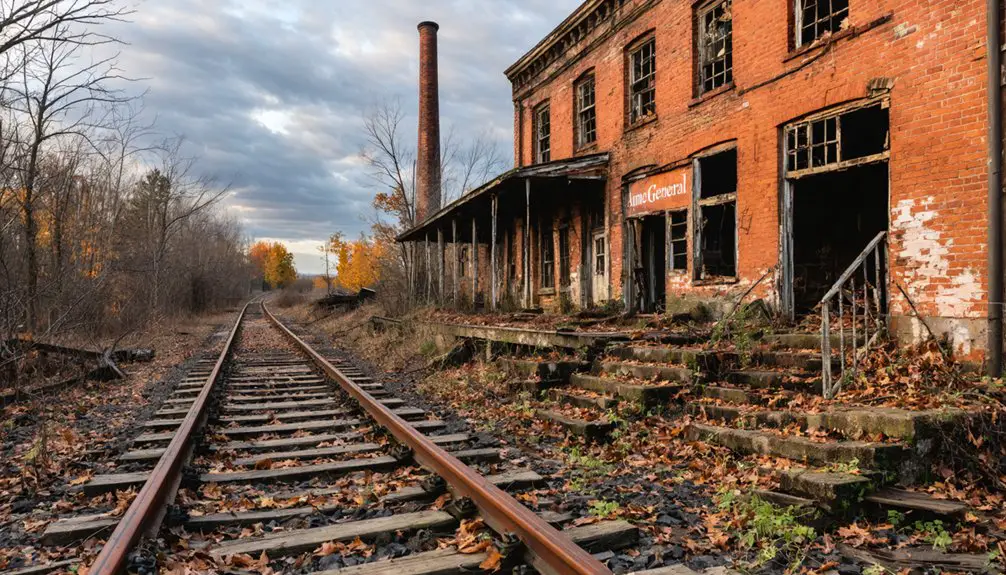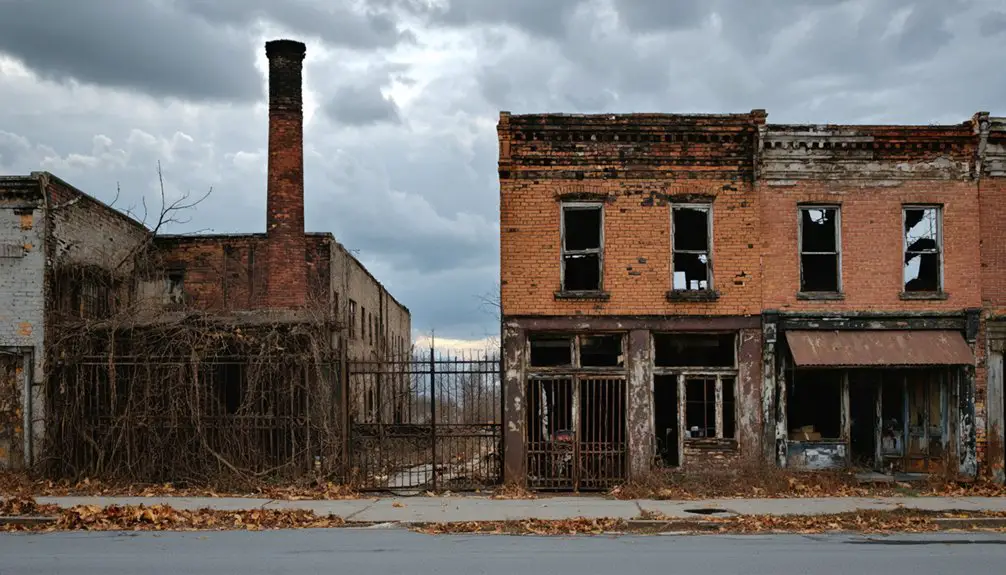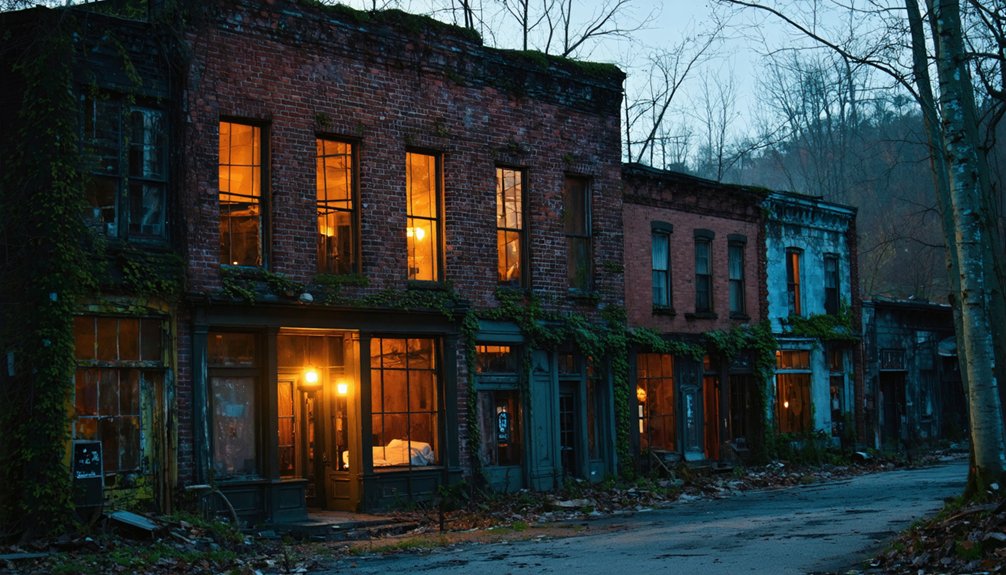
You can’t technically sleep *in* Pennsylvania’s ghost towns like Rausch Gap or Wehrum, but you’ll find haunted historic inns remarkably close to these abandoned settlements. The Golden Plough Inn near Lahaska and Inn at Jim Thorpe sit amid coal country’s industrial graveyards, where spectral postmasters and colonial women still wander the halls. Pineapple Hill Inn offers ghostly encounters near Washington Crossing, while the Ghost Town Trail leads you through Cold Springs Resort‘s fire-scarred ruins. Explore further to discover which haunted rooms await your overnight stay.
Key Takeaways
- Golden Plough Inn in Lahaska offers overnight stays in a historic 1800s stagecoach stop with documented paranormal activity and colonial-era spirits.
- Inn at Jim Thorpe, Pennsylvania’s most haunted hotel since 1833, features overnight accommodations in rooms with active ghostly phenomena.
- Pineapple Hill Inn near New Hope provides lodging in a 1790 colonial manor with multiple resident spirits and haunted guest rooms.
- Ghost Town Trail provides access to abandoned towns like Rausch Gap and Wehrum for hiking and exploring historical ruins year-round.
- These historic inns combine authentic colonial architecture with paranormal experiences, offering unique overnight stays in Pennsylvania’s haunted heritage sites.
Yellow Dog Village: A Colorful Abandoned Town Experience
Deep in the hills of western Pennsylvania, where Buffalo Creek winds through limestone valleys, Yellow Dog Village stands frozen in time—a haunting collection of weathered duplexes and crumbling homes that once housed generations of mining families.
A ghost town preserved in decay, where mining families once thrived amid limestone valleys and fading memories.
You’ll discover 19 structures dating back to the 1920s, their vintage architecture whispering tales of company-town life and “yellow dog contracts” that bound workers to Pittsburgh Limestone Company.
For $20, you can explore this eerie landscape where horses now wander abandoned streets and playgrounds. The haunted storytelling comes alive through peeling wallpaper and sagging porches. Inside, you’ll find abandoned personal belongings including family photos, VHS tapes, and even unopened food cans left behind when the last families departed around 2010. Each home showcases unique architectural details with vintage built-in cabinets original to the 1910-1920 construction period.
New owners have announced plans for overnight stays in renovated houses, letting you experience authentic mining-era atmosphere. It’s your chance to step into history without restriction or sanitized museum barriers.
Inn at Jim Thorpe: Historic Hauntings in a Coal Town Hotel
You’ll find Pennsylvania’s most haunted hotel standing proudly on Broadway in Jim Thorpe. It was built in 1833 as the White Swan Hotel and now masks decades of unexplained phenomena.
Behind its ornate Victorian woodwork and cast iron balconies, guests report TVs switching on by themselves, phantom pressure on beds in rooms 210 and 211, and the lingering smell of smoke from the Great Fire of 1849.
This restored coal town landmark connects you to Mauch Chunk’s boom-era past, when the Switchback Gravity Railroad drew more visitors than any American site except Niagara Falls—and apparently, some never left. The hotel has hosted notable dignitaries including Ulysses S. Grant and Thomas Edison during its storied history. After falling into disrepair during the Great Depression, the property was revitalized in the 1980s and now operates as a 65-room hotel across three connected buildings.
Paranormal Activity and Encounters
Nestled in the heart of Pennsylvania’s historic coal country, the Inn at Jim Thorpe harbors one of the state’s most chilling legends—the tragic tale of Madeline, whose spirit has lingered in Room 211 for over a century.
You’ll encounter her presence through mysterious 11 p.m. wake-up calls, indentations beside you on the bed, and childlike laughter echoing after doors lock. Electronic disturbances plague guests as televisions blast unexpectedly and room temperatures refuse adjustment.
Shadow figures drift through hallways while you’ll catch sudden whiffs of cigarette smoke and fire. Children sleeping here report ghostly visitors, and you might feel invisible touches or find your belongings inexplicably rearranged.
Staff members have encountered darker entities causing physical illness, though parapsychologist Marja Schantz assures visitors that Madeline herself remains a gentle, welcoming presence. Ghost hunting crews equipped with specialized tools and technology regularly visit from around the country to investigate the paranormal phenomena. The hotel’s haunting extends beyond Room 211, as guests have reported water mysteriously running from under locked doors, causing unexpected floods in bathrooms throughout the building.
Coal Era Historic Significance
When Cornelius Connor raised the White Swan Hotel in 1833, Mauch Chunk pulsed with the fevered energy of America’s coal revolution.
You’re standing where anthracite fortunes were made, where Josiah White’s vision transformed Bear Mountain into an industrial powerhouse.
The Switchback Gravity Railroad thundered past with black diamonds bound for the Lehigh Canal’s 49 locks, while millionaires built mansions along the ridges.
The Great Fire of 1849 reduced Connor’s inn to ash, but he rebuilt it grander—the New American Hotel, showcasing Victorian architecture that still commands these streets.
Coal mining prosperity filled its rooms with industrialists and adventurers alike.
When the Depression strangled the anthracite industry, the building survived through decades of poverty-preservation, waiting for 1988’s restoration to resurrect its coal-town glory.
The town itself would be renamed in 1954 to honor legendary Olympian Jim Thorpe, whose mausoleum now rests along Route 903.
The coal mines’ wealth came at a brutal cost, with poor conditions and child labor plaguing workers who extracted the black diamonds that built empires.
Baladerry Inn: Gettysburg’s Civil War Ghost Hunt Destination
Just one mile from Little Round Top, the Baladerry Inn stands on Hospital Road where the blood of Union soldiers once soaked into the Pennsylvania soil. This 1812 farmhouse served as a field hospital during Gettysburg’s second day.
On Hospital Road, one mile from Little Round Top, this 1812 farmhouse absorbed the blood of dying Union soldiers.
Surgeons performed brutal amputations without anesthesia in what’s now the Great Room. Historical authenticity runs deep here—a blood-stained footprint remains visible on the original floor.
You’ll find ten guest rooms spread across the main house, carriage house, and old house, each with private baths. The Great Room features an original brick fireplace and beamed ceilings, opening onto a large terrace with a hot tub.
The innkeepers maintain a binder filled with ghostly legends from previous guests and staff who’ve encountered Confederate soldiers, a mysterious woman, and an amorous gentleman. Paranormal investigators have documented intelligent responses from spirits throughout the property, including phantom knocks and mysterious voices calling for help.
Seven Confederate soldiers reportedly lie buried beneath nearby tennis courts, their restless spirits woven into Gettysburg’s haunted tapestry.
Golden Plough Inn: Paranormal Activity in a Stagecoach Tavern
You’ll find the Golden Plough Inn anchoring the 42-acre Peddler’s Village in Lahaska, where a mid-1800s stone tavern once welcomed weary stagecoach travelers along Old York Road.
The spirit of Thomas Betts, Lahaska’s first Postmaster, reportedly lingers in the lobby, making his presence known to staff and guests who pass through the Colonial-style corridors.
At the nearby Cock ‘n Bull restaurant, witnesses describe a little girl’s ghost playing with silverware in the Twinings dining room before racing through second-floor administrative halls.
Historic Tavern Background
The Golden Plough Inn‘s weathered stone walls rise from the heart of Peddler’s Village like a sentinel from another era, its massive square-hewn logs and medieval timber frame telling stories that stretch back to the mid-1700s. You’ll discover builder Martin Eichelberger brought his Black Forest heritage to Pennsylvania around 1741, creating this rare *Fachwerkhäuser* structure with its distinctive *liegender stuhl* roof—a steep-pitched design seldom seen in America.
The two-story stone tavern, expanded in the mid-1800s, once welcomed weary stagecoach travelers along Old York Road between New York and Philadelphia. Today’s medieval architecture stands preserved through careful historic preservation efforts, its brick chinking infill and classic timber work creating an atmospheric backdrop. The adjacent 1751 Georgian house shares the inn’s sprawling grounds, their histories intertwined through centuries of hospitality.
Reported Supernatural Encounters
Beyond its architectural grandeur and historic charm, Golden Plough Inn harbors something far more elusive—a collection of supernatural encounters that have transformed this colonial stagecoach stop into one of Pennsylvania’s most actively haunted locations.
You’ll discover spectral residuals throughout the property, from room 123’s heavy presence to the colonial woman wandering the basement near Peddler’s Pub. The paranormal activity here isn’t subtle:
- Phone calls originating from unoccupied rooms reach the front desk
- Coffee stirrers arrange themselves in deliberate trails across the lobby
- Haunted furniture moves independently as table settings shift mysteriously in Twinings dining room
In February 2020, Brian DiSanto’s full-body apparition sighting prompted Bucks County Paranormal Investigations to conduct extensive probes. Their findings confirmed what staff already knew—playful spirits freely roam these halls.
Pineapple Hill Inn: Colonial Spirits in New Hope
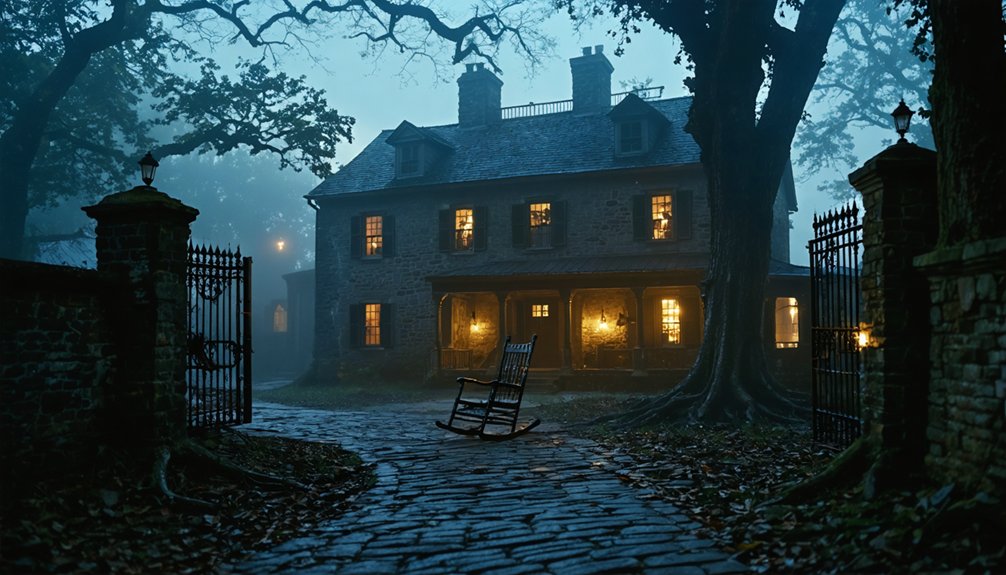
Nestled on nearly six acres between New Hope’s bustling center and the historic grounds of Washington Crossing Park, Pineapple Hill Inn beckons travelers seeking more than just a place to rest.
This 1790 colonial manor house operates as a bed-and-breakfast where you’ll encounter more than just eighteen-inch thick walls and pumpkin pine floors. Three known spirits frequent the property’s oldest rooms.
You might hear the spinning wheel of an elderly woman who died in the attic suite, or wake to John Scott—the original owner—planting a ghostly kiss on your cheek.
A playful child entity roams the original bedrooms. Despite these haunted guestrooms and spirit sightings, guests consistently rank this property #1 among area accommodations, praising its gourmet breakfasts and stunning grounds.
Ghost Town Trail Area: Exploring Abandoned Resorts and Rausch Gap
Three remarkable sites await your exploration:
Three historic ghost towns—Rausch Gap, Cold Springs Resort, and Wehrum—offer haunting glimpses into Pennsylvania’s forgotten industrial past.
- Rausch Gap – A vanished town with cemetery ruins, located 3.5 miles from the eastern trailhead.
- Cold Springs Resort – A mysterious site where a fire in 1900 left behind crumbling stairs and stone foundations from a 200-room hotel.
- Wehrum – Once home to 230 families; now only a single dwelling and a bank vault remain.
You’re free to hike, bike, or ski year-round through Blacklick Creek valley, where coal tipples, iron furnaces, and ghost town remnants tell Pennsylvania’s industrial story.
Frequently Asked Questions
What Safety Precautions Should Visitors Take When Exploring Abandoned Ghost Towns?
You’ll want to follow essential safety guidelines: test floors before entering, wear protective masks and sturdy boots, respect historical preservation by avoiding trespassing, and stay alert near steam vents where underground fires still smolder beneath cracked earth.
Are Children Allowed to Participate in Overnight Ghost Hunting Experiences?
Most overnight ghost hunts don’t restrict children, but you’ll want to check parental guidelines first. Children’s safety becomes your priority when exploring shadowy hallways and eerie basements where Confederate spirits reportedly linger in Pennsylvania’s haunted historic properties.
For those seeking a different type of adventure, exploring the best locations for astrophotography in Pennsylvania can be just as thrilling. With minimal light pollution and breathtaking night skies, these spots offer a perfect backdrop for capturing the beauty of the universe. Make sure to bring along your camera equipment and be prepared for a night of star-gazing magic.
What Is the Best Time of Year to Visit Pennsylvania Ghost Towns?
Like streaming a paranormal podcast, you’ll find fall offers the best ghost town visits. Haunted legends peak during October’s foliage, while cooler temps let you explore crumbling art restoration projects and eerie ruins without summer crowds restricting your adventure.
Do I Need Special Equipment or Cameras for Paranormal Investigations?
You’ll need basic equipment like EMF meters and digital voice recorders to start. Full-spectrum cameras capture what you can’t see, while thermal imaging reveals cold spots. Begin simple—your smartphone’s camera works perfectly for first investigations.
Are Pets Allowed at These Historic Haunted Accommodations?
Wondering if your furry companion can join your ghost hunt? Pet policies aren’t specified in these historic inns’ paranormal packages. You’ll need to contact each property directly about pet-friendly accommodations before booking your supernatural adventure.
References
- https://www.visitpa.com/blog/post/haunted-hotels-pennsylvania/
- https://www.hauntedrooms.com/pennsylvania/ghost-hunts/baladerry-inn-gettysburg
- https://www.youtube.com/watch?v=KV_TBcF2lec
- https://www.pahauntedhouses.com/real-haunts/hotels.aspx
- https://hiiker.app/trails/pennsylvania/indiana-county/ghost-town-trail/accommodations
- https://wmmr.com/listicle/pennsylvania-has-8-haunted-hotels-that-will-give-you-nightmares/
- https://www.tripadvisor.com/ShowUserReviews-g52565-d3534306-r230482663-Noon_Collins_Inn-Ebensburg_Pennsylvania.html
- https://erikarneson.wordpress.com/2013/05/28/the-ghosts-of-the-cold-springs-resorts/
- https://gettysburgghosts.com/overnight-jennie-wade-birthplace-ghost-hunt/
- https://uncoveringpa.com/yellow-dog-village