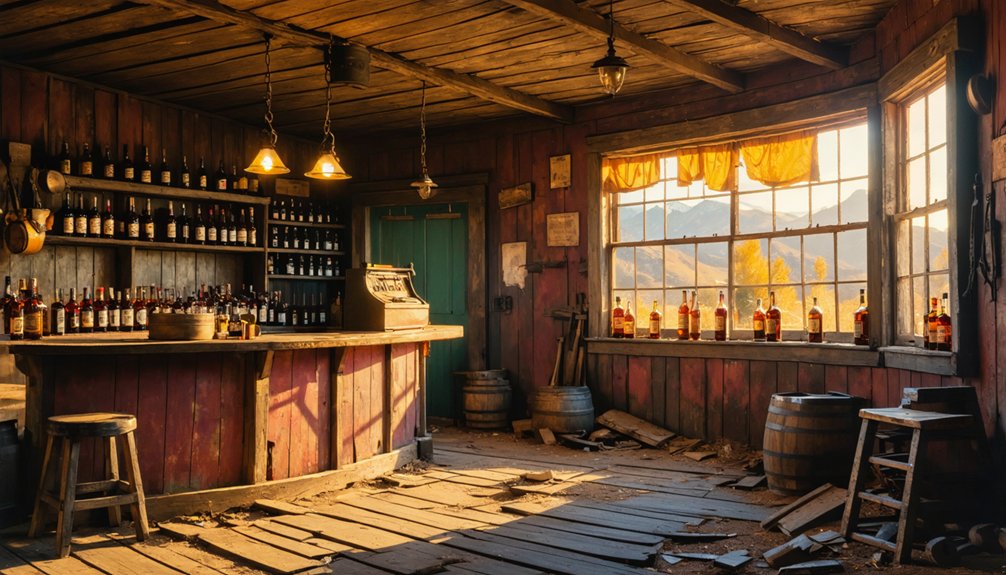
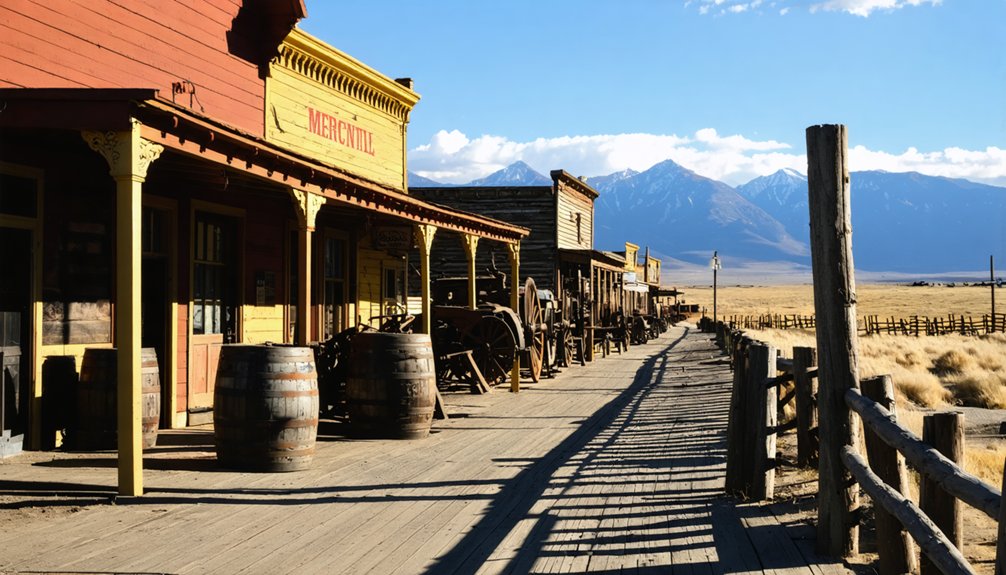
Goffs, California is a ghost town in the Mojave Desert that evolved from an essential railroad water station (1883) to a bustling Route 66 stopover. Its decline began with the 1931 highway realignment that bypassed the settlement. Today, you’ll find the restored 1914 schoolhouse museum, abandoned railway tracks, and desert tortoise habitats among the ruins. The town’s preserved structures offer silent testimony to the rise and fall of transportation-driven development in the American West.
Key Takeaways
- Goffs is a ghost town in the Mojave Desert that began as a railroad water station in 1883 and later served travelers on the original Route 66.
- The town declined after Route 66 was realigned in 1931, bypassing Goffs and leading to the schoolhouse closure in 1937.
- Historical remnants include abandoned railway tracks, the junction of California Eastern Railway, and the original Route 66 alignment now called Goffs Road.
- The restored 1914 Goffs Schoolhouse, listed on the National Register, now operates as a museum and cultural center open Friday through Sunday.
- Goffs is known as the “Desert Tortoise Capital of the Mojave” with preserved habitat for the threatened Gopherus agassizii species.
From Railroad Stop to Mining Boom (1883-1900)
Three pivotal events transformed Goffs from an isolated desert railway stop into a bustling junction town during its early years.
First, its 1883 establishment as an Atlantic and Pacific Railway water station created the settlement’s foundation, with steam locomotives dependent on Goffs’ deep desert well.
Goffs sprouted from necessity – a lifeline of water in the harsh Mojave where thirsty locomotives paused on their desert journey.
Second, the 1893 railroad expansion connected Goffs to the Vanderbilt mining camp when the Nevada Southern Railway built its significant branch line, elevating Goffs to junction status.
Third, the mining boom triggered by gold discoveries in the New York Mountains brought prosperity as Goffs became the essential shipping point for ore and supplies.
You’d have found a rapidly evolving landscape where tent businesses sprouted alongside railroad facilities, with Isaac Blake’s ore operations creating economic opportunities for entrepreneurs serving both miners and railroad workers traversing this remote Mojave outpost. The Santa Fe Railroad Company members flocked to the area in the early 1900s, contributing to the town’s growth. The boom in Searchlight that began in 1897 further solidified Goffs’ importance when the Santa Fe Railroad acquired the California Eastern Railway in 1902.
The Golden Age of Route 66
You’d find Goffs bustling with activity during its 1926-1931 heyday as an essential roadside oasis where weary travelers on the original Route 66 alignment could refuel, rest, and experience desert hospitality alongside railroad workers and miners.
The town’s fortunes dramatically reversed when the 1931 realignment cut a shorter path six miles to the south, effectively removing Goffs from the Mother Road’s economic lifeline and triggering its slow decline toward ghost town status.
As automobiles increasingly defined American mobility culture in the 1930s, Goffs stood as a poignant example of how quickly a community’s prosperity could vanish when bypassed by progress—its schoolhouse closure in 1937 symbolizing the end of its vibrant era. During World War II, the area found temporary renewal as soldiers trained at one of the Desert Training Centers established by the Army. Today, visitors can see pieces of the broken pavement scattered throughout the desert landscape, physical remnants of the original historic route.
Roadside Oasis Appeal
When travelers ventured across the harsh Mojave Desert along historic Route 66, Goffs emerged as an essential sanctuary offering respite from the unforgiving terrain.
You’d find practical amenities blended with distinctive local character, creating that quintessential roadside charm that defined the Mother Road’s golden era.
The town’s strategic location made it perfect for rest, refueling, and resupplying. Establishments like the White Cottage Restaurant welcomed weary motorists with desert hospitality, while the 1914 schoolhouse added cultural depth to your journey. The renovated schoolhouse is now maintained by the Mojave Desert Heritage and Cultural Association, preserving this important piece of Route 66 history.
The surrounding landscape, with its desert tortoises and mining heritage, fueled travel nostalgia and adventure. Travelers should be mindful of the native desert tortoise population that gives Goffs its recognition as the Desert Tortoise Capital of the World.
Even after the 1931 bypass reduced traffic, Goffs retained its appeal as an authentic detour for those seeking the true spirit of Route 66.
Bypassed Town Blues
The fateful December 1931 rerouting of Route 66 marked the beginning of Goffs’ slow decline into ghost town status.
When highway engineers decided to shorten the Mother Road by six miles, they effectively sentenced this once-bustling desert stop to economic isolation.
You would have witnessed the immediate bypass consequences as local businesses that depended on weary travelers shuttered their doors or relocated to capture passing traffic.
The timing couldn’t have been worse—coinciding with the end of the mining boom and post-World War I slowdown, this perfect storm of economic decline emptied the town’s coffers and streets.
For visitors seeking specific information about Goffs’ history, a proper disambiguation page would help clarify this location from other similarly named places.
While steam locomotives once brought life to Goffs, and gold discoveries sparked development, the abandoned stretch of old Route 66 became a symbol of the town’s fading relevance in America’s westward journey.
1930s Travel Culture
While Goffs faced decline after being bypassed, the broader story of Route 66 during its golden years reveals an American travel revolution that transformed desert outposts into essential pit stops along the nation’s most celebrated highway.
During the 1950s and 60s, you’d find families packing station wagons for the quintessential American road trip. Diners, motels with neon signs, and quirky attractions became hallmarks of Route 66 culture. Towns like Goffs that began as railroad sidings gradually evolved to serve automobile travelers seeking authentic desert experiences.
This wasn’t just travel—it was freedom on four wheels. The Mother Road fostered a unique roadside ecosystem where gas stations, restaurants, and souvenir shops thrived.
Travel nostalgia persists today because Route 66 embodied the American Dream: open roads, new possibilities, and unexpected discoveries around each bend.
The highway connected diverse communities and created a shared cultural experience that continues to captivate your imagination.
Abandoned Rails and Forgotten Roads
Established as an essential water stop in 1883, Goffs witnessed the rise and fall of transportation networks that once gave this Mojave Desert town purpose and energy.
The abandoned tracks of the Atlantic and Pacific Railway tell a story of technological progress that both created and ultimately abandoned this desert outpost.
If you venture along these forgotten pathways today, you’ll find:
- The junction where California Eastern Railway branched from the Santa Fe mainline, now silent since 1956
- Original Route 66 alignment (1926-1931) that became Goffs Road after the highway’s rerouting
- Railroad beds that once carried ore from the New York Mountains’ mining operations
- Remnants of the WWII military depot that briefly revitalized the area before its final decline
The Iconic Goffs Schoolhouse
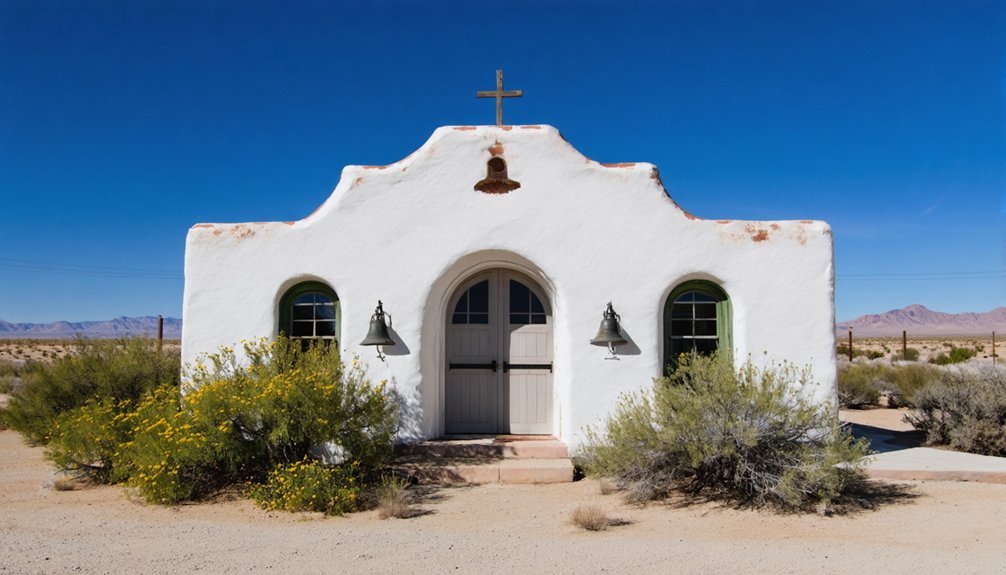
Stepping into the 1914 Mission-style Goffs Schoolhouse, you’ll encounter a meticulously restored desert educational landmark that served local children for 23 years before its 1937 closure.
The building’s remarkable journey from abandoned schoolhouse to wartime canteen to private residence culminated in its complete restoration by the Mojave Desert Heritage and Cultural Association in 1998. The unique 800 square-foot classroom is significantly larger than most desert schools of the era.
Today, this one-acre historic site functions as a museum preserving the rich heritage of Mojave Desert mining, Route 66 travel, and local education through its extensive collection of artifacts and archives. Visitors can also explore the Dennis Casebier library, a comprehensive historical archive founded by the renowned Mojave Desert historian.
Historic Desert Education Hub
The iconic Goffs Schoolhouse stands as the educational heartbeat of this historic desert community, dating back to its 1914 construction on an acre of land generously donated by H.P. Ware.
This distinctive mission-style building served as far more than just a school—it embodied the spirit of community engagement through its multiple roles.
While exploring this educational legacy, you’ll discover:
- Students planted and cared for cottonwood trees, learning environmental stewardship alongside traditional studies.
- The 800 sq ft classroom transformed regularly into a dance hall, church, and community center.
- The school district formed in 1911 after local families petitioned for proper education.
- During WWII, the building served troops at Camp Goffs, adapting to the nation’s military needs.
Restoration and Preservation Triumph
Once condemned to demolition in the early 1980s, the iconic Goffs Schoolhouse stands today as a tribute to grassroots preservation efforts that rescued this historic desert landmark from oblivion.
You’ll find authentic Mission Revival architecture meticulously restored to its 1914 appearance, guided by firsthand accounts from former students and hundreds of historic photographs.
The $150,000 restoration success came entirely from private donations—no taxpayer dollars—with community involvement providing essential labor and expertise.
Local cowboy Jim Wold and his wife initiated the five-year restoration before conservation groups guaranteed its perpetual preservation.
Since reopening in 1998, this National Register-listed building serves as a museum and cultural center, attracting Route 66 travelers and preserving a rare example of early 20th-century desert education.
The schoolhouse embodies what determined citizens can accomplish when freedom and heritage intertwine.
Museum of Mojave History
Today’s Museum of Mojave History stands as a tribute to desert resilience within the iconic 1914 Goffs Schoolhouse.
As you explore this Mission Revival landmark, you’ll discover the rich tapestry of Mojave artifacts that tell stories of mining pioneers, railroad workers, and military personnel who shaped this frontier.
The 2,000-square-foot structure, meticulously restored using historic photographs and former students’ testimonies, now preserves Goffs heritage as:
- Home to the extensive Dennis Casebier Library archiving desert cultural history
- Display space for authentic Route 66 and WWII Desert Training Center relics
- Guardian of the original Mojave Road School Bus and whimsical monuments
- Educational center showcasing operational 19th-century mining equipment
This National Register-listed treasure transforms a once-bustling educational hub into your gateway to understanding the untamed spirit of Mojave desert communities.
Desert Tortoise Capital of the Mojave
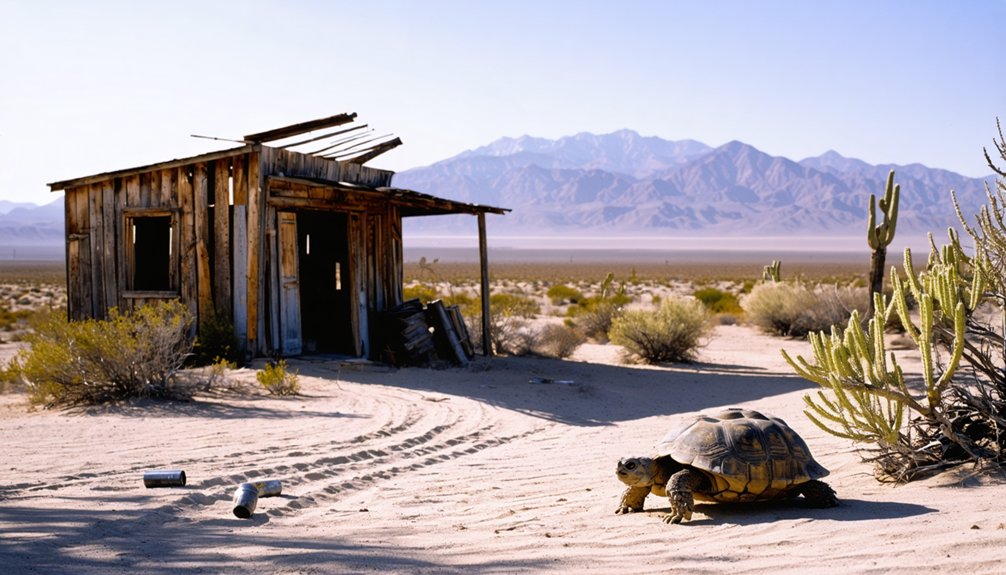
Nestled in the heart of the Mojave Desert, Goffs has earned its reputation as the “Desert Tortoise Capital of the Mojave” due to its exceptional habitat conditions for the threatened Gopherus agassizii.
The area’s sandy loam soil with perfect gravel and clay mixtures creates ideal burrowing conditions that these ancient creatures seek.
A delicate balance of sand, gravel and clay offers these prehistoric reptiles the perfect medium for their life-sustaining burrows.
When you visit Goffs, you’ll encounter pristine desert scrub and Joshua tree environments where tortoises once thrived at densities of 50-300 per square mile.
Now, with populations declining to fewer than 10 per square mile, this region has become essential for desert tortoise conservation.
Goffs’ natural open spaces provide refuge from the habitat destruction and fragmentation threatening these herbivores throughout the Mojave habitat.
Unlike developed areas, here they can still dig their protective burrows and access native vegetation away from human interference.
Visiting the Ruins: What Remains Today
When exploring the desolate landscape of Goffs today, you’ll encounter a haunting blend of preserved history and weathered ruins scattered across the Mojave Desert floor.
The 1914 Mission-style schoolhouse stands as the crown jewel of your ghost town exploration, surrounded by mining equipment and railroad artifacts exposed to the elements.
What you’ll discover during your visit:
- The National Register-listed schoolhouse museum (open Friday-Sunday, 9-4) containing exhibits of the town’s railroad and mining heritage
- Restored operational machinery including the American Boy Ten-Stamp Mill and the towering Samson Windmill
- The Library Depot housing the Mojave Desert Archives in a replica of the 1902 Santa Fe Railroad structure
- Scattered historical artifacts across 75+ acres of unbarriered grounds, allowing intimate connection with the past
Frequently Asked Questions
Why Was Goffs Originally Named Blake?
You’ll find that 100% of Goffs’ early identity was tied to railways. In Goffs history, the Blake origin stems from Isaac Blake, who constructed the Nevada Southern Railway through this location in 1883.
What Happened to the General Store That Burned in 2021?
The general store completely burned down in a suspicious fire on June 8, 2021. You’ll find it’s now just ruins, a devastating community impact that erased a significant Route 66 landmark forever.
How Did Camp Goffs Serve in World War II?
In the heat of battle preparation, Camp Goffs whipped troops into shape for desert warfare. You’ll find its military history includes training 15,000 soldiers with specialized camp facilities simulating North African combat conditions.
Are There Any Permanent Residents in Goffs Today?
No, you won’t find any permanent residents in Goffs today. The current population is zero, with only occasional visitors exploring its local history as a preserved desert ghost town.
When Did Goffs Briefly Serve as an Emergency Air Navigation Site?
Hitting the nail on the head, you’re looking at the early 1930s when Goffs served as an emergency navigation site, appearing on aviation history charts by 1932 as “Site 21” along the Los Angeles-Amarillo airway.
References
- https://www.islands.com/1984642/goffs-california-once-thriving-abandoned-ghost-town-historic-rustic-desert-charm/
- https://californiathroughmylens.com/goffs-schoolhouse/
- https://digital-desert.com/goffs-ca/history.html
- https://en.wikipedia.org/wiki/Goffs
- https://www.sunset.com/travel/where-are-the-real-ghost-towns-of-the-west
- https://www.youtube.com/watch?v=372NMuITWVA
- https://www.theroute-66.com/goffs.html
- https://www.exploratography.com/blog-66/goffs-cal-rt-66
- https://www.route66roadtrip.com/route-66-goffs-california-road-trip.htm
- https://www.desertusa.com/desert-california/goffs-railway-depot.html