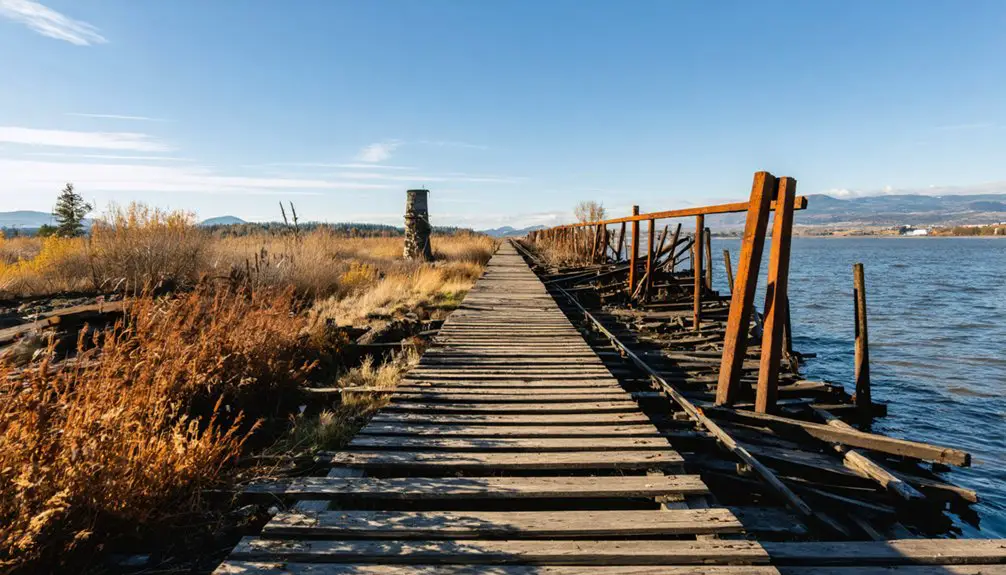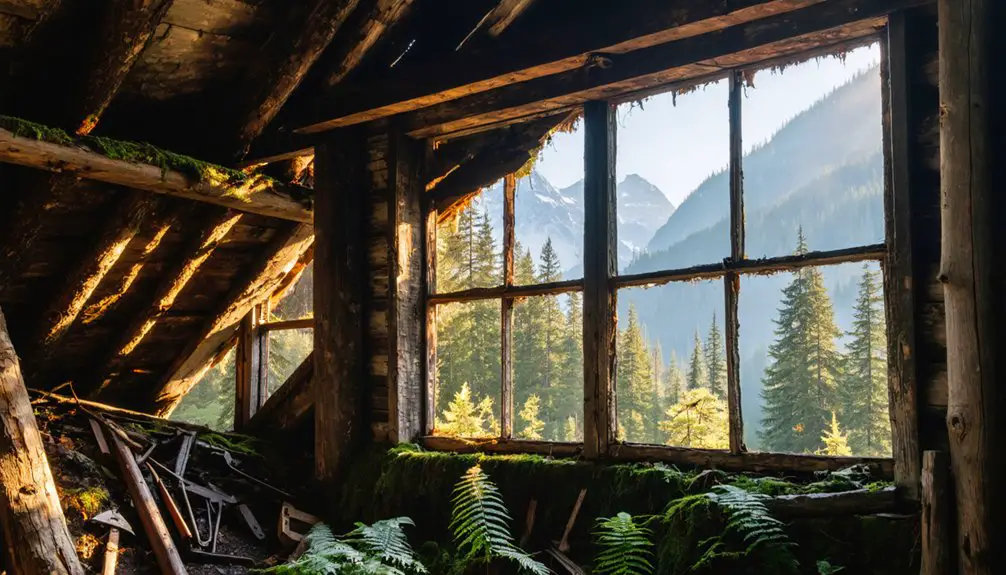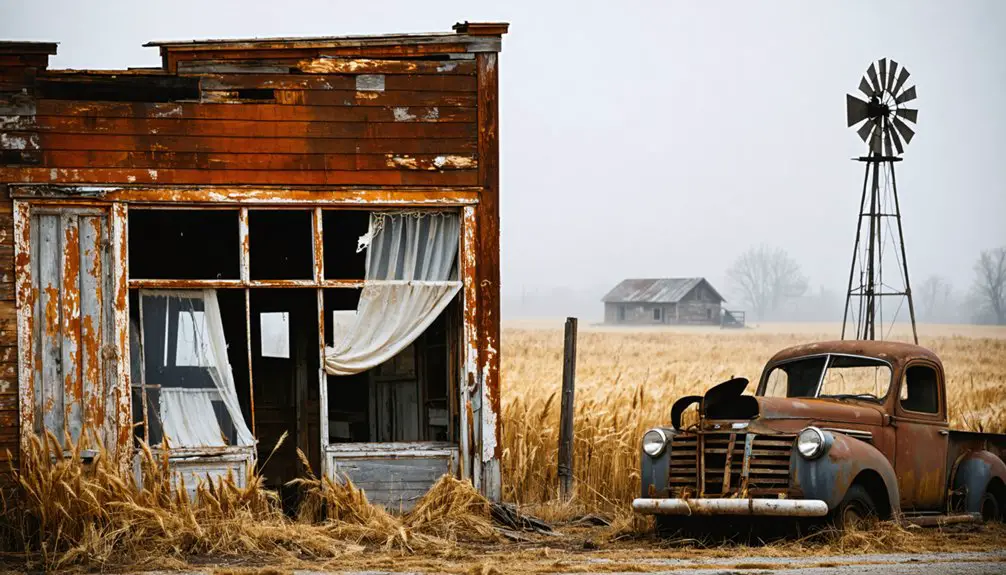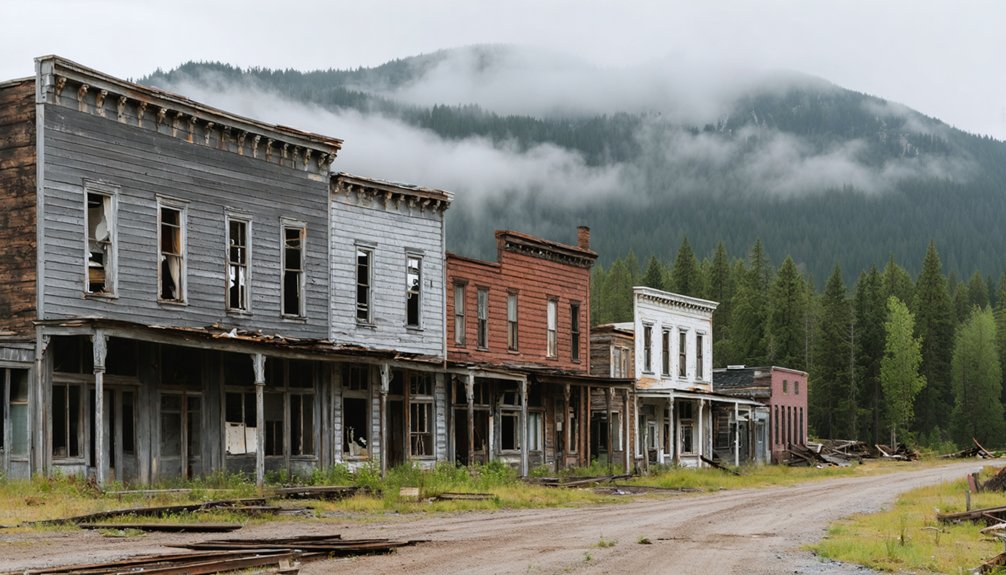
You’ll find Washington’s most haunted ghost towns scattered across former mining districts, where documented tragedies fuel persistent paranormal reports. Govan’s schoolhouse harbors spirits from the unsolved 1902 double murder of Judge J.A. Lewis and his wife, while Monte Cristo’s 8-mile trail features miner apparitions wandering among 1890s ruins. Liberty’s preserved structures and Bayview Cemetery’s “Angel Eyes” monument report cold spots and spectral children’s laughter during full moons. These abandoned settlements combine authentic historical artifacts with supernatural encounters that continue attracting investigators to their remote locations.
Key Takeaways
- Monte Cristo’s 8-mile trail features miner apparitions haunting 1890s ruins, including stone walls and rusty equipment from Rockefeller-era operations.
- Govan’s schoolhouse site holds spectral violence stories from the unsolved 1902 double murder of Judge J.A. Lewis and his wife.
- Bayview Cemetery’s “Angel Eyes” monument reports cold spots and children’s laughter during full moon nights with mysterious paranormal activity.
- Cascade Tunnel echoes with 1910 Wellington Avalanche victim stories, where occasional shapes appear and vanish along historic railroad tracks.
- Liberty’s preserved 1903 schoolhouse and mining office, listed since 1974, anchor stories of restless spirits guarding their historic past.
The Rise and Fall of Washington’s Ghost Towns
When Washington Territory broke away from Oregon in 1853, few could have predicted the boom-and-bust cycles that would reshape its eastern landscape over the next half-century. The territorial boundaries, finalized through the 1846 British cession and 1863 Idaho separation, enclosed lands where Native tribes had roamed for millennia.
You’ll find that the 1880s gold rush transformed north-central Washington overnight, spawning mining camps like Liberty and Monte Cristo. The latter attracted even John D. Rockefeller’s capital by 1891.
Coal towns like Melmont and Franklin followed, while railroad hubs like Govan emerged in 1889. Yet these settlements depended entirely on finite resources. Some early locations were relocated or renamed as communities evolved, with sites shifting positions or ceasing to exist entirely. Along the Snake River, towns like Ainsworth were platted in 1879 only to be abandoned within six years and eventually absorbed into Pasco.
Okanogan County’s Abandoned Mining Communities
While mining operations appeared and vanished across Washington’s landscape, nowhere did this cycle play out more dramatically than in Okanogan County’s rugged highlands.
The Okanogan history began in 1859 when boundary commission members discovered gold along the Similkameen River, setting off a rush that would reshape the region for decades.
When Chief Moses Reservation opened in 1886, prospectors flooded the highlands. Towns materialized almost overnight:
- Molson peaked at 700 residents with hotels, saloons, and dance halls
- Loomis evolved from trading post to mining hub with eight saloons
- Chesaw honored Chinese miner “Chee Saw’s” popular store
- Bodie operated mills from 1902-1944 before permanent closure
The Alder Mine near Twisp proved most successful, extracting over $1 million in gold, silver, and copper between 1937 and 1953. Today, abandoned mines dot the landscape. The county records 1,127 mining sites, their deposits exhausted and communities vanished into memory. The landscape now features well-preserved buildings and rusted machinery that stand as eerie monuments to the boom-and-bust mining era.
Central Washington’s Forgotten Railway and Mining Settlements
Central Washington’s railway expansion between 1900-1920 left behind settlements like Govan, where a 1908 double murder remains unsolved, creating lasting legends in this abandoned Great Northern Railway town.
You’ll find Monte Cristo’s ambitious mining operations, which extracted silver and gold from 1889-1907 before flooding and economic collapse transformed it into one of Washington’s most accessible ghost towns.
These communities emerged during the railroad and mining boom that connected eastern Washington’s agricultural heartland, only to vanish when economic conditions shifted and rail lines like the Milwaukee Road were abandoned by 1980. Near Stevens Pass, Alpine Lumber Company established a short-lived logging town around 1892 that was demolished by 1930, leaving only seven building foundations hidden beneath dense vegetation. Sherman’s remaining church and cemetery stand as silent testaments to the homesteading boom that briefly populated this northeastern settlement before improved roads drew residents toward Spokane.
Govan’s Unsolved Murder Mystery
Though Govan barely registered 33 residents in the 1890 census, this quiet railway settlement six miles west of Wilbur would become the site of three brutal murders that continue to baffle investigators over a century later.
The violence began in December 1902 when Judge J.A. Lewis and his wife were axed to death in their home—a crime considered among Washington’s most grisly. The urban decay that followed couldn’t erase the bloodshed.
- Spring 1903: A masked gunman killed C.S. Thennes in Govan Saloon; authorities caught but never convicted the murderer.
- 1941: Lillie Lesneww was slain on her farm.
- 1948/1949: Her son Wes Murray’s skeleton was discovered years after disappearing.
All three cases remain unsolved, spawning supernatural legends.
You’ll find these mysteries haunt Govan’s crumbling schoolhouse, where photographers still capture the town’s dark legacy. The town’s prosperity relied on an 1890 sandbank discovery that made it headquarters for railway construction operations. Two major wildfires in the early 1970s devastated what remained, reducing the population to just 3 residents by 2019.
Monte Cristo Mining Ruins
Deep in a remote Northern Cascade Mountains valley, silver ore discovery in 1889 sparked one of Washington’s most spectacular mining booms.
You’ll find Monte Cristo’s ruins where 1,000 residents once extracted fortune from thirteen mines and hundreds of claims. Rockefeller’s syndicate controlled key operations like Pride and Mystery mines, while Frederick Trump ran the town’s notorious hotel.
Mining infrastructure included railways along South Fork Sauk River and mills processing 300 tons daily by 1894.
The 1897 flood devastated everything. Most residents fled, though operations limped along until 1912.
Today’s ghost town preservation efforts followed ASARCO’s 2009 bankruptcy settlement, funding hazardous waste cleanup. The Monte Cristo Preservation Association maintains interpretive signage throughout the site, providing historical context about the mining operations and railroad infrastructure.
You’ll discover stone walls marking where avalanche-prone slopes once housed Washington’s richest mining stretch—a emblem of boom-and-bust ambition. The historic Everett and Monte Cristo Railroad once provided the primary access route to this elevated settlement perched at 2,762 feet.
Northern State Mental Hospital: A Self-Sufficient Town Frozen in Time
Near the Skagit River north of Sedro-Woolley, the Northern State Mental Hospital began as an ambitious 1909 experiment in self-sufficient psychiatric care. You’ll find remnants of what became Washington’s largest mental institution, where 2,700 patients once lived in an 800-acre colony featuring its own dairy, lumber mill, and bakery—ghost town economies that challenged traditional asylum models.
The facility’s dark history reveals uncomfortable truths about mental healthcare:
- Experimental lobotomies and forced sterilizations controlled “undesirable” populations
- Overcrowding reached crisis levels despite 1922 security warnings
- Brutal treatments including hydrotherapy continued into the late 1950s
- Arbitrary commitments imprisoned alcoholics, immigrants, and nonconformists
After closure in 1973, preservation challenges left buildings deteriorating alongside an unmarked cemetery holding thousands. This haunted landscape reminds us why institutional freedom matters.
Historic Ghost Towns Across Washington State
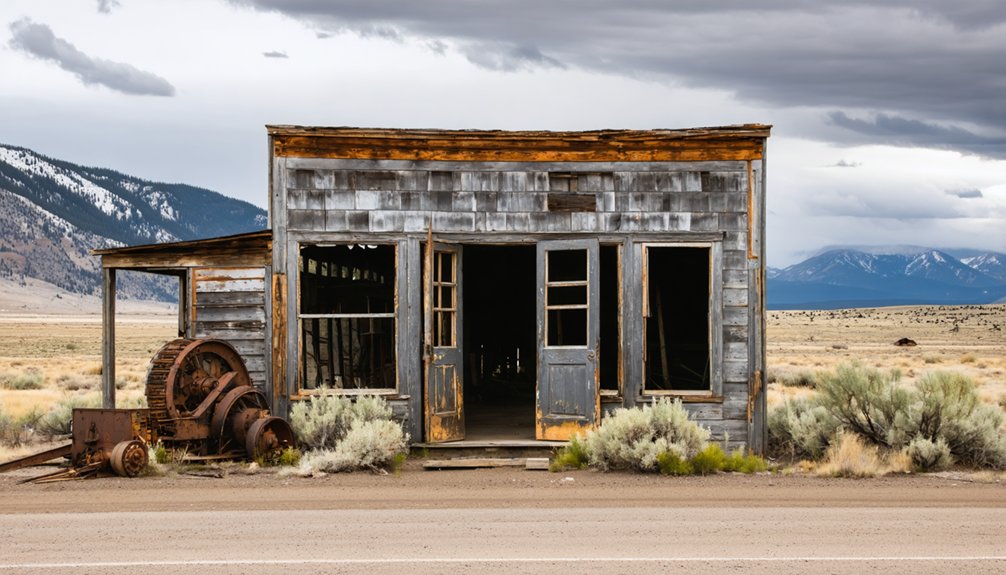
Washington’s ghost towns emerged primarily from the 1870s-1900s mining booms, with Liberty dating to the 1873 gold rush. Monte Cristo operated from 1889-1907 with backing from investors like John D. Rockefeller.
You’ll find preserved structures ranging from Molson’s open-air museum, which has intact buildings since 1960, to Ruby’s remaining stone foundations. Monte Cristo’s abandoned equipment is accessible via an 8-mile hike.
These historic sites span from Okanogan County’s northern border towns to the Cascade Mountains’ mining camps and Snohomish County’s valleys, creating a geographic trail of Washington’s frontier economy across the state.
Mining Boom Origins
Gold fever first gripped Washington Territory in 1853 when Captain George McClelland’s railroad exploration party discovered the precious metal in the Yakima River valley. You’ll find prospectors quickly spread across the region, working placers along Columbia and Pend Oreille Rivers by 1855. The 1873 Swauk Creek rush near Kittitas Valley marked a turning point in mining techniques.
As placer deposits exhausted by 1900, ore extraction shifted to lode operations:
- Republic district emerged as Washington’s richest mining center, generating $150,000 dividends by 1898
- Coal mining launched simultaneously in 1853 near Black River
- Lode discoveries replaced dwindling placers throughout the 1870s
- Multiple districts flourished: Wenatchee, Blewett, Monte Cristo, Oroville-Nighthawk
These boom-and-bust cycles created the ghost towns you’re exploring today.
Preserved Structures and Artifacts
The boom-and-bust cycles that emptied Washington’s mining camps left behind tangible remnants you can still explore today. Liberty’s 1903 schoolhouse stands alongside its original mining office and Nighthawk hotel, all recognized on the National Register of Historic Places since 1974.
Molson’s open-air museum showcases historical architecture through preserved 1900s offices, banks, and cabins filled with frontier photographs and treasures.
Monte Cristo offers mining relics scattered along an 8-mile trail, where three intact trestles and rusty equipment evoke the 1890s silver rush.
You’ll find Claquato’s restored church with its original bell and crown of thorns steeple, while Bodie’s weathered schoolhouse and mining structures whisper stories of Okanogan County‘s late 19th-century prosperity.
Each site preserves authentic glimpses into Washington’s untamed mining past.
Geographic Distribution Patterns
Scattered across diverse landscapes from arid eastern plains to rugged Cascade peaks, Washington’s abandoned settlements cluster in distinct regional patterns that reveal the state’s economic history.
You’ll discover concentrations following railway corridors in Lincoln and Douglas counties, where towns like Govan and Sherman emerged with the 1889 Central Washington Railway expansion. Mining booms created mountain communities such as Monte Cristo, accessible via an 8-mile trek from Barlow Pass.
Regional distribution reflects distinct economic drivers:
- Eastern concentration: Railway and homesteading communities along Highway 2 corridor
- Cascade mining belt: Mountain settlements tied to 1890s mineral extraction
- Climate influence: Harsh winters and isolation accelerated abandonment rates
- Bird migration routes: Remote locations now serve as undisturbed wildlife corridors
These patterns mirror natural resource exploitation and transportation development across Washington’s territorial expansion.
Paranormal Activity in Abandoned Settlements
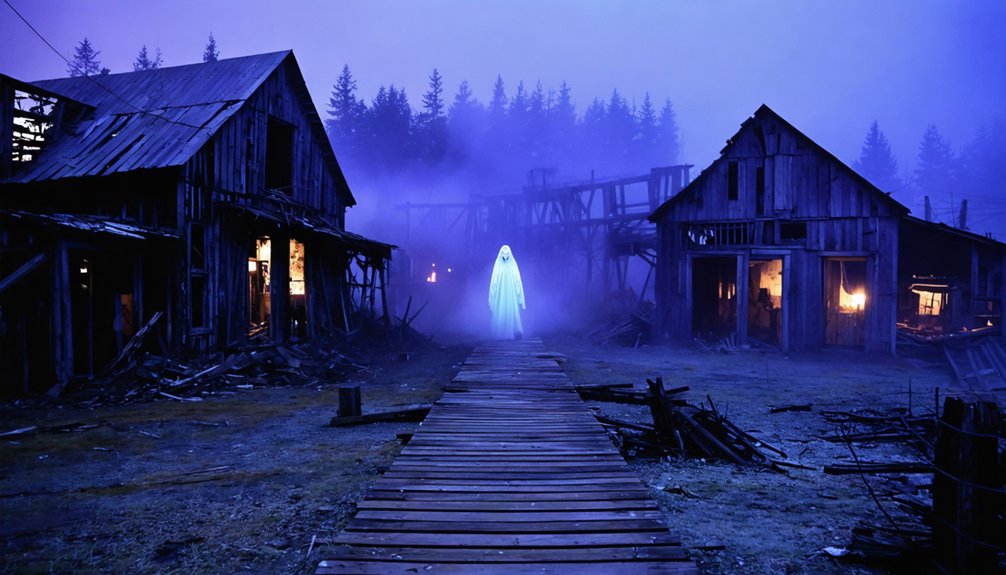
Deep within Washington’s remote landscapes, abandoned settlements harbor restless spirits whose stories refuse to fade with time.
At Monte Cristo Ghost Town, you’ll walk the same 8.5-mile trail miners traveled over a century ago, where their apparitions still linger among crumbling structures.
Govan’s empty schoolhouse stands witness to brutal unsolved ax murders from 1902, when Judge J.A. Lewis and his wife met their grim fate—urban legends that persist alongside 1941’s equally mysterious killings.
Bayview Cemetery’s “Angel Eyes” monument bleeds during full moons according to folklore narratives, while visitors report cold spots and children’s laughter among unnamed graves.
The Cascade Tunnel echoes with disembodied voices from 1910’s Wellington Avalanche victims, where strange figures materialize along tracks before vanishing into mountain mist.
Black Diamond Cemetery and Its Restless Spirits
Since 1884, Black Diamond Cemetery has stood sentinel over the coal mining community’s turbulent past. Its 1,200 graves tell stories of immigrants who traveled from Wales, Italy, Russia, Germany, and Australia seeking fortune in Washington’s dangerous mines.
You’ll discover this National Register site commemorates devastating explosions in 1902, 1910, and 1915 that claimed dozens of miners’ lives.
Today, haunted whispers and spectral apparitions reportedly manifest as:
- Swinging lanterns and miners’ whistling echoing through darkness
- A phantom white horse wandering between weathered headstones
- Floating mist and unexplained odors drifting across grave sites
- An overwhelming sensation of being watched by unseen presences
Located on Cemetery Hill Road, you can explore this preserved memorial to industrial tragedy through Black Diamond Historical Society tours, where restless spirits allegedly guard their final resting place.
Exploring Washington’s Most Accessible Ghost Town Sites
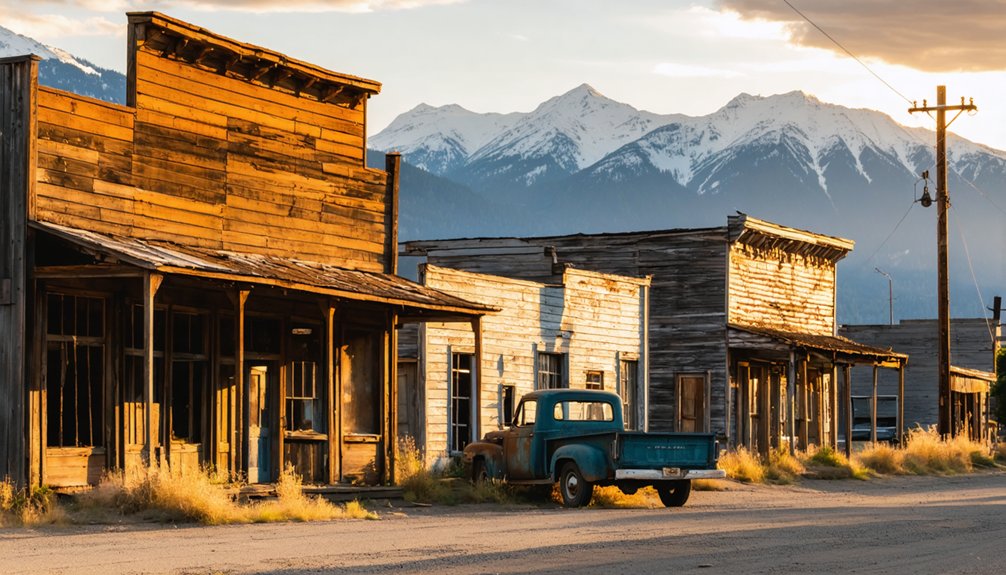
Beyond the cemetery’s spectral guardians, Washington’s ghost towns offer tangible adventures where you can walk through preserved history without paranormal expertise. Monte Cristo’s 8-mile roundtrip from Barlow Pass follows miners’ century-old routes through Mount Baker-Snoqualmie National Forest, where 1890s buildings still stand despite 2016 relic removal.
In addition to Monte Cristo, you can discover other ghost towns to explore in Washington, such as the hauntingly beautiful town of Wilkeson, where remnants of coal mining history still whisper tales of the past. The decaying structures and overgrown landscapes create a unique atmosphere that draws adventurers and history buffs alike. Whether you’re seeking solitude or a glimpse into Washington’s storied past, these ghost towns promise an unforgettable experience.
Melmont’s 6-mile muddy trail reveals decaying vehicles and foundation remnants accessible via three routes. Sherman’s church, schoolhouse, and cemetery sit 15 minutes from Govan—no extensive hiking required.
Northern State Recreation Area’s 5-mile trail winds past Olmstead Brothers’ designed landscape and a cemetery holding 1,500 burials. Molson’s Okanogan Highlands location showcases gold rush history near the Canadian border.
These sites blend Native folklore with modern exploration, letting you experience Washington’s abandoned communities firsthand.
Preservation Efforts and Historic Recognition
While Washington’s ghost towns face constant threats from weather and time, dedicated preservationists have secured lasting protection for several key sites through National Register designation and community-driven restoration.
Liberty’s 1974 listing enabled authentic restoration of its firehouse and arrastra, while Claquato’s 1950s church revival preserved its original bell and distinctive crown of thorns steeple.
Molson’s transformation into a free open-air museum showcases frontier life through preserved offices, banking equipment, and historic cabins.
Preservation challenges include:
- Weather impact at 3,708-foot elevations requiring constant maintenance
- Urban decay of Monte Cristo structures following 2003 and 2006 flood damage
- Collapsed mine sites demanding careful documentation
- Limited remaining structures compared to neighboring states
These efforts ensure you’ll experience authentic history rather than reconstructed facades.
Frequently Asked Questions
What Supplies Should I Bring When Visiting Remote Ghost Town Sites?
You’ll need essential gear including sturdy boots, heavy-duty gloves, respirator masks, and multiple flashlights with backup batteries. Don’t forget safety precautions like first aid supplies, navigation tools, water purification systems, and emergency blankets for unexpected situations in remote locations.
Are Any Washington Ghost Towns Privately Owned or Require Permission to Enter?
Yes, several Washington ghost towns sit on private property requiring permission. Barron, Shuksan, and Carson all have restricted access with gates and no-trespassing signs. You’ll need owner consent before exploring these sites to avoid legal issues.
What Is the Best Time of Year to Visit Ghost Towns?
Fall offers you prime ghost town exploration—golden foliage against weathered buildings creates stunning contrasts. You’ll find historical preservation efforts most visible, eco tourism opportunities flourish, and summer crowds vanish. Spring works too, but autumn’s atmosphere perfectly complements Washington’s abandoned settlements.
Can I Legally Take Artifacts or Items From Abandoned Ghost Towns?
No, you can’t legally take artifacts from ghost towns. Washington’s strict laws protect these sites on all lands, requiring permits for any removal. Respecting legal boundaries guarantees artifact preservation while hefty fines and potential jail time await violators.
Are Ghost Town Sites Safe for Children and Pets to Explore?
Ghost towns aren’t death traps, but you’ll need caution. Despite haunted legends and spiritual encounters reported by some visitors, real dangers include unstable structures, rusted metal, and challenging trails. Keep pets leashed and supervise children closely for safe exploration.
References
- https://en.wikipedia.org/wiki/List_of_ghost_towns_in_Washington
- https://okanogancountry.com/ghost-towns
- https://stateofwatourism.com/ghost-towns-of-washington-state/
- https://www.explorersue.com/haunted-places-in-washington-state/
- https://www.wta.org/go-outside/seasonal-hikes/fall-destinations/hidden-history-ghost-town-hikes
- https://keyw.com/haunted-washington-state-rankings-nation-wide/
- https://www.cascadeloop.com/ghost-towns-and-haunted-places-in-the-washington-cascades
- https://www.prospectorstreasure.com/products/washington-ghost-towns-sites-then-and-now
- https://freepages.history.rootsweb.com/~gtusa/usa/wa.htm
- https://www.youtube.com/watch?v=FVveO9uJBvc