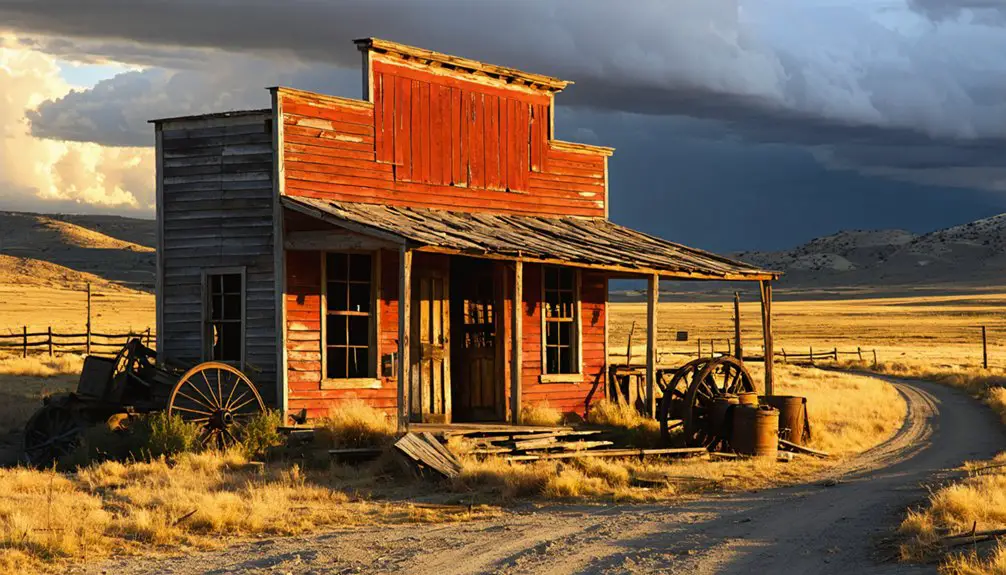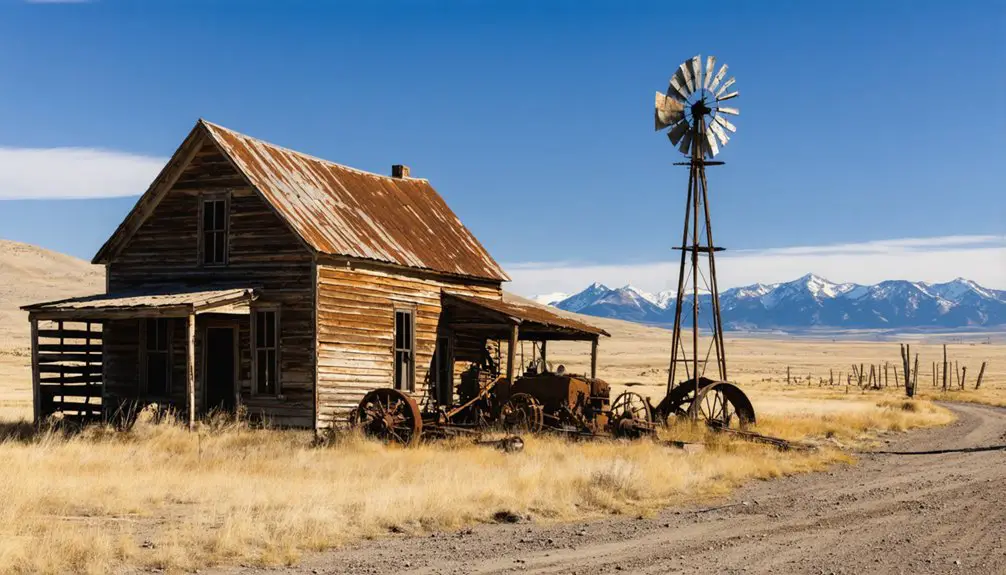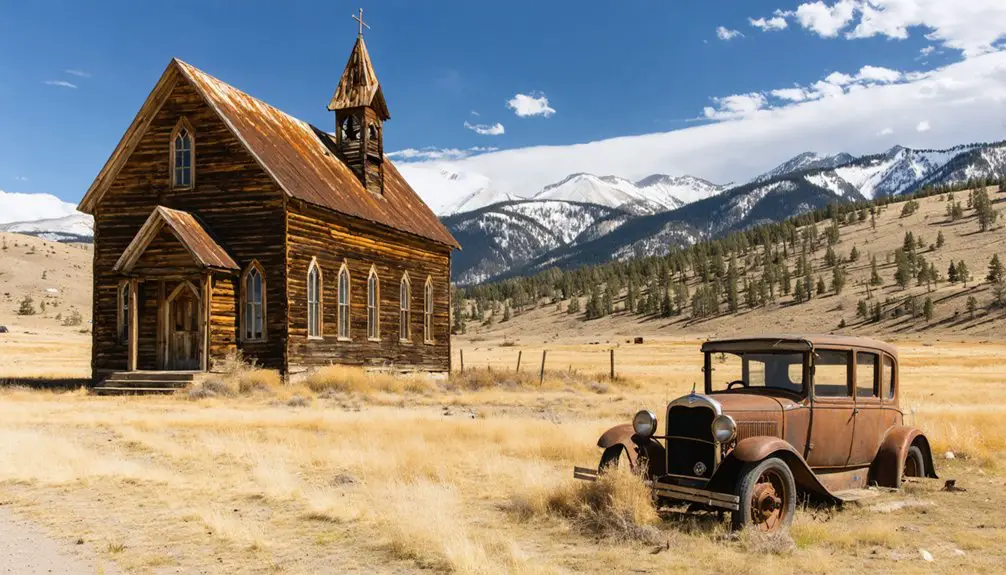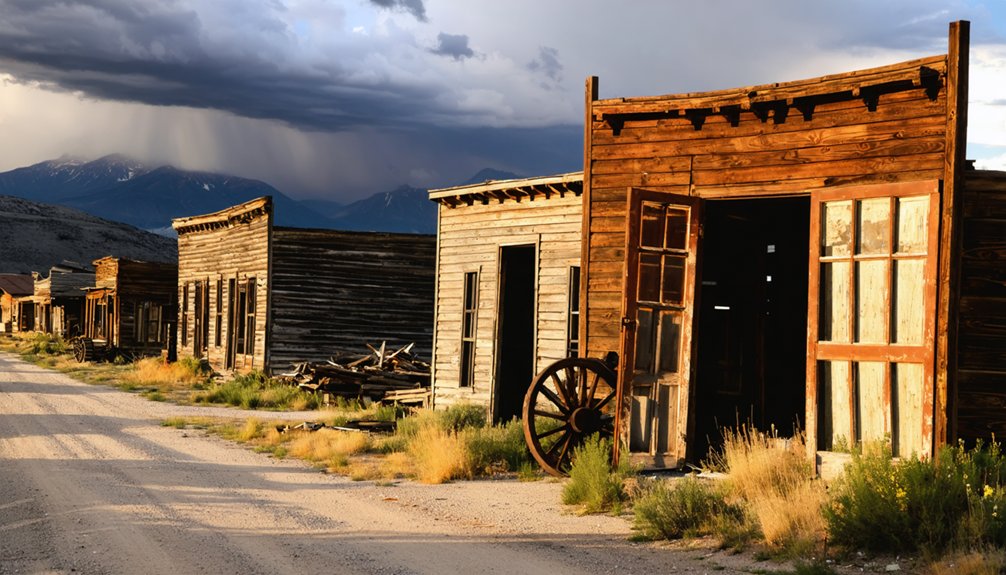
You’ll find Wyoming’s most haunted ghost towns steeped in genuine tragedy—from South Pass City’s 1867 gold rush ruins to Kirwin, where a 1907 avalanche killed residents whose spirits allegedly haunt Brown Mountain. Superior sits in Horse Thief Canyon with outlaw history and abandoned mines, while Benton’s cemetery was established the same day the town was founded in 1868, reflecting its violent origins. The Sweetwater County Library stands atop an 1892 cemetery with documented paranormal activity, and Carbon’s multiple mine disasters claimed over 41 lives before abandonment. The stories behind these spectral sightings reveal darker historical truths.
Key Takeaways
- South Pass City preserves over 250 buildings from 1867, with ghost stories centered on “The Cave” and spectral sightings throughout structures.
- Kirwin’s 1907 avalanche killed multiple residents, creating haunting legends of miners on Brown Mountain and near Earhart’s unfinished cabin ruins.
- Superior’s Union Hall and Horse Thief Canyon history combine outlaw violence with abandoned mines, creating a haunted frontier atmosphere since 1963.
- Carbon experienced deadly mine explosions killing 41 and the 1890 Scranton Hotel fire, leaving foundations amid reported supernatural encounters.
- Sweetwater County Library sits on 1892 cemetery grounds with documented paranormal activity including disembodied voices and ghostly figures since 1980.
South Pass City: Where Gold Fever Meets the Supernatural
When Mormon prospectors struck gold in the Wind River Mountains during the summer of 1867, they unleashed a stampede that would transform a remote Wyoming valley into one of the territory’s most significant settlements.
Within a year, South Pass City exploded to over 250 buildings and 1,000 residents drawn by the Carissa Mine’s promise of fortune. The town’s half-mile main street bustled with hotels, saloons, and two newspapers—the infrastructure of American ambition.
But prosperity proved fleeting. By 1869, the boom collapsed as extraction costs mounted. The population plummeted from thousands to mere hundreds, then dwindled to nothing by 1949. Before the miners arrived, the region was inhabited by Arapaho, Cheyenne, and Sioux tribes who knew these mountains long before gold fever took hold.
Today, Wyoming preserves 23 original structures where spectral sightings and ghostly legends haunt the abandoned corridors—remnants of dreams that couldn’t outlast reality’s harsh economics. Among these preserved buildings stands The Cave, built in 1868 as a storage facility that doubled as a fortress during Indian raids.
Superior: A Violent Past Echoes Through Time
You’ll find Superior tucked in Horse Thief Canyon, where it began as an outlaw refuge called White City before transforming into a coal mining boomtown of 3,000 residents from over 30 countries.
The massive Union Hall, built in 1921 as the largest west of the Mississippi, still anchors this living ghost town alongside abandoned mine structures that closed in 1963.
Today’s Superior Museum in the old Administration Building preserves this violent frontier history, where diverse immigrant miners once extracted coal at 7,000 feet to fuel Union Pacific’s railroad empire. The community survived tragedies including WWI and Spanish flu, which devastated the population in 1911-12. The town’s remote location offers spectacular star gazing at night, with the high elevation and wide-open spaces creating an ideal environment for viewing the night sky.
Coal Mining Melting Pot
By 1885, the Union Pacific Railroad had transformed Rock Springs into a powder keg of racial tension, employing 500 coal miners—two-thirds of them Chinese immigrants who’d replaced striking white workers a decade earlier.
Mining labor competition created deep resentment, with white miners earning comparable wages to Chinese workers’ $1.73-$2 daily pay yet perceiving favoritism toward their Asian counterparts.
Cultural tensions exploded on September 2nd when a dispute over work areas escalated into fatal violence.
What began as ten white miners beating two Chinese laborers sparked a mob of 150 armed residents marching on Chinatown.
They killed 28 Chinese miners, wounded 15 others, and torched 79 homes—causing $150,000 in damages.
Survivors fled into the hills and along railroad tracks, with some burned alive in their homes while rioters looted and destroyed the settlement.
Despite 16 arrests, no convictions followed.
Federal troops occupied Rock Springs for thirteen years, a permanent reminder of America’s violent reckoning with immigrant labor.
The victims’ cremated remains were sent back to China, as racial restrictions barred them from burial in white cemeteries.
Union Hall Still Stands
The architectural significance extends beyond its unusual shape.
When 3,000 residents called this coal town home, the Hall’s second-floor stage hosted union meetings that shaped working-class solidarity.
After the mines closed in 1962-1963, the building stood defiant against abandonment.
The three-story brick structure on Main Street featured decorative elements and the prominent U.M.W.A. emblem that marked its union heritage.
Today, you can explore this partially restored landmark at 7,000 feet elevation, where harsh winters couldn’t erase its proof to collective action.
Once recognized as the largest union building west of the Mississippi, it symbolized the power of organized labor in Wyoming’s mining heartland.
Museum Preserves Outlaw History
Just 20 minutes outside Rock Springs, Superior’s museum stands as a proof to Wyoming’s bloodiest frontier chapter. You’ll find authentic relics from an era when outlaw legends like Jack Slade terrorized the Continental Divide.
The exhibits showcase weapons from Big Nose George Parrott’s gang, including a .44-caliber Army Remington and .36-caliber Navy Colt used in the bungled 1878 train robbery near Rawlins.
Artifact preservation here goes beyond dusty displays. You’re looking at the actual firearms that killed lawmen Bob Widowfield and Tip Vincent, tangible evidence of a time when survival meant meeting violence with violence. The collection also includes prison shackles and hanging rope that once held condemned men at Rawlins prison.
The museum doesn’t romanticize this brutal past—it documents the attempted arsons, robberies, and gunfights that shaped this melting pot community before war and coal mining’s collapse reduced it to rubble. In Baggs, the historic Mathews/Gaddis House served as a Saturday night dance hall where Butch Cassidy and his gang often stopped for meals and entertainment.
Kirwin: Avalanche Victims and Amelia Earhart’s Unfinished Legacy
Kirwin’s tragic 1907 avalanche, which killed three to four people and triggered a mass exodus from this 9,200-foot mining settlement, left behind more than abandoned buildings—visitors report ghostly miners haunting the slopes of Brown Mountain.
You’ll find the incomplete remnants of aviatrix Amelia Earhart’s planned vacation cabin, a 1930s project she and publisher husband George Palmer Putnam never finished before her disappearance.
Tours of this remote ghost town in the Absaroka Mountains now attract paranormal enthusiasts alongside history seekers, drawn by both documented disaster and persistent supernatural claims.
1907 Avalanche Tragedy
Before dawn on February 5, 1907, a massive avalanche—later known as the “White Death of the Rockies”—roared down Brown Mountain’s slopes and obliterated the Tewksbury Store and residence. The catastrophe killed Charles Brunell, his wife, and miner Jack Renolds, crushing the building “as easy as a man would crush an egg shell.”
You’ll find this disaster followed the 1905 mine explosion that claimed Chubb’s life, cementing Kirwin’s cursed reputation.
When spring arrived, residents fled en masse, abandoning mining equipment and personal belongings worth tens of thousands. Superstitious miners declared the tragedy “figured ill for the camp,” and their prophecies proved accurate—mine after mine closed permanently.
Ghost stories emerged as people seeking shelter reported paranormal encounters, believing spirits of the dead remained trapped in Kirwin’s frozen ruins.
Amelia Earhart’s Cabin Ruins
While death and disaster defined Kirwin’s legacy, an equally poignant story emerged in the valley just upstream from the ghost town’s ruins. In 1934, aviator Amelia Earhart discovered this mountain retreat and commissioned a personal cabin near the ancient mining ruins. Construction began in 1937, but when Earhart disappeared over the Pacific on July 2nd, husband George P. Putnam ordered work stopped immediately.
You’ll find the unfinished structure 0.4 miles upstream from Kirwin’s parking lot, frozen at just four logs high. The site reveals:
- Original stacked logs positioned beyond other cabins along the access road
- Shoshone National Forest stabilization efforts ongoing since 1999
- Annual commemorations at nearby Double Dee Guest Ranch
This abandoned cabin symbolizes dreams interrupted, accessible to anyone seeking freedom in Wyoming’s high country.
Haunted Mining Settlement Tours
Though prosperity defined Kirwin’s early years after Harvey Adams and William Kirwin discovered gold and silver near Spar Mountain in 1885, tragedy would ultimately shape the settlement’s legacy. An avalanche thundered through town in 1907, killing three people and destroying buildings—marking the community’s decline.
You’ll find mining ghosts allegedly haunting the ruins today, with visitors reporting eerie encounters in stabilized structures along the Wood River. Fred Cozzins documented ghostly phenomena among the standing buildings.
The U.S. Forest Service opened the site in 1999 for off-roaders and ghost hunters exploring haunted tunnels where rusted tools remain untouched. Located 40 miles from Meeteetse, you can access this Absaroka Mountains settlement via ATV, where prospectors once abandoned profitable veins citing supernatural fears rather than mineral exhaustion.
Benton: Wyoming’s Most Dangerous Ghost Town
In July 1868, Benton sprang into existence eleven miles east of present-day Rawlins as the Union Pacific Railroad’s temporary terminus, becoming what historians would later recognize as Wyoming Territory’s first ghost town. Named after Senator Thomas Hart Benton, this lawless settlement housed 3,000 souls in three violent months before railroad construction moved westward.
You’ll find urban legends and ghostly apparitions still haunting this Red Desert site where violence claimed over 100 lives. Contemporary observers called it worse than Sodom itself, with:
- Twenty-five saloons serving five-cent moonshine cheaper than water
- Open brothels including the notorious “Big Tent” with on-site physician
- Daily murders documented by historian Charles G. Coutant
A cemetery was established the same day Benton was founded—a grim necessity that proved prophetic.
Carbon: Tragedy and Abandonment in the High Plains
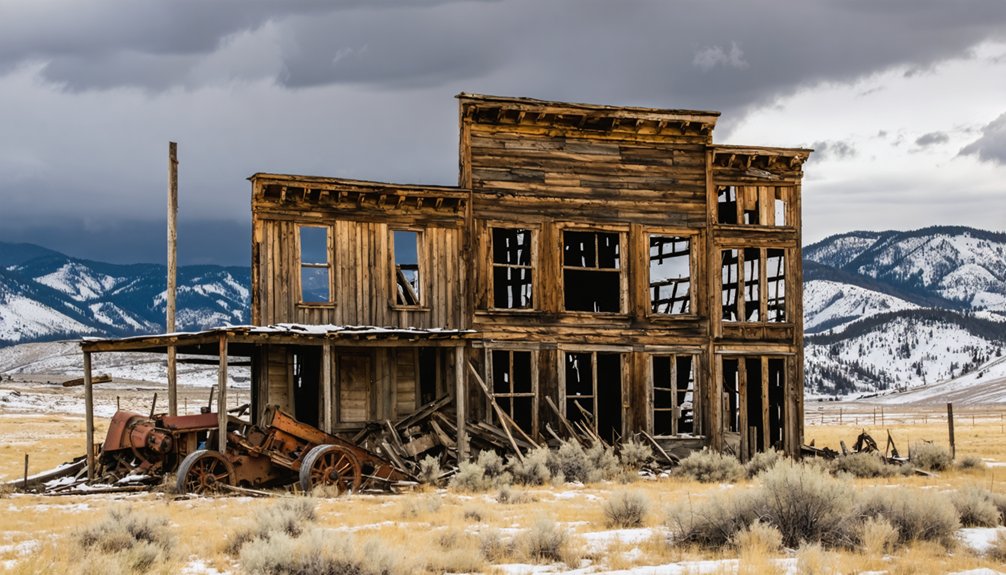
While Benton earned infamy for lawless violence, Carbon’s story unfolded twenty miles west as Wyoming’s first coal camp—a settlement where industrial tragedy rather than gunfights claimed lives with grim regularity. Established in 1868 by Union Pacific Railroad, you’ll find Carbon’s abandoned structures nestled at Saddle Back’s foothills.
Where 41 miners perished underground, averaging over one death annually. Coal town rumors still circulate about the 1890 fire that destroyed twenty buildings when a drunken boarder knocked over a kerosene lamp at Scranton Hotel. Without reliable water supply, firefighters couldn’t stop the devastation.
The last mine closed in 1902, leaving crumbling foundations and stone walls—remnants of residents who couldn’t escape Carbon’s cycle of explosions, fires, and cave-ins before abandonment became inevitable.
Sweetwater County Library: Built on Restless Graves
Could anything be more unsettling than a public library constructed directly atop forgotten graves? Green River’s Sweetwater County Library sits on land that served as the town’s original cemetery from 1892.
Despite relocation efforts in the 1920s, construction crews discovered remains during building in 1978—yet officials proceeded anyway.
The 15,500-square-foot facility opened in 1980, transforming sacred ground into public space.
Staff documented unexplained phenomena in a “Ghost Log” beginning in 1993, recording:
- Disembodied voices echoing through empty corridors
- Typewriters producing text without human operators
- Mysterious figures vanishing mid-stride through reading rooms
These aren’t mere urban legends—they’re documented accounts available at the Circulation Desk. Ghost sightings continue as forgotten souls make their presence known, reminding you that some foundations demand respect.
Frequently Asked Questions
What Safety Precautions Should Visitors Take When Exploring Wyoming Ghost Towns?
You’ll need sturdy boots, emergency supplies, and bear spray while respecting historical preservation laws. Don’t enter unstable structures, pack out trash, and ask locals about conditions—they know the terrain and local legends better than any guidebook.
Are Guided Tours Available for All Wyoming Ghost Town Locations?
No, you won’t find guided tours at every Wyoming ghost town. While South Pass City and Kirwin offer ranger-led experiences showcasing ghost town history with excellent photography tips, remote locations like Miner’s Delight require self-guided exploration for your independent adventure.
Can Visitors Stay Overnight at Any Wyoming Ghost Town Sites?
You can stay overnight at South Pass City’s Bartlett Inn, which immerses you in ghost town legends and local folklore. However, most Wyoming ghost towns prohibit camping on-site, requiring you to use nearby BLM land or motels instead.
What Is the Best Time of Year to Visit Wyoming Ghost Towns?
Late spring through early fall paints your perfect window for exploring Wyoming’s ghost towns. You’ll find ideal weather conditions, minimal environmental impact on fragile sites, and active historical preservation efforts welcoming visitors to these authentic Western remnants.
Do You Need Special Permits to Photograph Wyoming Ghost Town Properties?
You’ll need permits for commercial photography on federal or state ghost town lands, requiring insurance and fees. Your photography gear setup determines requirements—props, models, or crews trigger permits, while casual shooting with minimal equipment doesn’t.
References
- https://www.explorewy.com/play/activities/articles/ghost-stories-and-haunted-places
- https://travelwyoming.com/blog/stories/post/5-wyoming-ghost-towns-you-need-to-explore/
- https://sites.rootsweb.com/~wytttp/ghosttowns.htm
- https://www.wyomingcarboncounty.com/blog/123-5-ghost-towns-to-explore
- https://www.travelartsjournal.com/destinations/explore-wyomings-ghost-towns
- https://www.youtube.com/watch?v=GEoxbcwf8Ks
- https://www.livewyldmag.com/live-wyld/wyoming-haunts-kirwin-ghost-town
- https://en.wikipedia.org/wiki/List_of_ghost_towns_in_Wyoming
- https://windriver.org/spookiest-places-wyoming/
- https://usghostadventures.com/haunted-cities/the-top-10-haunted-places-in-cheyenne/