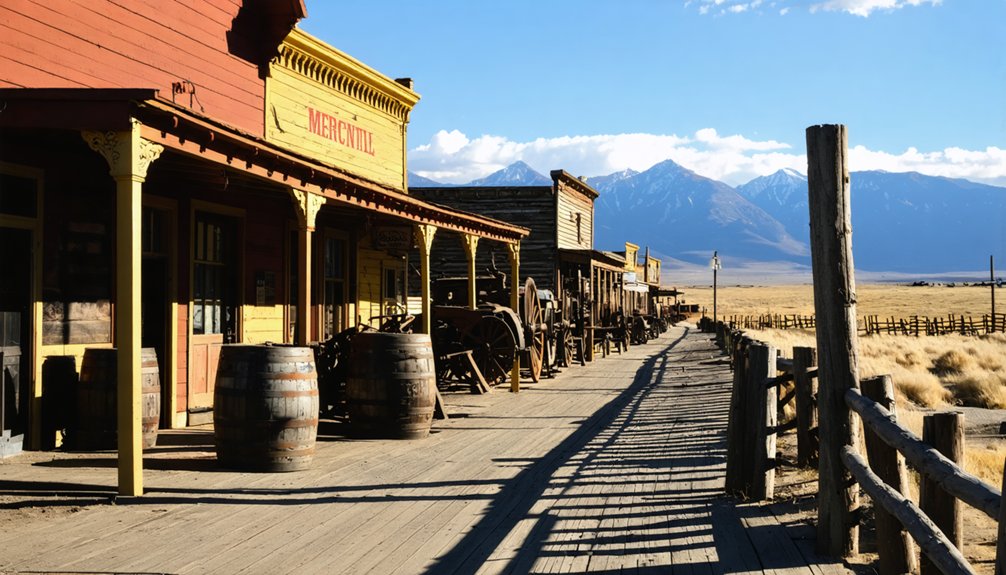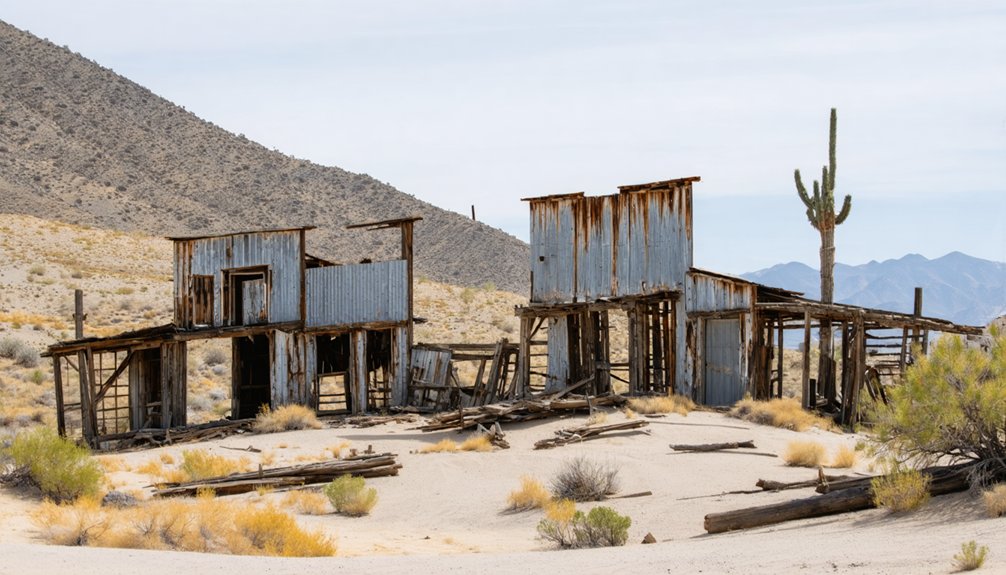
Havilah was founded in 1864 after Asbury Harpending discovered gold in Kern County‘s Sierra Nevada, naming it after the biblical land of gold. You’ll find it served as California’s first Kern County seat from 1866 to 1872, when its population peaked near 3,000 with 147 businesses lining Main Street. The town’s known for its Wild West lawlessness, frequent gunfights, and mining economy that collapsed when gold deposits depleted. Today it’s a ghost town with a historic cemetery, though the devastating 2024 Borel Fire destroyed many remaining structures including the replica courthouse.
Key Takeaways
- Founded in 1864 after gold discovery, Havilah rapidly grew to nearly 3,000 residents with 147 businesses and served as Kern County’s first seat.
- The town was notorious for extreme lawlessness, featuring frequent gunfights, stagecoach robberies, and frontier justice during its boomtown era.
- Economic decline began after 1872 when Bakersfield became county seat and gold deposits were depleted, leading to population loss.
- Designated California Historical Landmark No. 100, the town preserved its heritage through replica structures and the historic Havilah Cemetery.
- The 2024 Borel Fire destroyed most remaining historic buildings including the courthouse, leaving the cemetery as the primary historic site.
Discovery and Biblical Namesake
The story of Havilah begins with a convicted traitor seeking redemption in California’s gold country. Kentuckian Asbury Harpending, fresh from an Alcatraz imprisonment for plotting to seize Pacific gold shipments for the Confederacy, ventured into Kern County’s Sierra Nevada wilderness in 1864.
There, along Clear Creek’s rugged terrain, he discovered gold deposits that would transform the region.
Harpending’s group chose a name steeped in biblical symbolism—Havilah, the gold-rich land described in Genesis 2:11 as a place “where there’s gold.” The name literally means “Stretch of Sand,” perfectly capturing both the scriptural reference and the physical landscape.
Mining techniques of panning for precious metals quickly attracted prospectors to the Clear Creek Mining District, establishing a center that would thrive for two decades among the pine forests at 3,136 feet elevation. The wealthy founder Harpending would become linked to a second gold rush that further cemented the town’s reputation as a prospecting center. By late 1865, the booming settlement supported about 1,000 miners and mill operators who worked the surrounding claims.
The 1865 Gold Rush Boomtown
Within months of Harpending’s 1864 discovery, Havilah exploded into one of California’s most frenzied boomtowns. By late 1865, you’d find nearly 1,000 residents working Clear Creek‘s rich quartz deposits, with emigrant trains passing daily through town.
Gold fever transformed Havilah overnight—1,000 fortune-seekers descended on Clear Creek’s quartz deposits as emigrant trains rolled through continuously.
The settlement’s local architecture reflected rapid expansion—147 business buildings lined the streets, while Main Street frontage commanded $50 per front foot.
The mining techniques employed in the Clear Creek Mining District generated statewide speculation about becoming California’s richest operation:
- Thirteen saloons, multiple dance halls, and gambling establishments fueled round-the-clock entertainment
- Prospectors and land office seekers flooded in from across the state
- Desperadoes and adventurers overwhelmed the community, creating a lawless atmosphere typical of new mining camps
You’d witness a settlement transformed by gold fever into Kern River’s bustling trade center. The town’s biblical namesake reflected the ancient land of Havilah, renowned in Genesis for its abundant gold deposits. Deputy Harding worked tirelessly to maintain order, making approximately one arrest per hour as he confronted the town’s criminal element.
Becoming Kern County’s First Seat of Government
As Havilah’s population swelled to 800 inhabitants by early 1866, California legislators recognized the burgeoning mining district’s need for local governance. They formally organized Kern County on April 2, 1866, designating Havilah as its seat of government. The town layout centered around mineral-rich deposits discovered in 1864, with mining innovations driving settlement patterns through well-wooded, watered terrain.
You’ll find the county’s founding institutions took root quickly. A Special Board of Supervisors convened on August 1, 1866, establishing administrative functions.
The Havilah Courier launched that same year as the county’s first newspaper, initially championing states’ rights before shifting focus to local Democratic interests.
The Havilah School District formed simultaneously, becoming Kern County’s first public school.
A post office opened, cementing the town’s governmental status until 1872.
Havilah maintained its role as county seat until the government relocated to Bakersfield, marking the end of its administrative prominence in regional affairs. The county itself was named after Edward M. Kern, who had connections to the US Army and its campaigns in the region.
Life in a Wild West Mining Town
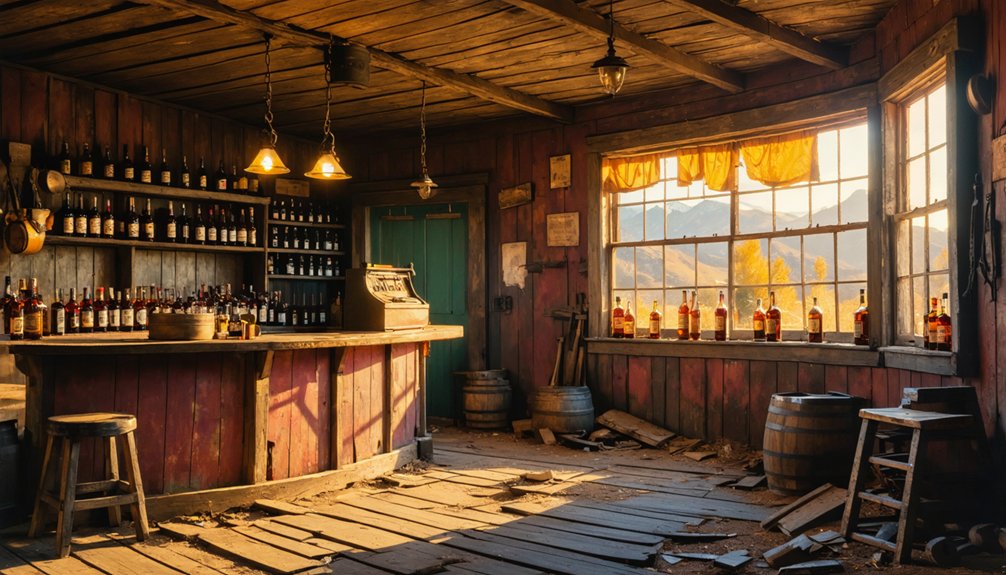
If you’d walked Havilah’s main drag in 1865, you’d have found yourself among thirteen saloons, dance halls, and gambling houses where miners wagered gold dust on cards and horse races.
Midday gunfights erupted regularly in the streets, while stagecoach robberies and manhunts for wanted murderers became routine occurrences in this settlement that newspapers described as “infested” with adventurers, sharps, and desperadoes.
The town’s founder himself, Asbury Harpending, had been convicted of high treason for plotting to seize California’s gold for the Confederacy—a fitting origin for a community where lawlessness overshadowed legitimate commerce. Despite the chaos, Havilah’s prosperity from the 1864 gold discovery earned it the distinction of serving as Kern County’s seat of government from 1866 to 1872.
Saloons and Gambling Halls
By the end of 1865, thirteen saloons dominated Havilah’s main drag, serving a booming population of nearly 1,000 miners who’d flooded into the Clear Creek Mining District. These establishments formed the heart of a 147-building downtown where fortunes changed hands nightly.
The entertainment district’s core features included:
- Saloon interior design featuring rough-hewn bars where miners wagered gold dust on card games and horse races.
- Gambling techniques perfected in dedicated gambling houses that lined the main street alongside billiard halls.
- Dance halls and houses of pleasure operating openly to serve the mining population’s recreational demands.
This vice economy drove property values to $50 per front foot, fueled by ten stamp mills processing ore. Daily emigrant trains brought fresh money until depleted gold veins triggered the town’s inevitable decline.
Crime and Lawlessness
When Havilah claimed the Kern County seat in 1866, it inherited a jurisdiction where homicide rates ran 60% above the national average of 4 per 100,000 residents. You’d find violence stemming from economic pressures that plagued post-Gold Rush mining towns—claim disputes, illegal trading of mineral rights, and even art theft from abandoned properties became commonplace.
The 1873 Coinage Act intensified tensions as prospectors competed for dwindling resources. Without formal law enforcement structures, the town operated under frontier justice where saloon altercations frequently turned deadly. Property crimes constituted 12.39% of county-wide arrests, while theft incidents reached 4.60%. The small community of 1,146 residents today contrasts sharply with the bustling population that once filled its streets during the mining boom.
Founded in the 1860s, Havilah once thrived as a vibrant mining hub complete with saloons, dance halls, hotels, and shops that catered to fortune-seekers and opportunists alike. Today’s Havilah earns an “A” safety rating as a quiet ghost town, though Kern County’s violent crime rates still exceed national benchmarks—a legacy of its lawless origins.
The Exodus: When the Gold Ran Out
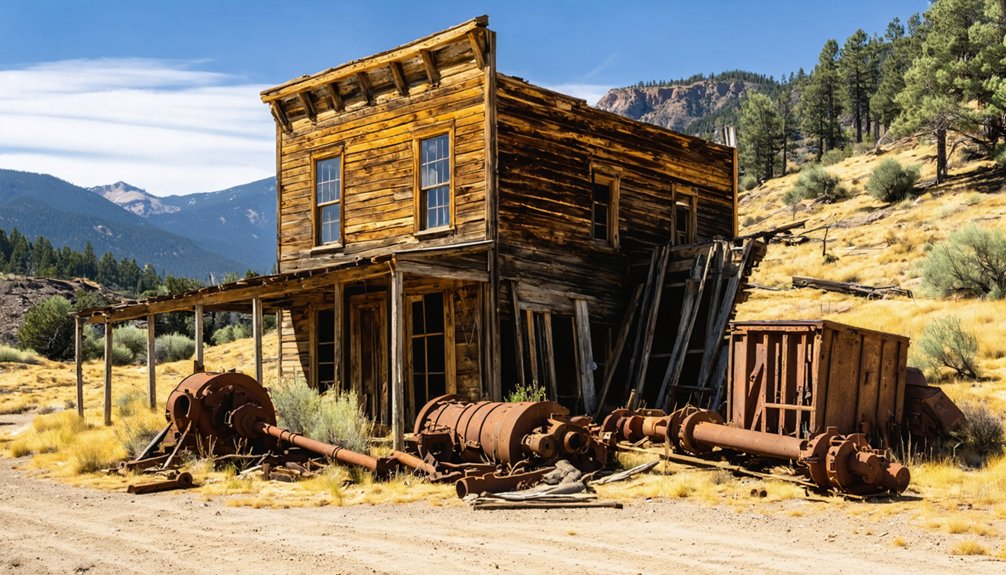
As the initial gold deposits grew scarce in the late 1860s, Havilah’s once-thriving economy began its inevitable collapse. The deeper veins demanded mining technology beyond what prospectors possessed, forcing them to abandon claims that couldn’t yield profits.
When surface gold vanished, Havilah’s miners lacked the technology to chase deeper veins, sealing the town’s fate.
You’d have witnessed a dramatic population decline as the town shrank from nearly 3,000 souls in 1865 to a fraction of that number within years.
The exodus accelerated when:
- Miners departed for richer fields once surface deposits vanished
- Lot prices crashed after peaking at $50 per front foot in 1865
- The county seat transferred to Bakersfield in 1872-1874, removing governmental functions
Major producers like Joe Walker Mine had extracted over $600,000 before tapering off, signaling there wasn’t enough left to sustain a community. The district’s gold deposits were primarily contained in quartz veins that ran through the quartz diorite rock west of Havilah.
Transformation Into a Ghost Town
The depletion of Havilah’s gold veins in the late 1860s triggered a cascade of consequences that would seal the town’s fate. You’ll find that mining technology couldn’t save operations once easy placer deposits vanished, forcing expensive rock extraction methods. Nearly 1,000 miners abandoned Clear Creek Mining District as yields plummeted post-1865.
Territorial disputes over Kern County’s administrative center accelerated Havilah’s decline. When Bakersfield claimed the county seat in 1872—confirmed permanently in 1874—you witnessed the courthouse, jail, and governmental authority disappear.
Preserving a Century of History
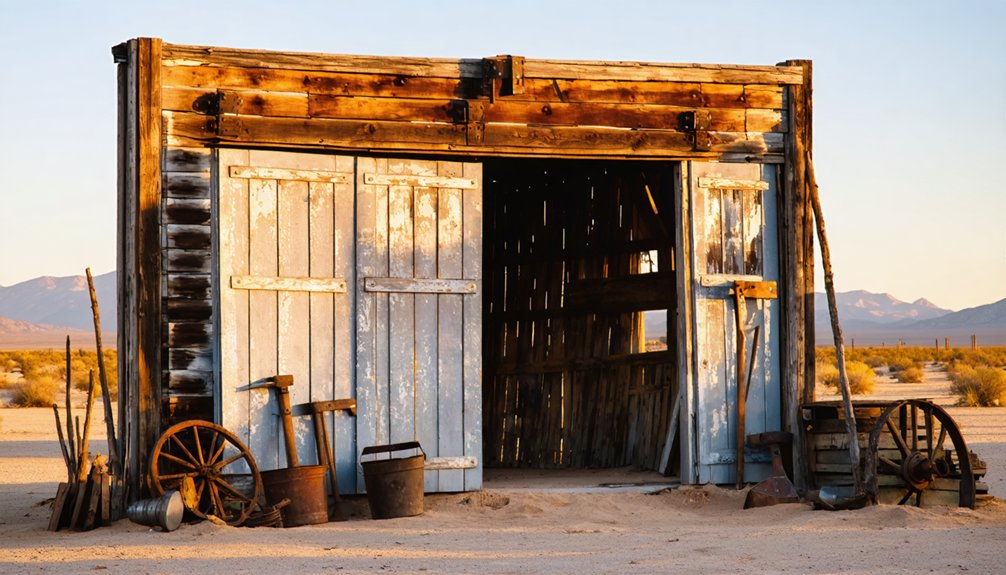
Despite Havilah’s transformation into a ghost town, dedicated community members worked for decades to preserve its mining heritage through careful documentation and reconstruction.
In 1966, you could visit a replica courthouse built for the town’s centennial, which housed historic photographs, mining tools, and documents curated by the Havilah Historical Society under Roy Fluhart’s leadership. This roadside museum defied modern architecture trends, instead honoring 1860s design.
The preservation effort included:
- Replica schoolhouse functioning as a community center alongside the courthouse
- Road signs and markers maintained along Caliente-Bodfish Road indicating original building locations
- California Historical Landmark No. 100 designation commemorating the 1864 gold discovery
However, July 2024’s Borel Fire devastated this carefully preserved heritage, destroying the courthouse replica while firefighters saved only the schoolhouse.
The Old Havilah Cemetery and Historical Landmarks
Among Havilah’s few surviving remnants, the Old Havilah Cemetery stands as the primary intact structure from the original 1860s settlement. You’ll find graves marking mining boom residents, their resting place outlasting the 1920s fires that consumed most buildings. Ancient burial customs reflected in these pioneer graves tell stories the burned structures can’t.
Located near Caliente-Bodfish Road at coordinates 35° 30.895′ N, 118° 31.08′ W, the cemetery sits alongside California Historical Landmark #100.
This state marker commemorates Havilah’s gold discovery in 1864 and its role as Kern County seat from 1866 to 1872.
Cemetery preservation efforts maintain access through visible signage marking historic sites.
You’ll spot two plaques: the official state marker at 10 Miller St., Bodfish, and a private marker at 6789 Caliente-Bodfish Road, documenting this once-thriving mining center.
The Devastating 2024 Borel Fire
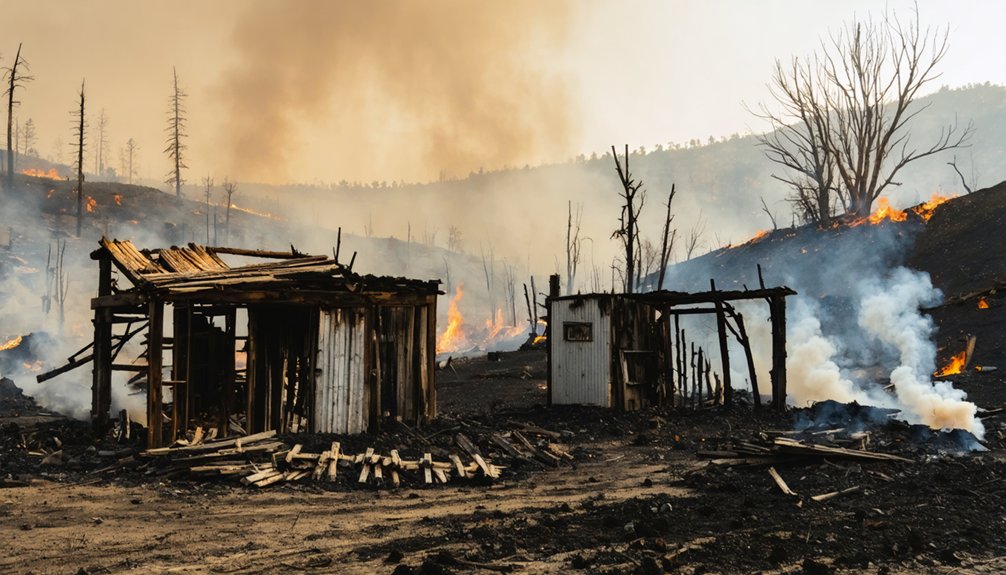
On July 26, 2024, you’d witness the Borel Fire sweep through Havilah in a single catastrophic day, consuming the town’s replica courthouse museum and its irreplaceable archives within 24 hours.
The fire ultimately destroyed 223 structures across 59,288 acres, though Havilah’s historic schoolhouse miraculously survived the flames.
Fire’s Rapid Destruction Path
When a pickup truck burst into flames along Highway 178 on July 24, 2024, at 12:59 PM, nobody anticipated it would trigger Kern County’s worst wildfire in recorded history.
The Borel Fire exploded across Sequoia National Forest with unprecedented speed, consuming 50,000 acres by Sunday night.
You’d witness fire advancing over five miles Thursday night, then another six miles Friday—growth rates matching severe Santa Ana wind conditions.
Havilah fell within 24 hours on July 26th.
Residents fleeing described:
- fire raining down around their vehicles
- tires melting on scorching roadways
- buildings reduced to foundations in minutes
Fire containment efforts struggled against zero percent initial control.
Evacuation procedures moved 2,300 residents as the inferno reached 59,288 acres before achieving 100% containment September 16th.
Historic Structures Lost Forever
The Borel Fire reduced over 200 structures to ash and rubble, erasing physical connections to Kern County’s gold rush heritage. You’ll find only foundations where historic buildings once stood in this 150-resident ghost town.
In addition to the remnants of the Borel Fire, there are numerous abandoned towns in California that tell similar stories of lost prosperity and forgotten dreams. Each ghost town has its own unique history, often tied to mining or agriculture, reflecting the harsh realities that led to their decline. Visiting these sites offers a haunting glimpse into the past and a reminder of the fleeting nature of fortune.
The replica courthouse museum, which housed irreplaceable aboriginal artifacts and documents spanning decades, burned completely within 24 hours on July 26, 2024. No evacuation time existed for these archives.
The fire consumed 63 single-family homes, 55 mobile homes, and countless vestiges of the 1860s mining community. Underground tunnels and remnants from California’s frontier era now lie buried beneath scorched earth.
Governor Newsom retrieved a novelty Uncle Sam coin bank from the courthouse rubble—a symbolic fragment of what you’ve lost to the flames.
Community Recovery and Resilience
Governor Newsom’s emergency proclamation for Kern County triggered immediate state and federal response mechanisms as the Borel Fire consumed 59,288 acres with zero containment.
You’ll find extensive assistance programs now operational, addressing everything from debris removal to insurance protections. CalOES approved Phase 2 cleanup operations, removing structural ash at no cost while DTSC handles hazardous materials like paints, oils, and batteries.
The recovery infrastructure includes:
- One-year moratorium protecting 185,000 policyholders from insurance cancellations in affected fire zones
- Waived fees for replacement driver’s licenses, birth certificates, and expanded unemployment benefits
- Direct federal assistance following the Presidential Major Disaster Declaration request
Your wildfire preparedness now hinges on these established recovery protocols.
Community rebuilding efforts coordinate through KCSO accountability systems, tracking 2,300 evacuated residents while crews continue constructing containment lines.
Frequently Asked Questions
What Mining Techniques Were Used to Extract Gold From Clear Creek?
You’ll find gold panning pioneered placer prospecting, followed by cradles and sluice boxes processing gravel. Hydraulic mining released high-pressure water monitors washing overburden and feeding sluices. Dredging operations later extracted alluvial deposits through the 1980s.
How Did Residents Survive Harsh Mountain Winters at 3,136 Feet Elevation?
You’d survive through mountain agriculture during milder seasons, stockpiling provisions before snowfall. Winter survival gear included heavy clothing and wood-burning stoves. Proximity to mines provided employment, while lower elevation meant winters weren’t as severe as higher peaks.
What Was the Crime Rate During Havilah’s Peak Population Years?
No quantified crime statistics exist from peak years, though local folklore describes gunfights and robberies. Historic preservation efforts focus on mining records rather than crime data, leaving you with only anecdotal evidence of the era’s lawlessness.
Are There Any Original Structures Still Standing in Havilah Today?
No original structures remain standing—only the Old Havilah Cemetery survives from the original era. Historical preservation efforts created replicas for ghost town tourism, but pre-1920s fires destroyed authentic buildings, leaving you with foundations and markers today.
Can Visitors Explore the Old Havilah Cemetery and Remaining Historic Sites?
Want to walk where pioneers rest? You can freely explore the Old Havilah Cemetery and historic sites along Caliente-Bodfish Road. Historic site preservation efforts maintain these Havilah Cemetery tales, with markers guiding your independent discovery of California’s 1866 frontier legacy.
References
- https://www.latimes.com/environment/story/2024-08-04/california-history-reduced-to-ash-borel-fire-destroys-havilah
- https://www.youtube.com/watch?v=DQZ8Zz_VMD8
- https://www.thegoodlifesv.com/story/2019/09/01/history/the-short-and-exciting-life-of-havilah-land-of-gold/446.html
- https://en.wikipedia.org/wiki/Havilah
- https://bakersfieldnow.com/news/local/eyewitness-news-tours-devastation-of-borel-fire-historic-havilah-barely-recognizable
- https://ohp.parks.ca.gov/ListedResources/Detail/100
- https://www.hmdb.org/m.asp?m=252982
- https://sierranevadageotourism.org/entries/historic-havilah-no-100-california-historical-landmark/41f8dec1-bec2-47c0-89f1-209ff4801529
- https://kids.kiddle.co/Havilah
- https://www.californiahistoricallandmarks.com/landmarks/chl-100