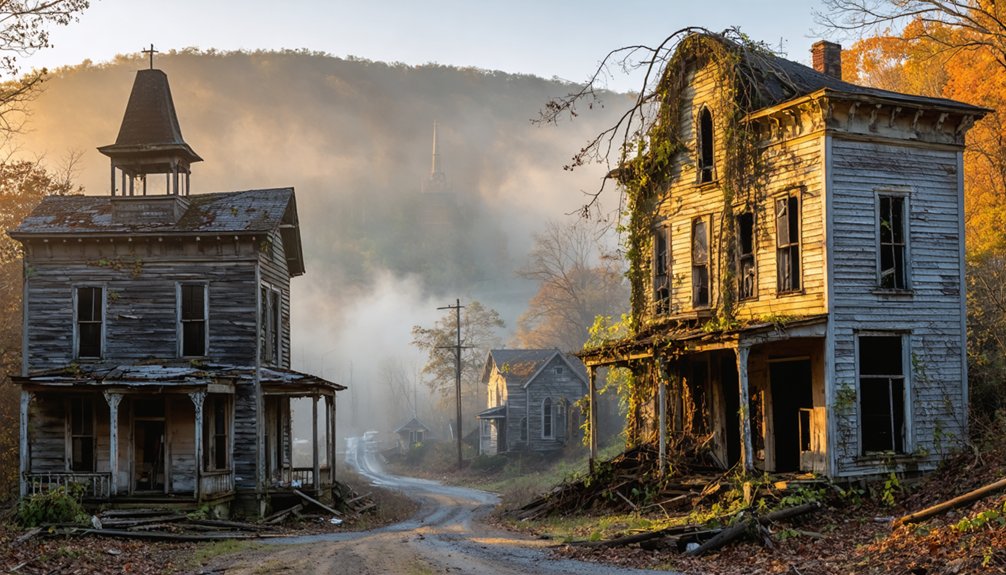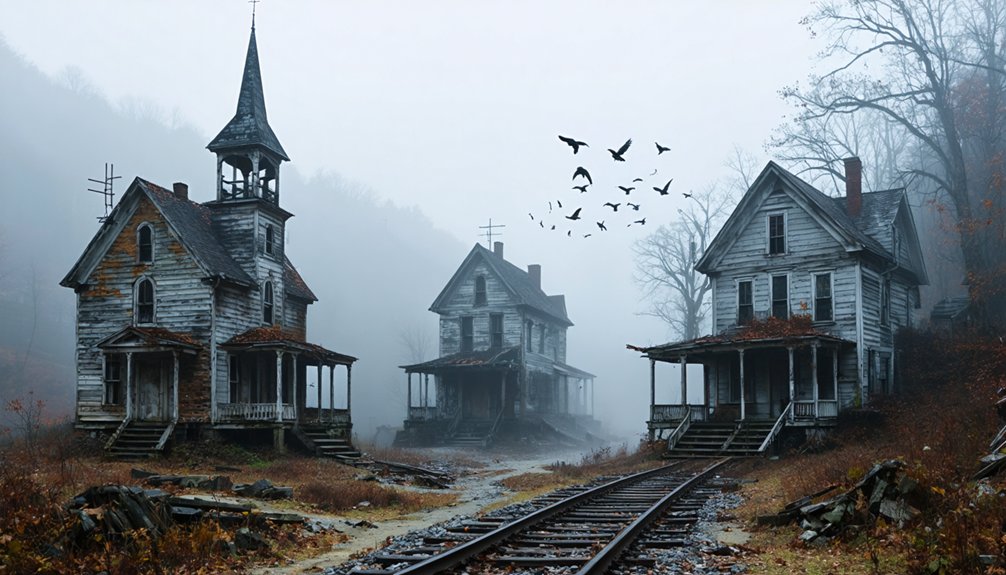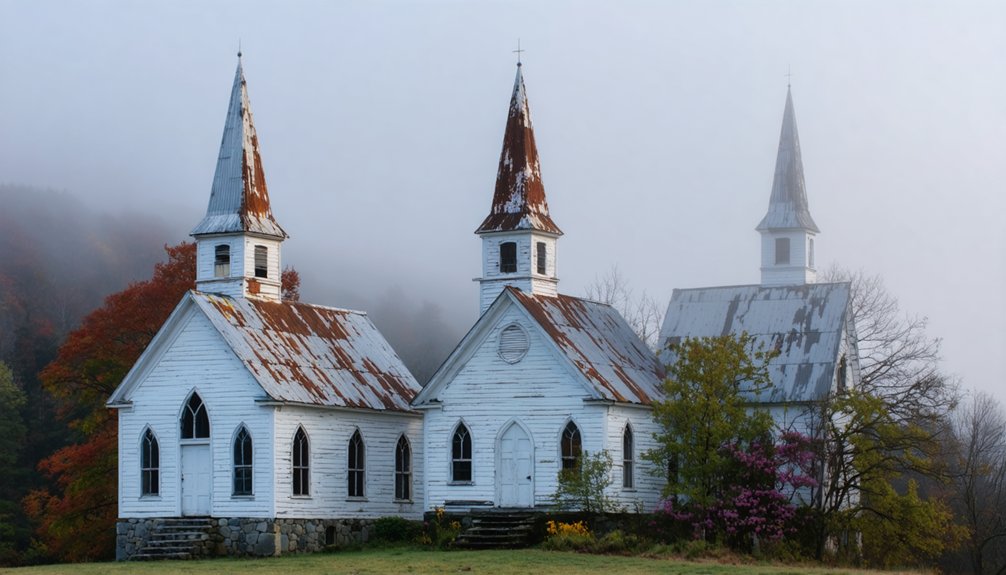
Appalachia’s ghost towns offer you windows into forgotten American history. You’ll discover submerged communities beneath Fontana Lake, abandoned coal mining settlements along New River Gorge, and preserved architectural treasures in Great Smoky Mountains National Park. Elkmont showcases early 20th-century Craftsman styles, while Kaymoor and Nuttallburg reveal industrial remnants that shaped regional identity. These cultural landmarks, preserved through conservation efforts, await those willing to explore the region’s complex transformation.
Key Takeaways
- Elkmont in Great Smoky Mountains National Park preserves 19 restored Craftsman structures accessible via hiking trails from nearby campgrounds.
- Kaymoor and Nuttallburg showcase significant industrial remnants from coal mining communities that once thrived in the New River Gorge.
- Fontana Lake occasionally reveals submerged remnants of Judson and Proctor during extreme drawdowns, offering glimpses into pre-1944 communities.
- Thurmond, once a bustling railroad hub serving 95,000 annual passengers, features well-maintained structures through National Park Service conservation.
- Blue Heron presents rare examples of preserved company town architecture, illustrating the welfare capitalism system that dominated Appalachian coal communities.
The Underwater Legacy of Fontana Lake
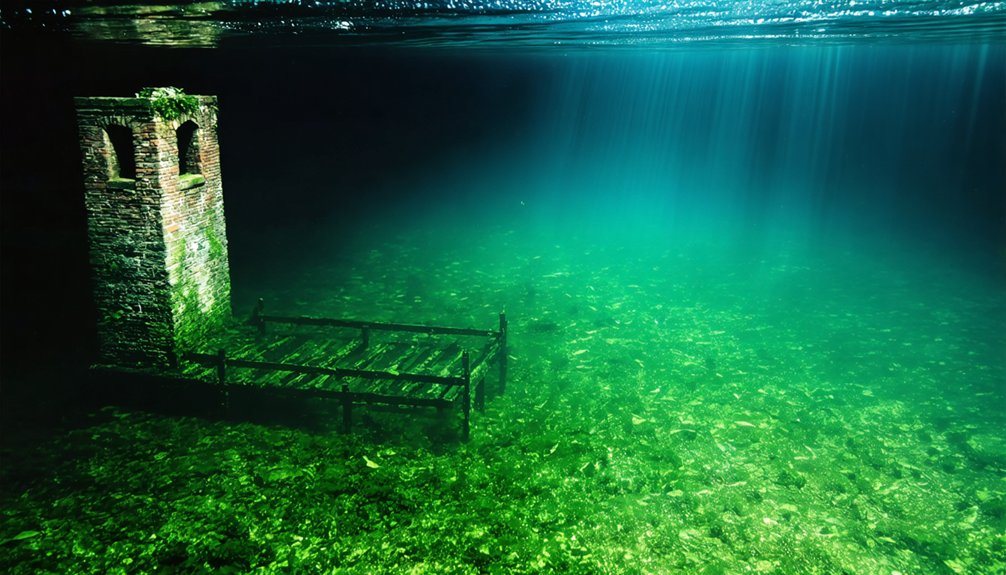
While the placid waters of Fontana Lake now offer picturesque recreation to thousands of visitors annually, they conceal a profound historical sacrifice beneath their surface.
The 1944 completion of America’s tallest eastern dam submerged entire communities—most significantly Judson and parts of Proctor—displacing thousands of Appalachian residents.
When progress demanded sacrifice, Appalachia paid the price—its communities drowned beneath the rising waters of industrial necessity.
This submerged history represents a dual displacement for many families, first removed for the national park, then again for wartime industrial priorities.
During extreme drawdowns, you’ll glimpse foundations, remnants of schools, and other architectural ghosts of these once-vibrant settlements.
The flooding effectively erased centuries of cultural heritage, severing generational connections to ancestral lands and sacred sites.
What appears as mere recreational waters to modern visitors actually entombs the collective memory of Appalachian communities sacrificed for progress.
The town of Judson once thrived with approximately 600 residents before being completely submerged by the rising waters.
The dam was constructed primarily to generate hydroelectric power for aluminum production during World War II.
Lost Mining Communities in the New River Gorge
Hidden beneath the verdant canopy of West Virginia’s New River Gorge lies a remarkable industrial archaeology treasure trove—the remnants of more than 60 coal mining communities that once pulsed with economic and social significance.
These lost communities emerged following the 1873 completion of the Chesapeake & Ohio Railroad, which catalyzed a coal production boom that nearly doubled output.
You’ll discover Kaymoor, where Low Moor Iron Company employed advanced steam technology, and Nuttallburg, the most intact site featuring a massive coal conveyor system and 80 coke ovens.
The latter even supplied Henry Ford’s automotive empire in the 1920s.
The intense labor movements and conflicts between miners and company men in these communities shaped the local culture that persists in the region today.
Today, explorers can visit Thurmond, once a thriving hub that accommodated 95,000 passengers annually through its railroad depot during the peak of coal mining operations.
Abandoned Railroad Boomtowns Along Mountain Routes
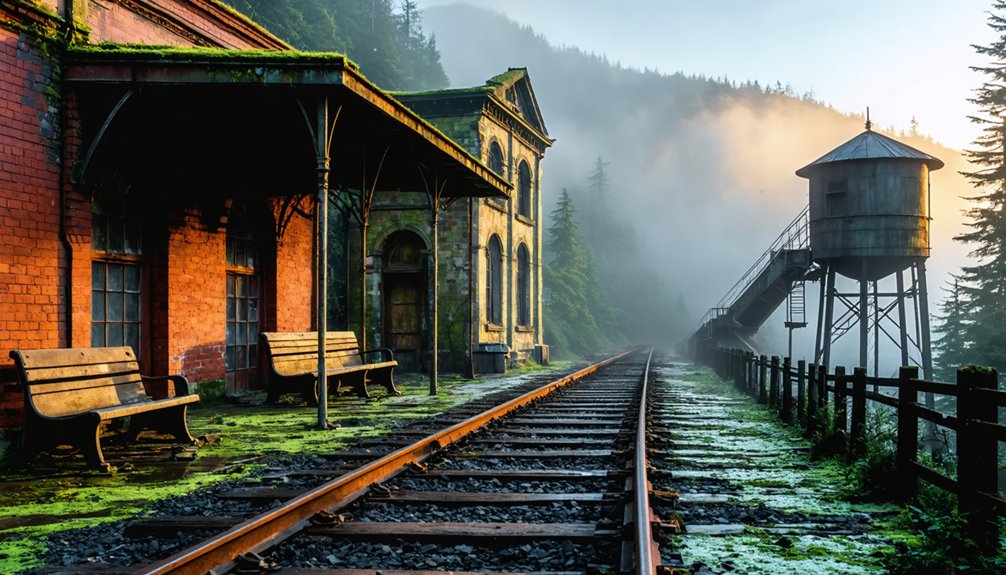
As you venture through Appalachia’s forgotten railroads, you’ll encounter once-thriving boomtowns like Thurmond and Erwin that emerged rapidly during the late 19th century’s industrial expansion.
These communities developed around critical railroad infrastructure—depots, maintenance facilities, and company housing—forming the backbone of the region’s coal and timber economies. Mining companies rapidly established entire towns with wooden houses and stores, creating instant communities centered around coal production.
Thurmond was particularly notable as it generated significant revenue for the Chesapeake and Ohio Railroad while connecting major ports from West Virginia to Virginia.
Their abandoned storefronts, empty worker housing, and silent train platforms now stand as evidence to the engineering marvel of mountain railroad construction and the harsh economic realities that eventually silenced the whistles of progress.
Iron Rails, Silent Streets
Deep within Appalachia’s furrowed landscape, a network of railroad boomtowns once pulsed with industrial vigor at the dawn of the twentieth century. Towns like Thurmond, West Virginia, wielded economic might disproportionate to their size, handling more freight than Cincinnati at their zenith.
You’ll find these railroad relics carved strategically through mountain gorges, where companies like the Chesapeake and Ohio Railroad established crucial arteries connecting isolated coal reserves to distant markets. Thurmond earned its reputation as a commercial hub with thriving banks and businesses despite facing challenges from gambling and liquor operations in surrounding areas.
The towns’ skeletons—empty banks, hotels, and depots—testify to their former prominence. The gradual decline of these communities was part of a larger pattern affecting approximately 2,500 company towns established across America during the late 1800s and early 1900s.
When diesel engines replaced steam locomotives, these communities quickly unraveled. Their abandoned infrastructure now stands as monuments to community nostalgia—places where tight-knit populations lived, worked, and socialized around the rhythmic heartbeat of passing trains before falling silent as the mines ran dry.
Coal Dust Memories
Where ancient seams of carboniferous treasure lay dormant for millennia, Appalachian coal boomtowns sprang to life in extraordinary fashion following the Civil War.
You’ll discover these once-vibrant communities along rugged rail corridors that penetrated isolated mountain terrain, connecting distant coal seams to America’s industrial centers.
These settlements reveal the complex dynamics of welfare capitalism, where companies constructed entire communities to maintain control over workers while addressing basic needs:
- Company-built housing, schools, and stores created architectural uniformity still visible in ruins
- Railroad maintenance yards that once thundered with steam locomotives now stand silent
- Coal dust permeates abandoned structures, a tangible reminder of mining heritage
- European immigrants and African American migrants formed diverse communities, their cultural imprints enduring
Though abandoned, these ghost towns preserve industrial archaeology that tells an authentic American story of boom and bust. Many of these ghost towns were established near loading structures called coal tipples that facilitated the transfer of coal onto trains. Workers in these communities were paid in company script, forcing them to purchase necessities from company-owned stores at inflated prices.
Ghost Towns Preserved Within National Park Boundaries
You’ll find Elkmont’s well-preserved Craftsman and Appalachian architecture stands as a symbol of early 20th century resort culture, now protected within Great Smoky Mountains National Park.
The former logging community’s 19 restored structures offer you a rare glimpse into the region’s pre-park leisure class lifestyle, accessible via short hiking trails from the still-active campground.
These backcountry treasures represent the complex intersection of privilege, displacement, and conservation that shaped America’s most visited national park.
Elkmont’s Historic Architecture
Nestled within the verdant confines of Great Smoky Mountains National Park, Elkmont’s historic architecture stands as a compelling representation to Appalachia’s evolving socioeconomic landscape during the early twentieth century.
When you explore this ghost town, you’ll discover how its buildings shifted from humble logging camp to elite vacation community.
The architectural legacy of Elkmont showcases:
- Rustic cabins alongside more elaborate summer homes, reflecting distinct class divisions
- Native stone chimneys and foundational remains that dot hiking trails like Little River and Jakes Creek
- “Daisy Town” structures that exemplify functional Appalachian vernacular design
- Restored historic buildings preserved through National Register designation in 1994
This Appalachian preservation effort balances visitor access with conservation, allowing you to witness how local materials shaped a unique architectural identity before the area’s 1934 absorption into the national park.
Accessible Backcountry Treasures
Within the protected boundaries of national parks and forests across Appalachia, a remarkable collection of ghost towns offers intrepid explorers access to the region’s complex historical narrative.
Lost Cove in Pisgah National Forest and Blue Heron in Big South Fork preserve distinct chapters of Appalachian self-sufficiency and industrial development. You’ll discover hidden trails leading to Proctor’s remnants beneath Fontana Lake and Loyston’s underwater legacy at Norris Lake—both representations of infrastructure’s impact on mountain communities.
Daisy Town in Great Smoky Mountains National Park stands as a rare intact example of early 20th-century resort architecture.
These sites, enshrined within federal lands, transcend mere abandoned settlements; they embody local legends and cultural resilience. Their preservation invites critical reflection on Appalachia’s socioeconomic transformations while maintaining accessibility for those seeking historical understanding.
Accessing Remote Mountain Ghost Towns Safely
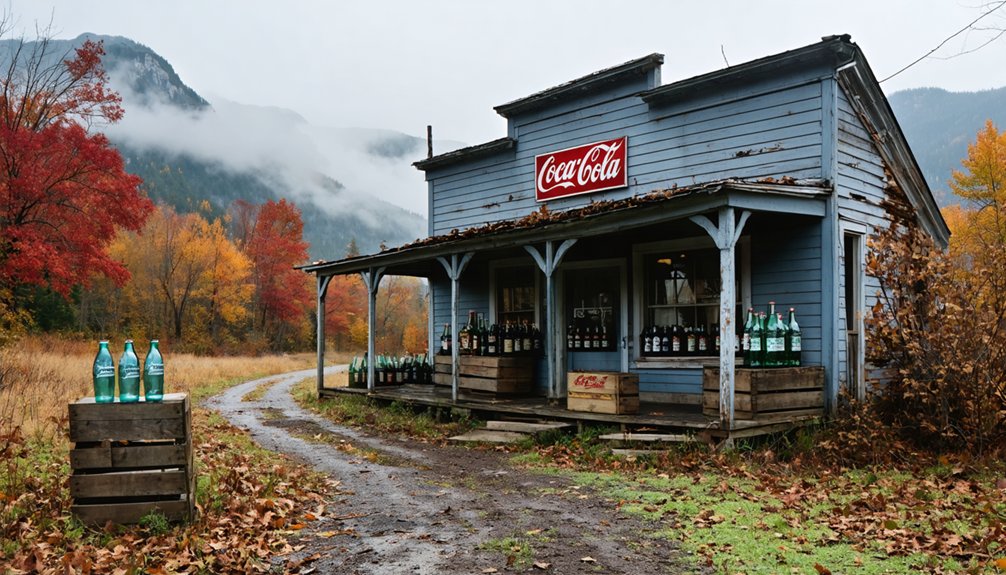
Journeying into the remote ghost towns of Appalachia requires meticulous preparation and heightened awareness, as these abandoned settlements often lie beyond well-maintained trail systems and cellular coverage.
Following established safety protocols guarantees your exploration remains an enriching rather than hazardous endeavor. Historically, these isolated communities were designed with limited access points—a feature that now demands strategic navigation tips for modern adventurers.
- Register with local authorities before departure and provide a trusted contact with your detailed itinerary
- Utilize both traditional navigation tools (maps, compass) and modern technology (satellite messengers)
- Remain vigilant of structural instability in abandoned buildings—many have deteriorated considerably
- Depart well before dusk, as these former settlements lack illumination and become particularly treacherous after dark
The Human Stories Behind Flooded Communities
Beneath the tranquil waters of man-made reservoirs throughout Appalachia lie the remnants of once-thriving communities, their stories submerged but not forgotten.
When you explore these landscapes today, you’re witnessing the aftermath of profound displacement that severed deep community ties. Entire towns like Gad, West Virginia disappeared for flood control projects, forcing families from lands cultivated for generations.
The ancestral grief continues decades later as descendants can no longer visit family homesteads or easily access relocated graveyards.
The cultural impact reverberates through time—Tennessee Valley Authority’s documentation of towns like Loyston preserves glimpses of vanished ways of life.
Former residents still gather to commemorate these places, maintaining oral histories that keep their heritage alive despite the physical erasure of their communities from the Appalachian landscape.
Photography Opportunities in Appalachian Ruins
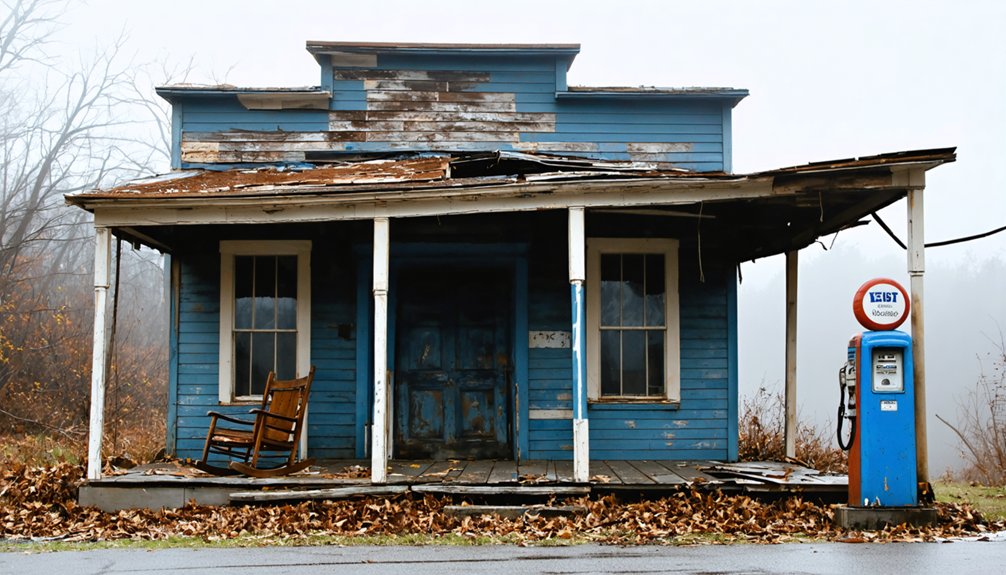
The hauntingly silent facades of Appalachia’s abandoned communities offer photographers a rare canvas where human history merges with nature’s reclamation. Ghost town photography captures not merely architectural decay but narratives of America’s industrial past etched in weathered timber and crumbling stone.
When documenting these temporal landscapes, consider:
- Wide-angle compositions that contextualize ruins within their mountain settings
- Early morning light that accentuates textural details of deteriorating structures
- Seasonal variations—autumn’s vibrant palette and winter’s skeletal exposure
- Interior spaces where light filters through collapsed roofs, creating dramatic interplay
Locations like Lost Cove’s forest-embedded remnants and Elkmont’s preserved cabins represent distinct photographic opportunities.
The submerged ruins at Fontana Lake offer an extraordinary underwater dimension to your visual exploration of Appalachia’s abandoned heritage.
Seasonal Changes That Reveal Hidden Town Foundations
Seasonal fluctuations transform Appalachia’s ghost towns into dynamic archaeological sites, periodically disclosing structural elements that remain obscured during much of the year.
The autumn leaf-fall offers enhanced foundation detection in settlements like Lost Cove, NC, where deciduous canopies previously concealed stone outlines beneath summer’s verdant cloak.
You’ll find winter’s bare landscape particularly beneficial for identifying architectural remnants, as snow creates revealing shadows across surface irregularities while frost heaving occasionally exposes buried walls.
During drought periods, receding water levels around Fontana Lake reveal Proctor’s submerged ruins—stone walls and road fragments briefly accessible before waters return. These hydrological cycles create ephemeral windows for documentation and exploration.
For peak seasonal visibility, time your expeditions to late fall or winter when reduced vegetation and contrasting conditions illuminate the ghostly footprints of these vanished communities.
Cultural Festivals Celebrating Lost Mountain Communities
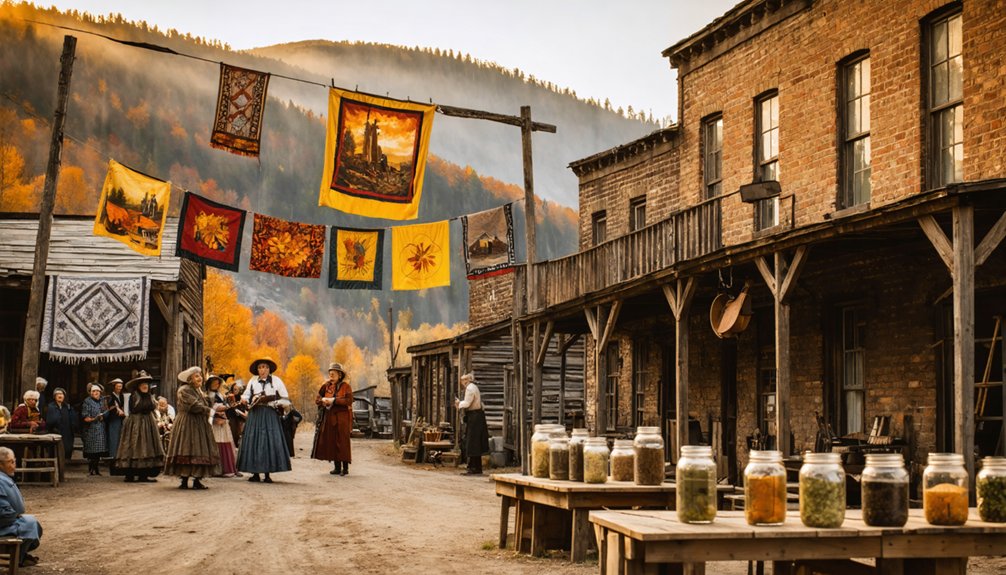
When you explore Appalachia’s cultural calendar, you’ll discover poignant Memory Days Reunions where descendants of vanished communities gather to share oral histories and maintain connections to their ancestral mountain towns.
Moonshine Heritage Celebrations have transformed from secretive gatherings into legitimate festivals that honor the economic ingenuity and resistance traditions of mountain communities who once relied on this controversial livelihood.
Ghost Town Craft Fairs showcase traditional Appalachian artisanship—from blacksmithing to quilting—perpetuating skillsets that sustained these mountain settlements before their abandonment and preserving tangible links to a disappearing way of life.
Memory Days Reunions
Amidst the mist-shrouded hollows of Appalachia, Memory Days reunions have emerged as essential cultural institutions preserving the heritage of communities that time has nearly erased.
These annual gatherings, typically held during late summer or early fall, foster memory preservation and community connections through living history experiences.
You’ll discover these reunions feature:
- Oral history sessions where elders share tales of mountain life
- Traditional Appalachian music performances with fiddles and ballads
- Family genealogy workshops connecting distant relatives
- Community potluck meals featuring ancestral recipes
The gatherings—organized by descendants or historical societies—transform abandoned schoolhouses, churches, and community centers into vibrant spaces of cultural reclamation.
From Elkhorn City, Kentucky to Olinger, Virginia, these events don’t merely commemorate ghost towns; they breathe life into collective memory, ensuring Appalachian heritage endures for generations unbound by time.
Moonshine Heritage Celebrations
Deeply rooted in Appalachia’s complex relationship with prohibition and economic survival, Moonshine Heritage Celebrations have emerged as vibrant cultural festivals that commemorate the region’s clandestine distilling traditions.
These gatherings—from Pikeville’s Appalachian Moonshine Festival to the Moonshiners Reunion during October’s first weekend—preserve the resilient spirit of mountain communities.
You’ll encounter living history through moonshine tastings, craft demonstrations, and storytelling sessions where master distillers share techniques passed through generations.
Virginia’s Moonshine Heritage Trail connects historic Appalachian distilleries, offering year-round opportunities to explore this cultural cornerstone.
In Maggie Valley’s Hillbilly Jam and Asheville’s cultural celebrations, these festivals transcend mere entertainment—they’re economic catalysts and custodians of vanishing traditions, ensuring the independent spirit of mountain moonshine traditions endures despite the ghost towns that once housed them.
Ghost Town Craft Fairs
Throughout abandoned main streets and forgotten town squares of Appalachia’s ghost towns, craft fairs have emerged as vibrant cultural lifelines, preserving the artistic heritage of communities that time nearly erased.
These artisan showcases transform forgotten spaces into cultural preservation venues where you’ll encounter the authentic spirit of mountain craftsmanship.
The region’s traditional crafts flourish at these seasonal gatherings, particularly during summer and fall months when:
- Skilled artisans demonstrate heritage techniques like 1850s-era blacksmithing and vegetable dyeing
- The “Starstruck” themed quilt exhibitions display contemporary interpretations of time-honored patterns
- Juried competitions elevate exceptional craftspeople within the maker community
- Live bluegrass performances by artists like Daniel Lilly create an immersive cultural atmosphere
Conservation Efforts Preserving Appalachian Ghost Town History
While decades of neglect threatened to erase the physical remnants of Appalachia’s once-thriving communities, coordinated conservation efforts have emerged as crucial bulwarks against the complete disappearance of the region’s ghost towns.
Organizations like Southern Appalachian Highlands Conservancy and Blue Ridge Conservancy have secured critical lands, protecting both ecological and cultural heritage. You’ll find these preservation challenges addressed through innovative partnerships—the National Park Service maintains structures in Thurmond and Blue Heron, while Friends of the Smokies established a $9 million endowment for Elkmont Ghost Town restoration.
Community engagement remains fundamental to these conservation efforts. Local historians document oral histories, high school students in St. Paul transformed a neglected lake into a protected wetland, and volunteers participate in hands-on restoration projects.
These collaborative initiatives guarantee Appalachian ghost towns remain living examples of regional heritage.
Frequently Asked Questions
Are There Any Fully Intact Buildings Remaining in Appalachian Ghost Towns?
Yes, you’ll discover sixteen fully intact buildings accessible to the public, with architectural preservation efforts maintaining wooden cabins in Kaymoor and other abandoned structures throughout documented Appalachian ghost town locations.
How Did Residents Respond When Told Their Towns Would Be Flooded?
You’d find flooding reactions ranged from shock to fierce resistance. Families confronted with losing generational homes and sacred burial grounds demonstrated remarkable community resilience through protests, though ultimately government authority prevailed.
What Paranormal Activity Has Been Reported in Appalachian Ghost Towns?
You’ll encounter haunting tales of shadowy figures, disembodied voices, and spectral sightings throughout Appalachian ghost towns. Residual energies from tragic mining accidents and violent histories manifest as footsteps, cold spots, and moving objects.
In addition to Appalachian ghost towns, haunted farms in New England are another hotspot for paranormal enthusiasts. These rustic locations often carry stories of lost livestock and restless spirits, with visitors reporting eerie sounds echoing through the fields. As the sun sets, the air becomes thick with anticipation, inviting those brave enough to uncover the mysteries hidden within the shadows.
Can Metal Detecting or Artifact Collection Be Done at Ghost Towns?
You’ll find metal detecting legally complex at ghost towns. Most require explicit permission, as ethics dictate artifact preservation rather than collection. Federal protections classify unauthorized removal as destruction of historical context.
Which Ghost Towns Are Most Endangered by Current Development Projects?
You’ll find Thurmond, West Virginia and Elkhorn City, Kentucky facing imminent threats. Downtown Beckley’s historic district and settlements along French Broad River stand as critically endangered sites needing urgent preservation efforts.
References
- https://www.thewanderingappalachian.com/post/the-underwater-towns-of-appalachia
- https://www.blueridgeoutdoors.com/go-outside/southern-ghost-towns/
- https://en.wikipedia.org/wiki/Lists_of_ghost_towns_in_the_United_States
- https://www.youtube.com/watch?v=4oHlJFXbrCk
- https://appalachianmemories.org/2025/10/16/the-lost-towns-of-appalachia-the-forgotten-mountain-communities/
- https://www.geotab.com/ghost-towns/
- https://www.onlyinyourstate.com/state-pride/north-carolina/judson-nc-underwater-ghost-town
- https://www.blueridgeoutdoors.com/go-outside/sunken-secrets-the-underwater-ghost-towns-of-the-blue-ridge/
- https://avltoday.6amcity.com/remembering-judson-wncs-underwater-ghost-town
- https://wlos.com/news/local/north-carolina-fontana-lake-proctor-town-submerged-underwater-history-100-years-ancestors-families-shorelines-world-war-2-lee-woods-historian