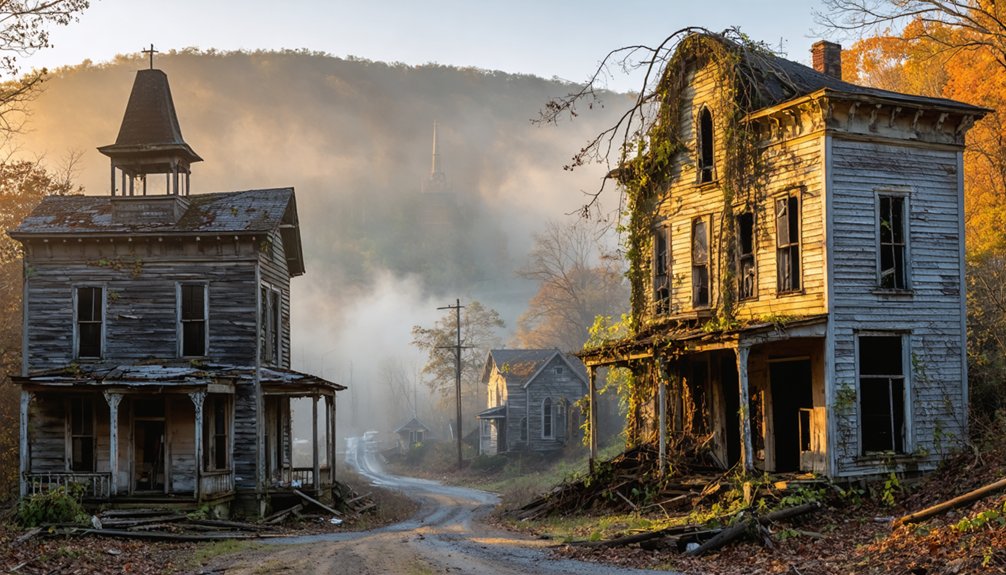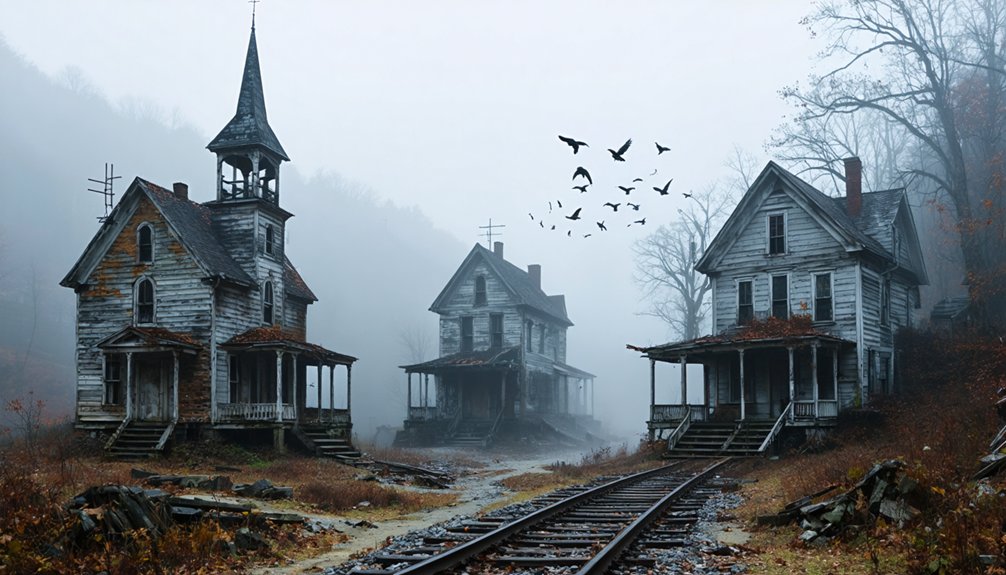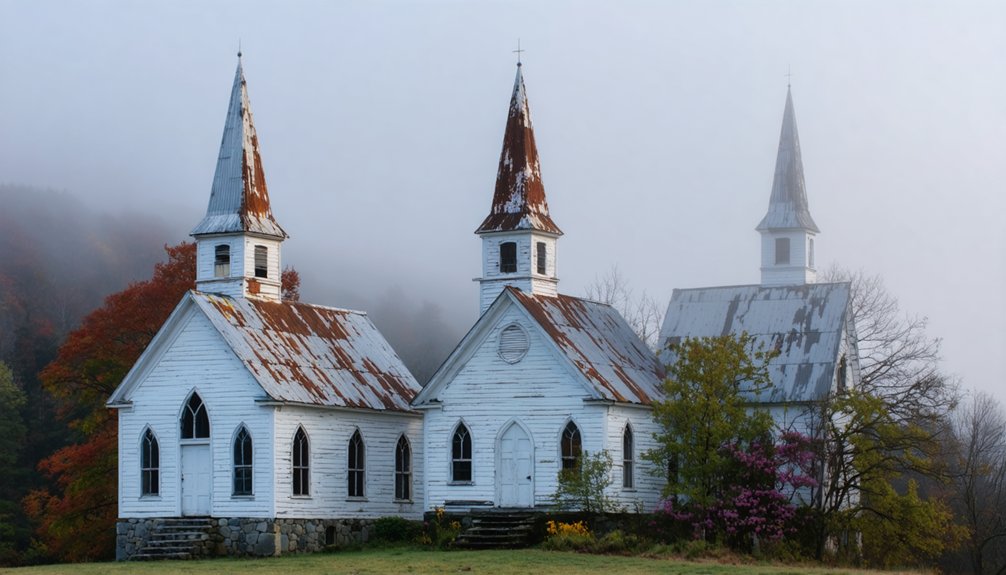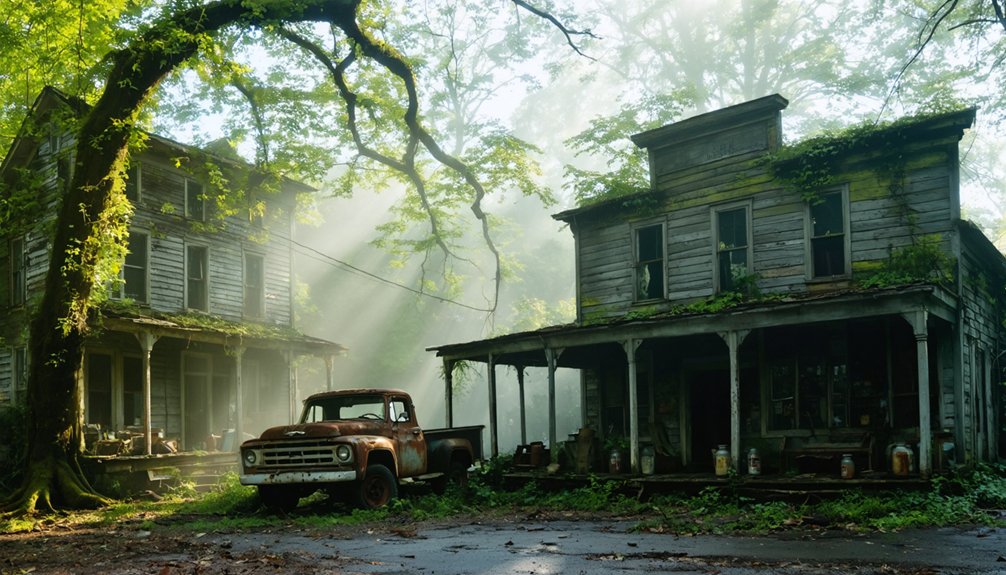
You’ll discover hundreds of ghost towns hidden throughout Appalachia, from submerged settlements beneath man-made lakes to abandoned coal communities frozen in time. These forgotten places tell stories of boom-and-bust cycles, company towns built by coal barons, and communities displaced by industrial progress. Some remain accessible via overgrown logging roads, while others emerge only when drought lowers lake waters. The mountains guard these secrets, waiting for those prepared to uncover their tales.
Key Takeaways
- Submerged settlements beneath man-made lakes like Fontana, Jocassee, and Tellico reveal themselves during low water periods.
- Abandoned coal towns feature crumbling company stores, wooden trestles, and empty rail depots from the industrial boom era.
- Many ghost towns were constructed by coal barons who built identical houses, schools, and stores for mining communities.
- Seasonal timing is crucial for exploration, with late autumn presenting challenges due to reduced maintenance and tourism infrastructure.
- Ethical exploration requires navigation skills, permission for photography, and care not to disturb artifacts or reveal exact locations.
Vanished Communities: The Origins of Appalachian Ghost Towns
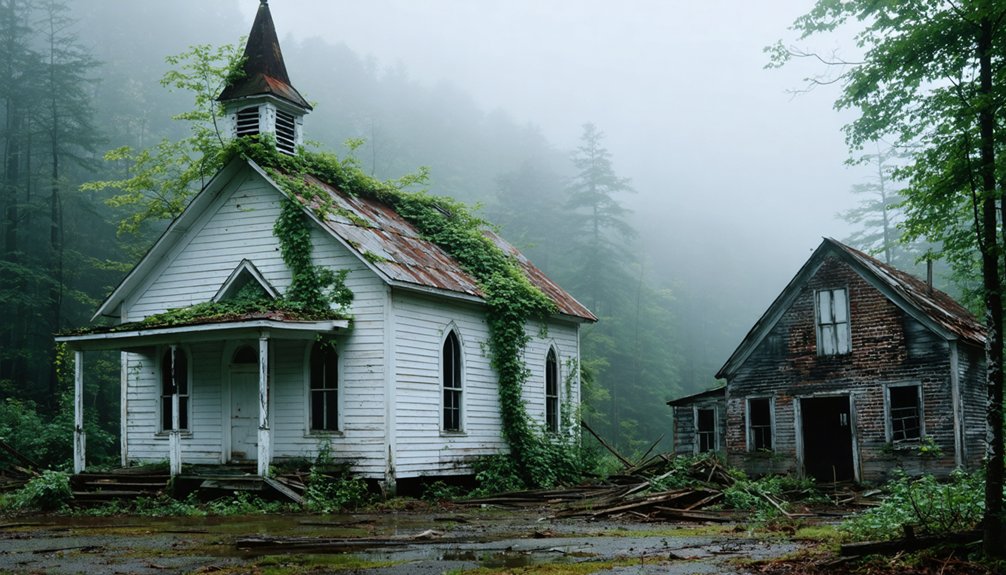
While many of today’s travelers zip along interstate highways through the Appalachians, they’re passing near the forgotten foundations of communities that once bustled with life.
These ghost towns began with settler motivations rooted in westward expansion, as displaced tidewater residents pushed into the frontier in the 1700s.
You’ll find the fingerprints of German and Scots-Irish immigrants who populated the Shenandoah Valley between 1730-1750, establishing the first community dynamics of the region.
After the Revolution, settlers flooded beyond the Appalachians despite Britain’s failed 1763 Proclamation attempting to halt expansion.
Later, the industrial boom created another wave of settlements—company towns sprouting alongside newly-laid railroad tracks, housing coal miners and timber workers.
These communities thrived briefly, then withered as single-industry economies collapsed, leaving only whispers of their existence in today’s wilderness. Many Appalachian towns were abandoned when natural disasters devastated communities beyond repair, forcing residents to permanently relocate. The depletion of natural resources directly contributed to the decline of once-prosperous towns like Elkmont, where logging operations eventually ceased.
Submerged Settlements: Towns Beneath Appalachian Lakes
Beneath the placid surfaces of Appalachia’s man-made lakes lie the ghosts of communities that once thrived along river valleys.
Forgotten towns sleep under calm waters, their stories silenced by the dams that drowned them.
You’re floating above submerged histories every time you boat across Fontana Lake, where Judson and Kirkland Branch disappeared in the 1940s, sacrificed for wartime power needs.
The same lost legacies haunt Lakes Jocassee and Keowee, where entire settlements vanished underwater in 1973.
Cherokee heritage suffered particularly cruel erasure when Chota, Tanasi, and five other historic towns disappeared beneath Tellico Lake’s waters.
When autumn draws down Norris Lake and Summersville Lake, you might glimpse foundations of Loyston or Gad—communities where families farmed for generations until government agencies forced them out.
Divers report eerie standing forests below, frozen in time like underwater monuments to displaced mountain folk.
During periods of low water levels at Lake Burton, visitors can explore the visible remnants of a once-thriving gold rush town that was flooded in 1917 to provide hydroelectric power.
The town of Bushnell with its train station and stores was among the vibrant communities submerged by the Tennessee Valley Authority when creating Fontana Lake.
Rail and Coal Relics: Industrial Towns Frozen in Time
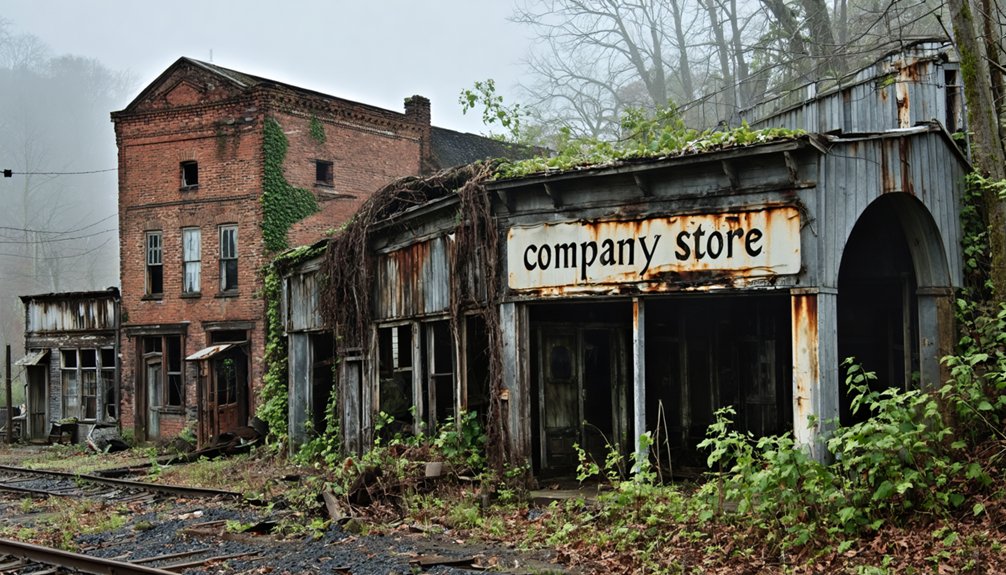
As you wander through the silent hollows where Appalachian coal towns once thrived, you’ll find towering wooden trestles and rusted rail lines leading to nowhere, silent witnesses to the region’s industrial past.
Coal barons’ grand visions—once manifested in company stores, tipples, and coke ovens—now crumble into the mountainsides they once conquered, their empires reclaimed by kudzu and forest.
The rail depots of Thurmond and similar boomtowns, which once processed nearly 100,000 annual passengers, now stand hauntingly quiet, their platforms empty save for the occasional historian or curious traveler tracing the ghostly outlines of a vanished way of life. The Chesapeake & Ohio Railroad established in 1873 transformed the region, nearly doubling coal production and population through improved transportation. These abandoned structures, with their gravel roads and piles of bricks, offer glimpses into a forgotten world where entire communities once flourished.
Towering Trestles Remain
Countless wooden trestles once stretched across the rugged Appalachian landscape, engineering marvels that carried locomotives through seemingly impassable terrain.
You’ll find few of these towering structures remaining today—victims of time, weather, and abandonment.
Lines like the Tallulah Falls Railroad once boasted 58 wooden trestles, with 42 still standing when the Franklin terminus closed.
These engineering marvels required constant maintenance as wood rotted and weakened under heavy trains.
Today, trestle preservation efforts focus on the rare survivors.
You might stumble upon stone culverts or piers while hiking remote trails—silent sentinels of industrial ambition.
Most wooden spans have vanished completely, replaced by earthen fill or simply left to decay after rails were salvaged for scrap.
The few intact specimens remain hidden treasures for explorers seeking freedom in forgotten corners.
The Tallulah Falls Railroad, nicknamed the “Total Failure” due to persistent financial difficulties, nevertheless left a lasting legacy in the region’s transportation history.
In Vermont, the abandoned Long Trail Railway remnants are particularly visible between Bourn Pond and the William B. Douglas Shelter, where coal cinders and scattered railroad ties mark the path.
Coal Barons’ Vanished Legacies
While wooden trestles carried trains through Appalachian valleys, coal barons were busy building entire towns from scratch. Within weeks, they’d raise rows of identical wooden houses, company stores, schools, and churches—all under their strict control.
You’ll find these company legacies scattered throughout West Virginia, Kentucky, and Virginia, where towns like Thurmond and Clinchco once bustled with activity. Steam whistles regulated daily life while coal trains rumbled through constantly.
The mining impacts remain visible today in abandoned structures and empty main streets. Once-grand Masonic lodges and general stores stand vacant, their historic signage fading. Beehive coke ovens crumble silently beside overgrown rail yards. Jellico stands as a testament to this history, with its coal-mining community heritage shaping generations of families.
Though the barons’ economic power has vanished, their architectural footprint persists—skeletal reminders of an era when corporations built not just businesses, but entire communities.
Railroad Towns’ Quiet Tracks
The silent railway stations of Appalachia tell stories that echo across decades, frozen in time like insects trapped in amber.
You’re witnessing the remnants of once-thriving communities built by railroad companies like the L&N, which established towns at strategic points along their routes. During the late 1800s and early 1900s, approximately 500 company towns were established in counties that would become part of the Appalachian Region.
- Visit Etowah, Tennessee, where you’ll find a reflection of the community spirit that flourished around the railroad’s rhythmic heartbeat.
- Explore Thurmond, West Virginia, preserved within New River Gorge National Park.
- Hike to Lost Cove, North Carolina, accessible only by foot where abandoned rail lines once connected mountain folk to the wider world.
- Discover Cass, a restored logging railroad town where you can still ride historic trains.
These ghost towns stand as monuments to freedom sought and lost along forgotten railroad routes.
Accessing the Abandoned: Trails to Forgotten Mountain Communities
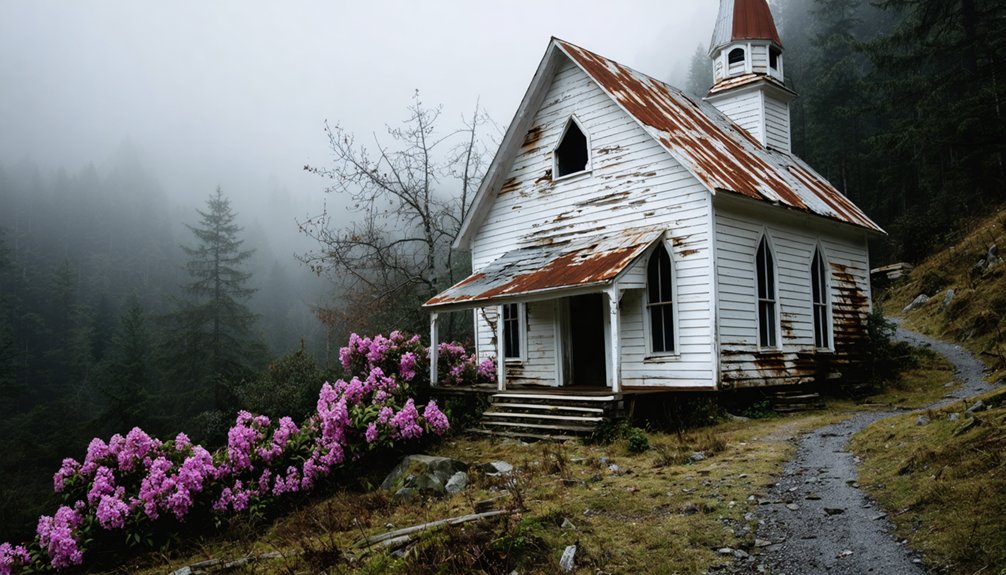
When you’re setting out to find these forgotten mountain settlements, you’ll need to master backcountry navigation techniques including map reading, compass use, and GPS tracking—skills that become even more essential when seasonal challenges like spring flooding or winter trail closures alter your planned route.
Photography at these sites demands both technical skill and ethical awareness, as you’ll want to capture these fleeting moments of history without disturbing artifacts or compromising structural remains.
Your visit represents a rare privilege that carries responsibility, so pack extra batteries, respect posted boundaries, and remember that your footprints should leave no trace in these fragile windows to Appalachia’s past.
Steering deep into Appalachia’s hidden ghost towns requires more than just adventurous spirit—you’ll need solid backcountry navigation skills to pierce the green veil that has reclaimed these forgotten settlements.
Your journey demands both traditional navigation tools and terrain interpretation abilities as ridges, valleys, and old roadbeds become your only signposts.
- Master the compass-map combo – orient your map to physical surroundings before plotting each leg of your journey
- Read the land’s language – recognize how contour patterns on paper translate to passable routes on ground
- Employ natural “handrails” – use creeks and ridgelines to guide your path toward abandoned communities
- Diversify your toolkit – carry redundant systems (GPS and paper maps) for when technology inevitably fails in deep hollows
Seasonal Access Challenges
Even the most skilled navigator’s compass won’t help when Mother Nature decides to lock down Appalachia’s ghost towns with her seasonal barriers.
You’ll face winter’s icy paths and reduced visibility, while spring flooding transforms gentle streams into impassable torrents cutting off historic sites entirely.
Pay attention to trail advisories – those seasonal closures aren’t mere suggestions.
Late autumn brings diminished tourism infrastructure, with fewer maintained access points just when mud and erosion demand specialized footwear.
The six-mile incomplete road to cemetery sites means longer hikes, complicated by high water periods along the Nolichucky River.
Remember that Blue Heron’s train access operates on limited schedules, and guided hikes run primarily in spring and early summer.
Your freedom to explore these forgotten communities depends on timing your visit when nature permits passage.
Photography Ethics Onsite
Three cardinal rules govern photography in Appalachia’s forgotten settlements: obtain permission, document without disturbing, and protect these fragile sites through your actions.
When you’re capturing these hauntingly beautiful ghost towns, remember that your presence leaves an impact long after you’ve gone.
- Respect the “take nothing but photos” principle – even seemingly worthless artifacts tell important stories.
- Position found objects exactly as discovered – your documentation standards preserve historical context.
- Keep location details vague when sharing online – preventing vandalism protects these treasures.
- Use manual exposure for challenging lighting conditions – the stark contrast between sunlit windows and dark interiors demands technical skill.
Your camera becomes a preservation tool when wielded with respect and cultural authenticity, ensuring these mountain communities’ stories survive.
Nature’s Reclamation: How Wilderness Engulfs Human History

As you wander through the dense forests of the Appalachian Mountains, you’ll find nature silently reclaiming what humans once claimed as their own.
Where miners’ children once played, dogwoods and pines now reach skyward. Vines strangle abandoned structures while moss carpets rusted bridges and forgotten railway lines.
Nature’s resilience transforms these once-bustling communities into silent green cathedrals.
You might stumble upon concrete curbs or a stone foundation—historical echoes of lives lived decades ago. The rain and weather have washed away the soot, allowing wilderness to heal industrial wounds.
Beneath your feet, soil recovers its essence as ecosystems reestablish balance.
What you’re witnessing isn’t just decay—it’s restoration. These ghost towns aren’t merely disappearing; they’re being archived within the living museum of the forest.
Preserving Mountain Memories: Conservation Efforts and Cultural Legacy
While the forest quietly reclaims these forgotten communities, dedicated organizations and passionate individuals work tirelessly to guarantee the mountain’s human history isn’t completely erased.
Nature reclaims, but determined guardians ensure mountain communities’ stories survive beneath the returning wilderness.
You’ll find groups like the SAHC purchasing Lost Cove’s 95 acres for conservation, while Friends of the Smokies established a $9 million endowment to restore Elkmont’s historic structures.
These preservation efforts safeguard Appalachia’s cultural preservation and highlight its historical significance through:
- Meticulous restoration using original materials and matching century-old paint colors
- Recording oral histories from former residents to supplement physical conservation
- Creating sustainable eco-tourism opportunities that honor the region’s heritage
- Collaborating between national organizations and local volunteers to preserve authentic mountain narratives
You’re witnessing the delicate balance between allowing nature’s reclamation while protecting the stories of those who shaped these mountains.
Frequently Asked Questions
Are Ghost Towns in Appalachia Legally Accessible to the Public?
Over 60% of Appalachian ghost towns aren’t legally accessible. You’ll face legal restrictions when exploring as many sit on private property, though some within national forests offer limited public access with proper permits.
What Paranormal Activity Has Been Reported in Appalachian Ghost Towns?
You’ll encounter everything from the Bell Witch’s chains and voices to shadowy figures watching you through abandoned windows. Appalachia’s haunted history brims with spectral sightings tied to tragic local stories and lingering energies.
In addition to these tales, ghost stories from rural Alabama reveal chilling encounters with restless spirits who wander the darkened landscapes. From eerie whispers in the pines to phantom lights flickering along the old dirt roads, these stories weave a tapestry of the unknown that captivates both locals and visitors. Each narrative carries a sense of place, anchored in the history that permeates every rural community.
Can I Metal Detect or Collect Artifacts From These Sites?
No, you can’t legally metal detect without permission. Metal detecting regulations protect these sites, and artifact preservation concerns are significant. You’ll need explicit landowner approval or face serious penalties for trespassing.
How Do Former Residents and Descendants Feel About Tourism?
You’ll find community perspectives on tourism impacts are mixed. Former residents often appreciate economic benefits and heritage preservation while worrying about commercialization, environmental damage, and whether their authentic stories are being told respectfully.
Which Ghost Towns Are Most Threatened by Development or Climate Change?
Like canaries in coal’s aftermath, you’ll find Beartown and Thurmond facing urban encroachment while Kaymoor and Nuttallburg battle climate’s fury. Their stories whisper warnings we’d be wise to heed.
References
- https://www.blueridgeoutdoors.com/go-outside/southern-ghost-towns/
- https://www.thewanderingappalachian.com/post/the-underwater-towns-of-appalachia
- https://www.youtube.com/watch?v=4oHlJFXbrCk
- https://www.visitnc.com/list/ncs-mysterious-disappearances-and-abandoned-places
- https://appalachianmemories.org/2025/10/16/the-lost-towns-of-appalachia-the-forgotten-mountain-communities/
- https://www.britannica.com/topic/ghost-town
- https://birthplaceofcountrymusic.org/appalachian-ghost-tales-and-stories-to-help-you-get-your-halloween-on/
- https://en.wikipedia.org/wiki/Appalachia
- https://www.blueridgeoutdoors.com/go-outside/sunken-secrets-the-underwater-ghost-towns-of-the-blue-ridge/
- https://www.thesmokymountaintimes.com/local-news/under-water-stories-towns-lost-fontana-lake