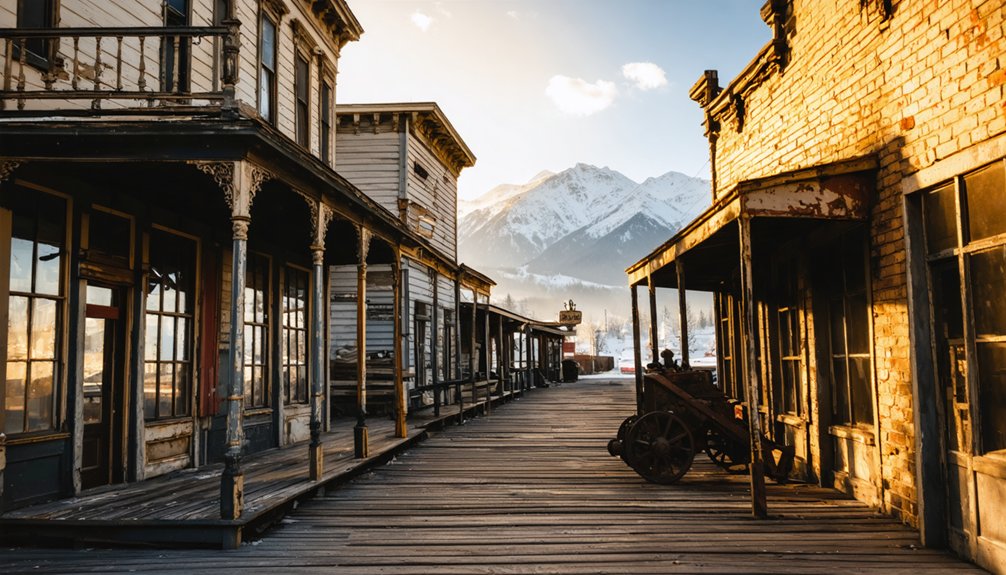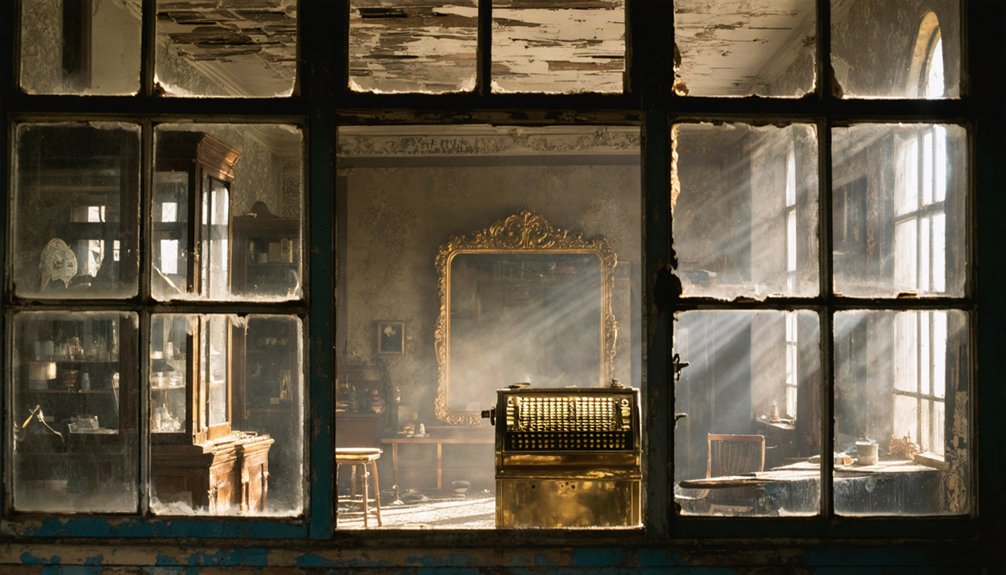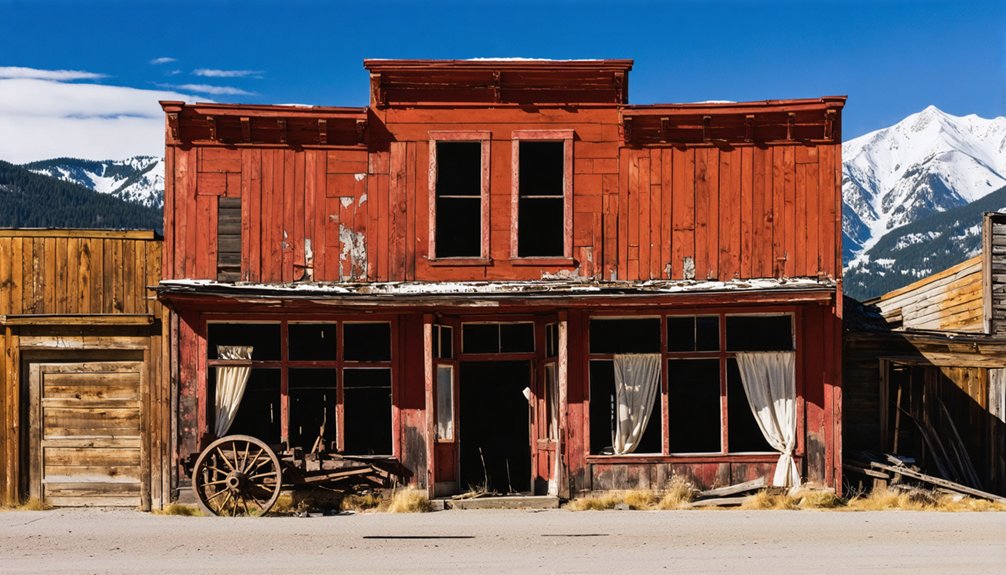
America’s landscape is dotted with hidden Victorian ghost towns from the 1800s gold rush era. You’ll find well-preserved settlements like St. Elmo (Colorado), Bodie (California), and Virginia City (Nevada) showcasing ornate architecture with original furnishings. Lesser-known gems include Crystal City, Garnet, and Silver City, while the Appalachians harbor Lost Cove and Thurmond. These abandoned communities offer glimpses into America’s industrial past through their weathered structures and forgotten stories.
Key Takeaways
- St. Elmo, Colorado preserves original Victorian buildings including a general store and schoolhouse in “arrested decay.”
- Crystal City and Animas Forks in Colorado feature remote Victorian mining structures often buried under snow during winter.
- Garnet, Montana contains two dozen authentic Victorian-era structures with original artifacts still inside them.
- Silver City, Idaho maintains Victorian cabins through dedicated summer residents preserving its mining heritage.
- South Pass City, Wyoming showcases nearly two dozen restored frontier buildings with distinctive Victorian architectural details.
America’s Forgotten Victorian Mining Towns: Remnants of the Gold Rush
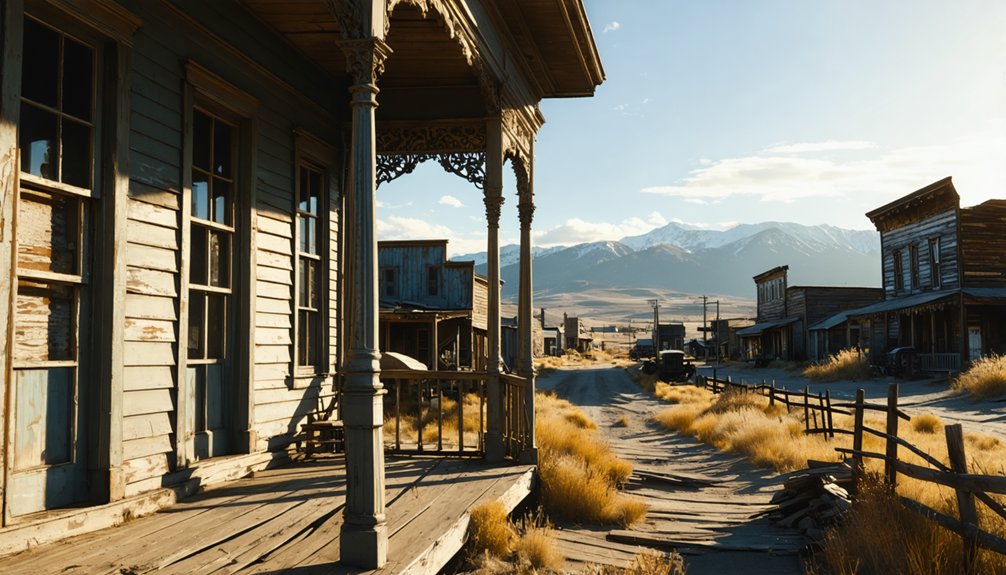
Whispers of America’s golden past echo through the weathered structures and abandoned streets of the nation’s Victorian-era mining towns.
You’ll find these remnants scattered across California’s gold country, where James Marshall’s 1848 discovery in Coloma sparked a remarkable rush.
Places like Jamestown, Murphys, and Georgetown rapidly evolved from simple mining camps into thriving communities adorned with Victorian architecture reflective of their newfound prosperity.
These settlements revolutionized mining techniques, shifting from rudimentary placer mining in riverbeds to sophisticated hard-rock quartz operations.
Innovative water management systems, including suspension flumes and drainage races, enabled efficient extraction in challenging terrain.
The economic output was staggering—Murphys alone yielded approximately $20 million in gold. Columbia, once home to thousands of hopeful miners, shipped an impressive $87 million in gold by the 1860s.
California’s total gold production reached an estimated 118 million troy ounces, forever altering the nation’s trajectory.
Today, visitors can travel Highway 49 through these historic towns, experiencing their preserved architecture and participating in gold panning activities that connect them to this significant chapter in American history.
Southern Ghost Towns With Deep Historical Significance
While California’s gold rush towns showcase the western frontier’s Victorian legacy, the American South harbors equally compelling ghost towns with distinct historical narratives.
Lost Cove straddles the North Carolina/Tennessee border, where moonshining thrived until 1957 due to its strategic location. The community developed as a self-sustaining agricultural settlement during the Civil War era, with some accounts tracing its origins to Daniel Boone’s expedition.
Charleston and Fort Bowie in Arizona reflect different Southern frontier experiences—the former a lawless mill town serving Tombstone’s silver mines, the latter marking pivotal Apache conflicts. Fort Bowie was established in 1862 to protect Apache Springs, a critical water source for travelers crossing the harsh desert terrain.
Mississippi’s Rodney, once 4,000 residents strong, witnessed significant Civil War action when Confederates captured Union officers from a gunboat.
Old Cahawba, Alabama’s first capital, now stands as ruins within flood-prone river lands.
These settlements collectively tell a story of Civil War tensions, economic shifts, and the fragile nature of Victorian-era prosperity in the American South.
Hidden Gems: Lesser-Known Victorian-Era Settlements
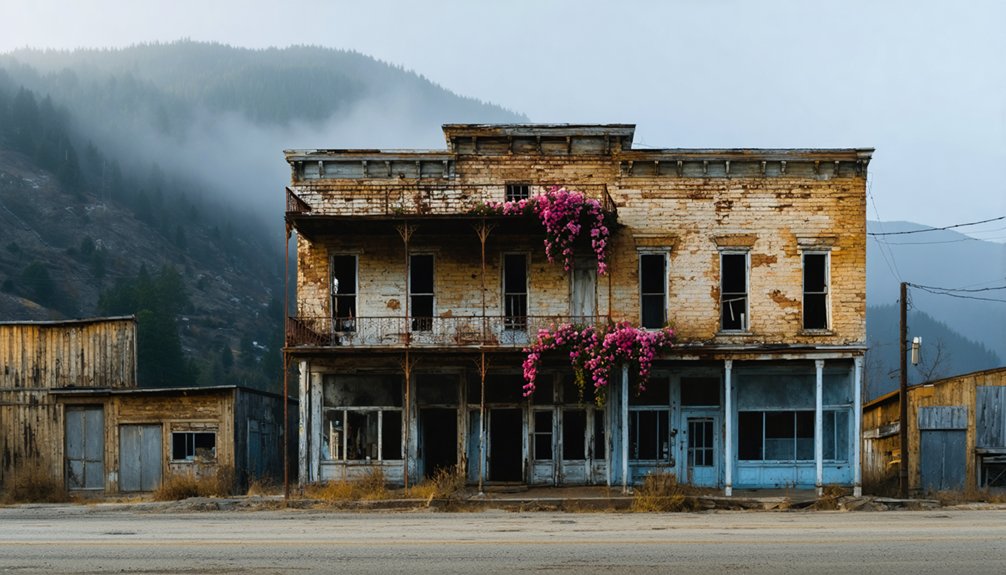
Beyond the well-documented ghost towns of California and the South lie America’s most intriguing Victorian settlements—hidden treasures tucked away in remote mountain passes and forgotten valleys of the American West.
Among these hidden gems of the American West, visitors can uncover fascinating stories of pioneers and settlers who once called these places home. The eclectic architecture and vibrant histories breathe life into these often-overlooked locations. Exploring these sites offers a unique perspective on the rich tapestry of American heritage and the enduring spirit of the West.
You’ll discover remote mining heritage in places like Crystal City, Colorado, and Animas Forks, where severe winters once buried buildings to their second stories.
These forgotten communities reveal America’s extractive past:
Abandoned towns whisper stories of America’s relentless pursuit of natural wealth across the untamed frontier.
- Custer, Idaho—preserved within Salmon-Challis National Forest with 600 peak residents before abandonment by 1910
- Garnet, Montana—featuring two dozen authentic structures with original artifacts intact
- Grafton, Utah—showcasing five restored Mormon settlement buildings near Zion National Park
- Silver City, Idaho—maintained by a handful of dedicated residents preserving Victorian cabins during summer months
Many of these abandoned sites offer visitors a unique opportunity to glimpse into past lifestyles and cultures through their well-preserved architecture and artifacts.
The town of Elkmont in Tennessee, founded in the early 1900s, attracts history enthusiasts with its collection of protected historic buildings that showcase the lifestyle of affluent Blue Ridge families.
Appalachian Spectral Villages: Lost Communities of the Southeast
The haunting remnants of forgotten communities aren’t limited to the American West—they’ve left their spectral imprint across the Appalachian Mountains as well.
Lost Cove, straddling the Tennessee-North Carolina border, thrived on Appalachian moonshining after 1898, using its strategic location to evade tax collectors before being abandoned by 1957.
Underwater ghost towns like Proctor, Andersonville, and Loyston succumbed to mid-century dam projects, their histories now submerged beneath artificial lakes. The town of Proctor was submerged when Fontana Dam was built in the 1940s to provide wartime electricity for the Oak Ridge facility.
Mining settlements such as Thurmond and Kaymoor stand as representations of industrial boom-and-bust cycles. Thurmond was once a thriving railroad town nicknamed the Dodge City of the East due to its notorious reputation for lawlessness.
These vanished communities leave cultural echoes through stone chimneys, abandoned rail stations, and submerged church steeples.
You’ll find their stories preserved through preservation efforts—oral histories capturing the sounds of coal trains and Sunday hymns that once animated these now-silent mountains.
Well-Preserved Victorian Ghost Towns You Can Visit Today
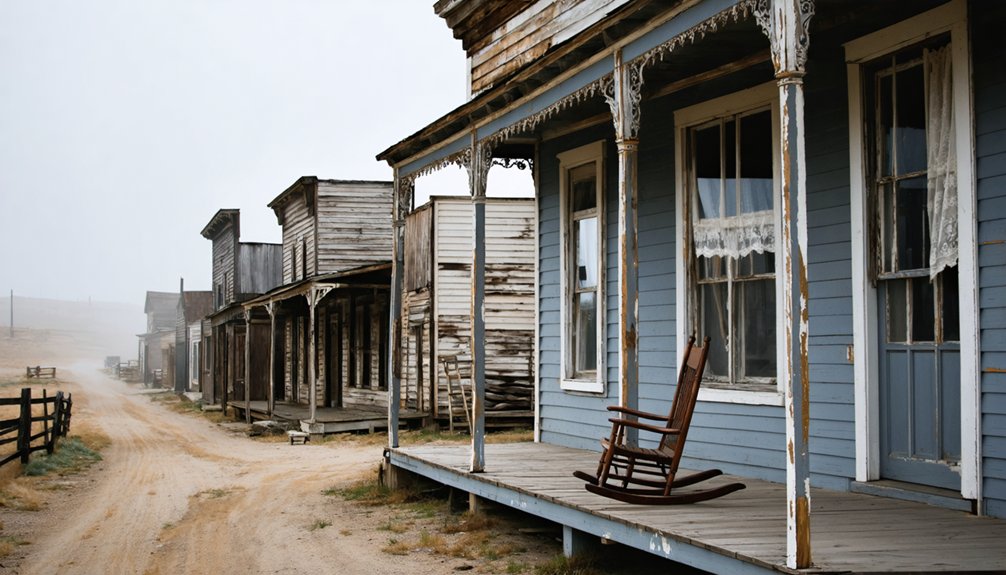
Unlike their permanently abandoned counterparts, several Victorian ghost towns have escaped total ruin through careful preservation efforts, offering today’s visitors immersive glimpses into America’s 19th-century frontier past.
These sites showcase authentic Victorian architecture while maintaining the rugged frontier aesthetic that characterized America’s westward expansion. St. Elmo, Colorado remains one of the state’s best-preserved ghost towns with original buildings including a general store and schoolhouse still standing. Many visitors report an eerie feeling when exploring these sites, despite the absence of actual hauntings.
Preserved Victorian frontier towns blend ornate architectural elegance with the raw pioneer spirit that defined America’s westward journey.
- Virginia City, Nevada stands as a premier example of historical preservation with over 150 Victorian-era structures, including the three-story Mackay Mansion.
- Bodie, California remains in “arrested decay,” with original Victorian furnishings still visible inside its 100+ weathered buildings.
- South Pass City, Wyoming features nearly two dozen restored frontier buildings with period-appropriate Victorian details.
- Batsto Village, New Jersey offers a unique northeastern perspective, where Victorian embellishments were added to earlier industrial structures.
Frequently Asked Questions
Are There Specific Seasons Best for Ghost Town Photography?
Yes, photograph in fall for rich autumn hues against abandoned structures, or winter when snow blankets these forgotten settlements, creating stark winter landscapes with dramatic lighting and fewer visitors.
Do Any Ghost Towns Have Active Paranormal Investigation Opportunities?
Despite skepticism, numerous ghost towns offer structured paranormal tours. You’ll find ghost hunting opportunities in Bodie (California), Virginia City (Nevada), and St. Elmo (Colorado), where documented evidence of spectral phenomena awaits your independent investigation.
Can You Legally Collect Artifacts From Abandoned Ghost Towns?
You generally can’t legally collect artifacts from ghost towns. Federal and state laws mandate artifact preservation, and unauthorized collection carries serious legal ramifications including fines and imprisonment. Private property rights further restrict access.
Which Ghost Towns Accommodate Visitors With Mobility Challenges?
Step back in time without stepping over obstacles at Virginia City and Jerome, which provide accessible trails and visitor facilities including paved paths, designated parking, and shuttle services for your mobility needs.
How Do Local Indigenous Communities View These Abandoned Settlements?
You’ll find indigenous perspectives vary considerably—many communities view these sites as symbols of colonial displacement while others recognize their cultural significance as spaces for honoring ancestors and reclaiming erased historical narratives.
References
- https://albiongould.com/ghost-towns-to-visit-in-the-states/
- https://www.visittheusa.com/experience/5-us-ghost-towns-you-must-see
- https://www.blueridgeoutdoors.com/go-outside/southern-ghost-towns/
- https://www.mythfolks.com/haunted-us-ghost-towns
- https://www.geotab.com/ghost-towns/
- https://www.atlasobscura.com/lists/americas-best-preserved-ghost-towns
- https://en.wikipedia.org/wiki/Lists_of_ghost_towns_in_the_United_States
- https://www.legendsofamerica.com/gt-hiddentales/
- https://www.youtube.com/watch?v=ONtJ-QTcMWo
- https://mymotherlode.com/community/recreation/historic-gold-mining-towns