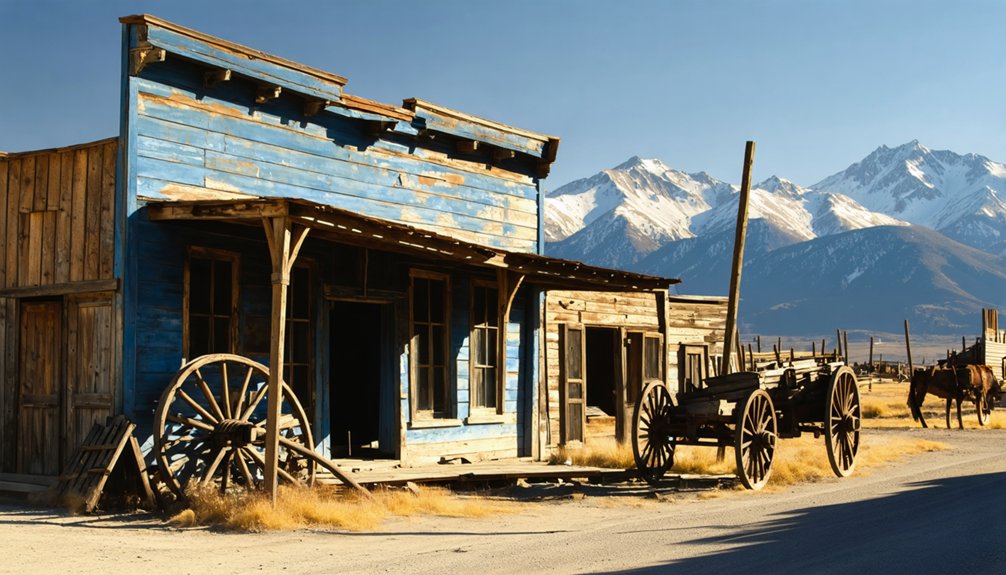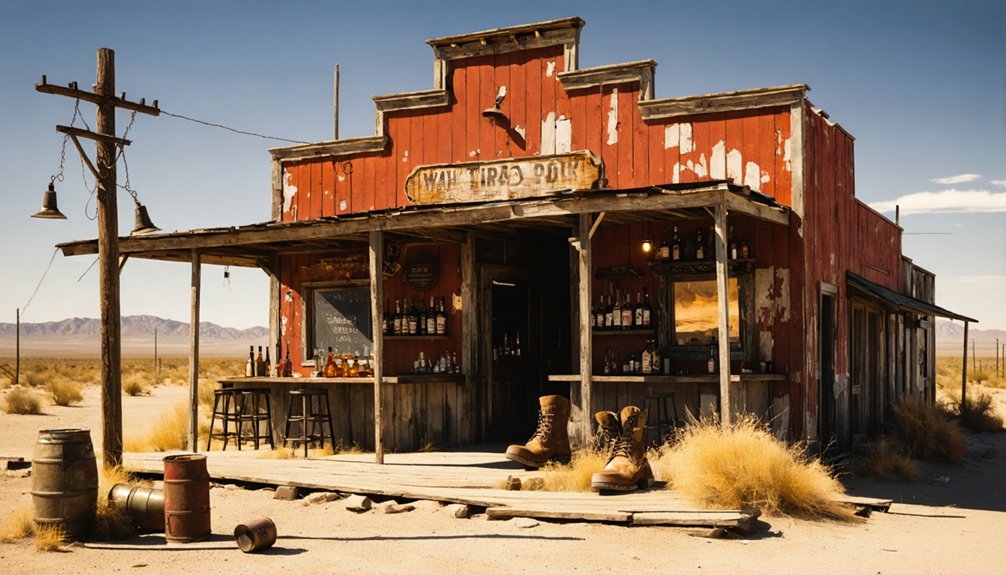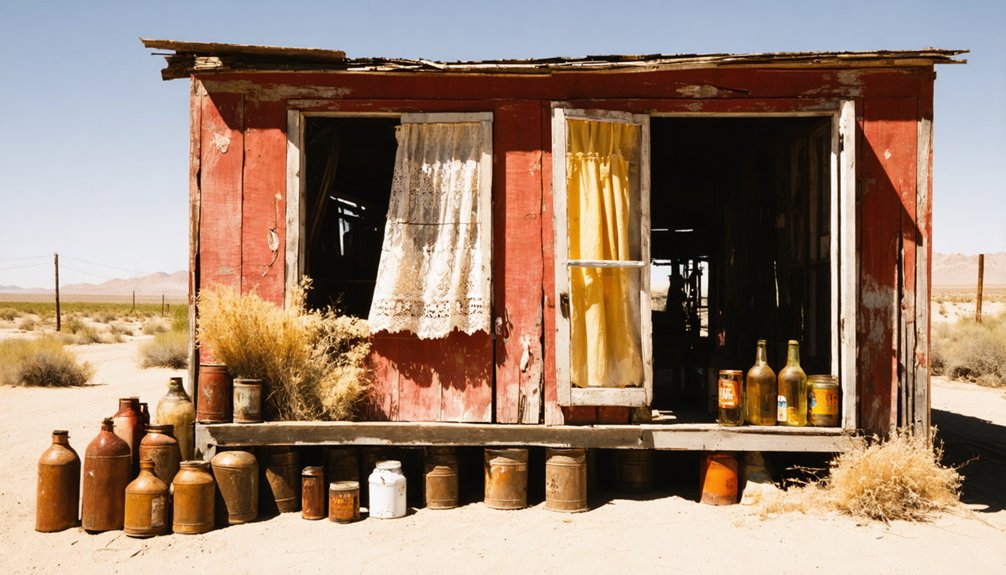
You’ll discover America’s most fascinating ghost towns in Texas and California, where abandoned buildings from 1880-1940 tell stories of boom-and-bust mining cycles. Sites like Bodie, California showcase perfectly preserved structures in “arrested decay,” protected by high elevation and arid climates that naturally “mummify” wooden buildings. Visit between May and October for ideal exploration conditions. These open-air museums offer unparalleled glimpses into authentic frontier life waiting to be uncovered.
Key Takeaways
- Bodie, California stands as a perfectly preserved gold rush ghost town with 110-170 buildings maintained in “arrested decay.”
- Arid desert climates naturally preserve ghost towns by preventing wood decay, inhibiting rust, and minimizing vegetation damage.
- Visit between May and October for ideal exploration conditions, with desert towns like Calico more comfortable during winter months.
- Ghost towns showcase architectural significance, mining artifacts, and period furnishings that provide tangible connections to frontier life.
- Practice responsible tourism by avoiding artifact removal, using local guides, and supporting preservation efforts in these historical treasures.
The Rise and Fall of America’s Western Ghost Towns
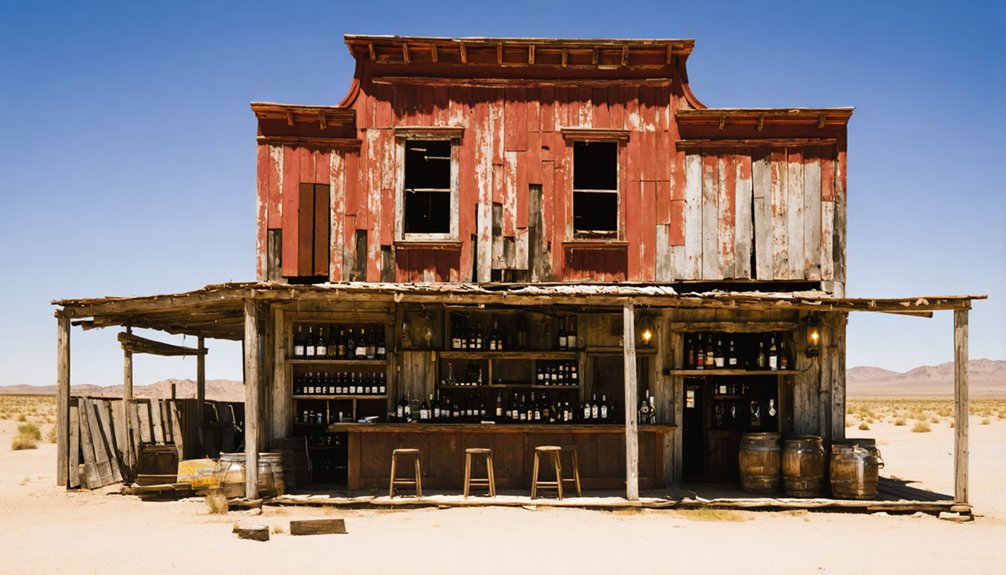
During America’s westward expansion between 1880 and 1940, the rapid emergence and subsequent abandonment of frontier settlements created the phenomenon we now recognize as Western ghost towns.
These once-thriving communities sprang up around singular economic opportunities—gold veins, silver deposits, cattle shipping points, or oil strikes. You’ll find these towns followed predictable boom-and-bust cycles, falling victim to resource depletion, market collapses, or changing transportation routes. Texas and California have the highest concentration of these abandoned settlements due to their rich mining and oil histories.
Western ghost towns stand as stark monuments to America’s transient prosperity—victims of depleted resources and shifting economic winds.
Many settlements like Rhyolite, Nevada boomed spectacularly with electric lights and stock exchanges before collapsing just as dramatically.
Places such as Beer City, Oklahoma thrived in regulatory gaps until law enforcement arrived. The town originally named White City was quickly renamed to reflect its reputation for alcohol-fueled activities that attracted cowboys and travelers alike.
Today, these abandoned outposts evoke profound cultural nostalgia while telling a stark story of economic shifts that left entire communities behind.
Bodie, California: The Ultimate Time Capsule
Among the West’s most perfectly preserved ghost towns, Bodie, California stands as an unparalleled time capsule of America’s gold rush era. Following W.S. Bodey’s 1859 gold discovery (whose name was later misspelled as “Bodie”), this mining settlement exploded after 1876 into a boomtown of nearly 10,000 residents. The site serves as a disambiguation reference point for people seeking information about various locations named Bodie.
You’ll find approximately 110-170 buildings maintained in “arrested decay,” showcasing authentic mining heritage from its $70 million gold production heyday. The town was known for its extreme lawlessness with over 60 saloons operating by 1880.
- Explore structures where notorious Bodie legends like “goodbye God, I’m going to Bodie” originated
- Walk streets once home to 65 saloons and nightly Wild West violence
- Examine America’s pioneering hydro-electrical center built in 1893
- Visit the infamous Boothill Graveyard for outcasts
- Photograph California’s official gold rush ghost town, attracting 200,000 visitors annually
Mining Boomtowns: From Prosperity to Abandonment
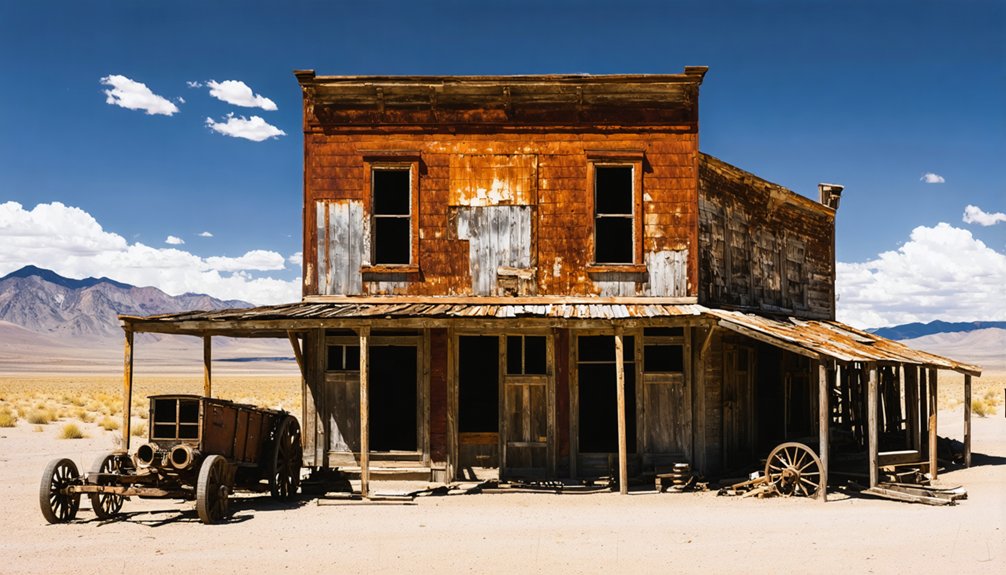
The American West’s boomtown phenomenon represents one of the most dramatic chapters in the nation’s economic history, with Bodie serving as just one example of the meteoric rise and fall that characterized hundreds of mining settlements.
You’ll find these towns initially thrived through placer mining before evolving to industrial-scale lode extraction as surface deposits depleted. Their economic impacts were transformative—places like Virginia City exploded from nothing to 25,000 residents, while the Comstock Lode’s output increased tenfold between 1859-1861. The wealth generated auxiliary industries from railroads to stock exchanges. Towns like Deadwood, South Dakota became infamous for their reputation of crime and corruption.
Yet prosperity proved fleeting. When ore deposits exhausted or metal prices crashed, towns emptied almost as quickly as they’d filled. Towns that managed to survive often transformed into resorts, particularly those located in scenic mountain settings like Aspen and Telluride.
Fires, financial panics, and the nomadic nature of frontier opportunity left behind the haunting ghost towns you can still explore today.
Exploring Well-Preserved Structures and Artifacts
Stepping into the weathered doorways of America’s best-preserved ghost towns offers you a tangible connection to frontier life that history books alone can’t provide.
Exploring the forgotten villages in New England reveals hidden stories etched in time, with remnants of once-thriving communities dotting the landscape. Each crumbling structure and overgrown path serves as a reminder of the lives lived and dreams pursued long ago. These places invite you to imagine the past, inspiring a deeper appreciation for the resilience of those who came before us.
The architectural significance of these sites ranges from Garnet’s innovative Bottle House constructed from 50,000 beer bottles to Bodie’s 110 structures maintained in “arrested decay” with original furnishings intact. Each location showcases different building techniques and artifact preservation methods that bring the frontier era to life.
- Calico’s museum houses thousands of mining tools and household items from its prosperous mining days.
- Bannack features over sixty historic buildings including a jail, church, and homes with period furnishings.
- Bodie’s strict preservation guidelines maintain authentic 19th-century living conditions.
- St. Elmo’s general store displays vintage merchandise and mining paraphernalia.
- The Bottle House in Garnet demonstrates creative material reuse with 50,000 bottles.
Virginia City stands as a testament to the incredible wealth generated by the Comstock Lode, funding significant development throughout the region. In Tombstone, visitors can witness realistic O.K. Corral reenactments that bring the famous 1881 gunfight between the Earps and Clantons to life.
How Geography and Climate Shaped Ghost Town Preservation
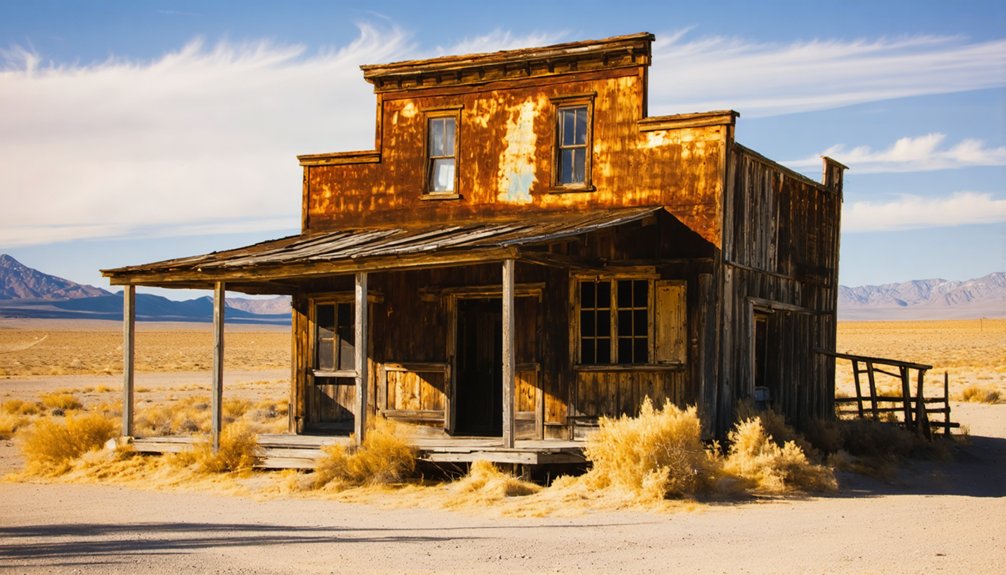
When you visit ghost towns above 5,000 feet elevation, you’ll notice remarkably intact structures due to the preservative effects of thinner air and reduced biological activity.
This elevation advantage combines with the arid conditions of many Western ghost towns, where low humidity effectively “mummifies” wooden buildings by preventing rot and decay.
Desert environments further protect artifacts through minimal precipitation, limited vegetation growth, and reduced microbial activity—essentially creating open-air museums that require minimal human intervention to maintain their historical integrity. Many once-thriving mining boomtowns were abandoned after resources were depleted, leaving behind well-preserved remnants of frontier life. Oregon’s landscape is particularly dotted with hundreds of settlements that now exist only as haunting reminders of boom-and-bust cycles throughout the state’s history.
Elevation Preserves Western Ruins
Throughout the high-elevation landscapes of the American West, ghost towns persist as physical monuments to boom-and-bust cycles that once defined frontier development. The elevation impact on these sites serves as both preservationist and destroyer, simultaneously isolating structures from human interference while subjecting them to harsh climate conditions.
You’ll find these mountainous ruins more intact than their lowland counterparts due to limited accessibility deterring vandalism and redevelopment. Preservation challenges intensify with altitude as freeze-thaw cycles accelerate structural deterioration.
- Remote high-altitude locations limit visitor access, reducing human-caused damage
- Snow accumulation provides seasonal protection while increasing structural load risks
- Economic abandonment occurred rapidly at elevation, preventing demolition or reuse
- Harsh climates discouraged resettlement, leaving original structures untouched
- Rugged terrain prevented agricultural conversion that might’ve erased town footprints
Desert’s Mummifying Effect
Desert environments function as natural embalming agents for the West’s abandoned towns, creating a preservation phenomenon distinct from their mountainous counterparts. When you explore these parched landscapes, you’re witnessing a natural mummification process in action.
The absence of moisture prevents wood decay and inhibits fungal growth that would otherwise consume structures within decades. Unlike humid regions where buildings quickly deteriorate, the arid climate halts rust formation on metal components while minimal rainfall preserves foundations.
You’ll notice the desert’s sparse vegetation means fewer root systems to compromise structural integrity. Without moisture-dependent microbial activity and wood-boring insects, deterioration slows dramatically.
These factors combine with geological stability to create perfect conditions for natural preservation, transforming abandoned settlements into time capsules rather than ruins—pristine windows into frontier life that remain remarkably intact despite the passage of time.
Planning Your Ghost Town Adventure: Best Times to Visit
Timing your visit to historic Wild West ghost towns requires careful consideration of seasonal conditions that can dramatically affect both accessibility and comfort.
Most towns are best explored during the peak season (May through October), when roads are clear and seasonal businesses operate. Desert locations like Calico, however, offer more comfortable exploration during winter months.
If you’re seeking solitude, plan early morning arrivals to avoid crowds typical of late afternoon hours.
- Visit mountainous towns like Bodie during summer to avoid snow-blocked roads
- Explore desert ghost towns in winter (December-February) to escape scorching heat
- Attend special events like Garnet Day (June) or Gold Rush Days (July) for historical immersion
- Arrive at opening time (typically 9AM) for the most authentic ghost town experience
- Check seasonal availability of guided tours, as many operate only during off-season
Photography Tips for Capturing Haunting Western Landscapes
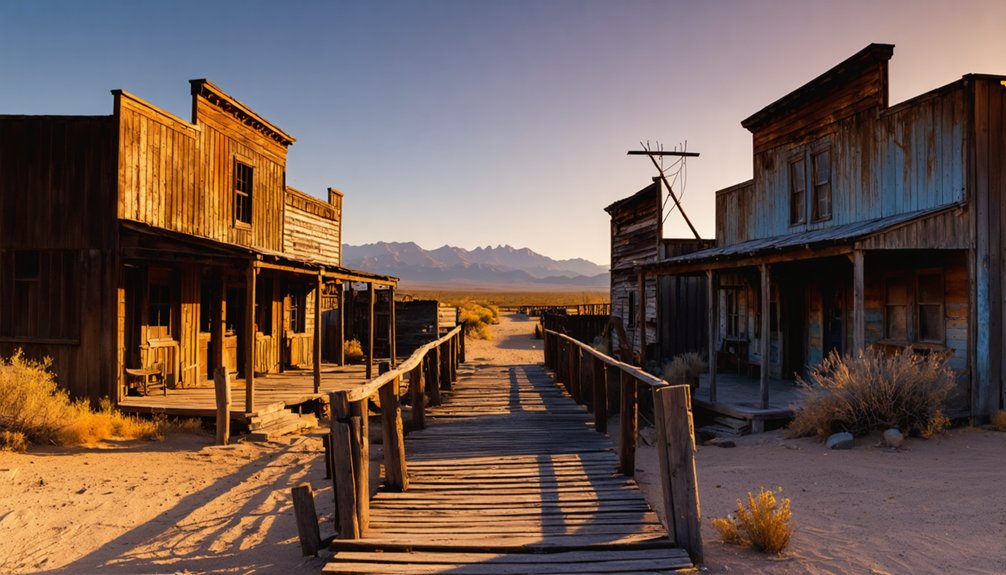
Capturing the soul of historic Wild West towns requires more than just pointing your camera at weathered buildings and rusty artifacts.
Consider wide-angle lenses to emphasize vast emptiness and shoot during golden hour when sidelight accentuates texture focus on dilapidated structures.
Incorporate lighting techniques that reveal the character of abandoned places—try long exposures under starlight or selective illumination with flashlights for dark interiors.
Frame compositions with natural elements to create isolation narratives, and utilize unusual angles from low or elevated positions to add visual intrigue.
Don’t overlook architectural details—peeling paint and rusted metal tell compelling stories.
For post-processing, consider black and white conversion to emphasize age and texture, but maintain authenticity through minimal adjustments.
Remember that weather elements like fog dramatically enhance the haunting qualities these forgotten landscapes naturally possess.
Responsible Tourism: Respecting Historical Sites and Artifacts
While exploring the remnants of America’s frontier past, visitors must balance their curiosity with ethical responsibility toward these irreplaceable historical treasures.
When you engage with local communities and preservation efforts, you’ll contribute to sustainable tourism that protects these sites for future generations. Cultural sensitivity begins with understanding the historical context and significance of each location you visit.
- Partner with knowledgeable local guides who provide authentic historical context
- Avoid touching or removing artifacts—even small items contribute to the site’s integrity
- Research appropriate behavior and dress codes before visiting culturally significant areas
- Support local businesses and craftspeople to guarantee economic benefits stay within communities
- Participate in volunteer opportunities that contribute to artifact preservation and site maintenance
Frequently Asked Questions
Are Ghost Towns Legally Protected From Looters and Vandals?
Like forgotten time capsules, ghost towns receive varied legal protections through trespassing laws, historic preservation efforts, and property rights. You’ll face criminal penalties if you damage or loot these protected sites.
Can Visitors Take Souvenirs or Artifacts From Ghost Towns?
No, you can’t legally take artifacts from ghost towns. Souvenir policies strictly prohibit removal from public lands, while private property requires written permission. Artifact preservation laws impose significant penalties for violations.
Do Any Ghost Towns Have Paranormal Activity Reports?
Yes, many ghost towns feature well-documented paranormal activity reports. You’ll find Bodie’s haunted buildings and various locations worldwide host paranormal investigations that substantiate centuries-old ghost stories with consistent visitor experiences.
Are There Guided Overnight Experiences in Ghost Towns?
Like moths to a forgotten flame, you’ll find limited guided tours of ghost towns, but true overnight camping experiences are exceptionally rare, with most paranormal excursions lasting only a few evening hours.
Which Ghost Towns Are Accessible for Visitors With Mobility Limitations?
Bodie and South Pass City offer the most accessible routes with paved paths and proper visitor facilities. You’ll find wheelchair-accessible visitor centers, while Bannack provides some paved areas for limited mobility exploration.
References
- https://www.sixt.com/magazine/travel/top-ghost-towns-us/
- https://explorethearchive.com/western-ghost-towns
- https://www.americansky.co.uk/travel-inspiration/top-10-wild-west-towns-in-america
- https://www.visitutah.com/things-to-do/history-culture/ghost-towns
- https://www.geotab.com/ghost-towns/
- https://mwg.aaa.com/via/places-visit/western-ghost-towns
- https://wildwestcity.com/old-west-ghost-towns/
- https://en.wikipedia.org/wiki/Lists_of_ghost_towns_in_the_United_States
- https://www.youtube.com/watch?v=SC60gEY39us
- https://www.atlasobscura.com/lists/americas-best-preserved-ghost-towns