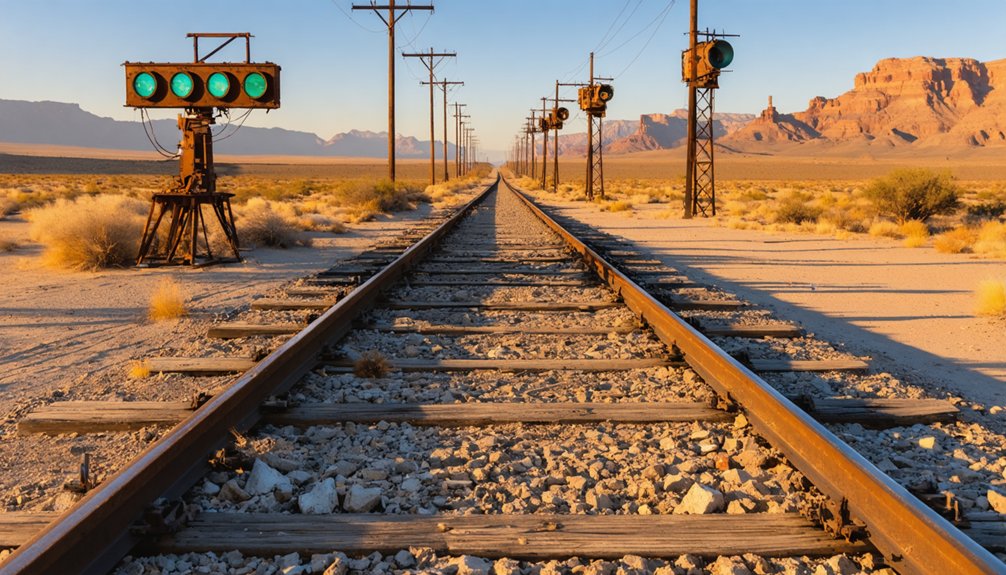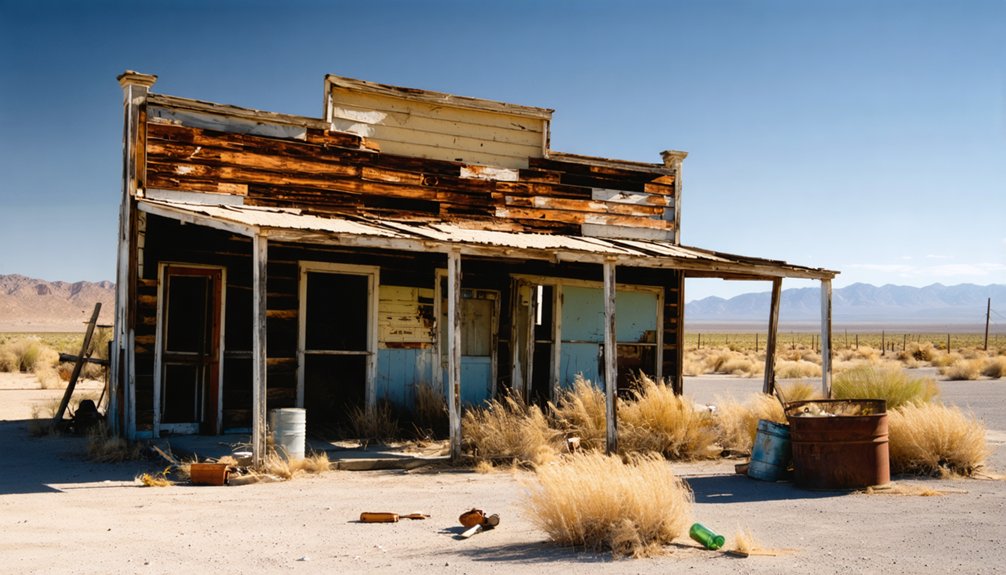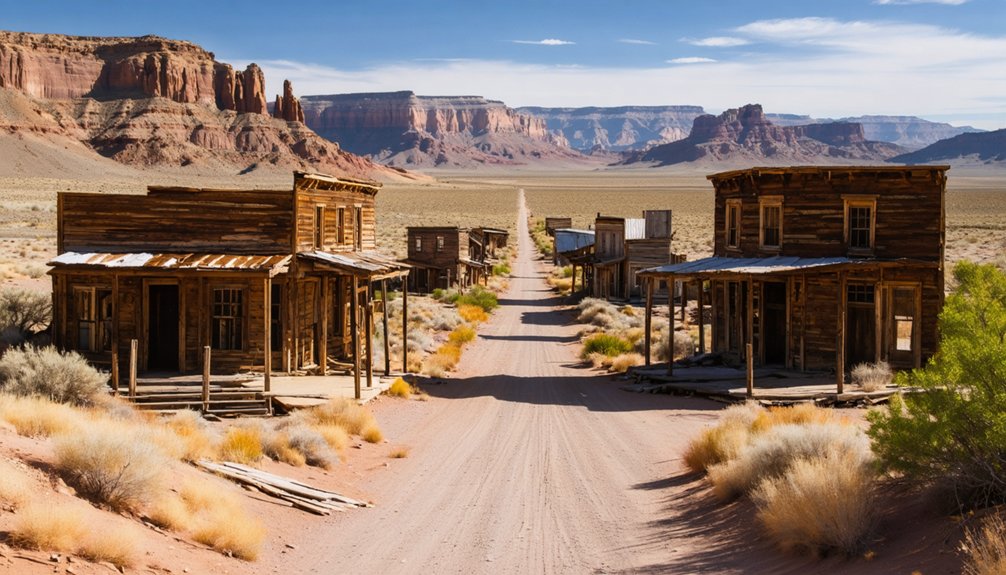
You’ll find between 100 and 275 ghost towns scattered across Arizona, depending on how strictly you define “abandoned.” Official counts range from 36 prominent sites identified by Arizona Highways to 131 documented locations, with Yavapai County holding the highest concentration at 24 towns. Most emerged during the late 19th-century mining boom and were deserted when ore deposits ran dry, typically within 5-10 years. These settlements span from southeastern sites near Tombstone to northwestern Route 66 corridors, and exploring their histories reveals fascinating stories of boom-and-bust cycles.
Key Takeaways
- Arizona contains between dozens and hundreds of ghost towns, depending on the definition and criteria used for classification.
- Geotab documents 131 ghost towns across Arizona, while Arizona Highways identifies 36 prominent sites worth visiting.
- Yavapai County has the highest concentration with 24 ghost towns, more than any other Arizona county.
- Ghost towns range from completely deserted sites to locations with small remaining populations still living there.
- Most towns originated during late 19th-century mining booms and were abandoned after ore depletion or economic collapse.
The Total Count of Arizona’s Ghost Towns
Determining Arizona’s exact ghost town count proves challenging due to varying definitions of what constitutes an abandoned settlement. You’ll find estimates ranging from dozens to hundreds across the state, depending on the criteria used.
Geotab’s mapping project identifies 131 documented ghost towns, while Arizona Highways focuses on 36 prominent sites in their detailed listings.
The reality lies somewhere between complete urban decay and partial abandonment—some towns are entirely deserted, while others maintain small populations.
Yavapai County leads with 24 ghost towns, many clustered within 25 miles of Prescott Valley.
These settlements face ongoing preservation challenges, as harsh desert conditions and vandalism threaten historical structures. Many of these abandoned communities originated in the late 19th century driven by mining booms, railroad development, or resource discoveries that attracted thousands of prospectors and workers.
You’re fundamentally exploring a landscape where mining booms and busts created a unique archaeological record of Arizona’s frontier past. Some locations like Castle Dome and Charlestown are now maintained by the BLM as historical sites, reflecting preservation efforts to protect these remnants of Arizona’s mining heritage.
Where Arizona’s Abandoned Towns Are Located
Arizona’s ghost towns cluster across five distinct geographic regions, each shaped by the mining booms that defined the state’s frontier economy.
Five geographic regions cradle Arizona’s ghost towns, each bearing the dusty fingerprints of mining booms that forged the frontier economy.
You’ll find Southeast Arizona’s densest concentration near Tombstone, where Courtland, Gleeson, and Pearce showcase cultural significance through preserved jails, schools, and cemeteries.
Southwest sites like Ruby and Castle Dome represent Arizona’s largest historical mining camps, with Ruby maintaining exceptional preservation in Coronado National Forest.
The Northwest-central corridor along Route 66 holds Oatman and Goldroad, while Central Arizona features Jerome and Goldfield near Phoenix.
Northern locations like Chloride stretch toward California’s border.
Preservation challenges intensify at remote sites—unpaved roads test vehicle capability, and exposure to elements threatens structures.
Ruby’s protected forest status demonstrates how geographic isolation sometimes aids conservation efforts you can still explore today.
Fort Bowie requires visitors to complete a 1.5-mile hike through desert terrain to reach the ruins of the former military post and stage station.
Many sites connect to surrounding states’ ghost towns, reflecting the broader southwestern mining heritage that extended beyond Arizona’s borders.
Mining Booms That Created Desert Communities
The General Mining Act of 1872 transformed Arizona’s rugged landscape by allowing prospectors to claim mineral deposits on public land for just $5 per acre, releasing waves of fortune-seekers who established communities across the territory.
You’ll find the Patagonia Mountains once held some of Arizona’s highest-grade silver, lead, and gold deposits, producing 79 percent of all territorial ore within three decades—worth over $2.5 trillion in today’s currency.
Wild west boomtowns like Harshaw swelled to 2,000 residents with over 200 buildings, while Ruby reached 1,200 inhabitants when Eagle-Picher Lead Co. arrived in 1926.
These desert landscapes supported sophisticated infrastructure: Ruby generated electricity via diesel engines and maintained a hospital and eight-grade school, proving frontier life wasn’t always primitive. The workforce consisted largely of Mexican Americans and Latinos, who earned approximately $2 per day—significantly less than their Anglo counterparts despite performing the same dangerous underground work. The Pacific Railroad connected mining operations to broader Western markets, facilitating the transport of ore and fueling economic growth across the region.
Ghost Towns You Can Still Visit Today
Arizona’s ghost towns range from privately owned tourist destinations like Ruby, which requires permits and admission fees, to government-maintained sites such as Gleeson’s schoolhouse museum operated by volunteers.
You’ll find some towns like Vulture City offering structured seasonal tours with amenities, while others like Courtland exist as scattered ruins accessible only through guided hikes.
Access varies greatly—some welcome year-round visitors along Route 66, while others like Fairbank provide self-guided tours daily with trails leading to the river and historic cemetery. Vulture City operates Thursday through Sunday with guided tours available on Sunday mornings. Remote locations near international borders face weather-related closures and property restrictions.
Privately Owned Tourist Attractions
Several Arizona ghost towns have transformed from abandoned relics into privately owned attractions where you can walk through authentic buildings and experience frontier history firsthand.
Vulture City near Wickenburg showcases extensive restoration efforts begun in 2017, preserving over 16 original 1800s structures including the infamous Hanging Tree with its famous stories of frontier justice.
You’ll find similar authenticity at Ruby near Nogales, featuring 50+ restored buildings, though it’s currently closed to public access.
Goldfield Ghost Town along Apache Trail offers underground mine tours, gunfight reenactments, and zipline adventures. Originally established in 1893 after gold discovery, the town was abandoned after five years but was reconstructed in the 1980s as a tourist attraction with replicas of an 1890s mining town.
Gold King Mine west of Sedona displays vintage equipment and mining camp artifacts for $5 admission. Self-guided tours allow you to explore a 1914 sawmill, mineshaft, and various historic buildings.
Stanton, managed by Lost Dutchman’s Mining Association since 1978, now includes RV hookups alongside preserved original structures, making ghost town exploration accessible and immersive.
Government-Maintained Historic Sites
Unlike privately operated attractions, government-maintained ghost towns offer unrestricted access to authentic historical sites preserved through federal and state stewardship. These locations exemplify historical preservation through Bureau of Land Management oversight, protecting Arizona’s mining heritage without entrance fees or restricted hours.
You’ll find exceptional cultural significance at these accessible sites:
- Swansea (La Paz County) – BLM-preserved smelter town from 1908, featuring explorable buildings 30 miles east of Parker
- Cherry (Yavapai County) – Semi-abandoned 1884 mining settlement showcasing progression to modern residential use
- Gleeson (Cochise County) – Preserved 1910 jail, school, and hospital ruins 16 miles from Tombstone
- Fort Bowie (Cochise County) – National Historic Site with Apache Wars military structures and interpretive trails
- Ehrenberg (La Paz County) – Colorado River port ruins open for archaeological exploration
Access Restrictions and Permits
While Arizona’s ghost towns offer compelling glimpses into mining-era history, you’ll encounter varying access restrictions depending on land ownership and management status.
Private properties like Ruby closed permanently in June 2024, while Vulture City operates seasonally with self-guided exploration October through May. You’re legally required to respect “No Trespassing” signs on private land to avoid liability issues.
Federal BLM and Forest Service lands generally allow public access, though permits requirements for state trust land vary by location.
You’ll need detailed topographic maps and offline GPS devices for remote sites lacking cell coverage.
Summer visits aren’t recommended due to temperatures exceeding 105°F and monsoon-season flash flooding risks.
Wildlife restrictions and artifact removal laws carry fines reaching $20,000, making advance research essential before exploration.
Famous Arizona Ghost Towns and Their Stories
* Gleeson: East of Tombstone, featuring a 1910 jail and original two-story schoolhouse
Why These Towns Were Left Behind
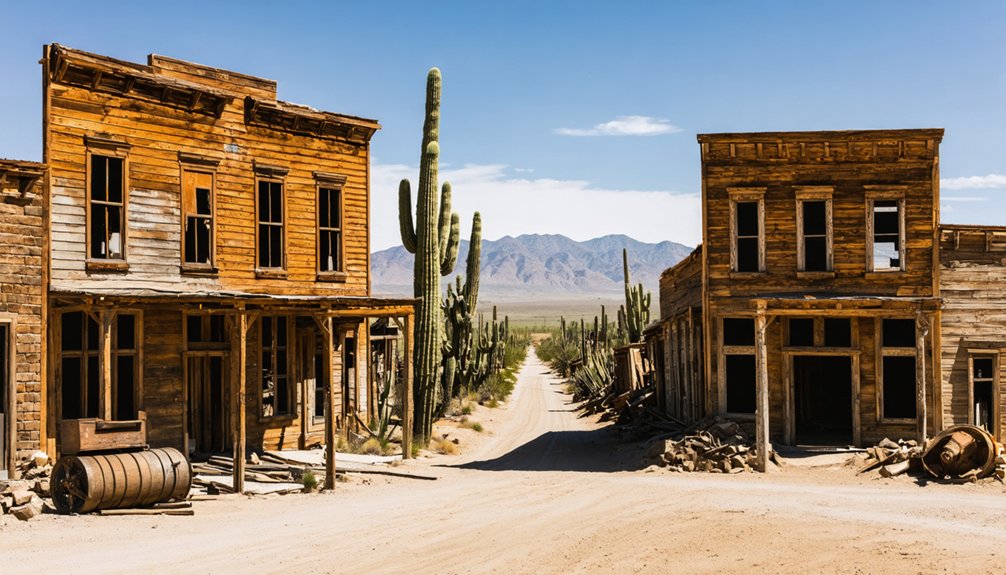
You’ll find that Arizona’s ghost towns share remarkably similar abandonment stories rooted in economic vulnerability and geographic isolation.
When high-grade ore deposits depleted within five to ten years of discovery, single-industry mining communities collapsed almost overnight—populations that once numbered in the thousands dwindled to fewer than 100 residents.
These remote settlements, already struggling with harsh desert conditions and difficult access, became economically unsustainable once the resources that justified their existence disappeared.
Mining Resources Ran Out
The depletion of mineral resources transformed Arizona’s bustling mining camps into abandoned settlements across a sixty-year span from 1860 to 1920. When ore veins ran dry, entire communities vanished almost overnight. You’ll find ghost town remnants scattered throughout the state, each telling a story of exhausted wealth and departure.
Mining History’s Most Dramatic Depletions:
- Bisbee produced $6 billion before shutting down in 1975, evolving into an arts community.
- Ruby generated $14 million until 1940, when complete abandonment left 25 structures standing.
- Vulture Mine yielded $200 million in gold before ore outcroppings vanished.
- Harshaw cycled through openings and closures tied to silver prices until final shutdown in the 1960s.
- Pearce declined through the 1930s, becoming a ghost by the late 1940s.
Over 200 towns experienced this cycle of boom and bust.
Economic Collapse and Decline
Exhausted ore veins didn’t work alone in creating Arizona’s ghost towns—economic forces beyond simple depletion delivered the final blow to countless communities. When precious metal prices collapsed, single-resource towns hemorrhaged populations overnight.
Jerome’s 1953 mine closure dropped residents below 100, while Bisbee shrank from 20,000 to 5,000 after 1974. Economic downturn hit hardest where diversification failed—Hayden and Winkelman lacked alternative industries when copper operations ceased.
Transportation shifts proved equally devastating. Route 66’s diversion from Oatman strangled traffic-dependent businesses, while railroad bypasses left ranching whistle stops isolated.
Resource depletion combined with infrastructure changes created perfect abandonment conditions. Environmental contamination from unregulated mine tailings forced EPA buyouts in lead-poisoned communities, while younger generations fled to Phoenix and Tucson, leaving aging populations behind in economically obsolete settlements.
Remote Locations, Limited Access
Geographic isolation sealed the fate of Arizona’s most remote ghost towns long before economic forces dealt their final blow. Desert solitude transformed once-thriving communities into restricted relics with hidden stories locked behind gates and miles of barren terrain.
Today’s access limitations reveal how geography continues controlling these settlements:
- Ruby sits near Nogales, off-limits to public exploration as of 2024, viewable only through binoculars from roadside vantage points
- Salero remains trapped behind private gates in Santa Cruz County, its 1884 assay office completely inaccessible
- Swansea deteriorates four miles south of Bill Williams River with no amenities for miles
- Two Guns embodies complete silence along forgotten Route 66 stretches
- Vulture City operates as controlled tourist attraction near Wickenburg, limiting spontaneous exploration
These barriers preserve authenticity while preventing the unrestricted discovery many seekers crave.
Frequently Asked Questions
Are There Any Ghost Towns in Arizona That Are Reportedly Haunted?
Yes, you’ll find haunted legends throughout Arizona’s ghost towns. Jerome’s particularly notorious for spiritual activity, with reports of paranormal encounters in its abandoned buildings. Vulture City and other mining settlements also claim ghostly residents from their violent, boom-and-bust pasts.
Can You Legally Take Artifacts or Souvenirs From Arizona Ghost Towns?
Ironically, while Arizona’s ghost towns offer freedom to explore, you can’t legally take artifacts or souvenirs. Federal and state laws impose strict artifact removal restrictions, with penalties reaching $100,000 fines and imprisonment for violations on public lands.
What Safety Precautions Should Visitors Take When Exploring Ghost Towns?
You’ll need proper safety gear like sturdy boots and sun protection, plus emergency preparedness supplies including water, first-aid kits, and GPS devices. Watch for wildlife, unstable structures, and extreme heat while respecting private property boundaries during your exploration.
How Do Ghost Towns Differ From Towns That Are Simply Abandoned?
Ghost towns are time capsules with historical preservation efforts maintaining mining-era structures, while simply abandoned towns show urban decay without notable heritage. You’ll find ghost towns attract tourists through restored buildings; abandoned sites lack economic legacy or protected remnants.
Are There Guided Tours Available for Arizona’s Most Remote Ghost Towns?
Yes, you’ll find guided exploration opportunities at remote Arizona ghost towns like Swansea, Harshaw, and Congress. These tours balance historical preservation with adventure, letting you experience abandoned mining sites through organized desert excursions and jeep trail access.
References
- https://www.arizonahighways.com/article/arizona-ghost-towns
- https://en.wikipedia.org/wiki/List_of_ghost_towns_in_Arizona
- https://www.visitarizona.com/like-a-local/4-arizona-ghost-towns-you-may-have-never-heard-of
- https://www.hipcamp.com/journal/camping/arizona-ghost-towns/
- https://www.youtube.com/watch?v=Hl0qxYmKPoE
- https://www.tripadvisor.com/Attractions-g28924-Activities-c47-t14-Arizona.html
- https://www.geotab.com/ghost-towns/
- https://www.shoparizonahighways.com/products/ghosttowns
- https://www.youtube.com/watch?v=Q18D1sHH2Cc
- https://storymaps.arcgis.com/stories/4c3d847adebf4b0580cc4e1f050d8173