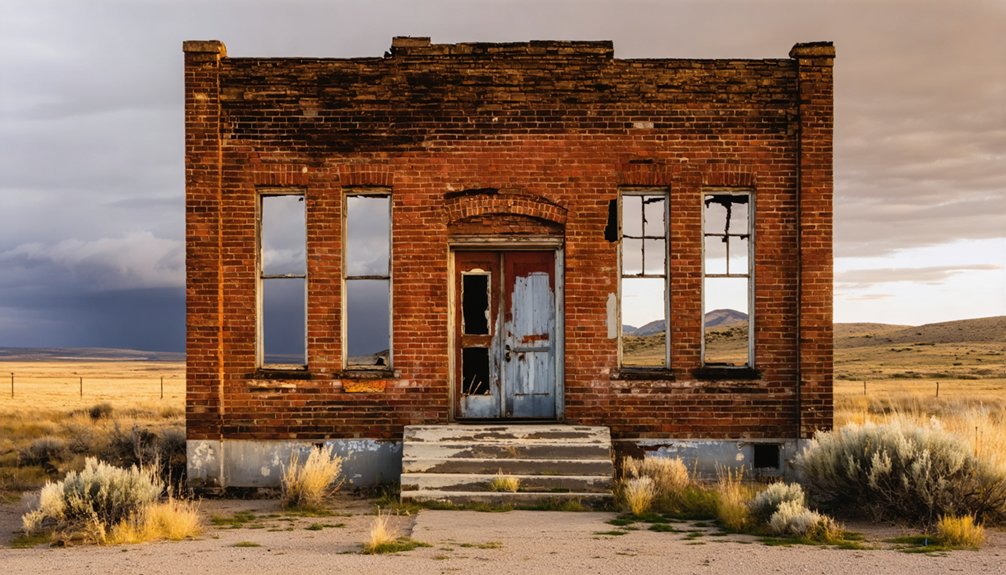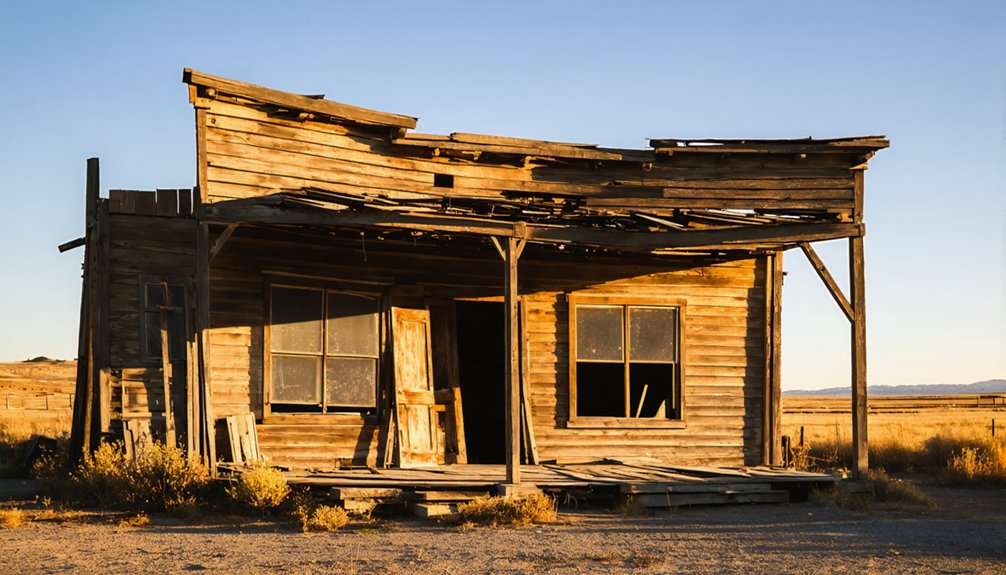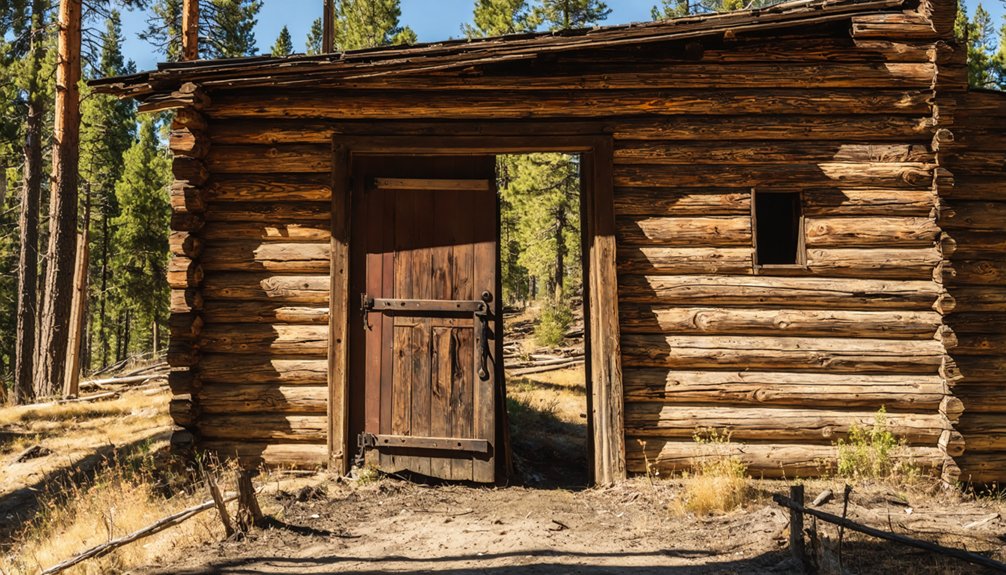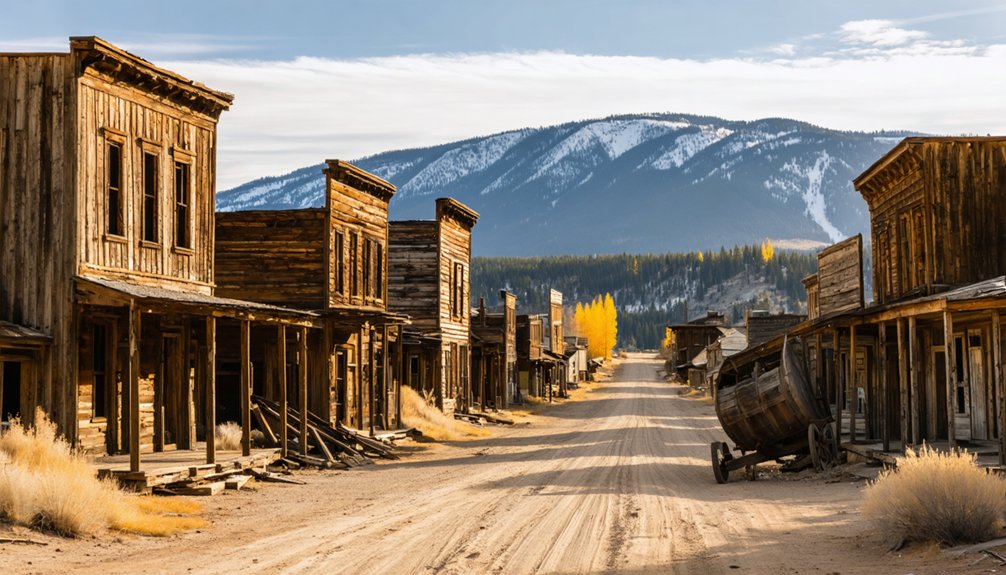
You’ll find approximately 700 abandoned mines and 1,800 physical safety hazard locations across Idaho, though the exact number of ghost towns depends on your definition—roughly a dozen well-preserved settlements like Silver City, Custer, and Bonanza remain accessible, while countless smaller mining camps have vanished entirely. These abandoned communities cluster in five distinct regions: the Boise Basin, Southwest Owyhee County, Salmon River Mountains, Central Idaho’s Alturas area, and Northern Idaho near Coeur d’Alene. The state’s mining heritage spans from the 1860s gold rush through the early 1900s, leaving behind everything from completely deserted towns to partially inhabited historic sites that still welcome visitors seeking Idaho’s fascinating boom-and-bust legacy.
Key Takeaways
- Idaho contains numerous ghost towns scattered across the state, with well-documented sites including Silver City, Custer, Bonanza, Gilmore, and Leesburg among others.
- Approximately 700 abandoned mines exist statewide, with about 1,800 physical safety hazard locations forming Idaho’s ghost town landscape.
- Ghost towns cluster in five distinct regions: Boise Basin, Southwest Owyhee County, Salmon River Mountains, Central Idaho, and Northern Idaho.
- Notable preserved ghost towns include Silver City with 75 structures, plus Placerville, Rocky Bar, Bayhorse, Shoup, and Gibbonsville.
- Most towns were abandoned due to exhausted ore deposits, railroad bypasses, natural disasters, and economic downturns during mining era decline.
Counting Idaho’s Abandoned Mining Communities
Since the 1862 gold discovery in Boise Basin sparked Idaho’s mining boom, thousands of mines have ceased operations across the state, leaving behind a scattered legacy of abandoned communities and hazardous sites.
You’ll find approximately 1,800 physical safety hazard locations spread across 700 abandoned mines, with roughly 9,000 mining-related contaminated sites statewide. These numbers reflect operations deserted by their operators without maintenance or valid claims, predating responsible reclamation policies.
The abandoned infrastructure includes dangerous open shafts extending hundreds of feet, horizontal adits stretching for miles, and unstable structures containing high levels of lead and metals. Waste rock, tailing piles, and contaminated soil at these sites can be tracked into homes or vehicles unknowingly, with dust-covered objects posing particular risks through hand-to-mouth contact.
While mining legends draw you to these ghost towns for recreational exploration, you’re encountering sites where former villages and cities once thrived alongside active claims that may still exist today. The Idaho Department of Lands works to identify and secure these dangerous mine openings through its Abandoned Mine Reclamation Act, prioritizing public health and safety by sealing deep mine entries and collaborating with federal agencies.
Where Ghost Towns Cluster Throughout the State
Idaho’s ghost towns concentrate in five distinct geographic clusters that mirror the state’s chronological mining development from 1862 through the 1880s.
Idaho’s ghost towns cluster in five geographic regions, each marking a distinct chapter in the state’s mining boom from 1862 to the 1880s.
You’ll find the earliest settlements in the Boise Basin, where Placerville, Pioneerville, and Idaho City preserve historical architecture from the 1862 gold rush.
Southwest, the Owyhee County cluster centers on Silver City, the state’s patriarch ghost town, with seven abandoned communities within 50 miles of Boise.
The Salmon River Mountains hold Leesburg (1866) and Bonanza (1878), showcasing mining relics in remote terrain.
Central Idaho’s Alturas region features Rocky Bar and Atlanta from the 1860s. These towns experienced population decline similar to other mining communities, with resources diverted for WWII causing many mines to close permanently in 1942.
Northern Idaho’s cluster includes Murray’s 1884-era buildings and the sparse remains of Eagle City near Coeur d’Alene, representing the state’s final major mining wave.
Why Prosperous Settlements Became Deserted
You’ll find that Idaho’s once-thriving mining towns collapsed through three primary forces between the 1860s and early 1900s. When ore deposits ran dry, thousands of miners abandoned camps within months—Florence lost 10,000 residents after its 1862 rush, while Kuster’s 300-person community dissolved by 1910 after exhausting 31 years of resources.
Railroad bypasses compounded these failures, as towns like Salubria died when tracks laid across the Weiser River spawned Cambridge instead.
Devastating fires accelerated the desertions that mining exhaustion had already begun. Economic pressures such as dropping gold prices stripped away financial backing that had sustained operations, forcing mill closures and driving remaining residents to seek opportunities elsewhere. The transient nature of these communities was evident in their formation, as miners—ranging from church members to merchants and laborers—moved like quicksilver from one gold deposit to another, creating temporary settlements that rarely developed permanent roots.
Mining Resources Ran Out
Most Idaho mining settlements met their demise when the very ore deposits that created them simply ran dry. You’ll find Silver City’s story typical—after exhausting its silver veins in the late 19th century, its 1,000 residents scattered.
Leesburg followed the same pattern, with miners abandoning camp by 1870 for richer prospects elsewhere.
The Warren Mining District exemplifies this cycle: after producing $15 million in placer gold from 1862 to 1935, yields declined sharply. Population dynamics shifted dramatically as resources depleted.
Chinese miners often inherited exhausted claims, working them for diminishing returns—by 1870, they comprised 3,853 of Idaho’s 6,579 miners.
Mining equipment fell silent across camps like Gilmore, where the last mine closed in 1929, and Rocky Bar, where dwindling yields drove prospectors elsewhere. Bayhorse in Custer County faced similar fate after its silver and lead mines ceased production, leaving behind a once-thriving community of 300 residents. Bonanza’s population declined as miners relocated to Custer following devastating grass fires in 1889 and 1897.
Devastating Fires and Disasters
While depleted ore veins sealed the fate of many camps, catastrophic fires and natural disasters delivered swifter death blows to Idaho’s mining settlements. Burke Canyon endured repeated avalanches—1890’s slide killed three residents, while 1910’s buried twenty.
The Great Fire of 1910, known as the Big Burn, claimed 87 lives and destroyed a third of Wallace as flames shot hundreds of feet skyward.
Black Bear suffered devastating blazes in 1904 and 1908, leaving only scattered cottages standing. The 1908 blaze started in a saloon and caused $75,000 in damages to the settlement.
Burke’s 1923 fire displaced 600 people and shuttered the Hecla mine for months. The inferno destroyed over 50 commercial buildings alongside most homes, leaving predominantly brick and stone structures standing amid the narrow canyon.
You’ll find that natural disasters accelerated economic decline across mining towns—when avalanches leveled wooden structures and fires consumed entire business districts, rebuilding costs often exceeded the community’s remaining value, hastening abandonment.
Economic Shifts and Isolation
Four economic factors sealed these towns’ fates:
- Railroad bypass isolation – Towns like Camas and Atlanta couldn’t compete without transportation links.
- Ore exhaustion – Bayhorse and Rocky Bar collapsed when mines played out.
- Failed economic diversification – Mormon settlements like Chesterfield (1879-1928) and mining-dependent Burke (closed 1991) couldn’t pivot to new industries.
- Population drain – Warren shrank from 5,000 residents to 12-16 year-round inhabitants.
Without adaptable economies, Idaho’s 26 documented ghost towns couldn’t survive.
Silver City: Idaho’s Premier Ghost Town Destination
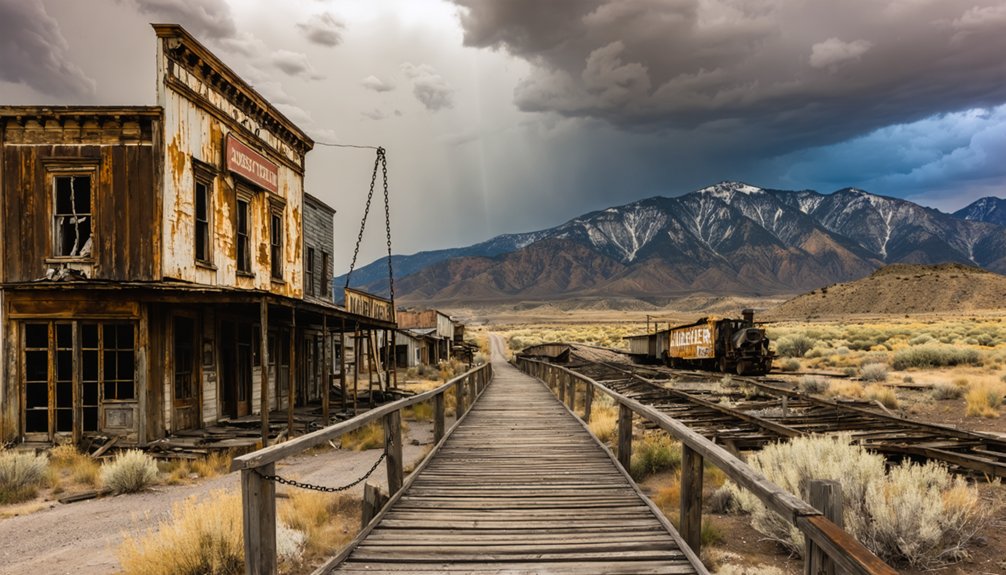
Silver City stands as Idaho’s most historically significant ghost town, having served as the Owyhee County seat from 1866 to 1934 after its founding in 1864 following silver discoveries on War Eagle Mountain.
You’ll find approximately 75 structures dating from the 1860s to early 1900s that year-round residents actively maintain, including the 1869 Masonic Lodge, 1898 church, and a school museum.
The town that once housed 2,500 residents, 300 homes, and 75 businesses during its 1880s peak now operates three businesses, with the Idaho Hotel welcoming summer tourists to experience this preserved mining settlement.
Peak Population and Prosperity
During the 1860s boom, Silver City exploded into one of Idaho Territory’s most significant settlements, with population estimates reaching as high as 3,500 residents in the early years before a rapid decline set in.
By 1870, the census recorded 960 residents, though numbers fluctuated as mining fortunes shifted.
The town’s prosperity manifested in remarkable infrastructure:
- Commercial District: 75 businesses thrived, including six general stores, eight saloons, and two hotels serving the bustling community.
- Local Architecture: 300 homes lined a dozen streets, with historic landmarks including Idaho Territory’s first telegraph office.
- Mining Operations: Over 250 mines and twelve ore-processing mills extracted more than $60 million in precious metals.
- Modern Amenities: Telephones arrived by 1880, followed by electricity in the 1890s—before Idaho achieved statehood.
Preserved Buildings and Structures
Unlike most Western ghost towns reduced to foundations and rubble, Silver City stands as an exceptional proof of 19th-century mining architecture, with approximately 70 original buildings from the 1860s through early 1900s still intact. You’ll find these structures maintain their uncommercialized character, with building restorations respecting original construction methods.
The town’s off-grid mountain location and lack of natural disasters enabled architectural preservation that earned it a place on the National Register of Historic Places in 1972.
You can explore operational landmarks including the Idaho Hotel, relocated from Ruby City in 1866, which offers seasonal tours. Mine shafts remain visible throughout town, with the hotel reportedly containing tunnel entrances to abandoned workings below.
The Sommercamp Saloon (1866), Odd Fellows Hall (1870s), and Standard School (1892) demonstrate the settlement’s diverse infrastructure, all authentically preserved without commercial exploitation.
Visiting Silver City Today
Perched 6,000 feet above sea level in the remote Owyhee Mountains, this exceptionally preserved mining settlement requires dedication to reach but rewards visitors with an authentic 19th-century experience unavailable at commercialized historic sites.
You’ll navigate a challenging rocky dirt road for approximately ninety minutes from Nampa, but seventy-five original structures await your exploration.
What You’ll Find:
- Summer Operations: The Idaho Hotel and three businesses serve tourists seasonally.
- Living History: Modern resident insights reveal continuous occupation since 1864, challenging typical ghost town narratives.
- Architectural Treasures: Tour the 1869 Masonic Lodge, 1898 church, and museum-equipped schoolhouse.
- Preservation Challenges: All buildings remain privately owned, requiring respectful exploration while year-round inhabitants maintain this National Register site.
Custer, Bonanza, and Other Mining Camp Remnants
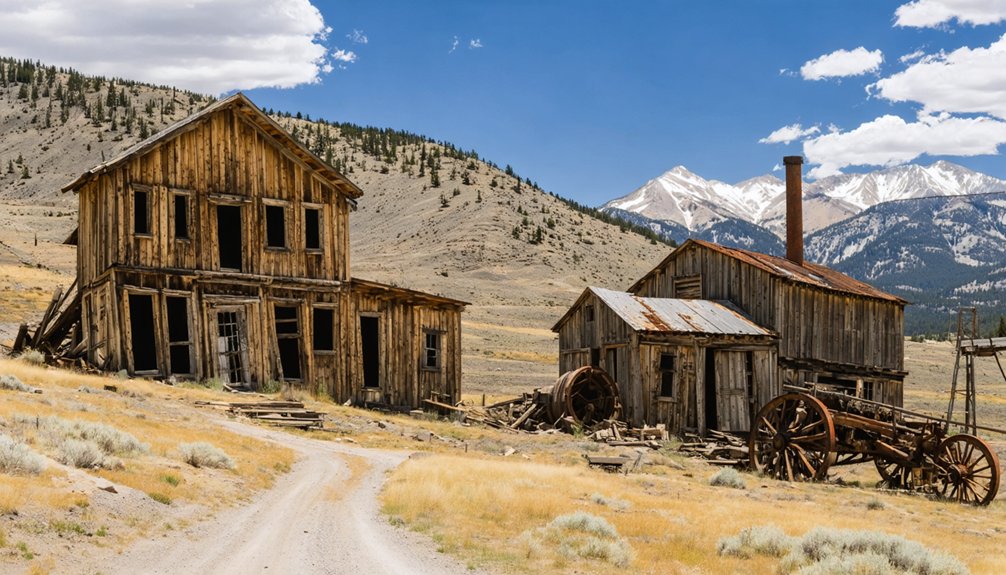
Deep in Idaho’s rugged backcountry, Custer Ghost Town stands as one of the state’s most accessible windows into the late 19th-century gold rush. You’ll find abandoned infrastructure throughout Custer County, where thousands once worked the mines using historical mining techniques.
Nearby Bonanza preserves its silver mining legacy, complete with the early 1900s Sunbeam Dam that powered operations.
Venture into Lemhi County and you’ll discover Gilmore near the Montana border, alongside Leesburg’s 1866 relics and Bayhorse’s weathered structures.
The list extends to Shoup, Gibbonsville, and Ulysses, each telling its own story.
Elmore County’s Rocky Bar, Boise County’s Placerville, and Banner’s log cabins add to Idaho’s extensive collection.
Silver City remains the patriarch among hundreds of ghost towns scattered across the state’s mountains.
The Gold Rush Timeline That Built and Buried Towns
Idaho’s ghost towns didn’t simply appear—they rose and fell in distinct waves that mirror the state’s gold rush chronology.
You’ll find demographic trends clearly charted through these pivotal moments:
- 1860-1862: The Clearwater Rush – Pierce’s October 1860 discovery brought Idaho’s first major influx, with experienced California miners flooding northward by 1861.
- 1862-1863: Boise Basin Explosion – August 1862’s Boston Bar strike created Pioneerville and Idaho City within months, producing millions in gold by year’s end.
- 1863-1864: Southern Expansion – Feather River and Owyhee discoveries shifted populations southward, with Atlanta’s 1864 lode offering rare stability.
- Post-1864: The Quick Collapse – Within ten years, placers exhausted. No artificial intelligence was needed to predict the outcome: when gold disappeared, so did entire communities.
Visiting Idaho’s Most Accessible Abandoned Sites
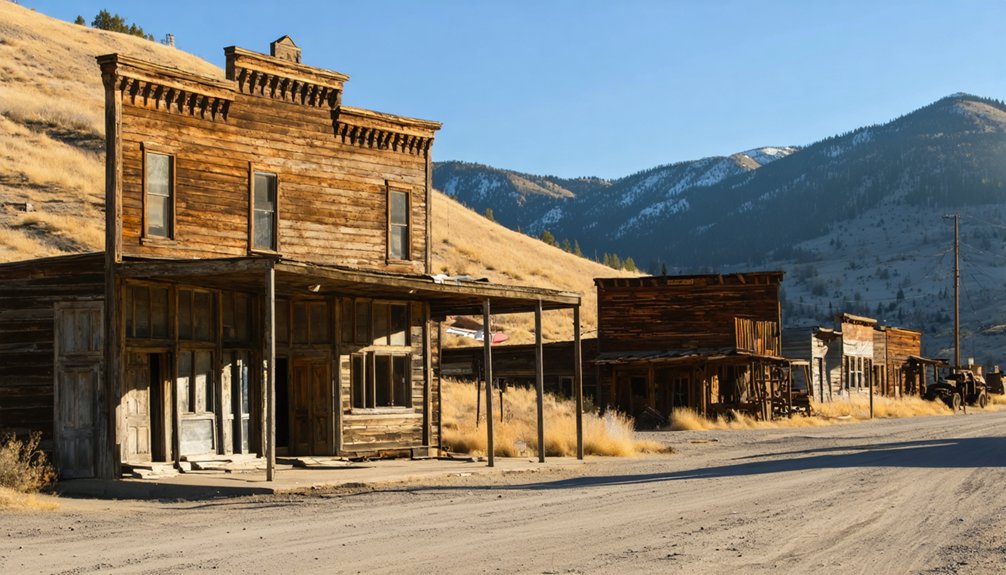
While most Idaho ghost towns require serious four-wheel-drive commitment, five exceptional sites offer documented history without the backcountry risk.
You’ll find Custer Ghost Town‘s artistic restoration most accessible via Highway 75, where summer guides interpret the Yankee Fork Gold Dredge‘s cultural significance.
Bonanza sits ten miles from paved roads with wheelchair-accessible facilities, preserving its unrestored authenticity.
Bayhorse showcases Western America’s best-preserved mining infrastructure within Salmon-Challis National Forest—stone buildings and charcoal kilns intact since the 1870s.
Silver City’s 300 original structures demand weather preparation but reward you with Owyhee County’s most complete 19th-century streetscape.
Gilmore requires planned trips through Lemhi Valley’s gravel roads, offering fishing and wildlife viewing alongside historical mining exploration.
From Boom to Bust: Population Shifts Over 150 Years
Gold fever transformed remote Idaho valleys into population centers almost overnight, then abandoned them just as quickly. You’ll find dramatic shifts revealing the transient nature of mining economies:
- 1860s Explosive Growth: Florence swelled to 10,000 miners by 1862, while Idaho City survived 50 murders in months—lawless prosperity that couldn’t last without sustainable resources.
- 1870s-1890s Peak Infrastructure: Silver City installed telephones by 1880 and electrified in the 1890s, operating 12 ore mills that extracted over $60 million before decline.
- Early 1900s Collapse: Bonanza and Custer emptied by 1911, Bayhorse abandoned in 1915—once-thriving communities reduced to seasonal tourism destinations and archaeological excavations.
- Wartime Revival: Stibnite’s antimony mines boomed to 1,500 residents during WWII, then closed permanently in 1952.
Frequently Asked Questions
Are There Any Legal Restrictions on Exploring Idaho’s Ghost Towns?
Yes, you’ll face legal restrictions when exploring Idaho’s ghost towns. Property ownership limits access since most buildings are privately owned, and active mining claims often overlap sites, prohibiting unauthorized entry without permission from landowners.
Which Ghost Town Is Considered the Most Dangerous to Visit?
Florence stands as Idaho’s most dangerous ghost town to visit. You’ll encounter unstable abandoned structures amid haunted legends of daily shootings that killed thousands. The extreme violence and brutal winters that devastated this 1860s outlaw haven still threaten modern explorers today.
Can You Buy Property in Idaho’s Ghost Towns?
You’ll find real estate opportunities vary considerably across Idaho’s ghost towns. Property ownership regulations depend on whether locations remain privately held, state-controlled, or historically preserved. Most purchases require investigating county records and contacting current owners directly for availability.
What Artifacts Are Commonly Found in Idaho’s Abandoned Mining Towns?
You’ll discover mining relics like ore carts, stamp mills, and twisted railroad tracks throughout Idaho’s ghost towns. Cultural remnants include rusted household items, vintage crockery, blue glass shards, pioneer cemeteries, and remarkably preserved 19th-century buildings with period antiques inside.
Do Any Ghost Towns Have Remaining Descendants of Original Residents?
You won’t find documented descendants living near Idaho’s ghost towns like Chesterfield, Silver City, Bonanza, or Leesburg. Historical preservation and ghost town tourism efforts focus on structures rather than tracing original residents’ family lines through genealogical records.
References
- https://www.thegoldminehotel.com/ghost-towns-and-haunted-places-in-idaho
- https://outerrealmz.com/the-amazing-ghost-towns-of-central-idaho/
- https://idaho-forged.com/idahos-ghost-towns-eerie-yet-approachable/
- https://history.idaho.gov/wp-content/uploads/2018/08/0064.pdf
- https://cdapress.com/news/2024/sep/05/over-the-hill-exploring-north-idahos-very-own-ghost-town/
- https://en.wikipedia.org/wiki/List_of_ghost_towns_in_Idaho
- https://visitidaho.org/things-to-do/ghost-towns-mining-history/
- https://www.tripadvisor.com/Attractions-g28933-Activities-c47-t14-Idaho.html
- https://www.idl.idaho.gov/mining-minerals/abandoned-mine-lands/
- https://www.idahogeology.org/pub/Staff_Reports/2014/S-14-4_Intro_Summary.pdf