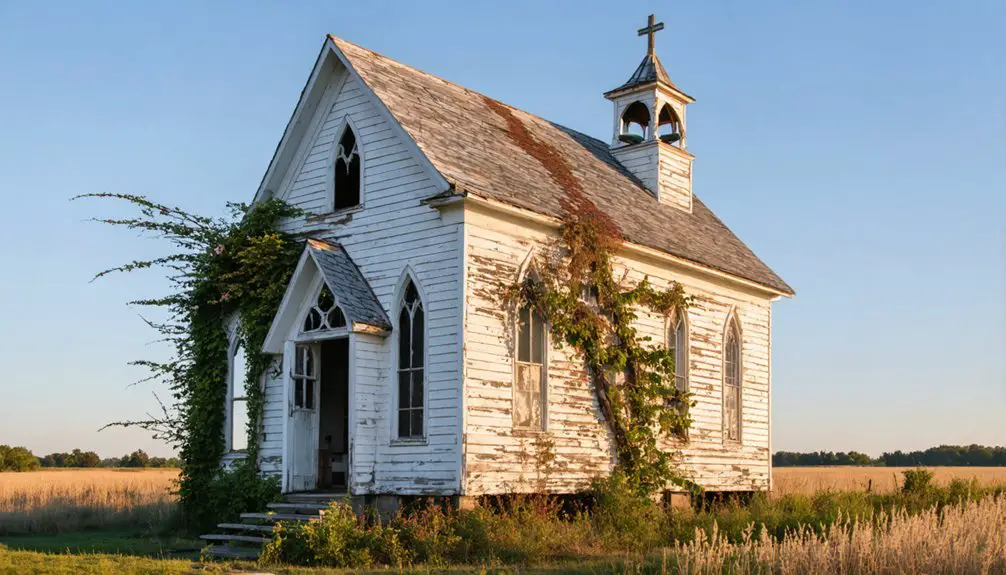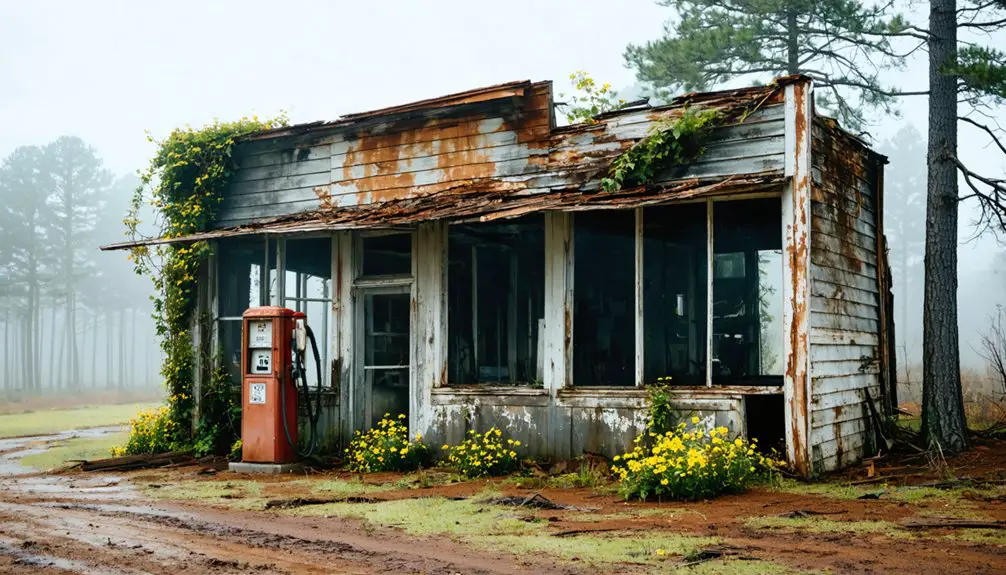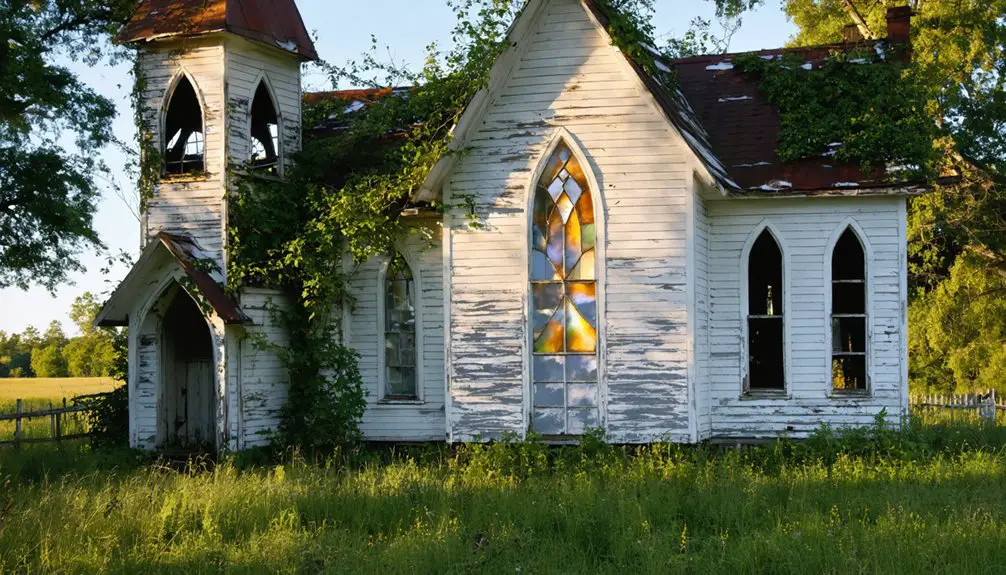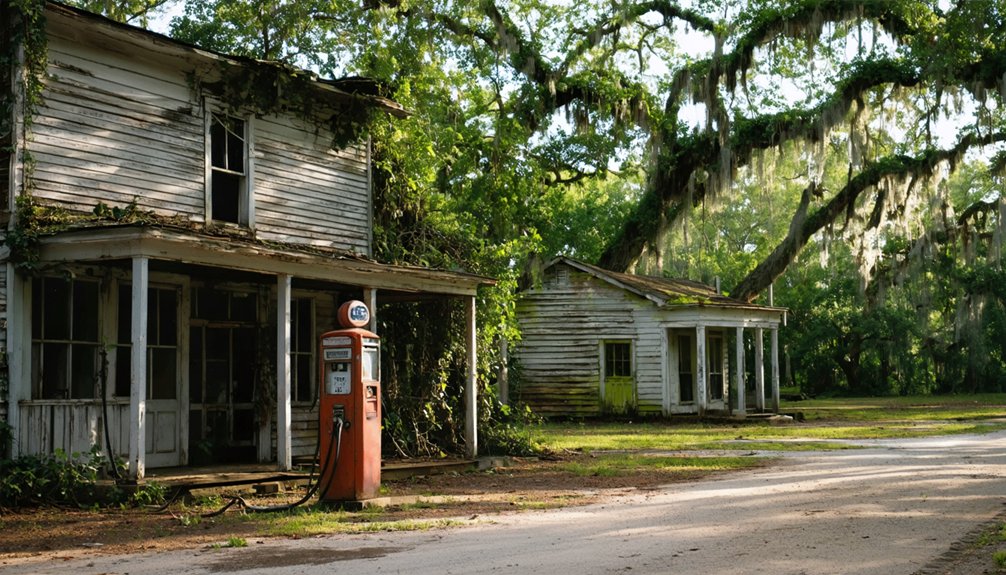
You’ll find between 27 and 52 documented ghost towns scattered across Mississippi, though the exact count remains uncertain since no official agency maintains a *thorough* registry. The variation depends largely on how you define “abandoned”—whether you’re counting completely deserted settlements or including towns experiencing severe decline. Rodney stands as the state’s most historically significant example, while communities like Tchula and Friars Point currently teeter on the edge of abandonment. This mid-range count reflects Mississippi’s agricultural decline rather than the mining boom-bust cycles that created ghost towns elsewhere, and understanding these patterns reveals broader insights into the state’s economic transformation.
Key Takeaways
- Mississippi has approximately 27 documented ghost towns, though estimates vary from 27 to 52 sites depending on the source.
- No official agency maintains a comprehensive registry, making exact counts difficult due to fragmented data and varying definitions.
- Rodney, founded in the 1820s, is Mississippi’s most historically significant and accessible ghost town with preserved churches and cemetery.
- Mississippi ranks mid-range nationally with fewer ghost towns than western states like Texas (511) or California (346).
- Towns like Tchula, Friars Point, Oakland, and Crenshaw currently face decline and risk becoming future ghost towns.
The Official Count of Mississippi’s Abandoned Settlements
Determining Mississippi’s precise number of ghost towns proves elusive, as no official governmental agency maintains a definitive statewide registry of abandoned settlements.
You’ll find conflicting estimates ranging from 27 documented sites in national surveys to Wikipedia’s incomplete inventory of 52 named locations.
The absence of standardized definitions complicates accurate tallying—historians don’t universally agree on what constitutes a “ghost town” versus a declining community.
Economic decline, particularly following railroad route changes and river commerce shifts, created these abandoned settlements across Mississippi’s landscape.
Environmental factors, including devastating floods and erosion along waterways, accelerated abandonment in vulnerable areas.
Notable examples include Rodney, founded in the 1820s, which declined after the Mississippi River changed course and was further damaged by fires.
These ghost towns are spread across different counties throughout the state, with geographical distribution varying based on historical transportation routes and economic factors.
Without centralized documentation, you’re left relying on fragmented historical records, census data comparisons, and user-submitted databases that acknowledge their own incompleteness in capturing Mississippi’s full ghost town inventory.
Most Famous Ghost Towns Worth Visiting
Among Mississippi’s abandoned settlements, Rodney stands as the state’s most historically significant and accessible ghost town. You’ll find this once-thriving port twelve miles from Highway 61 in Lorman, where 4,000 residents conducted commerce through two banks and newspapers by 1860.
The 1828-founded Rodney Presbyterian Church remains the sole original structure, its red-brick Federalist architecture displaying a Civil War cannonball from Union gunboat fire. Preservation efforts continue at Mt. Zion Baptist Church (circa 1850-1851), recently restored before 2011 flooding damaged its Greek Gothic design.
You can explore Rodney Cemetery’s three acres containing 200+ graves dating to 1828. Though haunted legends attract paranormal investigators year-round, winter visits prove safer than snake-prone summers when traversing fallen tombstones and overgrown paths throughout this Rodney Center Historic District. The town’s decline accelerated when the Mississippi River changed course in 1870, causing the loss of Rodney’s critical port commerce. General Zachary Taylor purchased land near Rodney in 1842 and named Cypress Grove Plantation, which he visited frequently before becoming president.
Why These Communities Were Abandoned
Mississippi’s ghost towns emerged through five interconnected forces that systematically dismantled entire communities between the 1860s and early 1900s.
You’ll find river channel shifts isolated ports like Fort Adams and Napoleon, while steamboat decline devastated Rodney’s 4,000 residents.
Civil War destruction obliterated Cotton Gin Port in 1863 and left Augusta in ruins.
Railroad companies bypassed towns like Eaton and Edsville, collapsing their commerce hubs overnight.
Economic hardship crippled farming communities, making Jefferson County the nation’s fourth-poorest.
Delta flooding evacuated Grand Gulf and eroded Artonish completely.
The Great Depression shuttered mills across the state, resulting in the complete abandonment of lumber towns like Piave and other timber-dependent communities.
Unlike Western ghost towns built around mineral deposits, Mississippi’s abandoned settlements represent cultural heritage tied to agricultural commerce and riverine transportation.
These forces converged ruthlessly, erasing entire municipalities from maps within single generations.
Today, some locations preserve old buildings standing while others exist only as empty fields marked by historical plaques.
Towns on the Brink of Becoming Ghost Towns
While Mississippi’s historic ghost towns vanished within single generations, contemporary communities face a slower erosion that threatens similar outcomes.
You’ll find economic decline transforming Delta towns like Tchula and Friars Point, where empty storefronts outnumber operating businesses.
Infrastructure decay characterizes places like Oakland and Crenshaw, with crumbling roads and failing utilities mirroring Jackson’s 2022 water crisis that persists into 2025.
Alligator ranks among America’s poorest communities, while Gattman’s population has shrunk so drastically that one family’s departure could erase the village entirely.
Tax base erosion prevents municipalities from maintaining essential services, creating a downward spiral.
Young residents leave permanently, accelerating population loss that drops below sustainability thresholds.
Communities like Sardis feature underused natural spaces and silent landmarks such as closed movie theaters and community centers, weakening the social bonds that once held these towns together.
Jackson’s median income hovers around $43,000 with 25% in poverty, compounding the challenges faced by Mississippi’s struggling municipalities.
These towns haven’t died yet, but archival evidence suggests they’re following documented patterns of community collapse.
How Mississippi Compares to Other States
With 27 documented ghost towns, Mississippi occupies a middle position in the national landscape of abandoned communities, falling well below the staggering counts of western states while surpassing most of its southeastern neighbors.
Mississippi’s 27 ghost towns place it between western boom-bust states and its more stable southeastern counterparts.
You’ll find Texas dominates ghost town tourism with 511 sites, followed by California’s 346, while Mississippi’s count exceeds Tennessee’s 12, Kentucky’s 13, and Louisiana’s 17.
This abandoned settlement history reflects different development patterns—western states experienced rapid boom-and-bust mining cycles, creating hundreds of deserted settlements, whereas Mississippi’s agricultural economy produced fewer dramatic abandonments.
The state’s 27 documented locations position it above North Dakota’s 23 but below Nebraska’s 31, demonstrating how economic foundations shaped community permanence. Across the nation, over 4,530 ghost towns dot the American landscape, with every state containing at least one abandoned settlement.
Mississippi’s ghost towns represent controlled decline rather than catastrophic desertion. Modern ghost town potential is measured through indicators like population decline, rental vacancy rates, and drops in new building permits, which help identify cities at risk of becoming tomorrow’s abandoned communities.
Frequently Asked Questions
Are Mississippi’s Ghost Towns Safe to Explore and Photograph?
You’ll find Mississippi’s ghost towns generally safe for exploration and photography, though you should watch for structural hazards and overgrowth. Their historical significance attracts visitors, while urban legends add intrigue—just respect preservation efforts and navigate deteriorated infrastructure carefully.
Can You Buy Property in Mississippi’s Abandoned Ghost Towns?
You can buy property in Mississippi’s ghost towns through standard real estate regulations and county auctions, though property investment guidelines require title searches, zoning compliance, and environmental assessments—while flood risks and heir disputes complicate transactions.
What Artifacts Remain in Mississippi’s Ghost Towns Today?
Time’s fingerprints mark these landscapes. You’ll discover historical artifacts like crumbling courthouse basements, weathered tombstones, and church ruins across archaeological sites. Cemetery markers, building foundations, and overgrown street paths document Mississippi’s abandoned settlements, preserving their untold stories for exploration.
Do Any Mississippi Ghost Towns Have Reported Paranormal Activity?
You’ll find spooky legends surrounding Rodney’s overgrown cemetery and Brewton’s outlaw-burned courthouse, though documented haunted stories remain scarce. Most paranormal claims stem from eerie atmospheres rather than verified supernatural encounters in Mississippi’s abandoned settlements.
Which Ghost Towns Have the Best Preserved Original Buildings?
Rodney offers you the best-preserved buildings among Mississippi’s ghost towns, with its 1832 Presbyterian Church showcasing exceptional historical preservation. You’ll find significant tourism potential here, as active restoration efforts maintain authentic Federal-style architecture and Civil War artifacts.
References
- https://kids.kiddle.co/List_of_ghost_towns_in_Mississippi
- https://en.wikipedia.org/wiki/List_of_ghost_towns_in_Mississippi
- https://www.loveexploring.com/gallerylist/188219/the-us-state-with-the-most-ghost-towns-revealed
- https://mississippifolklife.org/articles/haunted-by-a-ghost-town-the-lure-of-rodney-mississippi
- https://freepages.rootsweb.com/~gtusa/history/usa/ms.htm
- https://www.onlyinyourstate.com/experiences/mississippi/ms-ghost-towns
- https://www.youtube.com/watch?v=9kYDx9ZR7Fo
- https://www.geotab.com/ghost-towns/
- https://www.tripadvisor.com/Attraction_Review-g28945-d10045204-Reviews-Rodney_Ghost_Town-Mississippi.html
- https://www.youtube.com/watch?v=VtwaqLs2Lf0