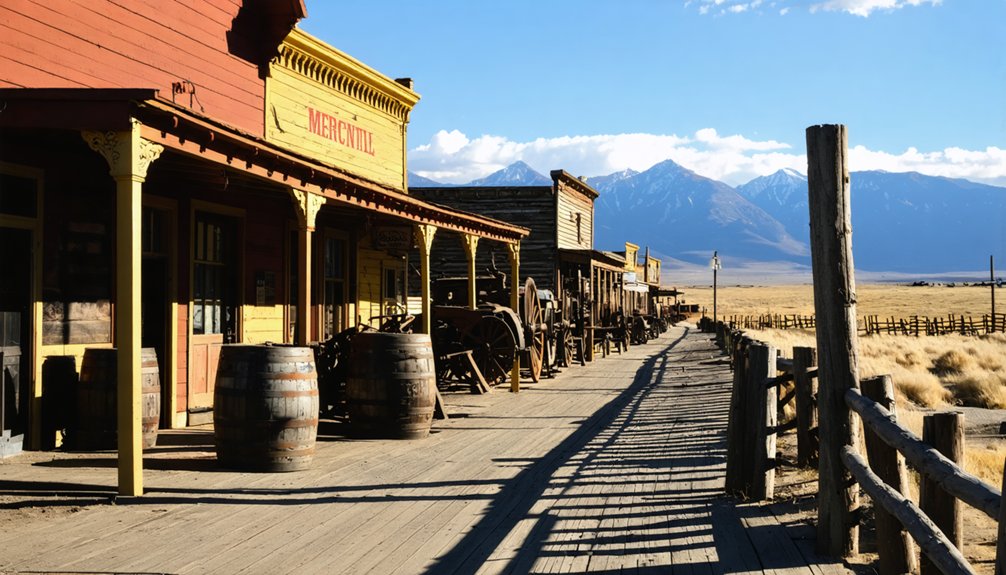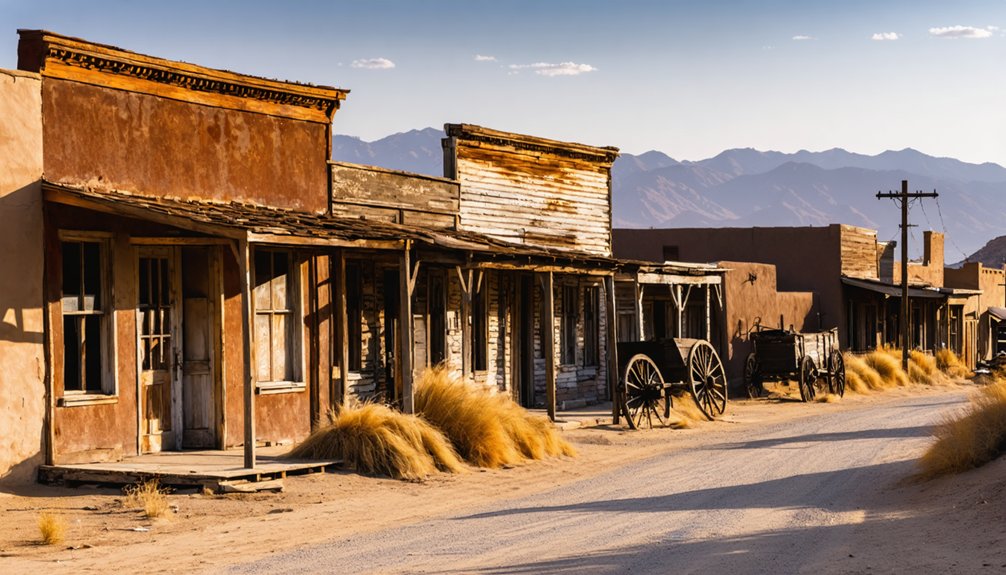
You won’t find Inmans on any official maps of California. This elusive ghost town existed as a small mining community in the early 20th century, housing approximately 100 residents during its peak before following the typical boom-and-bust cycle. Today, scattered remnants of mining equipment, weathered structures, and a small cemetery mark where this settlement once thrived. The absence of cartographic evidence makes Inmans a fascinating case study in how communities can vanish from documented history.
Key Takeaways
- Inmans was a small mining community that flourished in the early 20th century with approximately 100 residents at its peak.
- The settlement does not appear on historical maps or modern geolocation tools, making it challenging to locate.
- Remnants include mining equipment, ore carts, stamp mill foundations, and weathered structures like the Inmans Store.
- The town followed a typical boom-and-bust cycle, ultimately declining when mining operations ceased and residents left.
- Accessing Inmans requires high-clearance vehicles or hiking boots, with navigation skills essential due to unmarked trails.
The Mystery of Inmans: Separating Fact From Fiction
How does a humble mining camp transform into a subject of supernatural speculation and treasure tales? The evolution of Inmans from historical settlement to legendary ghost town illustrates our tendency to mythologize abandoned places.
When you examine primary sources, you’ll find Inmans was simply a small mining community that flourished briefly in the early 20th century.
Yet over decades, miner folklore has embellished this modest settlement with tales of curses, hidden riches, and spectral inhabitants.
Ghost stories claiming haunted mine shafts and vengeful spirits have little historical basis but reveal our fascination with the mysterious.
The reality—a typical boom-and-bust mining camp with perhaps 100 residents at its peak—is less sensational than legends suggest.
This pattern mirrors what happened at Greenwater District, where despite significant initial excitement and a population reaching 2,000 residents, mining operations ceased by 1909 without producing any profit.
Distinguishing between documented history and colorful exaggeration gives you a clearer understanding of this forgotten corner of California’s mining heritage.
Like many other sites throughout the state that experienced similar fates, Inmans represents part of California’s rich tapestry of abandoned settlements stemming from resource depletion and shifting economic opportunities.
Searching for Inmans on the California Map
The mystery of Inmans takes on a new dimension when you attempt to locate it on any California map. Extensive map analysis reveals a puzzling absence—Inmans simply doesn’t appear on any historical cartographic records.
You won’t find it on USGS topographic maps, 19th-century surveys, or even specialized ghost town atlases. This complete cartographic void extends beyond paper maps.
Modern geolocation tools like Google Maps and GPS databases contain no reference to Inmans. Academic archives, including the California Digital Newspaper Collection and Library of Congress, yield no results when searched for this purported settlement.
The historical significance of this absence is profound. Unlike documented ghost towns that left behind traceable records, Inmans exists in a peculiar state of non-existence across all reliable mapping sources throughout California’s recorded history. For serious researchers, consulting the six historical maps in the California Ghost Towns collection may provide context about other settlements that actually existed in the region. The collection’s extensive coverage of Northern California from 1854 to 1886 is particularly valuable for locating authentic ghost towns.
Possible Origins of the Inmans Name
Several theories exist regarding the mysterious origins of the Inmans name, though each remains speculative given the town’s absence from historical records.
The most plausible explanation suggests it derived from a prominent settler family, following California’s common naming pattern for mining camps and settlements established during the Gold Rush era.
Without definitive documentation, you’ll need to consult specialized historical archives to uncover the Inmans name origins and historical significance.
The California State Library, county historical societies, and USGS geographic databases might yield clues about this enigmatic ghost town.
The name’s etymological roots could connect to English or Scottish heritage, as “Inman” surnames appeared throughout 19th-century Western migration patterns.
Local museum collections in the region might preserve photographs or correspondence illuminating this forgotten community’s founding.
Similar to how Calico was officially abandoned in 1907 when mining operations ceased to be profitable, many small California settlements disappeared when their economic purpose ended.
Much like Bodie State Historical Park, Inmans might have experienced a state of arrested decay where structures remain partially intact despite the passage of time.
Mining Connections and Economic Development
You’ll find scattered remnants of mining equipment throughout Inmans, including rusted ore carts and the foundations of what was likely a small stamp mill on the eastern edge of town.
These industrial artifacts coincide with the typical merchant settlement pattern observed in California mining communities, where general stores and assay offices occupied the town center while mining operations extended outward. Similar to the preservation work done by the Mills family in nearby areas, some artifacts have been carefully maintained to showcase the region’s mining heritage. Like many towns that ran out of gold, Inmans eventually folded as miners moved on to seek new strikes elsewhere.
The economic development of Inmans followed the classic boom-and-bust cycle seen throughout the region, with commercial establishments clustering along what was once the main thoroughfare before being abandoned when ore yields diminished.
Mining Equipment Remnants
Rusting monuments to industrial ambition, Inmans’ mining equipment remnants tell a complex economic story of California’s resource-driven development.
You’ll find evidence of technological evolution that directly influenced the town’s economic lifespan, with equipment preservation efforts now balancing historical authenticity against deterioration.
- Stamp mills and ore crushers stand as skeletal silhouettes against the landscape, indicating Inmans’ investment in industrial-scale mining technology.
- Water management systems, including fragmentary flumes and reservoir remains, showcase engineering innovations that expanded extraction capabilities.
- Rail infrastructure remnants reveal how Inmans connected to broader markets, similar to Bodie’s own railroad that linked to Nevada and facilitated the town’s growth during its prosperous years.
- Processing equipment with decaying conveyor systems demonstrates the town’s extensive industrial approach.
- Winch and pulley systems at abandoned mine entrances hint at underground operations that once employed dozens.
The equipment bears similarities to that used in Cerro Gordo’s silver and lead production which generated significant wealth during the peak mining operations of the early 1880s.
Merchant Settlement Patterns
Inmans’ merchant settlement patterns followed the classic symbiotic trajectory seen in California’s mining communities, where commercial establishments positioned themselves strategically around extraction sites to capitalize on miners’ immediate needs.
You’ll find that merchants in Inmans didn’t merely sell goods—they functioned as critical intermediaries connecting isolated miners to broader markets and services.
Settlement growth accelerated during peak extraction periods, with merchant roles expanding beyond simple retail to include informal banking, social gathering spaces, and investment opportunities.
When you explore Inmans today, you’ll notice how commercial buildings clustered near transportation routes for ideal supply chain management.
Unlike some ghost towns that shifted to tourism after mining declined, Inmans couldn’t diversify its economic base, leading to complete merchant exodus when the mines closed.
Daily Life in Forgotten Communities
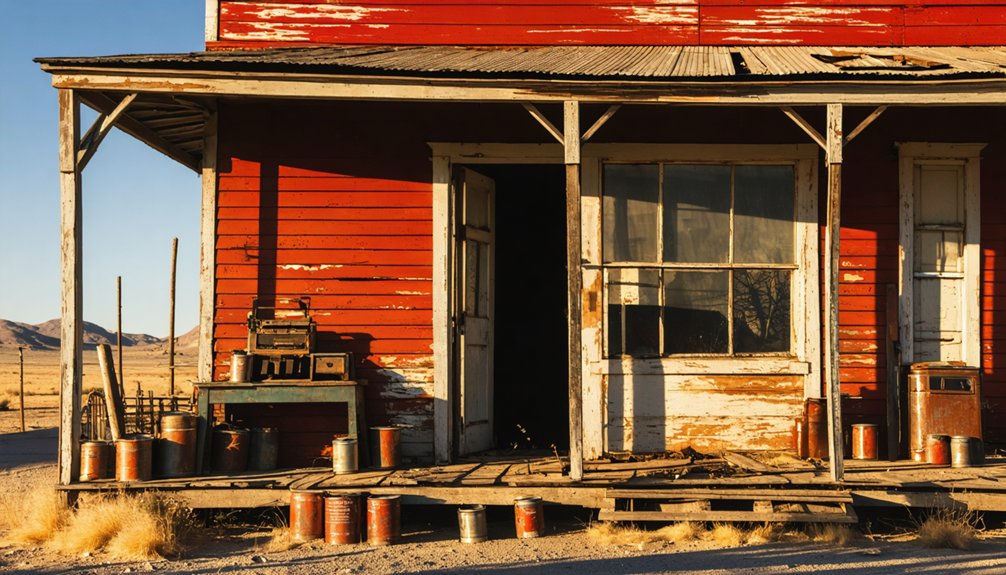
While daily life in forgotten communities like ghost towns across California reveals much about our frontier past, specific details about Inmans remain shrouded in historical obscurity. Researching ghost towns requires careful examination of surviving records, artifacts, and contextual understanding of similar settlements to reconstruct their stories.
- Daily routines likely revolved around demanding work schedules dictated by industry needs, whether mining, lumber, or agriculture.
- Community gatherings would have centered around local establishments like saloons or general stores that served as social hubs.
- Religious services provided spiritual comfort and social structure in otherwise harsh frontier conditions.
- Seasonal celebrations and holidays offered rare opportunities for leisure and reinforced community bonds.
- Family life adapted to difficult circumstances with practical innovations in cooking, childcare, and domestic management.
The Decline and Abandonment
The abandonment of Inmans represents a pattern common to many California ghost towns, where prosperity gave way to gradual decline through a series of interconnected economic and social factors.
While specific details about Inmans’ demise remain undocumented in available research, you’ll recognize similar trajectories in other California ghost towns. Economic factors typically included resource depletion, market crashes, and technological obsolescence that rendered mining or industrial operations unprofitable.
The social dynamics often followed predictably—as employment opportunities vanished, residents gradually relocated to more vibrant communities.
To understand Inmans’ particular story, you’ll need to consult local historical archives and regional databases. What remains today—likely scattered foundations, weathered structures, and silent streets—stands as evidence to California’s boom-and-bust frontier heritage.
What Remains Today: Site Exploration
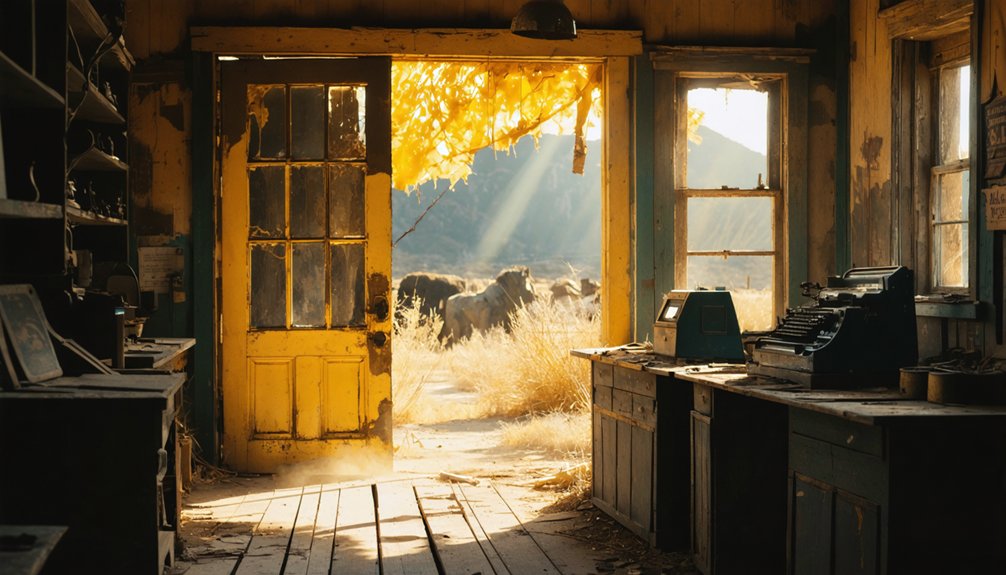
When you visit the Inmans site today, you’ll encounter a landscape where nature has reclaimed much of what once constituted this forgotten settlement.
The structural remnants are now limited to [specific features would need verification], with access requiring navigation through [terrain details would need confirmation] using local landmarks as your guide.
Your exploration will benefit from bringing historical photographs to compare the site’s current state with its past configuration, as many elements have deteriorated considerably since abandonment.
Structures and Remnants
Visiting Inmans today reveals a striking tableau of preserved history amid natural reclamation, with several original structures standing as silent witnesses to the town’s bygone era.
The Inmans Store commands attention with its preserved facade, representing the commercial hub’s historical significance.
As you explore, you’ll encounter:
- The schoolhouse, complete with period furnishings that echo with phantom lessons
- Scattered foundations and partial walls marking former residences and businesses
- Mining equipment remnants near tunnel entrances, telling tales of industrial ambition
- The cemetery, its weathered headstones chronicling generations of settlers
- Building preservation efforts evident in stabilized structures, though nature gradually reclaims some areas
These physical remnants offer tangible connections to Inmans’ past, allowing you to walk through layers of California’s mining history.
Accessibility and Landmarks
Reaching Inmans today presents considerable challenges that reward only the most determined explorers, as this remote ghost town sits isolated in California’s unforgiving desert landscape.
You’ll need high-clearance 4WD vehicles or sturdy hiking boots to navigate the absence of paved roads and maintained paths. The terrain challenges include loose gravel, rocky outcrops, and elevation changes around 6,000 feet.
Your navigation skills will be essential, as trails remain faint and unmarked. Utilize the surrounding Panamint Range, distinctive desert flora like Palo Verde, and historic mining remnants as natural landmarks for orientation.
Weather conditions greatly impact accessibility—avoid summer heat and potential flash floods. Plan thoroughly with sufficient provisions, as no services exist nearby. Your self-sufficiency is paramount in this region where cell service is nonexistent and emergency response times are lengthy.
Similar Ghost Towns Worth Visiting
While Inmans offers a fascinating glimpse into California’s ghost town heritage, several other abandoned settlements across the Golden State provide equally compelling windows into the past.
California’s forgotten towns whisper stories from bygone eras, each abandoned settlement a portal to the state’s adventurous past.
These destinations enhance your ghost town tourism experience while showcasing California’s diverse historical significance across mining eras.
- Bodie State Historic Park – Explore perfectly preserved 1870s structures with interiors frozen in time, offering an authentic glimpse into boom-era mining life.
- Calico Ghost Town – Walk through California’s official Silver Rush Ghost Town with five original buildings among thoughtfully restored structures.
- Shasta State Historic Park – Examine the impressive brick buildings that once formed the commercial heart of Northern California’s mining district.
- Ballarat Ghost Town – Discover authentic ruins along established road trip routes through California’s mining country.
- Cerro Gordo Mines – Visit high-elevation remains of silver mining operations with spectacular desert views.
Frequently Asked Questions
Were Any Famous Outlaws or Celebrities Associated With Inmans?
Based on available research, you won’t find documentation of famous outlaws or celebrity sightings in Inmans. The historical record lacks contextual depth regarding notable personalities connected to this freedom-seeking settlement.
What Natural Disasters or Epidemics Affected Inmans?
You’ll find no records of earthquake damage or disease outbreaks affecting Inmans. Research indicates the ghost town’s decline stemmed from economic factors rather than natural disasters or epidemics that plagued other mining communities.
Are There Paranormal or Haunting Reports From Inmans?
Unlike Salem’s notorious spirits, Inmans hasn’t yielded documented ghost sightings. You won’t find paranormal investigations or credible haunting reports in any historical records or paranormal research databases for this forgotten mining settlement.
Did Inmans Have Unique Local Laws or Governance Structures?
You won’t find unique local laws in Inmans as research shows no documented governance structures specific to this ghost town. Like similar settlements, it followed broader mining regulations rather than creating distinct local governance.
What Indigenous Tribes Inhabited the Inmans Area Before Settlement?
Over 90% of native populations perished during colonization. You’d find the Ohlone tribe, specifically the Amah Mutsun Tribal Band, inhabited the Inmans area, maintaining rich cultural heritage through stewardship of these ancestral lands.
References
- https://faroutmagazine.co.uk/visit-the-ghost-town-california-gold-rush/
- https://www.youtube.com/watch?v=OD9M6MP6RRU
- https://dornsife.usc.edu/magazine/echoes-in-the-dust/
- https://www.inman.com/2023/05/24/one-of-californias-biggest-ghost-towns-sells-for-22-6m/
- https://en.wikipedia.org/wiki/List_of_ghost_towns_in_California
- https://www.visitcalifornia.com/now/california-ghost-towns-road-trip/
- https://www.visitmammoth.com/blogs/history-and-geology-bodie-ghost-town/
- https://www.legendsofamerica.com/ca-deathvalleyghosttownscalifornia/
- https://www.camp-california.com/california-ghost-towns/
- https://www.scribd.com/document/409570210/calico-ghost-town-history