You won’t find a ghost town called La Rose in California, but you will discover Hotel La Rose in Santa Rosa’s Railroad Square. Built in 1907 by Italian stonemasons using local basalt stone, this historic hotel serves as the centerpiece of local ghost lore despite being fully operational. Two spectral residents allegedly haunt its halls: the Elevator Boy and the Wandering Woman. The building’s rich railroad history and Victorian architecture tell a deeper story beyond the supernatural claims.
Key Takeaways
- La Rose is not actually a ghost town but a historic hotel in Santa Rosa’s Railroad Square built in 1907.
- Hotel La Rose remains operational today, balancing historic preservation with modern hospitality services.
- The hotel features reported apparitions including the “Elevator Boy” and “Wandering Woman,” contributing to its paranormal reputation.
- Despite ghost stories, Hotel La Rose lacks documented evidence typical of authentic ghost towns or genuine paranormal activity.
- The hotel’s ghostly reputation contributes to Santa Rosa’s haunted tourism industry, attracting visitors interested in the paranormal.
The Railroad Legacy of Hotel La Rose
When the North Pacific Coast Railroad expanded across Sonoma County in the early 1900s, Hotel La Rose emerged as a critical establishment to serve the growing railroad industry. Built in 1907 by Italian stonemasons using local basalt stone, the hotel’s durable construction symbolized the railroad’s significance in Santa Rosa.
You’ll find Hotel La Rose strategically positioned in Railroad Square, near the depot that opened in 1904. This location made it the perfect lodging for rail workers and passengers traveling through the Russian River Valley.
The railroad impact transformed Santa Rosa into a central hub, with the hotel’s significance peaking during the rail era (1870-1936). The establishment was an integral part of the industrial ecosystem that thrived alongside the tracks until automobile transportation gradually diminished passenger rail service after 1936. The hotel remains largely unaltered since its construction, maintaining its original purpose and historical integrity. Visitors today can still experience authentic period accommodations in the historic Main Building while enjoying modern amenities.
Victorian Architecture and Historical Preservation
You’ll discover La Rose’s Victorian structures showcase the shift from adobe to more durable post-earthquake construction, with 20-24 inch andesite stone walls cut by Northern Italian stonemasons.
These architectural gems feature distinctive elements like octagonal designs with wraparound porches, pressed paper wainscoting resembling embossed leather, and Georgian Revival styling with three-story elevations. Many of these buildings were constructed in 1907 as replacements for structures destroyed in the devastating 1906 San Francisco earthquake. The collection resembles Heritage Square Museum’s approach with its diverse architectural styles representing nineteenth-century building practices.
Despite preservation challenges, including accidental fires and continuous repair needs, local advocacy groups have successfully relocated and maintained these buildings without major donor support for decades.
Architectural Heritage Details
The architectural heritage of La Rose stands as a tribute to both resilience and craftsmanship following the devastating 1906 San Francisco earthquake.
You’ll find impressive earthquake-resistant design in the 20-24 inch thick walls constructed of locally-quarried andesite stone. Italian immigrant stonemasons Peter Maroni, Natale Forni, Massimo Galeazzi, and Angelo Sodini brought expertise from Northern Italy’s marble quarries to create this Georgian Revival masterpiece.
The stone craftsmanship is particularly remarkable in Hotel La Rose, a four-story structure measuring 62 by 80 feet. Skilled craftsmen hand-worked the difficult volcanic andesite on-site. The area showcases various architectural styles including Victorian and Craftsman homes that add to the neighborhood’s historic character.
Its architectural significance earned National Register listing in 1978, while Railroad Square Historic District gained similar recognition in 1979. These basalt buildings represent the most significant structures in a neighborhood that evolved from industrial uses before 1970s preservation efforts secured their legacy. The area surrounding the Depot became known as Little Italy due to the significant Italian immigrant population drawn to Sonoma County for jobs and favorable climate.
Preservation Amid Tourism
Since its initial construction in 1907 by Bautista Bettini, Hotel La Rose has exemplified successful historical preservation while accommodating modern tourism needs.
This National Register landmark balances heritage conservation with tourism management, allowing you to experience authentic California history while enjoying modern amenities.
The hotel’s preservation strategy includes:
- Maintaining original architectural features with minimal alterations since construction
- Functioning as both a working hotel and public historical site accessible to all visitors
- Serving as an anchor for Railroad Square’s historic district, connecting visitors to broader regional history
- Incorporating historical elements like the San Francisco Cable Car Barn staircase in the lobby
You’ll find La Rose’s stone walls telling stories of Italian craftsmanship while its continued operation honors the resilience of California’s development period. Unlike many boom and bust communities that emerged during California’s economic cycles, Hotel La Rose stands as a rare example of continuous operation through changing times. The building’s endurance contrasts sharply with places like Mentryville that were designated ghost towns after their economic purpose disappeared.
Alleged Paranormal Encounters and Spectral Residents
You’ll encounter two frequent apparitions when visiting Hotel La Rose’s haunted corridors: the Elevator Boy, a spectral child said to operate the hotel’s antique elevator at night, and the Wandering Woman, who passes through walls near the hotel’s eastern wing.
The Elevator Boy reportedly wears early 1900s attire and vanishes when approached, while witnesses describe feeling sudden temperature drops during his appearances. Many visitors compare these encounters to the rich paranormal experiences found in Bodie State Park, where buildings are similarly preserved in a state of “arrested decay.” Similar to many California ghost towns that emerged during the mid-1800s, these spectral residents are believed to date back to the town’s economic boom period.
The Wandering Woman, believed to be a former hotel resident from the railroad boom era, manifests as a translucent figure that moves silently between rooms that once connected before the building’s partial renovation in 1937.
Elevator Boy Apparition
Among the many spectral legends surrounding La Rose, perhaps none has captured visitors’ imagination quite like the Elevator Boy apparition.
You’ll find this ghostly tale centered on Hotel La Rose‘s nighttime elevator encounters, where a young spectral resident allegedly manifests after dark.
Despite appearing on numerous paranormal websites and ranking sixth among California’s most haunted hotels, critical examination reveals this legend stands on shaky foundation:
- No documented incident explains the apparition’s origin
- Hotel staff report no eerie feelings or sightings
- Long-term employees provide no corroborating evidence
- Paranormal researchers classify these claims as “almost certainly unreliable”
What distinguishes this modern urban folklore from authentic Gold Rush ghost towns is its complete lack of historical documentation.
The elevator boy represents digital-age mythology rather than substantiated spectral sightings.
Wandering Woman Spirit
Another spectral figure allegedly haunts La Rose’s moonlit paths—the Wandering Woman spirit.
You’ll recognize her by her flowing nightgown or period dress as she roams the abandoned town and nearby Hotel La Rose after sundown.
Unlike the elevator boy apparition, this female entity emits a distinctly mournful presence.
Visitors report unexplained footsteps, sorrowful cries, and sudden temperature drops during encounters.
Some witness doors moving on their own or experience electronic disturbances when she’s near.
Historical records suggest her origins may tie to tragic deaths in the area.
Multiple spectral sightings across decades describe consistent details—a woman seemingly searching for something lost.
EVP recordings have captured whispers believed to be her voice, making the Wandering Woman one of the most documented phenomena in this paranormal hotspot.
Separating Myth From Reality: Evidence Assessment
While many alleged ghost towns in California have substantial historical documentation and physical remains, La Rose stands apart as a puzzling anomaly in the state’s historical record.
When you examine the evidence critically, you’ll find that La Rose’s mythical origins likely stem from confusion with the haunted Hotel La Rose in Santa Rosa, rather than an actual abandoned settlement.
Consider these critical assessment points:
Examine the evidence critically before accepting claims about undocumented ghost towns in California’s historical record.
- La Rose is absent from all authoritative ghost town registries and historical records.
- No archaeological remains, ruins, or foundations exist to verify its existence.
- Unlike verified ghost towns like Llano Del Rio or Bagdad, La Rose lacks a documented reason for abandonment.
- Ghostly folklore surrounding La Rose lacks the archival or physical corroboration typically found with authentic ghost towns.
Santa Rosa’s Haunted Tourism Appeal
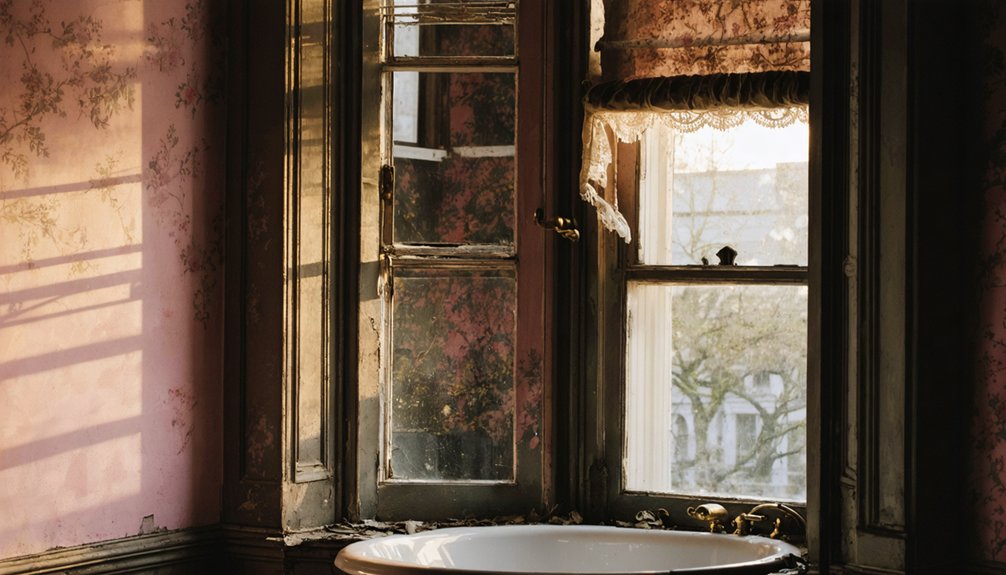
Although La Rose as a ghost town may be mythical, Santa Rosa itself has cultivated a thriving haunted tourism industry centered around several key landmarks with documented paranormal reputations.
Hotel La Rose, built in 1907 for railroad passengers, stands as the centerpiece of this spectral tourism circuit, with reported ghost sightings driving visitor interest.
You’ll find the haunted experience extends beyond the hotel to “Disguise the Limit” costume shop (a former tavern) and Rose Hill Cemetery, creating a thorough paranormal itinerary.
These sites function as repositories of ghost folklore while generating substantial tourism revenue. Tourist engagement thrives through specialized ghost tours, medium visits, and themed events that blend historical preservation with supernatural intrigue.
This strategic marketing of haunted locations differentiates Santa Rosa in California’s competitive tourism landscape, even when paranormal evidence remains largely anecdotal.
Modern Operations in a Historic Setting
Since its establishment in 1907 as a railroad passenger lodging facility, Hotel La Rose has maintained continuous commercial operations at its historic 308 Wilson Street location in Santa Rosa.
You’ll find the building’s infrastructure remarkably preserved while functioning as a modern hotel. Despite paranormal marketing claims, staff consistently report no credible ghost encounters, with visitor investigations yielding disappointing results for supernatural enthusiasts.
Key operational elements include:
- Preservation of original architectural character while maintaining active business operations
- Adaptation from railroad passenger lodging to contemporary guest experiences
- Balance of historic preservation with modern hospitality requirements
- Navigation of operational challenges while maintaining the property’s century-spanning legacy
The hotel continues welcoming guests at (707) 579-3200, offering an authentic historic lodging experience without the supernatural encounters promoted in tourism materials.
The Cultural Impact of Ghost Stories on Local Heritage
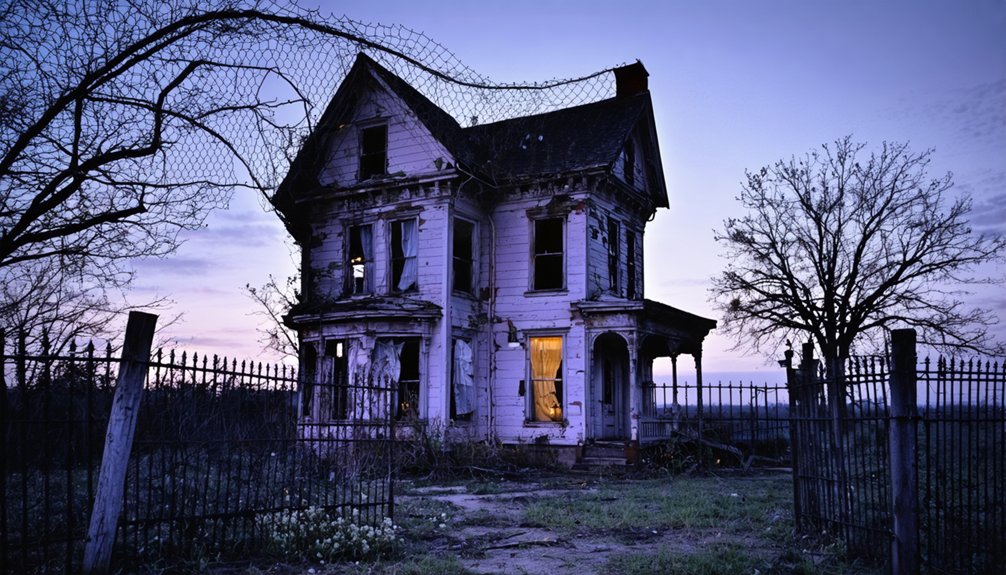
Ghost stories surrounding La Rose have profoundly shaped the town’s cultural identity despite their lack of factual basis at Hotel La Rose. These narratives serve as powerful vehicles for preserving cultural heritage while strengthening community identity through collective memory of the region’s boom-and-bust cycles.
When you visit La Rose, you’ll discover how storytelling traditions maintain local narratives connecting present generations to their past. The folklore significance extends beyond entertainment—it economically transforms the town through paranormal tourism, creating jobs and revitalizing historic structures.
Annual ghost-themed events foster social cohesion, bringing both residents and curious visitors together. The impact of these stories reaches beyond entertainment into historical interpretation, as they’ve motivated preservation efforts that might otherwise be neglected, ensuring La Rose’s unique history remains alive for future generations.
Frequently Asked Questions
Was Hotel La Rose Ever Temporarily Closed or Abandoned?
Like a wilted rose awaiting water, Hotel La Rose experienced serious decline but has no documented temporary closure or historical abandonment. You’ll find it continuously operated since 1907, despite reputation challenges before its 1990 revival.
Have Paranormal Investigators Conducted Formal Research at the Hotel?
No formal paranormal investigation reports exist for the hotel. You won’t find documented ghost hunting evidence or professionally researched spirit sightings in any available sources or peer-reviewed studies.
Are Specific Rooms Reported to Have More Supernatural Activity?
You’ll find haunted history concentrated in Room 31 with nighttime disturbances, Room 42 near a family murder site, and throughout common areas where spectral sightings include children’s laughter and mysterious 4:52 a.m. phone calls.
Does the Hotel Offer Ghost Tours or Paranormal Experiences?
No, Hotel La Rose doesn’t offer ghost tours or paranormal experiences. Despite its 1907 historical significance, the establishment operates as a standard hotel, without marketing the alleged ghostly encounters to visitors.
How Has the Local Community Responded to the Haunting Claims?
You’ll find community beliefs are skeptical, with locals dismissing haunting claims as unsubstantiated. Staff report no experiences, while businesses strategically leverage local folklore for commercial gain rather than genuine paranormal credibility.
References
- https://www.youtube.com/watch?v=OD9M6MP6RRU
- https://www.sfgate.com/travel/article/eagle-mountain-california-ghost-town-18096768.php
- https://en.wikipedia.org/wiki/List_of_ghost_towns_in_California
- https://www.californiahauntedhouses.com/real-haunt/hotel-la-rose.html
- https://www.enjoylivingabroad.com/my-blog/our-whistle-stop-tour-of-diners-ghost-haunts
- https://www.islands.com/1977075/bagdad-siberia-california-ruins-route-66-abandoned-ghost-towns/
- https://www.californiasun.co/california-ghost-town-famous-for-riches-and-rowdiness-prepares-to-welcome-guests/
- https://npgallery.nps.gov/NRHP/GetAsset/NRHP/78000802_text
- https://www.visitcalifornia.com/experience/railroad-square-district-santa-rosa/
- https://noehill.com/sonoma/nat1978000802.asp