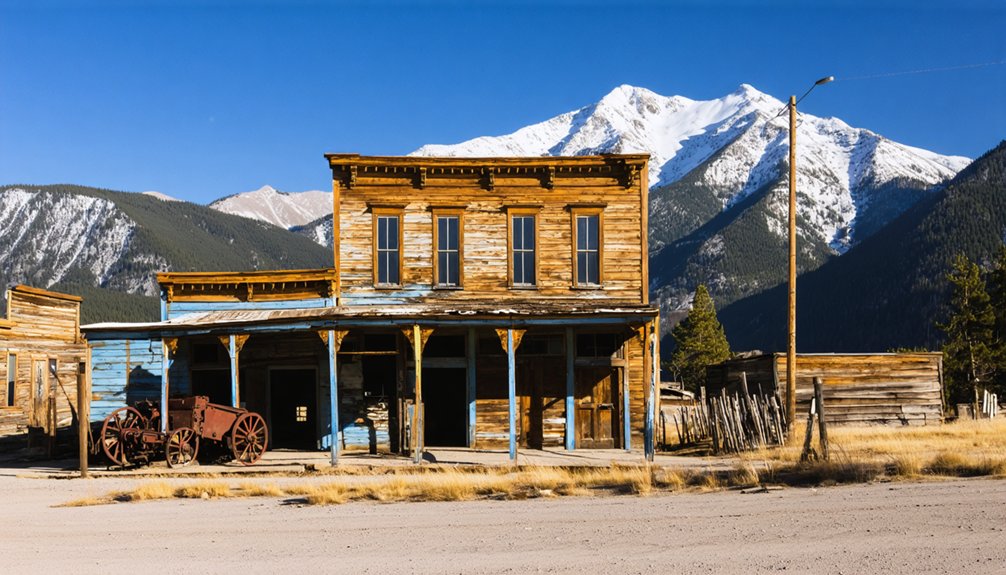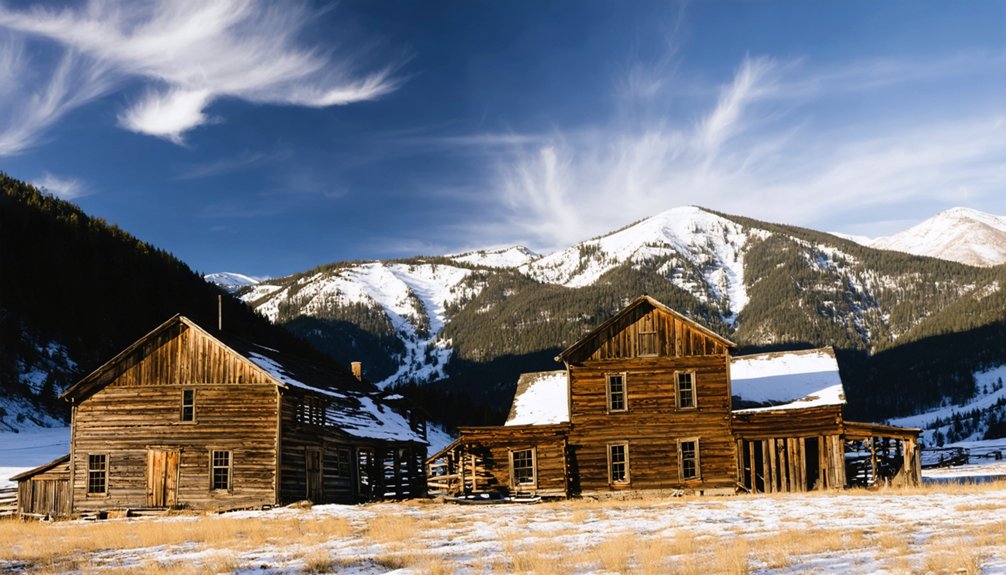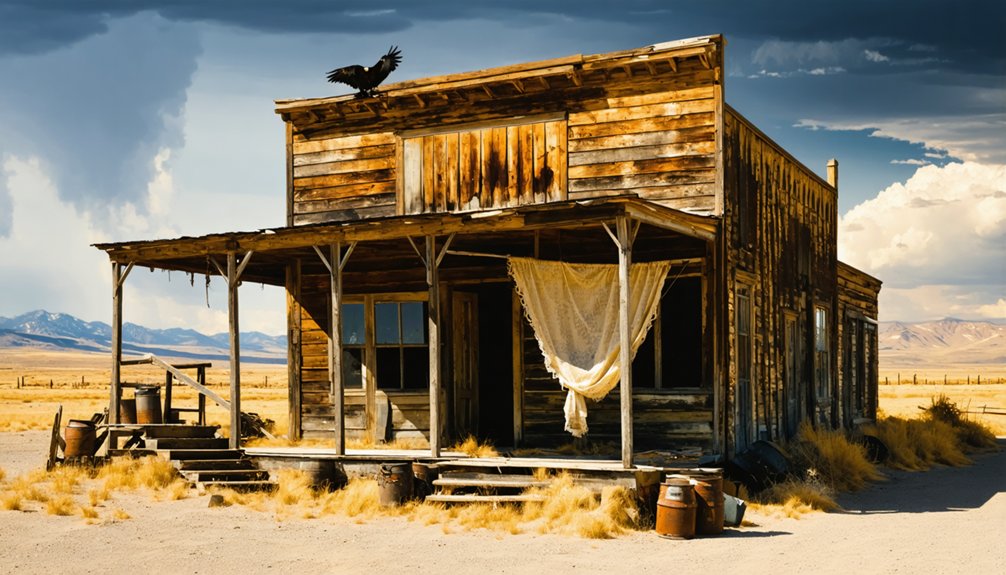
Last Chance, Colorado began as a critical frontier waystation in the 1890s before evolving into a thriving highway stop 80 miles east of Denver from the 1920s-1950s. You’ll find remnants of its once-bustling Dairy King restaurant, motel, and gas station that served travelers before Interstate 70 rerouted traffic. Today, you can explore dilapidated structures and scattered artifacts that tell the story of how changing transportation patterns erased an entire community.
Key Takeaways
- Last Chance was established in the 1890s as a mining supply stop before becoming a highway service town.
- Located 80 miles east of Denver, it thrived from the 1920s-1950s with a motel, restaurant, and gas station.
- The town declined rapidly after Interstate 70 rerouted traffic away from the community.
- Abandoned structures including the Dairy King restaurant and motel remain as artifacts of mid-century highway commerce.
- Visitors can explore the navigable infrastructure connecting commercial buildings to residential dwellings.
The Birth of a Frontier Waystation
In the early 1890s, as silver discoveries near Creede catalyzed Colorado’s mining expansion, Last Chance emerged as a critical frontier waystation with profound strategic significance.
You’d find this settlement strategically positioned at the gateway to the mineral-rich San Juan Mountains, offering the final opportunity for supplies before entering remote terrain.
The town’s very name reflected frontier optimism, derived from Theodore Renninger’s declaration that striking the Amethyst vein in 1891 was his “last chance” at fortune.
Grubstaked by investors Ralph Granger and Eric Von Buddenbrock, this outpost quickly developed essential mining infrastructure while serving transportation needs along routes crossing the Rockies.
As you’d travel between Denver and Gunnison via Marshall Pass, Last Chance represented civilization’s edge—a final refuge before venturing into the untamed wilderness where fortunes awaited.
Today, visitors can explore this historic site at 504 Last Chance Mine Rd to experience firsthand the preserved remnants of Colorado’s mining heritage.
Located at the junction of highways 34 and 71, it later became a major stop for travelers heading east from Denver before the interstate system was built.
Highway Era Prosperity (1920s-1950s)
Unlike its origins as a mining waystation, Last Chance found renewed purpose during the automobile age that defined American expansion in the mid-twentieth century. Positioned 80 miles east of Denver, the town transformed into a critical refueling and rest stop for travelers crossing the vast eastern plains.
Highways breathed new life into forgotten outposts, transforming Last Chance into a vital artery of American travel.
You would have encountered a bustling hub where travel trends converged with economic impact. The aptly named “Last Chance” offered final opportunities for gasoline, lodging, and meals before lengthy stretches of desolate highway. Much like the early settlers in Dearfield who relied on cow chips for fuel, Last Chance residents adapted to their environment with resourcefulness.
Local businesses thrived on constant traffic flow—the motel, Dairy King restaurant, and gas station forming the commercial backbone of this roadside community. Visitors today can still see the abandoned buildings that once housed these thriving establishments. Rather than relying on mining or agriculture, residents built livelihoods entirely around highway commerce.
This prosperity represented the golden era of American road culture before Interstate bypasses would eventually render such waystations obsolete.
Life in a Roadside Community
Living in Last Chance during its roadside heyday meant participating in a unique social ecosystem where permanent residents and transient travelers continuously intersected.
Your daily existence revolved around the highway’s rhythm—the post office, Dairy King, and motel serving as critical nodes for community interactions. These establishments weren’t merely businesses but social anchors where locals exchanged news while travelers shared stories from distant places.
If you’d settled here, you’d have witnessed the delicate balance between agricultural traditions and highway commerce. Families like the Harberts represented the town’s homesteading roots, while newer residents adapted to transient lifestyles serving highway users.
Your economic survival would have depended on traffic volume, creating both opportunity and vulnerability. The need for clear navigation was evident, as visitors often consulted disambiguation pages to locate the small community among similarly-named places. This interdependence between permanent residents and passing travelers defined Last Chance’s character until highway patterns eventually shifted.
When the Roads Changed: The Abandonment Story
The highway that once breathed life into Last Chance would ultimately precipitate its demise. When Interstate 70 rerouted traffic in the 1950s, it severed the town’s commercial lifeline, initiating a swift town decline.
You’d hardly recognize the vibrant stopover that once served weary travelers with food, lodging, and fuel. This roadway evolution transformed Last Chance from a necessary pit stop to an inconvenient detour. As motorists embraced the efficiency of interstate travel, businesses shuttered, the post office closed, and residents departed.
The abandoned structures you might glimpse today—dilapidated motels, empty homes, and the forsaken Dairy King—stand as artifacts of mid-century highway commerce, casualties of transportation progress. The buildings, now dangerous and legally off-limits, silently chronicle how a simple change in traffic flow can erase an entire community.
What Remains: Exploring the Ghost Town Today
Today, visitors to Last Chance encounter a haunting tableau of structural remains that chronicle the town’s abrupt abandonment.
You’ll find the dilapidated motel with its exposed wooden framework standing as evidence to travelers who once sought refuge along regional routes. The Dairy King’s abandoned commercial kitchen, with its weathered counters and faded signage, offers glimpses into the social hub that once served both locals and motorists. Warning signs alerting explorers about HIDDEN AND VISIBLE DANGERS reflect the environmental hazards left behind by industrial activities.
Scattered residential dwellings contain historical artifacts—personal belongings frozen in time—suggesting residents departed with minimal preparation.
The town’s infrastructure remains navigable, with identifiable thoroughfares connecting the commercial center to outlying homes.
This abandoned architecture presents an unfiltered historical record, where structural decay and forgotten possessions tell a more authentic story than any museum display could convey about mid-20th century small-town American life.
The area sits at approximately 5,600 feet elevation in the high plains of southern Colorado, offering spectacular views of the distant Rocky Mountains.
Frequently Asked Questions
Are There Any Paranormal Legends Associated With Last Chance?
You’ll find a million ghost sightings in Last Chance. You’ve heard reports of moving objects, shadowy figures, unexplained noises, and scattered toilets contributing to its haunted history, attracting paranormal investigators and thrill-seekers alike.
What Happened to the Original Harbert Family?
The original Harberts eventually departed Last Chance as younger generations relocated elsewhere. You’ll find their Harbert legacy continues through family descendants who preserve their pioneering stories of prairie resilience and community building.
Can Visitors Legally Explore the Abandoned Buildings?
100% of Last Chance’s buildings are privately owned. You can’t legally enter them. Exploration guidelines strictly prohibit interior access, while visitor safety concerns include structural hazards and potential trespassing charges.
Were Any Movies or TV Shows Filmed in Last Chance?
Available records don’t document any Ghost Town Films or productions utilizing Last Chance locations. You’d need specialized film history archives to verify if this Colorado landmark ever served as a cinematic backdrop.
Additionally, the allure of abandoned structures in Lenado, Colorado, serves as a potent symbol of the state’s rich history and untold stories. Exploring these remnants can uncover unique insights into the past, enticing adventurers and historians alike. Each decaying wall carries whispers of a bygone era, making Lenado a captivating subject for those fascinated by the mysteries of forgotten places.
Are There Restoration Efforts or Heritage Preservation Plans Underway?
You’ll witness a mountain of preservation initiatives at Last Chance Mine. Jack Morris’s restoration projects include four mine buildings, overnight cabins, a museum with period equipment, and maintaining the original amethyst vein for educational tours.
References
- https://www.uchealth.org/today/ghost-towns-abound-in-colorado/
- https://95rockfm.com/last-chance-colorado-ghost-town/
- https://www.ghosttowns.com/states/co/lastchance.html
- https://en.wikipedia.org/wiki/Last_Chance
- https://www.howderfamily.com/blog/last-chance/
- https://kool1079.com/tour-of-last-chance-colorado/
- https://stevehirschphoto.com/abandoned-motel-last-chance-co/
- https://www.nps.gov/parkhistory/online_books/blm/co/10/chap6.htm
- https://archive.org/download/frontierintransi00orou/frontierintransi00orou.pdf
- https://lastchancemine.com/history/