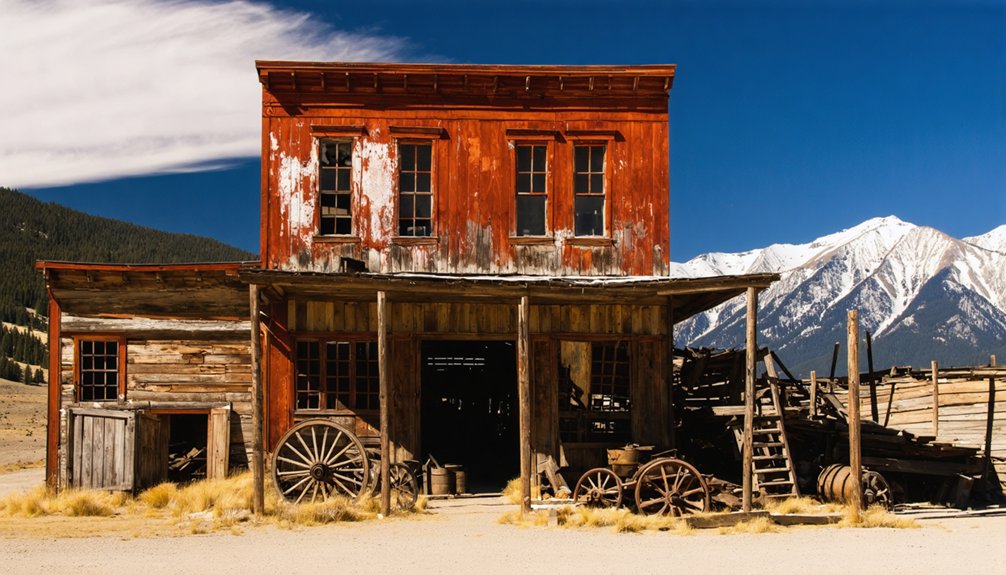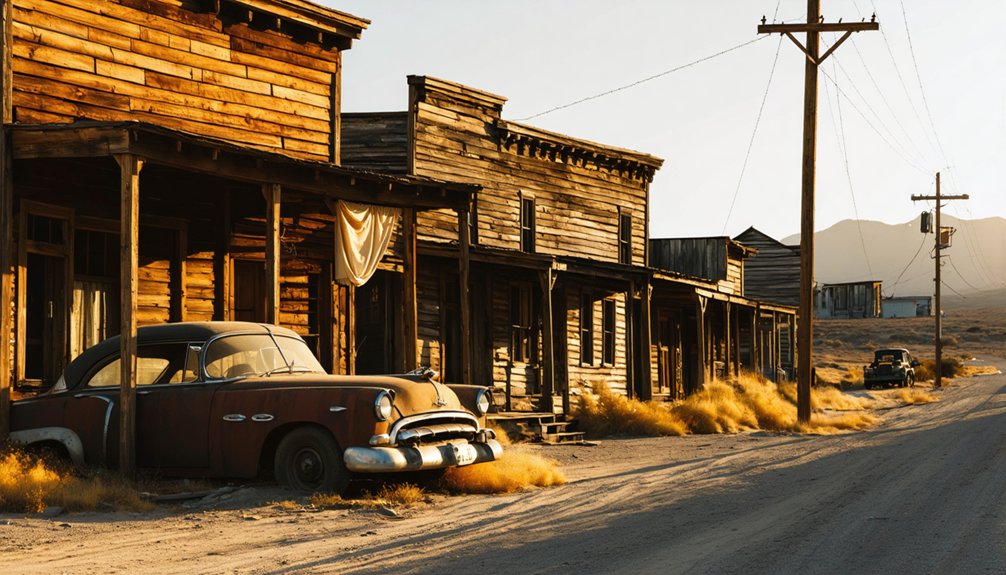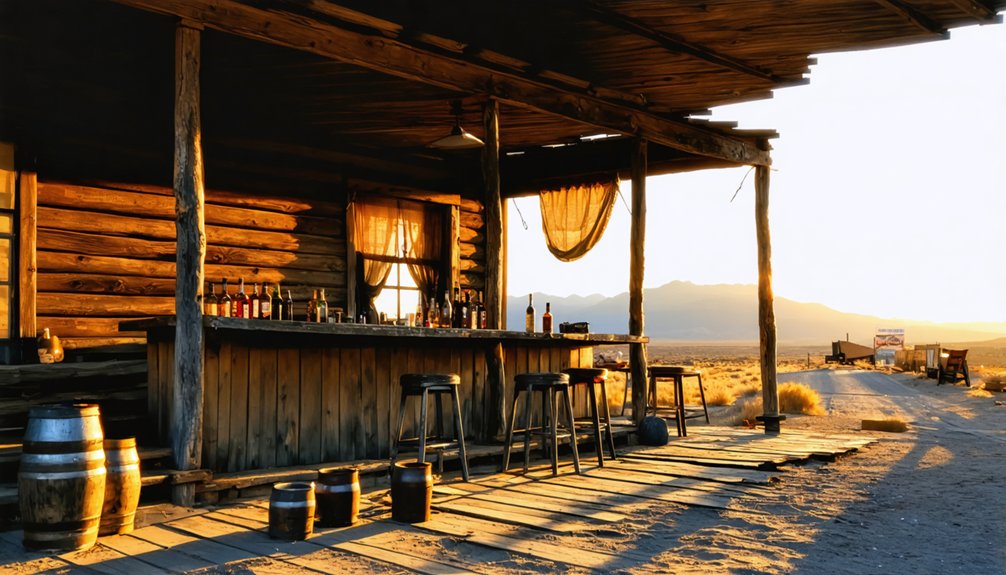
Wild West ghost towns offer glimpses into America’s frontier past, where boom-and-bust cycles transformed prosperous mining settlements into abandoned relics. You’ll find tales of legendary gunfights at places like Tombstone’s O.K. Corral, alongside architectural remnants telling stories of gold rushes and silver strikes. These weathered buildings housed notorious outlaws, vigilante lawmen, and hardworking miners whose legacies shaped western expansion. The preserved structures and local legends reveal how resource depletion and economic shifts ultimately sealed their fates.
Key Takeaways
- The O.K. Corral gunfight in Tombstone established Wyatt Earp as a legendary lawman fighting against notorious outlaws in the Wild West.
- Wild Bill Hickok’s murder while holding the “Dead Man’s Hand” in Deadwood exemplifies the dangerous reality behind romanticized outlaw tales.
- Bodie, California preserves over 100 original buildings in an “arrested decay” state, offering authentic glimpses into boom-town prosperity and decline.
- Ghost towns like Bannack, Montana emerged from gold and silver discoveries but collapsed when resources depleted, leaving behind architectural time capsules.
- Mount Moriah Cemetery in Deadwood houses famous Wild West figures including Calamity Jane, connecting visitors to frontier personalities and legends.
Silver Strikes and Gold Rushes: Birth of Boom Towns
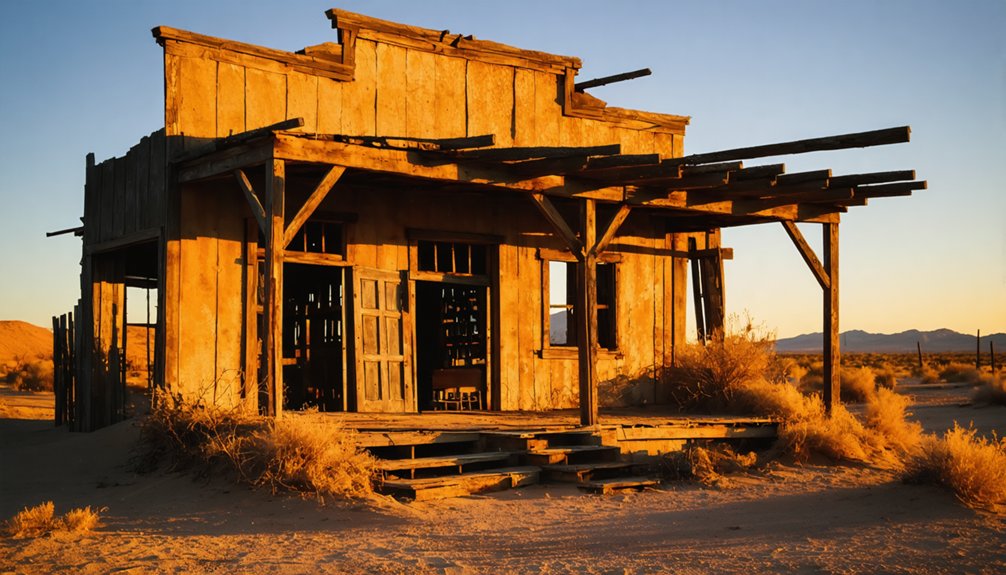
When James Marshall discovered gold flecks glistening in the American River at Sutter’s Mill in 1848, he unknowingly sparked a transformation that would reshape the American frontier for generations. The ensuing California Gold Rush drew thousands of “forty-niners” westward, establishing the pattern for boom town development that would repeat across the continent.
As prospectors exhausted placer deposits, they followed new strikes along the Sierra Nevada’s Mother Lode and beyond. The 1859 Comstock Lode discovery launched America’s first major silver rushes in Nevada, yielding over $350 million in precious metals and transforming Virginia City into a symbol of mining prosperity. The Civil War temporarily interrupted mining progress throughout the western territories during the 1860s.
Similar patterns emerged in Colorado, Montana, and Idaho, where bustling communities arose virtually overnight. Mining techniques evolved rapidly from simple panning to more advanced hard rock mining as surface gold became scarce. You’ll find that while many mining settlements eventually collapsed when deposits depleted, others like Denver evolved into enduring economic centers.
Infamous Gunfights and Lawless Streets
Beyond the dust and promise of mineral wealth, the Wild West’s ghost towns gained their most enduring notoriety through the infamous gunfights that erupted on their lawless streets.
You’ll trace this legacy to places like Tombstone, where the 30-second O.K. Corral shootout established gunfight tactics that defined frontier justice.
In Dodge City, “the wickedest little city in the West,” Front Street embodied the chaotic nature of boom-town violence.
Street vigilantism flourished where formal law enforcement faltered, with figures like Wyatt Earp and Doc Holliday becoming legendary through their deadly confrontations.
Where lawmen were scarce, gunslingers filled the void, their lethal showdowns immortalizing them in Wild West lore.
These violent episodes—from the “Four Dead in Five Seconds” gunfight in El Paso to the Dalton Gang’s bloody last stand in Coffeyville—weren’t merely isolated incidents but rather defining characteristics of settlements where disputes were settled with revolvers rather than courts.
The Birdcage Theatre in Tombstone still bears witness to its violent past with over 140 bullet holes embedded in its walls, silent testaments to the era’s dangerous nightlife.
At Deadwood in South Dakota, visitors can walk the same streets where Wild Bill Hickok met his demise while playing poker, holding what would become known as the dead man’s hand.
Architectural Remnants: Preserving the Past
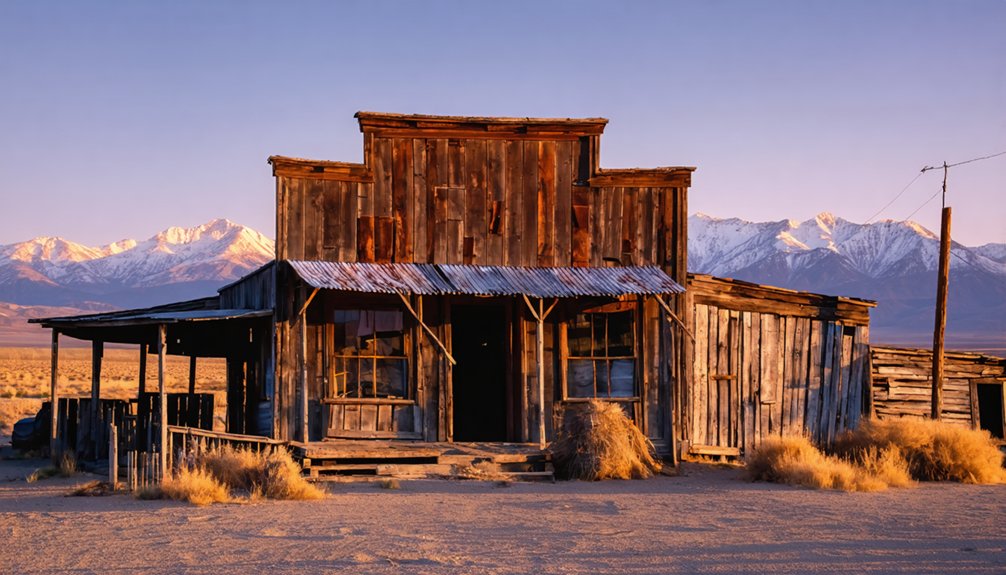
While countless ghost towns have vanished entirely into the dust of history, the architectural remnants that survive offer invaluable windows into frontier life and construction techniques.
You’ll find remarkable structural authenticity in places like Bodie, California, where over 100 buildings are intentionally maintained in their weathered state, preserving their historical essence without artificial restoration.
Bannack, Montana demonstrates superior architectural preservation with more than 60 original structures now protected as a National Historic Landmark.
Geological forces have dramatically shaped preservation efforts—Thistle’s buildings remain imprisoned in silt from a 1983 landslide, while Pactola’s structures lie submerged beneath 150 feet of water.
In Utah, Grafton’s renovated schoolhouse stands as one of the state’s most pristine examples of abandoned buildings, frequently serving as a backdrop for Hollywood productions.
The original courthouse in Belmont, Nevada still stands today and is carefully maintained by nonprofits dedicated to preserving the town’s historical significance.
When visiting these fragile time capsules, respect their vulnerability by avoiding climbing on structures, ensuring these authentic windows to America’s frontier past remain accessible for future generations.
Mining Operations That Built the West
The West’s transformation from frontier wilderness to industrial powerhouse hinged on four major mining booms that fundamentally reshaped America’s economic landscape.
California’s 1849 Gold Rush initiated this revolution, producing over 106 million ounces of gold while spurring nationwide migration. Nevada’s 1859 Comstock Lode silver discovery followed, revolutionizing mining techniques through industrial-scale extraction methods.
You’ll find evidence of intense labor struggles throughout these operations. Between 1880-1923, over 70,000 coal miners perished, including 362 in West Virginia’s catastrophic Monongah explosion.
These dangerous conditions sparked fierce resistance, culminating in the deadly 1921 Logan County uprising. Coal companies exercised near-total control over miners’ lives through company housing and stores. By 1922, miners’ strikes had shut down 90% of operations nationwide.
The economic impact persisted; by 2015, U.S. mining produced $109.6 billion in resources, while former supply towns like Denver evolved into thriving metropolitan centers. Arizona contributed significantly to this legacy as the leading copper producer in the West, with much of its gold extracted as a byproduct of these operations.
Notorious Outlaws and Legendary Lawmen
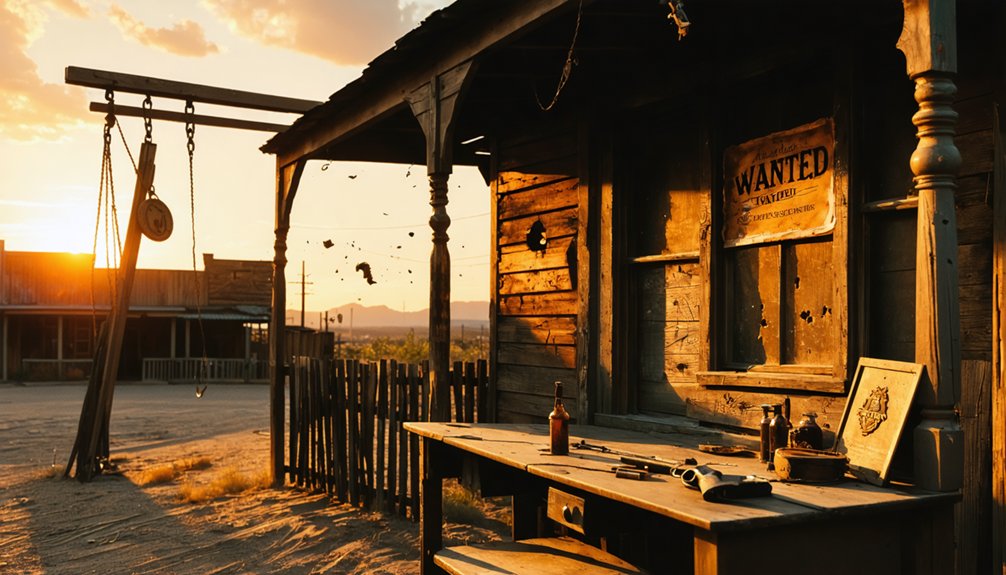
Amid the gold-dusted boomtowns and silver-rush settlements, a different type of legend emerged—one written in gunsmoke and frontier justice.
The clash between outlaw legends and lawman tales defined these territories, where authority existed in fragile balance with lawlessness.
Between badge and bandana, the Wild West existed as contested ground where lawbooks met six-shooters in uncertain terms.
You’ll encounter these dramatic confrontations through historical flashpoints:
- The Doolin-Dalton Gang’s reign of terror across multiple territories, culminating in the bloody 1893 Battle of Ingalls
- Wyatt Earp’s infamous 30-second gunfight at Tombstone’s O.K. Corral against the Clanton-McLaury faction
- Marshal “Brushy” Bush’s corrupt enforcement in Beer City until Pussy Cat Nell orchestrated his demise
- Wild Bill Hickok’s assassination in Deadwood while holding the now-legendary “Dead Man’s Hand”
These conflicts embodied the West’s essential struggle—where individual freedom constantly tested the boundaries of emerging civilization. Beer City exemplified this tension as it thrived in the ungoverned No Man’s Land of the Oklahoma Panhandle, attracting those seeking escape from established laws.
Visitors can explore the historic Mount Moriah Cemetery in Deadwood where Wild Bill Hickok and Calamity Jane found their final resting place.
From Prosperity to Abandonment: Why Ghost Towns Exist
As prospectors’ picks fell silent and saloon doors ceased swinging, once-vibrant settlements transformed into the haunting relics we now call ghost towns.
You’ll find their stories rooted primarily in economic decline, when mineral veins ran dry and boomtowns faced the brutal reality of single-industry dependence.
The challenges posed by economic downturns in former boomtowns have left many communities struggling to adapt. This relentless cycle of instability often drives away the younger generation, seeking opportunities elsewhere. As a result, these once thriving towns are transformed into shadows of their former selves, grappling with a loss of identity and purpose.
Resource depletion marked their inevitable fate—gold and silver exhaustion left overbuilt infrastructure abandoned as residents fled.
Towns that couldn’t diversify beyond mining collapsed when market panics struck, like the devastating silver crash of 1893.
Natural catastrophes accelerated abandonment: persistent underground fires in Centralia, Pennsylvania made the ground unstable and air toxic.
Government interventions, including dam projects that intentionally flooded communities, and infrastructure shifts that bypassed isolated settlements, further sealed the fate of these once-thriving frontier havens.
Ghost Town Tourism: Experiencing Living History
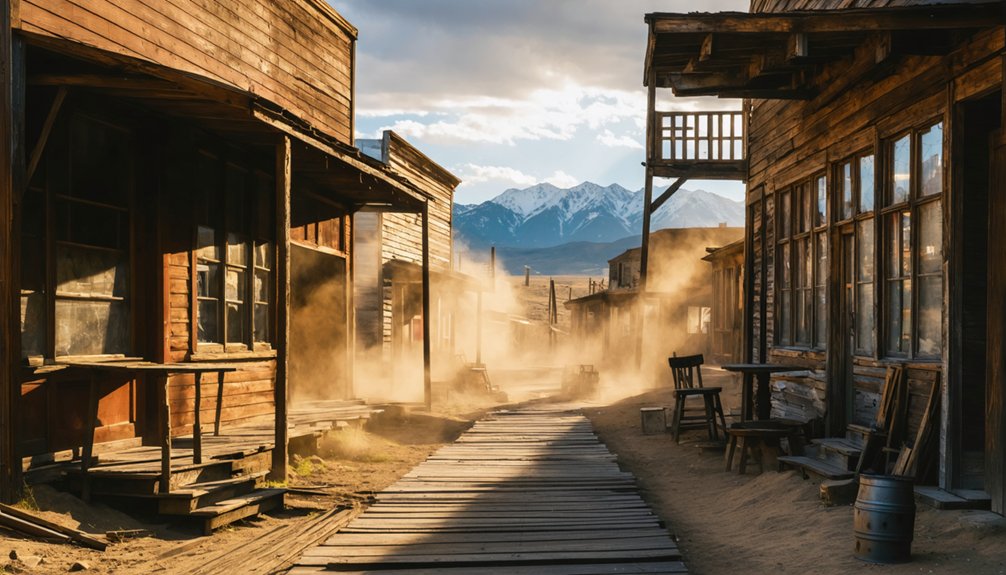
Today’s ghost town tourists seek more than crumbling facades and weathered storefronts—they’re participating in a multidimensional heritage experience that transforms forgotten settlements into living classrooms.
When you visit these historical sites, you’re engaging with authentic narratives of Western frontier life through interactive programs led by knowledgeable interpreters.
Heritage tourism at ghost towns offers:
Experience the past reimagined through hands-on heritage encounters that breathe life into the forgotten corners of American history.
- Immersive encounters with artisans demonstrating traditional blacksmithing, weaving, and gold panning techniques
- Educational interpretation centers revealing socioeconomic contexts of bygone communities
- Seasonal festivals recreating historical markets and pioneer activities
- Guided tours featuring local legends and folklore from original inhabitants
These experiences generate essential economic revitalization for surrounding communities while presenting preservation challenges that balance authenticity with accessibility.
You’ll discover both educational value and the freedom to connect personally with America’s pioneering spirit.
Frequently Asked Questions
Did Ghost Towns Experience Significant Paranormal Activity Historically?
You’ll find ghost towns documented numerous paranormal occurrences through firsthand accounts, with ghost sightings and haunted legends often corresponding to historical tragedies like murders, hangings, and mining accidents.
What Natural Disasters Contributed to Ghost Town Abandonment?
You’ll find underground fires, landslides, flooding impact, earthquakes and volcanic eruptions drove abandonment. In Centralia, fires burned for decades, while drought effects made other settlements unsustainable when water sources disappeared completely.
How Did Women Influence the Development of Boomtowns?
You’ll find women entrepreneurs transformed boomtowns by establishing essential businesses while simultaneously building social structures through schools, churches, and community organizations—challenging gender norms and bringing stability to otherwise transient mining settlements.
Were There Non-Mining Ghost Towns With Different Economic Foundations?
Yes, you’ll find numerous non-mining ghost towns built on diverse economic foundations. Railroad towns collapsed when lines closed, while cattle ranching communities disbanded during droughts or market shifts, demonstrating the West’s complex economic landscape beyond mineral extraction.
How Did Native American Tribes Interact With Developing Boomtowns?
Like parallel rivers meeting in turbulent confluence, you’d observe tribes engaging in tribal trade and cultural exchange with boomtowns while simultaneously resisting encroachment on their territories and maintaining cultural practices amidst mounting pressures.
References
- https://www.visitutah.com/things-to-do/history-culture/ghost-towns
- https://explorethearchive.com/western-ghost-towns
- https://www.americansky.co.uk/travel-inspiration/top-10-wild-west-towns-in-america
- https://www.geotab.com/ghost-towns/
- https://www.youtube.com/watch?v=SC60gEY39us
- https://wildwestcity.com/old-west-ghost-towns/
- https://www.atlasobscura.com/lists/americas-best-preserved-ghost-towns
- https://en.wikipedia.org/wiki/Lists_of_ghost_towns_in_the_United_States
- https://featured.com/questions/spotlight-ghost-towns-american-west
- https://bcgoldadventures.com/gold-rushes-in-the-west/