Leonards was a Sierra Nevada mining boomtown established in 1853 after rich gold veins were discovered. You’ll find the ghost town in California’s Mojave Desert, accessible via unpaved roads from State Route 66. Unlike commercialized ghost towns, it offers an authentic glimpse into mining history with weathered buildings and foundations slowly surrendering to nature. Pack supplies if you explore—this untouched relic of California’s gold rush awaits without modern amenities or interpretive signs.
Key Takeaways
- Leonards began as a gold mining town in the Sierra Nevada region during the California Gold Rush era.
- The town thrived from 1853 with rich gold veins, hotels, mercantile stores, and a stagecoach station by 1855.
- Economic decline began with resource exhaustion, leading to mine closures and population exodus by the early 1900s.
- Now an abandoned ghost town in the Mojave Desert, accessible via unpaved roads from State Route 66.
- Visitors can explore weathered buildings without tourist amenities, bringing necessary supplies for desert exploration.
The Golden Discovery and Settlement Origins
Although most Americans associate California’s gold rush with the 1848 discovery at Sutter’s Mill, the state’s first authenticated gold find actually occurred six years earlier in Placerita Canyon, north of Los Angeles.
You might be surprised to learn that José Francisco de Gracia Lopez, a mineralogy-educated prospector, found gold clinging to wild onion roots while digging for lunch in 1842.
This discovery, authenticated by the Philadelphia Mint as .926 fine gold, sparked California’s first gold rush. Hundreds of fortune-seekers from Los Angeles and Sonora flocked to establish makeshift camps along the riverbanks.
Simple mining techniques prevailed—knives and pans were used to extract gold from surface deposits. The Del Valle family leased land to these early miners, who extracted approximately 1,300 pounds of gold before the easily accessible deposits were depleted. Many of these early mining settlements featured women like Jennie Wimmer who played crucial roles in testing and confirming gold discoveries. The oak tree where Lopez made his discovery later became a California Historic Landmark, preserving the site’s historical significance.
Life in a Bustling Sierra Nevada Mining Community
The Sierra Nevada mining communities of the 1850s represented a stark contrast to the primitive encampments of California’s earlier gold discoveries. You’d find yourself in a world of sharp social dynamics, where wealthy mine owners constructed substantial homes while laborers crowded into simple wooden cabins or tents that offered little protection against harsh mountain winters.
Community resilience manifested through mutual aid systems and seasonal social events despite limited infrastructure. You’d witness diverse immigrants contributing to local customs while facing social tensions. The area was permanently transformed by hydraulic mining techniques that efficiently extracted gold but devastated the natural landscape. Many abandoned sites like those near Shamong and Masonic remain in the last stages of decay, presenting significant hazards to modern explorers.
The economy revolved around gold extraction, with ancillary businesses supporting mining operations. Women maintained essential roles in boarding houses and shops, while fraternal organizations provided civic structure.
Despite challenging conditions and fluctuating populations, these rugged communities forged distinctive identities through self-reliance and adaptation.
Economic Rise and the Town’s Infrastructure
While California’s gold boom triggered Leonards’ rapid transformation from mining camp to functioning town, its economic rise began in earnest during the winter of 1853, when several deep-shaft operations struck particularly rich veins in the western foothills.
You’d have witnessed a frenzy of infrastructure development as mining profits were channeled back into the community. Within months, rough canvas tents gave way to wooden structures—a two-story hotel, general mercantile, assay office, and eventually a small school. The town’s design mirrored the 15-minute city concept seen in modern development plans, with essential services within walking distance of residential areas. Similar to Cerro Gordo, Leonards saw economic prosperity through silver ore extraction that supported its rapid development.
Unlike many boom-and-bust settlements, Leonards achieved remarkable economic sustainability by diversifying beyond gold extraction. The town council encouraged investment in timber operations and a small foundry that served neighboring communities.
The addition of a stagecoach station in 1855 cemented Leonards’ position as a regional hub before its eventual decline.
The Inevitable Decline as Resources Vanished
Despite Leonards’ remarkable economic resilience during its heyday, exhaustion of precious metal deposits signaled the town’s inevitable downfall by the early 20th century.
You’d have witnessed the gradual transformation as once-profitable mines closed their gates when gold and silver veins ran dry. Resource exhaustion triggered a devastating economic downturn that rippled through every aspect of community life. The story of Leonards exemplifies the boom and bust cycles that defined California’s mining communities throughout history.
Where thriving businesses once stood, vacant buildings remained as miners and their families sought opportunities elsewhere. The town’s remains now attract urban explorers seeking glimpses into California’s mining past. The 1920s census revealed a town rapidly emptying, with essential services shuttering one by one.
Visiting Leonards Today: a Window Into California’s Past
Venturing into the dusty expanse of the Mojave Desert, you’ll find Leonards tucked away in San Bernardino County, accessible only via unpaved roads branching from State Route 66 near Ludlow.
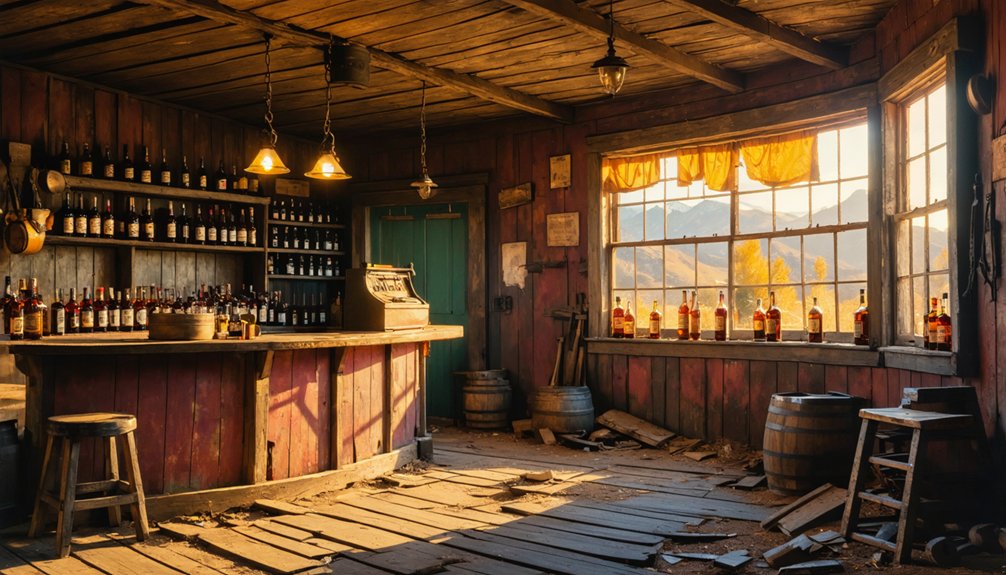
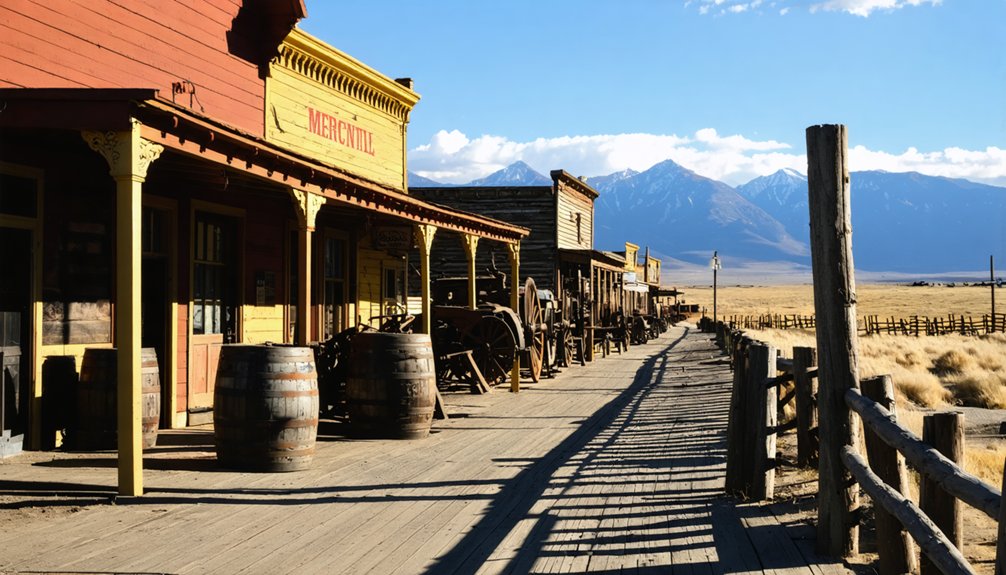
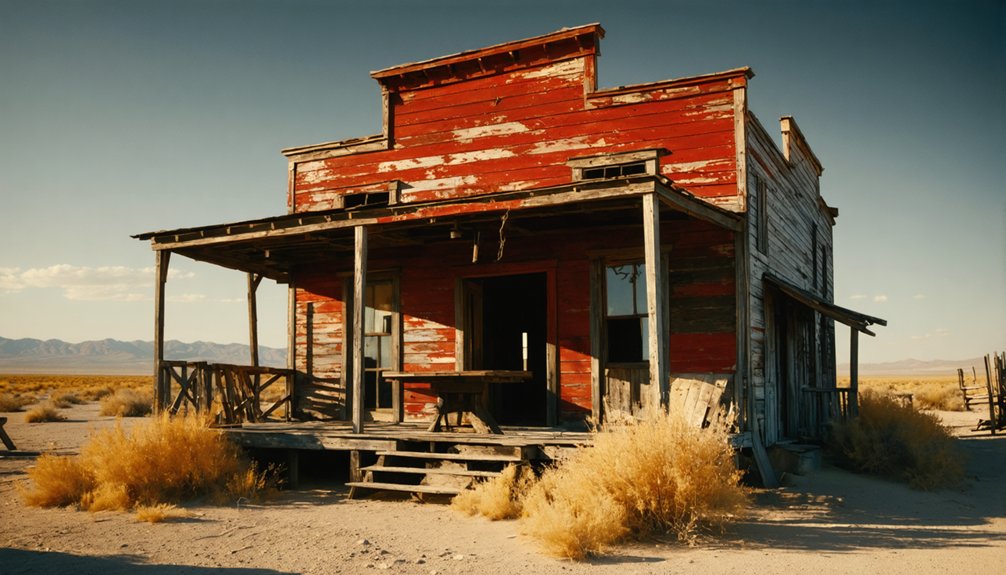
This forgotten ghost town offers raw desert exploration without sanitized tourist trappings. Weathered wooden buildings and crumbling foundations of the general store and post office stand as silent witnesses to California’s past. Like many ghost towns in the region, Leonards fell into decline due to resource depletion in the early 1900s.
You’ll encounter no interpretive signs, visitor centers, or amenities—bring all necessary supplies for this remote adventure. Unlike Calico Ghost Town which attracts over 240,000 visitors annually, Leonards remains virtually unknown to most tourists.
The site remains untouched by preservation efforts, slowly surrendering to the desert’s embrace. No protective measures shield these remnants from further decay or vandalism.
While photography is permitted, tread carefully around unstable structures as you glimpse this unfiltered window into a bygone California era.
Frequently Asked Questions
What Happened to Leonards’ Original Mining Equipment?
You won’t find Leonard’s original mining relics today—they were likely salvaged, scrapped, or deteriorated after the mine’s closure, as historical preservation wasn’t prioritized for this Mother Lode operation.
Were There Any Famous Outlaws or Notable Shootouts?
There’s no historical record of famous outlaws or notorious shootouts in Leonards. You won’t find Wild West legends here—this quiet mining settlement didn’t attract the gunslinging desperados that characterized other California boomtowns.
How Did Residents Survive Winter Months at High Elevation?
You’d have relied on winter preparations like preserving meat and vegetables in cellars, stockpiling firewood, layering clothing, and forming communal spaces where neighbors shared resources during harsh, snowy isolation.
Did Any Indigenous Communities Interact With Leonards Settlers?
Like shadows in the valley, indigenous communities—likely Chimariko—did interact with Leonards settlers. You’d have witnessed tense indigenous interactions alongside limited cultural exchanges, often marked by resource competition and displacement.
Are There Reports of Paranormal Activity in Abandoned Buildings?
You’ll find numerous accounts of ghost sightings within Saint Leonards’ haunted structures, particularly shadow figures and headless dogs. Reports often mention unexplained sounds and moving objects in these isolated, decaying buildings.
References
- https://www.altaonline.com/dispatches/a62686535/ghost-towns-california-haunted-places-lauren-markham/
- https://www.salvationmountain.us/history2.html
- https://www.youtube.com/watch?v=OD9M6MP6RRU
- https://en.wikipedia.org/wiki/List_of_ghost_towns_in_California
- https://www.calexplornia.com/california-ghost-towns/
- https://www.youtube.com/watch?v=7Wm97gwXVq0
- https://www.youtube.com/watch?v=HyPU2X5KHr4
- https://scvhistory.com/scvhistory/signal/worden/lw012496.htm
- https://www.barnesandnoble.com/w/the-california-gold-rush-and-the-coming-of-the-civil-war-leonard-l-richards/1100618127
- https://www.ebay.com/itm/183749778387