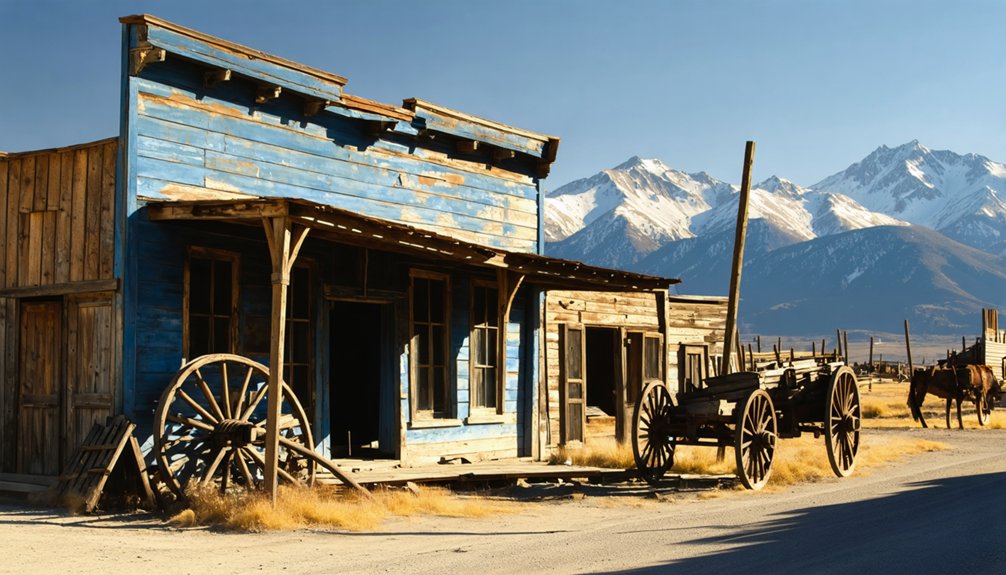
You’ll find numerous hidden ghost towns beyond tourist-heavy destinations scattered throughout the American West. Bannack, Montana showcases infamous vigilante justice history, while Ruby, Arizona preserves mining infrastructure with dark frontier violence tales. Silver City, Idaho offers telegraph offices frozen in time, and Garnet, Montana displays untouched personal belongings. At Thurmond, West Virginia, a former bustling railroad hub now houses just five residents. These forgotten settlements reveal America’s territorial past through their authentic architectural remnants.
Key Takeaways
- Gleeson, Arizona features a restored 1910 jail and remnants of a copper boom town where millions in ore were extracted.
- Ruby, Arizona contains well-preserved adobe and cement structures near the Mexican border but remains closed to public access.
- Terlingua, Texas survived the mercury market crash and transformed into a cultural hub featuring the famous chili cook-off.
- Castle Dome, Arizona showcases 300+ historic mines as an open-air museum of Arizona’s lead and silver mining heritage.
- Thurmond, West Virginia operated as a coal freight hub handling more tonnage than Cincinnati before declining to just five residents today.
Bodie, California: The Gold Rush Town Frozen in Time
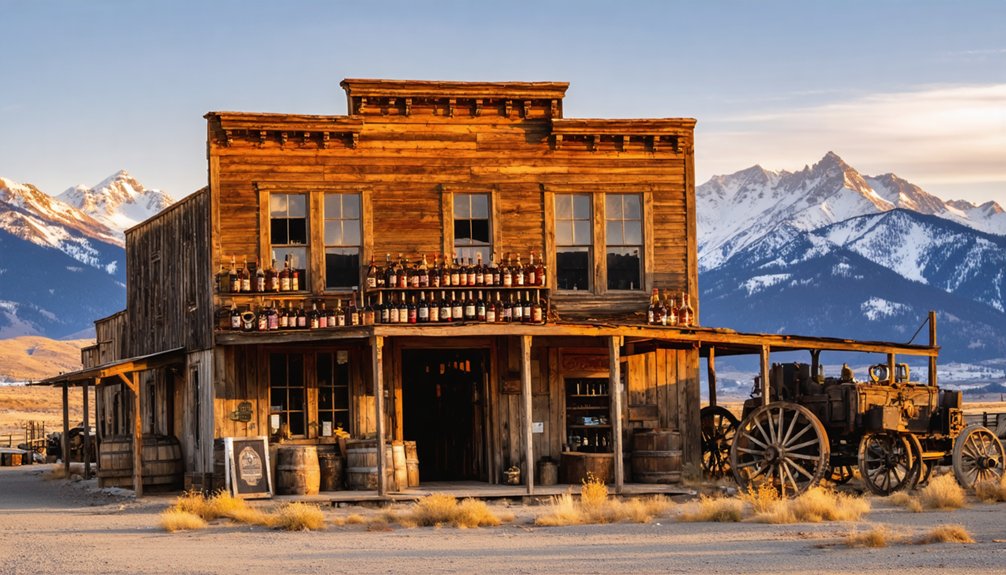
While many ghost towns dot the western landscape, few remain as perfectly preserved as Bodie, California, a gold rush boomtown that sprang to life following William Bodey’s 1859 discovery east of the Sierra Nevada Mountains.
Despite the misspelling of its founder’s name, Bodie’s history exploded in the 1870s, growing to 10,000 residents with 65 saloons and producing over $70 million in gold mining revenue by 1941.
You’ll find Bodie preserved in “arrested decay,” with more than 170 original structures still standing.
After devastating fires and depleted ore veins triggered its decline, California designated it a National Historic Landmark in 1961.
Today, you can walk through this authentic snapshot of Wild West mining culture, where buildings and artifacts remain untouched—a reflection of the transient nature of frontier boom-and-bust cycles. The town serves as a perfect example of why proper disambiguation resources are necessary when researching historic locations with multiple namesakes. Known for its lawlessness and violence, Bodie earned the infamous phrase “Badman from Bodie” by 1880, rivaling notorious towns like Tombstone and Deadwood.
Bannack, Montana: Where Vigilante Justice Once Ruled
Among the many ghost towns of the American West, Bannack, Montana stands as a chilling symbol of frontier justice unlike the preserved commercial character of Bodie. Founded in 1862 following a major gold discovery, this former territorial capital witnessed one of America’s deadliest episodes of vigilante justice when citizens formed the Vigilance Committee to combat frontier lawlessness.
While Bodie stands as a commercial relic, Bannack’s legacy lies in its bloody history of vigilante justice and frontier lawlessness.
You’ll find the dark legacy of Sheriff Henry Plummer, who allegedly led a road agent gang while wearing his badge, before meeting his end at the vigilantes’ rope in 1864. Today, visitors report encounters with ghostly apparitions in the historic Hotel Meade, particularly of a young girl named Dorothy Dunn who drowned in 1916.
- Over 22 suspected criminals hanged without formal trials
- Montana’s first territorial capital, established 1864
- Sheriff Plummer executed alongside his deputies
- Crime dropped dramatically after the vigilante actions
- Now preserved as a state park since 1954
The gold in Grasshopper Creek was exceptionally pure at 99-99.5% purity, which attracted thousands of prospectors to the area within months of its discovery.
Thurmond, West Virginia: The Railroad Ghost Town of Appalachia
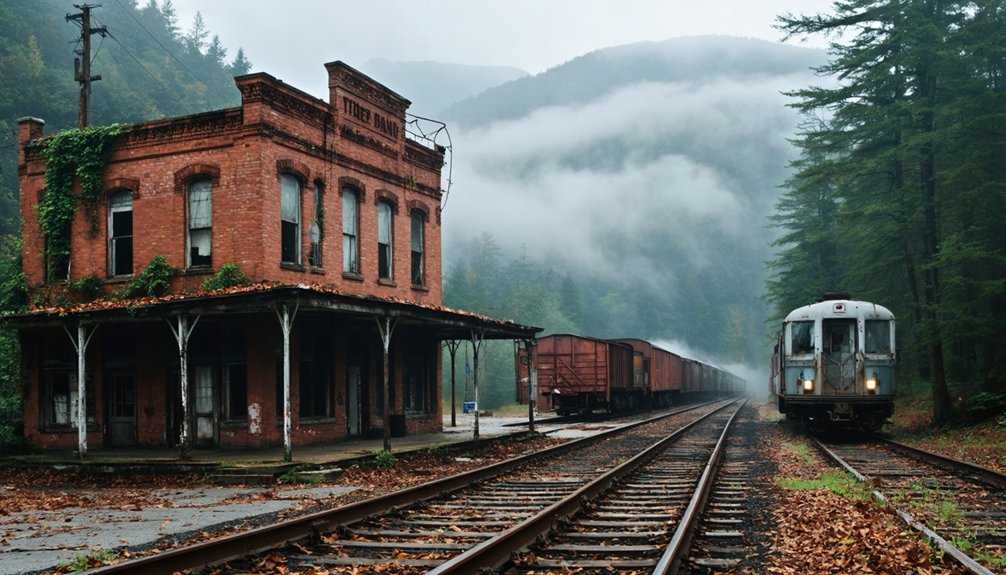
Deep in the heart of West Virginia’s New River Gorge, Thurmond stands as an extraordinary monument to America’s railroad era, its rise and fall mirroring the economic evolution of Appalachia itself. Founded by Captain William D. Thurmond in 1873 after a land survey payment, this once-bustling hub handled more coal freight than Cincinnati during its 1920s peak.
Thurmond history reveals a town divided—Captain Thurmond’s dry, religious vision on one side of the river, while “Ballyhack” thrived with gambling and vice on the other. The notorious Chief of Police Harrison Ash maintained order among the town’s troublemakers by using considerable force when necessary. Today, with a population of just five residents, Thurmond holds the distinction of being West Virginia’s least-populous municipality.
The town’s railroad legacy included wealthy banks, the famous Dun Glen Hotel (site of a legendary 14-year poker game), and extensive C&O Railway operations.
Fires in 1922 and 1930, coupled with diesel locomotives replacing steam engines, accelerated Thurmond’s transformation into the haunting ghost town you’ll find today.
Ruby, Arizona: The Forgotten Mining Outpost Near the Border
Moving east to west across America’s forgotten frontier landscapes, we encounter Ruby, Arizona—a remarkably well-preserved mining settlement near the Mexican border that offers a starkly different portrait of western abandonment than Thurmond’s railroad legacy.
This ghost town, placed on the National Register of Historic Places in 1975, preserves Arizona heritage through its mining legacy of gold, silver, and copper extraction that once employed 350 miners working around the clock. The town’s unfortunate history includes the brutal Fraser brothers murders in 1920, one of several violent incidents that earned Ruby its reputation for lawlessness.
As the stories of old towns fade from memory, efforts are underway to reinvigorate interest in historical spaces, including reviving forgotten towns in Oregon. These initiatives aim to breathe new life into communities that once thrived, showcasing their unique heritage and potential for future growth. By restoring their charm and promoting local tourism, these towns can reclaim their place in the narrative of American history.
- Ruby’s adobe and cement structures remain among Arizona’s best-preserved ghost town architecture
- The community life evolved from tent dwellings to a vibrant town with a baseball team and rifle club
- Environmental impact includes tailings piles and man-made lakes now attracting wildlife
- Cultural significance includes being featured in “The Ghosts of Ruby” PBS documentary
- Preservation efforts continue through private ownership despite being closed to public access
Originally built as a mining camp, Ruby’s population once peaked at 1,200 during its boom years as residents extracted valuable lead and zinc from the surrounding hills.
Terlingua, Texas: The Desert Mining Community That Refused to Die
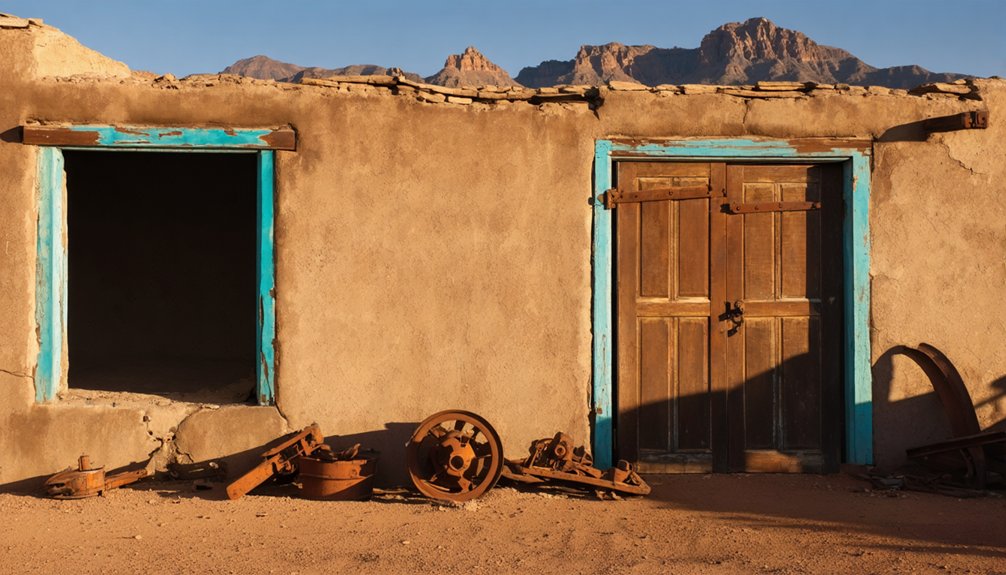
While Ruby, Arizona receded into history as a preserved but largely abandoned relic, Terlingua, Texas stands as a remarkable symbol to resilience in America’s harsh southwestern frontier.
This mining community emerged in the late 1800s after cinnabar deposits were discovered, transforming a small Mexican settlement into a booming quicksilver hub. By 1922, Terlingua produced 40% of America’s mercury, with the Chisos Mining Company dominating operations under Howard Perry’s ownership.
The town’s prosperity couldn’t withstand the mercury market crash of the 1930s. After the mines closed in the 1940s, Terlingua nearly vanished—but refused to die.
Today, the ghost town’s ruins of sandstone buildings, historic cemetery, and Perry’s mansion form the core of a revitalized community. What was nearly bulldozed has become home to rustic lodgings, restaurants, and the internationally famous chili cook-off that established Terlingua as the Chili Capital of America in 1967. Visitors can explore the St. Agnes Church ruins from 1913, which once served as a central gathering place for the mining community.
Silver City, Idaho: The Overlooked Gem of the Owyhee Mountains
Hidden among the rugged peaks of the Owyhee Mountains, Silver City represents an extraordinary chapter in Idaho’s mining history that has escaped the spotlight often shining on more famous Western ghost towns.
This remarkable settlement, founded after the Jordan party’s 1863 gold discovery, quickly transformed into a booming silver metropolis that extracted over $60 million in precious metals.
Silver City’s mining legacy offers unparalleled glimpses into frontier industrialism:
Silver City’s industrial remnants stand as rugged monuments to Idaho’s ambitious frontier spirit and mining innovation.
- First discovered by prospectors seeking the mythical Blue Bucket mine
- Home to Idaho’s first newspaper and earliest telegraph connections
- Produced over $1 million annually during peak mining operations
- Features over 70 preserved structures from the 1860s-1900s
- Remains privately owned with strict preservation ordinances protecting its authentic character
You’ll find few places that maintain such pristine historical integrity while revealing the economic powerhouse of Idaho’s territorial past.
Gleeson, Arizona: A Copper Boom Town’s Silent Remains
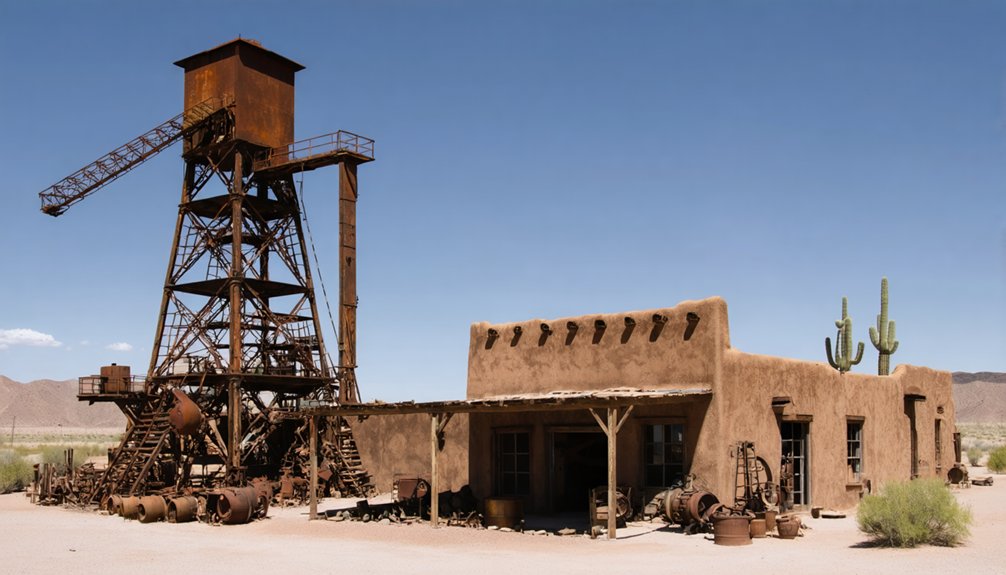
When you visit Gleeson, Arizona today, you’ll find the skeletal remains of a copper boom town where fortune seekers once extracted millions in ore during the early 20th century.
The restored 1910 jail stands as the most prominent reminder of both the town’s criminal element and the determined efforts to maintain order in this once-thriving mining community.
Among the desert sands, foundations of saloons, the hospital, and mining operations tell the story of Gleeson’s dramatic trajectory from Native American turquoise site to copper boomtown to abandoned ghost town.
Copper and Criminal Past
As you wander through the scattered ruins of Gleeson, Arizona, the weathered remnants of copper mines and crumbling structures tell a complex tale of boom and bust.
This former copper mining hub thrived after Irish miner John Gleeson staked claims around 1896, transforming the area from turquoise prospecting to industrial copper extraction.
The town’s ghostly remnants reveal a colorful past centered around:
- The restored 1910 Gleeson Jail, now a small museum preserving local history
- A devastating 1912 fire that destroyed 28 buildings before rapid rebuilding
- Copper Belle Mine, foundation of the boomtown’s economic prosperity
- Railroad connections completed in 1909, linking isolated miners to the world
- The Spanish flu pandemic that decimated approximately 20% of residents
You’ll find the town’s heyday ended as copper prices collapsed after World War I, with final operations ceasing around 1940.
Ruins Among Desert Sands
Today, Gleeson exists as a windswept collection of adobe ruins and concrete foundations scattered across the Arizona desert landscape.
As you explore this mining heritage site, you’ll find the remnants of what was once a thriving community of 6,000 residents during its 1918 peak.
Desert archaeology reveals the town’s evolution—from indigenous turquoise mining to the copper boom initiated by John Gleeson’s discoveries in 1900.
The concrete jail still stands as proof of the settlement’s relative orderliness compared to other frontier towns.
After the devastating 1912 fire destroyed wooden structures, residents rebuilt using fire-resistant adobe and concrete, explaining the distinctive ruins you see today.
These silent remains tell a story of resilience, as miners transformed an abandoned settlement into a prosperous community with schools, hospitals, and commerce.
Garnet, Montana: The Best-Preserved Ghost Town You’ve Never Heard Of
Nestled within Montana’s mountainous terrain, Garnet stands as one of the West’s best-preserved mining ghost towns, offering visitors an authentic glimpse into America’s gold rush era.
Originally called Mitchell, this frontier settlement boomed after an 1895 strike at the Nancy Hanks Mine yielded $690,000 in just one year. Mining techniques evolved from early placer operations to hard-rock extraction following the 1893 repeal of the Sherman Silver Purchase Act.
What makes Garnet exceptional:
- Nearly 30 original structures remain intact with personal belongings left behind
- The town escaped the widespread looting that plagued other ghost towns
- At its peak, 1,000 residents supported 13 saloons and numerous businesses
- A devastating 1912 fire accelerated its decline
- Now protected by the BLM and listed on the National Register of Historic Places
Castle Dome, Arizona: A Mining Town Reborn as an Outdoor Museum
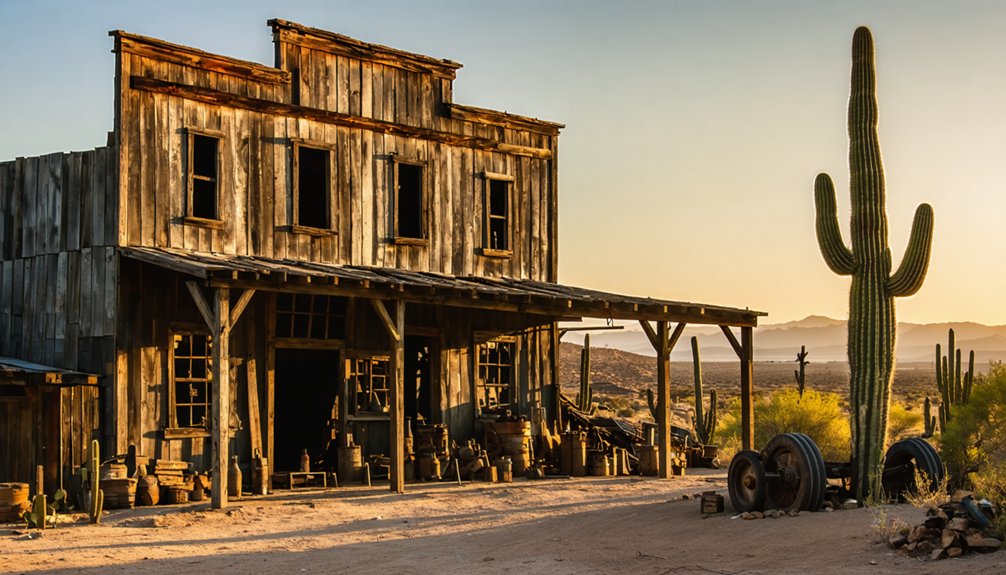
While Garnet preserves Montana’s gold rush legacy, Castle Dome represents Arizona’s lead and silver mining heritage through its remarkable rebirth as an open-air museum.
You’ll find this desert preservation marvel nestled in the Kofa Mountains foothills, about 30 miles north of Yuma on a patented mine site dating to 1871.
The district’s 300+ mines operated intermittently from the 1860s through 1979, making it Arizona’s longest continuously worked mining area. At its peak, Castle Dome boasted a population exceeding Yuma’s, with 3,000 residents, multiple saloons, mercantiles, and essential services.
Jacob Snively’s 1863 galena discovery sparked the boom, but declining silver prices eventually silenced the district.
The ore that built a community ultimately proved its undoing as silver’s value diminished across Arizona’s rugged frontier.
Today, the reconstructed town offers a glimpse into frontier life where the harsh Sonoran Desert shaped both mining operations and daily existence.
Frequently Asked Questions
How Did Children Experience Life in These Isolated Mining Communities?
You’d have sparse childhood memories dominated by harsh realities—irregular schooling experiences, domestic labor, and playtime amid dangerous terrain, all while developing resilience in communities that could vanish overnight.
What Natural Disasters Have Threatened These Ghost Towns Over Time?
You’ll find these towns ravaged by destructive floods that eroded foundations and earthquake impacts that collapsed mine shafts. Fire consumed wooden structures while drought rendered mills inoperable, accelerating their abandonment.
Are Any Ghost Towns Accessible for People With Mobility Limitations?
You’ll find some accessible ghost towns like Calico and Grafton with maintained walkways, while South Pass City offers relatively flat terrain. Mobility friendly sites often include those managed as historical parks.
Which Ghost Towns Have Documented Paranormal Activity or Haunting Legends?
While skeptics demand proof, historical records confirm eerie encounters at Ruby (Arizona), St. Elmo (Colorado), and Frisco (Utah). You’ll discover well-documented ghost stories amid these crumbling structures where violent pasts fuel paranormal legends.
How Did Women’s Roles Differ in These Frontier Mining Settlements?
You’ll find pioneering women created economic niches beyond domestic spheres—running boarding houses, laundries, and even mines while establishing community roles that stabilized these volatile settlements through education, healthcare, and social organization.
References
- https://www.tripadvisor.com/Articles-loOISRppph64-American_ghost_towns.html
- https://mwg.aaa.com/via/places-visit/western-ghost-towns
- https://www.hertz.com/p/american-road-trip-planner/west-coast/ghost-towns-of-the-west
- https://www.geotab.com/ghost-towns/
- https://www.youtube.com/watch?v=yeTVfoQxqJc
- https://www.legendsofamerica.com/gt-hiddentales/
- https://wildwestcity.com/old-west-ghost-towns/
- https://en.wikipedia.org/wiki/Lists_of_ghost_towns_in_the_United_States
- https://www.atlasobscura.com/lists/americas-best-preserved-ghost-towns
- https://www.bodiehistory.com