Levee isn’t a California ghost town, but historic levees built throughout California’s Central Valley have created unique settlements. You’ll find ghost towns like Locke, established by Chinese laborers who constructed over 1,000 miles of levees in the Sacramento-San Joaquin Delta under dangerous conditions. These workers transformed 88,000 acres of marshland into farmland by 1880, establishing vibrant communities with distinct cultural enclaves. Their legacy persists in California’s complex flood management infrastructure and cultural heritage sites.
Key Takeaways
- Chinese laborers built over 1,000 miles of levees in California’s Delta region, transforming marshland into farmland by 1880.
- Locke, a California ghost town, emerged as a cultural enclave where Chinese workers established vibrant communities supporting agricultural laborers.
- The ghost town’s population fluctuated seasonally, swelling from 600 to 1,600 residents during harvest seasons.
- Daily life centered around communal spaces like gambling halls, general stores, and teahouses that reinforced cultural identity.
- Today, ecological restoration efforts have transformed the abandoned town while preserving historical elements like the weathered Ghost Ship.
The Birth of Levee: 19th Century Development
As the California Gold Rush erupted in 1848, Sacramento emerged at the confluence of the Sacramento and American Rivers, drawing thousands of fortune-seekers who established settlements with little regard for the land’s natural flood vulnerability.
This oversight proved catastrophic when January 1850 brought devastating floods, submerging Sacramento under six feet of water.
You’d have witnessed a remarkable display of community resilience as citizens gathered immediately after the waters receded, launching an engineering survey and committing to early flood management through levee construction.
The hastily built earthen and timber structures, created through manual labor, represented the frontier spirit of self-determination. These projects attracted Chinese laborers to the area, establishing a workforce presence that would later influence settlement patterns.
Though the Placer Times optimistically declared protection achievable at “comparatively small expense,” these rudimentary defenses would soon face nature’s unrelenting power.
The Great Flood of 1862 would ultimately prove these early efforts insufficient, turning the Central Valley into an inland sea and destroying a quarter of California’s buildings.
Great Flood of 1862: Catalyst for Change
The primitive levee system Sacramento’s pioneers constructed would face its ultimate test within a decade. The Great Flood of 1862 transformed California’s landscape and economy, creating an inland sea spanning 300 miles through the Central Valley.
The hastily built levees of Sacramento would soon confront nature’s fury, as the 1862 deluge remade California forever.
In the flood aftermath, Sacramento legislators rowed to Capitol meetings through streets submerged under 10 feet of debris-laden water. The Santa Ana River created two large lakes in the Inland Empire and Orange County region. These devastating floods resulted from atmospheric river storms that brought weeks of continuous precipitation from November 1861 to January 1862.
The catastrophe’s magnitude reshaped California:
- Downtown Sacramento required elevation by 10 feet, creating an “underground city” beneath today’s streets.
- One-third of taxable property vanished overnight, bankrupting the state for 18 months.
- A quarter of California’s economy collapsed as 200,000 cattle drowned.
- Egg prices skyrocketed to $3 per dozen ($79 in today’s dollars).
Economic recovery took years, permanently ending California’s cattle industry while fundamentally altering both settlement patterns and agricultural practices.
Chinese Labor and the Building of Delta Defenses
Chinese laborers, working for about a dollar per day after the completion of the Transcontinental Railroad, constructed over 1,000 miles of levees in the Sacramento-San Joaquin Delta using just hand shovels and wheelbarrows.
You’ll find these workers endured grueling conditions—often standing waist-deep in water while moving massive amounts of peat soil by hand—to transform 88,000 acres of marshland into farmable terrain by 1880.
Despite facing dangerous working conditions and systemic discrimination, Chinese immigrants established cultural enclaves like Locke where they maintained their traditions while contributing innovations such as specialized horseshoes that made the “virtually impossible” task of Delta reclamation feasible. Their work directly benefited white landowners like George D. Roberts who gained enormous profits while the laborers themselves received exploitative low wages. These laborers were organized through a contract system managed by Chinese labor agents who assembled and coordinated the workforce.
Subheading Discussion Points
How tirelessly did thousands of Chinese laborers transform California’s Sacramento-San Joaquin Delta from swampland to productive farmland?
By 1876, nearly 3,000 Chinese workers reclaimed 88,000 acres of rich Delta soil while enduring grueling conditions and leaving indelible cultural influences on the region’s development.
These laborers, organized under a familiar contract system, faced tremendous labor struggles while earning just one dollar daily for backbreaking work that generated millions in profit for land companies. Despite facing legal discrimination under the California Alien Land Law, they continued to develop communities that would become cultural landmarks. The early levees they constructed were typically four feet high and twelve feet wide, entirely built by hand before mechanization.
- Workers standing waist-deep in murky water, stacking peat bricks in parallel walls
- Makeshift tent camps dotting levee construction sites, smoke rising from cooking fires
- Men wielding wooden rammers and shovels, their bodies bent under heavy soil baskets
- Horses with oversized horseshoes treading carefully along newly packed levee tops
Dangerous Backbreaking Levee Work
Standing knee-deep in murky waters that teemed with mosquitoes and unseen hazards, Delta levee builders risked their lives daily while transforming California’s vast Sacramento-San Joaquin swamplands into productive farmland.
By 1876, about 3,000 Chinese laborers toiled in these hellish conditions, earning merely a dollar per day. You’d find them stacking sun-dried peat bricks, digging through mud, and damming sloughs with nothing but hand tools—shovels, wheelbarrows, and wooden rammers.
Their labor struggles went largely unacknowledged despite introducing innovations like specialized horseshoes for packing soil.
Health risks were extreme. Workers faced drowning during repairs, as evidenced by multiple fatalities during the severe 1885 winter floods. The waist-deep water, constant exposure to elements, and mosquito-infested environment created perilous conditions that claimed lives while generating millions in profits for companies like the Tide Land Reclamation Company.
Cultural Enclaves Amid Hardship
Amid these brutal working conditions, cultural lifelines emerged as Delta laborers forged communities that sustained their survival. Chinese workers established vibrant enclaves in towns like Locke and Isleton, creating centers of cultural resilience that defied growing anti-Chinese sentiment. These communities preserved heritage while adapting to harsh American realities.
Within these settlements, you’d find:
- Bustling Chinese commercial districts supporting agricultural workers
- Community associations providing mutual aid and protection from discrimination
- Traditional temples and gathering spaces that reinforced community identity
- Economic networks connecting labor agents, merchants, and workers
Despite exclusionary laws and vigilante violence pushing most Chinese from land ownership by the 1890s, these cultural strongholds persisted.
When disasters struck—like Isleton’s 1915 fire—communities rebuilt, maintaining essential cultural centers that supported the 90% of workers who powered the Delta’s agricultural revolution.
Daily Life in a River Settlement
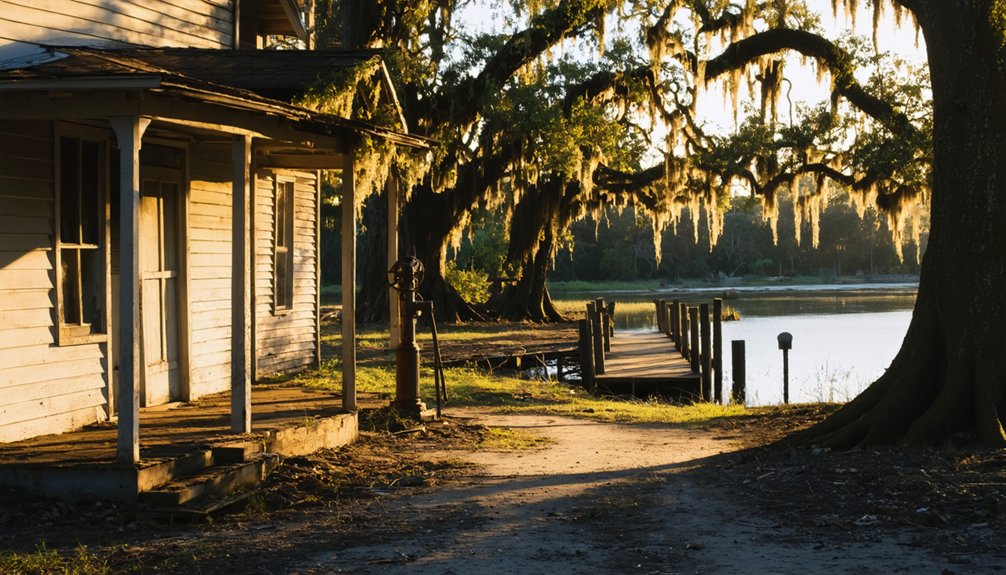
Walking through Levee during its heyday, you’d notice the rhythm of communal life centered around gambling halls, general stores, and teahouses where residents sought respite from long workdays.
Your visit would vary dramatically depending on the season, as winter months maintained a steady population of permanent residents while summer brought waves of agricultural laborers who transformed the settlement into a bustling hub.
The social calendar followed agricultural cycles, with celebratory gatherings after harvests contrasting sharply with the focused intensity of levee repair work that followed winter floods. These repair efforts were crucial as the entire Sacramento Valley is an artificial creation sustained by the very levees that gave the town its name.
Community Gathering Places
Levee’s community fabric was woven through a network of diverse gathering places that defined daily life in this Sacramento River settlement. Social interactions flourished in gambling halls and brothels, while markets and restaurants strengthened community bonds through informal exchanges. Similar to Locke’s Chinese Americans, Levee residents established cultural institutions that preserved their heritage while adapting to California’s frontier conditions.
- The Baptist church served as both spiritual sanctuary and social hub, hosting celebrations that united the town’s 600 permanent residents.
- Hotels and boarding houses transformed from mere lodging into vibrant community centers where seasonal workers and locals mingled freely.
- The quarter-mile Main Street became the town’s lifeline, a bustling thoroughfare where daily conversations shaped the settlement’s character.
- Riverbanks functioned as natural gathering points where laborers congregated, creating spontaneous communities among the Chinese workers constructing the levees that gave the town its name.
Seasonal Work Rhythms
While the community gathering places anchored social life in Levee, the Sacramento River itself orchestrated the town’s working rhythms through its seasonal cycles.
You’d notice the town’s calendar divided by water’s ebb and flow—when river levels rose, the entire community shifted to flood preparedness mode.
Residents elevated structures and stockpiled sandbags, while workers patrolled levees around the clock, their truck spotlights scanning for dangerous seepage.
Seasonal inspections became ritualized knowledge, with crews reinforcing weakened sections immediately after each flood season.
Your daily labor would have cycled between agriculture and levee maintenance, with emergency teams ready to mobilize at any moment water threatened the community’s fragile boundary.
This constant vigilance against the river’s natural rhythms defined Levee’s existence, ultimately shaping both its prosperity and eventual abandonment.
Agricultural Economy and Seasonal Workers
As the Sacramento Delta region evolved from marshland to agricultural powerhouse in the early 20th century, Levee emerged as a critical hub for both permanent Chinese residents and the seasonal workforce that sustained the area’s booming fruit industry.
The town’s economic pulse followed agricultural cycles, with seasonal migration doubling its population during harvest times. While 600 permanent residents formed the town’s core, an additional 1,000 laborers arrived when orchards demanded hands.
Levee breathed with the seasons, its population swelling from 600 to 1,600 as migrant workers answered the orchards’ call.
- Farmers tending vast pear orchards beneath Delta sunlight
- Seasonal workers crowding gambling halls after sunset, pockets full of hard-earned wages
- Marketplaces buzzing with merchants selling produce just hours from harvest
- Restaurants filled with workers speaking Cantonese, sharing meals before returning to fields
The Slow Decline: Why Levee Was Abandoned
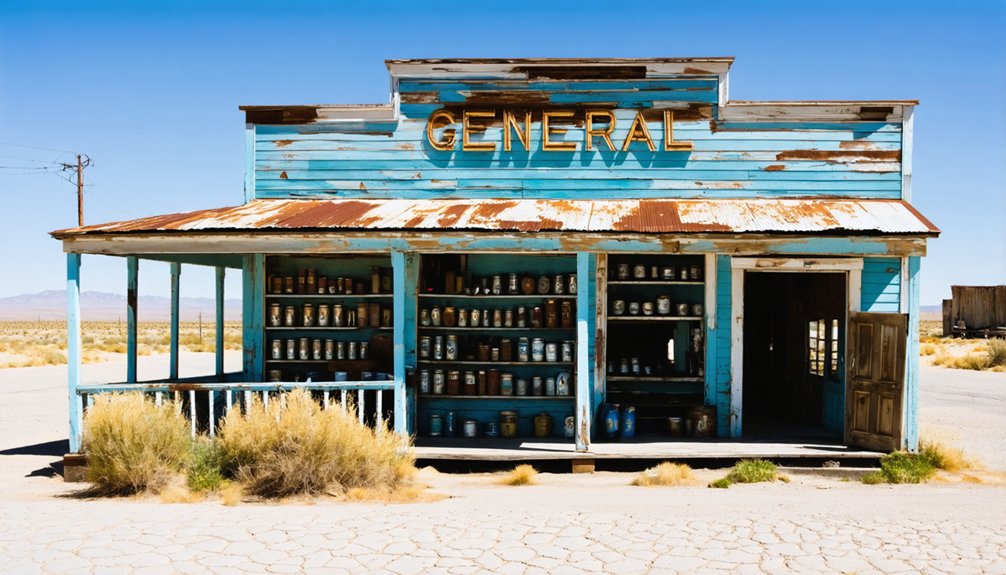
Despite its promising beginnings as an agricultural hub, Levee’s fate was sealed by a perfect storm of environmental vulnerabilities, infrastructural weaknesses, and shifting economic priorities.
You could trace the town’s decline to the fundamental challenges of flood management in the Sacramento Valley, where aging levee systems repeatedly failed against the river’s might.
As land subsidence worsened, maintenance costs skyrocketed beyond economic viability. The catastrophic breaches of nearby Liberty Island (1998) and Jones Tract (2004) foreshadowed Levee’s inevitable abandonment.
With each flood, fewer residents returned to rebuild, especially as insurance premiums became prohibitive.
The seismic risks only compounded these challenges, making investment in infrastructure improvements increasingly difficult to justify as the population dwindled and agricultural profits diminished in the shadow of recurrent flooding.
Legacy and Remnants: What Survives Today
When you visit Levee today, you’ll encounter a haunting palimpsest where nature and human history intertwine in compelling ways. The abandoned ghost town has transformed through ecological restoration efforts while maintaining connections to its industrial past through historical preservation.
Haunting layers of history and rebirth coexist as nature reclaims what industry abandoned.
The most striking remnants include:
- A weathered Ghost Ship at the shoreline—standing as a silent sentinel to maritime heritage.
- The repurposed historic boathouse—once commercial, now a community gathering space.
- Original boat launch rails—deliberately preserved and integrated into the redesigned coastline.
- Harbor Marsh—where native grasses now grow between industrial remnants.
Despite lead and asbestos contamination that once threatened redevelopment, remediation efforts have succeeded.
The horizontal levee project exemplifies how infrastructure can blend protection with habitat recovery, allowing you to experience both historical significance and ecological rebirth simultaneously.
Frequently Asked Questions
Are There Any Accessible Ruins or Buildings to Visit Today?
No accessible ruins exist in Levee itself. You’ll find local preservation efforts concentrated in nearby Locke, where you can explore well-maintained abandoned structures from Chinese immigrant communities instead.
What Specific Crops Were Grown in Levee’s Agricultural Heyday?
While cotton production ebbed and flowed, you’d have found abundant fruit orchards—particularly pears—alongside asparagus, potatoes, beans, sugar beets, tomatoes, and staple grains like wheat and corn during Levee’s agricultural prime.
Were There Any Notable Disasters Besides Flooding?
Besides flooding, you’d find earthquake damages compromised Levee’s already vulnerable infrastructure, while fire incidents periodically destroyed wooden structures. These disasters compounded economic hardships faced by struggling agricultural communities in the region.
Did Any Famous Historical Figures Visit or Live There?
In the million records examined, you’ll find no famous visitors documented in these levee towns. Their historical significance stems from collective communities like Chinese laborers in Locke rather than celebrity residents or distinguished guests.
Are There Paranormal Stories Associated With This Ghost Town?
You’ll find numerous ghost sightings reported near abandoned buildings, particularly after floods. Local haunted legends often feature Chinese laborers’ spirits and victims from the devastating 1862 flood along deteriorating levee structures.
References
- https://cvfpb.ca.gov/news/when-sacramento-became-levee-city-marking-the-170-year-anniversary-of-the-flood-that-started-it-all/
- https://www.7×7.com/a-ghost-town-near-sacramento-contains-little-known-california-history-1781796785.html
- https://patch.com/california/banning-beaumont/13-ghost-towns-explore-california
- https://californiacrossroads.com/abandoned-ghost-towns-in-california/
- https://ksj.mit.edu/news/2021/06/11/two-lost-towns/
- https://www.rickyshistoricaltidbits.com/articles/hoboken-the-city-that-seized-the-day
- https://en.wikipedia.org/wiki/Great_Flood_of_1862
- https://energyskeptic.com/2018/battling-the-inland-sea-the-history-of-why-and-how-the-levee-system-was-built-in-californias-delta/
- https://www.historynet.com/gold-fever-leads-to-environmental-disaster-in-california/
- https://www.portofstockton.com/wp-content/uploads/2021/04/Early_Reclamation_Abandonment_Central_Sacramento-San_Joaquin_Delta.pdf