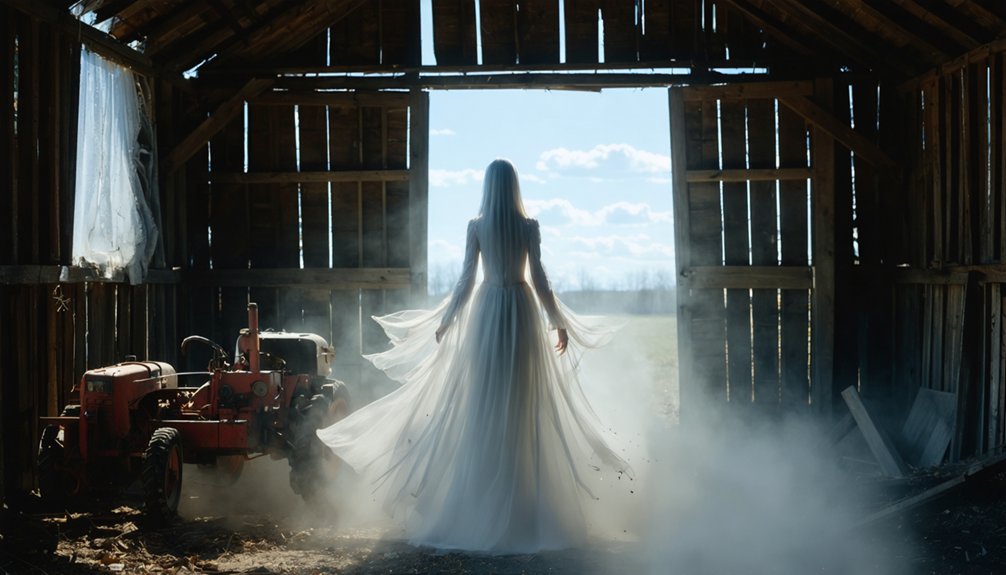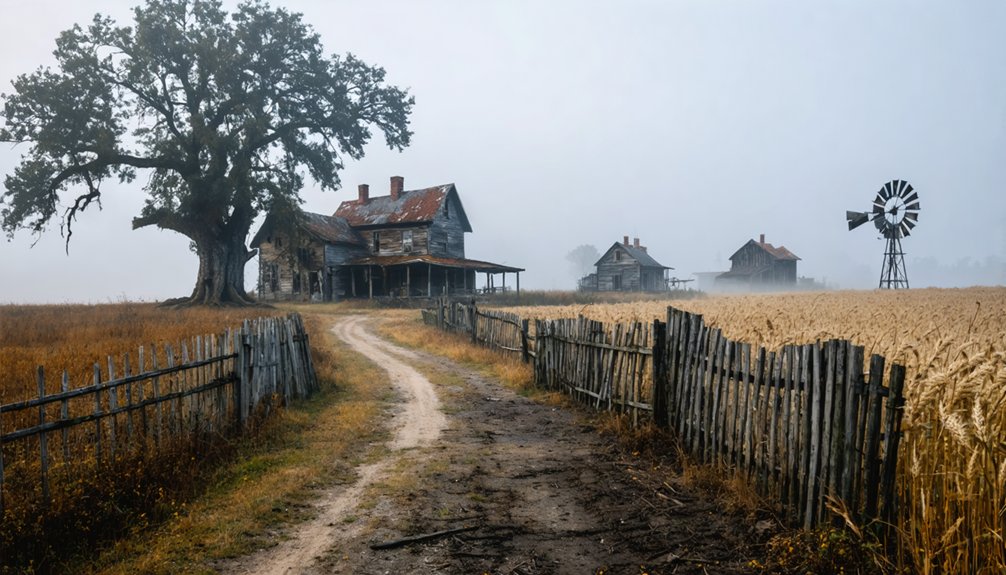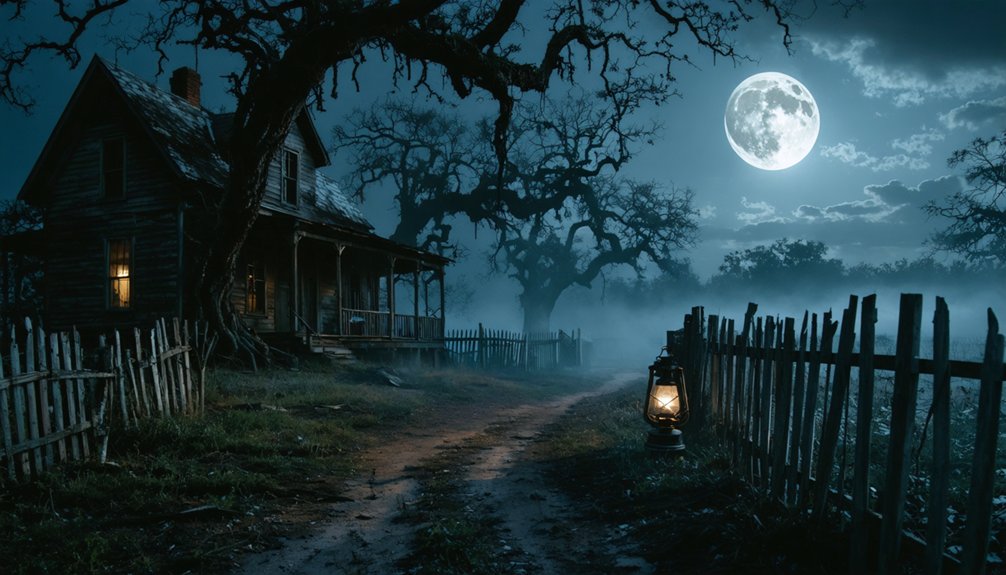
To master rural ghostly folklore, you’ll need to distinguish authentic local legends from tourist fabrications by looking for community-maintained variations. Trace stories to historical events and recognize cultural symbols embedded within tales. Always record oral histories ethically with proper consent and equipment. Study regional variations of similar ghost archetypes and understand how these tales reinforce community values. Document endangered traditions respectfully with multimedia tools. These seven approaches will reveal folklore’s deeper cultural significance.
Key Takeaways
- Distinguish authentic rural ghostlore through consistent local beliefs that affect community behaviors beyond tourist seasons.
- Record oral ghost narratives using high-quality equipment while obtaining explicit permission about usage and storage.
- Listen for historical truths beneath supernatural elements, particularly in locations with documented community trauma or conflict.
- Create comfortable interview settings when collecting ghost stories, respecting cultural taboos and narrator boundaries.
- Preserve regional variations in ghostlore through community-led documentation using diverse digital media formats with proper consent.
Identifying Authentic Local Legends From Tourist Traps

How can one distinguish between a genuine piece of rural folklore and a commercial fabrication designed to separate tourists from their money?
Look for stories maintained through local storytelling traditions rather than polished narratives crafted for entertainment. Authentic legends are anchored in community practices—often featuring taboos still observed by residents—while commercialized versions prioritize dramatic appeal over accuracy.
True folklore exhibits natural variations across tellings while maintaining core elements, unlike tourist attractions presenting single, unvarying narratives.
Community involvement is essential; genuine legends are preserved by elders and families during gatherings, not by paid guides with scripted performances.
When folklore preservation efforts involve actual residents sharing personal connections to the stories, you’ve likely found something authentic rather than a manufactured experience complete with gift shops and admission fees. The most compelling folklore traditions are those with living traditions that continue to shape local behaviors and cultural identity beyond tourist season. Family homes often become the backdrop for these enduring supernatural tales, with many containing personal encounters that are passed down through generations.
Tracing Historical Roots of Ghost Stories to Real-World Events
When examining rural ghost stories with analytical rigor, you’ll discover that many seemingly fictional apparition narratives actually stem from documented historical events.
Rural folklore often conceals genuine historical truths beneath supernatural veils—apparitions emerge from documented reality.
Civil War battlefields like Gettysburg transformed into epicenters of supernatural encounters, where mass casualties generated widespread phantom sightings that persist today.
The historical context reveals how spectral beliefs evolve through cultural blending—European settlers’ fear-based apparition traditions merged with Indigenous spiritual frameworks that honored rather than feared the spirit world.
This cultural fusion created distinctly American supernatural narratives.
You’ll find that community traumas often manifest in ghostlore.
For example, plantation ghost stories reveal racial power dynamics, with competing narratives emerging from different social groups.
Both Black and white storytellers contributed to ghost story traditions, despite misconceptions that attributed greater supernatural knowledge to Black southerners, creating a collective tradition that transcended racial boundaries.
The industrialization era introduced new ghost story themes when dangerous factory conditions and urban developments caused an increase in unexplained phenomena that people sought to make sense of through supernatural tales.
Recognizing Cultural Symbols and Motifs in Supernatural Tales

Diving into supernatural tales across rural communities reveals complex symbolic landscapes where cultural motifs function as more than mere storytelling devices.
You’ll encounter ancestral spirits representing cultural continuity in African and Latin American lore, while mourning female figures like La Llorona embody collective grief and warning.
When analyzing these narratives, recognize how spectral symbolism reflects psychological realities—ghosts often represent unresolved traumas or social anxieties.
Notice how power dynamics materialize through hauntings, particularly in American Southern folklore where racial tensions manifest through spectral figures tied to plantation histories.
Natural environments serve as symbolic thresholds between worlds, with forests and rivers marking boundaries between mundane and supernatural domains. In pre-technological societies, these ghost stories functioned as a moral compass for community members, encouraging adherence to social norms through supernatural consequences. The Middle Ages introduced a notable shift toward portraying spirits as restless souls seeking vengeance for violent deaths or unresolved injustices.
Recording Oral Histories With Respect and Ethical Consideration
When recording ghostly oral histories in rural communities, you’ll need to preserve voices authentically by using high-quality equipment that captures nuances without distorting the narrator’s natural cadence and linguistic patterns.
You must obtain explicit informed permission through transparent conversations about how recordings will be used, stored, and potentially shared, respecting narrators’ rights to control their supernatural narratives.
Handle sensitive material with careful consideration by acknowledging cultural taboos, respecting periods of silence, and recognizing when certain ghostly accounts might connect to collective trauma or sacred knowledge that requires additional protective measures.
Consider documenting group performances when supernatural narratives emerge naturally during community gatherings, as these collective tellings often reveal important social dynamics and shared belief systems.
Arrange a comfortable interview environment in a quiet location free from distractions to help narrators feel at ease when sharing personal supernatural experiences.
Preserve Voices Authentically
To preserve the authentic voices of rural folklore narrators, fieldworkers must approach the recording process with both technical precision and ethical mindfulness. Capture uncompressed WAV audio at 24-bit/96kHz using external microphones positioned to minimize handling noise while monitoring levels around -13 dB to accommodate emotional variations.
Store original recordings intact, preserving the narrator’s tone, pauses, and inflections without editorial intervention. Your voice recording equipment should balance quality with reliability—prioritize dependable recorders over flashy features. Consider using clip-on lavalier mics to enhance the clarity of recordings while allowing narrators to move naturally during storytelling. While video recording may seem appealing, audio preservation is more feasible on a budget and poses fewer long-term archival challenges.
Create thorough documentation including signed releases that clearly define usage rights. During interviews, use visual prompts like photographs or artifacts to reveal deeper storytelling. Allow narrators to express themselves without interruption, respecting their voices as cultural treasures.
Audio preservation requires planning for media obsolescence through migration strategies and secure backup systems.
Obtain Informed Permission
Obtaining informed permission stands as the ethical cornerstone of rural ghostly folklore collection, requiring fieldworkers to navigate complex legal and moral territories with precision and care.
Before recording any spectral narrative, you must clearly communicate your project’s purpose, sponsorship, and intended use of materials. This transparent approach forms the foundation of ethical storytelling.
Secure signed release forms documenting specific permissions and any restrictions narrators wish to place on their contributions. Remember that oral histories are protected creative works under copyright law.
You’ll need to explain where recordings will be archived and how they’ll be accessed in the future.
Always provide narrators the opportunity to review transcripts before public dissemination, respecting their role as bearers of cultural tradition and ensuring informed consent throughout the documentation process.
Handle Sensitive Material Carefully
Handling sensitive material carefully requires a multifaceted approach that balances respect for narrators with the scholarly imperatives of preservation and documentation.
When collecting ghost stories that might involve personal trauma or cultural taboos, approach your work with ethical sensitivity. Never pressure narrators to share beyond their comfort zone, and provide clear options for restricting sensitive portions from public access.
Practice sensitive storytelling by avoiding out-of-context quotes that might distort meaning or sensationalize content. Allow narrators to review recordings before archiving, giving them agency over their contributions.
Document contextual metadata thoroughly while respecting privacy boundaries.
Remember that ghost stories often intersect with deeply held beliefs, historical traumas, or family histories. Your commitment to ethical practice doesn’t end with collection—it extends to how you analyze, preserve, and share these narratives with future audiences.
Understanding Regional Variations in Similar Ghost Archetypes
When documenting rural ghostly folklore, you’ll discover that similar spectral archetypes—from Lady spirits to vengeful revenants—manifest with distinct regional variations reflecting local cultures and histories.
These variations include color-coded lady apparitions (white in Germanic traditions, green in Scottish castles), death-heralding entities (the Irish Banshee, the Scottish Bean Nighe, the Welsh Cyhyraeth), and shapeshifting spirits that test moral boundaries across continents.
Understanding these geographic adaptations provides essential context for your folklore research, revealing how landscape, climate, and cultural traditions transform universal human fears into regionally specific supernatural manifestations.
Common Roots, Different Faces
Although ghost stories emerge from vastly different cultures across the globe, they often share remarkable similarities in their fundamental structures and archetypes.
When conducting cross-cultural comparisons of ghostly archetypes, you’ll discover that manifestations like the Lady in White appear consistently across European, Asian, and Latin American traditions—all typically linked to tragic deaths and betrayal.
These similarities aren’t coincidental. They reflect universal human experiences with death, grief, and the unknown.
You’ll notice vengeful spirits like Japan’s Onryō and Latin America’s Sayona emerge from similarly violent or unjust deaths, while death omens like the Banshee and Lavandière serve as harbingers across different societies.
Even shapeshifting predator spirits follow parallel patterns, typically enforcing moral boundaries through cautionary tales that reflect each society’s values and fears.
Geography Shapes Phantoms
The geographic landscape where ghost stories originate fundamentally alters their manifestation, creating distinctive regional variations of otherwise similar archetypes. You’ll notice how coastal zones produce water-bound spirits like Ireland’s banshees, while mountainous territories birth imposing entities such as Scotland’s Grey Man of the Cairngorms, reflecting the harsh terrain’s influence.
Among these variations, the hidden ghost towns of West Virginia stand out as intriguing manifestations of the past, where echoes of history intertwine with eerie legends. These abandoned settlements, often shrouded in mist and folklore, reveal the tales of communities that once thrived but were lost to time. Each town carries its own haunting narratives, inviting adventurers and ghost hunters to explore their forgotten streets.
These geographic influences extend beyond physical features into cultural-religious domains. Catholic regions feature purgatorial spirits seeking prayers, while indigenous areas maintain ancestral guardians tied to specific landmarks.
Climate further shapes spectral manifestations—foggy regions amplify ethereal wails, while arid landscapes produce apparitions warning of isolation dangers.
Even political histories leave imprints, with colonized areas developing phantoms that embody complex cultural tensions between indigenous and colonial narratives. Understanding these regional patterns reveals how environment fundamentally structures ghostly folklore.
Connecting Ghostly Tales to Community Values and Taboos
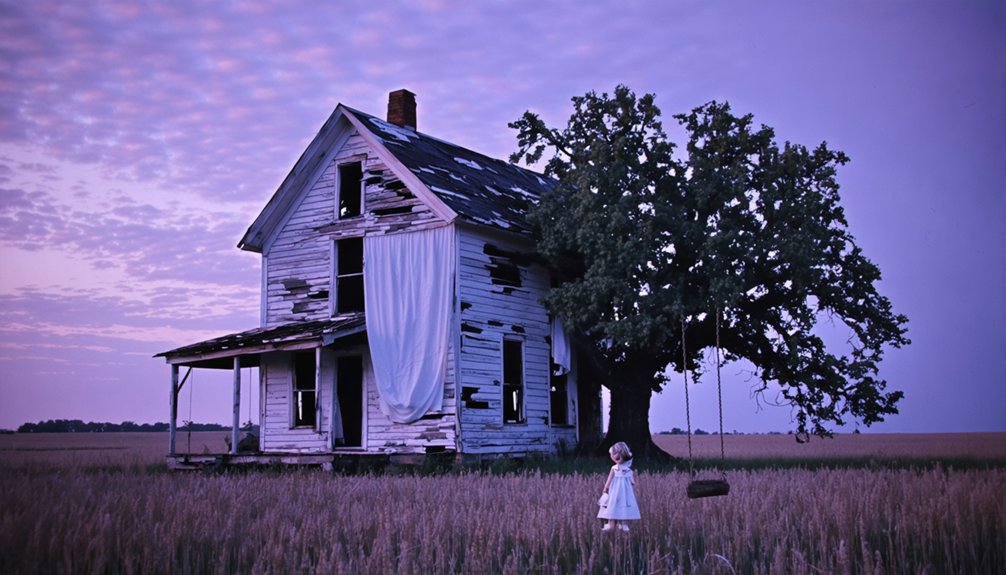
Ghostly folklore serves as a powerful vehicle through which rural communities have historically encoded, transmitted, and reinforced their collective values and taboos. When you examine these narratives, you’ll discover they function as moral instruction mechanisms—restless spirits often embody consequences for violating community morals or social boundaries.
Medieval and Victorian tales particularly connected supernatural hauntings to familial drama, forbidden relationships, and unresolved injustices. Through spectral justice, communities processed historical trauma and addressed topics otherwise deemed unspeakable.
You’ll notice how marginalized voices—particularly women and people of color—appear prominently in ghost traditions, their stories preserving struggles that official records omitted. These narratives allow indirect discussion of genocide, oppression, and cultural trauma, creating space for acknowledging difficult histories while maintaining cultural resilience in the face of disrupted death rituals and generational suffering.
Preserving Endangered Folklore Through Modern Documentation
As rural ghostly traditions face mounting threats from modernization and digital homogenization, preserving these narratives has become increasingly urgent for folklorists and community archivists alike.
You’ll find digital archiving offers innovative solutions when approached ethically, prioritizing community involvement throughout the documentation process.
Consider utilizing multimedia platforms to capture ghost stories in engaging formats while maintaining their authentic elements. Augmented and virtual reality can create immersive experiences that resonate with younger audiences without compromising cultural integrity.
When implementing these technologies, guarantee communities maintain control over which stories are shared and how they’re presented.
Be mindful of potential barriers—limited internet access in rural areas and the challenge of capturing performative aspects of oral storytelling require thoughtful solutions.
Always obtain proper consent, especially when documenting folklore connected to sensitive cultural sites or beliefs.
Frequently Asked Questions
Can Ghost Stories Influence Modern Rural Architectural Designs?
Despite skepticism, you’ll find ghost stories profoundly shape modern rural designs. Haunted architecture transforms mundane structures through folklore aesthetics, incorporating symbolic elements that both honor traditions and liberate spaces from conventional limitations.
How Do Skeptics Engage With Folklore Within Traditional Communities?
You’ll find skeptics maneuvering folklore through respectful dialogue, acknowledging cultural interpretations while maintaining their beliefs. They’ll often participate in traditions despite doubts, recognizing folklore’s community value beyond literal truth claims.
Do Ghost Stories Change When Rural Areas Become Urbanized?
As shadows transform, so too do your ghost stories. You’ll notice urban legends replacing agrarian tales, with cultural shifts reflecting new anxieties—technological alienation and social displacement supersede natural landscape hauntings in urbanized communities.
Are Certain Landscapes More Prone to Generating Ghostly Folklore?
Yes, you’ll find haunted landscapes like rural grasslands, marshes, and mountains generate more folklore origins due to their isolation, psychological impact, and historical significance as liminal threshold zones.
How Has Technology Changed the Creation of Rural Ghost Stories?
70% of rural ghost stories now spread digitally. You’re witnessing a transformation where digital storytelling platforms preserve once-isolated tales, while virtual folklore communities democratize narratives previously confined to secluded villages and forgotten crossroads.
References
- https://www.14streety.org/2020/10/31/scary-tales-around-the-world/
- https://en.wikipedia.org/wiki/List_of_urban_legends
- https://www.introtoglobalstudies.com/2019/10/japanese-ghosts/
- https://www.participatelearning.com/blog/spooky-tales-and-legends-from-around-the-world/
- https://usghostadventures.com/haunted-stories/the-history-of-ghost-stories-from-folklore-to-urban-legends/
- https://www.flightsandfables.com/dark-legends-european-ghost-stories-folklore
- https://rgu-repository.worktribe.com/OutputFile/795836
- https://www.gothichorrorstories.com/real-ghost-stories/
- https://www.losethemap.com/scariest-ghost-towns-in-the-world/
- https://www.tandfonline.com/doi/full/10.1080/14616688.2024.2412547