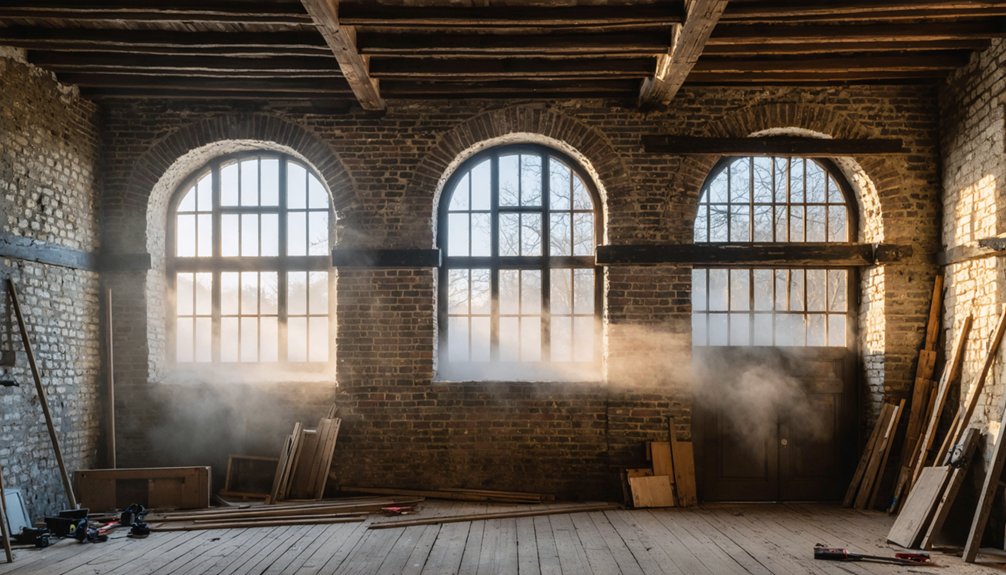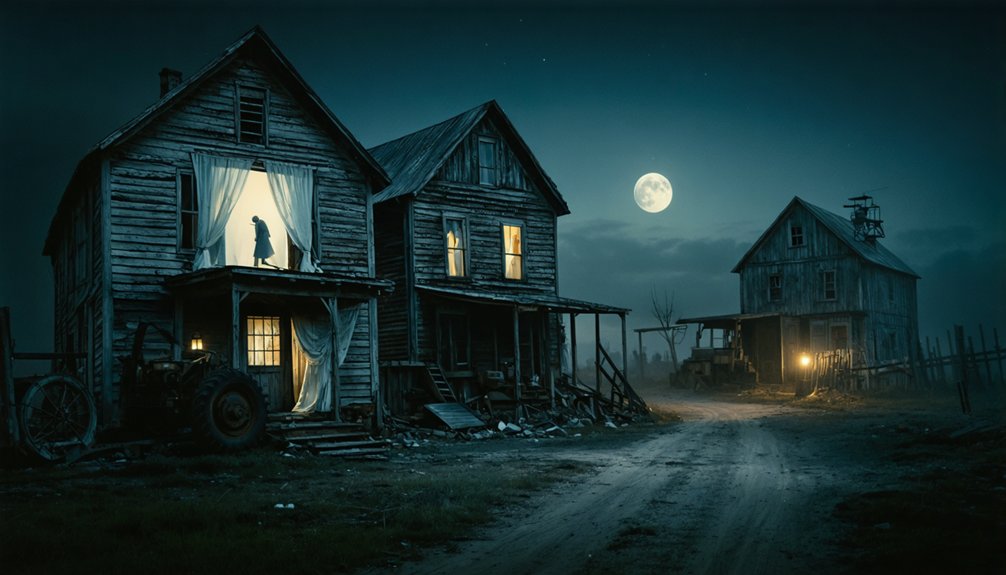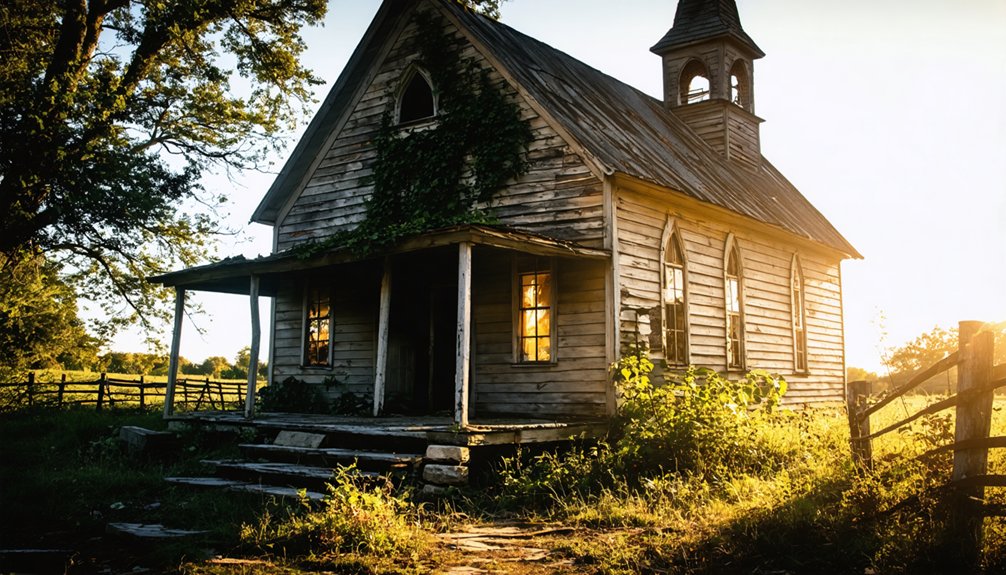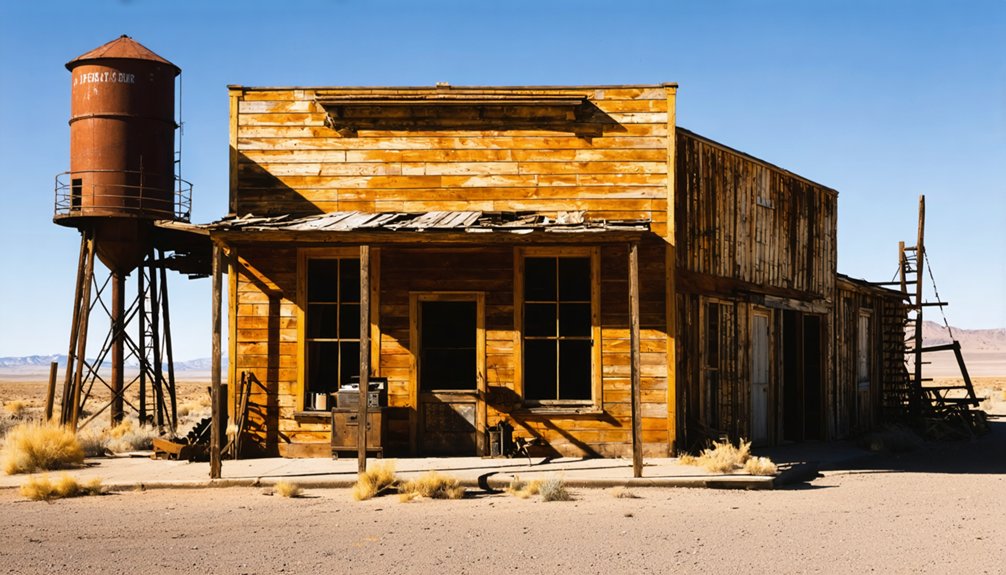
To maximize your ghost town visit, research the site’s history and verify accessibility beforehand. Pack essential supplies, including water, emergency gear, and navigation tools. Arrive during golden hours for dramatic photography opportunities, and always assess structural integrity before entering any building. Practice “leave only footprints” ethics by photographing rather than collecting artifacts. Wear protective clothing and share your itinerary with someone trusted. These abandoned settlements hold fragile stories waiting for respectful explorers to discover.
Key Takeaways
- Plan thoroughly with route maps, weather forecasts, and emergency supplies for a safe, self-sufficient adventure.
- Visit during shoulder seasons and golden hours for optimal lighting and fewer crowds.
- Practice “leave only footprints” ethics by photographing rather than collecting artifacts.
- Assess structural integrity from a safe distance before approaching abandoned buildings.
- Document your experience through photography, focusing on textures, details, and atmospheric elements.
Essential Planning Before Your Ghost Town Adventure
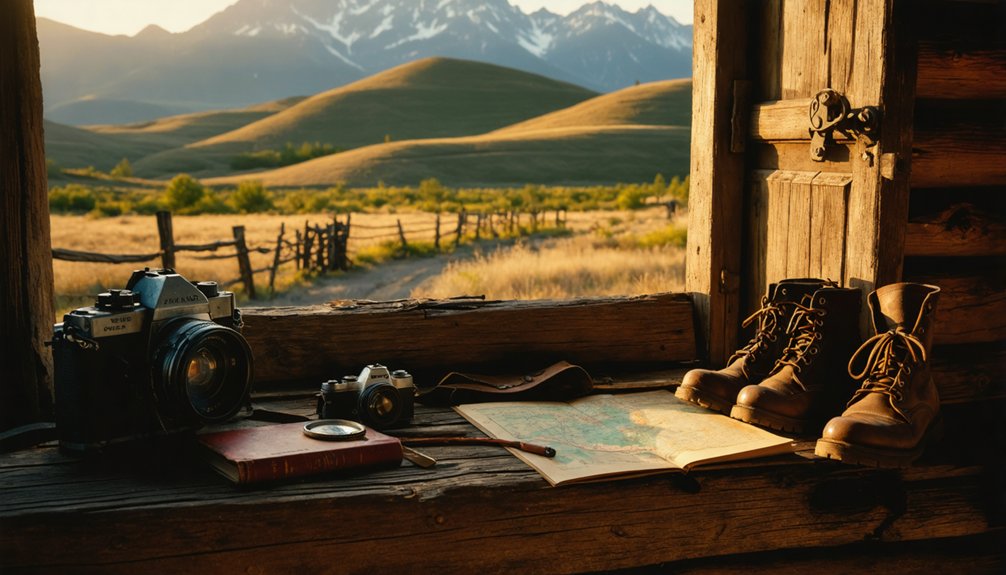
When commencing on a journey to explore America’s historic ghost towns, thorough preparation becomes the difference between a fulfilling expedition and a potentially dangerous misadventure.
Begin with meticulous route mapping of your intended path, noting unpaved segments and potential hazards along the way.
Chart your course with precision, identifying rough terrain and possible dangers before your ghost town adventure begins.
Prior to departure, conduct access verification with local land management agencies to confirm current road conditions and any seasonal restrictions.
Share your detailed itinerary with a trusted contact, including expected return time—crucial when venturing into areas with limited or nonexistent cell service.
Pack extensively for self-sufficiency: three days of provisions, appropriate clothing for temperature fluctuations, emergency supplies, and navigation tools beyond electronic devices.
This preparation preserves both your safety and the fragile historic sites you’ve come to experience.
Check weather forecasts carefully, as locations like Bodie at 8,275 ft elevation can experience extreme conditions that drastically impact accessibility and comfort.
Equip your vehicle with high-quality tires that have aggressive tread patterns suitable for the challenging terrains commonly encountered on ghost town access roads.
Understanding the Historical Significance of Abandoned Settlements
With proper preparation secured, your appreciation of ghost towns deepens considerably through comprehension of their historical context.
As you traverse these abandoned landscapes, recognize the distinct patterns that precipitated their demise—resource extraction cycles at Kolmanskop and Kennecott, agricultural transformations in medieval settlements like Gainsthorpe, political conflicts in Varosha, or natural disasters at Craco.
These sites represent more than mere curiosities; they’re tangible records of economic impact on human settlement patterns.
When you stand amid diamond mining remnants or volcanic-consumed structures, you’re witnessing humanity’s perpetual dance with prosperity and abandonment.
Each location illuminates different aspects of our cultural heritage—whether showcasing labor shifts following the Black Death or territorial disputes frozen in time. When visiting sites like Wharram Percy in North Yorkshire, you’ll encounter one of Britain’s most well-preserved villages with extensive archaeological evidence of medieval life.
Understanding these forces enriches your experience beyond the superficial allure of decay.
The haunting remnants of Pripyat serve as a stark reminder of how quickly human civilization can be disrupted by nuclear disasters, with countless personal belongings left behind during the hasty evacuation.
Photography Tips for Capturing the Beauty of Forgotten Places
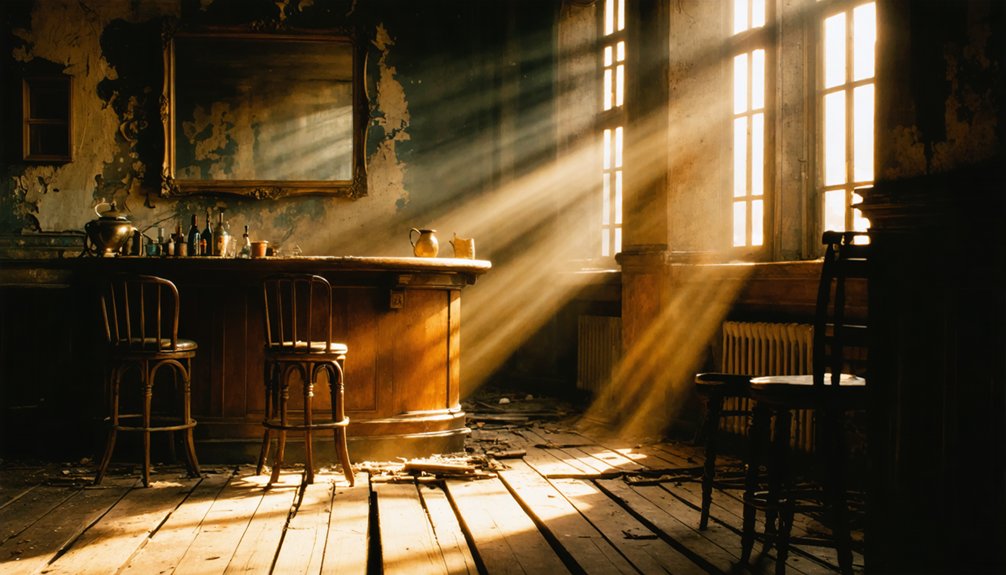
Capturing the ephemeral beauty of ghost towns requires specialized photographic techniques that elevate your documentation beyond mere snapshots. Equip yourself with a sturdy tripod and manual-control camera to master the challenging lighting conditions these abandoned places present.
Embrace composition techniques that tell compelling stories—frame dilapidated structures against dramatic skies, incorporate foreground elements like rusted artifacts, and shoot through windows to create layered perspectives. Seek unusual vantage points that reveal the site’s forgotten character. Exploring off the beaten path areas often yields cleaner compositions without distracting footprints or evidence of recent visitors.
Your lighting strategies should maximize dawn and dusk’s golden hours when soft, directional light accentuates textures and casts evocative shadows. Consider long-exposure techniques to capture movement and create an ethereal quality that enhances the surreal beauty of abandoned locations. Consider light painting during long exposures to illuminate architectural details dramatically.
For powerful storytelling, focus on personal artifacts and weathered details that speak to human absence—these elements convey the freedom these places now embody.
Safety Precautions When Exploring Deteriorating Structures
Before you approach any abandoned structure, conduct a thorough visual assessment from a distance to identify structural weaknesses such as sagging roofs, tilting walls, or missing foundation elements.
Your exploration pack should contain essential emergency supplies including a first aid kit, signaling device, respirator mask, and enough water to last twice your intended visit duration.
Always inform a trusted person about your specific exploration plans and expected return time before heading to any ghost town.
These preparatory measures greatly reduce your risk when investigating historically significant yet potentially hazardous sites that deserve both your appreciation and cautious respect. Be aware that many ghost towns are connected to abandoned mines with significant hazards that have caused injuries and fatalities among explorers.
Structural Assessment First
Safety begins long before you set foot inside an abandoned structure’s threshold. Conduct a thorough visual assessment of the site first—identify cracks, beam deflections, and corrosion signs that compromise structural integrity. Document visible defects with photographs to establish baseline conditions before proceeding.
Carefully evaluate foundations, load-bearing components, and roofing systems from a safe distance. Your primary goal during hazard identification is recognizing loose elements like cornices or parapet walls that could detach unexpectedly. Understanding the site history and vicinity can provide crucial context about potential structural weaknesses that may not be immediately visible.
Look beyond the structure itself—check for environmental factors such as soil erosion, nearby trees, or drainage issues affecting stability.
Never enter a building without first determining if structural components pose imminent threats to your safety. If you observe severe deterioration or questionable integrity, respect these warnings. The most valuable historical experience is one you survive to document.
Pack Emergency Supplies
Proper emergency supplies represent the critical difference between a memorable exploration and a dangerous ordeal when visiting historic ghost towns. Always carry a thorough first aid kit with bandages and antiseptics to address injuries immediately on-site.
Include respiratory protection like N95 respirators to prevent inhalation of asbestos or toxic dust present in deteriorating structures.
Don’t underestimate the importance of reliable illumination—pack a flashlight with extra batteries even for daytime exploration.
Apply insect repellent before entering abandoned buildings to prevent bites, and bring mentholated ointments to mask unpleasant odors. Prioritize wearing thick-soled boots and protective clothing to shield against industrial waste and hazardous materials often found on abandoned sites.
Emergency signaling devices such as air horns provide protection against wildlife encounters.
Finally, make certain you’ve packed sufficient water and non-perishable snacks, as ghost towns lack amenities.
Remember to maintain strict hand hygiene before consuming anything in these contaminated environments.
Respecting Preservation Efforts and Archaeological Integrity
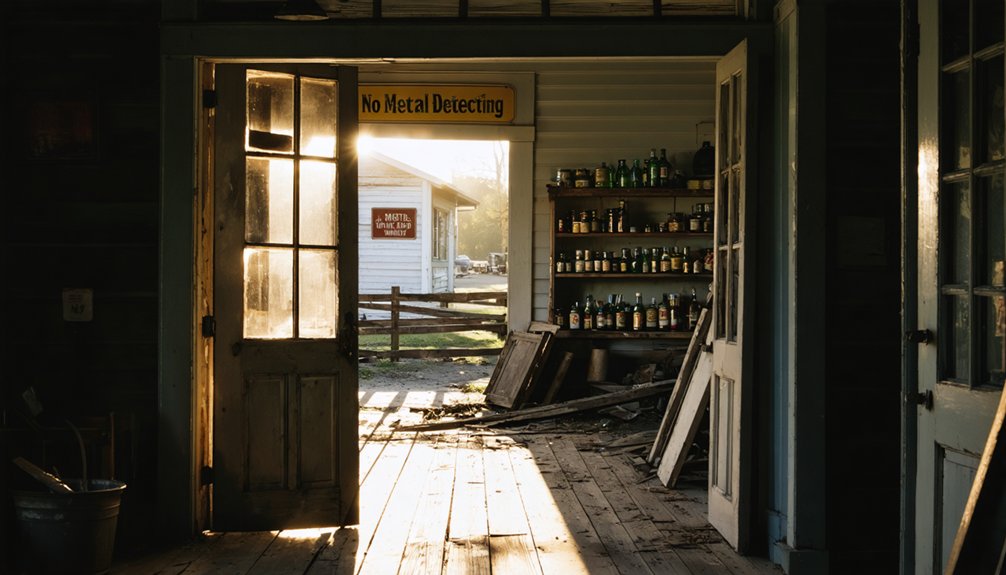
When visiting ghost towns, you’ll contribute to preservation by adopting the “leave only footprints” philosophy that guarantees artifacts remain undisturbed for future visitors and researchers.
Resist the temptation to collect souvenirs—even small items like rusty nails or broken glass fragments—as these objects constitute the archaeological record that professionals use to reconstruct historical narratives.
Instead, document your discoveries through photography, creating a personal record that respects both legal protections and the site’s historical integrity.
Leave Only Footprints
The cultural legacy of America’s ghost towns relies entirely upon visitors’ commitment to preservation ethics, as every footfall carries potential consequences for these delicate historical sites.
When exploring these windows into our past, remember that proper ghost town etiquette requires taking only photographs and leaving everything else untouched. Don’t remove artifacts, as each item contributes to the site’s historical narrative and is protected under preservation laws.
The importance of preservation can’t be overstated—these structures represent irreplaceable historical records that help us avoid repeating past mistakes.
Respect property boundaries, close gates behind you, drive slowly around livestock, and never discharge firearms near historic buildings. Sites on the National Register receive federal protection, but every location deserves your conscientious care.
Your responsible behavior guarantees these cultural treasures remain intact for future generations to experience and study.
Photograph, Don’t Take
Photography serves as a powerful preservation tool that allows you to document ghost town histories without disrupting their archaeological integrity. Proper ghost town etiquette demands you capture images rather than artifacts—your camera preserves memories while leaving physical evidence intact for researchers and future visitors.
When practicing ethical photography, use tripods and natural lighting techniques that minimize your physical impact. Focus on capturing textures, architectural details, and atmospheric elements without moving objects or disturbing the scene. Your photographs can actually support preservation efforts by raising awareness while documenting site conditions over time.
Remember that these fragile structures and scattered artifacts aren’t merely photo opportunities but irreplaceable historical records. By respecting property boundaries, seeking permission, and leaving everything as you found it, you’re participating in cultural stewardship while still enjoying creative freedom.
Best Seasons and Times for Authentic Ghost Town Experiences
Selecting a prime time to explore abandoned settlements remains perhaps the most essential factor in achieving an authentic ghost town experience. Your seasonal considerations should prioritize shoulder months—early fall and late spring—when crowds thin and weather proves most cooperative across varied regions.
Exploring the rich history of Saint Johnstown, Delaware can offer unique insights into the lives of those who once inhabited the area. As you walk through its remnants, you’ll encounter artifacts that tell stories of resilience and community. Each visit provides a tangible connection to the past, enhancing your ghost town experience.
The perfect ghost town awaits those who time their journey with precision—choose shoulder seasons for authenticity and solitude.
For ideal timing, plan your arrival during golden hours of early morning or late afternoon when light casts dramatic shadows across weathered structures.
- Winter visits (December-February) offer solitude in desert ghost towns like Calico, CA, while mountain locations may be inaccessible.
- Weekday mornings (9-11AM) provide the quietest exploration opportunities regardless of season.
- Desert locations demand winter visits; mountain towns require summer planning.
- Special events enrich experiences but sacrifice authenticity of solitude.
Frequently Asked Questions
Are Children Allowed in Most Ghost Towns?
Yes, you’ll find most publicly maintained ghost towns permit children, but always practice proper ghost town etiquette by supervising them closely during family-friendly activities and respecting all preservation boundaries.
Can I Bring My Dog to Ghost Town Sites?
With nearly 70% of ghost towns allowing pets, you’ll find varied dog-friendly policies. You can typically bring your leashed dog to outdoor areas, but must maintain pet safety around historic structures and natural hazards.
How Do I Distinguish Between Authentic Ruins and Tourist Reconstructions?
Examine authentic materials—weathered wood, rusted metal, and natural decay. You’ll notice reconstructions have uniform appearance, fresh paint, and interpretive signage. Research the site’s historical significance before visiting for proper context.
Are There Functioning Restrooms or Facilities at Most Ghost Towns?
You’ll find restroom availability varies considerably. Authentic ghost towns typically offer minimal facilities, with maintenance challenges limiting conveniences. Research specific sites beforehand—preserved locations prioritize historical integrity over modern amenities you might expect.
Can I Use Metal Detectors at Ghost Town Locations?
Look before you leap. You can’t legally use metal detectors at most ghost towns due to strict historical preservation concerns and metal detecting regulations. Always obtain explicit permission from landowners first.
References
- https://history.howstuffworks.com/history-vs-myth/ghost-towns.htm
- https://en.wikipedia.org/wiki/Ghost_town
- https://www.britannica.com/topic/ghost-town
- https://westernmininghistory.com/664/what-is-a-ghost-town-wmh-town-classifications-explained/
- https://freepages.history.rootsweb.com/~gtusa/definitions.pdf
- https://www.blueridgeoutdoors.com/go-outside/southern-ghost-towns/
- https://grokipedia.com/page/Ghost_Town
- https://www.nps.gov/thingstodo/ghost-towns.htm
- https://www.ytravelblog.com/bodie-ghost-town-california/
- https://nvtami.com/2024/10/06/ghost-towns-are-not-theme-parks-how-to-visit-them-safely/