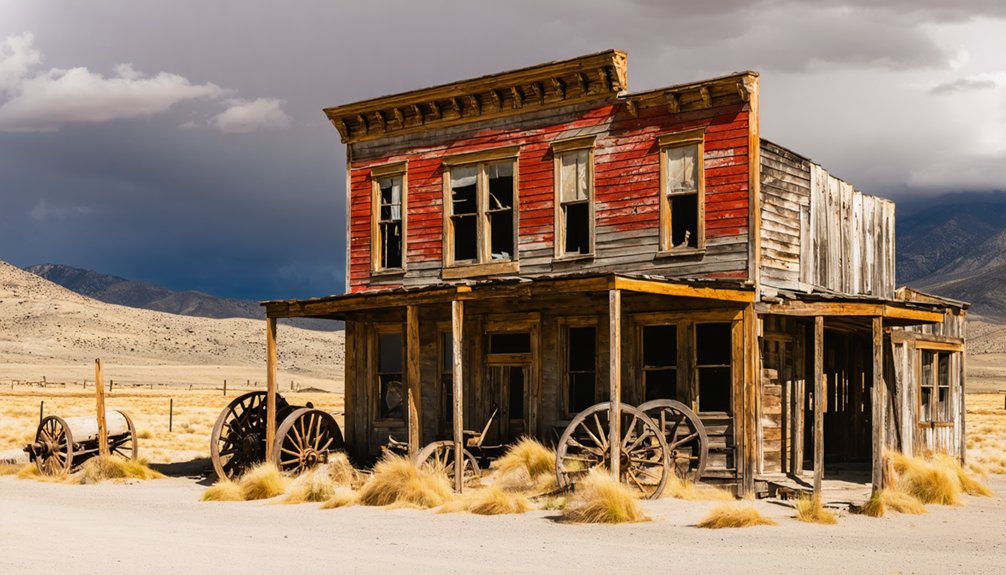
You’ll face significant legal restrictions when metal detecting in ghost towns, as most abandoned settlements on federal land fall under the Archaeological Resources Protection Act and American Antiquities Act, prohibiting excavation of artifacts over 100 years old without permits. State parks typically ban detectors entirely, while private ghost town properties require written landowner permission specifying access areas and dates. Violations carry penalties up to $250,000 and five years imprisonment, with equipment confiscation. Understanding these protective frameworks, permit requirements, and proper documentation methods guarantees you’ll preserve historical contexts while exploring legally accessible locations.
Key Takeaways
- Ghost towns on federal lands require permits; Archaeological Resources Protection Act prohibits excavating artifacts over 100 years old without authorization.
- Always obtain written permission from property owners specifying authorized areas, dates, and times before detecting on private ghost town sites.
- Research historical maps, aerial imagery, and plat maps to identify promising ghost town locations and demonstrate informed interest to landowners.
- Essential equipment includes metal detectors with iron discrimination, pinpointers, digging tools, and GPS units for recording discovery locations.
- Document finds with photographs, GPS coordinates, and field notes; fill holes and report significant discoveries to historical societies when appropriate.
Understanding Legal Requirements and Restrictions
Before you begin metal detecting in ghost towns, you must understand that federal law establishes strict prohibitions across all public lands containing historical resources. The Archaeological Resources Protection Act of 1979 bans excavation of objects over 100 years old on federal lands, while the American Antiquities Act of 1906 protects prehistoric sites uniformly across all states.
Ghost towns listed on the National Register of Historic Places carry felony penalties for detecting. You’ll find authorized detectors only permitted on Bureau of Land Management lands for items under 100 years old, and National Forest System lands without archaeological resources. State parks like California’s ban metal detectors entirely.
Local ordinances further restrict access even where state law permits. Compliance documents required vary by jurisdiction, making written verification essential before you proceed. Many municipalities require permits for city parks with specific regulations on permissible digging depths and plug sizes. Ghost towns on private property always require owner permission regardless of federal or state regulations.
Obtaining Permission From Property Owners
Understanding applicable laws represents only the initial phase of responsible metal detecting preparation. You must identify property ownership through county records, tax assessor offices, or coordinate-based research before approaching any ghost town site. Leveraging local networks—friends with older properties, metal detecting clubs, historical societies—accelerates access to promising locations while establishing productive relationships with landowners.
Secure written permission specifying:
- Exact dates, times, and authorized access areas to protect your detecting rights
- Property owner’s contact information and site description for legal documentation
- Prohibitions on historically significant areas that override general permission
Research property history using aerial maps and HistoricAerials to demonstrate informed interest. When ghost towns lack traditional addresses, utilize GIS mapping tools with longitude and latitude coordinates to pinpoint exact locations and identify current landowners. Approach owners respectfully, highlighting benefits like debris removal. Be persistent with respectful requests, as even abandoned or less cooperative properties can yield permission when asked courteously and flexibly. Document agreements thoroughly, ensuring non-transferability and owner retention of discovered artifacts when required.
Federal Laws That Protect Historical Sites
You must understand that federal statutes impose strict prohibitions on artifact removal from public lands and historic sites. The American Antiquities Act of 1906 established foundational protections requiring permits for excavation and authorizing national monument designations to safeguard archaeological resources.
Violations of the Archaeological Resources Protection Act (ARPA) carry substantial civil and criminal penalties, including fines up to $100,000 and imprisonment for unauthorized disturbance of sites over 100 years old on federal or tribal lands. The National Historic Preservation Act of 1966 created State Historic Preservation Offices that maintain inventories of historic sites and participate in federal review processes to protect cultural resources. The act also established the National Register of Historic Places, which serves as the official list of the nation’s historic properties worthy of preservation.
American Antiquities Act 1906
When President Theodore Roosevelt signed the American Antiquities Act into law on June 8, 1906, he established the nation’s first thorough legal framework for protecting cultural and natural resources on federal lands. The monument designation process grants presidents authority to proclaim national monuments through executive action, restricting public land access for activities that threaten archaeological sites.
The Act prohibits you from:
- Excavating or destroying prehistoric structures and historic landmarks on federal property
- Metal detecting in designated monuments without proper permits
- Removing artifacts from protected archaeological sites
This legislation emerged from widespread looting of American Indian relics. While it’s safeguarded over 168 national monuments, you’ll find your detecting activities constrained on federal lands. The Act balances preservation with valid existing rights, confining restrictions to areas essential for site protection. Presidents from both major parties have utilized this authority to establish national monuments over the past century. Roosevelt demonstrated his commitment to conservation by declaring eighteen monuments during his presidency, including six specifically designated to protect historic or prehistoric structures.
ARPA Violations and Penalties
The Archaeological Resources Protection Act (ARPA) of 1979 imposes severe consequences on metal detectorists who violate its provisions, establishing an extensive enforcement framework that combines criminal prosecution, civil liability, and asset forfeiture.
You’ll face criminal penalties ranging from $20,000 fines and one year imprisonment for first offenses to $250,000 and five years for subsequent violations. Civil penalties operate under strict liability penalties, requiring no proof of intent—merely unpermitted actions causing damage.
These penalties equal double the restoration costs based on resource valuation criteria including archaeological value, commercial value, and repair expenses. Federal authorities will confiscate your equipment—metal detectors, vehicles, tools—used during violations.
Recent prosecutions at Yellowstone and Buffalo National River demonstrate enforcement remains active, with one professional looter receiving a 78-month sentence for systematic site destruction. ARPA also addresses the shortcomings of the Antiquities Act of 1906, which previously struggled with vague law enforcement provisions and inadequate protections against archaeological looting. To prevent looting and preserve resources, archaeological site locations remain confidential and are not disclosed to the public.
National Monument Protection Rules
Federal law layers multiple protective frameworks around national monuments and historic sites, creating overlapping jurisdictions that metal detectorists must navigate before operating near these protected areas. The Antiquities Act of 1906 shields monuments from excavation, looting, and industrial development through presidential designation. You’ll face criminal penalties for unauthorized digging within these boundaries.
Section 106 Review mandates federal agency coordination to evaluate project impacts, incorporating a public comment process that gives communities voice in preservation decisions.
National monuments receive protection through:
- Criminal prosecution with fines and imprisonment for unauthorized excavation
- Permanent management by agencies like the National Park Service
- Congressional authority required for boundary reductions—presidents can’t unilaterally shrink protected areas
These restrictions preserve archaeological contexts while limiting your access to potentially artifact-rich locations on federal land.
State and Local Regulations You Must Know
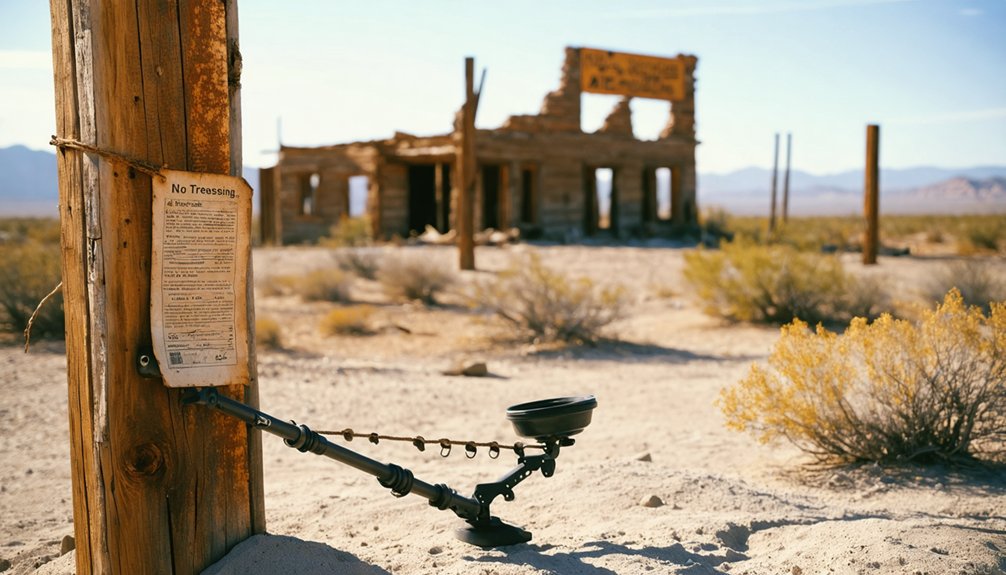
Beyond federal restrictions, state and local jurisdictions maintain their own regulatory frameworks that directly affect your metal detecting activities in ghost towns. Each state enforces distinct permit requirements and artifact protection standards. Colorado mandates permits for public areas and prohibits digging entirely on public lands.
Iowa restricts detecting hours seasonally while Kansas allows detecting but forbids excavation in parks. Private property restrictions require explicit landowner consent before you begin—written permission protects your liberty to detect lawfully. State trust land trespass carries substantial penalties, including arrest and fines in Arizona.
Municipal ordinances further constrain activities through digging depth limits and proximity restrictions near monuments. You must verify regulations through local parks departments and on-site rangers before detecting. Objects exceeding one hundred years age remain protected across multiple jurisdictions, regardless of permission status.
Essential Equipment and Research Techniques
When approaching ghost town metal detecting, your success depends fundamentally on assembling proper equipment before entering the field. Your primary toolkit includes a metal detector with iron discrimination capability, pinpointer for precise location, digging tools with serrated edges, and protective gloves. Models like the XP DEUS II with HF2 coil excel in relic-rich environments through superior target separation.
Proper equipment assembly before fieldwork fundamentally determines your ghost town detecting success through iron discrimination, precision pinpointing, and superior target separation capabilities.
Environmental considerations demand waterproof pinpointers and coil covers protecting against dust and moisture. Equipment maintenance extends detector lifespan in harsh conditions.
Research techniques transform random searching into systematic discovery:
- Historical maps reveal former structures and high-traffic zones
- Ground scarring patterns indicate privy locations and homesteads
- Grid search methodology ensures complete site coverage
Headphones detect faint signals from deeply buried artifacts, while headlamps enable structural exploration. Cross-reference vintage photographs with current terrain for precision targeting.
Documenting Your Discoveries Responsibly
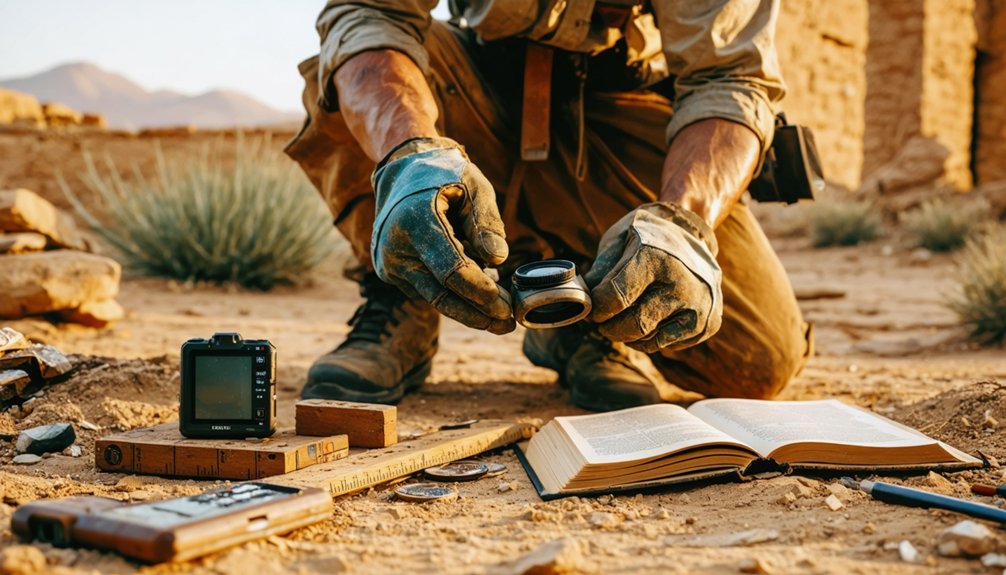
Every artifact you extract from a ghost town site carries irreplaceable historical context that disappears without proper documentation. Record exact GPS coordinates and sketch site layouts before disturbing anything. Your field notes should include timestamps, proximity to foundations or paths, and environmental conditions affecting preservation. Photograph finds in situ from multiple angles with scale references, then again after cleaning with proper labels.
When you’ve obtained written permission from landowners, you’re free to explore—but significant discoveries require reporting to local authorities or historical societies. Store artifacts in acid-free containers alongside your documentation. Compare old plat maps with current boundaries using tools like OnXMaps Hunt. Practice Leave No Trace principles: fill holes and remove trash, ensuring future researchers can benefit from undisturbed context.
Alternative Locations for Metal Detecting
Ghost town sites represent only one category within a broader spectrum of productive metal detecting locations. You’ll discover comparable opportunities at remote and undeveloped sites throughout historical settlement corridors. Water adjacent detection areas near former industrial operations yield concentrated artifact deposits where currents have transported and preserved material culture.
Exploring abandoned sites in Northern Ontario can unveil a rich tapestry of both natural and human history. The remnants of old settlements and industries nestled within the landscape offer clues to past lifestyles and economic activities. Enthusiasts often find that the artifacts collected from these locations provide a deeper understanding of the region’s development and its diverse stories.
Consider these alternative detection environments that preserve autonomy while producing historical finds:
- Abandoned logging camps and tent cities offer minimal detection pressure with preserved stratified deposits
- Creek beds near defunct mining operations contain concentrated artifact zones from worker activity patterns
- Private property cellar holes and field remnants provide unregulated access through landowner permission protocols
Research methodology remains consistent across location types. LIDAR mapping, historical plat documentation, and satellite imagery analysis identify promising sites while OnXMaps Hunt applications verify access legality and ownership boundaries.
Frequently Asked Questions
What Time of Day Is Best for Metal Detecting in Ghost Towns?
Early mornings contrast sharply with crowded afternoons—you’ll find ideal detecting conditions before 8 AM. Seasonal variations affect ground temperature and visibility, while avoiding nocturnal activities preserves site integrity. You’re free to search undisturbed, documenting finds methodically.
How Do Weather Conditions Affect Metal Detecting Success Rates?
Weather profoundly affects your success rates through soil moisture levels and ground saturation impacts. You’ll achieve ideal detection after light rain when conductivity increases, while frozen or oversaturated conditions compromise signal clarity and target identification accuracy.
Can Metal Detectors Differentiate Between Valuable and Worthless Items Underground?
Metal detectors can’t definitively distinguish valuable from worthless items underground. Approximately 60% of small gold jewelry shares identical conductivity signatures with pull-tabs. You’ll need signal discrimination understanding and item composition knowledge to interpret readings, though false positives remain unavoidable.
What Insurance Coverage Protects Detectorists From Liability Claims While Searching?
General liability insurance protects you from bodily injury and property damage claims during detecting activities. You’ll need equipment liability coverage and documented landowner permissions with policy details to satisfy hold harmless agreements before accessing private ghost town properties.
How Deep Can Most Metal Detectors Effectively Scan in Ghost Town Terrain?
Most detectors scan 4-11 inches effectively in ghost town sites. You’ll find 85% of historical artifacts within this range, though soil density and underground obstructions greatly/enormously/profoundly limit depth. Preserve context by documenting finds methodically before removal.
References
- https://mymetaldetectors.com/blogs/metal-detecting-tips/can-you-metal-detect-in-ghost-towns-legal-guide-best-practices
- https://seriousdetecting.com/pages/metal-detecting-laws-and-code-of-ethics
- https://www.minelab.com/blog/article/the-treasure-hunter
- https://www.oreateai.com/blog/navigating-the-treasure-trove-understanding-metal-detecting-laws/1b788a085738597357b3004cdf93e59a
- https://panckydetectors.com/blogs/pancky-insights/where-can-i-metal-detect-in-the-us
- https://www.treasurenet.com/threads/mass-laws-regarding-metal-detecting-digging.299073/
- https://kellycodetectors.com/content/pdf/site_locator_books/MA_MD.pdf
- https://metaldetectingforum.com/index.php?threads/ghost-towns.91331/
- https://www.fs.usda.gov/media/63823
- https://www.youtube.com/watch?v=Tw5RIzQnsAQ