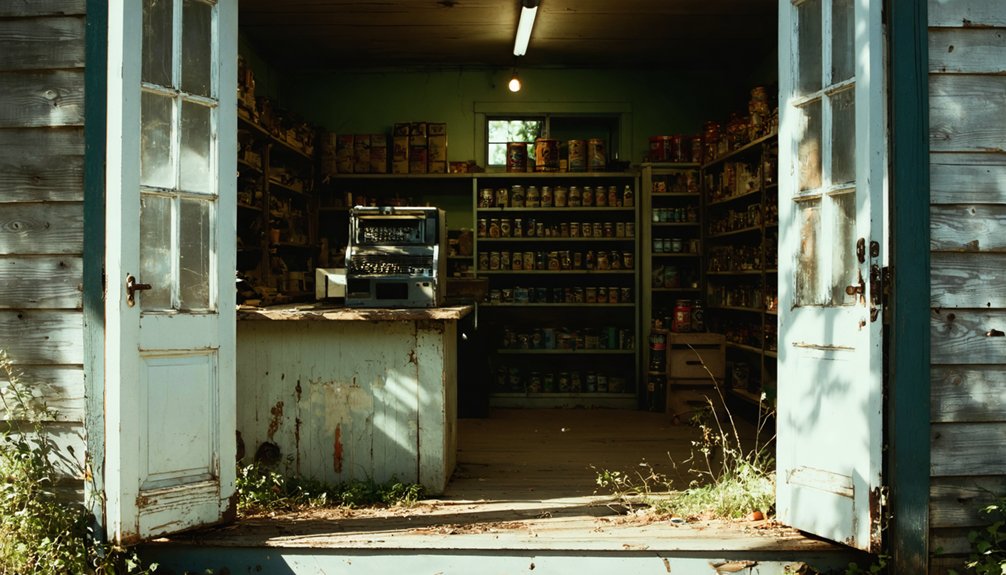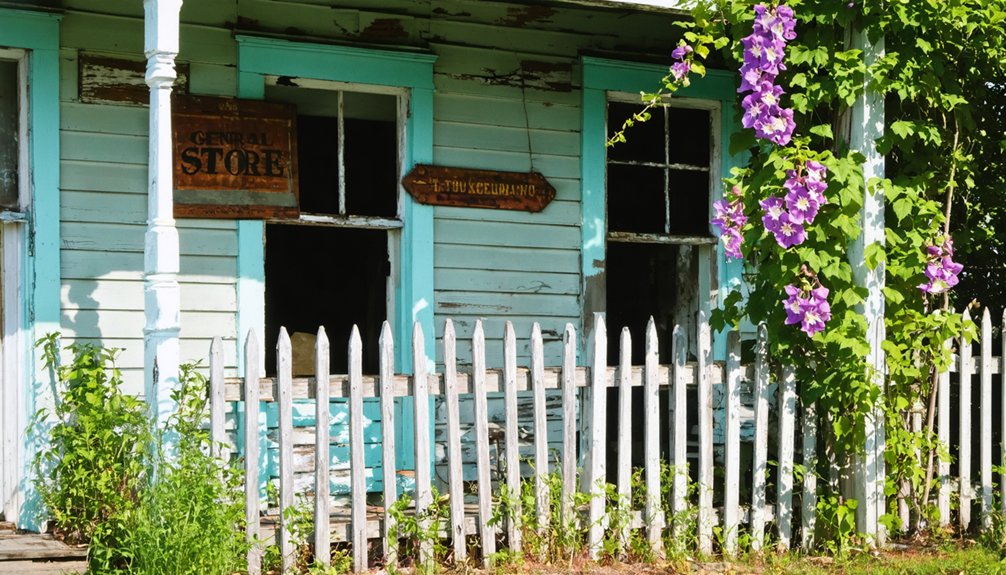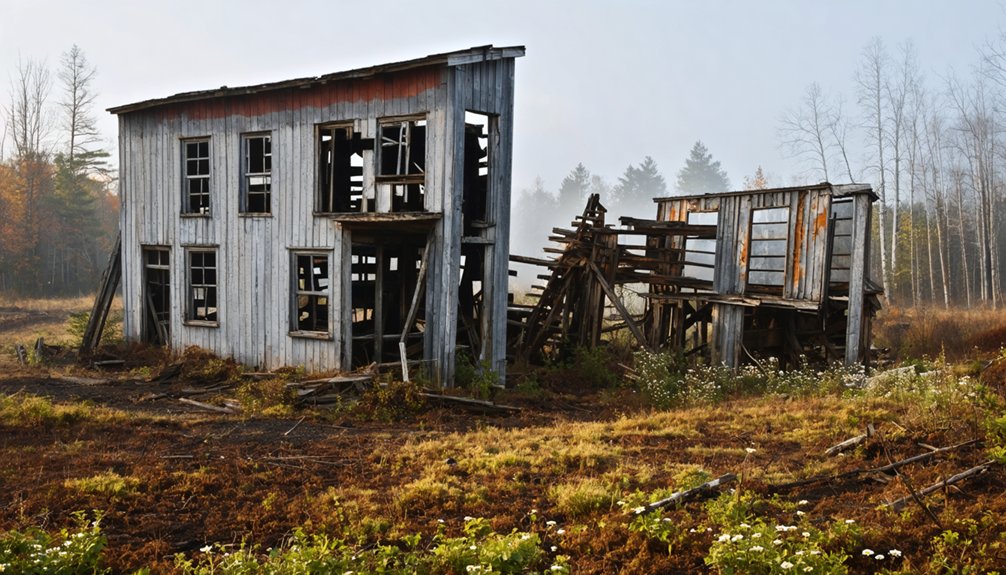
You won’t find mining ghost towns in Delaware the state—Delaware Mine sits hidden in Michigan’s remote Keweenaw Peninsula. This 19th-century copper mining settlement operated for 40 years, extracting over 7 million pounds of copper from shafts reaching 1,400 feet deep. Despite this impressive output, the mine never turned a profit due to its ore containing only 1.5% copper and the crushing costs of operating in such an isolated location. The preserved ruins and underground tunnels reveal fascinating details about the mining techniques and tight-knit community that once thrived here.
Key Takeaways
- The Delaware Mine operated in Michigan’s Keweenaw Peninsula, not Delaware state, from the 1840s through 1880s before abandonment.
- Located in a remote wilderness area, the mining settlement formed a tight-knit community despite harsh conditions and isolation.
- The mine extracted over 7 million pounds of copper but never profited due to low ore quality and high extraction costs.
- Underground operations reached 1,400 feet deep using dangerous techniques that prioritized production over safety, leaving hazardous voids.
- The settlement declined after 40 years when financial troubles forced permanent closure, creating a ghost town in the wilderness.
From Ancient Copper Pits to 19th Century Boom Town
Long before European prospectors arrived with their mining equipment, Native Americans worked the copper deposits of Michigan’s Keweenaw Peninsula using ingenious fire-setting techniques. They’d heat rock surfaces, then crack them with cold water before pounding out the precious metal for arrowheads and tools.
By 1846, European settlers established operations in this wilderness, with the North West Mining Company chartered three years later. You’ll find evidence of their ambitions in five shafts, the deepest plunging 1,400 feet into Allouez Conglomerate beds. Their mining techniques evolved rapidly, transporting supplies from Eagle Harbor and building stamp mills along the Little Montreal River.
The 1880s brought peak development when the Conglomerate Mining Company spared no expense, constructing employee housing and railroads. Despite copper production exceeding 7 million pounds, operations ceased in 1887—never turning a profit.
Underground Operations and Mining Techniques at Delaware
Deep beneath the surface, Delaware Mine’s operations combined both prehistoric and industrial-era techniques across its four-decade lifespan. You’ll find that workers accessed copper seams through vertical shafts, horizontal drifts cut into hillsides, and sloping tunnels descending from the surface.
The mine prioritized production over stability, applying minimal roof support throughout its workings. This approach created significant worker safety concerns, particularly during pillar-robbing operations at abandonment. When operators removed support pillars to extract remaining copper, they triggered widespread subsidence that’d plague the region for decades.
The environmental impact extended beyond surface collapse—small, poorly-mapped workings left hazardous voids requiring post-1941 closure measures. State regulators eventually enforced reclamation bonds similar to surface mining standards, addressing dangers from Delaware’s extraction-focused legacy.
Life in a Remote Keweenaw Peninsula Settlement
Isolated by Lake Superior on three sides, the Keweenaw Peninsula offered mining families a life of stark contrasts between industrial ambition and geographical remoteness. You’d navigate US-41 through the “Tunnel of Trees” to reach settlements like Eagle Harbor, where 69 residents created tight-knit communities.
Today’s remote workers discover exceptional work from home potential here, with 40 acres of wilderness per person and dark skies unmarred by light pollution.
Daily rhythms centered on:
- Paddling the 125-mile Keweenaw Water Trail around Copper Island
- Exploring uncrowded trails through ancient volcanic landscapes
- Winter recreation across terrain where minor roads close seasonally
The Keweenaw Waterway bisected this rugged territory, where Lake Superior crashed against rocky shores and everyone-knows-everyone trust replaced urban anonymity. You’ll find genuine freedom in this blend of wilderness isolation and purposeful community.
The Decline and Abandonment of Delaware Mine
How could a mine producing over 7 million pounds of copper fail to reward its investors? You’ll find the answer in simple economics: the Delaware Mine’s ore contained just 1.5% copper, with 98.5% worthless rock. Despite operating for 40 years and sinking shafts to 1,600 feet, the operation never escaped its financial troubles.
The math was brutal. Extraction costs in this remote Keweenaw Peninsula location consumed any potential profits. Multiple company reorganizations—from Pennsylvania Mining Company in 1861 through Conglomerate Mining Company in 1881—couldn’t change the underlying reality of unprofitable operations.
Exploring the Preserved Ruins and Underground Tunnels Today
Today’s visitors can walk through two original mine buildings still standing along Highway 41 in Grant Township, where stone walls from the 1870s frame the Delaware Mine’s compelling story. You’ll descend 100 feet below surface into damp copper tunnels, experiencing conditions that challenged 19th-century miners through dimmed lighting and solid rock passages that meet modern underground safety regulations.
Your exploration reveals multiple historical layers:
- Prehistoric mine pits where native peoples extracted copper using fire, water, and stone hammers thousands of years ago
- Stamping process structures from the 40-year industrial operation that crushed rocky ore
- Antique engines, trains, and equipment displays scattered across the grounds
Despite preservation challenges, this ghost town offers both self-guided underground tours and surface trails connecting ruins, foundations, and interpretive exhibits that showcase Keweenaw’s mining heritage.
Frequently Asked Questions
What Safety Equipment Should Visitors Bring When Exploring Delaware Mine?
You’ll need proper lighting equipment like headlamps with backup batteries, a hard hat, sturdy boots, and a respirator. Before entering, check mine ventilation systems aren’t blocked, as poor air quality poses serious risks to your safety.
Are There Other Mining Ghost Towns Near Delaware in the Keweenaw Peninsula?
Yes, you’ll find several mining ghost towns nearby, including Central Mine, Cliff Mine, and Baltic. These sites showcase historic copper deposits and geological formations of the region that drove Keweenaw’s 19th-century mining boom and eventual decline.
Can Copper Still Be Found by Visitors at the Delaware Mine Site?
No, you won’t find copper at Delaware Mine—like searching emptied vaults, the mining equipment found and mining practices observed extracted nearly everything profitable. Heritage regulations prohibit removing materials anyway, preserving this historical site for educational tours only.
What Are the Operating Hours and Seasonal Availability for Underground Tours?
Underground tours run 10:00 AM to 5:00 PM daily from mid-May through mid-October, with 2025 opening May 10. You’ll find visitor accessibility through self-guided tours descending 100 feet, though guided tour options aren’t available at this heritage site.
How Did Miners Transport Copper From Underground Shafts to the Surface?
Miners used mine cart systems to hand-push ore from stopes to skip cars, then hoisting equipment—steam-powered engines with cables—lifted the loaded skips through inclined shafts to the surface, transporting eight million pounds total.