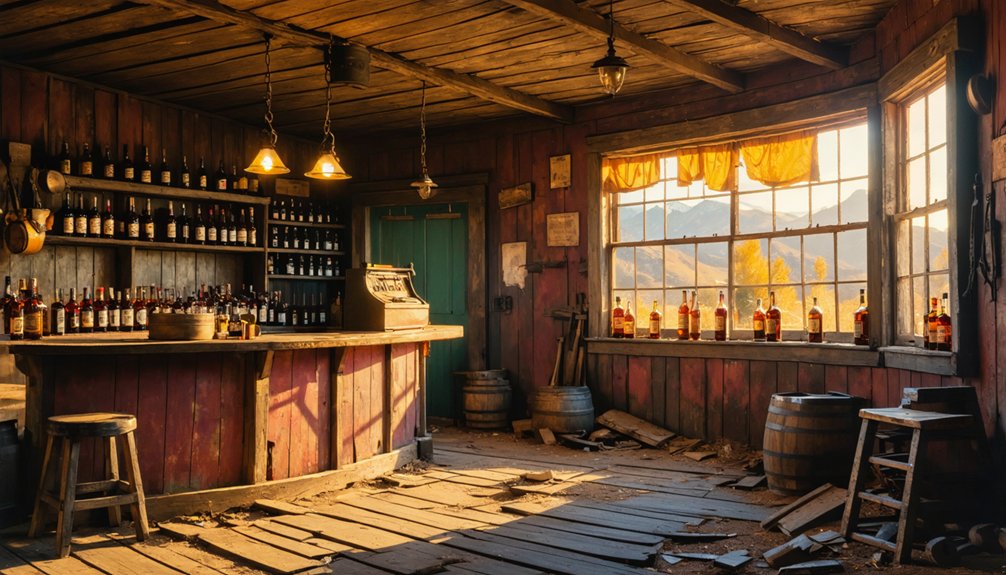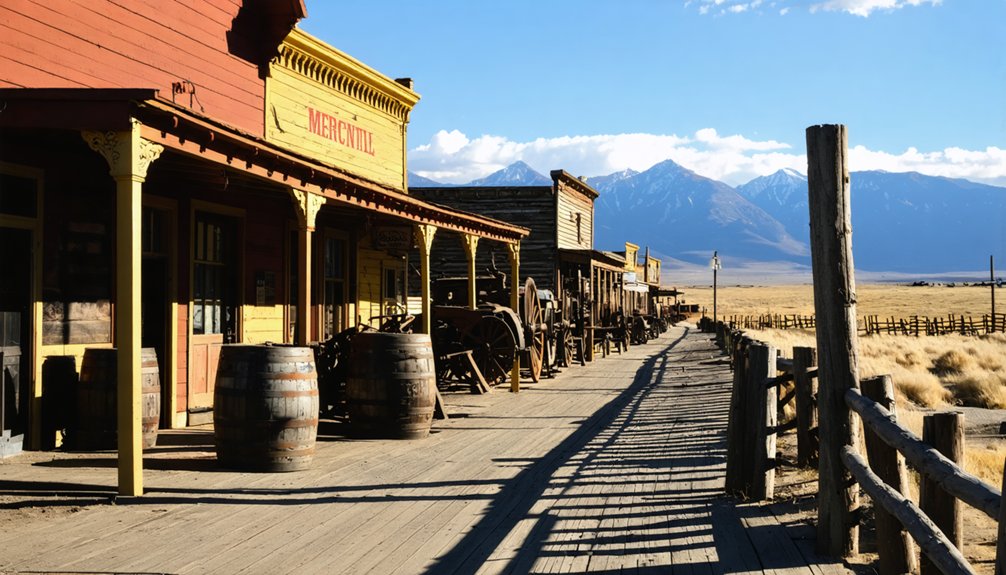
Monte Rio, California (originally “Montirio”) transformed from a thriving resort town to a near ghost town through several economic shifts. You’ll discover a rich history spanning from Pomo Native American settlements to its 1920s-30s entertainment heyday when Hollywood celebrities frequented the Russian River destination. The town’s decline came with the Great Depression and changing transportation trends, leaving behind haunted landmarks and abandoned structures that tell tales of its glamorous past.
Key Takeaways
- Monte Rio (originally Monterio) transformed from a thriving vacation destination to a partial ghost town following economic disruption.
- The decline began with the rise of automobiles and the Great Depression, causing many resorts and venues to close permanently.
- Abandoned structures, particularly in the northern rail area, reflect the town’s golden era of entertainment from the 1920s-1930s.
- Paranormal activity includes Prohibition-era spirits at Rio Nido Lodge and a hitchhiking ghost near Monte Rio cemetery.
- Historic foundations behind the fire station, the phantom train whistles, and spectral sightings at Fallon evidence the town’s ghostly presence.
The Pomo Legacy: Native American Origins of Monte Rio
Stewards of a rich ecological tapestry, the Pomo people inhabited the verdant landscapes of Northern California long before Monte Rio existed as it’s understood today.
Along the Russian River—which they called “Shabaikai” (long snake)—these indigenous communities thrived on seasonal rhythms since 5000 BCE.
You’ll find the essence of Pomo culture in their masterful environmental management through controlled burning and sustainable harvesting.
Their economic systems featured sophisticated trade networks using shell currency from Bodega Bay.
Shell beads gathered from Bodega Bay shores served as vital currency in the Pomo’s far-reaching trade networks.
Traditional practices included acorn processing, basket weaving, and tobacco cultivation for ceremonies. The Pomo people were especially renowned for their exceptional basket-making skills, creating containers ranging from large storage vessels to intricate miniatures.
Their social structures centered around village life with dome-shaped homes and communal roundhouses for gatherings.
Despite Russian fur trappers arriving in 1812, followed by Spanish missions and the devastating Gold Rush, the Pomo’s historical resilience continues to influence the region’s identity. The Pomo people were organized in small bands or lineages, not as a unified political entity, which shaped their distinct cultural expressions across Northern California.
Railroad Glory Days: How Trains Built a Resort Paradise
When the North Pacific Coast Railroad incorporated on December 16, 1871, few could have anticipated how profoundly this narrow-gauge wonder would transform the Russian River region from a remote timber outpost into a thriving vacation paradise.
The railroad expansion initially focused on accessing timber resources, but by 1902, the line’s purpose shifted dramatically toward tourism.
You could have joined the crowds boarding one of fourteen Sunday trains from Sausalito to Monte Rio, then known as “Vacation Wonderland.”
After 1909’s broad-gauge completion, Monte Rio blossomed with hotels, entertainment venues, and restaurants catering to Bay Area visitors seeking freedom in the Russian River’s natural splendor.
This golden era persisted until automobiles and improved roads began diminishing rail dependency in the late 1920s, with the final passenger service ending when the last train left Monte Rio in 1935.
The Great Depression further accelerated the decline, leading to significant reductions in railroad operations throughout Marin County and beyond.
From “Montirio” to Monte Rio: The Evolution of a River Town
While railroads transformed the Russian River region into a tourism hotspot, the area’s identity began long before the first train whistle echoed through the redwoods. The cultural influences started with Pomo and Kashaya tribes, who lived here for millennia before Russians named the waterway “Slavianka River” in 1811.
You’ll find that “Montirio” evolved into Monte Rio, officially established in 1901 by San Francisco entrepreneurs developing a resort community. This naming reflected contemporary romantic trends with Spanish or Italian linguistic roots.
Economic shifts followed predictable patterns—original logging and mining industries gave way to tourism when the railroad extended from Guerneville. Monte Rio became a popular stop on the North Pacific Coast Railroad since the 1870s, establishing its importance as a transportation hub.
After automobile travel emerged in the 1920s, the town’s character shifted again. Large resorts disappeared as smaller motels and businesses developed along Highway 116, catering to motorists rather than rail travelers. The historic downtown featured buildings set back from the street with wide pedestrian sidewalks, creating a distinct architectural style.
Golden Age of Entertainment: When Hollywood Came to Town
How did a small river town transform into a dazzling entertainment destination that attracted Hollywood’s elite? The answer lies in Monte Rio’s 1920s-30s emergence as a Northern California entertainment hub, where nightclubs, theaters, and the iconic Monte Rio Amphitheater flourished under the stars.
The Hollywood influence crystalized when Boho Manor became a filming location for productions like “Holiday Inn,” starring local homeowner Bing Crosby.
Cultural shifts accelerated as Big Band performances drew crowds to riverside pavilions, while the secretive Bohemian Grove hosted elite gatherings that blended entertainment with political significance. These gatherings, with their elaborate Cremation of Care ceremony, became a cornerstone of Monte Rio’s mystique.
The 1934 Monte Rio Bridge and improved rail connections supported this golden age, bringing performers and wealthy San Franciscans to vacation homes.
The town’s proximity to San Francisco cemented its status as a glamorous retreat during entertainment’s golden age.
The neon sign welcoming visitors has become an iconic landmark that preserves the memory of Monte Rio’s glamorous past.
The Great Decline: How Monte Rio Became a Ghost Town
Monte Rio’s transformation from a bustling entertainment destination to a ghost town began with the perfect storm of technological disruption and economic catastrophe in the early 20th century.
You wouldn’t recognize the vibrant resort town in its aftermath. The automobile’s rise triggered profound transportation evolution, severing Monte Rio’s dependence on railroad tourism that had sustained its economy.
As wealthy San Franciscans embraced personal vehicles, the railway-centric infrastructure that once attracted visitors became obsolete.
Then came the devastating economic shifts of the Great Depression. Discretionary spending evaporated, forcing resort hotels and entertainment venues to shutter. The story of Monte Rio reflects the complex histories that lie behind the romantic facade of many abandoned towns. Like many California ghost towns founded during the mid-1800s, Monte Rio’s development and eventual decline followed patterns seen throughout the state.
Summer homes stood abandoned as their owners battled financial hardship. The northern section near the rail line virtually disappeared, with activity concentrating only in the southern downtown area—a shell of its former glory.
Haunted History: Legends and Paranormal Tales Along the Russian River
If you’re walking along the Russian River near Monte Rio at dusk, you might witness the spectral whispers that locals claim emanate from the water itself, carrying tales of lost souls and forgotten tragedies.
The Victorian-era buildings that remain standing harbor more than just historical significance—they’re reputed gathering places for apparitions of former residents who continue their eternal social engagements long after death.
These persistent hauntings, particularly concentrated around Rio Nido Lodge and the old resorts, connect modern visitors to the region’s complex tapestry of Native American spirits, Prohibition-era ghosts, and the lingering energy of those who perished in accidents along the river’s treacherous bends.
River Whispers Persist
The haunting whispers of the Russian River’s past echo through time, enchanting visitors and locals with five distinct paranormal phenomena that define this mysterious waterway.
You’ll encounter the Prohibition-era spirits of Rio Nido Lodge, where shadowy figures and unexplained sounds manifest regularly, and the hitchhiking apparition seeking rides from Monte Rio cemetery.
River spirits are particularly active around George’s Hideaway, where a spectral cowboy from a deadly altercation still roams.
The tragic woman of Mays Canyon Road materializes to unsuspecting drivers, while Korbel’s blue orbs trace back to a cook’s 1880s suicide.
These ghost stories intertwine with Kashaya and Pomo tribal presences, creating a paranormal landscape where ancient redwoods and historic structures harbor restless souls from California’s tumultuous past.
Exploring the local legends often leads visitors to various white mountain city attractions, where eerie tales come to life in the shadows of towering peaks. Each site offers a glimpse into the rich cultural history and the supernatural experiences tied to the land. As night falls, these attractions take on a haunting allure, inviting daring adventurers to uncover their secrets.
Victorian Specters Remain
Shadowing the riverbanks where Victorian splendor once reigned, spectral remnants of Monterio’s railroad heyday persist among the architectural vestiges still visible throughout town.
Behind the fire station, concrete foundations whisper stories of a grand hotel where Victorian hauntings are frequently reported after nightfall.
You’ll discover the paranormal history is as tangible as the preserved structures:
- The water tank at Fallon stands as a silent witness to spectral sightings, where visitors report seeing figures in period dress vanishing into thin air.
- The creamery building, though reduced to a single story, emanates unexplained cold spots and disembodied voices.
- The junction point between railroads harbors residual hauntings, with phantom train whistles piercing the midnight air.
These Victorian specters remain tethered to the architectural bones of this once-thriving railroad town.
Preserved in Time: Surviving Landmarks of Monte Rio’s Past
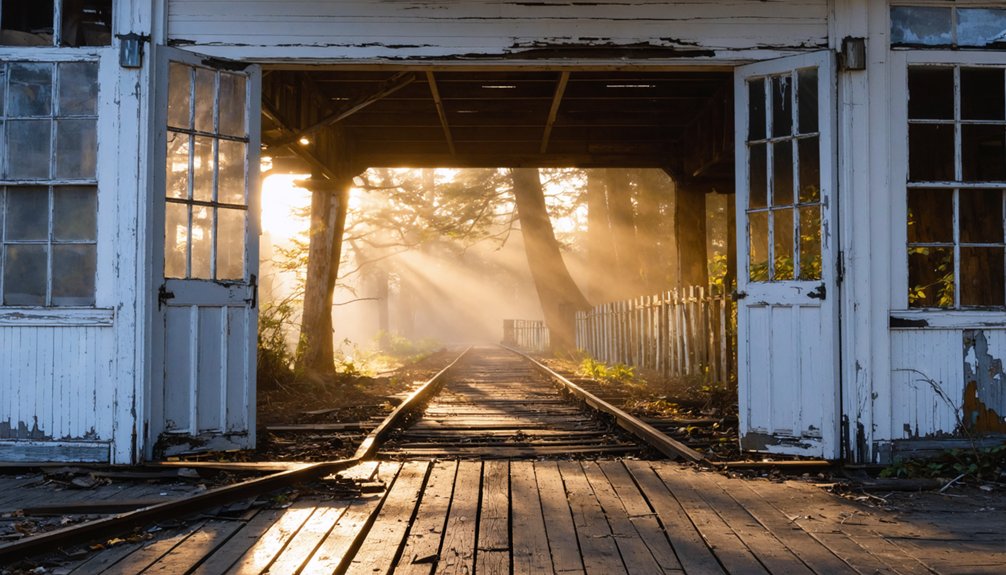
Nestled along the Russian River, Monte Rio’s surviving landmarks stand as storied sentinels of California’s golden resort era, offering visitors tangible connections to a bygone time when the town flourished as a premier vacation destination.
You’ll discover the iconic “Vacation Wonderland” neon sign dating to 1946, a rare survivor of California’s once-ubiquitous roadside welcome arches.
The town’s historic preservation efforts extend to structures with Hollywood pedigrees—Boho Manor appeared in “Holiday Inn” with Bing Crosby, while the 1906 Highland Dell Hotel continues hosting community celebrations.
The 1934 Monte Rio Bridge, listed on the National Register, anchors the town’s architectural heritage alongside the early 1900s amphitheater that once showcased Big Band performances.
These landmarks maintain Monte Rio’s distinct mid-century vacation atmosphere, blending nostalgic charm with the freedom of outdoor recreation.
Frequently Asked Questions
Can Visitors Stay Overnight in Any Historic Monte Rio Buildings?
Yes, you’ll find several historic accommodations in Monte Rio offering overnight experiences, including Boho Manor, Highland Dell Lodge, Casa Secoya, and Inn on the Russian River, all combining historical charm with modern amenities.
What Happened to Monte Rio’s Original Railroad Station?
Monte Rio’s original railroad station was repurposed following rail service cessation in 1935. The station architecture, central to the town’s railroad history, eventually disappeared as transportation needs evolved beyond rail infrastructure.
Were Any Famous Movies Filmed in Monte Rio?
Yes, Monte Rio’s filming history is significant. You’ll recognize Holiday Inn (1942) with Bing Crosby filmed at Village Inn Lodge, along with silent films and recent movie locations like Dream with the Fishes.
How Accessible Is Monte Rio During Winter Flooding?
You’re trapped, you’re stranded, you’re isolated when winter travel to Monte Rio becomes impossible during floods. Highway 116 and Old Bohemian Highway become impassable at 32-foot water levels, potentially cutting you off for days.
Do Any Descendants of Original Pomo Inhabitants Still Live Locally?
Yes, approximately 5,000 Pomo descendants live in nearby rancherias and reservations, maintaining Pomo culture through basket weaving and local traditions while actively reclaiming their ancestral connections to the land.
References
- http://www.pacificng.com/template.php?page=roads/ca/npc/gotg.htm
- https://www.sonomacountygazette.com/sonoma-county-news/the-spooky-side-of-the-russian-river-ghostly-legends-that-will-make-you-sh/
- https://www.russianrivergetaways.com/things-to-do/history
- https://en.wikipedia.org/wiki/List_of_ghost_towns_in_California
- https://bohomanor.com/monte-rio/
- https://www.portlandoccupier.org/2012/05/04/welcome-to-monte-rio-a-bay-area-occu-venture/
- https://en.wikipedia.org/wiki/Monte_Rio
- https://russianriverhistory.org/about-rrhs/area-history/
- https://en.wikipedia.org/wiki/Pomo
- https://www.andersonvalleymuseum.org/the-pomo