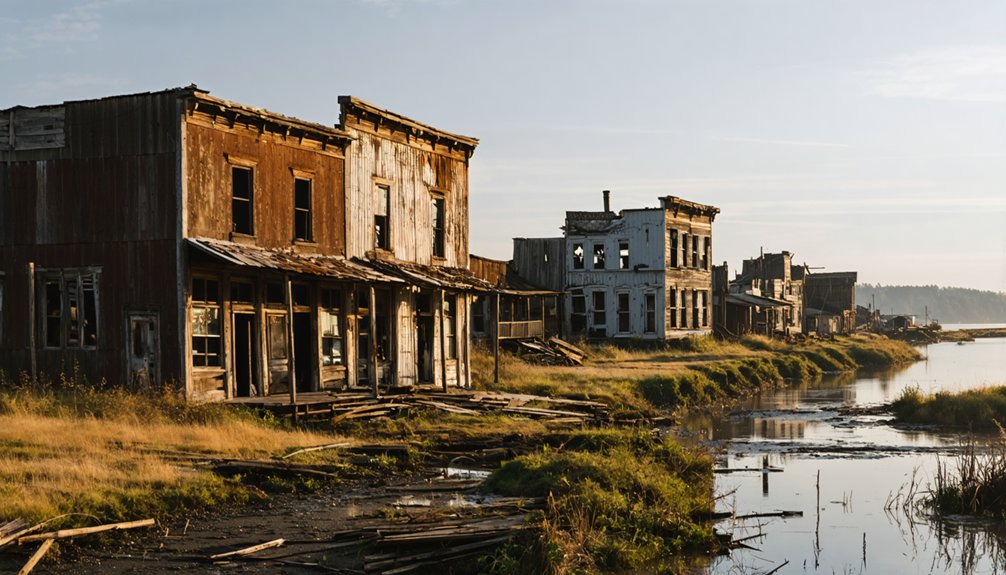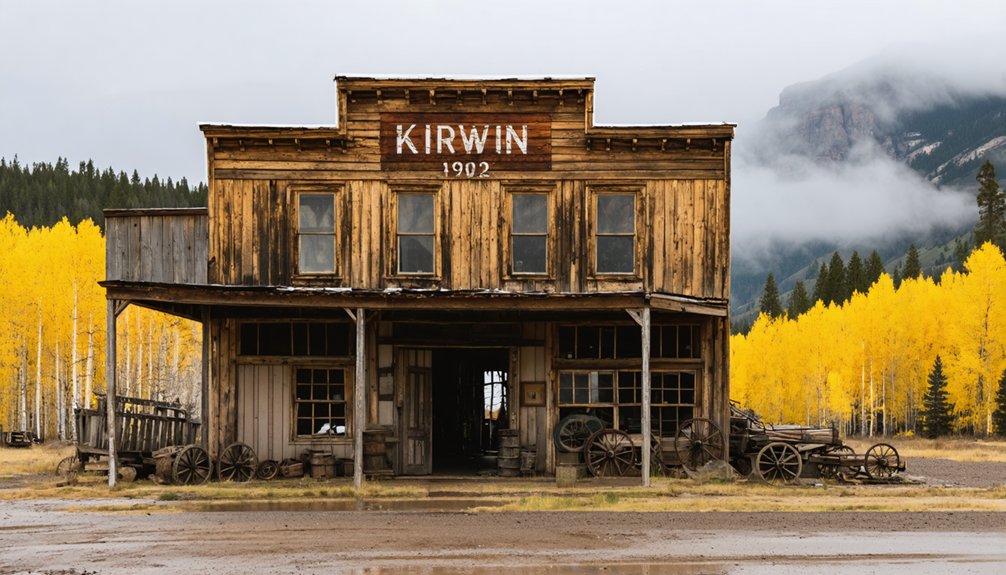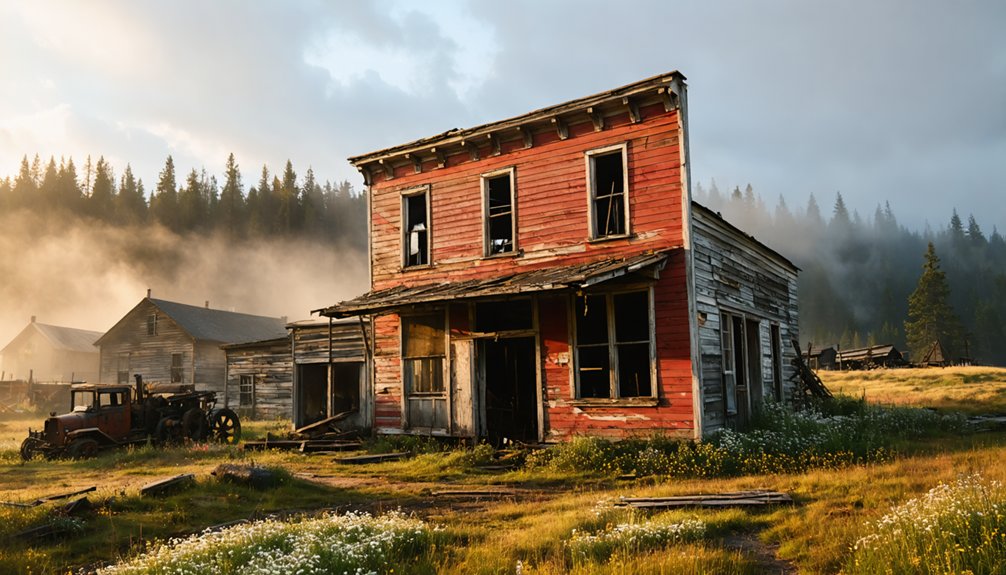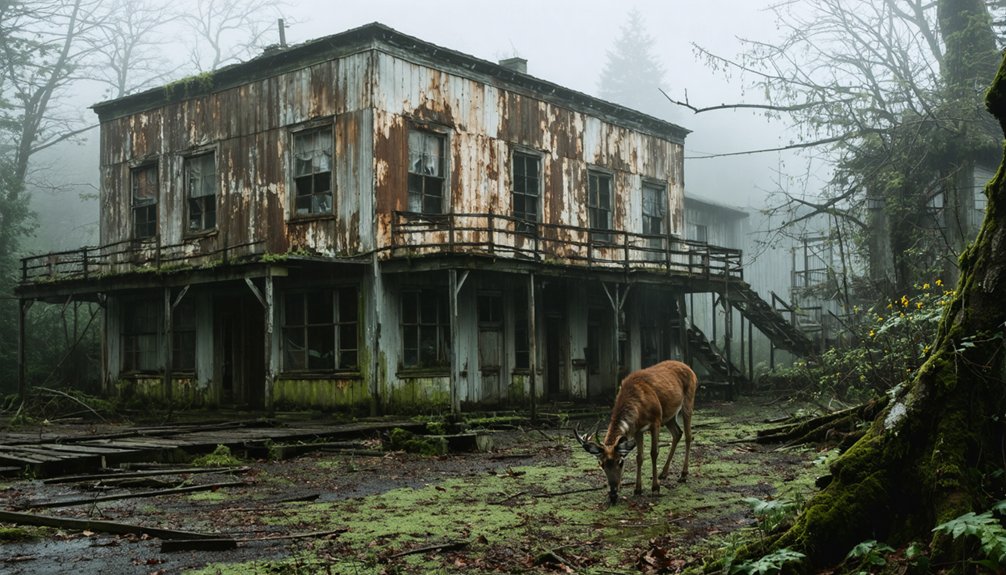
The Pacific Northwest’s ghost towns offer windows into bygone mining, lumber, and railroad eras. You’ll discover Liberty’s preserved 1870s gold rush buildings, submerged communities beneath Grand Coulee Dam, and abandoned psychiatric facilities at Northern State. Many sites harbor tales of spectral miners and eerie encounters, while others showcase remarkable tramway systems that once transported 100 tons daily. Proper timing enhances your experience—mountainous locations demand summer visits while lowland towns reveal their secrets year-round.
Key Takeaways
- The Pacific Northwest contains numerous abandoned mining towns like Liberty, Washington, which preserve buildings from the 1870s Gold Rush era.
- Ghost towns such as Ruby, Nighthawk, and Old Molson in Okanogan Country feature visible original structures dating back to the 1860s.
- Eleven towns were submerged during the construction of Grand Coulee Dam, impacting local tribal lands and creating underwater ghost settlements.
- Abandoned locations like Idaho Hotel in Silver City and Govan’s schoolhouse are reportedly haunted by spirits of former residents.
- Many ghost towns are accessible year-round for photography, with preservation efforts led by community partnerships and volunteer-guided tours.
The Rise and Fall of Pacific Northwest Mining Towns
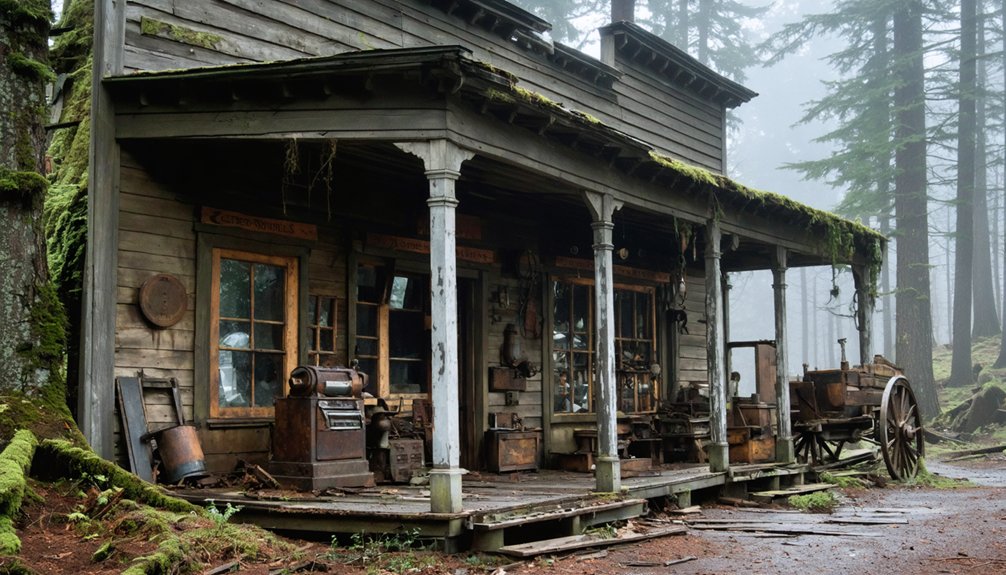
The discovery of valuable mineral deposits across the Pacific Northwest in the mid-nineteenth century catalyzed one of the most dramatic periods of settlement and development in the region’s history.
From William Tolmie’s 1833 coal discovery on the Cowlitz River to the Klondike gold rush of 1897, you’ll find a pattern of rapid expansion followed by inevitable decline.
Boomtowns materialized overnight, with infrastructure quickly following. Companies like Thomas G. Richards transformed frontier outposts into brick-and-mortar establishments.
The mining boom drove remarkable price differentials—coal selling for $11 locally versus $28 in San Francisco—fueling further development.
In the 1880s, advanced tramway systems were constructed to efficiently transport up to 100 tons daily from mining operations to shipping points, revolutionizing the industry’s productivity.
The environmental legacy of these mining operations continues today, with heavy metals still leaching into waterways like the Spokane River, requiring ongoing EPA cleanup efforts.
Yet as resources depleted, town decline followed. Former county seats lost status, smelters closed, and communities emptied, leaving the ghost towns that now haunt the Northwest landscape.
Washington’s Hidden Historical Treasures
While travelers often flock to Washington’s iconic landmarks, a more compelling historic landscape lies hidden across the state’s diverse terrain—ghost towns that chronicle Washington’s tumultuous relationship with industry and settlement.
Liberty, the state’s oldest mining town, stands as a living representation to the 1870s Gold Rush, where you’ll find preserved buildings and mining equipment.
Standing amidst Liberty’s weathered structures, visitors witness the raw ambition that fueled Washington’s first gold seekers.
Franklin’s coal mining legacy includes haunting reminders of the 1894 disaster that claimed 37 lives. The town once thrived with a vibrant community that included public houses and hotels along the Green River.
For those seeking more macabre historical landmarks, Northern State Recreation Area’s abandoned psychiatric hospital offers architectural insights into early mental healthcare practices.
In Okanogan Country, you’ll discover hidden gems like Ruby, Nighthawk, and Old Molson, each preserving distinct chapters of Washington’s frontier development through their remaining structures and foundations. Nighthawk’s history as one of the oldest mining districts dates back to the 1860s, with original structures still visible today.
Submerged Settlements: Towns Beneath the Water
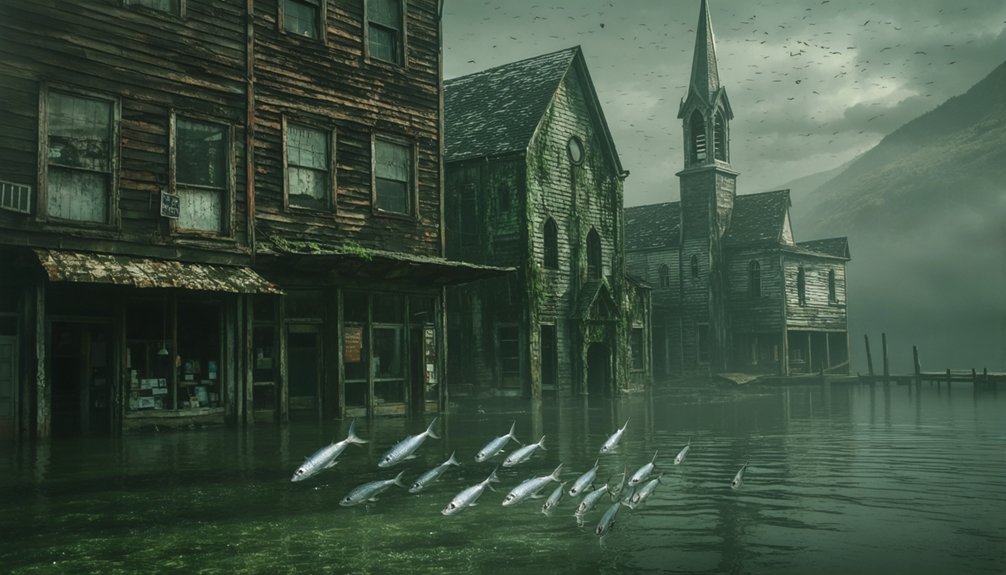
Beneath Washington and Oregon’s placid reservoir waters lie ghostly remnants of communities sacrificed for regional development—towns completely submerged by dam construction and coastal erosion.
You’ll find Grand Coulee Dam‘s creation submerged eleven towns, including Kettle Falls and Inchelium, erasing vibrant communities for hydroelectric power. The flooding significantly impacted local tribal lands, blocking salmon runs and diminishing traditional fishing opportunities.
Oregon’s forgotten communities include Robinette, now inaccessible beneath Brownlee Reservoir, with history preserved only through Pete Basche’s documentation.
Lookout Point Reservoir conceals six settlements including Landax and Signal, while Bayocean presents a different tragedy—a coastal town gradually reclaimed by the Pacific Ocean until its final destruction in the 1950s. Indigenous peoples had warned developers about the spit’s instability through their oral traditions, but these valuable insights were ignored.
These submerged histories represent a pattern across the Pacific Northwest: communities disappeared not through economic decline but deliberate flooding, their streets and buildings preserved in watery tombs beneath reservoirs you may cross today.
Exploring the Remnants of Railroad Communities
Scattered across the American West, abandoned railroad communities stand as skeletal reminders of transportation’s transformative power, their weathered remnants revealing stories of technological progress and human displacement.
As you explore towns like Matlin, Corfu, and Kirk, you’ll discover railroad infrastructure including trestles, sidings, and depots that once facilitated essential operations. In Corfu specifically, rails from 1927 remain visible with manufacturer markings, offering tangible connections to its railroad past. These settlements functioned as strategic nodes—places where trains passed safely, maintenance occurred, and goods transferred.
Community dynamics in these towns reflected their transient purpose. Chinese laborers maintained tracks while immigrants built lives around extraction industries that railways served. Many workers endured harsh conditions for minimal monthly wages of $30-$35, yet their contributions were essential to the railroad’s success.
These forgotten towns pulsed with temporary humanity—Chinese track workers and immigrant miners tied to the rails’ economic promise.
When diesel replaced steam or routes changed, these communities collapsed rapidly. Today, abandoned cemeteries and fire-damaged structures tell of lives intertwined with railroad economics—boom and bust cycles that defined America’s western expansion.
Preservation Efforts and Heritage Tourism
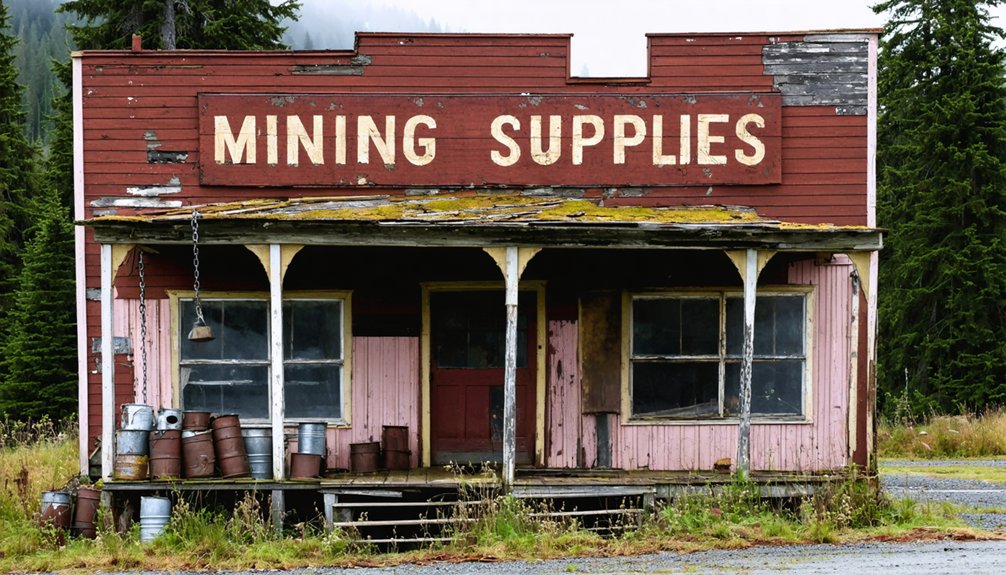
As abandoned communities fade into obscurity, dedicated preservation initiatives have emerged to safeguard these fragile historical assets through coordinated community, nonprofit, and governmental partnerships.
You’ll find exemplary community initiatives in the Maxville Heritage Interpretive Center’s collaboration with Forest Capital Partners and the Monte Cristo Preservation Association’s maintenance efforts.
Heritage preservation manifests through varied approaches—Molson relies on volunteer-guided tours, while Maxville develops traveling exhibits and educational kits for schools.
The negotiation of heritage easements balances preservation with existing land agreements. Graduate students conduct research while local historians collect oral accounts, ensuring these narratives endure.
When you visit these sites, your tourism supports ongoing preservation—whether through Molson’s donation system or Garnet’s immersive cabin rentals—creating sustainable models for protecting these tangible connections to our frontier past.
The annual Maxville Gathering held every August since 2009 features demonstrations of historical logging practices, providing visitors with authentic glimpses into the past while generating vital funding for preservation.
Visitors to Molson can explore the brick schoolhouse museum during summer months, where they can learn about Washington’s gold rush era and the town’s brief but significant history.
Legends and Lore of Abandoned Communities
In the dusty corridors of abandoned mining facilities, you’ll encounter spectral presences like the ghostly schoolteacher of Govan, Washington, who reportedly wanders through the decaying schoolhouse.
Your exploration of lakeside ghost settlements might reveal phenomena such as the phantom canoe at Spirit Lake, where Kootenai legend tells of drowned lovers who manifest on misty nights.
These paranormal accounts form a rich tapestry of regional folklore, blending indigenous spirit beliefs with settler narratives that attribute unexplained sounds and flickering lights to those who once inhabited these now-silent communities.
Haunted Mining Buildings
Mining buildings left behind in these once-bustling settlements offer some of the most compelling evidence of paranormal phenomena in the American West. The Idaho Hotel in Silver City stands as a testament to this claim, with numerous spectral sightings reported by overnight guests.
You’ll find similar accounts in Bayhorse’s stone structures, where miners’ spirits allegedly linger among the well-preserved mill sites.
Nighthawk’s abandoned concentration mills and Bodie’s mining company buildings harbor their own supernatural mysteries. These haunted buildings, constructed during periods of intense industrial activity and human struggle, appear to retain energetic imprints of their former occupants.
When exploring Mackay’s Mine Hill, visitors often report unexplained cold spots and disembodied voices near the miners’ cabins—perhaps echoes of the countless laborers who extracted millions in precious metals from these remote locations.
Eerie Lake Settlements
While ghost towns typically conjure images of dusty mining outposts, the Pacific Northwest harbors a distinct category of abandoned settlements with equally compelling stories—those established near lakes and waterways.
Among these unique ghost towns in Washington, visitors can uncover tales of early pioneers and the rich history of the timber industry. Each location offers a glimpse into the past, with remnants of homes and buildings that tell the stories of those who once thrived there. Exploring these sites can reveal a fascinating juxtaposition of nature reclaiming its space and the echoes of human ambition.
You’ll find these sites layered with complex narratives—Indigenous communities forcibly displaced by settlers, once-thriving towns abandoned after resource depletion or economic shifts.
Battle Ground Lake exemplifies this pattern, where Chief Umtux’s confrontation with militia created both a place name and lingering lore. Visit these locations and you might encounter ghostly remnants of structures reclaimed by nature or hear tales of eerie encounters that often reflect historical trauma.
Many sites preserve dual histories—the ecological practices of Indigenous stewardship through prescribed burning alongside the boom-and-bust cycles of settler economies.
These abandoned lakeside communities offer windows into disrupted relationships between people and landscapes.
Photography Guide to Capturing Ghost Town Beauty

Capturing the haunting allure of abandoned settlements requires specialized photographic techniques and equipment that differ considerably from traditional landscape or architectural photography.
For effective ghost town photography, arm yourself with a mirrorless or DSLR camera, wide-angle lenses for expansive scenes, and primes for textural details. A sturdy tripod is non-negotiable for low-light interiors.
Master composition techniques by balancing wide shots of main streets with intimate details of rusted artifacts. Photograph early morning or late afternoon when soft light accentuates weathered textures and creates dramatic shadows.
Experiment with window reflections and silhouettes to create layered visual narratives. Remember to respect “No Trespassing” signs and preserve these fragile historical sites as you document their decay—they’re irreplaceable windows into our collective past.
Seasonal Access and Best Times to Visit
Beyond capturing the perfect shot, timing your ghost town expedition is perhaps the most significant factor determining your experience.
Mountainous sites like Monte Cristo face seasonal weather limitations, with access restricted during winter months, while lowland towns such as Shaniko remain generally accessible year-round.
Elevation dictates accessibility—high-country ghost towns hibernate while their valley counterparts welcome visitors throughout the seasons.
For ideal conditions, consider fall and winter’s atmospheric overcast skies, which enhance the enigmatic ambiance despite potential access challenges.
Summer offers reliable dry conditions but draws larger crowds, particularly on weekends. Those seeking solitude should target off-peak seasons.
Remote locations demand additional preparation—carry maps and emergency supplies where cell service is unavailable.
Always verify current road conditions before departing, as forest service routes may close unexpectedly after precipitation events.
Early morning visits consistently provide superior lighting and cooler exploration temperatures regardless of season.
Frequently Asked Questions
Are Ghost Towns Legally Protected From Artifact Removal?
Yes. You’ll find ghost towns strictly protected by federal and state legal regulations. Artifact preservation laws criminalize removal of even small items, with enforcement through surveillance and prosecution mechanisms.
What Safety Precautions Should Visitors Take When Exploring?
You’ll need thorough safety gear including navigation tools, first aid supplies, and communication devices. Maintain wildlife awareness, respect structural dangers, inform others of your itinerary, and always follow established pathways and posted guidelines.
Which Ghost Towns Allow Overnight Camping Nearby?
While Bodie prohibits on-site slumber, Terlingua generously accommodates your nomadic spirit. You’ll find camping regulations vary considerably—with Terlingua offering nearby ghost town amenities, unlike Molson and Melmont that mandate distanced overnight retreats.
Do Any Ghost Towns Host Historical Reenactments?
Based on evidence, you’ll find limited historical reenactments at Pacific Northwest ghost towns. These sites typically offer self-guided tours rather than formal ghost town events with costumed interpretations of mining-era activities.
How Did Native American Communities Interact With These Settlements?
Like river waters meeting, you’ll find Native peoples established cultural exchanges with settlers through complex trade routes, often supplying essential resources while facing displacement from their ancestral territories as settlements expanded.
References
- https://en.wikipedia.org/wiki/List_of_ghost_towns_in_Washington
- https://siris-libraries.si.edu/ipac20/ipac.jsp?profile=liball&uri=link=3100009~!2578817~!3100001~!3100002&aspect=subtab103&menu=search&ri=2073&term=Ghost+towns+–+Northwest,+Pacific+–+Guidebooks.&index=PSUBJ
- http://pnwphotoblog.com/ghost-towns/
- https://stateofwatourism.com/ghost-towns-of-washington-state/
- https://www.wta.org/go-outside/seasonal-hikes/fall-destinations/hidden-history-ghost-town-hikes
- https://secure2.pbase.com/mad_monte1/ghost_towns_of_the_pacific_northwest
- https://grassrootsbookstore.com/lists/XByJlZqPrWU
- https://www.historylink.org/File/5158
- https://www.historylink.org/file/7162
- https://westernmininghistory.com/map/