Colorado’s Rockies harbor remnants of once-thriving mining camps that boomed during the 1859 Pikes Peak Gold Rush and 1879 silver boom. You’ll find towns like Tomboy (at 11,500 feet) and St. Elmo where thousands lived in brutal alpine conditions, enduring harsh winters and isolation for months. These communities quickly collapsed after silver prices crashed in 1893, leaving behind preserved structures and eerie stories that offer glimpses into the hard-fought fortunes of mountain pioneers.
Key Takeaways
- Tomboy ghost town sits at 11,500 feet with 20 miles of tunnels carved into mountainsides and numerous structural remnants.
- St. Elmo preserves 43 original structures including Town Hall and Home Comfort Hotel, with reported sightings of Annabelle Stark.
- Colorado mining camps fostered unique supernatural lore after their abandonment following the 1893 silver crash.
- Extreme isolation and high mortality rates in mining communities contributed to persistent ghostly legends and unexplained phenomena.
- Former mining settlements like Cripple Creek and Nevadaville attract paranormal investigators and tourists seeking ghostly encounters.
Colorado’s Mining Boom: How Ghost Towns Emerged in the Rockies
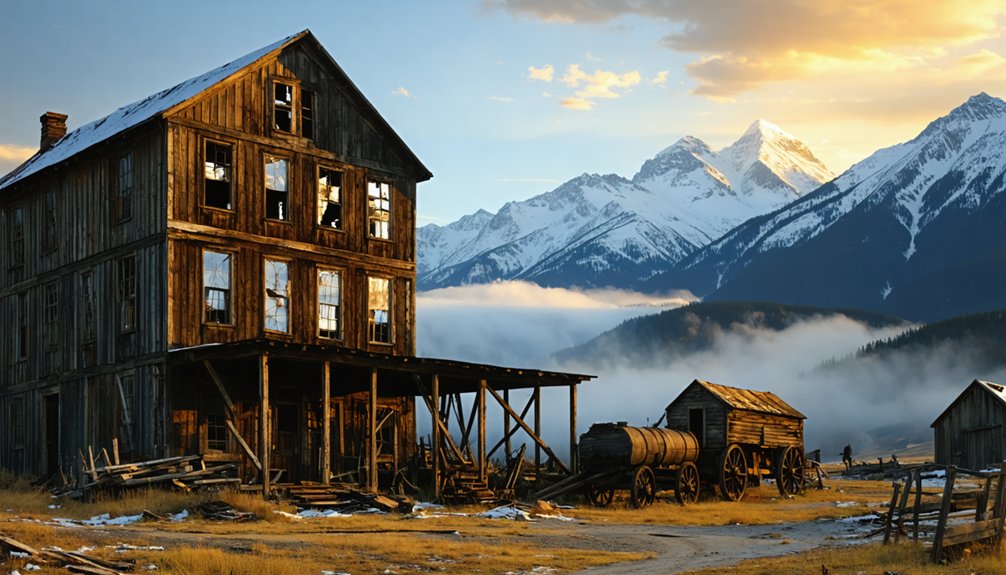
Fortune seekers transformed Colorado’s rugged landscape in 1859 when the Pikes Peak Gold Rush drew thousands of prospectors to the Rocky Mountains.
You can trace mining legacies back to boom towns like Central City, which exploded from 15 to 10,000 residents in just one month after John Gregory’s lode discovery.
Initially, miners focused on placer gold in Baker’s Park and South Platte branches, but by the early 1860s, they shifted to shaft mining as surface gold dwindled.
As surface gold disappeared, Colorado’s early miners abandoned creek beds for the demanding depths of shaft mining.
The silver boom of 1879 further altered the Rockies, creating prosperous cities like Leadville and Aspen.
When silver prices collapsed in 1893 following the Sherman Act repeal, these thriving communities faced abandonment, creating the perfect conditions for ghost town tourism that preserves Colorado’s mining history today.
The largest gold discovery, Tom’s Baby, weighing over 13 pounds was found near Breckenridge in 1887 and represents one of the most significant finds in Colorado’s rich mining history.
During the height of mining operations, many labor organizations formed to advocate for miners’ rights, with Colorado’s first labor strike in 1880 requiring intervention by state militia.
Daily Life and Struggles in High-Altitude Mining Settlements
As you explore Colorado’s ghost towns today, you’ll find remnants of brutal living conditions where miners endured subzero temperatures in rudimentary wooden cabins perched above 8,000 feet.
Their daily timeline revolved around dangerous underground work extracting ore from sulfur-rich deposits, followed by evenings in town saloons or opera houses that offered brief respites from physical hardships.
These isolated communities formed tight networks centered around limited institutions like schools and churches, creating social support systems necessary for survival amid frequent mining accidents, respiratory illnesses, and contaminated water supplies. Towns like St. Elmo once housed nearly 2,000 residents with 150 patented mining claims before operations ceased in the 1920s. Caribou, established in 1870, became Colorado’s first great silver camp and quickly grew to a population of 3,000 by 1875 despite its challenging elevation.
Brutal Alpine Living Conditions
Life in these ghostly mining camps, perched at nearly 10,000 feet above sea level, tested the limits of human endurance through brutal environmental conditions and inadequate infrastructure.
You’d find yourself battling extreme weather year-round, with blustery storms blanketing settlements in heavy snow and freezing temperatures forcing miners to work in frigid creeks.
Altitude sickness plagued residents constantly, compounding the misery of overcrowded living quarters where nearly 3,000 people squeezed into makeshift tents and brush structures.
Contaminated water sources spread disease quickly through communities, while inadequate sanitation systems created muddy, unsanitary conditions.
Children and women faced particularly high mortality rates, with limited healthcare access during childbirth and illness.
Even after more permanent log houses replaced initial shelters, the harsh alpine environment continued claiming lives through unrelenting physical demands and exposure to the elements.
The devastating forest fire of 1879 destroyed dozens of homes, further complicating survival in an already challenging environment.
Women were expected to maintain Victorian-era dress standards despite the harsh conditions, wearing impractical long skirts and corsets while navigating the mud and roughness of mining camps.
Miners’ Hardship Timeline
Mining at these ghostly alpine encampments followed a punishing rhythm that dominated every aspect of existence, transforming ordinary men into weathered shadows of their former selves.
You’d endure 10-12 hour shifts in near-darkness, your body breaking under the weight of drills, blasted rock, and ore-filled carts.
When your shift ended, you’d return to cramped quarters where you might share a bed with a night-shift worker. Meals consisted mainly of canned provisions cooked over iron stoves that also provided your only warmth.
Labor conditions were brutal—children running errands while women washed clothes in water later used for bathing. These conditions were particularly harsh for Hispanic miners who often worked in coal fields during winter and beet fields in summer when mining operations slowed.
The miners’ struggles extended beyond physical toil; poor sanitation and limited medical care meant injuries often proved fatal.
Your rare moments of respite came through community gatherings and seasonal foraging expeditions. In the absence of formal law enforcement, vigilance committees emerged to maintain some semblance of order amid the frequent violence and crime that plagued isolated mining settlements.
Isolated Community Networks
Perched at dizzying elevations above 9,000 feet, these isolated mining communities carved out a precarious existence defined by extreme weather and profound isolation. For up to eight months yearly, heavy snow transformed these settlements into islands, where residents relied entirely on community resilience to survive.
The ethnic diversity of Colorado’s mining camps fostered unique social structures. African Americans, Chinese, and Hispanic miners developed tight-knit support networks despite facing discrimination. You’d find Chinese specialists working abandoned claims or running essential laundries, while social bonds formed around wood stoves during shared meals.
Daily life revolved around simple log cabins with homemade furniture, primitive sanitation, and modest diets supplemented by neighbors’ shared goods. Miners often shared traditional lunch items like pasties during their workday, keeping these one-dish meals warm with candle stubs. Social gatherings such as town hall dances provided crucial emotional relief from the hardships of mining life.
When snow blocked paths, residents collectively cleared routes, demonstrating how interdependence became their lifeline against the harsh mountain environment.
Legendary Mines and Their Million-Dollar Fortunes
While the Colorado Rockies appear serene today, they once thundered with industrial might as some of America’s wealthiest mines extracted fortunes from their depths.
You’ll find legendary fortunes throughout districts like Cripple Creek, where over 500 mines operated simultaneously, producing vast mineral wealth that transformed Colorado’s economy.
Camp Bird Mine near Ouray became known as “The Greatest Gold Mine in Colorado or the Whole Earth,” encompassing 103 claims across 941 acres.
The ghostly tales of Baby Doe Tabor still echo at Leadville’s Matchless Mine, one of the richest silver strikes in history.
Nevadaville’s Prize Mine and Inez Mining Camp represent the boom-and-bust cycle that defined these operations—towns rising to 500 residents before dwindling to mere handfuls as their mineral veins played out.
Exploring Five Notable Ghost Towns in Colorado’s Mountains
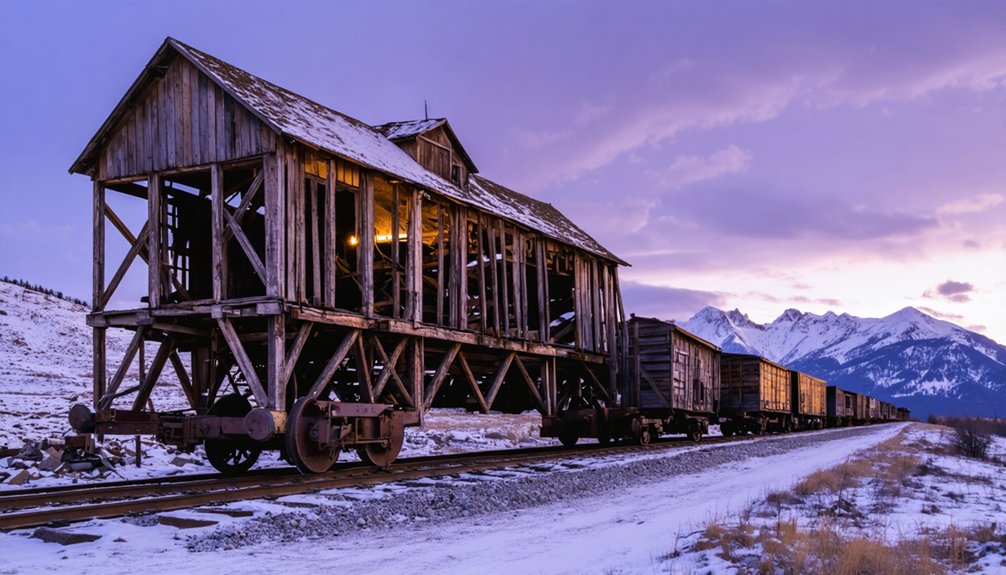
When you visit Tomboy near Telluride, you’ll find one of America’s highest ghost towns where gold mining operations at 11,500 feet once supported a thousand year-round residents.
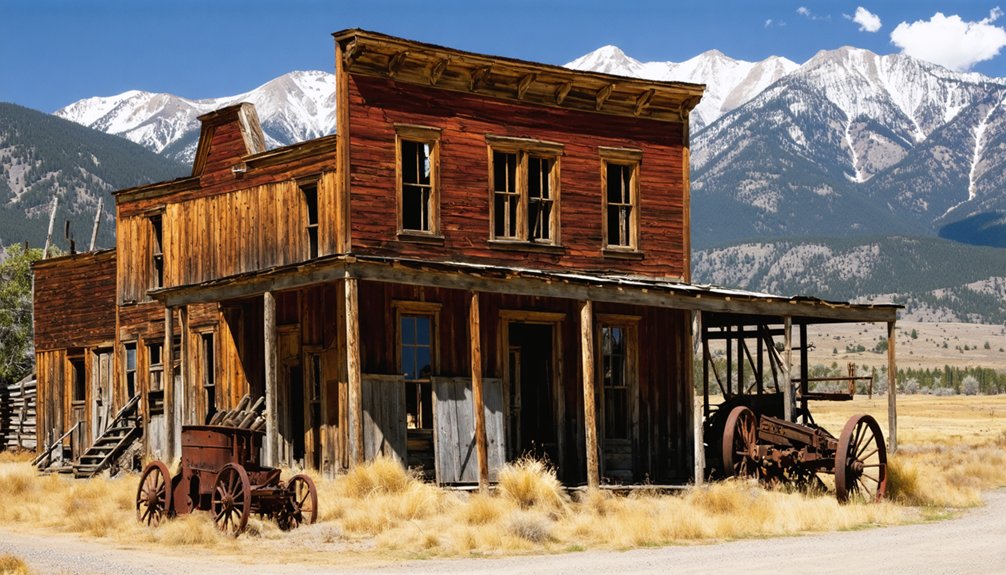
In contrast, St. Elmo offers Colorado’s most intact ghost town experience with well-preserved wooden storefronts and a defined Main Street that transport you to the mining era.
These two sites represent opposite experiences in Colorado’s mining heritage—Tomboy requiring challenging high-altitude access while St. Elmo welcomes visitors with relatively easy car access at 10,000 feet.
Tomboy: Gold at 11,500ft
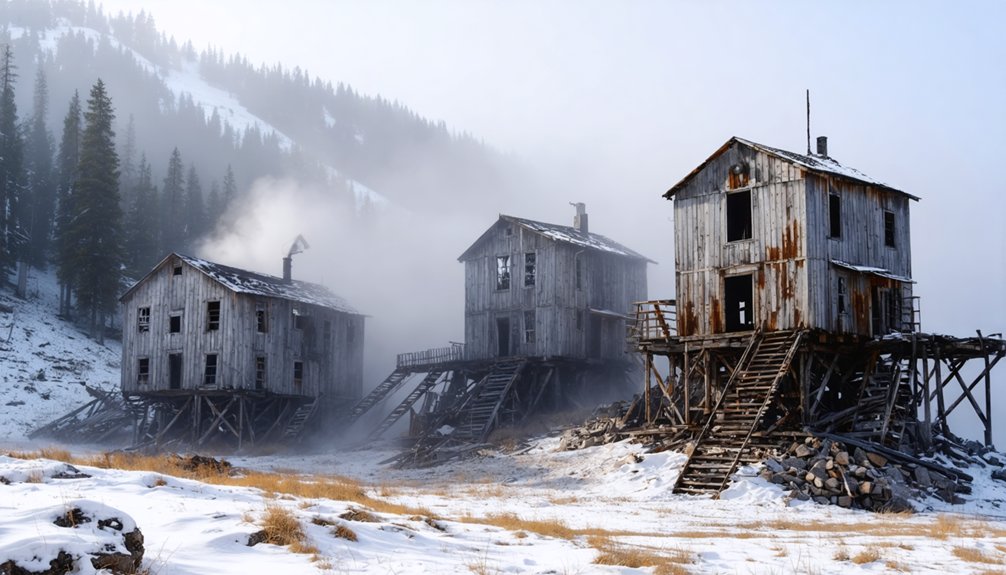
Situated at a breathtaking elevation of 11,500 feet in Colorado’s Savage Basin near Telluride, Tomboy stands as one of North America’s highest mining settlements.
This Alpine Gold producer flourished from 1894 until 1927, yielding millions in precious metals while supporting a surprisingly sophisticated community of nearly 1,000 residents.
Unlike typical mining camps, Tomboy Mine boasted not just the expected cabins and general store but also tennis courts and a YMCA.
You’ll find the remnants accessible via the challenging Imogene Pass Road or hiking trails that lead past the 365-foot Bridal Veil Falls.
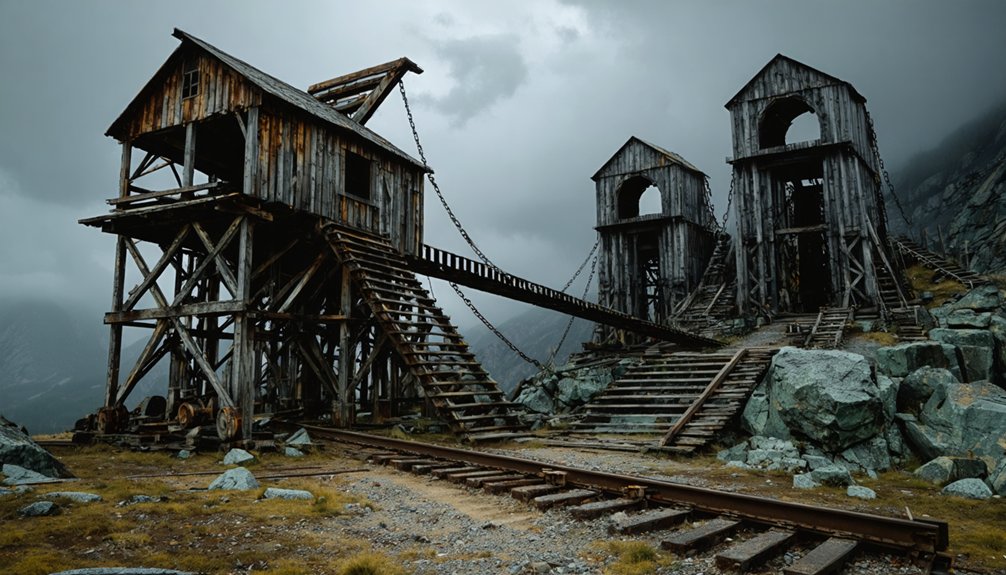
Though mostly on private property now, the visible remains of this once-thriving operation—with its 20 miles of tunnels carved into steep mountainsides—offer a glimpse into Colorado’s determined mining past amid spectacular alpine scenery.
St. Elmo’s Preserved Past
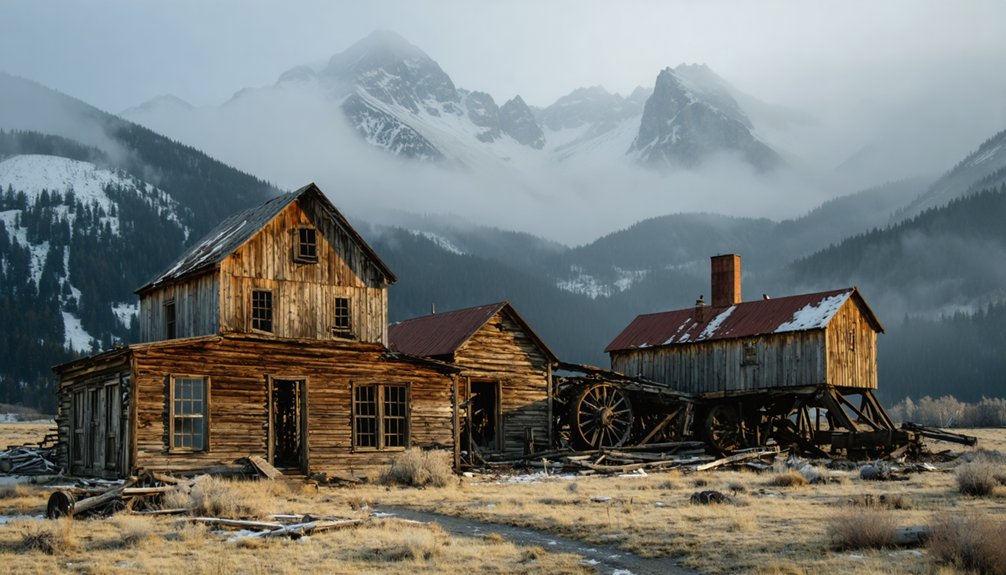
Unlike many abandoned mining settlements that have succumbed to time, St. Elmo stands as one of Colorado’s best-preserved ghost towns. Founded in 1880 at nearly 10,000 feet in the Sawatch Range, it once bustled with 2,000 residents during its gold and silver heyday.
You’ll find 43 original structures showcasing St. Elmo’s architecture, including the reconstructed Town Hall and Home Comfort Hotel. The town thrived until the 1920s when mining declined and the railroad departed, leaving the dedicated Stark family as the final residents until 1952.
Today, visitors explore this National Register Historic District while locals whisper ghost stories about Annabelle Stark’s lingering presence. Unexplained door slams and temperature drops in the old hotel remind you that in St. Elmo, the past isn’t completely silent.
Catastrophes and Conflicts: Why Mining Towns Were Abandoned
The collapse of once-thriving mining towns across the American West occurred through a perfect storm of economic, social, and environmental challenges that rendered these communities unsustainable.
When you visit these ghostly remnants today, you’re walking through the aftermath of dramatic economic decline that began with silver devaluation in 1893 and continued as precious metal veins were exhausted.
Social unrest compounded these problems, with violent crime flourishing in isolated communities where lawlessness prevailed.
- Harsh mountain winters proved unbearable, with avalanches and fires regularly destroying vulnerable settlements.
- Single-industry economies collapsed entirely when mines closed, leaving no alternative employment.
- Transportation shifts left many towns stranded as railroads bypassed them or stage routes became obsolete.
Preserving Colorado’s Mining Heritage: Modern Tourism and Conservation
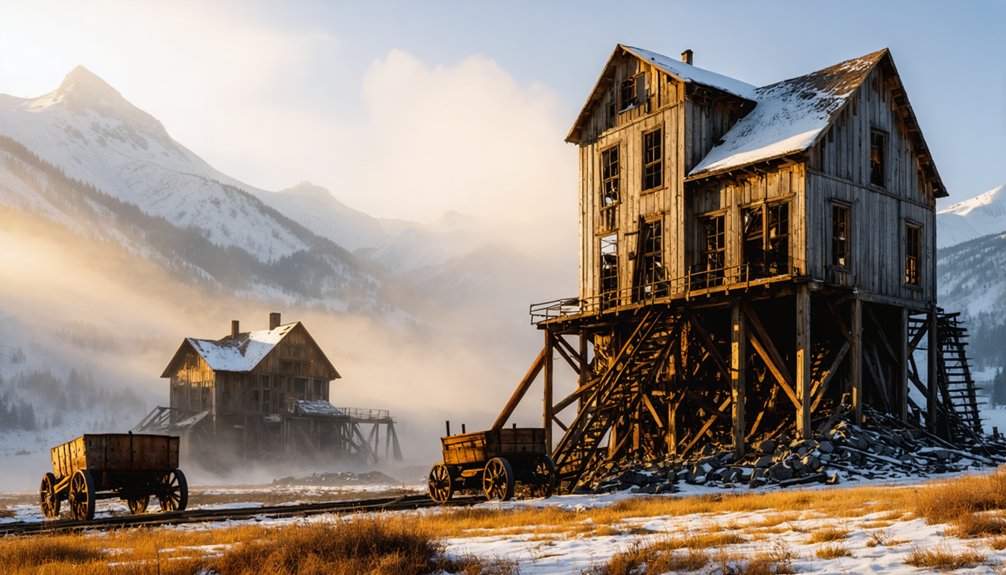
Colorado’s abandoned mining towns have transformed from economic casualties into cultural treasures through strategic preservation efforts that balance historical authenticity with modern tourism demands.
These preservation initiatives have generated over $2 billion in economic impact since 1981, while creating approximately 29,000 jobs through rehabilitation activities.
Heritage tourism has become a powerful economic engine, with 5.1 million heritage-prompted visitors spending $1.5 billion in Colorado in 2003 alone.
Former silver mining settlements now thrive as centers for tourism and mountain recreation, with their mining-era character providing a distinct place identity that attracts visitors.
Towns like Golden and Telluride demonstrate how National Landmark status and thoughtful downtown guidelines can protect historic spatial character while accommodating modern needs, resulting in a 10% increase in tourism visits to these preserved mining communities.
Frequently Asked Questions
Are There Any Reported Paranormal Activities in Colorado Ghost Towns?
You’ll encounter numerous ghost sightings across Colorado’s haunted locations, from Annabelle “Dirty Annie” Stark in St. Elmo to poltergeist activity in Gunnison and apparitions throughout former mining communities.
Local residents often report unexplained noises in Colorado towns, adding to the eerie atmosphere that shrouds these areas. Many believe these sounds are the echoes of the past, haunting reminders of the lives once lived in the now-abandoned sites. As night falls, the stories of these disturbances only grow, drawing curiosity and caution from those brave enough to explore.
Which Mining Town Had the Most Lawless Reputation?
Tincup earned the most lawless reputation. You’ll find lawless legends surrounding its Boot Hill Cemetery filled with fallen lawmen and notorious outlaws who gunned down Marshal Rivers in 1882.
Did Women Play Significant Roles in These Mining Communities?
Like power CEOs, you bet women dominated mining camp生活! They established schools, ran boarding houses, filed mining claims, and built communities, while simultaneously managing households in Colorado’s harsh mountain terrain.
What Happened to Wealthy Mine Owners After Operations Ceased?
You’ll find wealthy owners often retained their mining lands, diversified investments, or lost fortunes. Some transformed properties into conservation areas while others struggled with liability concerns, leaving complex mining legacies behind.
Were There Any Significant Racial or Ethnic Minorities in Mining Towns?
In 1870s Gilpin County alone, you’d find over 100 Chinese immigrants working dangerous mines for lower wages. African miners, alongside Hispanic and Native American populations, contributed despite facing segregation, violence, and “sundown town” policies.
References
- https://www.denver7.com/news/local-news/colorado-ghost-towns-their-past-present-and-future-in-the-rocky-mountains
- https://www.visitouray.com/ghost-towns
- https://aspenhistory.org/independence-ghost-town/
- https://www.legendsofamerica.com/co-ghosttowns/
- https://www.colorado.com/articles/colorado-ghost-towns
- https://www.coloradolifemagazine.com/blog/post/11-colorado-ghost-towns
- https://westernmininghistory.com/state/colorado/
- https://www.aspire-tours.com/blogs/hidden-mines-of-colorado-forgotten-history-beneath-the-rockies
- https://visitfourcorners.com/colorado-mining-history-made-the-state/
- https://en.wikipedia.org/wiki/Timeline_of_mining_in_Colorado