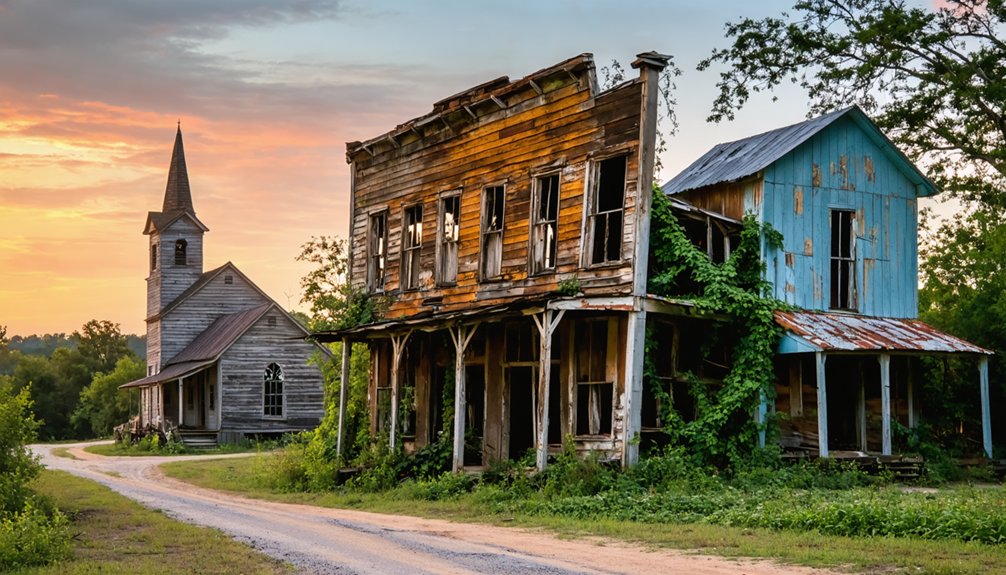
When exploring abandoned Southern suburban ghost towns, always check property ownership records first to avoid trespassing fines up to $2,000. Pack essential gear like respirators, sturdy boots, and multiple light sources. Document historical context through photographs and GPS coordinates while respecting the site’s integrity by never removing artifacts. Use 4×4 vehicles for remote locations and maintain a check-in system. These forgotten places hold countless stories waiting for those who approach with respect and preparation.
Key Takeaways
- Always verify property ownership through county assessor records before exploring to avoid trespassing charges and fines.
- Carry proper safety equipment including respiratory protection, multiple light sources, and emergency supplies.
- Document historical context through photographs, GPS coordinates, and research of local economic shifts.
- Select appropriate transportation for southern terrain and maintain a check-in system with someone back home.
- Respect preservation ethics by leaving artifacts undisturbed and supporting local economies instead of removing relics.
Research Legal Status and Property Rights Before Visiting
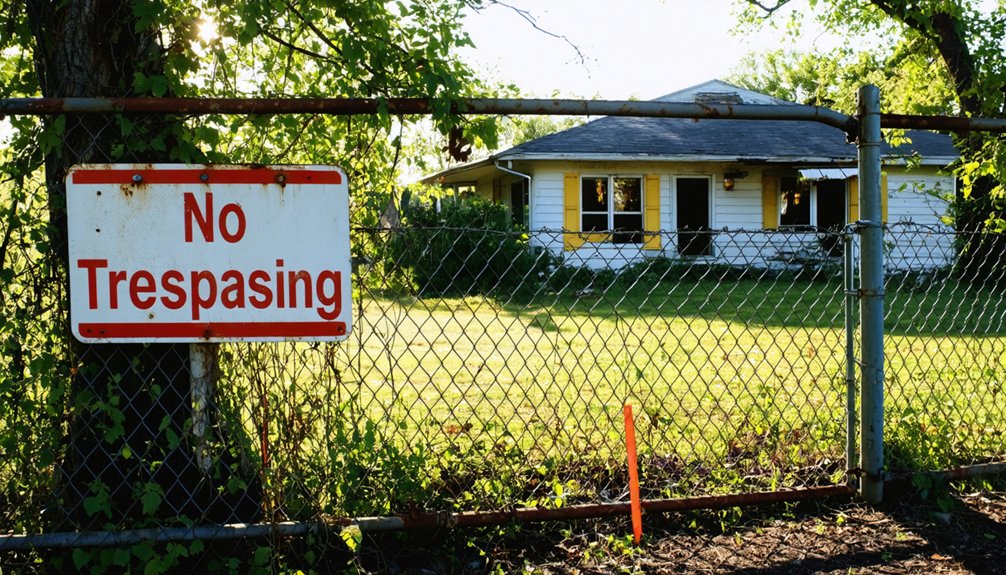
Before you set foot in those hauntingly beautiful abandoned southern suburbs where nature slowly reclaims what humanity has left behind, you’ll need to navigate the legal landscape that governs these forgotten places.
Despite appearances, these crumbling structures aren’t free for exploration—most remain privately or government-owned.
Start by checking county assessor records to determine property ownership of your target location. Remember, entering without permission is trespassing, which can result in fines from $50 to $2,000 or even jail time in severe cases.
Trespassing isn’t a victimless crime—the legal consequences can follow you long after the exploration ends.
Don’t assume a site’s abandonment equates to legal access.
For legitimate exploration, seek written permission from owners, join organized tours, or visit publicly accessible ghost towns with clear boundaries. States like Texas and Florida have particularly strict trespassing laws with serious consequences. Liability for injuries falls almost entirely on you as attractive nuisance doctrine typically only protects child trespassers.
The thrill of discovery isn’t worth the legal consequences that could follow you long after your adventure ends.
Essential Equipment for Safe Ghost Town Exploration
Backpacks laden with proper equipment make the difference between a fascinating journey through southern history and a dangerous misstep into disaster when exploring abandoned suburbs.
Don’t venture forth without sturdy boots and cut-resistant gloves—your hands and feet are your lifelines in these forgotten places.
Your safety gear must include respiratory protection—an N95 or P100 respirator with a tight seal—as old southern buildings often harbor asbestos and mold.
Carry multiple light sources: headlamps for hands-free exploration and backup flashlights with extra batteries.
A robust waterproof backpack will protect your valuable camera equipment and electronics from unexpected rain and humid conditions common in southern environments.
Pack emergency supplies like an all-encompassing first aid kit, doorstops to prevent accidental lockouts, and a whistle for signaling.
Always inform trusted contacts about your exploration plans and anticipated return time before venturing into abandoned locations.
Downloaded offline maps and marking chalk will guide your return journey.
Documenting Historical Context and Architectural Details
Uncovering the soul of abandoned southern suburbs requires more than merely wandering through vacant streets—it demands meticulous documentation of both historical context and architectural details.
You’ll reveal the historical significance of these forgotten places by tracing their rise and fall through careful research and observation.
- Consult primary sources – Immerse yourself in archival records, newspapers, and census data to establish founding dates and economic trajectories.
- Photograph remaining structures – Capture distinctive southern architectural styles, from plantation influences to mid-century suburban developments.
- Record GPS coordinates – Map significant structures to create an all-encompassing layout of the ghost town’s footprint.
- Collect oral histories – Local narratives often reveal untold stories behind architectural modifications and community transformations.
Pay particular attention to abandoned towns that became shadows of their former selves when economic functions shifted to nearby locations, leaving behind infrastructural remnants that tell stories of prosperity and decline.
Look for evidence of natural disasters that contributed to town abandonment, as seen in places like English, Indiana where repeated floods forced relocation of buildings and residents.
While documenting the rich history of abandoned suburbs demands careful attention to detail, reaching these forgotten places presents its own set of challenges.
You’ll need to conduct thorough terrain assessment before selecting your transportation method—4×4 vehicles excel on rugged, unpaved roads, while ATVs or motorcycles can navigate overgrown pathways where larger vehicles can’t pass.
Don’t underestimate the importance of vehicle maintenance when exploring these isolated locations. Equip your vehicle with reinforced chassis and durable tires, and always carry emergency supplies and backup power sources. Proper winterization steps are essential when exploring ghost towns during colder months to prevent vehicle issues.
For navigation, combine GPS devices with offline maps and a reliable compass for areas without cell service. GPS systems offer 99.88% accuracy through satellite positioning even in remote locations with no phone signal. Consider establishing supply caches along your route and implementing a check-in system with someone back home.
This approach guarantees you’ll safely access these haunting suburban remnants while maintaining your freedom to explore.
Respecting Preservation Guidelines and Cultural Heritage
As you stand amidst the haunting silence of a forgotten Southern suburb, understanding preservation guidelines becomes your ethical compass through these fragile historical landscapes.
Your footsteps echo with responsibility—each decision reflecting your preservation ethics and cultural sensitivity toward the communities who once called these places home. These abandoned structures deprive municipalities of potential tax revenue that could support local development initiatives. Similar to Centralia, Pennsylvania, many of these Southern ghost towns have potential to become educational tourist destinations that showcase our industrial past.
In addition, the stories hidden within abandoned towns in southern suburbs serve as reminders of the vibrant communities that once thrived there. Revitalizing these areas not only preserves history but also fosters a deeper understanding of the socio-economic changes over the decades. By engaging with local residents and historians, we can unearth valuable narratives that could inspire future generations.
When exploring these abandoned treasures, remember:
- Leave artifacts undisturbed – photographs capture memories without compromising historical integrity
- Support local economies – purchase handmade souvenirs from community shops instead of taking site relics
- Respect legal boundaries – obtain necessary permits for photography or drone usage
- Seek educational context – engage with guided tours to understand the human stories behind architectural remnants
Frequently Asked Questions
Are There Specific Seasonal Dangers in Southern Ghost Towns?
You’ll face extreme summer heat, winter ice storms, and seasonal flash floods. Wildlife migration patterns shift danger zones—rattlesnakes emerge in spring, mosquitoes swarm summer, and structural collapses follow freeze-thaw cycles.
How Do I Handle Encounters With Current Residents?
Approach residents with local etiquette in mind—introduce yourself clearly, maintain distance, and practice respectful communication. You’ll often find weathered souls who’ll share haunting tales if you honor their space and boundaries.
What Wildlife Threats Are Common in Abandoned Southern Structures?
You’ll face rodents, snakes, bats, and raccoons lurking in shadowy corners. Watch for pest infestations in deteriorating walls and ceilings. Wildlife encounters become dangerous when animals feel trapped in their makeshift homes.
Can Ghost Town Artifacts Legally Be Collected as Souvenirs?
Picture yourself standing before a weathered 1800s diary—tempting, but illegal. You can’t legally collect artifacts from ghost towns without permits or landowner permission. Legal implications and ethical considerations demand we preserve history, not pocket it.
How Do I Identify Structurally Unsafe Buildings Before Entering?
You’ll spot danger when walls bulge, cracks exceed 1/4 inch, roofs sag, or floors feel bouncy. Always perform a safety assessment before testing your structural integrity assumptions—freedom requires survival.
References
- https://www.loveexploring.com/gallerylist/131658/abandoned-in-the-usa-92-places-left-to-rot
- https://en.wikipedia.org/wiki/List_of_ghost_towns_by_country
- https://www.youtube.com/watch?v=tyXDXQSsuwA
- https://stephentravels.com/top5/ghost-towns/
- https://www.youtube.com/watch?v=UujbImwiLfA
- https://www.frrandp.com/p/ghost-towns-map.html
- https://westcoasttriallawyers.com/is-urban-exploring-illegal
- https://carte-urbex.com/en/blogs/infos/the-legality-of-exploring-abandoned-places-in-the-united-states
- https://www.10news.com/ghost-towns-sale-us/
- https://pabucketlist.com/abandoned-places-in-pa-you-can-legally-explore/