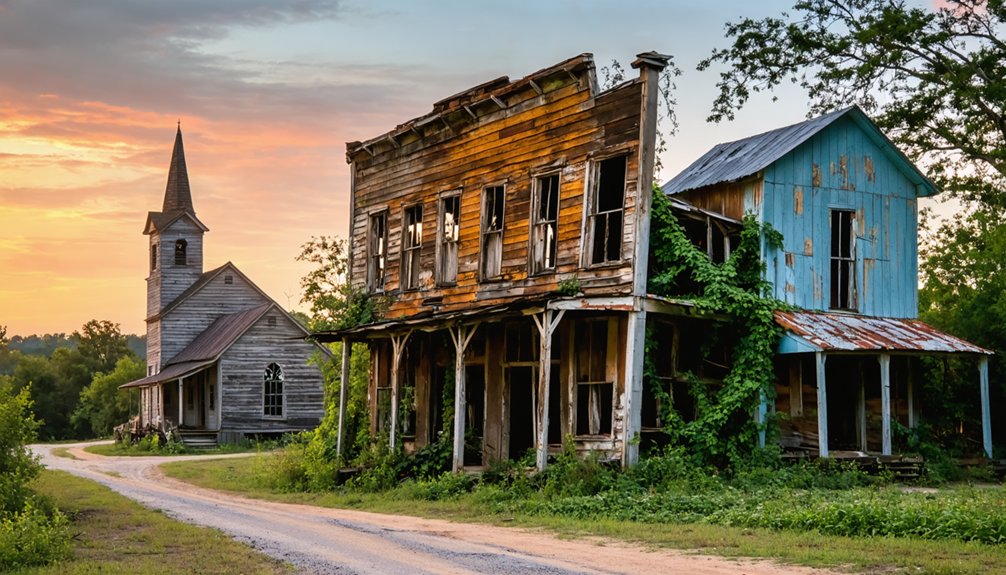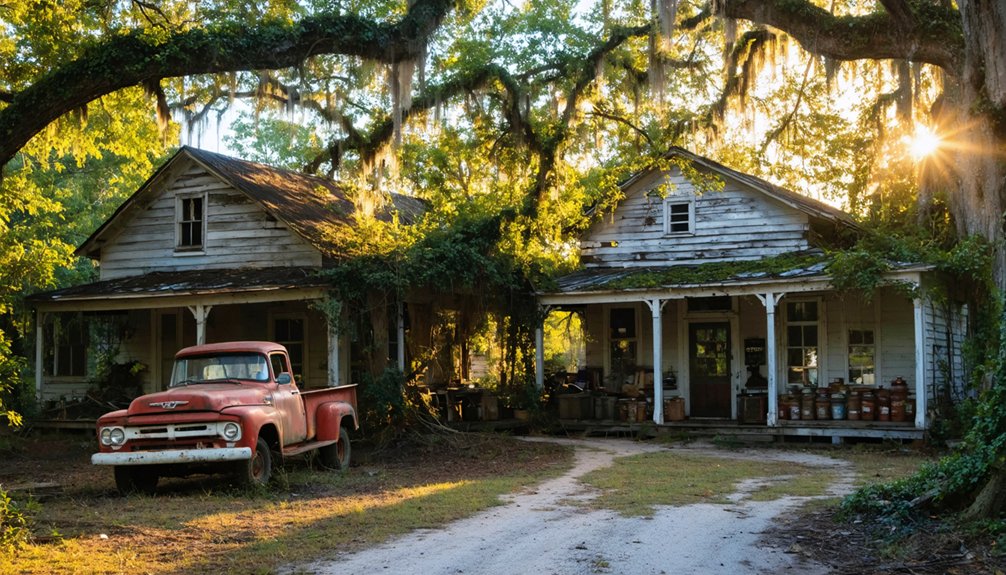
Exploring Southern ghost towns requires both navigation prowess and cultural awareness. You’ll need topographic maps, compass skills, and seasonal planning—fall offers ideal conditions with reduced hazards. Respect legal boundaries, as many sites exist on private property, and always carry survival gear including respiratory protection against toxic materials. Document sensitively without disturbing artifacts. These abandoned settlements tell profound stories of economic cycles, environmental challenges, and societal shifts that continue to echo through the contemporary South.
Key Takeaways
- Master paper map and compass skills as electronic navigation often fails in remote Southern ghost town locations.
- Carry essential survival gear including water filters, multi-tools, and respiratory protection against hazardous materials.
- Research land ownership status beforehand to avoid trespassing on private property or restricted federal lands.
- Plan explorations during fall for optimal weather conditions, reduced snake activity, and better visibility of structures.
- Use the STOP method (Stop, Think, Observe, Plan) if disoriented while navigating dense Southern landscapes.
The Ghostly Landscape: Types of Southern Ghost Towns
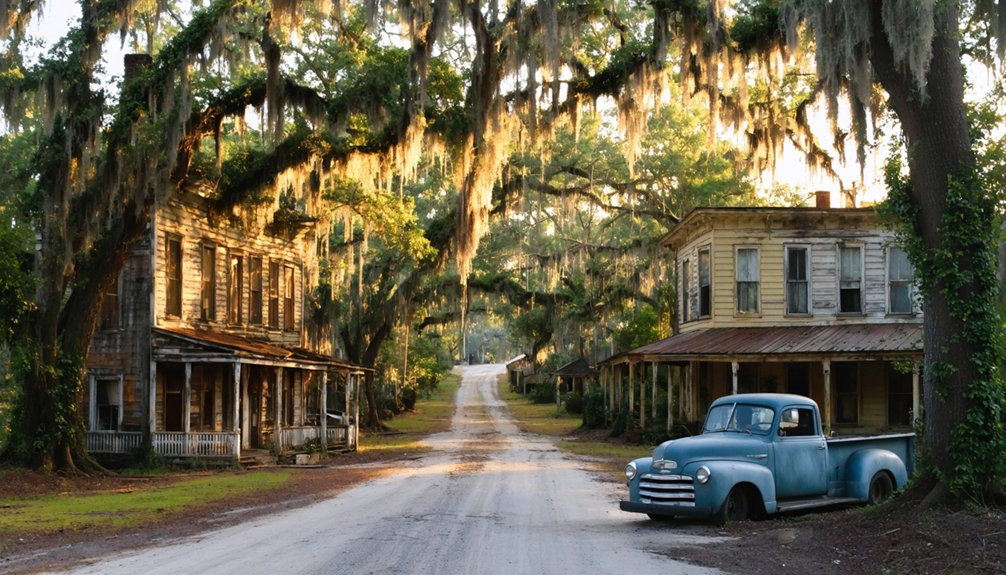
As you travel through the forgotten corners of the American South, you’ll encounter a diverse taxonomy of abandoned settlements, each telling a unique story of economic boom and bust.
These ghost town features emerge from distinctly Southern patterns of development and decline.
Faded storefronts and silent streets tell stories of Southern ambition surrendered to time’s relentless march.
You’ll find mercury boomtowns like Terlingua, Texas, where company bankruptcy left behind eerie mining equipment and collapsed storefronts.
Agricultural communities like Lost Cove, North Carolina shifted through moonshining economies before fading away.
Company towns such as Congress, Arizona reveal the rigid social hierarchies of industrial control, with distinct zones for workers and management now reduced to rubble and cemeteries.
Perhaps most haunting are the submerged towns beneath Southern lakes and reservoirs, their historical significance preserved only in memory as they emerge during rare droughts, offering fleeting glimpses into communities sacrificed for progress.
In South Carolina, changes in transportation routes have led to the decline of near-ghost towns like Pomaria and Peak as traffic and commerce shifted elsewhere.
Government intervention dramatically altered the landscape in Ellenton, South Carolina, where residents were forcibly removed to make way for a hydrogen bomb site.
Why They Were Left Behind: Southern Abandonment Stories
While the romantic myth of ghost towns often evokes images of western mining camps, Southern abandonment narratives reveal distinctly regional patterns of decline that mirror the region’s complex economic and social history.
Unlike Western boomtowns that collapsed when mineral deposits vanished, Southern ghost towns frequently emerged through transportation shifts. You’ll find communities once thriving along old trade routes that withered when interstate highways redirected commerce elsewhere. Small rural towns across places like Williamsburg County suffered prolonged economic decline as residents migrated to urban centers like Charleston seeking opportunity. Many of these small towns faced similar challenges as those along Route 66, experiencing economic devastation when newer highways bypassed them.
Exploring abandoned towns in Mississippi reveals stories of resilience and change. These forgotten places often mirror the fate of other ghost towns, carrying the weight of lost industry and fading memories. As you wander through their quiet streets, remnants of a vibrant past remind you of the people who once called them home.
Environmental factors also shaped Southern abandonment stories. Flooding forced communities like Harrisburg to relocate entirely, while agricultural challenges during drought periods emptied farming settlements. Towns like Greeleyville, South Carolina have experienced significant population decline since the 1980s, resulting in downtown abandonment despite well-maintained residential areas.
The region’s post-Civil War industrial changes left behind infrastructural skeletons when single-industry economies collapsed, creating the hauntingly beautiful abandoned landscapes you can explore today.

When venturing into forgotten Southern settlements, you’ll quickly discover that traditional navigation systems often fail where cellular networks have long disappeared and GPS signals falter among dense pine forests and kudzu-covered ruins.
The freedom to explore these cultural time capsules demands self-reliance through mastery of timeless navigation techniques. Learn to read the Southern landscape by identifying distinctive terrain features like creek bottoms and limestone ridges that once determined settlement patterns. Many ghost towns are accessible only via off-the-beaten-path routes that require careful navigation planning.
Practice using paper topographic maps and compass skills, interpreting the contour lines that reveal the gentle hollows where forgotten communities nestled.
Prepare thoroughly by researching historical routes—many ghost towns purposely positioned themselves along natural “handrails” like rivers or ridgelines. If you become disoriented, implementing the STOP method can help prevent panic and enable clearer decision-making.
Always plan emergency bearings toward known civilization points, acknowledging that water features typically lead to current settlements, just as they guided your ancestors.
Survival Gear and Planning for Remote Location Visits
When exploring the decaying infrastructure of southern ghost towns, you’ll need specialized equipment that reflects the cultural history of abandonment and environmental challenges unique to these locations.
Your survival gear should include cutting tools and protective equipment that acknowledge the socioeconomic conditions that led to these towns’ desertion, while also preparing you for the physical remnants of collapsed industry.
Planning your visits according to seasonal patterns mirrors how former residents adapted to the harsh southern climate, allowing you to experience these historical spaces safely while respecting their cultural significance. Always carry portable water filters to ensure access to safe drinking water, as many abandoned locations have compromised water sources. Keep a multi-tool in your EDC kit as it serves multiple purposes when navigating through debris and accessing structures in these forgotten places.
Essential Off-Grid Equipment
Every visit to abandoned ghost towns in the Southern United States demands meticulous preparation with appropriate survival gear, particularly as these isolated locations often lack basic infrastructure and cellular connectivity.
Your off-grid essentials should include redundant navigation tools—paper maps alongside GPS communicators like the Garmin GPSMap 66i—providing both orientation security and emergency contact capability.
In these spaces where civilization has retreated, survival checklists must prioritize multiple fire-starting methods and thermal emergency blankets, connecting you to the same basic needs early settlers faced.
Water purification systems become non-negotiable tools, echoing the historical struggle for clean water in these now-deserted communities.
Multi-tools and first aid kits with trauma supplies reflect the self-reliance culture that once defined these places—where independence meant survival, just as it does for today’s explorer. Carrying bear spray is essential when exploring these remote locations, as encounters with wildlife become increasingly likely the further you venture from populated areas.
Consider investing in a Stealth Angel survival kit that contains essential items for 72 hours, giving you peace of mind during unexpected emergencies in these remote ghost towns.
Seasonal Exploration Planning
Seasonal planning transforms ghost town exploration from potentially hazardous misadventures into meaningful cultural pilgrimages through America’s abandoned past. Your journey through these forgotten monuments of frontier capitalism demands respect for nature’s rhythms and temperature fluctuations that characterize the southern desert landscape.
Spring and fall emerge as prime windows when mild conditions allow deeper immersion in these abandoned spaces where American dreams once flourished and collapsed. The artifacts of failed communities speak most clearly when you’re not battling extreme elements.
Summer exploration becomes a dangerous proposition as temperatures surpass 100°F, while winter brings surprising cold that necessitates layered protection.
Prepare for dramatic seasonal weather shifts by carrying abundant water, wearing sun protection, and dressing in layers—practical considerations that honor both the physical demands and cultural significance of these historical spaces.
Legal Boundaries and Preservation Ethics

Maneuvering the legal landscape of ghost towns requires understanding a complex web of ownership rights that shape our access to these abandoned places.
You’ll find many Southern ghost towns reside on private property or protected federal lands, where trespassing could result in fines or criminal charges. Your legal responsibilities extend beyond mere access—removing artifacts or damaging structures violates preservation ethics and federal laws like the National Historic Preservation Act.
Before exploring, determine land ownership status and seek necessary permissions. On public lands, adhere to Bureau of Land Management or National Park Service regulations.
Remember that these crumbling structures aren’t just physical artifacts—they’re cultural touchstones for communities with ancestral ties to these places. Your respectful engagement honors both the letter of the law and the spirit of preservation, ensuring these time capsules remain intact for future generations.
When exploring these weathered relics of Southern industrial history, you’ll need to carefully assess foundations for signs of subsidence, cave-ins, or rot before entering any structure.
Your journey through these abandoned spaces requires understanding the toxic legacy of mining operations, where lead, cadmium, and other heavy metals remain concentrated in soil and building materials decades after communities dispersed.
Cultural appreciation of these ghost towns necessitates both respiratory protection against hazardous dusts and a practiced eye for spotting compromised beams, stairs, and flooring that might collapse under your weight.
Unstable Foundation Assessment
Beneath the weathered facades of southern ghost towns lies a treacherous reality that every explorer must confront: foundations compromised by decades of abandonment and environmental assault.
When venturing into places like Picher, Oklahoma, your foundation inspection should identify telltale signs—uneven floors, cracked walls, and sloping ground—that signal imminent collapse danger from the 14,000 abandoned mine shafts below.
- Mining communities sacrificed their land’s integrity for economic prosperity, leaving a cultural legacy of hidden dangers beneath seemingly solid ground.
- Local knowledge often preserves critical information about subsurface hazards that official subsurface mapping may miss.
- The freedom to explore these forgotten spaces comes with responsibility to recognize how industrial exploitation transformed both landscape and community.
The unstable terrain tells a story of environmental injustice where corporations extracted wealth then abandoned communities to live with the consequences.
Hazardous Material Protocol
The dark legacy of industrial exploitation extends beyond structural failures to include an invisible, lethal threat: toxic contamination that saturates these abandoned communities.
You’re traversing landscapes where lead, zinc, and dioxin have been culturally normalized as unavoidable byproducts of progress, disproportionately affecting marginalized communities pushed to society’s edges.
When encountering these forgotten spaces, remember that hazardous materials don’t recognize property lines or trespassing laws.
Never explore without respiratory protection, chemical-resistant gloves, and full-body coverage. Your exposure risks include neurological damage, cancer, and respiratory illness from merely breathing or touching contaminated surfaces.
The dust coating every surface contains concentrated toxins that can penetrate your system through multiple pathways.
These protocols aren’t about limiting freedom but ensuring survival in landscapes where corporate power prioritized profit over human life.
Digital Documentation Techniques for Historical Sites
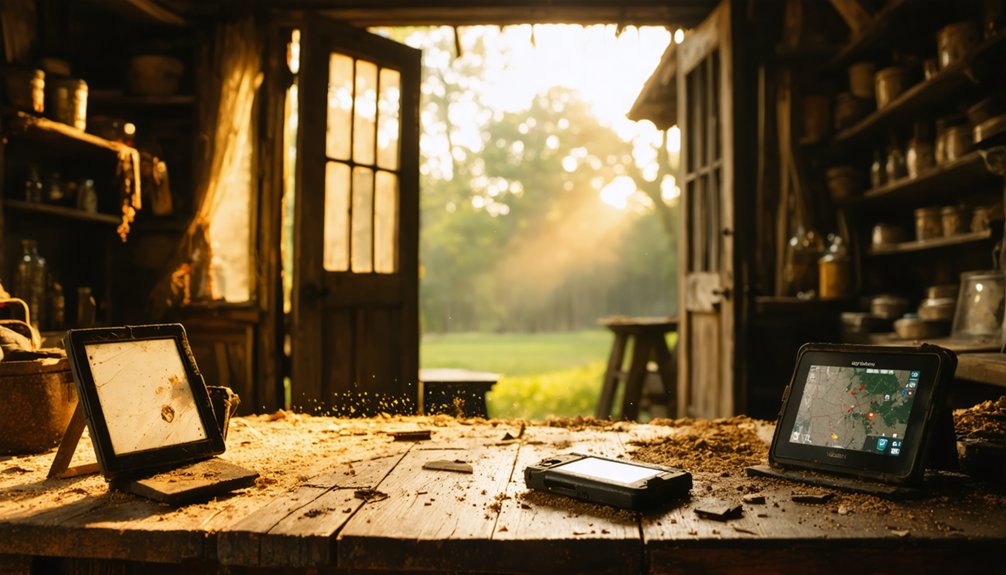
Modern digital documentation stands at the intersection of technological innovation and historical preservation across the Southern United States’ abandoned communities. When you’re exploring these forgotten places, you’ll discover that technologies like LiDAR and photogrammetry aren’t just documenting ruins—they’re creating digital twins that preserve cultural memory without disturbing fragile structures.
These heritage preservation tools capture millimeter-precise models that reveal the architectural evolution and cultural narratives embedded in these ghost towns.
- Combine terrestrial and aerial scans to create thorough digital archives that resist time’s erasure
- Access layered data models revealing construction techniques unique to Southern vernacular architecture
- Contribute to community-based documentation efforts that honor local knowledge systems outside institutional control
These technologies democratize access to historical knowledge while respecting the freedom to interpret cultural landscapes on your own terms.
Hidden Historical Narratives: What Ghost Towns Reveal
While digital preservation captures the physical remnants of these forgotten communities, abandoned settlements across the Southern landscape harbor deeper truths within their weathered structures and overgrown streets.
You’ll discover hidden narratives in places like Dearfield, Colorado, where Black Americans carved out autonomous lives, or Lost Cove, where isolation bred self-sufficiency and moonshine production flourished beyond government reach.
These cultural legacies speak through crumbling adobe walls in Charleston and weathered schoolhouses in Lando.
The whispered stories of forgotten lives echo from decaying structures, silent witnesses to communities that once thrived against impossible odds.
The ghost town’s physical placement—whether along state borders like No Business, Virginia, or near crucial water sources like Fort Bowie—reveals how communities navigated political boundaries and environmental constraints.
As you explore these abandoned spaces, you’re witnessing the complex interplay of economic booms, government intervention, and environmental challenges that shaped Southern communities’ rise and fall.
Seasonal Considerations for Southern Off-Grid Exploration
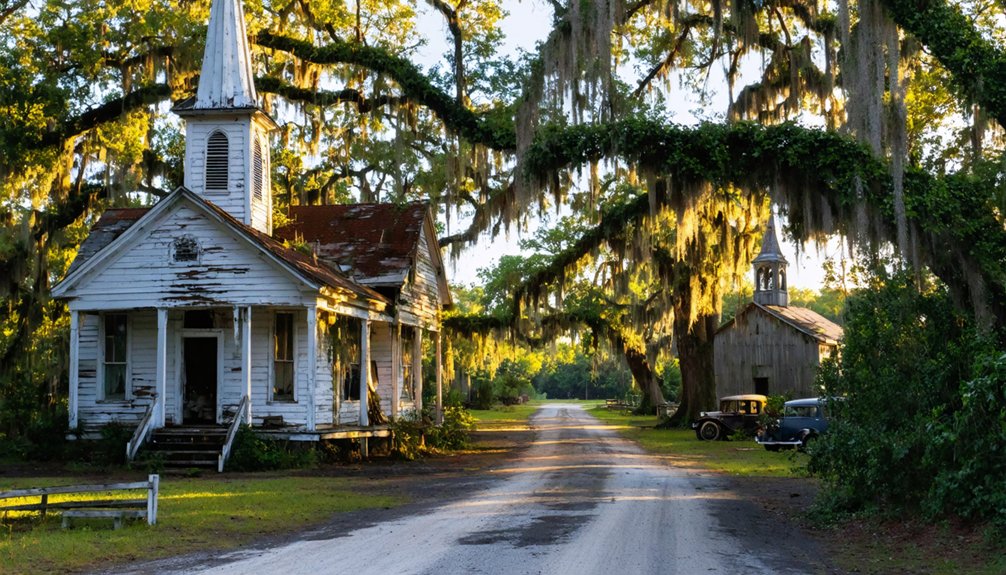
Venturing into the South’s abandoned settlements requires careful seasonal planning that extends beyond mere weather considerations into cultural rhythms and ecological awareness. Your exploration window hinges on understanding how seasonal shifts transform these forgotten landscapes—spring’s lush overgrowth conceals pathways once traveled by mining families, while summer’s punishing heat demands rigorous safety strategies to prevent heat exhaustion.
Weather preparedness becomes most critical during late spring’s thunderstorms, which can transform dry creek beds into raging torrents within minutes.
- Fall offers the sweet spot: moderate temperatures, reduced snake activity, and enhanced visibility through thinning foliage.
- Winter reveals architectural details normally hidden, but requires additional thermal layers and awareness of shortened daylight.
- Spring’s wildflower explosions provide context for settlement patterns, following indigenous seasonal knowledge systems.
Frequently Asked Questions
Can I Camp Overnight in Southern Ghost Towns?
You can’t legally camp in southern ghost towns due to camping regulations, but public lands nearby often permit overnight stays. These sites lack ghost town amenities while preserving cultural remnants of bygone communities.
How Do I Identify Unmarked Gravesites When Exploring?
Did you know 40% of 19th-century burials lack permanent markers? Look for sunken rectangular depressions, distinctive vegetation, and simple grave markers like stone piles. Always consult historical records before exploring culturally significant grounds.
Are There Venomous Snake Concerns Specific to Ghost Towns?
Ghost towns create perfect snake habitats with collapsed structures and rodent populations. You’ll encounter rattlesnakes, copperheads, and cottonmouths. Take safety precautions: wear boots, use walking sticks, and stay alert during warm months.
What Paranormal Equipment Should I Bring for Night Investigations?
Like moths to spectral flames, you’ll need EMF detectors to sense invisible energies and spirit boxes to pierce the veil between worlds—tools that Southern folklore practitioners have trusted for generations.
How Reliable Are Local Legends About Hidden Treasure?
Most treasure myths have limited folklore accuracy; you’ll find they’re cultural expressions of community identity rather than reliable maps. They’re valuable as windows into local history, not investment opportunities.
References
- https://www.americansouthwest.net/ghost-towns.html
- https://deepsouthurbex.com/2020/01/02/6-south-alabama-ghost-towns/
- https://quirkytravelguy.com/ghost-towns-of-the-deep-south/
- https://wicproject.com/lifestyle/7-southern-towns-that-were-abandoned-after-natural-disasters/
- https://www.geotab.com/ghost-towns/
- https://theforgottensouth.com/ghost-towns/
- https://en.wikipedia.org/wiki/Lists_of_ghost_towns_in_the_United_States
- https://www.youtube.com/watch?v=tErPiMbfhsw
- https://www.atlasobscura.com/lists/americas-best-preserved-ghost-towns
- https://www.nps.gov/slbe/learn/historyculture/ghosttowns.htm