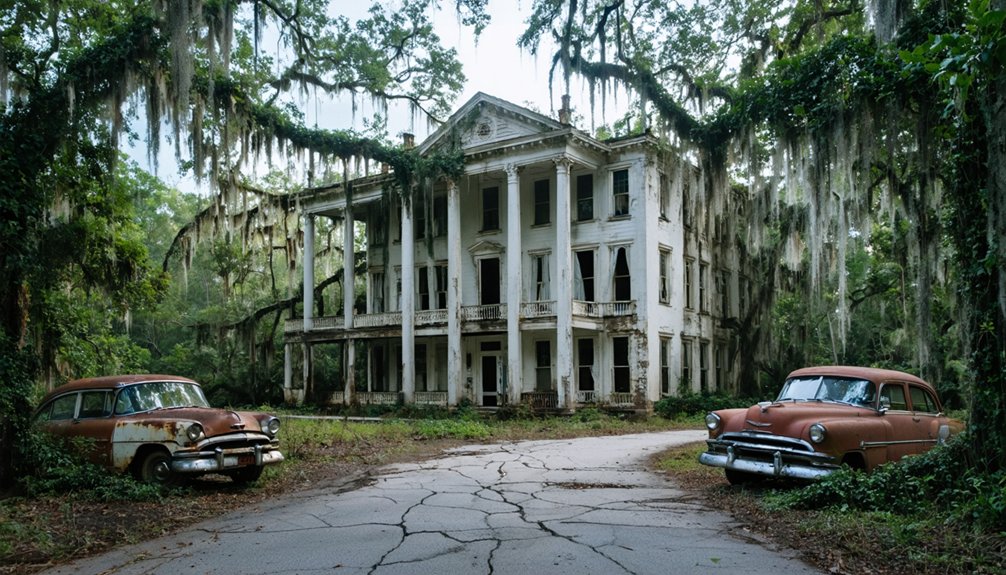
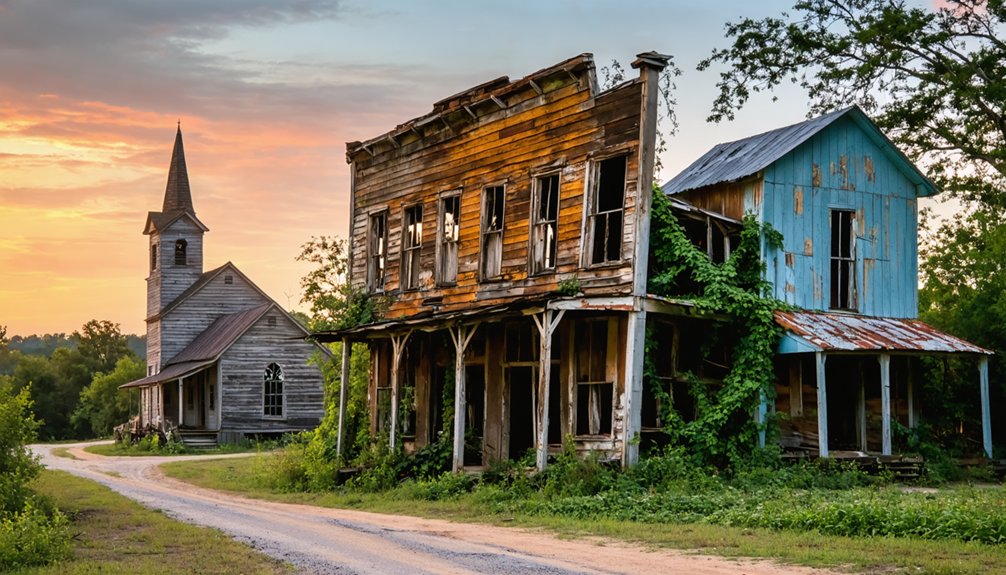
When exploring abandoned Southern suburbs, you’ll find vacancy rates above 18% in states like Mississippi and Louisiana. Wear sturdy boots, carry a flashlight, and always bring a companion. Test floors before walking, watch for structural damage like collapsed roofs, and stay alert for wildlife that’s reclaimed these spaces. County assessor records can reveal ownership status of properties you’re curious about. The stories behind these forgotten neighborhoods run deeper than their crumbling facades.
Key Takeaways
- Vacancy rates exceed 18% in Southern ZIP codes, with Jackson, Mississippi containing nearly 25% of the state’s abandoned properties.
- Look for structural red flags like collapsed roofs, boarded windows, or cracks wider than 1/4 inch before entering any abandoned structure.
- Always explore with a companion, carry a flashlight, and inform someone about your plans for safety.
- Check county assessor records to determine property ownership status and avoid trespassing issues.
- Use respirators to protect against mold and asbestos, and remain vigilant for wildlife that often inhabits abandoned areas.
The Scope of Southern Suburban Abandonment

Ghost towns—that’s what many southern suburban neighborhoods have become in recent years.
You’ll find vacancy rates exceeding 18% in certain ZIP codes, with Jackson, Mississippi harboring nearly 25% of the state’s abandoned properties.
Walking through these landscapes of urban decay, you’ll witness neighborhoods that have lost up to 49% of their population.
The scale is staggering—60426 near Chicago counts nearly 1,600 vacant homes among 9,227 total structures.
These aren’t random occurrences but concentrated pockets in historically distressed areas from Atlanta to Memphis.
As you explore, you’ll notice the pattern: older suburbs bearing the heaviest burden.
Jackson’s population fell dramatically from about 173,000 in 2010 to under 153,000 in 2020, representing an 11.5% decline that further fuels the abandonment cycle.
The phenomenon mirrors what’s happening in Birmingham, Alabama, where ZIP code 35204 has experienced a 13.8% population decrease with median household incomes below $22,000.
Despite this bleak reality, pockets of community resilience emerge where remaining residents fight to reclaim their spaces, refusing to surrender to the emptiness around them.
Root Causes Behind the Population Exodus
Behind the hollow windows and weed-choked driveways lies a complex web of forces driving people away from once-thriving southern suburbs.
You’re witnessing economic migration in real time—over 84,000 Louisiana residents vanished between 2020-2023, fleeing job scarcity and limited opportunity.
The math is brutal: more deaths than births plague these communities while insurance rates skyrocket and wages stagnate.
Your freedom to thrive diminishes as rural challenges intensify—inadequate healthcare, spotty internet, and nonexistent public transportation strangle daily life.
Climate threats loom larger each season.
Hurricane paths carve through vulnerable coastal parishes while summer heat becomes increasingly unbearable.
The young and educated escape first, leaving behind aging populations in communities where infrastructure crumbles beneath environmental pressures and economic neglect.
Recent statistics show that Louisiana ranked 6th highest in outmigration among all states in 2023 alone.
Louisiana’s struggle is especially pronounced, with a 0.82% decrease in rural residents from 2022 to 2023 representing one of the South’s most significant population losses.
Identifying High-Risk Abandoned Properties

As you venture through abandoned suburban streets, you’ll need to quickly assess structural integrity by looking for collapsed roofs, crumbling foundations, and boarded windows that signal high-risk properties.
You can determine ownership status through county assessor records, which often reveal whether properties are bank-owned, in tax foreclosure, or simply neglected by absentee landlords.
Watch carefully for clusters of properties with accumulated trash, overgrown vegetation, and evidence of unauthorized access—these visual indicators often correlate with increased safety hazards and criminal activity. Many municipalities are implementing predictive analytics models similar to Cincinnati’s approach to identify properties at risk of deterioration before they become dangerous. Particularly concerning are properties where standing water has accumulated, as these become breeding grounds for disease-carrying insects and present additional health risks to explorers and nearby residents.
Safety Assessment Techniques
The abandoned house stands before you like a silent sentinel, its vacant windows revealing little about the dangers that may lurk within. Before approaching, implement proper safety protocols by scanning for immediate red flags: broken windows, forced entry points, or signs of recent activity.
Your risk assessment begins at the perimeter. Note overgrown vegetation concealing potential hazards, unsecured openings, or structural damage that signals collapse risk. A thorough assessment should be performed by competent persons with knowledge of structural and safety hazards.
Fresh trash, makeshift bedding, or cooking remnants indicate unauthorized occupants who might still be present.
Look beyond the obvious—utility damage creates invisible threats through gas leaks or electrical hazards. Standing water breeds both vermin and health concerns.
Document security breaches like damaged boards or broken locks, and remain vigilant for signs of criminal activity—graffiti, illegal dumping, or suspicious gatherings that increase your vulnerability. These properties are frequently targeted for theft of valuable materials such as copper piping and fixtures, creating additional hazards.
Structural Decay Indicators
Identifying high-risk abandoned properties demands vigilant attention to structural decay indicators that whisper warnings of imminent danger.
You’ll notice the telltale deterioration signs: cracks wider than 1/4 inch snaking through foundations, stair-step patterns in brick walls, and horizontal fractures signaling foundation movement.
Watch for buckling exterior walls and spalling masonry—they’re not merely cosmetic flaws but harbingers of collapse.
Inside, uneven floors and sticking doors reveal the building’s hidden struggles against gravity. The structural integrity has been compromised when you spot sagging ceilings or bulging walls.
Urban mining wounds—where pipes and wiring have been forcibly removed—create invisible vulnerabilities. These abandoned structures often exhibit severe disrepair levels that directly contribute to neighborhood blight and decreased surrounding property values.
Stay alert for exposed corroded reinforcement and persistent dampness, as these accelerate the decay that transforms abandoned houses into deathtraps for the unprepared explorer.
Regular inspections of neighboring properties can help identify these warning signs before they become hazardous to the community, as early detection prevents potential safety risks from abandoned structures.
Ownership Research Methods
Beyond physical decay lies another layer of exploration—uncovering who actually owns these skeletal remains of suburban dreams. Your ownership verification journey begins with local tax assessors‘ online records and county deed registries, revealing the legal ghosts attached to these forgotten structures.
For deeper property tracing, combine utility disconnection data with electoral records—these breadcrumbs often lead to absentee owners.
Don’t overlook the neighborhood grapevine; locals frequently hold keys to ownership histories that official channels miss.
When paper trails go cold, specialized skip tracing services can pierce through LLC shields and locate elusive owners for a fee.
Remember that abandoned property definitions vary by municipality—some require formal registration of vacant properties, creating another research avenue for your exploration.
These detective methods gradually transform anonymous shells back into properties with accountable owners.
Safety Precautions When Exploring Vacant Areas
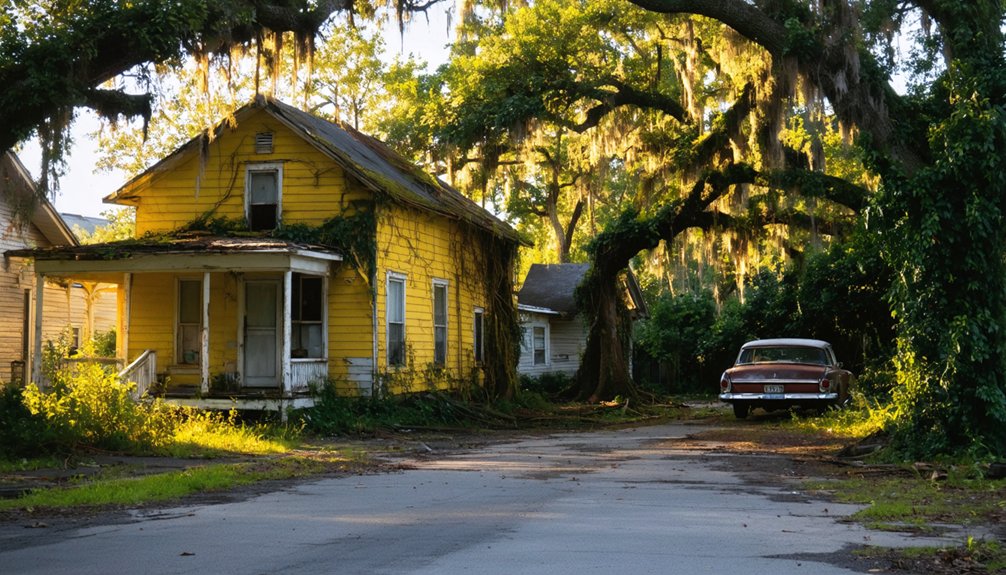
While venturing into abandoned suburban landscapes offers a fascinating glimpse into forgotten histories, proper safety precautions must be your first priority before stepping foot onto vacant property.
Always wear sturdy boots with good traction, long sleeves, and carry a reliable flashlight—even during daylight hours. The structural integrity of these homes can be compromised by weather damage and neglect, so stay near walls and test floors before committing your weight.
Never explore alone—bring a companion who shares your exploration ethics and inform someone trustworthy of your whereabouts and expected return time.
Your safety gear should include respirators to protect against mold and asbestos, and first aid supplies for unexpected injuries.
Watch for wildlife that may have claimed these spaces as their territory, and always maintain multiple escape routes in case of emergency.
Economic Ripple Effects on Surrounding Communities
The economic devastation radiates outward like ripples in a still pond when you stand at the edge of an abandoned suburban neighborhood.
The economic decay spreads silently through neighborhoods, consuming prosperity like an invisible tide.
You’re witnessing community disinvestment in real time—property values plummeting while insurance premiums skyrocket. Nearby homeowners lose wealth they’ve spent decades building.
Your local government struggles too. With millions in lost tax revenue, essential services deteriorate while remaining residents shoulder heavier tax burdens.
In Toledo, nearly $3.8 million annually goes to managing vacant properties rather than improving your community.
The cycle of economic decline accelerates as businesses avoid investing in areas plagued by abandonment.
You’ll notice fewer opportunities, weaker social connections, and spreading blight. Without intervention, this contagion of financial distress continues expanding, transforming once-thriving communities into shadows of their former prosperity.
Government and Community Responses to Vacancy

As you venture into abandoned suburban landscapes, you’ll discover innovative land banking programs that strategically acquire, hold, and transform vacant properties into community assets like parks, gardens, and affordable housing.
Your exploration will reveal grassroots reclamation initiatives where neighbors collaborate to revitalize forgotten spaces through tactical urbanism, temporary art installations, and neighborhood-led cleanup campaigns.
These community-driven approaches often succeed where traditional government interventions falter, creating vibrant pockets of renewal that spark wider regeneration throughout formerly declining neighborhoods.
Land Banking Solutions
Land banking initiatives have emerged as powerful tools in the fight against neighborhood abandonment, transforming the urban landscape like modern-day alchemists converting decay into opportunity.
You’ll witness land bank success when these entities acquire tax-foreclosed properties with clouded titles and transform them into community assets that private markets once rejected.
Through strategic community partnerships with organizations like Habitat for Humanity, these operations breathe new life into forgotten spaces without burdening taxpayers.
As you explore revitalized neighborhoods, you’ll discover former vacant lots reborn as vibrant gardens and dilapidated structures replaced with affordable homes.
The economic impact ripples outward—New York’s land banks leveraged $180 million in public funds to secure $300 million in private investment.
This financial alchemy doesn’t just rehabilitate buildings; it restores the freedom to thrive in once-abandoned communities.
Community Reclamation Initiatives
When abandoned neighborhoods spread like a contagion across America’s suburban landscapes, innovative community reclamation initiatives emerged from both government chambers and neighborhood living rooms.
Abandoned communities in the United States have become a canvas for artists and activists alike, sparking a movement focused on sustainability and social justice. As these initiatives gain momentum, they aim not only to revive physical spaces but also to foster new connections among residents. By transforming dilapidated buildings into vibrant hubs, communities are reclaiming their identities and histories.
You’ll find residents forming advisory boards to guide rehabilitation decisions, their local knowledge becoming the compass for transformation.
Cities like Detroit and Baltimore have pioneered data-driven approaches, demolishing over 16,000 blighted properties while rehabilitating thousands more.
But the most successful initiatives invite you into the process—cleaning vacant lots alongside neighbors, planting community gardens where dereliction once stood.
Property rehabilitation isn’t just about buildings; it’s about rebuilding trust.
When you participate in community engagement strategies, you’re crafting healthier neighborhoods where crime rates fall and property values rise—reclaiming not just abandoned spaces, but your freedom to shape the place you call home.
Case Studies: Jackson, New Orleans, and Beyond
Stepping through the forgotten streets of Jackson, Mississippi reveals an urban landscape that epitomizes the crisis of suburban abandonment.
You’ll find nearly 1,800 state-owned vacant properties here—a staggering 25% of Mississippi’s total. As you navigate these residential zones where 95% of abandonments occur, you’ll witness firsthand the abandonment impacts: crime hotspots overlapping vacant clusters, squatters seeking shelter in crumbling homes.
The city’s story isn’t just about empty buildings but systemic collapse. Water infrastructure failures, unpaid bills soaring from $6 million to $55 million, and demographic shifts have created perfect storms of neighborhood decline.
Jackson’s crisis transcends vacant structures—it’s about systems failing as infrastructure crumbles and debts multiply exponentially.
Yet within this landscape of neglect, pockets of neighborhood resilience persist where communities refuse to surrender to the cycle of disinvestment that’s gripped West Jackson since the 1980s.
Revitalization Strategies and Future Outlook
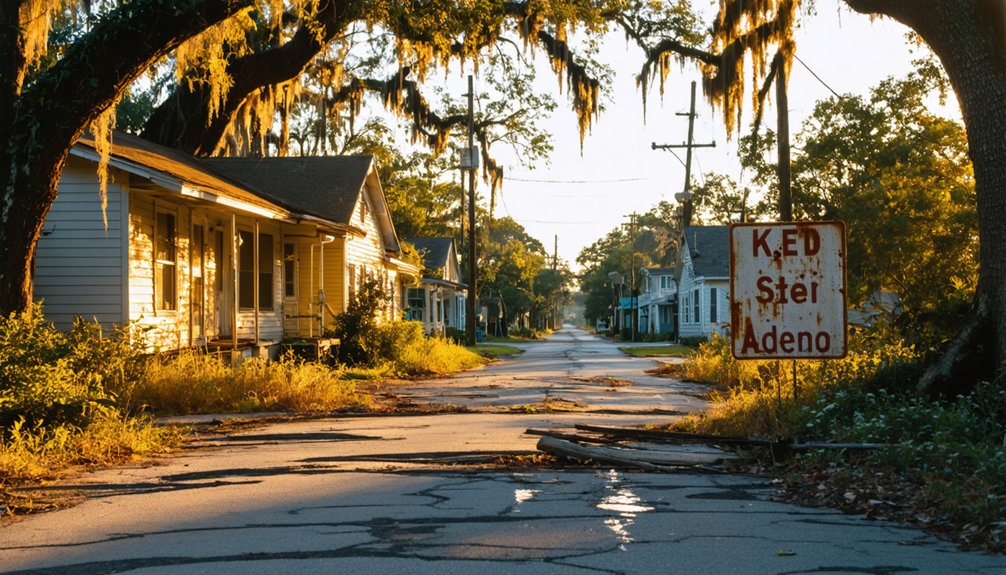
Against the backdrop of urban decay, hope blossoms in the form of strategic revitalization efforts taking root across America’s abandoned suburbs.
You’ll discover that successful renewal begins with robust community engagement—gathering input that shapes projects aligned with residents’ actual needs rather than outsiders’ assumptions.
Infrastructure upgrades transform more than just aesthetics; they rebuild neighborhood pride and attract investment.
When you convert underutilized spaces into vibrant green areas, you’re not just beautifying—you’re fostering community wellness and connection.
The future belongs to multi-sector collaborations where your voice matters.
Public-private partnerships create affordable housing in former commercial spaces while community land trusts preserve long-term affordability.
Through strategic planning that incorporates phased projects, neighborhoods maintain momentum, turning abandoned suburbs into walkable, sustainable communities where freedom flourishes.
Frequently Asked Questions
How Do Abandoned Neighborhoods Affect Local School Systems?
You’ll discover abandoned neighborhoods devastate school systems through enrollment decline, triggering school closures, longer commutes, and drastic funding reductions that ripple through educational quality and community stability like dominos falling.
What Legal Risks Exist When Purchasing Abandoned Properties?
Don’t judge a book by its cover! You’ll face murky title issues, possible liens, undisclosed zoning laws, squatter rights, environmental hazards, and inherited code violations when purchasing neglected, forgotten domains.
Are There Seasonal Variations in Crime Rates Around Vacant Properties?
You’ll witness distinct seasonal crime patterns around vacant properties—violent crimes surge in summer’s heat while property crimes thrive during winter’s darkness, when abandoned spaces offer perfect shelters for clandestine activities.
How Do Insurance Companies Handle Policies in High-Vacancy Areas?
You’ll face stringent policy adjustments in high-vacancy zones, where insurers tighten underwriting standards, increase premiums, and frequently deny insurance claims due to heightened risks of vandalism and undetected damage.
What Psychological Impacts Do Residents Experience in Declining Neighborhoods?
Alone and adrift, you’ll feel the suffocating grip of social isolation crushing your spirit. Community decline erodes your sense of belonging, fragmenting connections and intensifying hopelessness as vacant houses haunt your once-vibrant neighborhood.
References
- https://magnoliatribune.com/2024/09/09/city-of-jackson-has-nearly-a-quarter-of-mississippis-abandoned-properties/
- https://schoolofcities.utoronto.ca/neighbourhood-abandonment-in-the-american-rust-belt/
- https://www.youtube.com/watch?v=E50vJXh5ZdE
- https://www.datacenterresearch.org/reports_analysis/population-loss-and-vacant-housing/
- https://www.cbsnews.com/news/empty-neighborhoods-fill-rust-belt/
- https://247wallst.com/special-report/2020/12/08/30-american-ghost-towns-6/
- https://www.geotab.com/press-release/american-ghost-towns/
- https://247wallst.com/special-report/2021/05/19/30-american-ghost-towns-7/
- https://popcenter.asu.edu/content/abandoned-buildings-and-lots-0
- https://www.yardi.com/blog/news/abandoned-america/38780.html