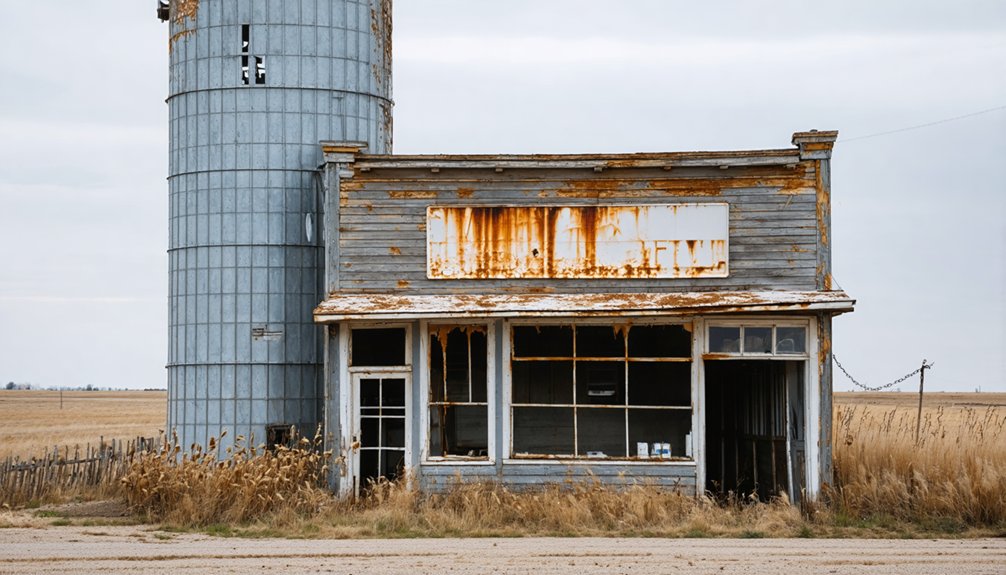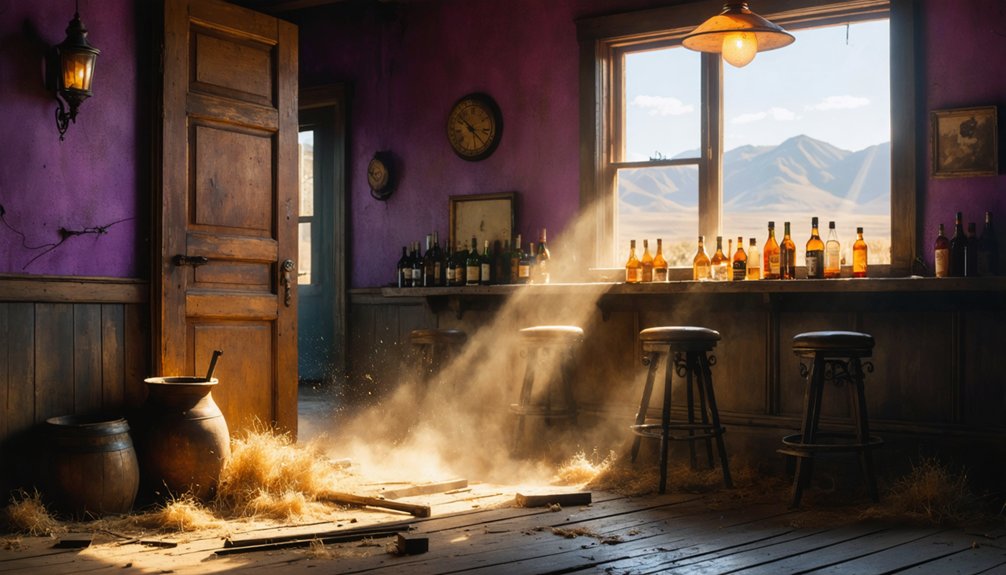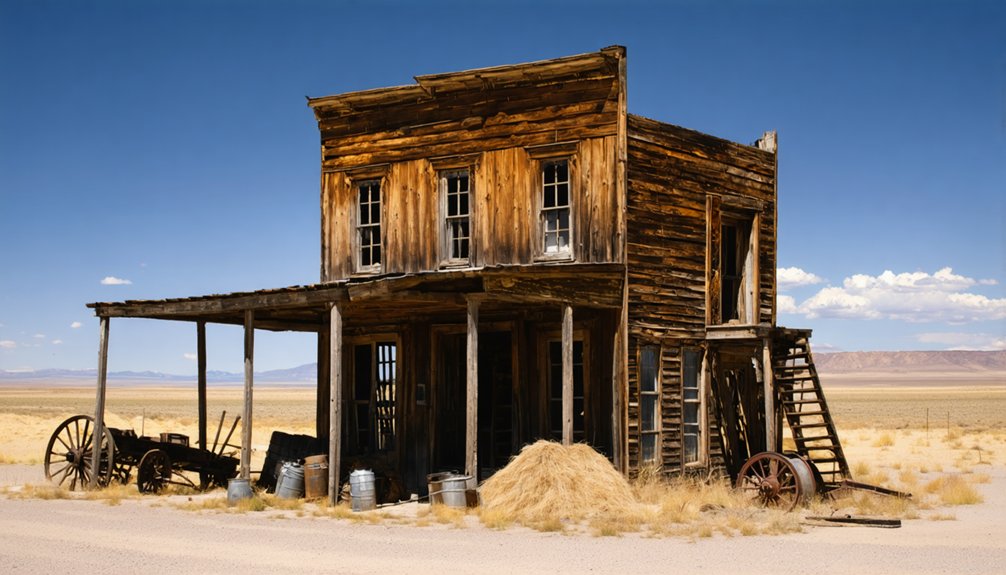
Exploring the West’s forgotten ghost towns requires careful planning and respect for both legal boundaries and safety hazards. You’ll need to secure permission from property owners, bring appropriate gear for potentially unstable structures, and research each site’s unique history before visiting. Towns like Bodie, California and Saint Elmo, Colorado offer glimpses into America’s mining past through their preserved architecture. The silent remains of these once-bustling communities hold fascinating stories waiting to be discovered.
Key Takeaways
- Obtain necessary permissions and research property ownership before visiting ghost towns to avoid trespassing violations.
- Bring safety equipment when exploring unstable structures and be prepared for limited emergency service access in remote locations.
- Visit during golden hour for dramatic lighting effects that enhance photography of weathered buildings and abandoned artifacts.
- Consider towns like Bodie, California or Saint Elmo, Colorado for well-preserved examples of Western mining history.
- Respect preservation efforts by leaving artifacts undisturbed and following established paths when navigating ghost town sites.
The Gold Rush Legacy: Mining Towns That Time Forgot
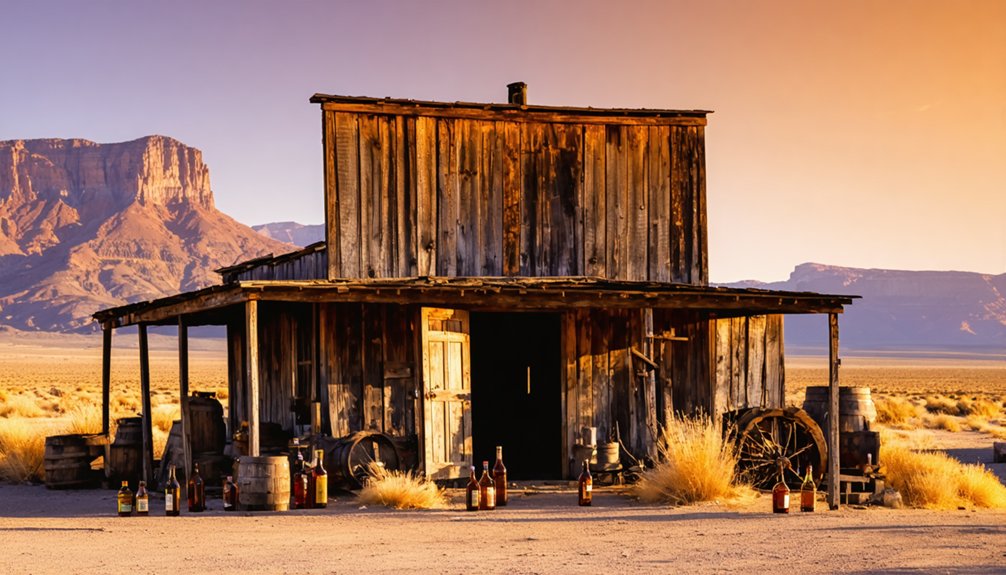
When gold and silver were discovered across the American West in the mid-to-late 1800s, they triggered explosive population growth in previously uninhabited territories, transforming barren landscapes into bustling communities virtually overnight.
Ghost town origins can be traced to these rapid booms, exemplified by Bodie, California, which expanded from 20 miners in 1859 to 10,000 residents by 1880.
Mining town culture developed around harsh realities of frontier isolation. The 1876 Black Hills Gold Rush brought prosperity to towns like Galena, which flourished briefly before facing economic fluctuations. You’d find these settlements characterized by a primarily male population, raucous entertainment districts, and primitive infrastructure.
Despite their lawless reputation, these communities established essential institutions—post offices, schools, and churches—attempting to create stability amid transience.
The economic foundation remained precarious, however, with prosperity lasting only as long as ore veins yielded sufficient returns, leaving behind the abandoned structures that now stand as monuments to American westward expansion.
The rise and decline of these settlements followed distinct boom and bust cycles, with towns like Goldfield, Nevada experiencing dramatic population growth followed by near abandonment within decades.
In addition to understanding these cycles, the importance of preserving historic towns in Pennsylvania cannot be overstated. These areas serve as vital links to our past, offering insight into the lives of those who came before us. By maintaining their unique architecture and cultural heritage, we ensure that future generations can appreciate the rich history that shapes our communities.
Accessing the Inaccessible: Safety and Legal Considerations
Although ghost towns offer fascinating glimpses into America’s past, traversing the legal and safety complexities of accessing these historical sites requires careful consideration.
Abandoned settlements reveal America’s history while demanding visitors navigate a maze of legal and safety challenges.
You’ll need written permission from property owners to avoid violating trespassing laws, as most abandoned structures maintain legal ownership despite their dilapidated appearance. Law enforcement can cite or arrest you without the owner present if you’ve entered illegally. Private property owners may display prominently posted signs indicating no trespassing, which serve as legal notification that you should not enter. Letter of Agency documentation may be required by some property owners to grant legal access to historical sites.
Beyond legal concerns, these sites harbor significant safety hazards: unstable structures, toxic materials, and potential wildlife encounters. Remote locations often lack emergency services access. Structural collapse, asbestos exposure, and blocked exits present real dangers.
Document all permissions meticulously and research site restrictions beforehand. Some locations remain off-limits due to environmental hazards or conservation efforts.
Your exploration should balance historical curiosity with respect for both law and personal safety.
Beyond Tombstone: Lesser-Known Ghost Towns Worth Visiting
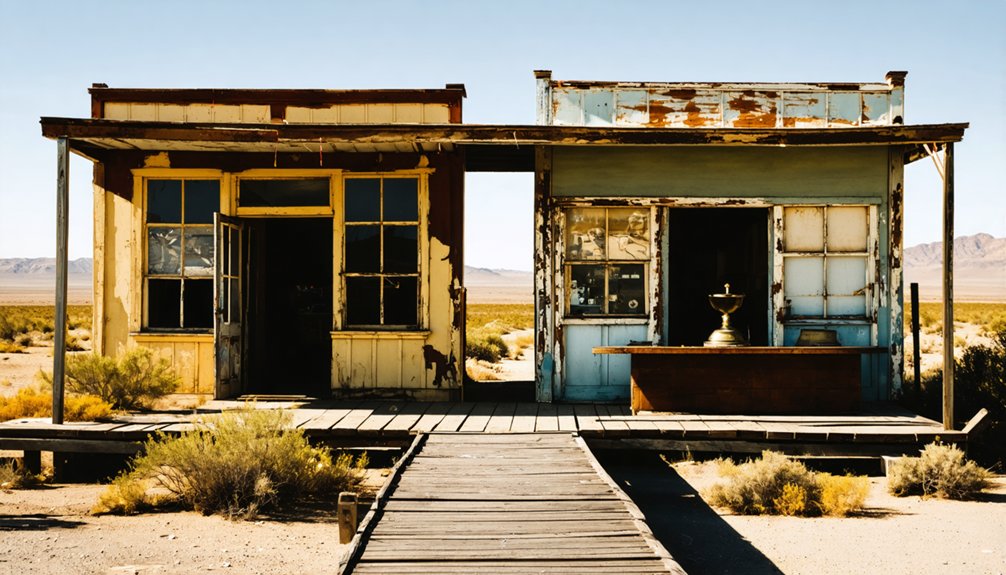
While Tombstone, Arizona, remains the quintessential ghost town in America’s collective imagination, the western United States harbors numerous lesser-known abandoned settlements that offer equally compelling historical narratives without the commercial development and tourist crowds.
These hidden treasures include Washington’s Molson with its abandoned farm machinery, Nevada’s Belmont where ghostly legends persist near the infamous “Clown Motel,” and Colorado’s Saint Elmo, remarkably preserved since its 1952 abandonment.
For the adventurous, California’s Panamint City—supposedly cursed by local tribes—provides a challenging expedition, while Bodie’s weathered structures maintain authentic frontier atmosphere under state protection.
Utah contributes Frisco, once so lawless it averaged a murder daily until its mine collapse in 1885, and Iosepa, which tells the unique story of Mormon settlers through its remaining cemetery and memorial markers.
Liberty, known as Washington’s oldest mining town, offers visitors a glimpse into the state’s Gold Rush era with its preserved historic buildings and interpretive displays.
Montana’s Bannack, once the territorial capital, provides visitors with over 60 preserved structures and hosts the annual “Bannack Days” historical reenactment each July.
Preservation Efforts: From “Arrested Decay” to Living Museums
The preservation of ghost towns presents a fascinating spectrum of conservation philosophies, from minimal intervention to full restoration.
Ghost towns embody diverse conservation approaches, balancing historical integrity against the forces of time and limited resources.
At Bodie State Historical Park, you’ll encounter the arrested decay approach, where structures are deliberately stabilized but not renovated, maintaining their weathered authenticity while preventing further deterioration. This method preserves the town’s unfiltered historical narrative.
In contrast, active restoration projects like those in Animas Forks demonstrate more interventionist approaches. The $330,000 rehabilitation of the Miners Union Hospital exemplifies how strategic investment can save historically significant structures from collapse. Animas Forks’ inclusion on the National Register in 2011 has further validated these preservation efforts.
These restoration efforts create economic opportunities—Animas Forks now attracts 250,000 annual visitors despite shrinking preservation budgets. The tension between limited funding and preservation needs continues to shape how you’ll experience these fragile windows into America’s frontier past. Jerome, Arizona demonstrates how abandoned mining communities can be successfully transformed into cultural hubs through artistic repurposing of historical structures.
Photographing History: Capturing the Spirit of Abandoned Places
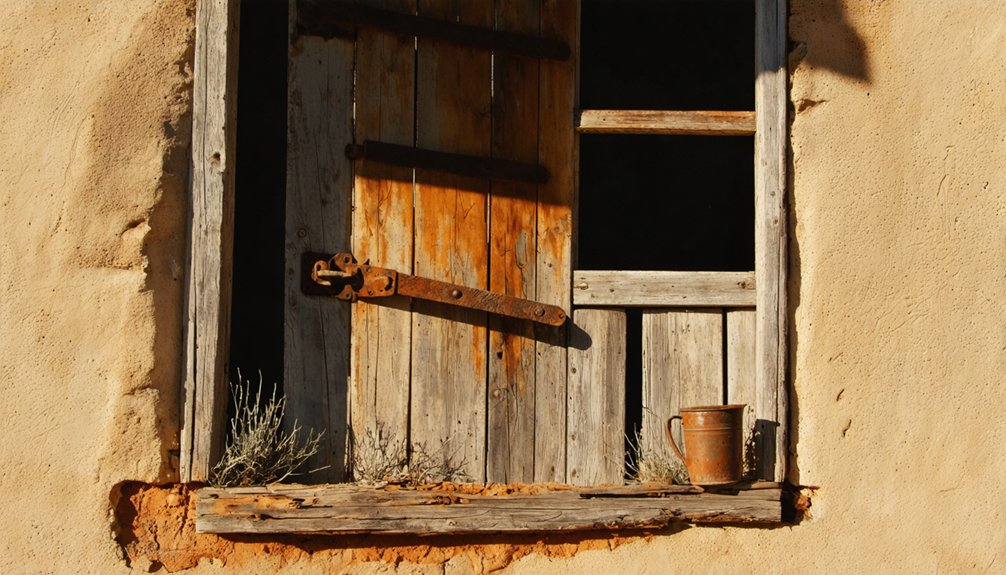
Stepping into the hushed corridors of a ghost town with camera in hand transforms you from mere visitor to visual historian, capturing ephemeral moments of architectural decline that connect past with present.
Equip yourself with a reliable DSLR or mirrorless camera, wide-angle lenses for expansive vistas, and a sturdy tripod essential for low-light environments.
Master lighting techniques by harnessing golden hour illumination to cast dramatic shadows across weathered facades, or experiment with light painting to reveal hidden textures in darkened interiors.
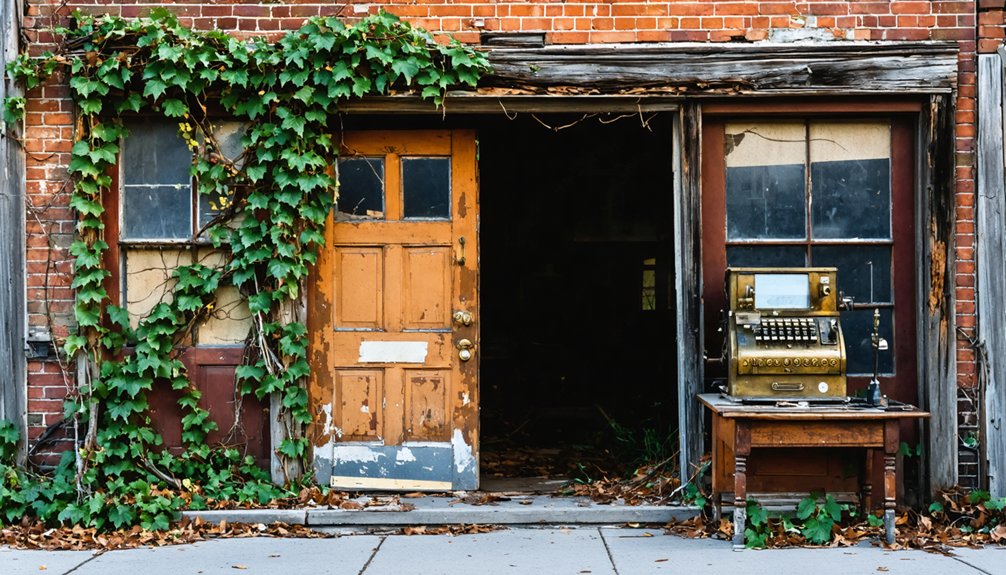
Your composition strategies should emphasize architectural details—door handles, faded signage, peeling paint—that tell stories of abandonment. Frame shots through broken windows or incorporate natural reclamation elements for layered narratives. Recognize that each location falls into one of the four distinct classifications of ghost towns, which will influence your photographic approach.
Remember ethical practices: seek permission, leave artifacts undisturbed, and prioritize safety amid unstable structures. Consider bringing a companion photographer for added security while exploring these hauntingly beautiful yet potentially hazardous locations. The ghost town’s silent testimony awaits your thoughtful documentation.
Frequently Asked Questions
How Did Ghost Towns Impact Nearby Native American Communities?
While you’ve preserved cultural heritage, you’ve lost economic sovereignty—ghost towns disrupted your communities through displacement, environmental contamination, resource depletion, and destruction of sacred sites, fundamentally altering traditional lifeways.
What Survival Supplies Should I Bring to Remote Ghost Towns?
You’ll need three days’ water supply, purification methods, emergency gear, calorie-dense food, shelter materials, and essential tools like first aid kits, multi-tools, fire starters, and navigation instruments.
Are There Seasonal Considerations When Planning Ghost Town Visits?
You’ll encounter significant seasonal accessibility variations when visiting ghost towns. Summer and fall offer ideal weather patterns, while winter necessitates specialized transportation due to snowfall limiting access to many sites.
How Have Ghost Towns Been Depicted in Film and Literature?
While ghost town symbolism often portrays decline, you’ll discover these places transcend abandonment in literature and cinematic representations—serving as backdrops for Western narratives of ambition, freedom, cultural transformation, and environmental reclamation.
What Paranormal Activities Are Reported in Western Ghost Towns?
In western ghost towns, you’ll encounter ghost sightings of former residents, unexplained sounds, physical phenomena like cold spots, and haunted structures where objects move inexplicably, particularly in abandoned mines and former residences.
References
- https://themortgagepoint.com/2024/10/25/americas-new-ghost-towns/
- https://www.loveexploring.com/gallerylist/188219/the-us-state-with-the-most-ghost-towns-revealed
- https://literaryfictions.com/articles/ghost-towns-in-the-american-west/
- https://www.mentalfloss.com/geography/american-ghost-towns-can-still-walk-through
- https://www.youtube.com/watch?v=u1KkAEZYqZY
- https://www.geotab.com/ghost-towns/
- https://en.wikipedia.org/wiki/Lists_of_ghost_towns_in_the_United_States
- https://247wallst.com/special-report/2020/12/08/30-american-ghost-towns-6/
- https://www.blackhillsbadlands.com/blog/post/old-west-legends-mines-ghost-towns-route-reimagined/
- https://westernmininghistory.com/map/