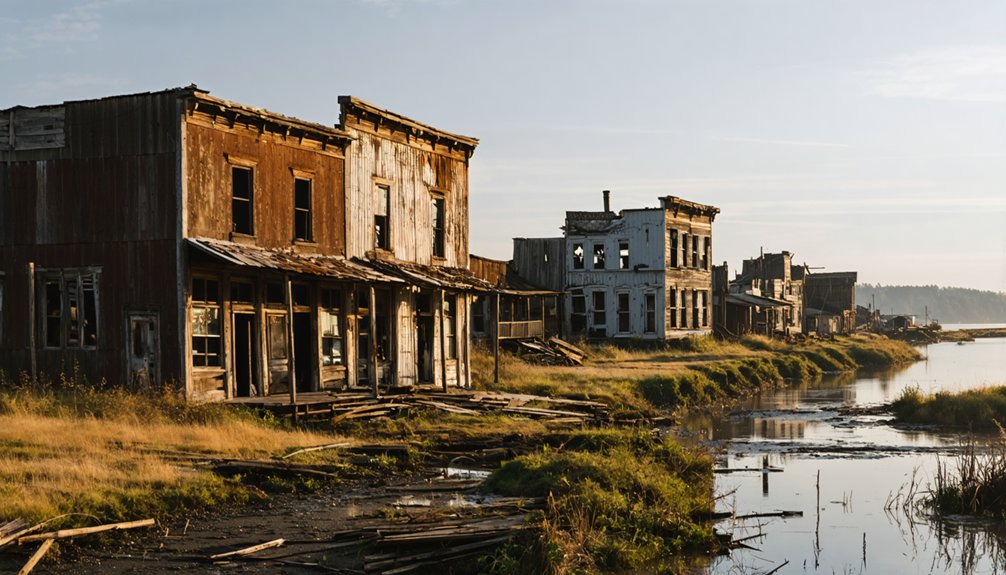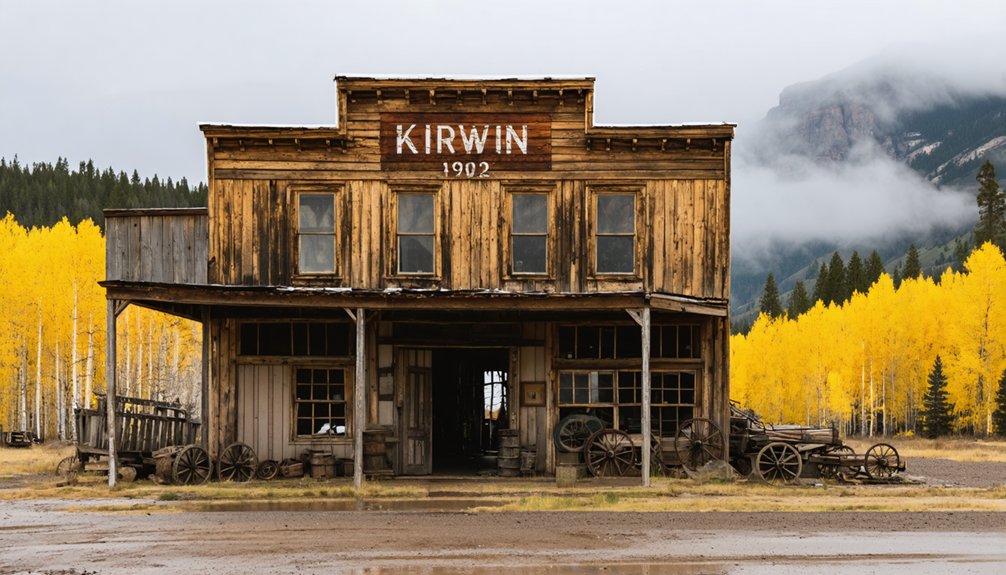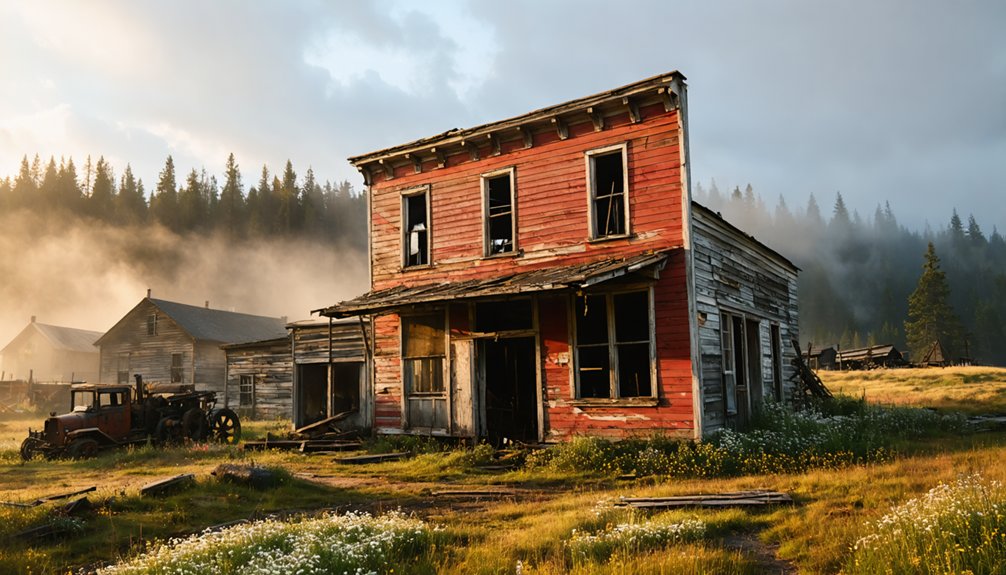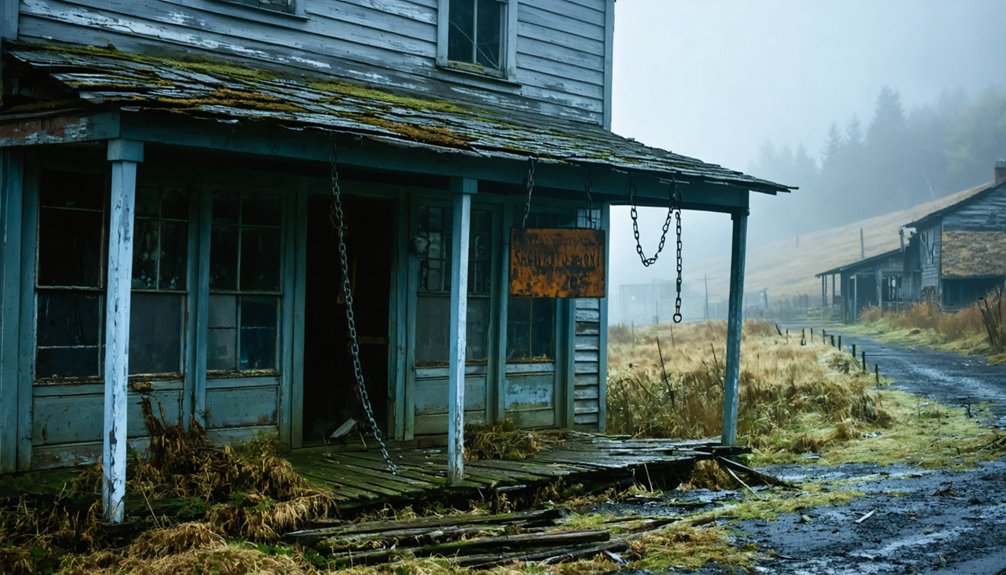
Pacific Northwest ghost town tours offer you glimpses into Washington’s abandoned mining communities like Franklin, Molson, and Monte Cristo. You’ll explore historic sites through self-guided trails ranging from 2-8 miles, where paranormal activity often includes miners’ voices and spectral tools. Visit well-preserved locations like the Molson Ghost Town Museum or Liberty, listed on the National Register of Historic Places. Discover how these towns reflect the boom-and-bust legacy of the region’s rich mining heritage.
Key Takeaways
- Monte Cristo offers an 8-mile hiking trail with reported ghostly echoes and paranormal phenomena along the original mining road.
- Port Gamble and Pike Place Market feature guided tours exploring maritime spirits and underground passageways with rich paranormal history.
- Franklin’s 2.5-mile coal mining trail showcases moss-covered structures where Washington’s second-worst mining disaster occurred in 1894.
- Self-guided ghost town trails provide authentic experiences of both historical ruins and unexplained phenomena throughout Washington State.
- Molson Ghost Town Museum preserves pioneer buildings year-round, serving as a well-maintained base for paranormal exploration tours.
Forgotten Mining Boomtowns of Washington State
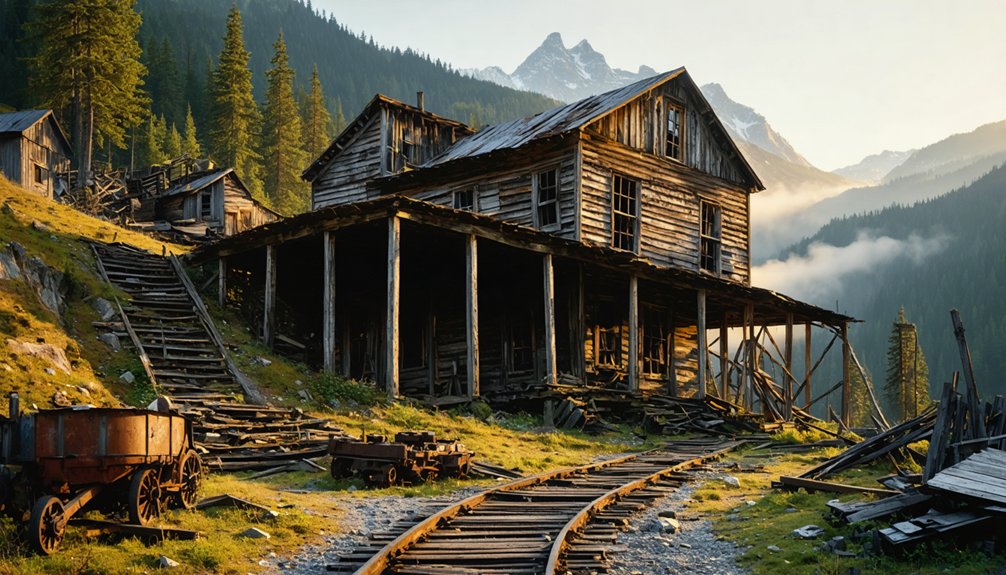
While the Pacific Northwest is known for its lush forests and scenic coastlines, Washington State harbors a hidden chapter of history in its abandoned mining towns. You can explore sites like Franklin, where the state’s second-worst coal mine disaster claimed 37 lives in 1894 before the town was virtually abandoned by 1919. Franklin’s significance in the region earned it the nickname “Pennsylvania of the West” during its peak years due to its extensive coal reserves.
Beyond evergreen forests and misty shores, Washington’s forgotten mining towns reveal tales of tragedy and abandoned dreams.
For well-preserved mining history, head to Molson near the Canadian border. Once bustling with 300 residents during a short-lived gold rush, it’s now among Washington’s best-maintained ghost towns thanks to preservation efforts since 1960. Visitors can explore the open-air museum showcasing preserved offices, farming equipment, and historic cabins that tell the story of frontier life.
Throughout Okanogan County, towns like Ruby City and Chesaw tell stories of rapid boom-and-bust cycles that defined Washington’s mining era.
Liberty, the oldest mining settlement, and Melmont, a coal town near Mount Rainier, showcase the fleeting prosperity that vanished when resources depleted.
Self-Guided Ghost Town Trails and Walking Tours
Exploring Washington’s abandoned mining towns provides a window into the past, but for those seeking a more structured adventure, self-guided ghost town trails offer the perfect blend of history and outdoor recreation.
You’ll find trails ranging from the challenging 8-mile Monte Cristo hike to shorter Franklin and Fairfax routes, each revealing unique remnants of the Pacific Northwest’s mining heritage.
- Monte Cristo’s trail follows the original mining road along South Fork Sauk River, where hikers report hearing ghostly echoes of miners’ tools.
- Franklin’s 2.5-mile coal mining route features moss-covered structures and a landmark mine cart for easy ghost town exploration.
- Fairfax’s gentle 2.35-mile trail outside Mount Rainier provides family-friendly access to scattered historical artifacts and abandoned structures that remain after fires and floods devastated the once-thriving town.
These self-guided hikes allow you to experience paranormal connections while traversing the authentic ruins of Washington’s boom-and-bust past. Monte Cristo was once home to over 200 mining claims before operations shut down permanently in 1907.
The Rise and Fall of Pacific Northwest Mining Communities
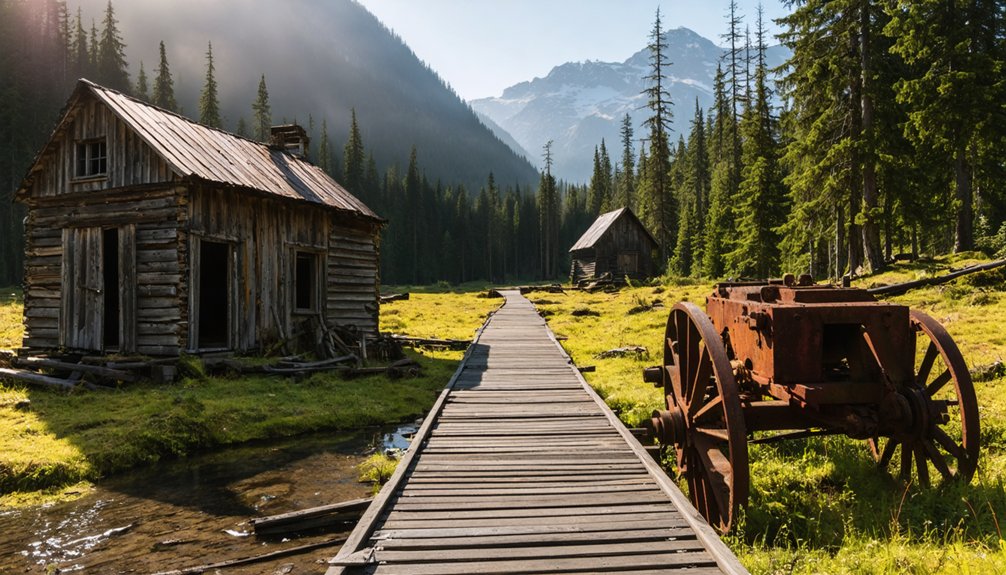
The Pacific Northwest’s mining legacy began with humble discoveries that would transform the region’s economic landscape forever. When William Tolmie found coal along the Cowlitz River in 1833, he sparked an industry that would shape the region’s development.
You’ll find that gold discoveries near Fort Colville in 1855 and Idaho’s rich Bunker Hill and Sullivan mine in 1885 created instant boomtowns as prospectors rushed in.
The mining heritage of these communities drove massive infrastructure investments, with railroads spending millions to connect these remote areas. The gold rush revitalized Seattle’s economy, with local merchants selling over $325,000 worth of goods in just one month during the Klondike rush. Chinese laborers played vital roles despite facing discrimination.
As you explore these sites today, you’ll notice how quickly community decline followed resource depletion—thriving towns abandoned after mines flooded, caught fire, or simply ran out of precious metals. This pattern of decline was evident when Washington coal mines struggled to compete as railroads shifted to using fuel oil in the early 20th century.
Paranormal Hotspots and Spine-Chilling Stories
Pacific Northwest ghost towns harbor more than just abandoned buildings—they’re portals to otherworldly encounters that attract paranormal enthusiasts from across the country.
Among the hidden secrets of the landscape lie abandoned towns beneath US rivers, where the remnants of civilization whisper stories of the past. These submerged locations often serve as a magnet for adventurers seeking to uncover lost histories and eerie memories. Each visit promises not only a thrilling exploration but also a chance to connect with the echoes of those who once inhabited these now-forgotten places.
Monte Cristo’s abandoned mining town echoes with spectral sounds of tools and miners’ voices, while Port Gamble’s historic structures preserve maritime spirits that materialize during paranormal investigations.
- Underground Seattle ranks among the region’s most active haunted sites, with disembodied voices intensifying on the Great Fire’s anniversary.
- Fort Worden’s military installations host unexplained phenomena in specific rooms (302 and 306), complete with phantom smells and apparitions.
- Starvation Heights Sanitarium carries the disturbing haunted legends of Dr. Hazzard’s victims, manifesting as moans and oppressive atmospheres.
You’ll encounter these supernatural remnants whether exploring Port Townsend’s 25+ haunted locations or the Whitman Massacre site’s echoing tragedy.
Pike Place Market, established in 1907, stands as one of Washington’s most haunted destinations with its rich paranormal history connecting to Seattle’s underground passageways.
The Oregon State Capitol in Salem features extreme cold spots and mysteriously malfunctioning electronics, with security guards reporting unexplained footsteps as recently as 2022.
Preserving Historical Remnants: Museums and Heritage Sites
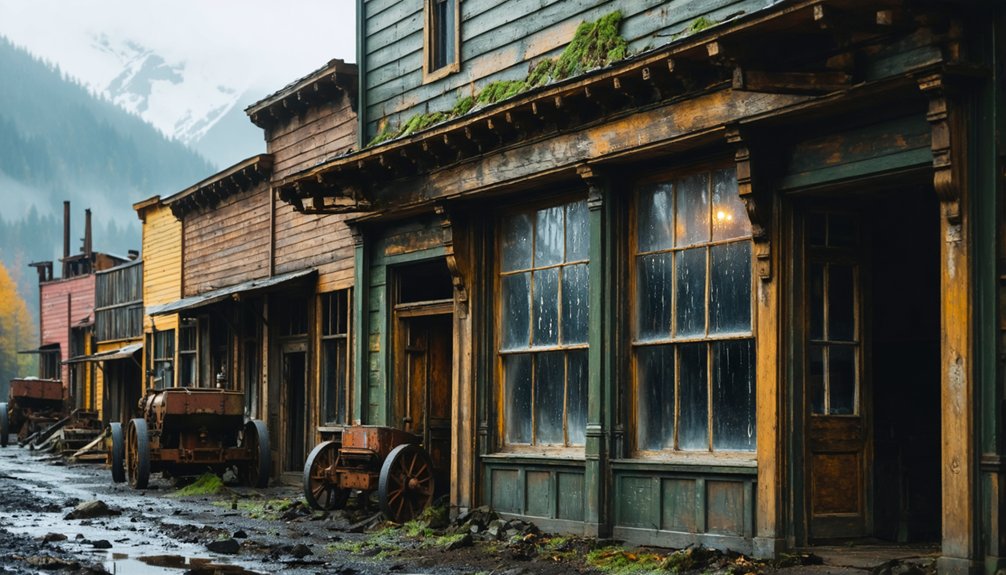
While abandoned buildings tell haunting stories of the past, numerous museums and heritage sites across the Pacific Northwest now safeguard these historical treasures for future generations.
You’ll discover meticulous historical preservation efforts at places like the Molson Ghost Town Museum in Washington, which displays pioneer buildings and equipment year-round.
In Oregon, the Maxville Heritage Interpretive Center has worked since 2008 to preserve logging community history through restoration of original infrastructure.
Community involvement drives these preservation initiatives, with volunteer-staffed institutions like the Oroville Historical Museum showcasing local memorabilia seasonally.
The heart of historical preservation beats through dedicated volunteers who safeguard our regional heritage with passionate community stewardship.
Visitors can explore the unique landscapes surrounding Molson Town, which was established in the late 19th century due to gold prospecting in the nearby hills.
The historic mining town of Liberty has been recognized for its historical significance, earning a spot on the National Register of Historic Places in 1974.
With over 256 ghost towns in Oregon alone, many former mining and lumber settlements are now protected through museum creation and site restoration, offering you authentic glimpses into the region’s pioneering heritage.
Planning Your Ghost Town Adventure: Seasonal Tips and Photography
When planning your ghost town expedition in the Pacific Northwest, timing your visit strategically can dramatically enhance your experience and photographic opportunities.
Spring and fall offer ideal conditions with less vegetation obscuring historical structures and moody atmospheric lighting perfect for seasonal photography.
- Visit during cooler months when fog and overcast skies create the eerie ambiance that defines ghost town imagery.
- Schedule early morning or late afternoon shoots to capture dramatic shadows and textures on weathered buildings.
- Check ghost town accessibility before traveling, as higher elevations may be inaccessible due to snow from mid-October through early spring.
While summer provides reliable access with dry trails, you’ll encounter larger crowds.
For the freedom to explore quietly and capture authentic images, prioritize shoulder seasons.
Frequently Asked Questions
Are There Guided Overnight Camping Experiences at Ghost Town Sites?
No, you’ll find most guided experiences don’t include overnight stays at ghost towns. Camping regulations typically prohibit sleeping within historical sites, though nearby campgrounds offer alternative accommodations for your frontier adventure.
What Indigenous Histories Intersect With These Abandoned Mining Settlements?
You’ll find indigenous narratives woven throughout these settlements, which were built on ancestral lands where tribes lived for millennia before being displaced by disease, treaties, and mining expansion. Cultural significance remains in sacred sites.
How Do Private Landowners Manage Access to Ghost Towns?
Like sentinels of the past, private landowners enforce access restrictions through signage, barriers, and monitored entry. You’ll need explicit landowner permissions, as they balance preservation needs with controlled visitor experiences.
Are Metal Detectors or Artifact Collection Permitted at These Sites?
You can’t use metal detectors on most ghost town sites due to historical preservation policies. Metal detecting regulations prohibit artifact collection from sites older than 100 years without proper permits.
Which Ghost Towns Are Accessible for Visitors With Mobility Limitations?
Wandering through history’s remnants? You’ll find wheelchair accessibility at Molson and Bodie, where accessible trails and facilities accommodate mobility needs. Ashcroft offers limited access, while Franklin remains inaccessible due to stairs.
References
- https://en.wikipedia.org/wiki/List_of_ghost_towns_in_Washington
- https://okanogancountry.com/ghost-towns
- http://pnwphotoblog.com/ghost-towns/
- https://stateofwatourism.com/ghost-towns-of-washington-state/
- https://www.nationaldaycalendar.com/lists/12-oregon-ghost-towns
- https://www.thegoldminehotel.com/ghost-towns-and-haunted-places-in-idaho
- https://secure2.pbase.com/mad_monte1/ghost_towns_of_the_pacific_northwest
- https://www.wta.org/go-outside/seasonal-hikes/fall-destinations/hidden-history-ghost-town-hikes
- https://www.youtube.com/watch?v=0JLTapdmaYY
- https://www.islands.com/1988063/washington-off-radar-abandoned-mining-ghost-town-molson-free-visit-history/