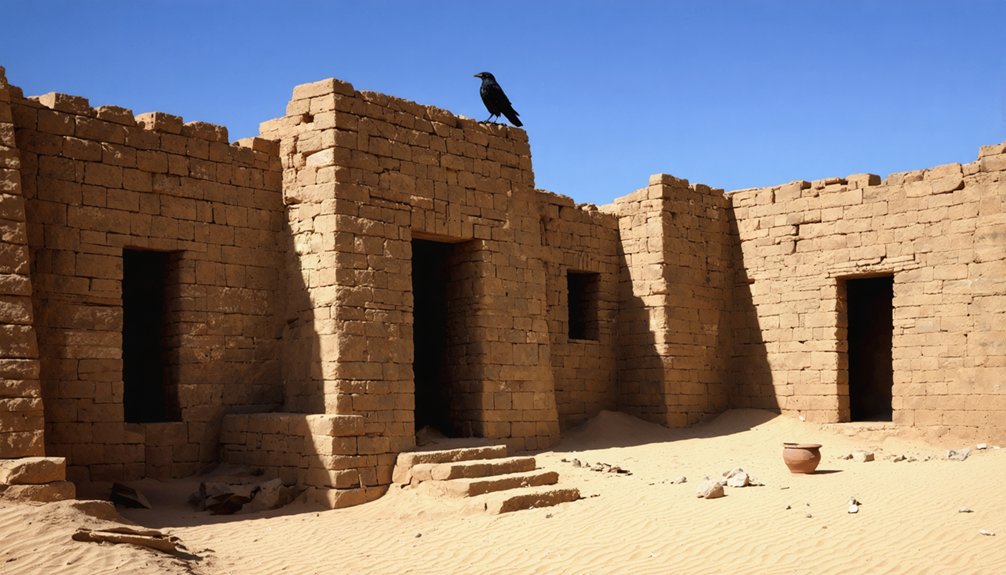
When visiting Native American archaeological sites, you’ll need to follow strict ethical guidelines. Always stay on designated paths, never remove artifacts, and research tribal customs beforehand. Respect sacred structures by not climbing on walls or entering ceremonial areas without permission. Choose Native-guided tours when possible for authentic cultural context. These fragile cultural landscapes face preservation challenges from both human activity and environmental factors. Proper navigation balances appreciation with protection of these irreplaceable historical treasures.
Key Takeaways
- Consult local tribal authorities and obtain necessary permits before visiting archaeological sites to ensure proper authorization.
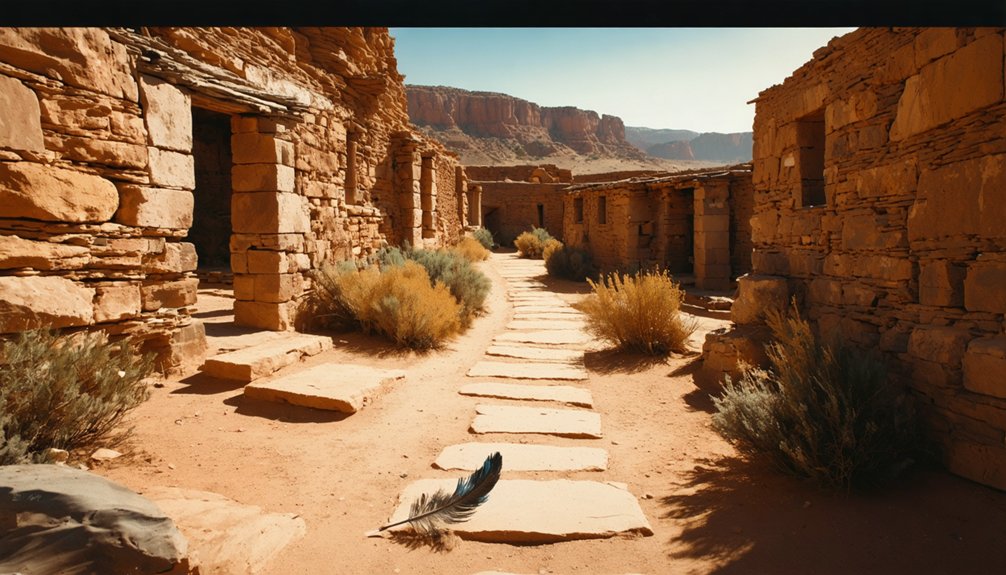
- Stay on designated trails and follow site-specific guidelines to minimize physical damage to fragile structures.
- Never remove artifacts, disturb remains, or alter sites as these actions are illegal and culturally disrespectful.
- Respect sacred spaces by refraining from entering kivas or other ceremonial structures without explicit permission.
- Choose Native-guided tours whenever possible to gain authentic cultural context and support Indigenous communities.
Famous Ancestral Puebloan Archaeological Sites of the Southwest
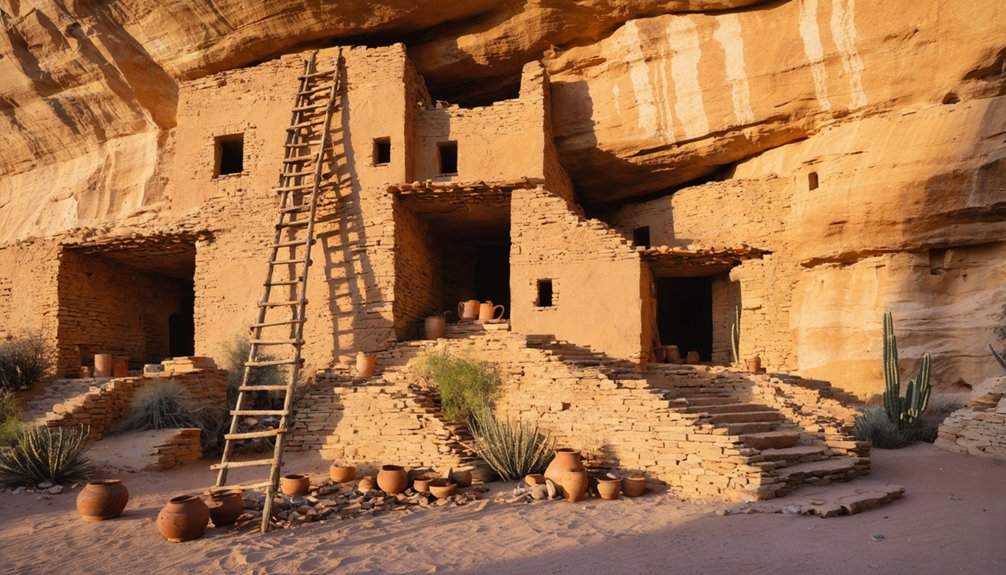
When exploring the American Southwest, you’ll encounter the remarkable architectural achievements of the Ancestral Puebloan people, whose settlements represent some of North America’s most significant archaeological treasures.
Chaco Canyon stands as the region’s preeminent ceremonial and political hub (AD 900-1150), showcasing monumental great houses and kivas that reflect complex social organization and extensive trade networks. These impressive structures were constructed using advanced stone-masonry techniques that evolved from earlier pithouse dwellings.
The site contains the Four Corners’ largest concentration of large-scale ruins, demonstrating its regional dominance.
At Mesa Verde, you’ll find over 4,000 documented sites, including the iconic cliff dwellings constructed between the 6th and 12th centuries.
This UNESCO World Heritage Site reached its population zenith (20,000+ residents) around 1200-1250 AD.
The defensive structures provide essential insights into Ancestral Puebloan settlement patterns, farming techniques, and community organization.
Visitors to Cliff Palace, the largest cliff dwelling in North America, can explore its 115 rooms and 28 kivas that once housed more than 100 people.
Understanding Cultural Context and Significance of Native American Ruins
While the grand architecture and archaeological significance of Ancestral Puebloan sites reveal physical evidence of past civilizations, these places represent far more than abandoned settlements to contemporary Native Americans.
You’re encountering living cultural landscapes that embody enduring spiritual relationships spanning millennia. These sites—containing over 100,000 archaeological features in places like Bears Ears—maintain active significance for ceremonial practices, healing, and collective identity formation. Fragile sites located on mesa tops are particularly vulnerable and constitute the majority of archaeological resources in the region. Similar to the burial mounds found throughout the Midwest, these sites represent sacred connections to ancestral peoples and require special protection.
Abandoned military bases in California also carry layers of historical and cultural significance. Often overlooked, these sites can reflect the impact of military decisions on local communities and ecosystems. Preserving these areas is essential not only for understanding the past but also for acknowledging the diverse narratives that shape the present.
When you visit these spaces, you’re witnessing chapters in continuous Indigenous narratives that inform present-day tribal communities.
Understanding these ruins requires integrating oral histories and mythology alongside archaeological data. The ancestral connections maintained by Native peoples reflect a worldview where past, present, and future generations exist in relationship.
The stewardship of these sites represents a shared responsibility that honors both scientific knowledge and Indigenous perspectives.
Architectural Marvels: Construction Techniques of Ancient Indigenous Settlements
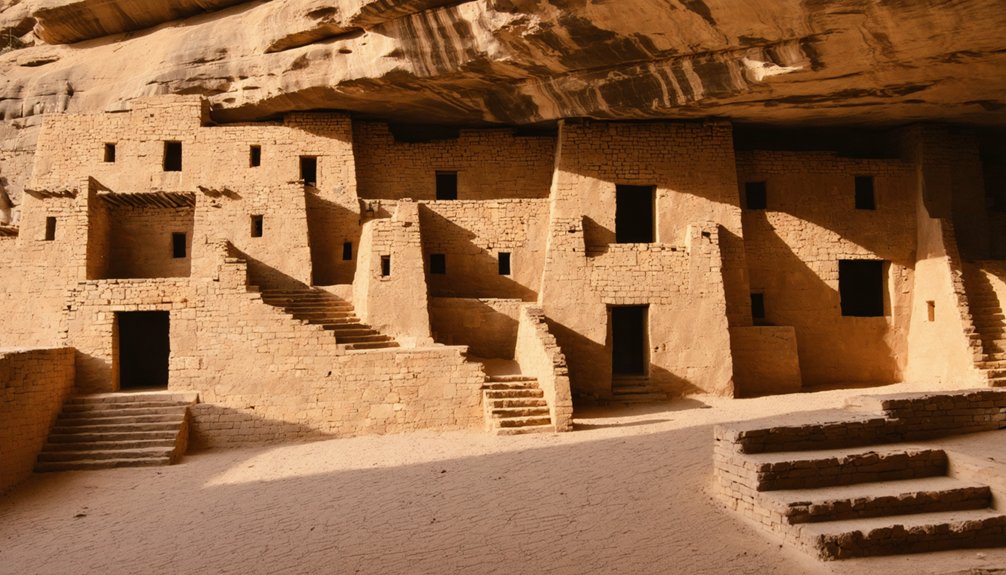
The architectural ingenuity of ancient Native American settlements stands as a demonstration to Indigenous engineering prowess developed over centuries.
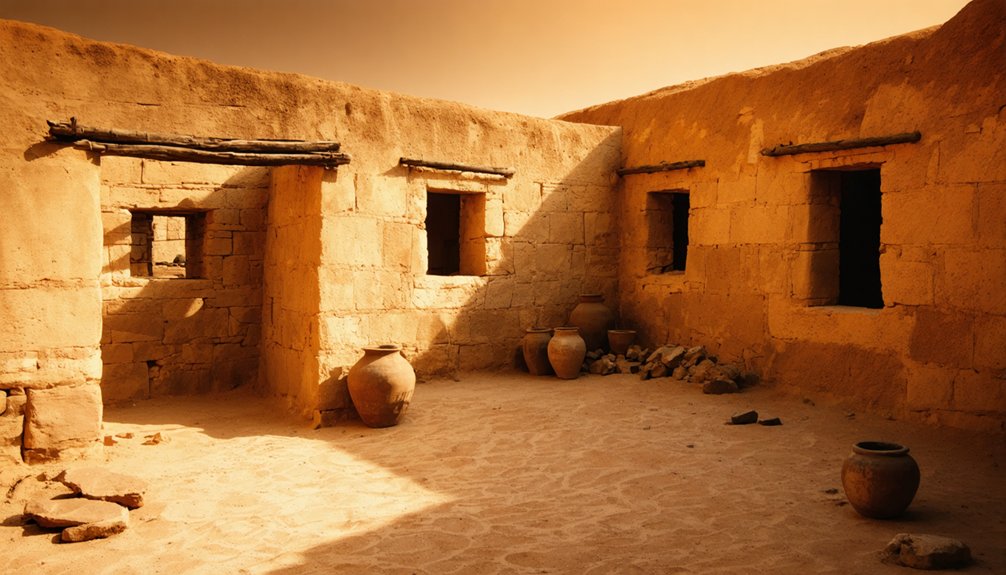
When you visit these sites, you’ll encounter stone masonry techniques where craftsmen shaped sandstone blocks using tools of similar hardness, creating walls strong enough to support five-story structures.
You’ll observe how builders masterfully combined materials, employing either pure adobe construction or mixed methods depending on available resources. Communal construction efforts typically halted during warm seasons for planting and warfare. The three-ply wall construction technique featured inner and outer facings of shaped sandstone with rubble core filling that enhanced structural stability.
In cliff dwellings, hand-hewn stones bound with adobe mortar formed impressive complexes containing hundreds of rooms organized around central plazas. The terraced, stepped design created defensible communities with remarkable structural integrity.
Regional variations emerged between major centers like Chaco Canyon and Mesa Verde, with techniques adapting to environmental conditions while maintaining cultural traditions that spread across vast territories.
Responsible Tourism: Ethical Guidelines for Visiting Sacred Places
Visiting ancient Indigenous settlements demands the same reverence you’d extend to any cultural heritage site, perhaps more so given the complex historical context surrounding these places.
Ethical travel requires thorough preparation—research the specific tribe’s customs and contact tribal offices for current visitor guidelines before arriving.
When on-site, practice cultural respect by adhering strictly to tribal laws, staying on designated paths, and never removing artifacts or disturbing sacred structures. Remember that these sites are part of Indian Country’s vastness, spanning over 56 million acres of culturally significant land.
Dress modestly, and always request permission before photographing community members or ceremonies. Some areas may be restricted due to spiritual significance; these boundaries aren’t negotiable.
Choose Native-managed tours with Indigenous guides whenever possible. They’ll provide authentic perspectives while ensuring your presence respects both the environment and the living cultural heritage these sites represent. Always verify if the community is open to visitors before planning your trip, as access may be limited during sacred ceremonies or private events.
Preservation Challenges and Modern Conservation Efforts
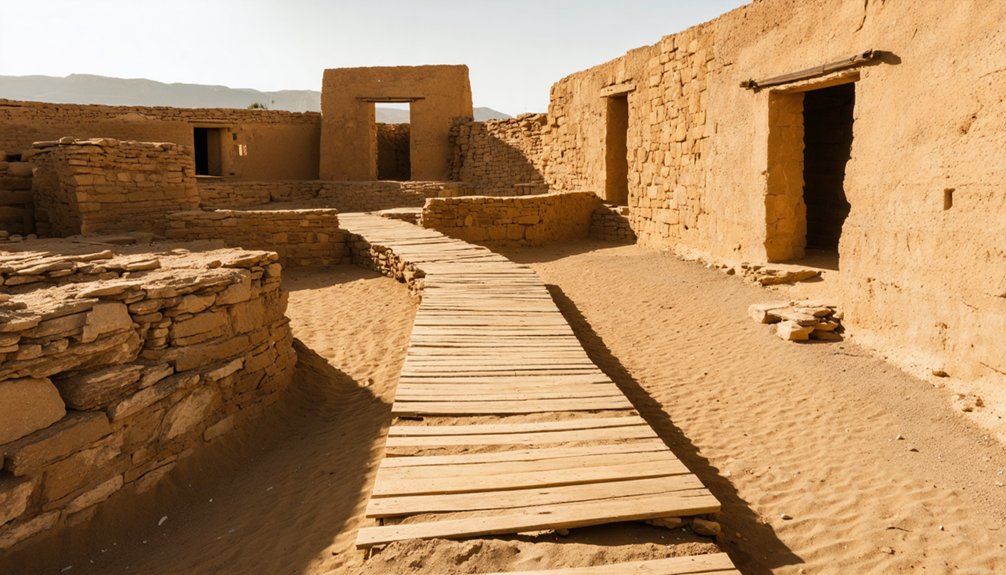
Despite significant legal frameworks designed to protect Native American cultural heritage, preservation efforts face substantial challenges across jurisdictional boundaries.
While legal frameworks exist for Native American heritage protection, preservation challenges persist at jurisdictional boundaries.
You’ll find a stark contrast between federal lands, where NAGPRA provides some protection, and private properties where artifacts remain largely unprotected by meaningful legislation. This regulatory gap enables continued looting and desecration of irreplaceable cultural resources. The misleading archaeological term abandonment narrative perpetuates harmful misconceptions about Indigenous peoples’ relationships with their ancestral sites.
Physical deterioration compounds these challenges. Organic materials decompose rapidly when exposed, while even stone artifacts suffer from erosion, weathering, and visitor foot traffic. The 2023 NAGPRA regulation changes represent a critical turning point in establishing clearer compliance guidelines and consequences for institutions that fail to properly repatriate Native American remains and artifacts.
Modern conservation strategies now emphasize thorough site preservation through integrated approaches that address both human impacts and environmental factors.
However, without addressing the fundamental disparity in protection between public and private lands, these efforts remain inadequate to fully safeguard the archaeological record for future generations.
Frequently Asked Questions
Can I Collect Artifacts as Souvenirs From Archaeological Sites?
No, you can’t borrow heritage items. Artifact preservation requires leaving materials undisturbed. The legal implications include substantial fines and imprisonment under federal laws protecting archaeological resources regardless of your personal freedom.
How Were Water Systems Engineered in Desert Pueblo Communities?
Pueblo communities engineered sophisticated water systems through conservation methods including rooftop collection, bedrock reservoirs with clay sealing, and irrigation techniques utilizing gravity-fed canals, terracing, and check dams to maximize limited precipitation.
What Spiritual Beliefs Are Connected to Abandoned Settlement Locations?
Walking in ancestral footsteps, you’ll find abandoned settlements hold profound spiritual significance through ancestral connections. They’re sacred spaces where tribal identity, ceremonial practices, and prophetic visions interconnect with the physical geography of the land.
Do Native Tribes Still Conduct Ceremonies at Ancestral Archaeological Sites?
Yes, you’ll find numerous tribes actively maintaining ceremonial practices at ancestral sites, strengthening traditional connections through solstice observations, ritual dances, and spiritual ceremonies that align with astronomical events and ancient knowledge systems.
How Did Climate Change Affect Ancient Native American Migration Patterns?
Ancient climate shifts influenced Native American migration trends through environmental factors like drought, flooding, and resource depletion. You’ll find these patterns reflected in settlement relocations responding to survival pressures across regions.
References
- https://www.infoplease.com/history/native-american-heritage/american-indian-archaeological-sites
- https://www.thetravel.com/best-native-american-archeological-sites-in-the-us/
- https://www.legendsofamerica.com/na-ancientcities/
- https://coastalreview.org/2020/07/lost-history-search-for-village-abandoned/
- https://www.christywanders.com/2024/08/top-ghost-towns-for-history-buffs.html
- https://www.americansouthwest.net/ancient-ruins.html
- https://www.youtube.com/watch?v=Z-rNZU3vIzU
- https://featured.com/questions/spotlight-ghost-towns-american-west
- https://floridatrailblazer.com/tag/indian-mounds/
- https://www.nps.gov/places/000/tusayan-ruin-trail.htm