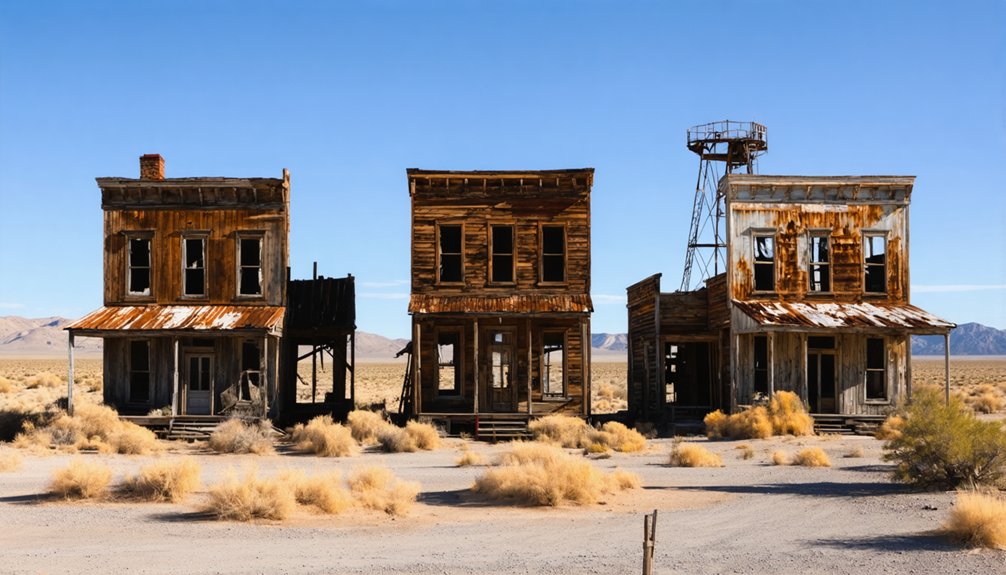
Nevada’s ghost towns offer a fascinating glimpse into the state’s mining past. You’ll need topographic maps, offline GPS navigation, and handheld GPS units to explore these historical sites safely. Avoid the 200,000 abandoned mines, which pose serious dangers including cave-ins and toxic gases. Visit notable towns like Rhyolite with its bottle house or Goldfield with its population once at 30,000. This 449-mile journey requires proper preparation and respect for historical preservation.
Key Takeaways
- USGS topographic maps and county road guides are essential for navigating Nevada’s rugged ghost town terrain.
- Offline navigation tools like Gaia GPS or handheld Garmin units provide reliable guidance in areas without cell service.
- Nevada contains over 600 abandoned mining settlements, with notable sites including Rhyolite, Goldfield, Belmont, and Jarbidge.
- The 449-mile ghost town road trip connects major sites and takes under eight hours of driving time.
- Historical mining maps from local archives help locate abandoned infrastructure while following safety protocols around dangerous mine openings.
The Preserved Relics of Nevada’s Mining Boom
Ghostly remnants of Nevada’s prosperous past dot the arid landscape, with over 600 abandoned settlements standing as a tribute to the state’s mining heritage.
You’ll discover these towns frozen in time since the gold rush began near Dayton in 1849, continuing until the early 20th century.
Nevada’s dry climate has preserved these sites in “arrested decay,” allowing you to witness mining artifacts exactly as they were left decades ago.
In places like Rhyolite, you’ll find evidence of surprisingly modern amenities—concrete sidewalks, electricity, and indoor plumbing—now standing silent.
Historical preservation efforts by organizations like the Central Nevada Historical Society protect these treasures for your exploration.
From ore cars to stamp mills, these authentic relics tell the story of boom-and-bust cycles that shaped the American West.
These abandoned locations offer visitors haunting photography opportunities as sunlight filters through deteriorating structures, creating dramatic shadows against the desert backdrop.
Among these historical gems, Tonopah commemorates its rich history through public art statues of mining pioneers like Jim and Belle Butler who discovered silver ore in 1900.
Top Ghost Towns Worth Exploring
Nevada’s vast desert expanse houses numerous ghost towns, each offering a distinct window into the state’s mining past. When planning your journey through these reminders-of-impermanence settlements, prioritize the iconic Rhyolite ruins with their bottle house constructed from 50,000+ glass bottles and three-story bank remains.
Goldfield history beckons with its once-thriving population of 30,000 and distinctive International Car Forest art installation.
Goldfield whispers tales of 30,000 souls through its haunting ruins and upended automobiles frozen in desert artistry.
For your expedition, consider:
- Rhyolite’s arrestingly preserved structures against stark desert backdrop
- Belmont’s roofless 150-year-old courthouse standing defiantly against time
- Jarbidge’s rare status as a living ghost town with authentic frontier character
These weathered monuments to boom-and-bust economics offer unparalleled freedom to explore America’s resource-driven past at your own contemplative pace. The entire road trip spans approximately 449 miles and can be completed in under eight hours of driving time. For those staying in Las Vegas, start with Nelson, a mere 45 minutes away, featuring fascinating mining equipment and restored buildings from its lawless past.

Maneuvering the rugged terrain of Nevada’s abandoned mining settlements requires specialized tools and resources that combine both traditional and modern technologies. Equip yourself with USGS topographic maps and county road guides that detail vital terrain features and access routes.
For digital resources, load offline maps through Gaia GPS or AllTrails before venturing beyond cellular coverage. Handheld GPS units like Garmin eTrex provide reliable navigation where smartphones fail, while satellite messengers offer emergency SOS capabilities in isolated zones. Exploring areas with more ghost towns than populated settlements demands thorough navigation preparation.
Complement these with historical mining maps from local archives to locate abandoned infrastructure. Master essential navigation techniques: use compass bearings alongside GPS, establish time-based turnaround points, and mark physical trail indicators.
Pre-trip planning with Google Earth and specialized ghost town databases will greatly enhance your self-reliant exploration of Nevada’s mining history. Remember to research accessibility constraints as many locations like Delamar Ghost Town require high-clearance vehicles due to extremely rough terrain.
Safety Precautions for Desert Exploration
Beyond navigation tools and techniques, understanding the life-threatening dangers of Nevada’s desert environment becomes paramount when visiting abandoned mining sites. The state’s 200,000 abandoned mines—with 25% posing serious safety threats—demand your vigilance and preparation.
Never enter mine openings regardless of how stable they appear; even professionals face risks from cave-ins, toxic gases, and unstable explosives.
Essential safety protocols include:
- Equip yourself with proper safety gear: sturdy boots, gloves, helmets, and communication devices that function in remote locations
- Travel in groups and share your detailed itinerary with trusted contacts who can alert authorities if you don’t return
- Maintain emergency preparedness with sufficient water, first aid supplies, and knowledge of whom to contact (county sheriff) should accidents occur
Recent outdoor activity increases have led to more incidents at abandoned mining sites where blasting caps and other dangerous materials remain undiscovered until accidents happen.
Rattlesnakes often make their homes in abandoned mine entrances, creating additional wildlife hazards for unprepared explorers.
Preserving History: Responsible Ghost Town Tourism

As you venture into Nevada’s ghost towns, responsible tourism practices become essential for preserving these fragile windows into America’s mining past. Always check in at designated entry points before exploring, strictly adhering to posted signs and property boundaries.
Remember that removal of artifacts—even seemingly insignificant items—violates both law and historical preservation principles.
Approach these sites with an educational mindset rather than merely recreational intent. These aren’t playgrounds but monuments to America’s heritage. Respect any current residents, obtain permission before entering structures, and leave everything as you found it. Take care not to sit or lie on historical sidewalks, as resting on sidewalks is prohibited in certain areas of Nevada.
When visiting Nelson Ghost Town, be sure to sign the required waiver at entry before accessing the historic Techatticup Mine area.
Responsible tourism demands that you carry out all trash, avoid metal detectors without explicit permission, and follow Tread Lightly ethics.
Frequently Asked Questions
Can I Legally Collect Artifacts or Minerals From Ghost Towns?
You can’t legally collect artifacts over 100 years old. Minerals may be collected on unclaimed public lands for personal use, but you’ll need to respect artifact preservation and legal regulations.
Are Any Abandoned Mining Towns Known for Paranormal Activity?
Yes, Nevada’s mining towns harbor significant paranormal activity. You’ll find ghostly encounters in Nelson Ghost Town, Techatticup Mine, and Belmont Mill—all recognized haunted locations with documented spectral phenomena.
These locations are steeped in history, reminiscent of the forgotten stories of Native American towns that once thrived in these areas. Each whisper of the wind seems to carry tales of resilience and struggle, connecting the present to a rich cultural heritage. Exploring these sites not only reveals their haunted past but also honors the legacies of those who came before.
What Wildlife Hazards Might I Encounter in Ghost Towns?
You’ll face venomous rattlesnakes, poisonous spiders, and bats carrying histoplasmosis. Take wildlife encounters seriously by maintaining distance and avoiding disturbing habitats to guarantee your safety precautions are adequate.
Do Any Towns Have Overnight Camping or Accommodation Options?
Yes, you’ll find lodging options in Gold Point’s cabins, Tonopah’s historic Mizpah Hotel, and the Gold Hill Hotel. Limited camping facilities exist primarily outside ghost towns in nearby public lands.
Which Ghost Towns Are Accessible During Winter Months?
You’ll find desert ghost towns like Rhyolite, Goldfield, and Gold Point accessible year-round due to paved roads and milder winter conditions, while higher-elevation sites like Belmont face more challenging winter accessibility challenges.
References
- https://www.rainesmarket.com/other-nevada-mining-towns.html
- https://www.geotab.com/ghost-towns/
- https://nvtami.com/nevada-ghost-towns-map/
- https://www.expertgps.com/data/nv/mines.asp
- https://travelnevada.com/ghost-town/
- https://nbmg.unr.edu/Collections/MiningDistricts/MiningDistricts.html
- https://nvtami.com
- https://forgottennevada.org/sites/newlist.html
- https://minerals.nv.gov/uploadedFiles/mineralsnvgov/content/Programs/AML/2017_NDOM_AML_Report_Final.pdf
- https://www.mininghistoryassociation.org/TonopahWalkingTour.htm