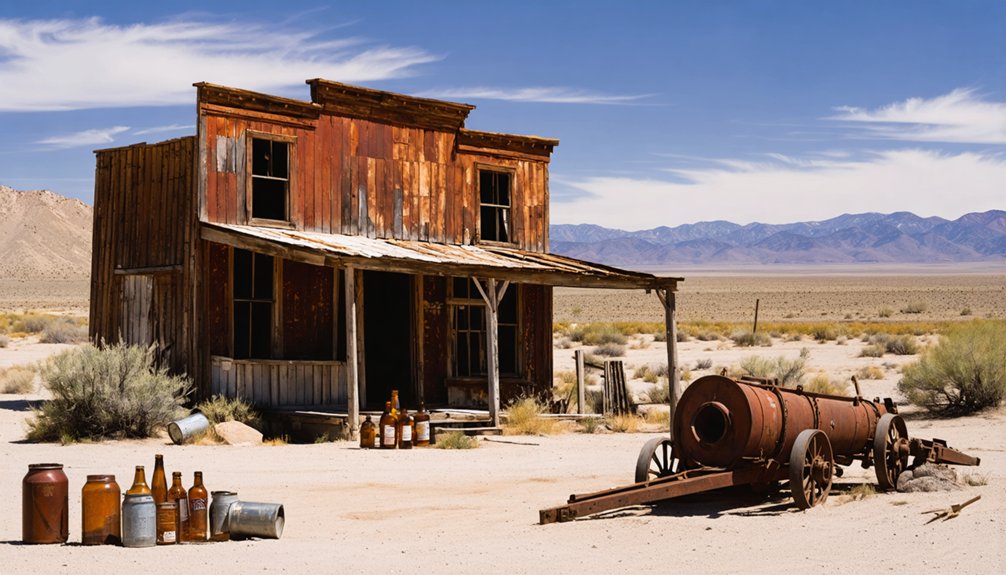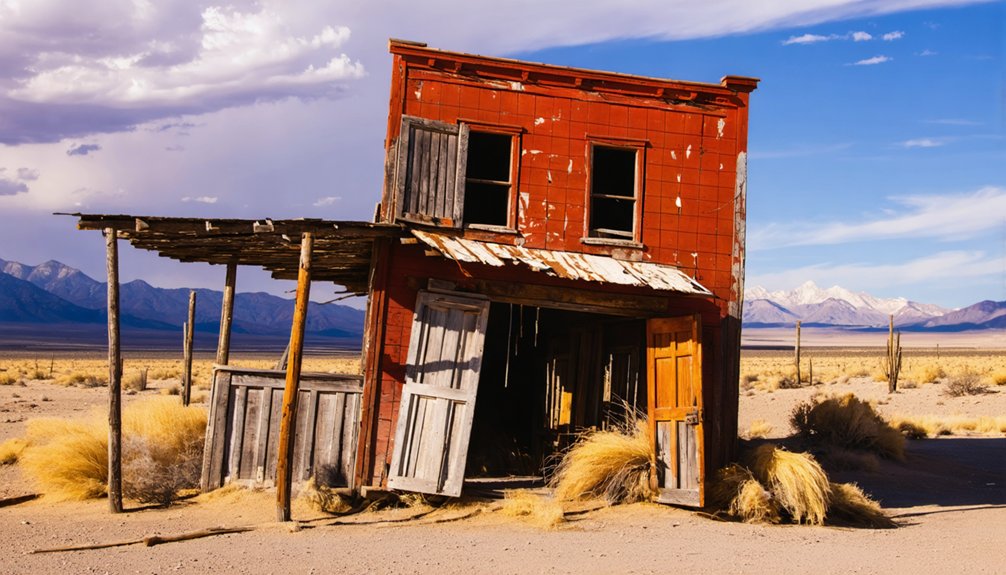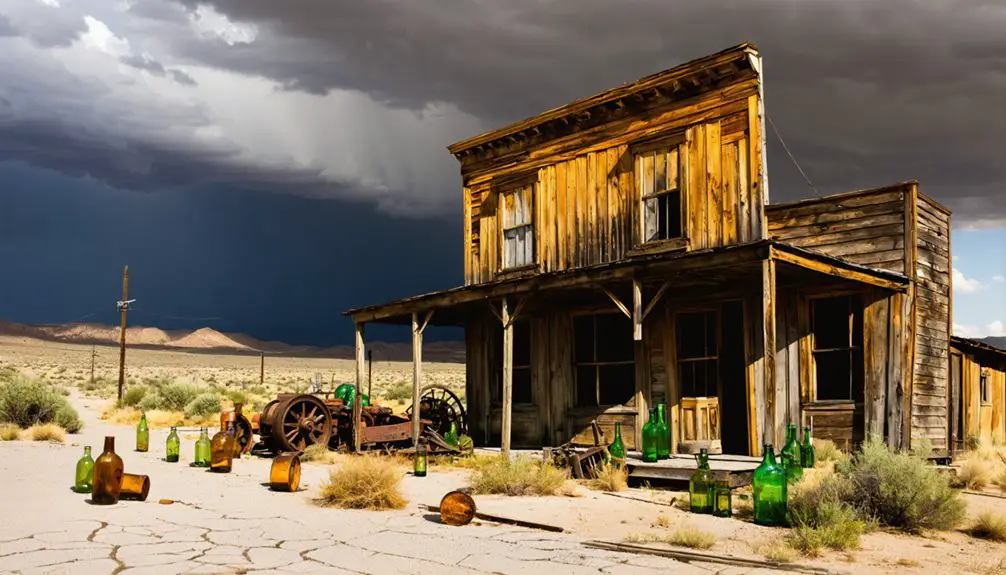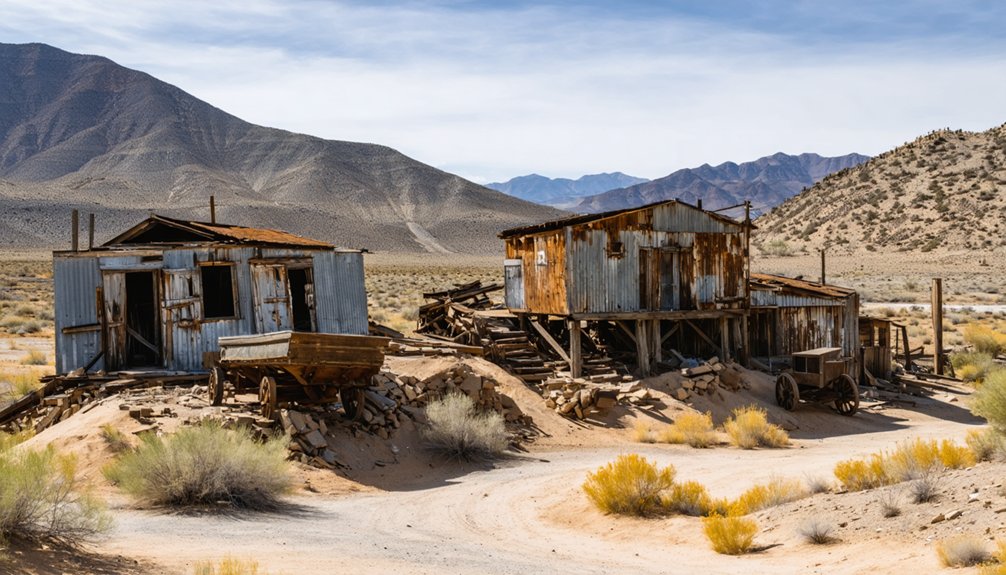
Nevada’s over 600 ghost towns make it the most ghost-town-dense state in the nation, scattered across counties like Nye, Esmeralda, and Clark. You’ll find well-preserved mining-era architecture in Tonopah, dramatic ruins in Rhyolite, and active remnants in Goodsprings. Most sites are accessible via major highways like US-95 and Highway 374. Before exploring, you’ll need to verify land ownership, carry essential safety gear, and respect federal artifact laws. There’s much more to uncover about these fascinating destinations.
Key Takeaways
- Nevada’s ghost towns, concentrated in Nye, Esmeralda, Clark, and Elko counties, reflect 19th-century mining culture through preserved structures and artifacts.
- Major highways like US-95 and Highway 374 provide accessible routes to prominent sites including Rhyolite, Goldfield, and Goodsprings.
- Notable destinations include Rhyolite, Tonopah, and Gold Point, each offering unique historical architecture and dramatic photographic opportunities.
- Safety essentials include hard hats, sturdy boots, water, navigation tools, and awareness of rattlesnakes and unstable mine shafts.
- Ghost towns are easily accessible as day trips from Reno and Las Vegas, with minimal travel commitment required.
Nevada’s Most Iconic Ghost Towns Worth Visiting
Nevada’s ghost towns stretch across the state’s remote desert landscape, offering explorers a rare window into the raw ambition of 19th-century mining culture.
You’ll find Goldfield history preserved in its original buildings, still functioning as Esmeralda County’s seat.
Tonopah preservation efforts keep its mining-era architecture remarkably intact.
Rhyolite ruins outside Las Vegas deliver dramatic structural remains perfect for ghost town photography.
The Marietta cemetery anchors a forgotten settlement alongside 1870s general store remnants.
Marietta’s weathered cemetery stands sentinel over crumbling 1870s storefronts, anchoring a settlement time quietly abandoned.
Goodsprings community maintains active residents alongside authentic mining artifacts, while Eldorado Canyon reveals multiple canyon-spanning structures with genuine historical depth.
Nevada’s dry climate locks these sites in arrested decay, meaning you’re seeing near-authentic snapshots of boom-era life.
Each location rewards deliberate exploration rather than casual drive-throughs.
Where Are Nevada’s Ghost Towns Located?
You’ll find Nevada’s ghost towns scattered across multiple counties — including Nye, Esmeralda, Clark, Elko, Lincoln, Mineral, and Lyon — each reflecting distinct mining histories tied to their regional geology.
If you’re traveling Highway 95 through Mineral County, you’ll encounter a concentrated cluster of mining camps collectively known as Nevada Silver Trails Territory.
Using Reno, Las Vegas, or Elko as your base, you can efficiently plan day trips to multiple sites, since roughly 1,000 miles of open dirt roads and trails connect these locations across the state.
Major Nevada County Locations
Scattered across multiple counties, Nevada’s ghost towns concentrate heavily in Nye, Esmeralda, Clark, Elko, Lincoln, Mineral, and Lyon counties.
Nye County’s Death Valley corridor shelters Bonnie Claire, Chloride City, Gold Bar, and Bullfrog, while Tonopah remains a living symbol of mining heritage.
Esmeralda County offers Goldfield, the legendary “Queen of the Mining Camps,” alongside Gold Point and Candelaria.
You’ll find Clark County‘s Goodsprings and Nelson still partially inhabited, preserving authentic ghost town preservation alongside active residents.
Lincoln County contains Delamar and Bristol Wells, though locked fencing now restricts access to some sites.
Mineral County’s Highway 95 corridor, known as Nevada Silver Trails Territory, clusters numerous mining camps within easy reach.
Each county delivers distinct historical character shaped by the specific minerals that once drove settlement.
Highway-Accessible Ghost Towns
While county boundaries help organize Nevada’s ghost towns conceptually, major highways make them practically reachable. Highway 95 opens up Nevada Silver Trails Territory in Mineral County, connecting you to remarkable highway attractions without complex navigation.
Here’s what you’ll discover along Nevada’s key routes:
- Highway 95 – Links Aurora, Marietta, and multiple Mineral County mining camps, offering stunning ghost town photography opportunities.
- US-93 – Guides you through Lincoln County ruins including Delamar’s cemetery and mining remnants.
- Highway 374 – Delivers access to Nye County’s Death Valley ghost towns including Rhyolite and Bullfrog.
- US-95 South – Connects Las Vegas explorers to Goodsprings and Eldorado Canyon’s preserved structures.
These corridors transform your road trip into a moving history lesson, putting freedom and discovery directly through your windshield.
Regional Exploration Hubs
Nevada’s ghost towns don’t cluster in one convenient corridor — they spread across the state’s vast desert terrain, making your starting point one of the most strategic decisions you’ll face as an explorer.
Three major hubs anchor your access points: Reno, Las Vegas, and Elko. From Reno, you’ll reach Mineral County’s silver trail destinations along Highway 95, including Aurora and surrounding camps packed with historical significance.
Las Vegas positions you near Clark County’s regional attractions like Goodsprings, Nelson, and Eldorado Canyon.
Elko opens Northeastern Nevada’s more remote mining districts. Each hub connects you to distinct geological zones, county histories, and preservation states.
Choosing your base deliberately lets you maximize mileage across Nevada’s roughly 1,000 miles of open dirt roads linking these scattered settlements.
What’s Still Standing in These Abandoned Mining Camps?
Despite the relentless passage of time, Nevada’s dry, crisp climate has preserved an impressive range of structures and artifacts across its abandoned mining camps in what experts describe as “arrested decay.”
You’ll find cemetery sites, general stores dating back to the 1870s, charcoal kilns, adobe sand buildings, saloons, and post offices still standing across towns like Rhyolite, Gold Point, and Candelaria.
These abandoned structures and historical artifacts tell stories worth exploring:
- Weathered headstones marking forgotten lives in isolated desert cemeteries
- Crumbling saloon walls where miners spent hard-earned wages after brutal shifts
- Silent charcoal kilns that once fueled relentless industrial ambition
- Collapsed adobe homes where families built entire lives before economies vanished overnight
Nevada preserves these remnants so you can experience authentic freedom through unfiltered history.
Nevada Ghost Town History: From Mining Boom to Bust
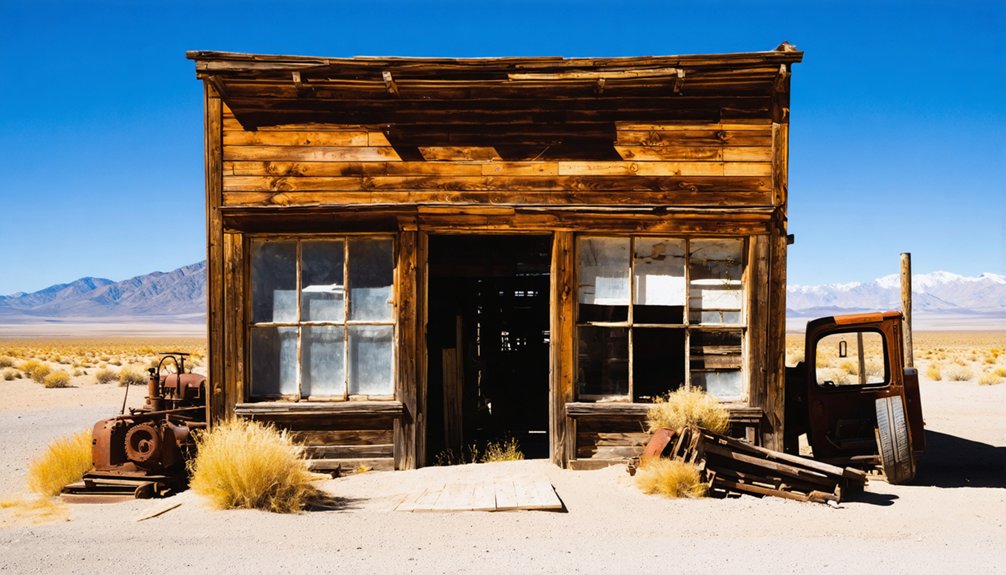
Those preserved structures you see frozen in “arrested decay” didn’t appear by accident — they’re the physical remnants of an economic cycle that defined Nevada’s identity. Silver and borax discoveries during the 19th century transformed empty desert into bustling communities almost overnight.
Towns like Marietta emerged in 1877, attracting hundreds of workers, building commercial infrastructure, and establishing post offices, saloons, and stores within years.
When deposits exhausted, populations vanished just as rapidly. That boom-bust rhythm created Nevada’s mining legacy — over 600 ghost towns now outnumber the state’s currently populated communities.
The cultural impact extends beyond abandoned buildings. Stage robberies, Chinese labor communities, and industrial operations shaped regional identity fundamentally.
You’re not just exploring ruins; you’re reading economic history written directly into the landscape.
How to Explore Nevada Ghost Towns Safely and Legally
Before you set out to explore Nevada’s ghost towns, you’ll need to verify access permissions, since some sites like Bristol Wells in Lincoln County are fenced off with warning signs due to private ownership.
You should research each location in advance using documented guides and maps, and stick to the approximately 1,000 miles of open dirt roads and ATV trails that legally connect these sites.
Once you’re on-site, you’ll want to treat all structures as potentially unstable, avoid removing artifacts, and carry sufficient water and navigation tools given the remote desert terrain.
Legal Access and Permissions
Exploring Nevada’s ghost towns legally requires understanding land ownership and access rights before you venture into the backcountry.
Respecting legal requirements and property boundaries protects both you and these irreplaceable historical sites.
Before heading out, confirm your rights by checking these critical steps:
- Verify land status — BLM, state, or private ownership determines your legal access completely.
- Respect locked gates — Sites like Bristol Wells post warning signs for legitimate reasons; trespassing carries real consequences.
- Obtain written permission — Private landowners can and do prosecute unauthorized visitors.
- Leave artifacts untouched — Federal law prohibits removing objects from public lands, protecting history for future explorers.
Freedom means knowing your boundaries.
Understanding who owns the land you’re crossing guarantees you keep exploring without legal complications.
Safety Tips for Exploration
Knowing your legal standing keeps you out of trouble, but it won’t keep you safe when a century-old floor gives way beneath your boots.
Nevada’s remote desert terrain demands serious preparation before you step into any abandoned structure or backcountry trail.
Pack essential safety gear including a hard hat, sturdy boots, and gloves. Carry navigation tools since cell service disappears fast in these isolated areas. Always leave emergency contacts with someone reliable before departing.
Weather preparation matters enormously — desert temperatures swing violently between dawn and midday. Bring a solid first aid kit and know how to use it.
Wildlife awareness is non-negotiable; rattlesnakes occupy these ruins year-round.
Terrain knowledge prevents dangerous missteps around unstable shafts and crumbling foundations. Group travel dramatically improves your survival odds if something goes wrong.
Ghost Town Day Trips From Reno and Las Vegas
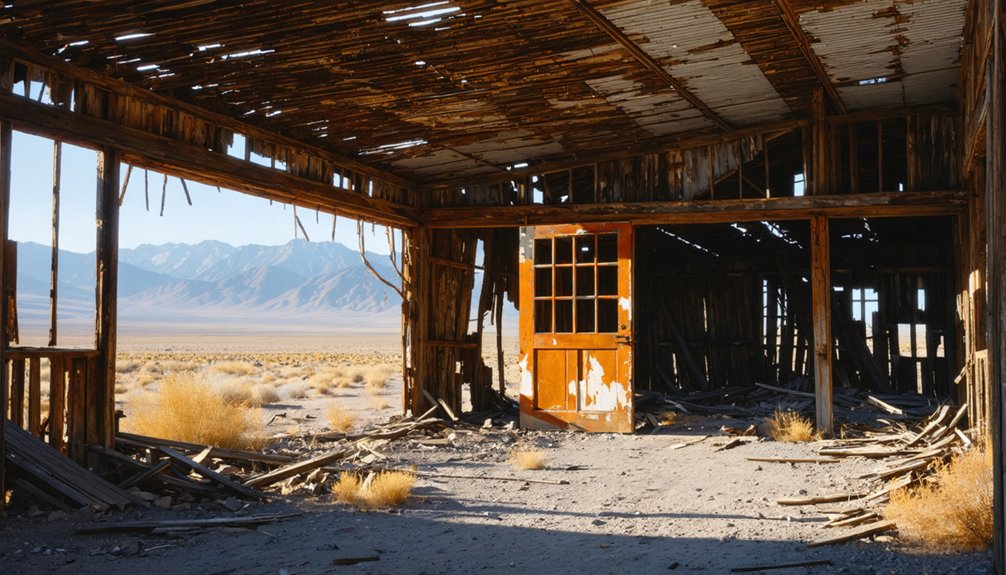
Nevada’s ghost towns are conveniently accessible from both Reno and Las Vegas, making day trips a practical option for history enthusiasts.
Reno routes connect you to Aurora, just 18 miles outside Hawthorne, while Las Vegas adventures lead to Nelson, Eldorado Canyon, and Goodsprings in Clark County.
From Reno, Aurora awaits just 18 miles beyond Hawthorne, while Las Vegas unlocks Nelson, Eldorado Canyon, and Goodsprings.
You’ll experience authentic frontier history without extensive travel commitments.
Top Day Trip Destinations:
- Aurora – Walk through Mineral County’s abandoned streets and feel the isolation miners endured daily.
- Goodsprings – Touch century-old structures still standing against relentless desert winds.
- Nelson/Eldorado Canyon – Witness canyon walls that absorbed decades of desperate labor.
- Rhyolite – Stand among crumbling ruins and grasp how quickly prosperity vanishes.
You’re free to explore Nevada’s remarkable past on your own schedule.
Frequently Asked Questions
What Types of Minerals Besides Silver and Borax Were Mined in Nevada?
You’ll find that gold mining and mineral exploration in Nevada also uncovered lead, salt, and copper deposits. These diverse minerals drove settlement expansion, transforming remote desert regions into thriving communities before their inevitable decline.
Did Chinese Workers Receive Equal Treatment in Nevada’s Mining Communities?
Don’t be fooled — Chinese contributions were essential, yet labor discrimination was rampant. You’d find Chinese workers, like those in Marietta, facing unequal pay, segregation, and harsh conditions despite building Nevada’s thriving mining communities.
How Did Stagecoach Robberies Impact the Economy of Mining Towns?
Stagecoach robberies devastated mining town economies through direct robbery consequences, disrupting supply chains and commerce. You’d see economic decline accelerate as 30 recorded 1880 robberies alone shook investor confidence, threatening the financial freedom these thriving communities desperately needed.
Are There Guided Tours Specifically Focused on Nevada’s Ghost Town Cemeteries?
While specific guided tours aren’t confirmed, you’ll find documented maps and guides helping you explore cemetery preservation sites and ghost town legends across Nevada’s 600+ “eternal resting destinations,” connecting freedom-seekers to these historically rich, hauntingly preserved locations.
What Photography Equipment Is Recommended for Documenting Ghost Town Ruins?
You’ll want a wide-angle lens and tripod for capturing Nevada’s ruins. Master your camera settings with HDR for high-contrast desert light, and apply composition tips like leading lines through crumbling structures to document authentic decay.
References
- https://www.legendsofamerica.com/nv-ghosttowns/
- https://www.visitmineralcounty.com/ghost-mining-camps
- https://www.youtube.com/watch?v=MrfB9oI-aXY
- https://nvtami.com/nevada-ghost-towns-map/
- https://travelnevada.com/ghost-town/
- https://www.thriftbooks.com/w/nevada-ghost-towns-and-mining-camps-illustrated-atlas–southern-nevada-death-valley-nevada-ghost-towns-and-mining-camps-illustrated-atlas_stanley-w-paher_paher/742961/
- https://www.nevadaghosttownsandmininghistory.com