New Chicago, California is a preserved Gold Rush ghost town in Amador County, established in the 1850s near the Gover Mine. You’ll find roughly twenty deteriorating houses and miner’s shacks, along with the 1878 Malson Hotel foundation, all sitting unrestored along New Chicago Road—about one mile east of Drytown. No permits are required to explore freely. The site’s layered history and accessible ruins make it worth knowing before you go.
Key Takeaways
- New Chicago is a preserved ghost town in Amador County, California, established in the 1850s during the Gold Rush era.
- The site features approximately twenty decaying houses, miner’s shacks, stone foundations, and the foundation of the 1878 Malson Hotel.
- No restoration efforts have been applied, keeping the remnants authentic to the original 1850s mining camp.
- New Chicago is accessible year-round via 2WD roads, located one mile east of Drytown on New Chicago Road.
- Spring and fall offer the most comfortable temperatures for exploring the site’s historical structures and artifacts.
New Chicago’s Origins as a Gold Rush Mining Camp
New Chicago traces its roots to the 1850s, when miners established a camp near the Gover Mine in Amador County, California, during the height of the Gold Rush era.
You’ll find this mining history fascinating — what started as a modest settlement grew into a fairly large town by 1850s standards. Entrepreneurs like Aaron Mason operated a boarding house and bar, while Seth Jennings ran a grocery store beside the Malson Hotel.
These businesses supported the working miners who drove the local economy.
The miners fueling New Chicago’s economy relied on local merchants for the essentials that kept them working.
Today, New Chicago stands as a ghost town, preserving the raw, unrestored remnants of that ambitious era. Unlike commercially developed historic sites, it offers you direct access to authentic 1850s mining camp relics — foundations, shacks, and structures that document California’s transformative Gold Rush period.
The Ruins and Relics Still Standing at New Chicago
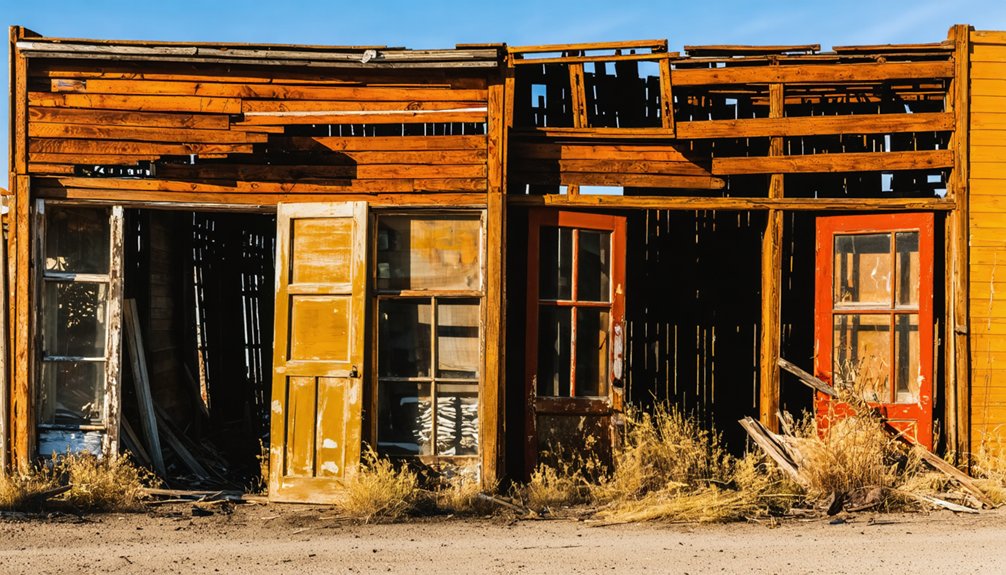
Walking through New Chicago today, you’ll encounter roughly twenty houses in various states of decay, alongside miner’s shacks, stone foundations, and an old boarding house that collectively document the site’s mid-19th century occupation.
Ruins exploration here reveals structural remnants tied directly to the Gover Mine’s operational period, including the foundation of the Malson Hotel, constructed in 1878 at a cost of $3,000 and measuring 34×48 feet with a rear kitchen.
Relics preservation remains informal, as no restoration effort comparable to Calico’s 1950s revival has been applied to New Chicago. What you’re examining are authentic, undisturbed artifacts of Gold Rush-era labor.
You can access the site year-round via 2WD roads, following New Chicago Road east from Drytown approximately one mile to the intersection with Old Drytown Plymouth Road.
How to Reach New Chicago From Drytown
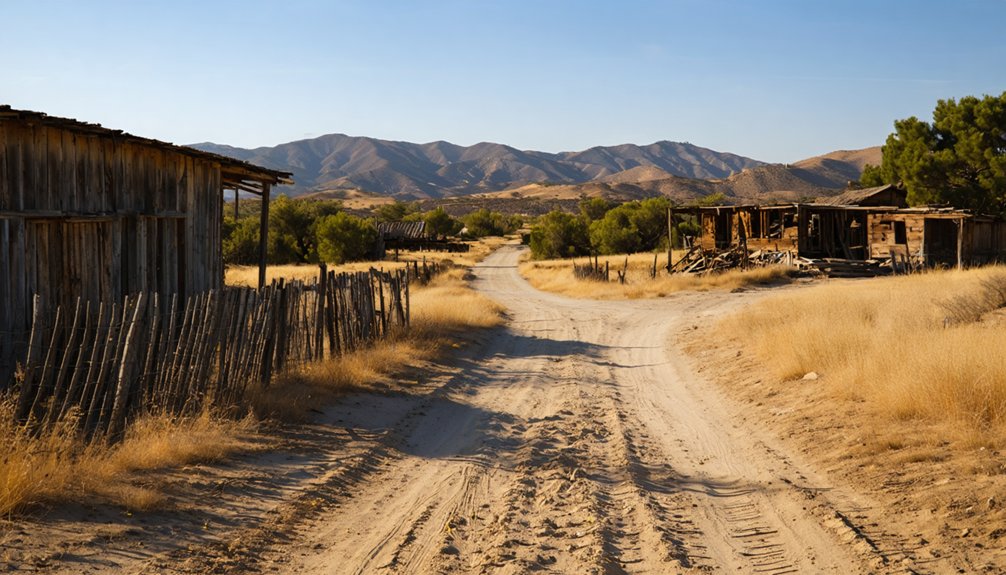
Reaching those ruins requires a straightforward drive that even standard passenger vehicles can handle. From Drytown, you’ll head east on New Chicago Road for approximately one mile.
The road’s 2WD-accessible terrain means you don’t need a specialized vehicle, so consult a directions map before departing to confirm the route hasn’t changed. You’ll arrive at the intersection of New Chicago Road and Old Drytown Plymouth Road, where the ghost town’s remains sit.
A few practical travel tips worth noting: the climate delivers hot summers and cold winters, yet the site remains visitable year-round. If you’re orienting yourself beforehand, Drytown’s historical marker references New Chicago directly, giving you a reliable landmark.
The drive itself is short, uncomplicated, and requires no special permits or equipment.
What to Expect When You Visit New Chicago
Stepping onto the site, you’ll find a collection of physical remnants that document New Chicago’s mid-19th-century mining activity. You’ll encounter approximately twenty deteriorating structures, including miner’s shacks, stone foundations, and an old boarding house.
The Malson Hotel, constructed in 1878 for $3,000, measured 34×48 feet and stands as a notable artifact within this ghost town. No residents occupy the area, so you’ll explore freely without restrictions.
The site’s mining history connects directly to the Gover Mine, which drove New Chicago’s brief economic existence during the 1850s Gold Rush. A historical marker in nearby Drytown provides additional context before your visit.
Cold winters and hot summers define the climate, though the site remains accessible year-round via 2WD roads for independent exploration.
The Best Time of Year to Visit New Chicago
Planning your visit around New Chicago’s climate will shape the quality of your experience at the site. Amador County’s cold winters and hot summers create distinct weather considerations for explorers. New Chicago’s accessible 2WD roads remain passable year-round, giving you flexibility in scheduling seasonal activities.
Consider these ideal visiting windows:
- Spring (March–May) – Mild temperatures make hiking the grounds and examining foundations comfortable.
- Fall (September–November) – Cooler air returns, reducing heat exposure while you document the miner’s shacks and boarding house remains.
- Winter (December–February) – Cold but manageable; check road conditions before traveling New Chicago Road.
Summer visits remain possible but demanding due to intense heat. Arriving early morning during warmer months helps you explore the site efficiently before temperatures peak.
Frequently Asked Questions
Who Built the Malson Hotel and How Much Did It Cost?
Picture weathered timber rising from Gold Rush dust — you’ll find the Malson Hotel’s construction documented in 1878, with construction costs reaching $3,000. It’s unclear who built it, but its 34×48-foot frame still echoes miners’ stories.
What Businesses Did Aaron Mason Operate in New Chicago?
You’ll find Aaron Mason’s legacy central to New Chicago’s economy — he actively operated both a boarding house and a bar, providing miners with essential shelter and social outlets during the Gold Rush era.
How Does New Chicago Differ From Calico Ghost Town?
Sure, they’re *both* ghost towns — that’s where the similarity dies! You’ll find New Chicago’s historical significance lies in its humble 1850s Gold Rush roots and architectural comparison of 20 modest homes, unlike Calico’s restored, tourist-polished 1880s silver boomtown grandeur.
Who Operated the Grocery Store Next to the Malson Hotel?
You’ll find that Seth Jennings operated the grocery store next to the Malson Hotel, a documented piece of grocery history that’s woven into New Chicago’s local legends, giving you a glimpse of free enterprise during the Gold Rush era.
Why Did New Chicago Eventually Become Abandoned?
once the Gover Mine’s resources dried up, you’d witness economic decline force population migration, as miners abandoned their shacks and freedom to chase gold elsewhere, leaving only ghostly foundations behind.
References
- https://historynet.com/ghost-town-calico-california/
- https://www.atlasobscura.com/places/calico-ghost-town-2
- https://www.youtube.com/watch?v=OsTV0s5Du5A
- https://www.ghosttowns.com/states/ca/newchicago.html
- https://visitusaparks.com/california-calico-ghost-town/
- https://savingplaces.org/guides/ghost-towns-on-route-66
- https://www.hmdb.org/m.asp?m=44621