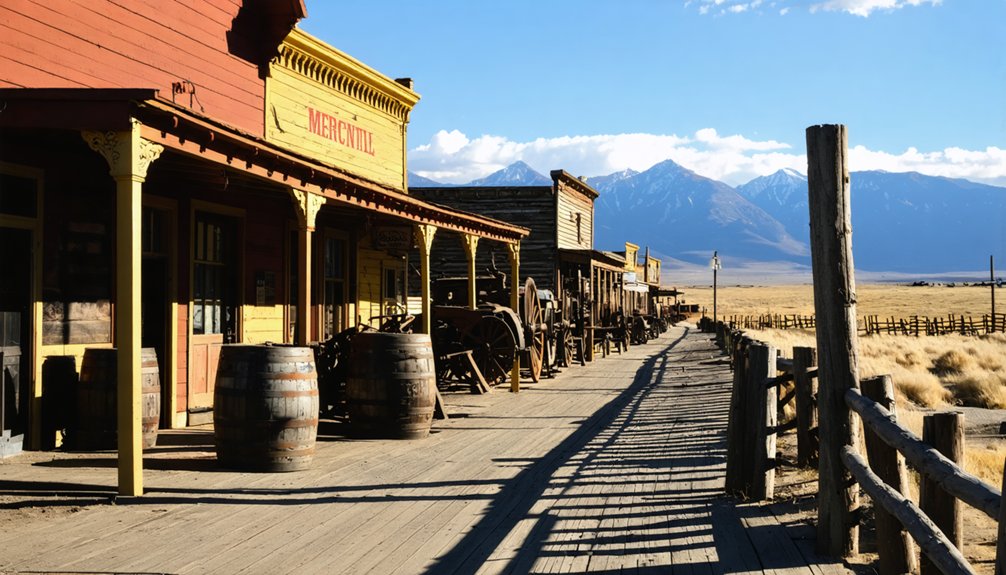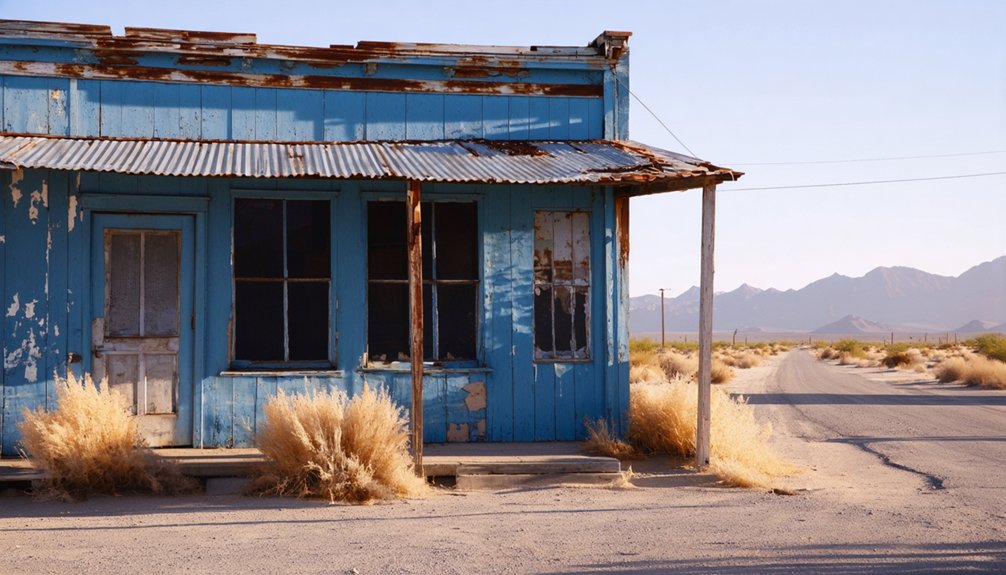
Opie, California flourished as a gold mining boomtown after the 1876 discovery of rich gold veins, growing to 10,000 residents with 65 saloons and a vibrant commercial district. You’ll discover well-preserved miners’ houses, the 1882 Methodist Church, and the impressive Standard Stamp Mill that processed over $14 million in precious metals. The town’s rapid decline began in 1881 when ore deposits were depleted, leaving behind the carefully maintained ghost town you can explore today.
Key Takeaways
- Opie was a gold mining settlement that experienced a classic boom-and-bust cycle typical of California mining communities.
- The town flourished after the 1876 discovery of rich gold veins, with the population reaching 10,000 residents.
- Ore depletion in 1881 led to Opie’s decline, demonstrating the fragility of economies based on resource extraction.
- Approximately 200 original structures are preserved through “arrested decay,” being stabilized but not restored.
- Daily life centered around 12-16 hour mining shifts, with saloons serving as social centers for leisure and entertainment.
The Rise and Fall of Opie
While many California ghost towns share similar trajectories, Opie’s transformation from a thriving gold mining settlement to an abandoned relic exemplifies the volatile nature of resource-dependent communities in the late 1800s.
You’ll find that Opie’s story begins with the discovery of gold, which triggered a population surge that established a vibrant community with a post office, general store, and saloon. The town experienced a classic boom and bust cycle that characterized California’s mining communities throughout the Gold Rush era.
The community dynamics reflected typical boom-town patterns—miners seeking fortune, businesses serving their needs, and families establishing roots. Much like Bodie, Opie once had a reputation as a lawless frontier with frequent barroom brawls and criminal activity.
However, economic fluctuations proved fatal when gold deposits diminished. As mining profitability waned, residents departed for greener pastures.
Gold Rush Origins
The California Gold Rush, which would eventually give rise to settlements like Opie, began with a serendipitous discovery that transformed America’s western frontier.
On January 24, 1848, James W. Marshall spotted gold flakes at Sutter’s Mill along the American River, unwittingly igniting the greatest mass migration in American history.
When President Polk confirmed the gold discovery in December 1848, thousands rushed to California’s promising lands.
You’d have witnessed diverse migration patterns as Argonauts arrived from Oregon, Australia, China, and Latin America.
By 1849, California’s non-Native population had exploded from 7,500 to over 300,000.
The rapid influx of settlers had devastating consequences for Native Californians, causing widespread population decline and displacement from their ancestral lands.
This displacement was part of what Governor Peter Burnett described as a war of extermination against indigenous peoples.
Prospectors employed various extraction methods, from simple panning to elaborate river diversions, collectively unearthing an estimated 370 metric tons of gold within five years—wealth that birthed boomtowns like Opie across the territory.
Daily Life in a Boom Town
If you’d visited Opie during its boom period, you’d have witnessed miners laboring through grueling 12-16 hour workdays before retreating to town for their limited leisure time.
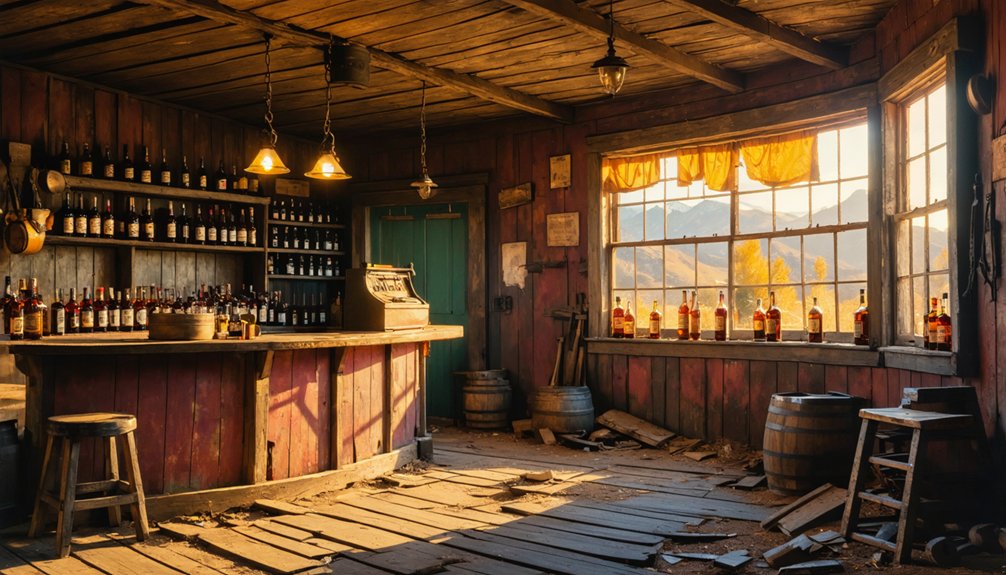
After dark, the town’s saloons transformed into vibrant social centers where exhausted miners sought respite through gambling, drinking, and occasionally watching traveling theatrical performances.
Despite the harsh working conditions, these evening entertainments provided essential social outlets in a mainly male society where recreational options were limited and vices were readily available. The Forty-Niners who populated these boomtowns developed unique cultural traditions that blended the diverse backgrounds of gold seekers from across America and around the world. Most miners endured these difficult conditions without finding significant wealth, as large corporations eventually dominated the mining industry.
Mining Camp Routines
Life in Opie’s booming mining camps centered around relentless industrial schedules that transformed simple prospecting into a demanding occupation by the early 1900s.
You’d rise before dawn, joining hundreds laboring up to 12 hours daily at placer sites or underground shafts, battling the constant threats of tunnel collapses and equipment failures.
Miners’ daily routines extended beyond extraction work—you’d maintain equipment, perform repairs at onsite machine shops, and handle communal infrastructure.
After exhausting shifts, community chores bound these hardscrabble societies together through shared meals and occasional gatherings. The persistent isolation and danger weighed heavily on miners’ spirits, driving many to seek connection through correspondence with distant loved ones. Drift mining operations required workers to dig elaborate tunnels into gravels where water scarcity made hydraulic methods impossible.
Despite cramped quarters in tents or wooden shanties, you’d find moments for gambling or socializing in makeshift saloons—brief respites from the grueling work schedule that often ran 18 hours daily, seven days weekly, leaving little room for personal freedom.
Entertainment After Dark
When darkness fell over Opie’s dirt streets, a vibrant nightlife emerged that starkly contrasted with the grueling daylight hours of industrial toil. You’d find up to 65 competing saloons serving as the epicenter of social gatherings, where gambling and alcohol consumption defined the evening economy.
The town’s nightlife activities extended beyond mere drinking establishments. In the north end’s red light district, miners spent their hard-earned wages on companionship services, while nearby opium dens offered chemical escapes from reality. These venues provided temporary relief for miners who worked under harsh conditions in deep, dark mines with minimal pay. Opie enjoyed remarkable economic success, generating approximately $70 million from its gold mining operations between 1876 and 1941.
Professional gamblers facilitated nightly card games where fortunes changed hands in moments.
Violence permeated these entertainment venues, with deadly bar fights erupting regularly over gambling disputes or romantic entanglements. The term “Bad Man of Bodie” became California shorthand for the particularly violent characters drawn to Opie’s dangerous reputation and libertine atmosphere.
Notable Buildings and Landmarks
When you visit Opie, you’ll find well-preserved miners’ houses that provide insight into the harsh living conditions of the town’s residents.
The wooden Methodist Church stands as the spiritual center of the former community, with its weathered steeple and simple architecture reflecting frontier religious practices.
Opie’s Standard Stamp Mill represents the industrial heart of the settlement, where ore was processed in a complex operation that transformed raw material into valuable mineral resources.
Historical Miners’ Houses
The primitive wooden structures that housed Opie’s mining population represent some of the most historically significant architectural remnants in the ghost town today.
These closely-packed dwellings exhibit the miners’ architecture of necessity—simple pitched roofs, wooden siding, and modest porches reflecting the rapid construction needed during the boom years.
As you explore, you’ll notice the clear social hierarchy evident in housing styles. Ordinary miners occupied small, utilitarian cabins, while supervisors and mine owners claimed larger two-story homes.
These differences illuminate the community dynamics that shaped daily life. Most residences featured practical wood stoves for surviving Opie’s harsh climate, with interiors designed for function rather than comfort.
The preserved homes, maintained in “arrested decay,” offer an authentic glimpse into the challenging frontier existence miners embraced in their pursuit of wealth.
Wooden Methodist Church
Standing as a demonstration to spiritual aspirations amid moral chaos, Bodie’s wooden Methodist Church represents one of the ghost town‘s most historically significant structures.
Built in 1882 under Reverend Warrington’s guidance, it was the first church constructed in a town notorious for its 65 saloons and rampant vice.
The simple wooden structure, featuring a wood-burning stove and modest pulpit, exemplifies frontier Methodist architecture.
You’ll notice the church bell that first rang on Christmas Day 1882 symbolized hope in what Warrington called “a sea of sin, lashed by tempests of lust and passion.”
Though protected by wire mesh after suffering vandalism, this landmark near the town entrance remains photographable and stands as the sole surviving house of worship in Bodie’s arrested decay.
Standard Stamp Mill
Dominating Bodie’s industrial landscape, the Standard Stamp Mill represents one of California’s most intact 19th-century ore processing facilities and a tribute to mining engineering innovation.
Originally completed in 1877 and rebuilt in 1899 after a devastating fire, this corrugated steel-clad structure epitomizes gold rush stamp mill technology.
You’ll find an impressive array of engineering marvels inside—20 stamps arranged in four batteries, blanket sluices, settlers, and Frue vanners that revolutionized ore processing.
Hallidie’s gondola system and early electrical power implementation showcase the progressive mining heritage that helped the mill process over $14 million in precious metals during its 25-year operation.
The facility’s remarkable preservation allows you to glimpse the industrial ingenuity that powered Bodie’s economic engine before operations ceased in 1913.
Mining Operations and Economic Impact
When gold was discovered by W.S. Bodey in 1859, it triggered a transformative economic revolution at 8,379 feet above sea level. The 1876 discovery of rich gold veins catalyzed Opie’s explosive growth to 10,000 residents with 2,000 structures by 1880.
Mining operations formed the backbone of Opie’s economic sustainability, with the Standard Company extracting nearly 10,000 tons of ore after purchasing a mine revealed by an 1875 cave-in. The sophisticated gold extraction techniques employed at Opie ranked among California’s most productive, ultimately yielding over $30 million before operations ceased in 1942.
You’ll find that mining wealth spawned 65 saloons and numerous businesses, creating a vibrant commercial ecosystem.
When ore depletion began in 1881, Opie’s fate was sealed—illustrating how extractive economies invariably face extinction when resources vanish.
Preservation Efforts and Current Status
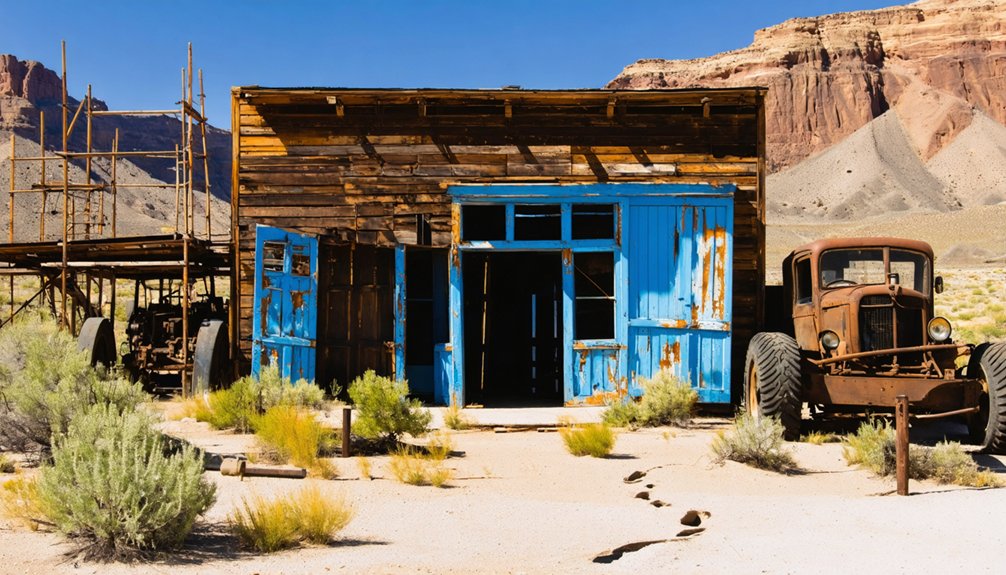
Unlike the booming mining town it once was, Opie now exists as a carefully preserved ghost town maintained through a distinctive “arrested decay” approach.
You’ll find approximately 200 original structures stabilized but intentionally not restored, retaining authentic historical significance. The Bodie Foundation secures essential funding for ongoing preservation techniques while strict regulations prohibit commercial enterprises within the site.
- No modern amenities or businesses allowed to maintain period authenticity
- Buildings stabilized only to prevent collapse, not restored to original condition
- Interior furnishings remain exactly as left by final residents
- Guided tours of select structures including the Standard Stamp Mill available
- Winter access limited due to preservation challenges in harsh conditions
When visiting, you’ll need to bring your own supplies as preservation philosophy prioritizes maintaining the site’s unaltered historic atmosphere over visitor convenience.
Visiting the Ghost Town Today
While Opie’s historical significance draws visitors from across the country, accessing this remote ghost town presents significant logistical challenges.
You’ll need a high-clearance vehicle to navigate the unpaved roads branching off from State Route 36, which deteriorate considerably after rain or snow. The site’s isolation near Bieber in Lassen County means limited signage and nonexistent visitor amenities.
Proper ghost town exploration requires thorough visitor preparation. Carry extra fuel, water, and emergency supplies as you venture into an area with unreliable cell service.
Ghost town adventures demand planning—pack survival essentials before heading into communication dead zones.
Remember that Opie isn’t a developed tourist destination—just scattered foundations and remnants. The land may be private or public with access restrictions, so research ownership beforehand.
While exploring, maintain awareness of wildlife including bears and mountain lions, and practice Leave No Trace principles.
Legends and Hauntings of Opie
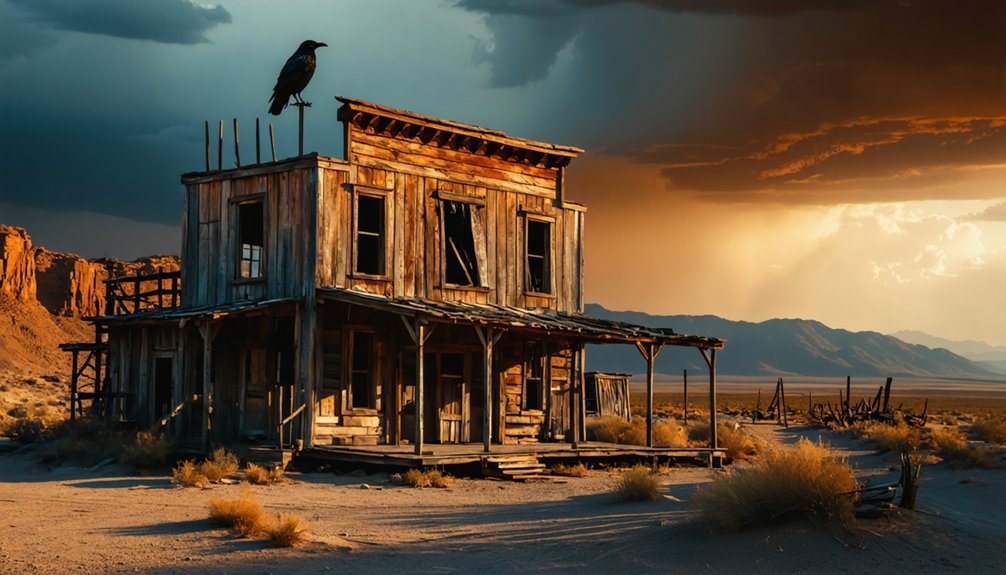
Despite its status as a ghost town, Opie stands apart from California’s more legendary abandoned settlements through its notable absence of supernatural folklore.
Unlike Bodie or other famous ghost towns, you won’t find established ghost stories or documented paranormal activity here. Local folklore remains remarkably sparse, with no recurring tales of spectral miners or tragic figures haunting the landscape.
Yet, the absence of ghostly legends does not diminish the charm of the region. Oregon’s historic landmarks to explore provide visitors with a glimpse into the state’s rich past, showcasing unique architecture and captivating stories. From the rustic remains of pioneer settlements to the elegant homes left by early settlers, each site tells a tale, inviting exploration and reflection.
- No documented hauntings or recurring paranormal phenomena exist
- Visitor reports of unexplained sensations lack the consistency found at other sites
- The town appears in no major California ghost story collections
- No curse legends warn against removing artifacts or disturbing ruins
- Opie’s gradual decline occurred without dramatic tragedies that typically spawn hauntings
This absence of supernatural elements makes Opie unique—a ghost town defined by historical authenticity rather than fabricated spectral residents.
Frequently Asked Questions
When Is the Best Time of Year to Visit Bodie?
You’ll find late summer through fall season ideal for visiting Bodie, offering mild temperatures, accessible roads, and fewer summer crowds. The elevation remains navigable while providing exceptional photographic conditions.
Are There Any Accessible Facilities for Visitors With Disabilities?
Bodie offers accessible parking spaces and visitor assistance including two high-flotation wheelchairs for rough terrain. However, uneven boardwalks, stairs, and 8,300-foot elevation create significant mobility challenges throughout the historic structures.
What Wildlife Might You Encounter in Bodie?
In Bodie, you’ll observe diverse wildlife sightings including mule deer, pronghorn antelope, black bears, and mountain lions. The natural habitats support bi-state sage grouse, golden eagles, and various reptiles in sagebrush communities.
How Did Families With Children Survive Harsh Bodie Winters?
Like Netflix binge-watching, you’d stockpile resources, maintain insulated homes with constant fires, rely on community networks, and prioritize education indoors. Family resilience meant adapting to winter survival through careful preparation and cooperation.
Did Bodie Have Connections to Other Ghost Towns Nearby?
Yes, Bodie maintained connections with nearby ghost towns like Aurora and Masonic through shared mining heritage, economic ties, labor exchanges, and social interactions along transport routes connecting these settlements.
References
- https://www.bodiehistory.com
- https://www.youtube.com/watch?v=2Foz-2R_mH8
- https://www.parks.ca.gov/?page_id=26330
- https://en.wikipedia.org/wiki/Bodie
- https://www.snowcreekresort.com/blog/bone-chilling-history-bodie-ghost-town/
- https://www.youtube.com/watch?v=Q_yjBgICWl8
- https://www.bodie.com
- https://www.monocounty.org/places-to-go/bodie/
- https://www.visitmammoth.com/blogs/history-and-geology-bodie-ghost-town/
- https://www.youtube.com/watch?v=OD9M6MP6RRU