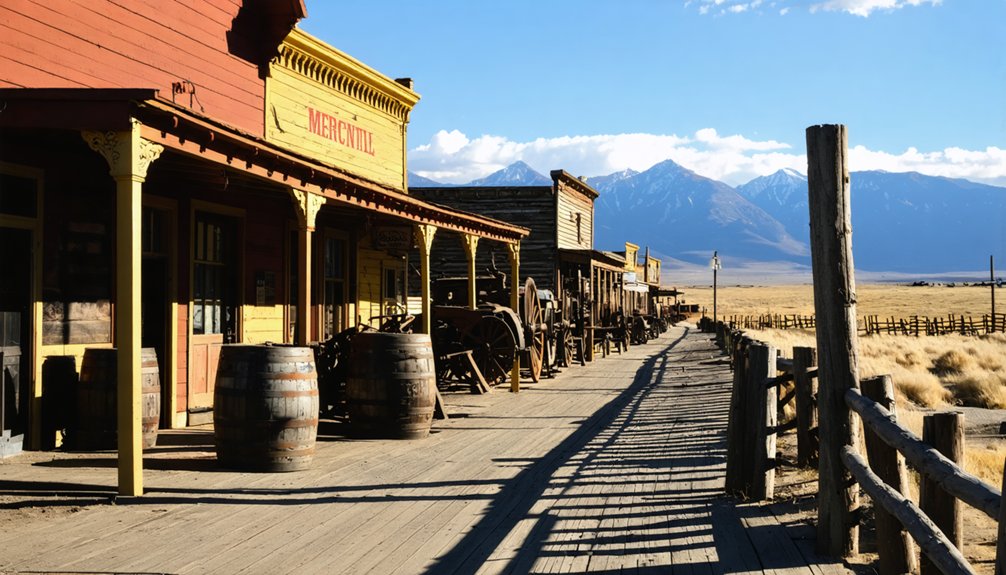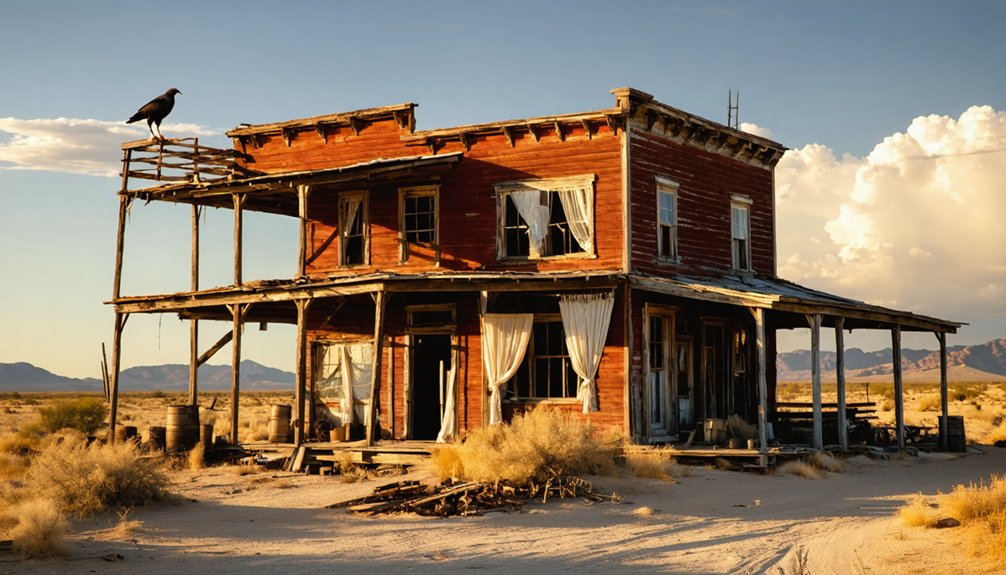
Owensville, California’s first permanent white settlement in northern Owens Valley, emerged in 1861 and was officially named in 1863. You’ll find little remains today where this ambitious community once thrived with 1,500 platted lots during its brief economic boom. Founded by A. Van Fleet, it’s now recognized as California Historical Landmark #230, dedicated in 1977. The story of this ghost town reveals the fleeting nature of frontier prosperity during America’s westward expansion.
Key Takeaways
- Owensville was established in August 1861 as the first permanent white settlement in northern Owens Valley, California.
- Recognized as California Historical Landmark #230, it evolved from a cattle settlement to a mining community.
- The town experienced a brief economic boom with 1,500 platted lots before declining as mining prospects faded.
- Owensville’s buildings were eventually dismantled after abandonment, with residents migrating to nearby Bishop.
- Environmental changes, including LADWP water diversions and natural disasters, contributed to the ghost town’s ultimate demise.
The Birth of Owens Valley’s First White Settlement (1861-1863)
In August 1861, four men led by A. Van Fleet drove cattle into the pristine Owens Valley, establishing what would become the first permanent white settlement in the northern region.
The frontier beckoned as Van Fleet’s party ventured into Owens Valley, planting civilization’s first tentative flag in virgin territory.
They constructed a sturdy sod and stone cabin as their base, marking the beginning of Euro-American settlement origins in this contested territory.
The settlement thrived enough that by 1863, prospectors officially named it Owensville.
This formalization occurred amid increasingly complex cultural interactions between white settlers and the Paiute, who’d been promised protection of their lands.
Despite Officer Davidson’s earlier recommendation to preserve the valley as an Indian reservation, the rich soil, abundant timber, and extensive meadows proved too attractive for settlers seeking new opportunities away from government oversight.
The site is now recognized as California Historical Landmark #230, dedicated in a ceremony on June 11, 1977.
By 1864, Owensville had become completely deserted as mining activity in the White Mountains diminished.
Rise and Fall: From Boom to Abandonment
You’d find Owensville’s brief prosperity reflected in its ambitious platting of 1,500 corner lots, a demonstration of the speculative optimism that drove mining settlements before the 1864 decline.
When miners abandoned the area for more promising claims, Owensville’s structures stood empty until locals gradually dismantled them for building materials elsewhere. Nearby Swansea once thrived with two large smelters and a significant population of 2200 residents.
The town’s physical disappearance mirrored its economic collapse—a pattern repeated throughout the Owens Valley as the combination of mining decline, the 1872 earthquake, and subsequent flooding erased once-thriving communities. This devastating cycle was particularly evident when flash flooding in 1874 completely buried the once-prosperous town of Swansea, abruptly ending its existence.
Prospectors’ Brief Promise
While gold discoveries near Owens Valley sparked initial excitement in 1862, Owensville’s prosperity proved tragically fleeting.
You’d have witnessed hundreds of hopeful prospectors flocking to the east bank of Owens River, their ambitions fueled by reports of “riches beyond computation” in the White Mountains and Mazourka Canyon.
Within months, Owensville transformed into one of northern Owens Valley’s largest settlements. The fleeting fortunes of miners supported a vibrant community of merchants, farmers, and service providers who profited most from the rush. Founded in 1861 by A. Van Fleet, Owensville experienced explosive growth with high-value real estate and corner lots selling for $1,500.
The settlement withered by 1871 as prospectors realized the area lacked the mineral riches they had hoped to discover.
Yet by 1864, the harsh reality became clear – yields were modest compared to neighboring strikes in Nevada.
1,500 Corner Lots
The soaring value of Owensville’s corner lots reveals both the town’s meteoric rise and its devastating collapse. At the height of mining optimism, these premium parcels commanded an astounding $1,500—representing significant wealth and reflecting the speculative investments driving the town’s economy.
Corner lot dynamics tell the complete story of Owensville’s brief existence:
- Initial valuation demonstrated settlers’ conviction that permanent prosperity awaited.
- Premium prices reflected strategic positioning for businesses seeking customer traffic.
- The subsequent plummet in land values preceded the town’s abandonment.
- Dismantled buildings floated downriver exemplified how even physical assets couldn’t sustain value.
The valley’s transformation from a flourishing agricultural community to a blighted land mirrors the economic devastation that befell Owensville’s property market.
You’re witnessing a microcosm of boom-and-bust economics—where paper wealth vanished as swiftly as it appeared, leaving nothing but historical footnotes where dreams of riches once stood.
Scavenged For Materials
After Owensville’s miners abandoned their futile search for precious metals in 1864, the town’s physical remnants didn’t simply decay in place—they commenced a second life through systematic dismantling.
You’d find nothing of Owensville’s structures today because practical settlers quickly recognized the value in material reuse. The town’s buildings were methodically taken apart, with lumber and timber salvage operations becoming an economic activity of their own.
Workers floated these precious building materials down the Owens River on barges, redistributing them to neighboring settlements suffering from timber shortages. This recycling practice wasn’t merely convenient—it was essential in a region where wood was scarce and transportation difficult. Much like the boom and bust cycles that characterized California’s ghost towns, Owensville’s rapid rise and fall exemplified the transient nature of resource-dependent settlements.
The resourcefulness of frontier settlers guaranteed nothing went to waste, effectively erasing Owensville’s physical presence while sustaining development elsewhere in the isolated Owens Valley.
Mining Dreams and Economic Realities
Despite initial enthusiasm among prospectors who flocked to the White Mountains in 1862-63, Owensville’s mining economy never achieved the sustained prosperity its founders envisioned.
The mining challenges of easily depleted silver ore and competition from richer strikes like Cerro Gordo created economic disparities between miners and the merchants who served them.
You’ll find that Owensville’s story reflects broader patterns in frontier resource extraction:
- Mining districts formed their own governance structures before county authority was established in 1866.
- The Ida mill processed diverse ores but couldn’t sustain operations as accessible minerals diminished.
- By 1871, miners had abandoned Owensville for more promising diggings.
- Transportation improvements like the 1883 Carson and Colorado Railroad came too late to save Owensville but integrated the region into wider markets.
Similar to many ghost towns in California’s mining regions, Owensville folded quickly after its gold and silver reserves were depleted.
Life Along the Owens River: Environmental Factors
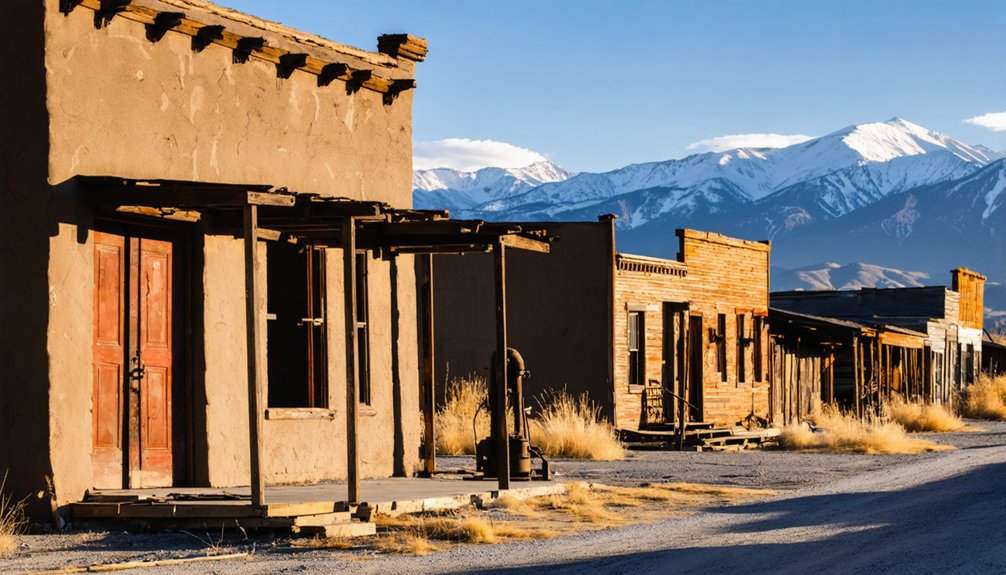
While Owensville’s boom-and-bust mining cycle shaped its economic trajectory, environmental factors along the Owens River ultimately determined the ghost town’s fate and that of the entire valley.
If you’d visited Owensville in its early days, you’d have witnessed a thriving ecosystem with Eastern Sierra snowmelt feeding the river and maintaining groundwater levels.
But Los Angeles’ aggressive water diversions transformed this landscape dramatically. The once-flowing Owens River dwindled as LADWP extracted both surface and groundwater, creating America’s largest dust pollution source when Owens Lake dried up. William Mulholland’s water acquisition campaign in the late 1800s began this environmental transformation.
River health collapsed as riparian habitats disappeared, threatening native species and increasing fire risks.
Despite $2 billion spent on dust mitigation and court-mandated water management reforms, the valley’s communities continue to struggle against the ecological and social consequences of a century of water exploitation.
What Remains: The Ghost Town’s Physical Legacy
Scattered across the Owens Valley floor, the physical remnants of Owensville tell a fragmented story of California’s mining past.
You’ll find architectural remnants similar to nearby ghost towns—foundations of adobe structures that couldn’t withstand the 1872 Lone Pine earthquake, scattered stones where silver-lead furnaces once roared to life, and the skeletal remains of tramway terminals that once transported precious minerals.
Historical artifacts emerge from the dusty landscape when you know where to look:
- Stone monuments marking former stagecoach stops along forgotten routes
- Mining equipment abandoned when operations ceased, now rusting in the desert sun
- Remnants of wharves built from slag extending into the now-dry Owens Lake
- Occasional ammo boxes containing logbooks—silent witnesses to the daily struggles of frontier life
Historical Recognition as California Landmark #230
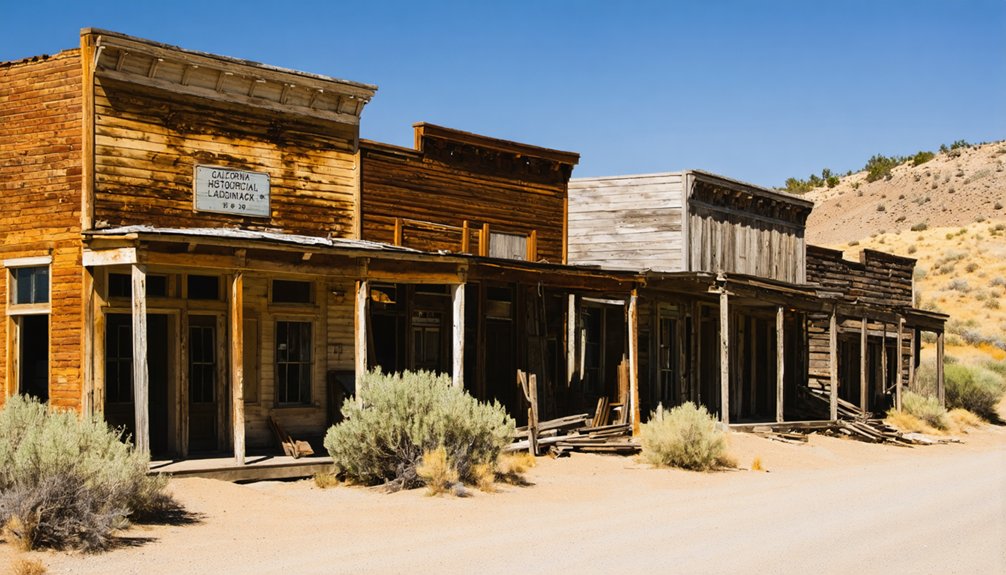
Although largely forgotten in mainstream history books, Owensville achieved official recognition in 1935 when the California Office of Historic Preservation designated the site as California Historical Landmark #230.
The landmark preserves the historical significance of A. Van Fleet’s 1861 settlement, marking the first permanent white habitation in Owens Valley.
You’ll find this important site at the intersection of State Highway 6 and Silver Canyon Road, about 4 miles northeast of Bishop at the Owens River’s big bend.
The Slim Princess Chapter of E Clampus Vitus formally dedicated the landmark on June 11, 1977, cementing its place in California’s historical record.
The site chronicles the evolution from cattle settlement to mining community, briefly called Glen Mary (1868-1869) before returning to its Owensville identity in official historical registers.
Connection to Neighboring Frontier Settlements
Beyond its status as a historical landmark, Owensville’s significance extends to its place within the broader frontier network of Owens Valley settlements.
You’ll find its position along the Owens River created essential settlement dynamics with nearby communities like Laws, Bishop Creek, and riverbank towns such as Bend City and San Carlos.
The ghost town’s connections reveal a complex frontier ecosystem:
- Served as a strategic refuge against Native American raids while supporting regional transportation networks
- Maintained economic interdependence with mining hubs including Cerro Gordo and Lone Pine
- Participated in cultural exchanges through mobile populations of miners and traders
- Shared common frontier challenges with neighboring settlements, including resource scarcity and harsh environmental conditions
When Owensville declined, most residents migrated to Bishop, transferring community ties and economic activities.
Owensville’s Place in Western Expansion History
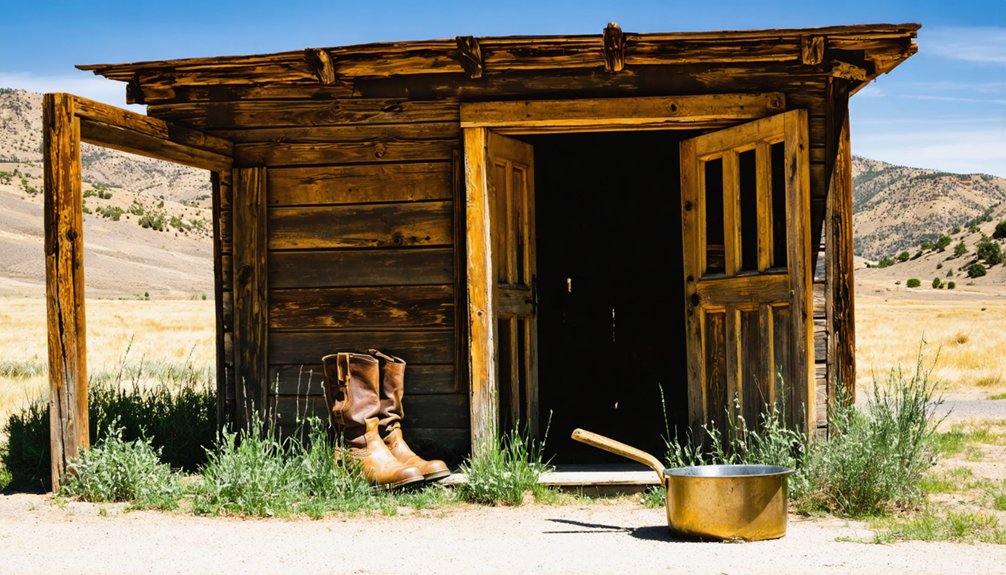
When examining the tapestry of western expansion, Owensville stands as a pivotal microcosm of America’s frontier development during the 1860s. This river settlement emerged at the intersection of multiple economic forces driving westward migration, reflecting the boom-and-bust cycle typical of frontier towns.
You’ll recognize familiar settlement patterns in Owensville’s story—initial growth sparked by agricultural promise rather than lasting mineral wealth. As one of the first white communities in Owens Valley, it served as a gateway for cattle routes connecting California’s drought-stricken Central Valley to new grazing opportunities.
Though short-lived, Owensville’s significance lies in its representation of frontier resourcefulness. When prosperity shifted elsewhere, settlers dismantled buildings for materials, demonstrating the practical adaptability that characterized western expansion—moving, rebuilding, and repurposing as opportunity dictated.
Frequently Asked Questions
What Happened to A. Van Fleet After Founding Owensville?
After founding Owensville, you’ll find Van Fleet drifted toward Independence before mysteriously disappearing from historical records in the early 1860s, leaving behind only his contribution to Owensville’s economy and Van Fleet’s legacy.
Were There Any Notable Conflicts With Native Americans Specifically in Owensville?
You’ll find no specific records of Native American conflicts in Owensville itself. Historical conflicts centered elsewhere in Owens Valley, where Van Fleet’s wounded encounter with Paiutes preceded widespread Native relations deterioration.
What Did Daily Social Life Look Like for Owensville Residents?
You’d find your daily routines centered around mining work, with evenings spent in saloons. Community gatherings were rare and short-lived, reflecting the transient nature of Owensville’s frontier society.
How Accessible Is the Ghost Town Site to Visitors Today?
You’ll find the ghost town site easily accessible via State Highway 6, with no formal visitor regulations restricting your exploration of this historical landmark near Bishop. The cemetery remains the primary visible feature.
As you continue your journey, take the time to explore the history of Packwood Station, where remnants of the past offer a glimpse into the lives of those who once inhabited the area. The ruins, alongside various artifacts, serve as a captivating reminder of the town’s rich heritage and the stories waiting to be uncovered. Don’t forget to bring your camera to capture the beauty of this unique site, as the landscape around it provides a stunning backdrop for photographs.
Did Any Families or Individuals From Owensville Achieve Later Prominence Elsewhere?
You’ll find no records of Owensville families or individuals achieving later prominence elsewhere. Historical documentation reveals only Van Fleet as a named settler, with no subsequent achievements tracked after the town’s 1871 abandonment.
References
- https://nvtami.com/2024/04/26/owens-valley-ghost-towns/
- https://lonepinechamber.org/history/ghost-towns-of-the-lone-pine-area/
- https://noehill.com/inyo/cal0230.asp
- https://lawsmuseum.org/long-gone-river-towns-owens-valley
- https://www.hmdb.org/m.asp?m=2953
- https://bishopvisitor.com/hidden-pioneer-history-of-the-owens-valley/
- https://landmarkquest.com/omeka/items/show/776
- http://sfmuseum.org/hist8/owens1.html
- https://www.nps.gov/parkhistory/online_books/manz/hrs6a.htm
- https://quarriesandbeyond.org/states/ca/structures/ca-inyo_co_owensville.html